Whistling Death - Vought F4U-4 Corsair
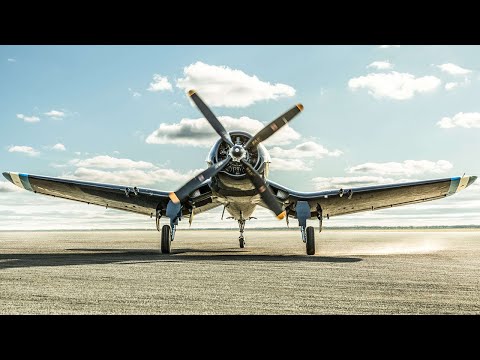
Video from the channel Dark Skies about Vought F4U Corsair, linked on its Above Ten Thousand entry. Duration: 12:53. Language: English. Video type: Documentary.
What it's about
Documentary about the Vought F4U Corsair from its design to its last combat. It explains its nickname "Whistling Death," which came from the sound of air passing through the wing root intakes at high speed, though some records indicate the Japanese called it "Sikorsky."
Historical background
In 1938 the Navy's Bureau of Aeronautics requested fighter proposals, and Vought submitted a design based on the Pratt & Whitney R-2800 Double Wasp engine. To give the large propeller enough ground clearance, the inverted gull wing was adopted. The prototype flew on 29 May 1940 and in October averaged 405 miles per hour, the first American fighter to exceed 400. Carrier trials in September 1942 revealed problems with the landing gear, tail wheel and arresting hook, so it entered service with the Marines flying from island bases instead. It fought over the Solomons, Palau, Iwo Jima and Okinawa, and did not receive carrier qualification until 1944.
Key facts
On 10 May 1945, near Okinawa, Lieutenant Robert Klingman shot down a Kawasaki Ki-45 by cutting off its tail with his propeller after his guns had frozen, and received the Navy Cross. The video credits the Corsair with 2,140 kills against 189 losses, 64,051 sorties and more than 15,500 tons of bombs. In Korea, Guy Bordelon was the only ace flying an F4U. Its last combat came in the 1969 Football War, in which Honduran pilot Fernando Soto shot down a P-51 and two FGs.