Morte fischiettante - Il Vought F4U Corsair | Segnalibri del canale
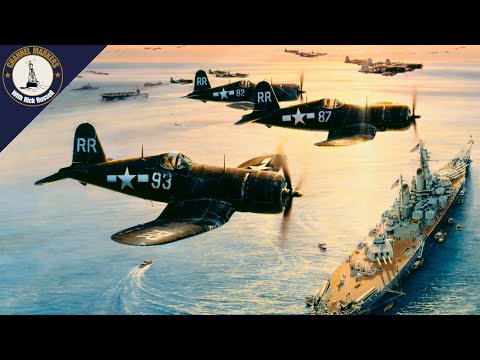
Video from the channel Bearing Straight about Vought F4U Corsair, linked on its Above Ten Thousand entry. Duration: 15:52. Language: English. Video type: Documentary.
What it's about
Episode of the Channel Markers series devoted to the Vought F4U Corsair, from its design to its retirement. It opens with the recollection of a liaison officer in Korea who called in air support for Turkish infantry, who always asked for the Navy's "blue airplanes," and with Jesse Brown and Thomas Hudner, who flew Corsairs in close support at the Chosin Reservoir in 1950.
Historical context
The project began with the Pratt & Whitney XR-2800 Double Wasp engine, which delivered 1,850 hp in tests in 1937. From 1938 Chance Vought tried to wrap it in the smallest possible airframe, and in June of that year it won the XF4U-1 prototype contract. The 13-foot-4-inch three-blade propeller required the inverted gull wing, which shortened the landing gear. The prototype flew on May 29, 1940, and by year's end reached 404 mph. In September 1942 it failed trials aboard USS Sangamon due to poor visibility and landing gear bounce, and the Navy sent it ashore: VMF-124 arrived at Henderson Field on February 12, 1943, and Tom Blackburn's VF-17 operated from New Georgia.
Key facts
According to the video, in World War II Corsairs shot down 2,140 aircraft for 189 losses of their own in combat. Production continued until 1953, totaling 15,056 units, and it was the last piston-engined fighter built in the United States. It fought in Korea, flew with the French Navy (F4U-7) from 1953 to 1964, attacked Egyptian airfields during the 1956 Suez crisis, and in 1969 a Honduran Corsair shot down two Salvadoran Corsairs and an F-51D in the Football War.