The Ultimate American Fighter of WWII - F4U Corsair
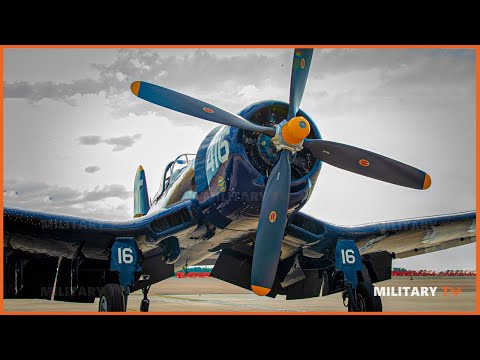
Video from the channel Military TV about Vought F4U Corsair, linked on its Above Ten Thousand entry. Duration: 9:54. Language: English. Video type: Documentary.
What it's about
An explainer piece about the Vought F4U Corsair, the carrier-based fighter of the US Navy and Marine Corps in the Second World War. It covers its design, performance, combat record and main variants.
Historical context
Development began in 1938 at Chance Vought, with Rex Beisel as designer. The prototype flew on 29 May 1940 and introduced the inverted gull wing, which gave ground clearance to a propeller of about 13 feet and allowed a shorter, more robust landing gear. The set-back cockpit reduced visibility and the aircraft tended to bounce on landing, problems that were resolved before production. It entered combat in 1943 at Guadalcanal with the Marine Corps and later took part in almost every major Pacific operation. Britain's Fleet Air Arm operated it from carriers with clipped wings and used it against the battleship Tirpitz on 3 April 1944. It also served in Korea and in French naval aviation until the 1960s.
Key facts
It carried a Pratt & Whitney R-2800 Double Wasp engine of up to 2,450 hp and was the first American fighter to exceed 400 mph (about 640 km/h). By the end of the war it was credited with 2,140 victories against 189 losses, in around 64,000 sorties. Production ended in 1952 with some 13,000 examples built by Vought, Goodyear (FG) and Brewster (F3A), in variants ranging from the F4U-1 to the F4U-5 and the ground-attack AU-1.