F4U Corsair: 'Black Sheep' adopted by the Royal Navy
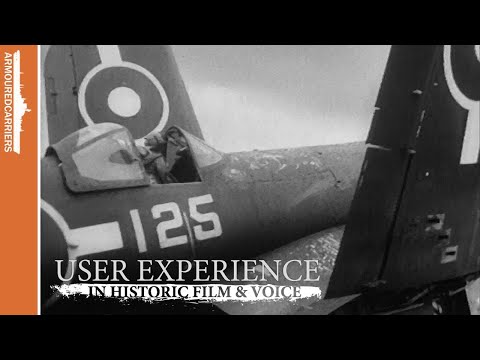
Video from the channel Armoured Archivist about Vought F4U Corsair, linked on its Above Ten Thousand entry. Duration: 23:30. Language: English. Video type: Documentary.
What it's about
British Fleet Air Arm veterans recount how the Vought F4U Corsair, a fighter the US Navy had deemed unfit for carrier operations, came to the Royal Navy. Their testimonies are interspersed with footage from period training films. They cover its design, how to fly it, its arrival in squadrons and its use against Japan at the end of the Second World War.
Historical background
According to those interviewed, the US Navy rejected it for carrier use because it stalled and spun at low speeds, bounced on landing due to poorly designed oleo struts, and its long nose - made worse by opening the cowl flaps to keep the engine from overheating - blocked the forward view. The Navy preferred the Hellcat and left the Corsair to the Marines, who used it extensively from land bases in the Pacific. A Fleet Air Arm officer posted as naval attaché in Washington ordered the first 200 aircraft on his own authority, before the government approved it. The British landed it on carriers without trouble, and once the US saw it worked from carriers, it reclaimed the type for itself, to the point that by the end of the war aircraft and spare parts were in short supply.
Key facts
The pilots highlight its size, larger than any single-seat fighter they knew. They put its speed at about 420 miles per hour and recall it as the first single-seat fighter to exceed 400 in level flight. It carried the 18-cylinder, two-row Pratt & Whitney R-2800 radial engine producing over 2,000 horsepower, with a very large three-blade propeller that forced the use of an inverted gull wing to shorten the landing gear. It was armed with six half-inch machine guns, three in each wing. To select its pilots, they checked that their legs reached a marked line. It is described as rugged, steady when firing, and able to withstand hard landings that would break a Seafire. Facing Japanese aircraft without self-sealing fuel tanks, one pilot says that for the first time in the war he had command of the air. They also recall how kamikazes attacked aircraft parked on Victorious's armoured deck.