The DC-3: The Aircraft That Built Modern Flight
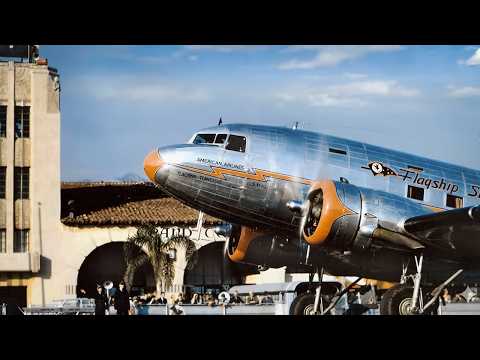
Video from the channel World at War about Douglas DC-3, linked on its Above Ten Thousand entry. Duration: 52:33. Language: English. Video type: Documentary.
What it's about
Documentary that traces the successive lives of the Douglas DC-3, from the 1930s sleeper airliner to the polar research aircraft, alternating history with the present-day stories of several preserved aircraft. It features a Swiss businessman who flies and restores DC-3s, the Basler Turbo Conversions workshop in Oshkosh, the Moss family in Florida, mechanic Roy Owens in Oklahoma City, a Berlin airline that wants to fly a "candy bomber" again, and the Alfred Wegener Institute.
Historical background
The DC-3 launched in California in 1936. Its first customer was American Airlines, which placed the order with a handshake. The sleeper version crossed the United States in about 15 hours with three stops, and a ticket cost the equivalent of two months' salary. Compared with the German Ju 52, which seated 15, it offered more seats and better performance; Swissair chose it in 1936 and became Douglas's first European customer. After the United States entered the war in December 1941, many civilian DC-3s were converted into C-47s. On D-Day, around 850 transports dropped 17,000 paratroopers and towed wooden gliders; veterans such as Ed Shames recount jumping under anti-aircraft fire. In 1948, during the Soviet blockade of Berlin, the aircraft supplied two million people through three air corridors, and pilot Gail Halvorsen began dropping candy with small parachutes. In Vietnam, the armed AC-47 version, nicknamed "Puff the Magic Dragon," fired up to 6,000 rounds per minute while circling the target.
Key facts
More than 16,000 units were built in ten years. The "Flagship Tennessee," the sixth DC-3 built, awaits restoration. "That's All, Brother," which led the D-Day drop, turned up about seventy years later in Basler's aircraft boneyard, where a historian identified it by its serial number. Its two 14-cylinder engines together produce about 2,400 horsepower; the 14 new cylinders for the aircraft "Judy" cost $50,000. Basler's turboprop conversions, dating from the 1990s, fly for NASA and for the Alfred Wegener Institute's Polar 6, which measures sea-ice thickness at about 300 km/h and low altitude.