Reportage "Le DC3 et le Douglas C-47" (Partie 3/4)
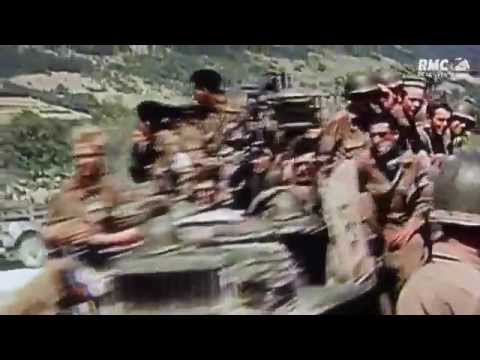
Video from the channel Théo Aviation about Douglas DC-3, linked on its Above Ten Thousand entry. Duration: 12:31. Language: French. Video type: Documentary.
What it's about
Third of four parts of a report on the DC-3 and its military version, the C-47. It covers commercial aviation in the 1930s, the aircraft's conversion for war, its role in the Normandy landings and its second civilian life after 1945.
Historical context
In 1935 around 2,000 women applied for the 43 stewardess positions TWA offered. They were required to be between 1.52 and 1.62 m tall and weigh between 45 and 53 kg. They trained in meteorology and aerodynamics, had to reassure passengers who had never flown, and carried train timetables in case bad weather forced a landing. In 1939, 350 DC-3s left the Douglas factory, and it is estimated that 80% of the aircraft flying over the United States were DC-2s or DC-3s. After the United States entered the war in December 1941, the army chose the DC-3. It only needed a cargo door added and the floor adapted for heavy loads, and it became known as the C-47. The Royal Air Force named it the Dakota.
Key facts
In 1944 a C-47 left the assembly lines every 34 minutes. It could carry a one-tonne jeep or 28 soldiers, and in Burma an RAF Dakota once evacuated 65 wounded. Eisenhower considered it essential to the Allied victory. On the eve of the landings it dropped paratroopers about 8 km inland and afterwards served as an air ambulance. In 1945 thousands of military aircraft ended up scrapped, but the C-47 returned to civilian life. In 1946 around 1,500 DC-3s covered short routes and allowed small airlines to offer cheap tickets. One of them, 69 years old, still carries 1,300 tonnes of goods a year to Santa Catalina Island, in California. The part ends with the Soviet blockade of Berlin, which began on 24 June 1948.