Fighter · Military · France
Dassault Rafale
- In service
- Status
Dassault Rafale in the news
September 14, 2026
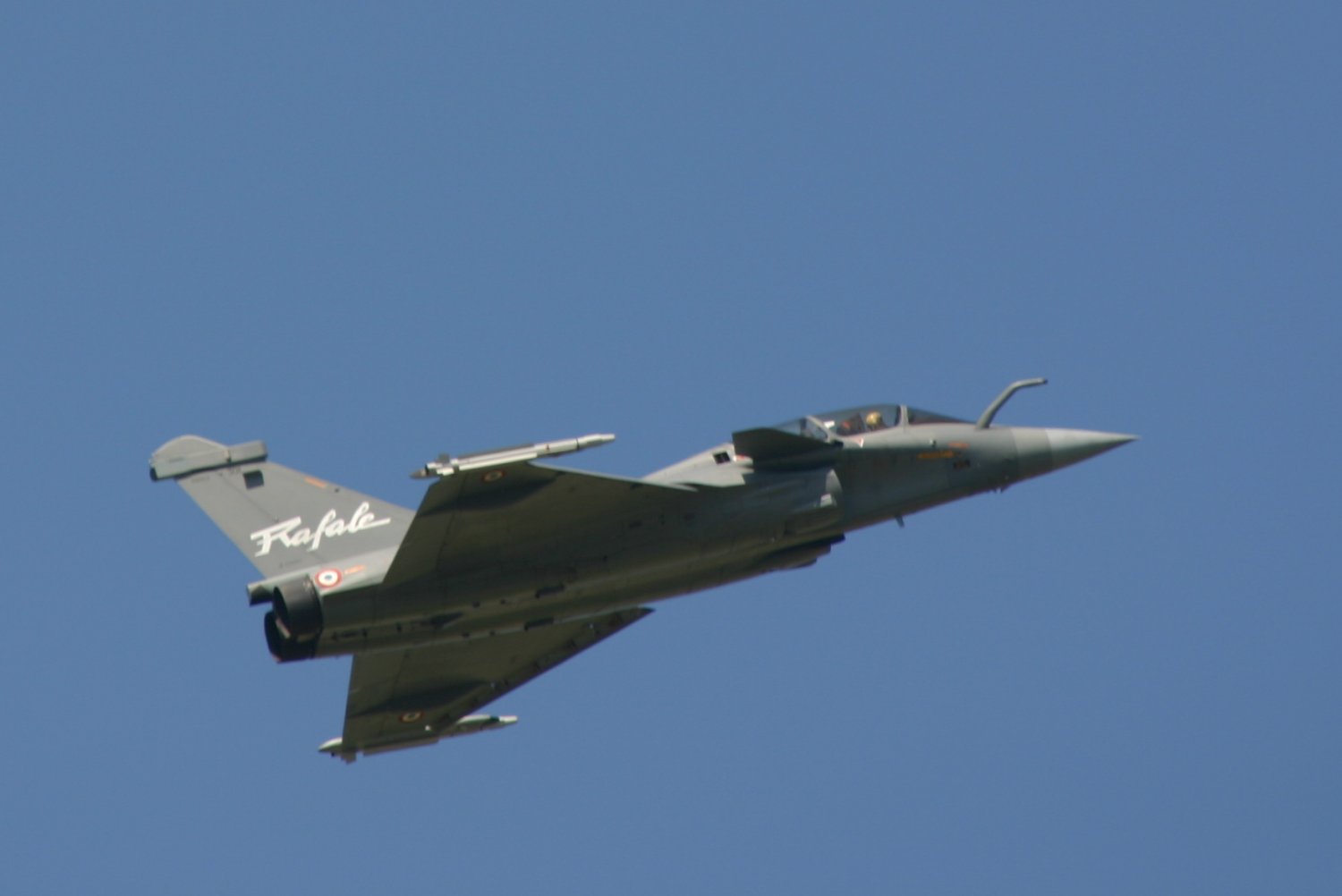
Without FCAS, the Dassault Rafale remains without a successor for now. So France is radically upgrading the jet: new radar, more thrust, digital self-defence. The details of the F5 programme.
August 29, 2026
.jpg)
This article was originally published on idrw.org. The possibility of integrating India’s upcoming BrahMos-NG supersonic cruise missile onto the Dassault Rafale has generated considerable... Read…
August 27, 2026
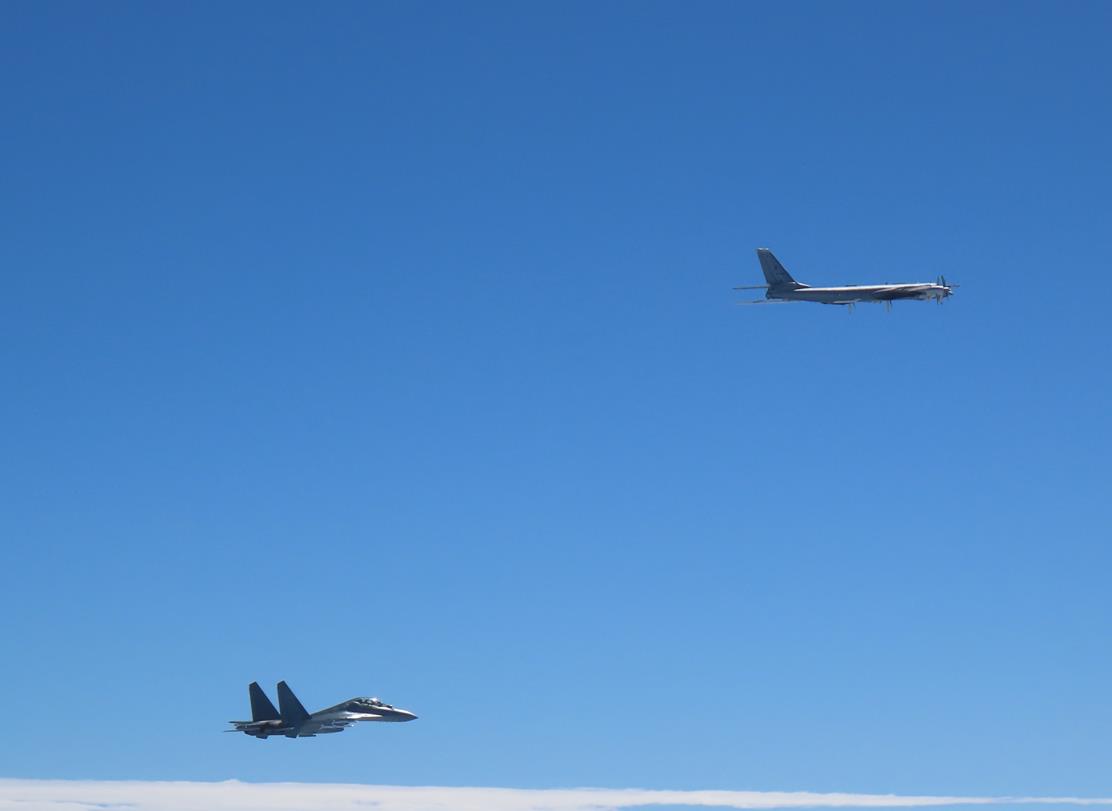
Six heavy Chinese Shenyang J-16 multirole fighters took part in aerial combat drills with French-built Dassault Rafale jets

August 7, 2026
.jpg)
The Indian Air Force (IAF) wrote a new chapter in its history by deploying the Dassault Rafale fighter for the first time at Exercise Pitch Black 2026, the traditional…
August 1, 2026
.jpg)
This report was originally published on IDRW.org. More than a decade after the Indian Air Force (IAF) selected the Dassault Rafale as the winner... The post Rafale or Eurofighter? Revisiting India’s…

-1600.webp)


-1600.webp)
-1600.webp)
-1600.webp)


-1600.webp)
-1600.webp)
-1600.webp)


-1600.webp)

_080719-N-4519D-010-1600.webp)
-1600.webp)
-1600.webp)
-1600.webp)
-1600.webp)


-1600.webp)
-1600.webp)


-1600.webp)

-1600.webp)
-1600.webp)

-1600.webp)
-1600.webp)
-1600.webp)
-1600.webp)


-1600.webp)


-1600.webp)
-1600.webp)
-1600.webp)


-1600.webp)

-1600.webp)


-1600.webp)
-1600.webp)
-1600.webp)
-1600.webp)


-1600.webp)
-1600.webp)
-1600.webp)
-1600.webp)


The Dassault Rafale is the twin-engine, canard-delta multirole fighter that forms the backbone of French combat aviation today, serving both the Air and Space Force and the carrier-borne aviation of the French Navy. Its name means "gust" or "burst", and Dassault markets it as an "omnirole" aircraft: the same airframe and crew can switch, within a single sortie, between air superiority, ground attack, reconnaissance, anti-ship strike and nuclear deterrence. It is also unusual among the European fighters of its generation in being almost entirely national: airframe, engines, radar, electronic warfare suite and weapons were designed and are built in France, with Dassault, Thales and Safran as the industrial pillars. The programme grew out of France's decision in 1985 to walk away from the joint European fighter that would become the Eurofighter Typhoon, after disagreements over workshare and over what kind of aircraft each partner actually needed. Dassault had already been maturing its own demonstrator, the Rafale A, which first flew from Istres on 4 July 1986 and spent eight years validating the aerodynamic formula and the Snecma M88 engine. From it came the three production versions: the single-seat land-based Rafale C, the two-seat Rafale B and the navalised Rafale M, strengthened for catapult launches and arrested landings. The end of the Cold War stretched the road to service. Originally expected in the mid-1990s, the aircraft suffered budget cuts and postponements and did not enter service until 2001, when the Navy's Flottille 12F received its first Rafale Ms; the Air Force stood up its first squadron in 2006. Since then the Rafale has matured through successive "standards" (F1, F2, F3, F3R and F4, with F5 in development) that have added air-to-ground capability, the nuclear ASMP-A mission, the RBE2 AA active electronically scanned array radar and the Meteor missile. In combat it has flown over Afghanistan, Libya, Mali, Iraq and Syria, and has been used by India against Pakistan. The 2011 Libyan campaign was particularly telling: thanks to its SPECTRA self-protection suite the Rafale operated without dedicated defence-suppression aircraft, and its performance became a sales argument. After a long export drought, Egypt became the first foreign customer in 2015, followed by Qatar, India, Greece, Croatia, the United Arab Emirates, Indonesia and Serbia, making the Rafale one of the most successful Western fighters of its generation on the international market. With a French fleet the government intends to bring to 225 operational aircraft by 2035 and a production line that Dassault is accelerating to meet export orders, the manufacturer expects the Rafale to remain the fighter of the French armed forces beyond 2060, and its evolution continues with the F5 standard and an accompanying unmanned combat aircraft.
Related events
Category
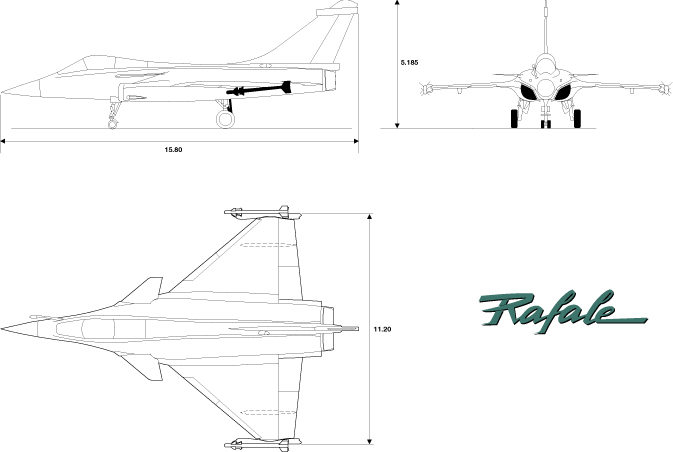
Three-view drawing
History
Origins: from European cooperation to a national path
In the mid-1970s the French Air Force and Navy each needed a new generation of fighters to replace a patchwork of ageing or soon-to-be-delivered types. Because their needs overlapped, the two services issued a joint request for proposals, and in 1975 the Ministry of Aviation began studies for an aircraft that would complement the smaller Mirage 2000, each type being optimised for different roles.
The project first went the multinational route. In 1979 Dassault-Breguet joined the MBB/BAe European Collaborative Fighter, renamed European Combat Aircraft, contributing the aerodynamic layout of a twin-engine single-seater; it collapsed in 1981 over divergent operational requirements. In 1983 the Future European Fighter Aircraft brought together France, Italy, Spain, West Germany and the United Kingdom, but the visions were irreconcilable: Paris wanted a light, multirole aircraft that could also fly from carriers and sell abroad, and demanded industrial leadership; London wanted a heavy long-range interceptor. France left the talks in July 1985 to safeguard the technological independence of its fighter industry; on 2 August 1985, in Turin, West Germany, the UK and Italy agreed to proceed with the European Fighter Aircraft, which Spain rejoined in September despite French pressure. That programme became the Eurofighter Typhoon.
.jpg)
The French Ministry of Defence pressed on alone with a demanding specification: an air-to-air and air-to-ground aircraft able to operate day and night and in bad weather, replacing the Jaguar, the Mirage F1 and Mirage 2000 families in the Air Force and the F-8 Crusader, Étendard IVP/M and Super Étendard in naval aviation.
The Rafale A demonstrator
While Europe negotiated, Dassault-Breguet was designing its Avion de Combat Expérimental (ACX). In late 1978 it had received contracts for the ACT 92 project, and the following year ONERA studied candidate configurations under the codename Rapace. By March 1980 four remained, two of them with canards, a delta wing and a single fin. On 13 April 1983 the government awarded a contract for two technology demonstrators, later cut to one, with the cost split equally between state and industry and a first flight set for 1986. To stay close to the European partners, the ACX was sized in the 9.5-tonne class; after the split, the design was made more compact, as the Air Force wanted. The programme was renamed Rafale in April 1985.
Construction of the Rafale A began in 1984. It was 15.8 m long with an 11 m span and a 9.5 t empty weight, an austere machine with minimal cockpit systems and fly-by-wire controls, built to validate the airframe and the aerodynamically unstable delta-canard formula. It was Dassault's 92nd prototype in forty years. Because the M88 was not yet available it used two General Electric F404 engines of 68.8 kN, the powerplant of the F/A-18 Hornet. Rolled out at Saint-Cloud in December 1985, it first flew from Istres on 4 July 1986 with Guy Mitaux-Maurouard at the controls: in an hour it reached 11,000 m and Mach 1.3, and the next month it was on show at Farnborough. The test programme included approaches to the carrier Clemenceau and trials with Foch, and by 1987 Air Force, Navy and CEV pilots had all flown it. In early 1990 its port engine was replaced by a 72.9 kN M88, with which it flew in May 1990 and reached Mach 1.4 without reheat, demonstrating supercruise. It was retired in January 1994 after 867 sorties.
The demonstrator's success gave the government confidence: in June 1987 Prime Minister Jacques Chirac announced the project would go ahead, and on 21 April 1988 four pre-production aircraft (one C, two Ms and one B) were ordered. The estimated total development and procurement bill of some 120 billion 1988 francs worried the executive; Prime Minister Michel Rocard regretted the failure to find partners (Belgium, Denmark, the Netherlands and Norway had been approached without success) but declared it inconceivable that France should be unable to build the weapons its independence required.
Prototypes and testing
The Air Force asked for two versions: the single-seat Rafale C (chasseur) and the two-seat Rafale B (biplace). Prototype C01 flew on 19 May 1991 at Istres, opening a test programme focused on the M88-2 engine, the man-machine interface, weapons and envelope expansion; the second single-seater was never built for budget reasons. Compared with the demonstrator the prototype was smaller (15.3 m long, 10.9 m span), with a gold-coated canopy and radar-absorbent materials to cut its signature, and without the dedicated airbrake. The sole pre-production two-seater, B01, flew on 30 April 1993 and served as a testbed for weapons, fire control, the RBE2 radar and the SPECTRA suite.
.jpg)
The first naval prototype, M01, flew on 12 December 1991 and the second on 8 November 1993. Their reinforced structure, arrestor hook and built-in ladder added 500 kg over the other versions. As France has no land-based catapult, trials were held in 1992 and 1993 at the US Navy facility at Lakehurst, New Jersey; in April 1993 the aircraft operated from Foch and in July 1999 it landed on and launched from the nuclear-powered carrier Charles de Gaulle, showing it could recover with substantial loads of unexpended ordnance.
Production, cuts and entry into service
The Gulf War changed priorities: the two-seater, conceived as a trainer, showed that a second crew member was invaluable in strike and reconnaissance, and the Air Force decided that 60 percent of its fleet would be Rafale Bs. Its plans went from 250 aircraft to 234 (95 C and 139 B) and then to 212; the Navy, which had wanted 86, came down to 60 (25 single-seat Ms and 35 two-seat Ns) and eventually cancelled the naval two-seater.
The Rafale was designed virtually with CATIA, the Dassault Systèmes CAD/CAM suite that became an industry standard: digital mock-ups, product data management and 15 GB databases for each component that also simplified maintenance. Production of the first batch formally started in December 1992, was suspended in November 1995 amid political and economic uncertainty, and resumed in January 1997 when the ministry and Dassault agreed a 48-aircraft run (28 firm and 20 options) for delivery between 2002 and 2007. A further 59 Rafale F3s were announced in December 2004 and another 60 in November 2009, bringing the total for both services to 180.
.jpg)
The aircraft is built almost entirely in France: fuselage in Paris, wings at Martignas, fins at Biarritz and final assembly at Mérignac near Bordeaux. Dassault performs 60 percent of the work, Thales 25 percent and Safran 15 percent, supported by 500 subcontractors and 7,000 direct and indirect jobs. In 2012 each fighter took 24 months to build at a rate of eleven a year.
Service entry had originally been planned for 1995. Development ran on time and on budget, but with the Soviet Union gone the government trimmed orders, driving up costs and delaying service entry. The Navy even studied second-hand F/A-18s to relieve its F-8s, but the government insisted on an all-Rafale fleet and in return gave naval deliveries priority. The first production Rafale B flew on 24 November 1998 and the first M on 7 July 1999.
In December 2000 naval aviation received its first two Rafale Ms; on 18 May 2001 Flottille 12F, formerly an F-8 Crusader unit, was reactivated as the first squadron on the type and immediately took part in exercise Trident d'Or aboard Charles de Gaulle. After almost four years of work-up the Rafale M was declared operational in June 2004. The Air Force received its first three F2-standard Rafale Bs in April 2005 at the CEAM at Mont-de-Marsan, and Escadron de Chasse 1/7 at Saint-Dizier formed the first operational squadron in June 2006, with a second in 2008.
Design
Dassault paired a delta wing with active close-coupled canards to maximise agility. The airframe is aerodynamically unstable and relies on digital fly-by-wire; it is cleared from −3.6 g to 9 g, with 11 g in an emergency. The canards bring the minimum landing speed down to 115 knots, and the manufacturer's simulations suggest it could operate from ski-jump STOBAR carriers without modification. The Rafale M has a reinforced undercarriage, an arrestor hook, a nose leg that extends for catapult launches, a built-in ladder, a microwave carrier landing system and the fin-tip Telemir system for aligning the inertial navigation with the ship; all of this adds 500 kg, yet it keeps 95 percent commonality with the land-based versions and, unusually for a carrier aircraft, has no folding wings, a trade-off the size of Charles de Gaulle made possible.
.jpg)
It is not a stealth aircraft (the cost was judged unacceptable), but its radar and infrared signatures were reduced with a smaller fin, a reshaped fuselage, intakes under the wing, serrated trailing edges and extensive composites covering 70 percent of the surface. The cockpit was built around data fusion: a central computer prioritises what appears on a wide-angle holographic head-up display, two multifunction displays and a central collimated display, with direct voice input (excluded from safety-critical functions such as weapon release), HOTAS controls with a side-stick, a zero-zero Martin-Baker Mk 16F seat reclined at 29 degrees and an on-board oxygen generator.
The avionics are organised around the MDPU modular data processing unit, an integrated modular architecture hosting flight management, data fusion, fire control and the crew interface; radar, communications and self-protection account for about 30 percent of the aircraft's cost. The SPECTRA suite, developed by Thales and MBDA, integrates detection, jamming and decoys and can be reprogrammed against new threats. The original radar was the passively scanned RBE2, whose technical troubles delayed the programme by six months in 1994. It has been superseded by the active-array RBE2 AA, with a 200 km detection range and lower maintenance; the first aircraft so equipped reached Mont-de-Marsan in October 2012. Thales's OSF front-sector optronics, working in visible and infrared, allow the MICA IR to be used beyond visual range and identify air, ground and naval targets.
The two Snecma M88s deliver 50 kN dry and 75 kN in afterburner, with a clean combustor, single-crystal blades and powder-metallurgy discs, and allow supercruise with four missiles and a belly tank. The M88-2 completed qualification in 1996 and the lower-maintenance M88-4E first flew in May 2010. The aircraft has 14 hardpoints (13 on the M) for up to 9,500 kg of external load, a 30 mm GIAT 30 cannon with 125 rounds and, through its MIL-STD-1760 interface, a broad arsenal: MICA EM/IR and Meteor air-to-air missiles, SCALP EG, AASM Hammer, Paveway guided bombs, the AM39 Exocet anti-ship missile and the nuclear ASMP-A, plus the Damocles, Talios and Areos pods.
The standards: from F1 to F5
The first Rafale Ms were delivered to the air-to-air-only F1 standard, operational in 2004. F2 added air-to-ground capability; the first M to that standard reached the Navy in May 2006. In February 2004 the ministry had awarded a €3.1 billion contract to develop the full F3, shared between Dassault, Snecma, Thales and others; F3, nuclear-capable and carrying the Areos pod, was certified in July 2008 and has been delivered since, with all earlier aircraft being brought up to it. In 2010 France ordered 200 Meteor missiles. In January 2014 the F3R standard, integrating the Meteor, was funded; it was validated in 2018. F4 was launched on 20 March 2017 and entered development in 2019 with radar and sensor upgrades to detect stealthy targets at long range, a helmet-mounted display and networked communications; the first F4.1 aircraft was delivered in March 2023. F5 is to bring more powerful engines, the hypersonic nuclear ASN4G, the RBE2 XG radar and an accompanying unmanned combat aircraft of more than ten tonnes; in April 2026 the United Arab Emirates withdrew from the agreement under which it was to contribute about €3.5 billion to its development, which France must now fund alone.
.jpg)
The total programme cost as of fiscal 2013 was around €45.9 billion, or roughly €160.5 million per aircraft including forty years of development; the flyaway price of an F3+ was €101.1 million in 2010. In 2018 Dassault unveiled the successor, the New Generation Fighter with Airbus, meant to replace the Rafale, Germany's Typhoon and Spain's F/A-18s between 2030 and 2040; in June 2026 that programme was announced cancelled. The Rafale is to remain France's primary fighter until at least 2040 and, according to its manufacturer, beyond 2060.
French operational history
The baptism of fire came early but without a shot: in 2002 seven Rafale Ms embarked on Charles de Gaulle for Mission Héraclès over Afghanistan, though the F1 standard barred them from ground attack; in June 2002 they patrolled near the India-Pakistan border. In 2007 a crash programme fitted six aircraft with laser-guided bombs: three Air Force jets deployed to Dushanbe in Tajikistan and three naval ones to the carrier. The first mission took place on 12 March 2007 and on 28 March a Rafale dropped its first GBU-12 in support of Dutch troops in southern Afghanistan, its combat debut. Between January 2009 and December 2011 at least three Rafales operated from Kandahar.
On 19 March 2011 Rafales opened Opération Harmattan over Libya by striking the artillery besieging Benghazi, without SEAD escort thanks to SPECTRA; on 24 March one destroyed a Libyan G-2 Galeb on the runway. Sorties lasted six hours with four MICAs, four or six AASMs, a Damocles pod and two tanks, and needed several in-flight refuellings. In January 2013, during Opération Serval, four Rafales took off from France on 13 January to hit camps and depots at Gao in Mali. From September 2014 Opération Chammal took them over Iraq from Al Dhafra, with the first strikes on 18 September near Zummar; in 2016 the Charles de Gaulle air wing bombed Islamic State, and in April 2018 five Rafale Bs of 1/4 Gascogne joined the strikes on Syria with two SCALPs each. On 13 April 2024 they shot down drones during the Iranian attack on Israel, and in the 2026 Iran war the Rafales deployed to the UAE had downed at least 60 drones by 20 March.
The Navy has exploited its interoperability with the US Navy: in 2008 six Rafales of 12F integrated into the USS Theodore Roosevelt air wing, on 4 June 2010 a Rafale became the first foreign fighter to have an engine changed aboard an American carrier, and in May 2018, in Operation Chesapeake, twelve aircraft of Flottilles 11F, 12F and 17F embarked with some 350 personnel on USS George H.W. Bush. In January 2025 the Charles de Gaulle group exercised with Indian Su-30MKIs and Jaguars during Mission Clemenceau 25.
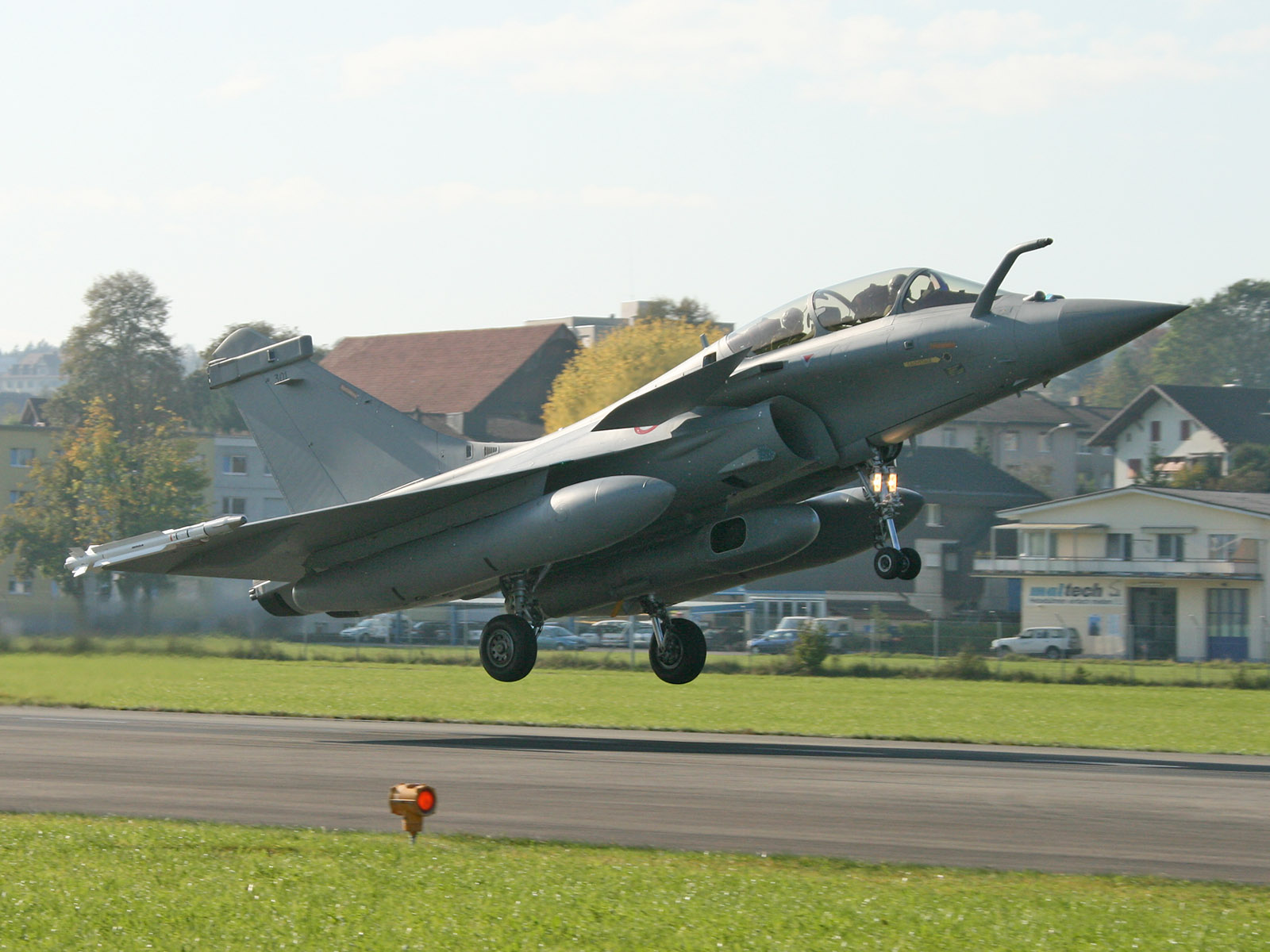
By 2026 France had received 189 Rafales, of which it sold twelve to Greece and twelve to Croatia; it operates about 165, 124 in the Air and Space Force and 41 in the Navy, and plans a total of 286 orders by 2035 to keep 225 in service, with an option for 30 more. In March 2025 Dassault announced it would move to three deliveries a month, and four between 2028 and 2029.
Exports
On 16 February 2015 Egypt became the first foreign customer with 24 aircraft (8 single-seat EMs and 16 two-seat DMs) in a US$5.9 billion package that included a FREMM frigate; the first three were handed over in July 2015, diverted from French production, and in May 2021 it ordered 30 more for $4.5 billion after the SCALP EG was made free of US components. Qatar announced 24 aircraft on 30 April 2015, signed a €6.3 billion contract on 4 May, exercised an option for twelve more on 7 December 2017 and received its first in February 2019; by 2023 it had all 36.
India named the Rafale preferred bidder in the 126-aircraft MRCA competition on 31 January 2012, but local production with HAL stalled and the tender was withdrawn on 30 July 2015. On 23 September 2016 a €7.8 billion contract was signed for 36 fly-away aircraft (28 EH and 8 DH): the first was handed over on 8 October 2019, the first five arrived on 27 July 2020 and the last in April 2022, equipping No. 17 Squadron at Ambala and No. 101 at Hasimara. In May 2025 Indian Rafales struck Pakistan with SCALP and AASM during Operation Sindoor; Pakistan claimed kills that India has not confirmed and the accounts remain contested. The Indian Navy signed on 28 April 2025 for 26 Rafale M F4s (22 carrier-capable and four two-seaters) for ₹63,887 crore, about €5.8 billion, with first deliveries in 2028; and on 12 February 2026 the Defence Acquisition Council cleared the purchase of a further 114 Rafale F4s (88 single-seat and 26 two-seat), 18 built in France and 96 in India.
Greece announced the purchase of 18 Rafales in August 2020 and signed on 25 January 2021 for €2.4 billion (six new and twelve used), adding six more in March 2022; the first arrived on 21 July 2021, the first six landed at Tanagra on 19 January 2022, the type entered service in September 2023 and all 24 had been delivered by January 2025. Croatia bought twelve used F3Rs (ten C and two B), announced on 28 May 2021 and contracted on 25 November 2021 for about €1 billion; it received the first on 2 October 2023 and the last on 25 April 2025, and in December 2025 signed a letter of intent to upgrade them to F4. The United Arab Emirates, after a decade of failed negotiations, signed on 3 December 2021 for 80 Rafale F4s, the first user of the standard outside France, and received the first in Paris on 29 January 2025, with the rest to follow from 2027. Indonesia signed on 10 February 2022 for 42 F4s (26 single-seat and 16 two-seat) in three tranches, received the first three at Bordeaux on 28 November 2025 and formally accepted them with three more on 18 May 2026 at Pekanbaru. Serbia announced on 8 April 2024 the purchase of twelve (nine single-seat and three two-seat) for €2.7 billion, with deliveries through 2029. In June 2025 Dassault agreed with Tata Advanced Systems to build fuselages in Hyderabad, the first time this will happen outside France.
Accidents
On 6 December 2007 an Air Force two-seater crashed on a training flight after the pilot became spatially disoriented and was killed. On 24 September 2009 two Rafale Ms collided in mid-air about 30 km from Perpignan while returning to Charles de Gaulle; test pilot François Duflot died. One M went into the Arabian Sea on 28 November 2010 after a fuel-tank switching error and another into the Mediterranean on 2 July 2012, both pilots ejecting safely. On 14 August 2024 two Rafale Bs from Saint-Dizier collided over Colombey-les-Belles: one pilot ejected and the two occupants of the second aircraft were killed.
Technical data
The C, B and M share a length of 15.27 m, a span of 10.90 m, a height of 5.34 m and a wing area of 45.7 m². Empty weight is 9,850 kg for the C, 10,300 kg for the B and 10,600 kg for the M; maximum take-off weight is 24,500 kg, with 4,700 kg of internal fuel in the single-seater. Maximum speed is 1,912 km/h (Mach 1.8) at altitude and 1,390 km/h at low level, combat range 1,056 km in a hi-lo-hi profile with three tanks, ferry range 3,700 km, service ceiling 15,835 m and rate of climb 304.8 m/s.
Variants
| Rafale A | Rafale C | Rafale M | Rafale B | Rafale DG | Rafale DH | Rafale DI | Rafale DM | Rafale DQ | Rafale EG | Rafale EH | Rafale EI | Rafale EM | Rafale EQ | Rafale MH | Rafale N | |
|---|---|---|---|---|---|---|---|---|---|---|---|---|---|---|---|---|
| First flight | July 4, 1986 | May 19, 1991 | December 12, 1991 | April 30, 1993 | — | — | — | — | — | — | — | — | — | — | — | — |
| Aircraft type | — | Single-seat land-based multirole fighter | — | — | — | — | — | — | — | — | — | — | — | — | — | — |
| Powerplant | — | Two Snecma M88-4e turbofans rated at 50 kN dry and 75 kN with afterburner each. | — | — | — | — | — | — | — | — | — | — | — | — | — | — |
| Powerplant | 2 × General Electric F404 (uno sustituido por Snecma M88 en 1990) | 2 × Snecma M88-4e | 2 × Snecma M88-4e | 2 × Snecma M88-4e | — | — | — | — | — | — | — | — | — | — | — | — |
| Thrust per engine | — | 75 kN Best value in this row | 75 kN Best value in this row | 75 kN Best value in this row | — | — | — | — | — | — | — | — | — | — | — | — |
| Length | — | 15.3 m Best value in this row | 15.3 m Best value in this row | 15.3 m Best value in this row | — | — | — | — | — | — | — | — | — | — | — | — |
| Wingspan | — | 10.9 m Best value in this row | 10.9 m Best value in this row | 10.9 m Best value in this row | — | — | — | — | — | — | — | — | — | — | — | — |
| Height | — | 5.3 m Best value in this row | 5.3 m Best value in this row | 5.3 m Best value in this row | — | — | — | — | — | — | — | — | — | — | — | — |
| Wing area | — | 45.7 m² Best value in this row | 45.7 m² Best value in this row | 45.7 m² Best value in this row | — | — | — | — | — | — | — | — | — | — | — | — |
| Empty weight | — | 9,850 kg Best value in this row | 10,600 kg | 10,300 kg | — | — | — | — | — | — | — | — | — | — | — | — |
| MTOW | — | 24,500 kg Best value in this row | 24,500 kg Best value in this row | 24,500 kg Best value in this row | — | — | — | — | — | — | — | — | — | — | — | — |
| Top speed | — | 1,912 km/h Best value in this row | 1,912 km/h Best value in this row | 1,912 km/h Best value in this row | — | — | — | — | — | — | — | — | — | — | — | — |
| Service ceiling | — | 15,835 m Best value in this row | 15,835 m Best value in this row | 15,835 m Best value in this row | — | — | — | — | — | — | — | — | — | — | — | — |
| Initial climb rate | — | 305 m/s Best value in this row | 305 m/s Best value in this row | 305 m/s Best value in this row | — | — | — | — | — | — | — | — | — | — | — | — |
| Range | — | 3,700 km | — | — | — | — | — | — | — | — | — | — | — | — | — | — |
| Ferry range | — | 3,700 km Best value in this row | 3,700 km Best value in this row | 3,700 km Best value in this row | — | — | — | — | — | — | — | — | — | — | — | — |
| Combat radius | — | 1,056 km | — | — | — | — | — | — | — | — | — | — | — | — | — | — |
| Range conditions | — | Ferry range of 3,700 km with three drop tanks; hi-lo-hi combat radius of 1,056 km on a penetration mission with three tanks, two SCALP-EG and four MICA missiles. | — | — | — | — | — | — | — | — | — | — | — | — | — | — |
| Armament | — | One 30 mm GIAT 30/M791 cannon with 125 rounds and 14 external hardpoints carrying up to 9,500 kg of fuel and ordnance: MICA and Meteor air-to-air missiles, SCALP-EG cruise missiles, AASM guided bombs, Exocet anti-ship missiles and the ASMP-A nuclear missile. | — | — | — | — | — | — | — | — | — | — | — | — | — | — |
| Max weapons load | — | 9,500 kg | — | — | — | — | — | — | — | — | — | — | — | — | — | — |
| Payload | — | 0 kg | — | — | — | — | — | — | — | — | — | — | — | — | — | — |
| Cargo capacity | — | Carries no cargo or passengers: it is a single-seat fighter whose entire external capacity (9,500 kg) is devoted to weapons and drop tanks. | — | — | — | — | — | — | — | — | — | — | — | — | — | — |
| Crew | 1 Best value in this row | 1 Best value in this row | 1 Best value in this row | 2 | 2 | 2 | 2 | 2 | 2 | 1 Best value in this row | 1 Best value in this row | 1 Best value in this row | 1 Best value in this row | 1 Best value in this row | 1 Best value in this row | 2 |
| Passengers | — | 0 | — | — | — | — | — | — | — | — | — | — | — | — | — | — |
| Units built | 1 | — | — | — | — | 8 | — | — | — | — | 28 Best value in this row | — | — | — | — | — |
Images
Elsewhere
- Airliners.netDassault Rafale C, France - Air Force, over Peloponnese ↗
- Airliners.netDassault Rafale C, France - Air Force, in flight over Belgium ↗
- JetPhotosDassault Rafale C, France - Air Force ↗
- JetPhotosDassault Rafale C, France - Air Force ↗
- DVIDSUSS Theodore Roosevelt launches F-2 Rafale M fighter ↗
- DVIDSNorthern Edge 23-2: French Dassault Rafale ↗
- DVIDSIndian Air Force Rafale participates in Red Flag-Alaska 24-2 ↗
- Wikimedia CommonsDassault Rafale at Aero India 2015 ↗
- Wikimedia CommonsDassault Rafale Marine at Paris Air Show 2017 ↗
- Wikimedia CommonsPlanform of Dassault Rafale, Royal International Air Tattoo 2011 ↗
- FlickrFrench Air Force Dassault Rafale ↗
- FlickrDassault Rafale C in flight ↗
Show the 6 more
- Ministère des Armées (defense.gouv.fr)Rafale N°127 118-CF, Armée de l'Air ↗
- Planespotters.net348 Armée de l'Air (French Air Force) Dassault Rafale B ↗
- Planespotters.net308 Armée de l'Air (French Air Force) Dassault Rafale B ↗
- Wikimedia CommonsDassault Rafale 3-view line drawing ↗
- Wikimedia CommonsDassault Rafale B & C illustrated profile ↗
- ConceptBunnyDassault Rafale Cutaway Drawing ↗
Videos







![DASSAULT RAFALE, Crazy Agile Flights! ✈️ MAKS 2013 [Remastered]](https://i.ytimg.com/vi/evW2jX2CREc/hqdefault.jpg)




![Dassault Rafale Official Presentation - SIRPA AIR [French Air Force]](https://i.ytimg.com/vi/2NaC6zREymY/hqdefault.jpg)


![Indian Air Force - Dassault Rafale [HD]](https://i.ytimg.com/vi/ZNzefG2I_wQ/hqdefault.jpg)
![Dassault Rafale multi-role Fighter Aircraft - MMRCA contender [French]](https://i.ytimg.com/vi/oqbG7Qyl5Aw/hqdefault.jpg)
Did you know… about Dassault Rafale
- Why is the rafale so popular?
The Rafale sells because it is a proven, independent multirole fighter: one airframe handles air defence, strike, reconnaissance, carrier operations and…
- Why is the rafale so slow?
The Rafale is not slow: it reaches Mach 1.8 (about 1,915 km/h, 1,035 kn) at altitude and can supercruise near Mach 1.4 with a light load. It does give up the…
- How much does the rafale weight?
A Rafale weighs about 10 t (22,000 lb) empty in the single-seat C version, roughly 10.6 t for the carrier-borne Rafale M with its strengthened landing gear…
- Why is the rafale so good?
The Rafale's reputation rests on an 'omnirole' design: one airframe covering air defence, strike, reconnaissance, nuclear and carrier missions, often within a…
- Why is the rafale so expensive?
The Rafale is expensive because France developed it alone, without partners to share more than €40 billion of development cost, builds it at a low rate of two…