Airliner · Civil · United States
Boeing 737
- April 9, 1967
- First flight
- In service
- Status


The Boeing 737 is the single-aisle, narrow-body jetliner that Boeing has built at its Washington state factories since the late 1960s, and very probably the most widespread passenger jet ever made. It was conceived in 1964 to complement the three-engined 727 on short, low-density routes, and its decisive advantage over rivals was the fuselage cross-section inherited from the 707, wide enough for six seats abreast where competitors offered five. The first 737-100 flew on April 9, 1967, and launch customer Lufthansa put it into service in February 1968; the stretched 737-200, born from a United Airlines order, joined airline fleets in April of the same year and became the version that actually sold. Since then the design has evolved through four generations — Original, Classic, Next Generation and MAX — that replaced the low-bypass Pratt & Whitney JT8D turbofans with CFM56 engines and later with CFM LEAP-1B engines, covering roughly 85 to 215 passengers depending on the model. Beyond airliners, the 737 has spawned business jets (the Boeing Business Jet family), freighters and military aircraft such as the T-43 navigator trainer, the C-40 Clipper transport, the E-7 Wedgetail airborne early warning aircraft and the P-8 Poseidon maritime patrol aircraft. It remained the best-selling commercial aircraft until the Airbus A320 family overtook it in orders in October 2019, and by September 2026 it had collected 17,641 orders and 12,739 deliveries. Its recent history is overshadowed by two 737 MAX 8 crashes in 2018 and 2019, which killed 346 people and led to the worldwide grounding of the MAX from March 2019 to November 2020.
Related events
- First flight of the Boeing 737
- The FAA certifies the Boeing 737
- Lufthansa puts the Boeing 737 into commercial service
- First flight of the Boeing 737-300, start of the Classic series
- USAir receives the first Boeing 737-300
- First flight of the Boeing 737-700, start of the Next Generation
- Southwest Airlines introduces the Boeing 737 Next Generation
- Boeing delivers the 5,000th 737
- Boeing delivers the 7,000th 737
- First flight of the Boeing 737 MAX
- Malindo Air puts the first Boeing 737 MAX into service
- The 10,000th Boeing 737 rolls out
- The FAA grounds the Boeing 737 MAX
- The FAA lifts the Boeing 737 MAX grounding
Related sheets
Category
Boeing 737 in the news

Allegiant Air has exercised options to purchase six Boeing 737 MAX 8 aircraft under its 2021 agreement with Boeing, lifting its firm order to 56 jets. The aircraft are scheduled for delivery in 2028…
Tonight a Boeing 737-8 arrived in Palermo from Corfu and will be permanently based at the Sicilian airport. The new aircraft joins the four already based there for some…

Overnight, a Boeing 737-800 arrived in Turin from Thessaloniki and will be permanently based at the Piedmont airport. The new aircraft joins the three already based there for some time…
Directive affects 1,987 US-registered aircraft, but the required checks also apply to 737NGs operated in other countries
US airline Allegiant Air has strengthened its order of aircraft from Boeing with the acquisition of six more 737-8 aircraft, from the 737 MAX family, whose deliveries are expected for…


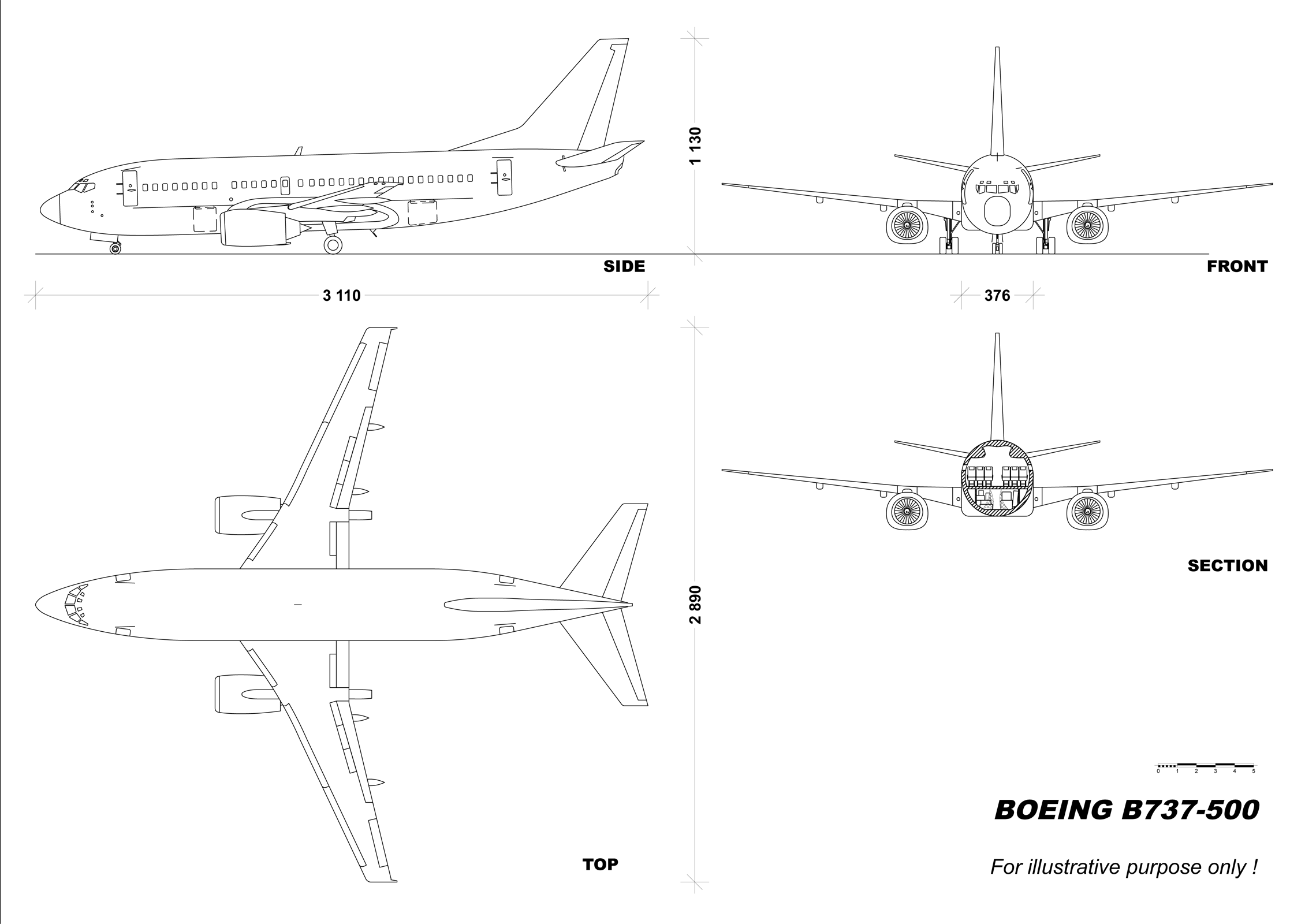
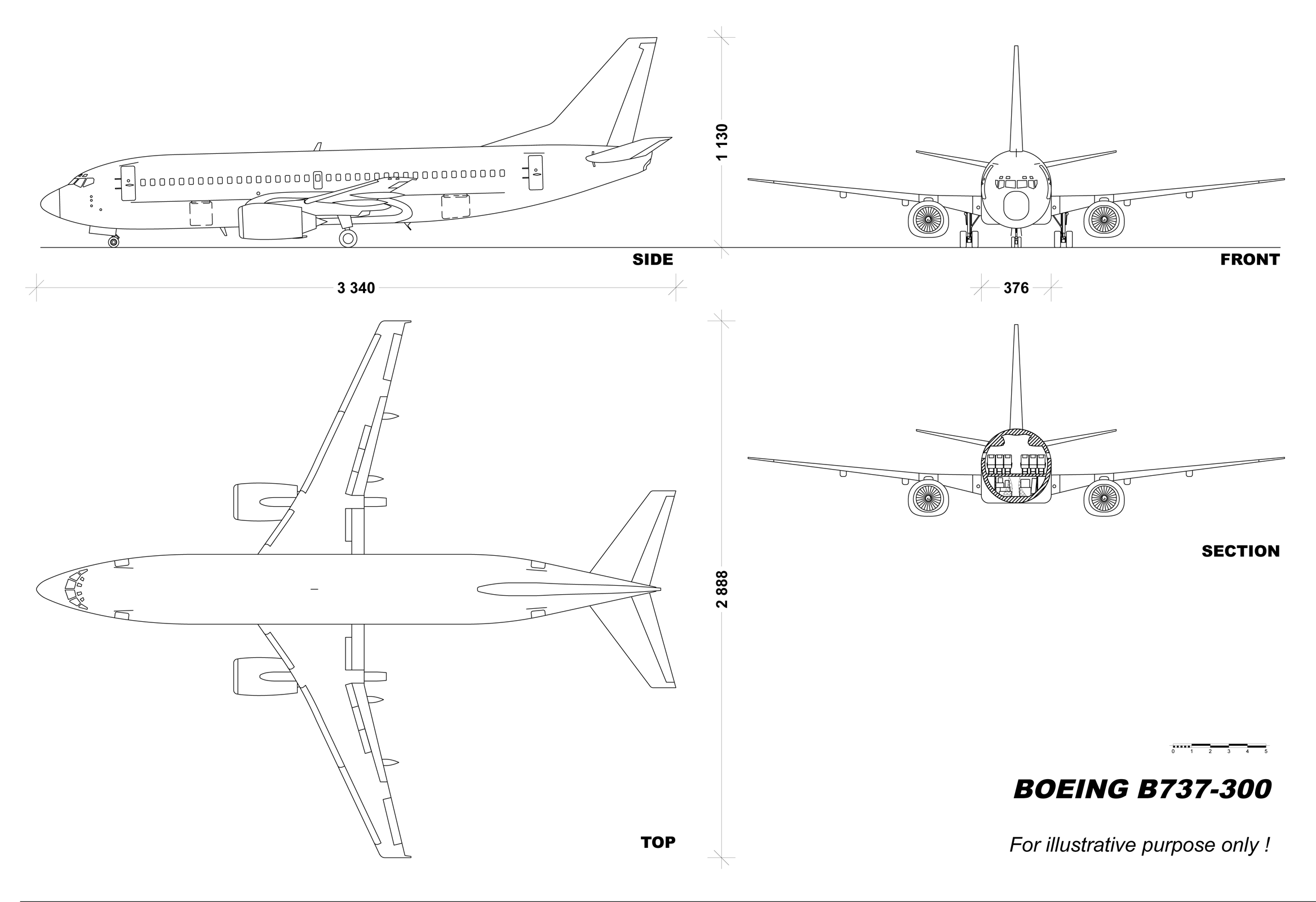
Three-view drawing

History
A jet for short routes
In the early 1960s Boeing led the long- and medium-haul jet market with the 707 and 727, but had nothing for short sectors. Its market research pointed to demand for a fifty-to-sixty-seat aircraft flying stages of 50 to 1,000 miles (100 to 1,600 km), and preliminary design began on May 11, 1964. Boeing was late: the SE 210 Caravelle had been flying airline services since 1955, while the BAC One-Eleven, the Douglas DC-9 and the Fokker F28 were already moving through certification.
The first concept looked much like its rivals, with engines podded on the rear fuselage, a 727-style T-tail and five-abreast seating. Engineer Joe Sutter moved the engines under the wings, which lightened the structure and made six-abreast seating easier to arrange. The nacelles were attached directly to the underside of the wing without pylons, so the landing gear could be shorter and the fuselage lower, easing access for passengers and baggage; with the engines gone from the tail, the horizontal stabilizer could sit on the fuselage itself rather than on top of the fin. Many shapes for the wing-to-engine junction were tried in the wind tunnel, and the best at high speed proved to be a fairly thick fairing that filled the narrow channels between wing and nacelle.
To save time Boeing reused 60% of the 727's structure and systems, above all the fuselage, which differed only in length. That 148-inch (3.76 m) cross-section, itself derived from the 707, was the new aircraft's main selling point. The wing sections were based on those of the 707 and 727 but somewhat thicker, and reshaping them near the nacelles cut drag substantially at high Mach numbers. The chosen engine was the low-bypass Pratt & Whitney JT8D-1 turbofan rated at 14,500 pounds of thrust (64 kN). Chief project engineer Jack Steiner unveiled the concept in October 1964 at the Air Transport Association maintenance and engineering conference, where its elaborate high-lift devices raised concerns about maintenance costs and dispatch reliability.
Launch: Lufthansa and United
Boeing's board approved a $150 million development programme on February 1, 1965, pitched on a simple promise: big-jet comfort on short-haul routes. On February 19 Lufthansa became launch customer with an order for 21 aircraft worth $67 million, after Boeing assured it the project would not be cancelled; consultations with the German airline over the preceding winter had raised the planned capacity to 100 seats.
On April 5, 1965, Boeing announced an order from United Airlines for 40 aircraft. United wanted a little more capacity, so the fuselage was stretched by 36 inches ahead of the wing and 40 inches behind it. The longer version became the 737-200 and the original short body the 737-100, with detailed design of both proceeding in parallel.
First flights and certification
The first 737-100 was rolled out on January 17, 1967, and made its maiden flight on April 9, 1967, flown by Brien Wygle and Lew Wallick. After flight testing, the US Federal Aviation Administration (FAA) issued Type Certificate A16WE on December 15, 1967. It was the first aircraft approved for Category II approaches — precision approaches with a decision height between 30 and 60 m — as part of its initial certification. Lufthansa took its first aircraft on December 28, 1967, and on February 10, 1968, became the first non-American airline to launch a new Boeing type.
The 737-200 was rolled out on June 29, 1967, flew on August 8 and was certified on December 21, 1967. United Airlines flew its first service on April 28, 1968, from Chicago to Grand Rapids, Michigan. Airlines clearly preferred the longer aircraft, and the improved 737-200 Advanced entered service with All Nippon Airways on May 20, 1971.
Lean years and a military rescue
Early sales were slow. The 737 first competed with the Caravelle and the One-Eleven, which had reached the market earlier, and later mainly with the McDonnell Douglas DC-9 and its MD-80 derivatives as the European twinjets faded away. After a peak of 114 deliveries in 1969, only 22 aircraft were shipped in 1972, with a backlog of just 19. The programme was kept alive by the US Air Force, which ordered T-43 trainers based on the 737-200, and by orders from African airlines, which kept the line running until the 1978 US Airline Deregulation Act boosted demand for six-abreast single-aisle aircraft. Re-engining with the CFM56 would increase that demand further.
737 Original: the -100 and -200
The first generation, later called the 737 Original and sometimes nicknamed the '737 Jurassic', comprises the -100 and -200. Only 30 -100s were built: 22 for Lufthansa, five for Malaysia–Singapore Airlines and two for Avianca, the last delivered on October 31, 1969. The original thrust reversers, borrowed from the 727's outboard nacelles, proved ineffective and tended to lift the aircraft off the runway when deployed, unloading the main wheels and weakening the brakes. A 1968 fix added a 48-inch tailpipe extension and new target-type reversers; it became standard on all aircraft from March 1969 and was offered as a retrofit, and together with longer fairings and improved flaps and slats it raised payload, range and short-field performance.
The prototype, N73700, went to NASA on July 26, 1973, and flew as N515NA for 30 years until September 27, 2003; it is now on display at the Museum of Flight in Seattle as the last surviving -100. The -200 became the standard model: the 200 Advanced, with better aerodynamics, automatic brakes, more powerful engines and more fuel, offered 15% more payload and range and became the production standard in June 1971. Convertible 200C (Combi) and 200QC (Quick Change) versions were also offered. The 1,114th and final -200 went to Xiamen Airlines in August 1988. Its short-field ability led Boeing to offer an unpaved strip kit, with a gravel deflector on the nose gear and a vortex dissipator ahead of each engine, which operators in Alaska and northern Canada used for decades.
Second generation: the 737 Classic
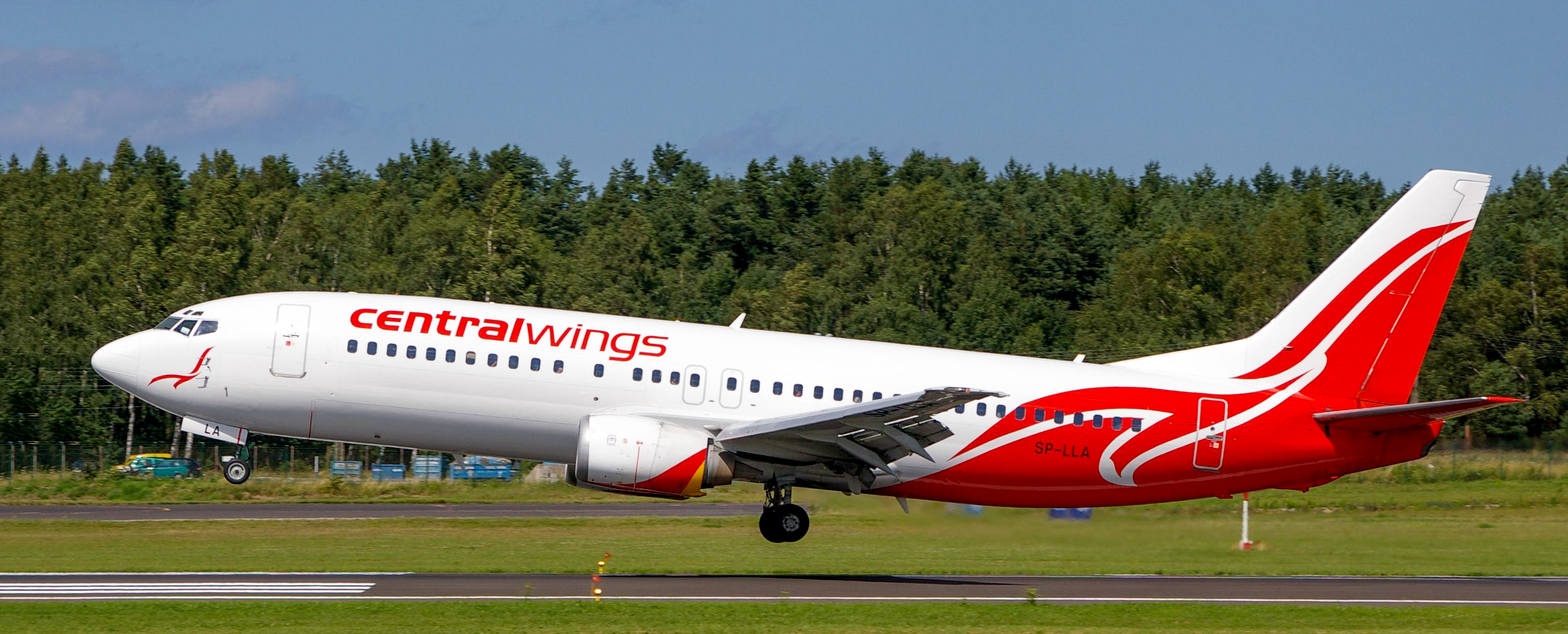
Work on the first major revision began in 1979, and preliminary specifications of the 737-300 were shown at Farnborough in 1980. The -300/-400/-500 series, later renamed 737 Classic, would compete with the MD-80, the derived MD-90 and the newly arrived Airbus A320 family. Engineer Mark Gregoire's team worked with CFM International to adapt the high-bypass CFM56-3B-1 turbofan, far more economical and quieter than the JT8D but larger in diameter — a serious problem on such a low aircraft. The answer was a smaller fan, an engine placed ahead of the wing and accessories moved to the sides of the nacelle, giving the intake its distinctive non-circular 'hamster pouch' shape.
The -300's fuselage was stretched by 2.87 m around the wing to seat 149 passengers; the wing gained extended tips and revised slats and flaps, the fin was redesigned, the flight deck offered optional electronic instruments (EFIS) and the cabin took improvements from the 757. The prototype, the 1,001st 737 built, flew on February 24, 1984, with Jim McRoberts at the controls. The 737-400, announced in June 1986, added another 3.0 m to reach 188 seats, with a tail bumper against tailstrikes and a strengthened wing spar; it flew on February 19, 1988, and entered service with Piedmont Airlines that October. The 737-500, launched in 1987 by Southwest Airlines as a direct replacement for the -200, flew on June 30, 1989, and was first delivered on February 28, 1990; its CFM56-3 engines made it 25 percent more fuel-efficient than the old -200. Boeing delivered 1,988 Classics between 1984 and 2000, the last two -400s going to CSA Czech Airlines on February 28, 2000. The fuel price spike of 2008 accelerated their retirement.
Third generation: Next Generation
By the early 1990s the A320 family had become a serious threat, winning traditional 737 customers such as Lufthansa and United. In November 1993 Boeing's board authorised the Next Generation (NG) programme: a redesigned wing with greater span and area, more fuel, longer range, higher maximum weights, higher-pressure-ratio CFM56-7 engines, a glass cockpit and new interiors. Its four models, -600 to -900, seat 108 to 215 passengers, and the CFM56-7 was 7% more fuel-efficient than the Classic's CFM56-3.
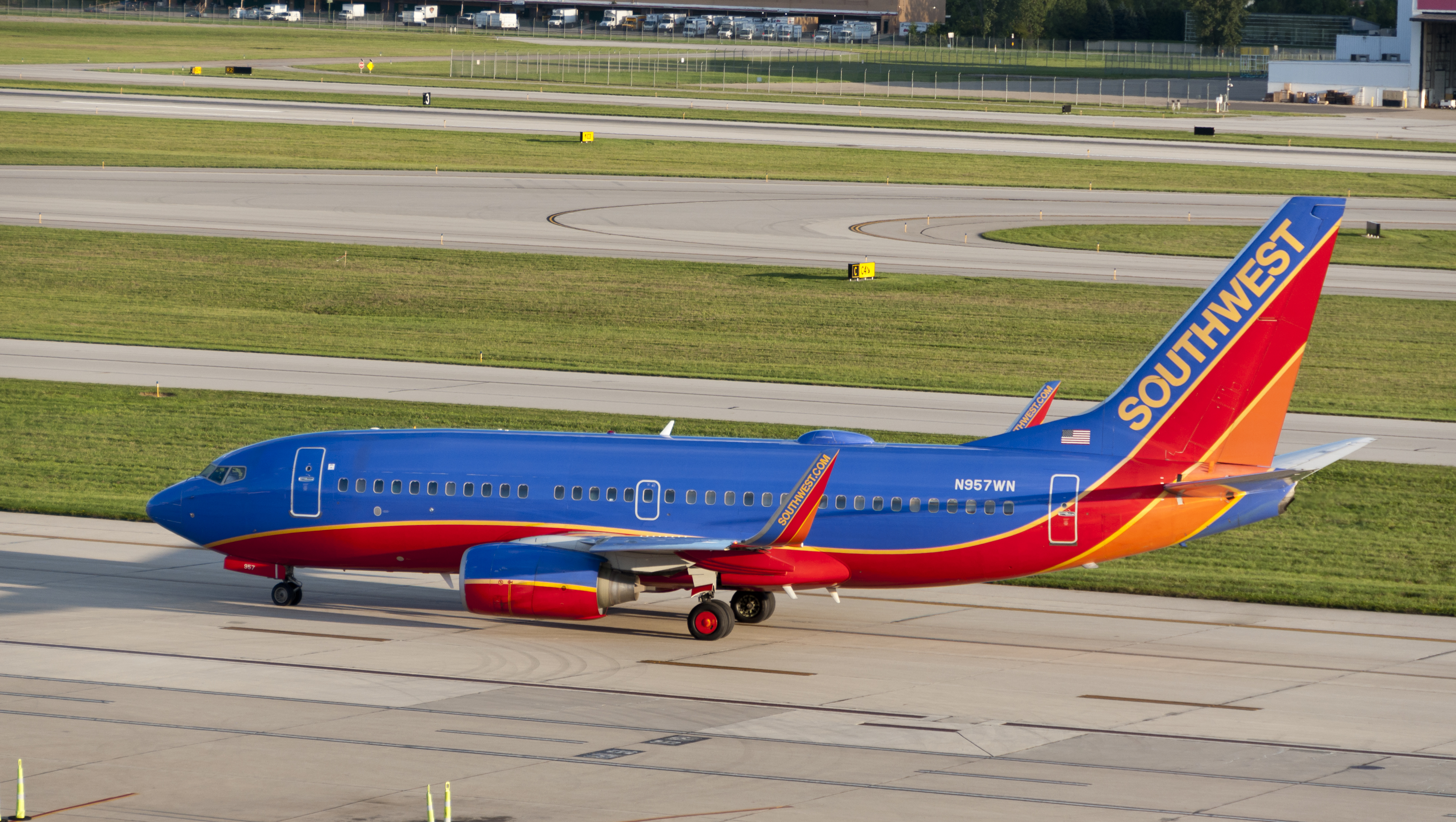
The -700, the first NG, was launched in November 1993, and Southwest Airlines received the first in December 1997. The stretched -800 was launched on September 5, 1994, flew on July 31, 1997, and reached Hapag-Lloyd Flug in April 1998; it became the most widely used narrow-body airliner and the A320's direct rival. The smallest -600 reached only 69 units; the -900 flew on August 3, 2000, and its -900ER variant, with an extra pair of exits and a flat rear pressure bulkhead, seated up to 220 and entered service with Lion Air in April 2007. After Boeing's 1997 merger with McDonnell Douglas the NG was left as the A320's only rival; by May 2019 the series had 7,097 orders and 7,031 deliveries.
Fourth generation: the 737 MAX
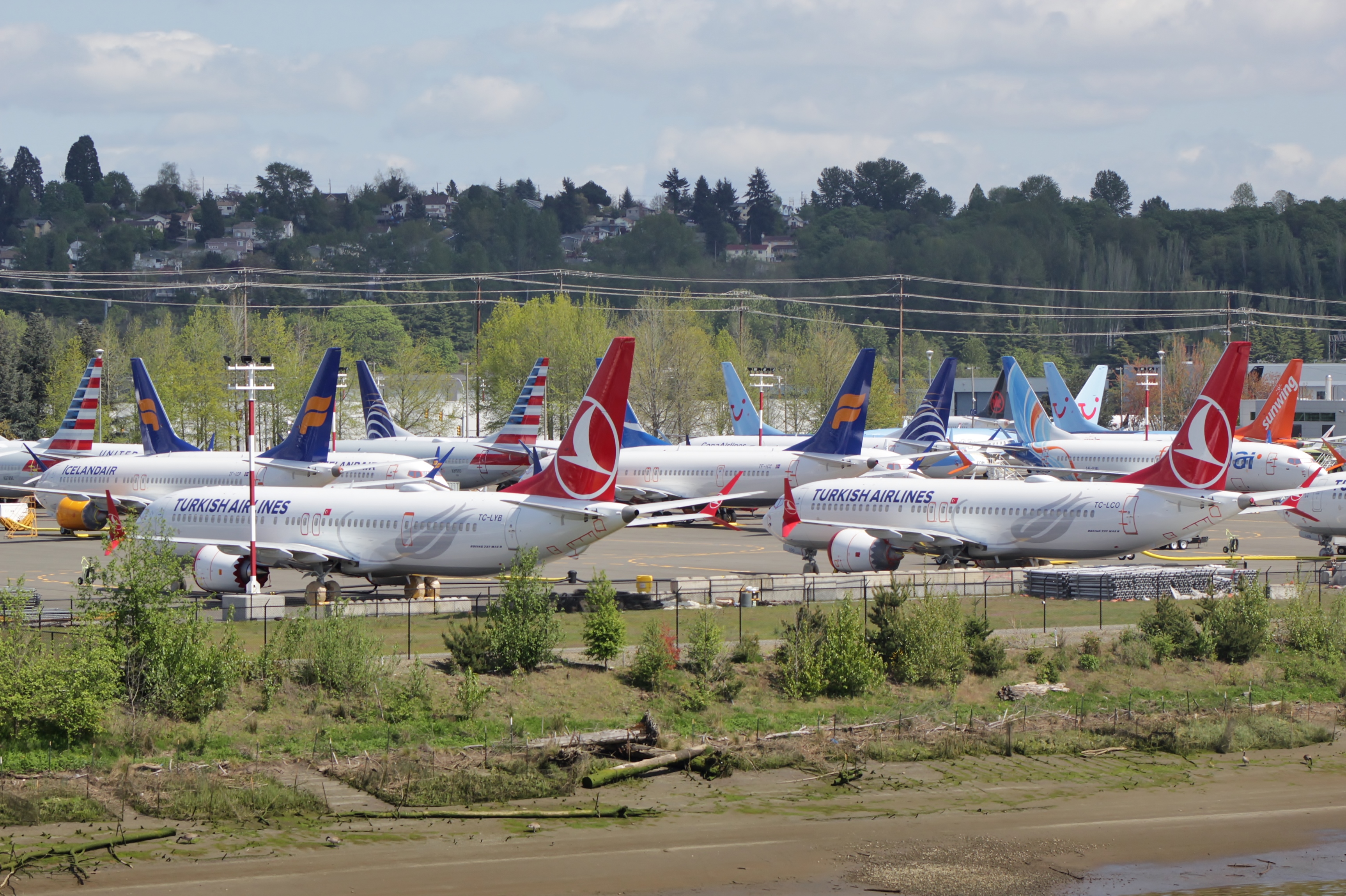
The A320neo family, launched in December 2010, reached 1,029 orders by June 2011 and broke Boeing's monopoly at American Airlines. Boeing's answer came on August 30, 2011: the 737 MAX, a re-engined NG with very-high-bypass CFM LEAP-1B turbofans with a 69-inch (1.76 m) fan, aerodynamic refinements such as split-tip winglets, and airframe changes. The MAX first flew on January 29, 2016, was certified by the FAA on March 8, 2017, and the first MAX 8 was delivered on May 6, 2017, to Lion Air subsidiary Malindo Air, which flew its first service on May 22. By January 2019 the series had 5,011 firm orders.
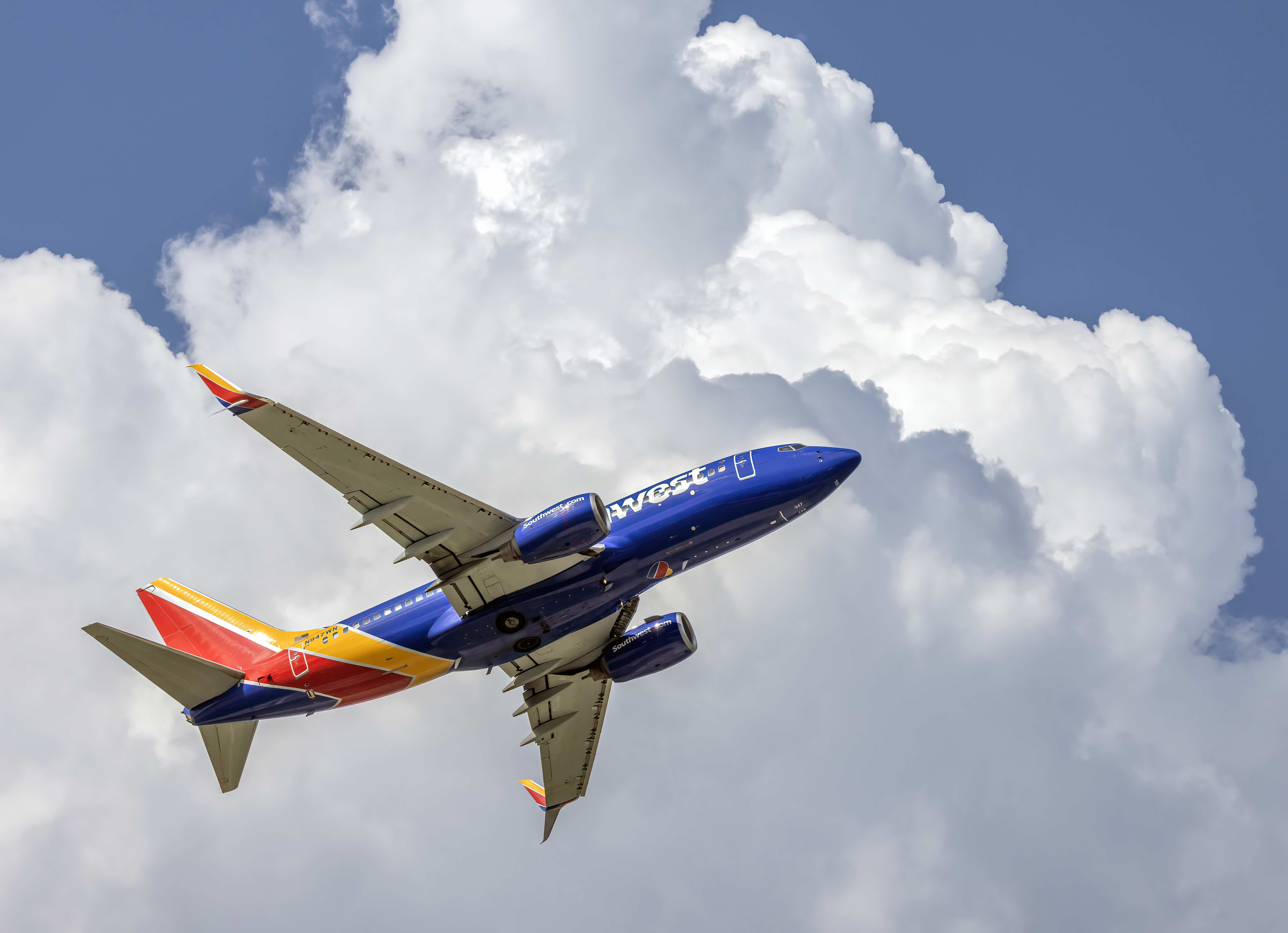
The family comprises the MAX 7, the MAX 8 — including the high-density MAX 200, launched in September 2014 and ordered by Ryanair — the MAX 9 and the MAX 10, stretched to take on the A321neo, which first flew on June 18, 2021, and is still awaiting certification. The FAA certified the MAX 7 on August 3, 2026. The flight deck adopted four 15.1-inch landscape displays derived from the 787 while keeping as much commonality as possible with earlier generations.
The MAX crisis
Lion Air Flight 610 crashed on October 29, 2018, and Ethiopian Airlines Flight 302 on March 10, 2019: two MAX 8s lost in similar circumstances, with 346 deaths in all. In both cases the Maneuvering Characteristics Augmentation System (MCAS) had activated — a system whose mention the FAA had allowed Boeing to remove from the flight manual in 2016. The FAA at first affirmed the aircraft's airworthiness, but on March 13, 2019, after 51 other regulators had acted, it grounded the type; by March 18 all 387 delivered aircraft were on the ground. Boeing suspended production in January 2020 and resumed it on May 27 that year.
The MAX's certification was investigated by Congress and several federal agencies, and engineering reviews uncovered further problems unrelated to MCAS in the flight computers and cockpit displays. On November 18, 2020, the FAA lifted the grounding after twenty months, the longest ever for a US airliner. Gol was the first airline in the world to resume passenger flights with the MAX, on December 9, 2020, and American Airlines the first in the United States, on December 29; Europe and Canada recertified it by January 2021. The cost to Boeing was estimated at $20 billion in fines, compensation and legal fees, plus more than $60 billion in indirect losses and some 1,200 cancelled orders.
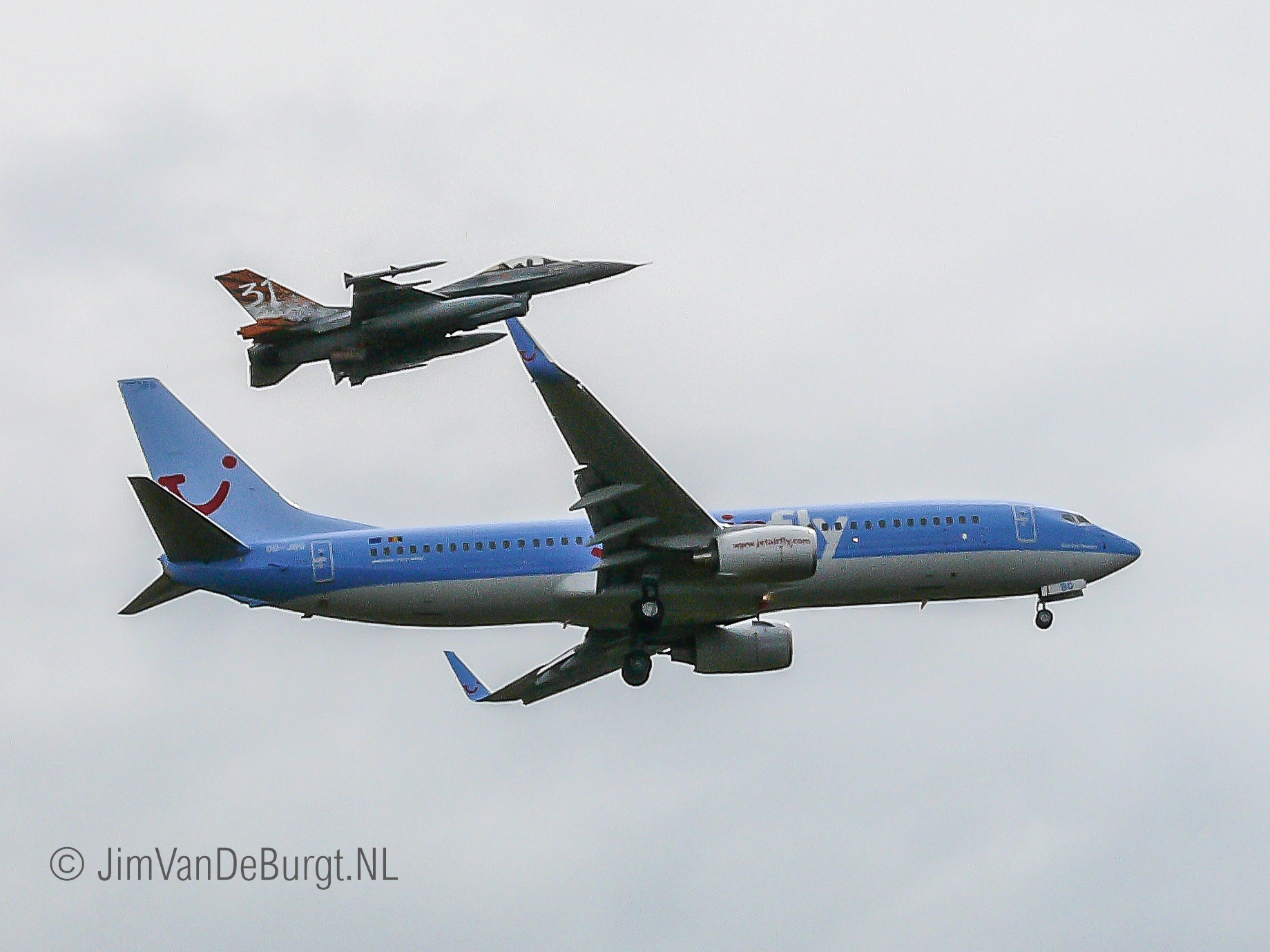
On January 5, 2024, Alaska Airlines Flight 1282 lost a plug covering an unused emergency exit in mid-flight, causing a rapid decompression. The FAA grounded some 171 MAX 9s with a similar configuration and said it would not approve any production increase until it was satisfied with stricter quality control; Boeing published its Safety & Quality Plan on May 30, 2024.
Design: a 1960s architecture
Across four generations the 737 has kept the same basic design. Its nose and fuselage section come from the 707 and 727, as did the 'eyebrow' windows above the glareshield, which were never meant for celestial navigation — only the military T-43A had a sextant port — and were dropped from the design in 2004. The aircraft was deliberately built low for the small airports of the late 1960s, which often lacked jet bridges and powered belt loaders, so passengers could board by airstairs and bags could be lifted into the holds by hand; that same low stance became an obstacle every time larger engines had to be fitted. The main gear retracts into the belly with the tyre sides exposed, and the 737 has no fuel dump system, Boeing having demonstrated an equivalent level of safety instead.
Flight controls are hydro-mechanical: steel cables carry the pilot's inputs to hydraulic boosters, unlike the fly-by-wire systems of the A320 or 777. After a total hydraulic failure the primary controls revert to manual mode through servo tabs moved by the pilot's own strength. The NG introduced a six-screen glass cockpit, and the MAX added fly-by-wire control only for the spoilers. Passenger cabins drew successively on the 757 and the 777, and the Boeing Sky Interior, with LED lighting and larger bins, debuted with Flydubai in late 2010.
Engines and wingtips
The flattened intakes of the Classic and NG are a direct result of fitting ever larger engines to such a low aircraft. The Classic's CFM56s were 25% more efficient than the JT8Ds and much quieter, and the MAX's LEAP-1Bs were expected to be 10 to 12% more efficient than the NG's CFM56-7Bs. The 737 has used four kinds of wingtip device: the -200 mini-winglets (certified in 2005), the blended winglets of the Classic and NG (standard on the NG since 2000, saving up to 5% of fuel), Aviation Partners' Split Scimitar winglets (available from 2014) and the MAX's Advanced Technology winglets.
Military and business versions
The US Air Force received nineteen T-43s in 1973 and 1974, flying classrooms for navigator training derived from the 737-200 that served for 37 years until 2010. Indonesia ordered three 737-2X9 Surveiller maritime patrol aircraft, delivered between May 1982 and October 1983, and Brazil flew two 737-2N3s as VC-96s. The NG gave rise to the C-40 Clipper transport for the US Navy and Air Force, the E-7 Wedgetail airborne early warning aircraft — with its dorsal MESA radar, ordered by Australia, Turkey and South Korea — and the P-8 Poseidon anti-submarine aircraft, based on the 737-800ERX. On the civil side, the first Boeing Business Jet was rolled out on August 11, 1998; it was followed by the BBJ2, launched on October 11, 1999, and first delivered on February 28, 2001, and by the BBJ3, based on the -900ER, with a range of up to 8,751 km. Since 2016 the 737-800BCF programme has converted passenger jets into freighters.
Rivalry with Airbus
From the Classic onwards the 737's great rival has been the A320 family, which entered service in 1988. Between March 1988 and December 2018 Boeing delivered 8,918 737s and Airbus 8,605 A320-family aircraft. The European family overtook the 737 in orders in October 2019 — the year 737 orders fell by 90% because of the MAX grounding — and in total deliveries in 2025: by September 2026 Airbus had delivered 12,900 A320s against 12,739 737s. The A220 at the small end and China's Comac C919 complete the competitive field.
Service, fleet and production
In 2006 more than 4,500 737s were flown by over 500 airlines to 1,200 destinations in 190 countries. By 2013 the fleet had carried more than 16.8 billion passengers on over 184 million flights, and in 2018 more than 7,500 were in service, with around 2,800 airborne at any moment and some three million passengers a day. In June 2021 there were 9,315 737s in service against 9,353 A320-family aircraft. As of June 2024 the largest operators were Southwest Airlines, Ryanair, United Airlines, American Airlines and Delta Air Lines. Fuselages are built in Wichita, Kansas, by Spirit AeroSystems and travel by rail to Washington, where Renton has three MAX assembly lines and Everett a fourth that started production in July 2026.
Safety record
By November 2023 the 737 family had been involved in 529 accidents and incidents, with 234 hull losses and 5,779 fatalities — figures that must be read against the size of the fleet. Boeing's analyses show the hull-loss rate per million departures falling generation by generation from the Original to the NG before rising again with the MAX accidents. In the 1990s a series of uncommanded rudder deflections on -200 and -300 aircraft caused two fatal accidents, United Airlines Flight 585 and USAir Flight 427, killing 157 people; the National Transportation Safety Board traced them to a design flaw, and the FAA ordered the rudder servo valves replaced on every 737 and introduced new pilot training protocols.
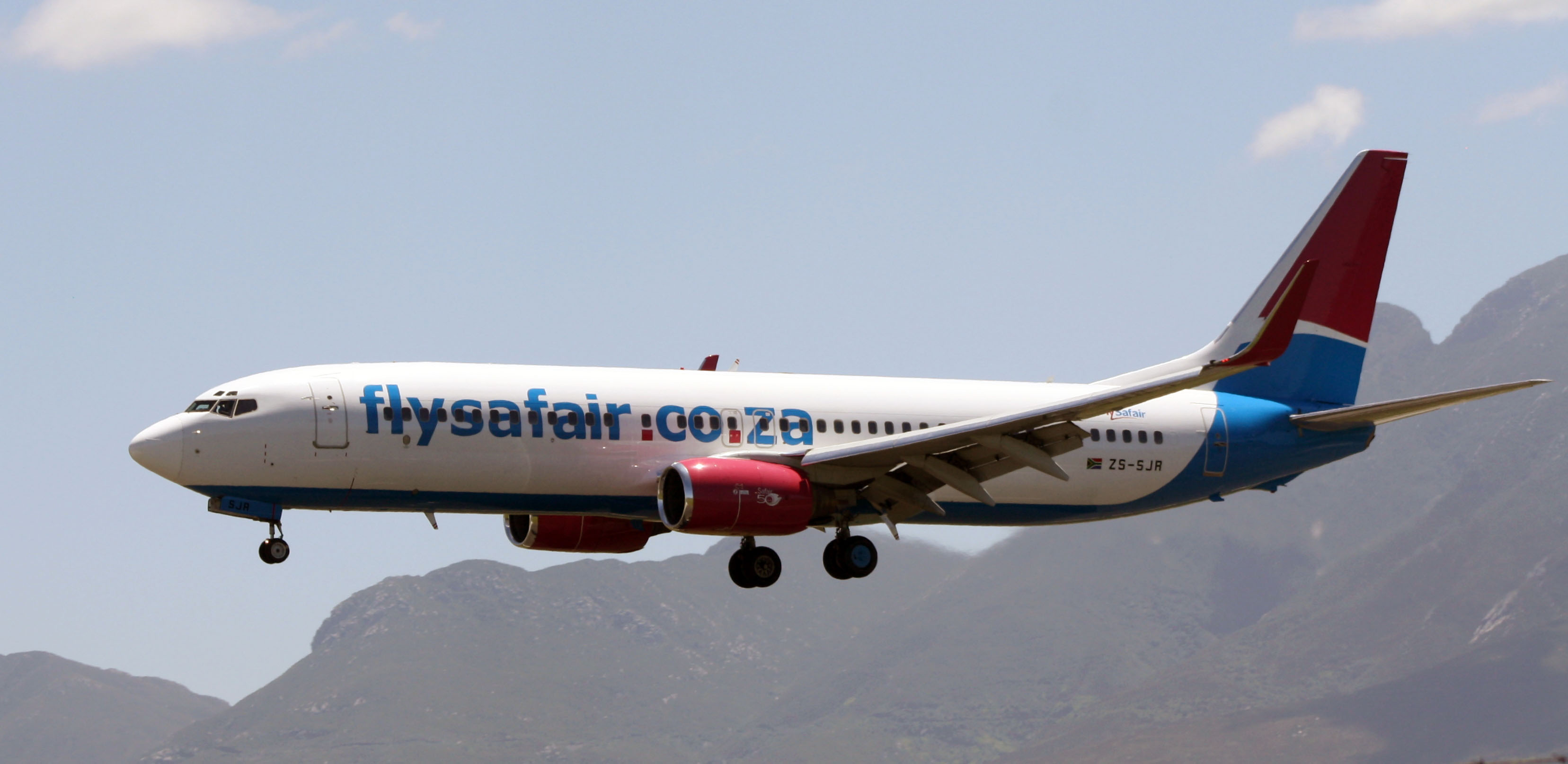
Variants
| 737-100 | 737-200 | 737-300 | 737-400 | 737-500 | 737-700 | 737-800 | 737-600 | BBJ1 | 737-900 | 737 MAX 8 | 737 MAX 9 | 737 MAX 7 | 737 MAX 200 | 737 MAX 10 | 737-200 Advanced | 737-200C | 737-200QC | 737-2X9 Surveiller | 737-700C | 737-700ER | 737-800BCF | 737-900ER | BBJ2 | BBJ3 | BBJ MAX 7 | BBJ MAX 8 | BBJ MAX 9 | VC-96 | |
|---|---|---|---|---|---|---|---|---|---|---|---|---|---|---|---|---|---|---|---|---|---|---|---|---|---|---|---|---|---|
| First flight | April 9, 1967 | August 8, 1967 | February 24, 1984 | February 19, 1988 | June 30, 1989 | February 9, 1997 | July 31, 1997 | January 22, 1998 | September 4, 1998 | August 3, 2000 | January 29, 2016 | April 13, 2017 | March 16, 2018 | January 13, 2019 | June 18, 2021 | — | — | — | — | — | — | — | — | — | — | — | — | — | — |
| Aircraft type | — | — | — | — | — | — | Twin-engine narrow-body short- to medium-range airliner | — | — | — | — | — | — | — | — | — | — | — | — | — | — | — | — | — | — | — | — | — | — |
| Powerplant | — | — | — | — | — | — | 2 × CFM International CFM56-7B26 turbofans, 117 kN thrust each | — | — | — | — | — | — | — | — | — | — | — | — | — | — | — | — | — | — | — | — | — | — |
| Powerplant | 2 × Pratt & Whitney JT8D-7 | 2 × Pratt & Whitney JT8D-15A | 2 × CFM International CFM56-3B-1 | 2 × CFM International CFM56-3B-2 | 2 × CFM International CFM56-3B-1 | 2 × CFM International CFM56-7B | 2 × CFM International CFM56-7B | 2 × CFM International CFM56-7B | — | 2 × turbofan | 2 × CFM International LEAP-1B | 2 × CFM International LEAP-1B | 2 × CFM International LEAP-1B | CFM International LEAP-1B | 2 × CFM International LEAP-1B | 2 × turbofan | 2 × turbofan | 2 × turbofan | — | 2 × turbofan | — | 2 × CFM International CFM56-7B27-B1 | 2 × CFM International CFM56-7B | 2 × CFM International CFM56-7B27-B1 | — | CFM International LEAP-1B | CFM International LEAP-1B | CFM International LEAP-1B | — |
| Thrust per engine | — | 69 kN | 89 kN | 98 kN | 89 kN | 116 kN | 117 kN | 91.6 kN | — | — | 128 kN Best value in this row | — | — | — | — | — | — | — | — | — | — | — | 121 kN | — | — | — | — | — | — |
| Length | 28.6 m | 30.5 m | 33.4 m | 36.4 m | 31 m | 33.6 m | 39.5 m | 31.2 m | — | 42.1 m Best value in this row | 39.5 m | — | — | — | — | — | — | — | — | — | — | — | 42.1 m Best value in this row | — | — | 35.6 m | 39.6 m | 42.1 m | — |
| Wingspan | 28.3 m | 28.4 m | 28.9 m | 28.9 m | 28.9 m | 35.7 m | 35.8 m | 35.7 m | — | — | 35.9 m Best value in this row | — | — | — | — | — | — | — | — | — | — | — | 35.7 m | — | — | 35.9 m | 35.9 m | 35.9 m | — |
| Height | 11.3 m | 11.2 m | 11.1 m | 11.1 m | 11.1 m | 12.5 m | 12.5 m | 12.6 m Best value in this row | — | — | 12.5 m | — | — | — | — | — | — | — | — | — | — | — | 12.5 m | — | — | 12.3 m | 12.3 m | 12.3 m | — |
| Wing area | — | 91 m² | 91 m² | — | — | — | 125 m² Best value in this row | — | — | — | — | — | — | — | — | — | — | — | — | — | — | — | — | — | — | — | — | — | — |
| Empty weight | 28,123 kg Best value in this row | 29,620 kg | 32,820 kg | 34,820 kg | 31,950 kg | 37,648 kg | 41,413 kg | 36,378 kg | — | 42,900 kg | — | — | — | — | — | — | 29,801 kg | 29,801 kg | — | — | — | 38,800 kg | 44,677 kg | 43,874 kg | — | — | — | — | — |
| MTOW | 49,895 kg | 58,105 kg | 62,820 kg | 68,040 kg | 60,550 kg | 70,080 kg | 79,016 kg | 65,544 kg | — | 79,015 kg | 82,644 kg | — | — | — | — | — | 58,105 kg | 58,105 kg | — | — | 78,000 kg | 79,015 kg | 85,139 kg Best value in this row | 79,015 kg | — | — | — | — | — |
| Top speed | — | 952 km/h Best value in this row | — | 876 km/h | 876 km/h | 876 km/h | 876 km/h | 876 km/h | — | — | — | — | — | — | — | — | — | — | — | — | — | — | 876 km/h | — | — | — | — | — | — |
| Cruise speed | — | 780 km/h | 790 km/h | — | — | — | 837 km/h Best value in this row | — | — | — | — | — | — | — | — | — | — | — | — | — | — | — | — | — | — | — | — | — | — |
| Service ceiling | 10,700 m | 11,278 m | 11,278 m | 11,300 m | 11,300 m | 12,500 m Best value in this row | 12,497 m | 12,500 m Best value in this row | — | — | 12,497 m | — | — | — | — | — | — | — | — | — | — | — | 12,500 m Best value in this row | — | — | — | — | — | — |
| Range | 3,440 km | 4,800 km | 4,176 km | 4,005 km | 4,445 km | 6,230 km | 5,421 km | 5,650 km | — | — | — | — | — | — | — | — | — | — | — | — | 10,695 km | — | 4,995 km | — | 8,751 km | 12,225 km Best value in this row | 11,975 km | 11,770 km | — |
| Range conditions | — | — | — | — | — | — | 5421 km (2927 nmi) per the specifications of the 737-800 with CFM56-7B26 engines | — | — | — | — | — | — | — | — | — | — | — | — | — | — | — | — | — | — | — | — | — | — |
| Armament | — | — | — | — | — | — | None (unarmed commercial passenger airliner) | — | — | — | — | — | — | — | — | — | — | — | — | — | — | — | — | — | — | — | — | — | — |
| Max weapons load | 0 kg Best value in this row | 0 kg Best value in this row | 0 kg Best value in this row | 0 kg Best value in this row | 0 kg Best value in this row | 0 kg Best value in this row | 0 kg Best value in this row | 0 kg Best value in this row | — | 0 kg Best value in this row | 0 kg Best value in this row | — | — | — | — | — | — | — | — | — | — | — | 0 kg Best value in this row | — | — | — | — | — | — |
| Payload | 12,701 kg | 13,472 kg | 15,404 kg | 19,427 kg | 15,182 kg | 17,554 kg | 21,318 kg | 15,558 kg | — | 20,738 kg | — | — | — | — | — | — | 15,105 kg | 15,105 kg | — | — | — | 21,450 kg | 23,044 kg Best value in this row | 18,857 kg | — | — | — | — | — |
| Cargo capacity | — | — | — | — | — | — | 44.1 m³ lower-deck hold; up to 189 passengers in a single class | — | — | — | — | — | — | — | — | — | — | — | — | — | — | — | — | — | — | — | — | — | — |
| Crew | 2 Best value in this row | 2 Best value in this row | 2 Best value in this row | 2 Best value in this row | 2 Best value in this row | 2 Best value in this row | 2 Best value in this row | 2 Best value in this row | — | — | 2 Best value in this row | — | — | — | — | — | — | — | — | — | — | — | 2 Best value in this row | — | — | — | — | — | — |
| Passengers | 118 | 130 | 149 | 188 | 140 | 149 | 189 | 130 | — | 189 | 189 | 220 | 172 | 200 | 230 Best value in this row | — | — | — | — | — | — | — | 220 | — | — | — | — | — | — |
| Units built | 30 | — | 1,113 Best value in this row | 486 | 389 | — | — | 69 | — | 52 | — | — | — | — | — | — | — | — | 3 | — | — | — | — | — | — | — | — | — | 2 |
Images
Elsewhere
- SFO MuseumBoeing 737-200 (N7560V), c. 1975 photograph ↗
- SFO MuseumAir California Boeing 737-200 (N463GB), 1970s print ↗
- JetPhotosNolinor Aviation Boeing 737-2B6C(Adv) C-GTUK at Newark ↗
- JetPhotosSmartWings Boeing 737-8 MAX OK-SWB in the Azores ↗
- AirHistory.netBoeing 737-8 MAX 8 N1TS at Appleton, Wisconsin ↗
- FlightGlobal Archive (AAP)Ryanair Boeing 737-200 (FlightGlobal archive) ↗
- AirticketshistoryBoeing 737-200 photo gallery ↗
- MOTATNAC Boeing 737-200 over the Southern Alps, July 1973 ↗
- Bob Bogash 737 siteBoeing 737 early photos, incl. first flight of PA-099 (9 April 1967) ↗
- ABPicBoeing 737-130 N515NA, NASA ↗
- World Airline NewsThe cockpit of the Boeing 737-8 MAX 8 ↗
- Flickr CommonsBoeing 737 photographs from San Diego Air and Space Museum and other Flickr Commons members ↗
Videos


Did you know… about Boeing 737
- How far can the 737 max fly?
Between roughly 3,100 and 3,800 nautical miles (5,740-7,040 km) depending on the variant. Boeing quotes 3,550 nmi (6,570 km) for the 737 MAX 8, 3,800 nmi…
- What is the 737 max 8?
The 737 MAX 8 is Boeing's re-engined single-aisle airliner, the best-selling member of the 737 MAX family. It pairs a 737-800 fuselage with CFM LEAP-1B…
- Why is the 737 max 7 not certified?
The MAX 7 is waiting on one specific fix: its CFM LEAP-1B inlet can overheat if engine anti-ice is left on in dry air, a hazard the FAA now limits in service…
- How much does the 737 max 8 cost?
Boeing's last published price list, in 2019, put the 737 MAX 8 at $121.6 million. The figure no longer means much: Boeing publishes no list prices now, and…
- Why is the 737 max 10 not certified?
It is last in the queue and blocked by problems it did not create. Boeing must first deliver a permanent fix for the LEAP-1B engine anti-ice inlet, an issue…