United States · 1916–
Boeing
American manufacturer of commercial and military aircraft founded in 1916, one of the two dominant airframers in the world.
Boeing in the news
_at_Las_Vegas%2C_2016.jpg)
AW | 2026 10 16 22:15 | INDUSTRY / AVIATION ORGANISM Boeing 737-10 MAX could get type certification next week The Boeing 737-10 MAX is close to obtaining type certification from the Federal…

The FAA has completed its final review of the Boeing 737 MAX 10, with certification expected as soon as next week after years of delays.
.jpg)
An American Airlines flight that had just departed from Chicago O’Hare on Friday afternoon made an emergency return to the airport after flight attendants suspected a fire in the trash can in the…

The agency completed the Type Certification Board meeting and approval could be announced next week, with deliveries originally planned for 2020.

The agency completed the Type Certification Board meeting and approval could be announced next week, with deliveries originally planned for 2020.
_at_Las_Vegas%2C_2016-1600.webp)

-1600.webp)


History
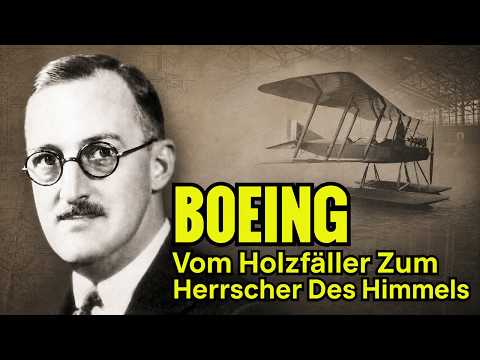
Founded by William E. Boeing in Seattle in 1916, the company went from building wooden seaplanes to defining modern commercial aviation with the 7x7 jet family.
Catalog — Aircraft
- 1916
Boeing Model 1 Sheet pending
- 1919
Boeing B-1 Sheet pending
- 1925
Boeing Model 40 Sheet pending
Variants (6)
- Model 40
- Model 40A
- Model 40B
- Model 40B-2
- Model 40B-4
- Model 40C
- 1926
Boeing F2B Sheet pending
Variants (2)
- F2B-1
- XF2B-1
- 1928
Boeing P-12 Sheet pending
Variants (12)
- F4B-1
- F4B-2
- F4B-3
- F4B-4
- Model 100
- P-12
- P-12B
- P-12C
- P-12D
- P-12E
- P-12F
- XP-12A
- 1930
Boeing Monomail Sheet pending
Variants (3)
- Model 200
- Model 221
- Model 221A
- 1932
Boeing P-26 Peashooter Sheet pending
Variants (5)
- Model 281
- P-26A
- P-26B
- P-26C
- XP-936
- 1933
Boeing 247
First flown on February 8, 1933, the Boeing 247 is regarded as the first modern airliner: an all-metal monoplane with retractable landing gear, an autopilot and de-icing equipment. Only 75 were built, because its very success drove the competition to Douglas and the lineage that produced the DC-3.
- 1935
Boeing B-17 Flying Fortress
The Boeing B-17 Flying Fortress was an American four-engined heavy bomber designed in the mid-1930s for the United States Army Air Corps. Fast for its size, able to work at high altitude and bristling with defensive guns at the expense of bomb load, it dropped more bombs than any other aircraft of the Second World War and ranks as the third most-produced bomber in history, after the Consolidated B-24 Liberator and the Junkers Ju 88. The design answered an Air Corps proposal issued on 8 August 1934 to replace the Martin B-10. Boeing built the Model 299 prototype at its own expense to a design led by E. Gifford Emery and Edward Curtis Wells, borrowing from the experimental XB-15 and the Model 247 airliner. It first flew on 28 July 1935 with Leslie Tower at the controls, and the name came from Richard Williams of The Seattle Times, who looked at the guns poking from the fuselage and called it a flying fortress. On 30 October 1935 the prototype stalled and crashed because the control gust locks had not been released, killing Major Ployer Peter Hill and Tower, disqualifying the aircraft from a competition won by the Douglas B-18 Bolo, and prompting the written pre-flight checklist that pilots still use. The Army nonetheless ordered thirteen service-test machines in January 1936, and the type entered service with the 2nd Bombardment Group at Langley Field. Development moved quickly. Exhaust-driven General Electric turbo-superchargers, derived from Sanford Moss's work, gave the bomber the operating altitude that shaped how it fought. Models A through D remained defensive in conception; the B-17E, with a fuselage stretched by roughly three metres, a far larger fin and gun positions in the tail, dorsal turret and a ventral ball turret, was the first built to attack. The B-17F carried the burden of 1943, and the definitive B-17G reached thirteen 12.7 mm machine guns including a chin turret; 8,680 of that version alone were built. In action, the Royal Air Force sent it against Wilhelmshaven on 8 July 1941 with disappointing results and later moved it to maritime patrol. Its defining campaign was the American daylight offensive over Europe, opened on 17 August 1942 against the marshalling yards at Rouen-Sotteville. The raids on the ball-bearing plants at Schweinfurt showed what unescorted daylight bombing cost: on 14 October 1943, remembered as Black Thursday, 77 of the 291 Fortresses despatched were lost, and deep missions were suspended until P-51 Mustang and P-47 Thunderbolt fighters with drop tanks could escort the bombers all the way. In the Pacific its career was shorter — caught up in the Pearl Harbor and Philippines attacks, effective in the Battle of the Bismarck Sea, then displaced by the B-24 and B-29 from mid-1943, though it continued in search and rescue. Inventory peaked in August 1944 at 4,574 aircraft, and of the roughly 1.5 million tons of bombs Allied aircraft dropped on Germany and occupied Europe, more than 640,000 tons fell from B-17s. Its reputation rested as much on its ability to absorb damage and come home as on those totals; Luftwaffe pilots likened attacking a combat box formation to taking on a flying porcupine. It became the emblem of American air power, and a 1943 survey found that nine in ten people asked knew what a B-17 was. When production ended in May 1945, Boeing, Douglas and Vega had delivered 12,731 aircraft. Some forty survive in United States collections and about forty-six worldwide, only a handful of them airworthy; the oldest is The Swoose, a B-17D that fought in the Pacific in the opening days of the war.
- 1937
Boeing XB-15 Sheet pending
Variants (2)
- XB-15
- XC-105
- 1938
Boeing 314 Clipper Sheet pending
Variants (2)
- 314
- 314A
- 1938
Boeing 307 Stratoliner Sheet pending
Variants (4)
- C-75
- S-307
- SA-307B
- SA-307B-1
- 1942
Boeing XPBB Sea Ranger Sheet pending
- 1942
Boeing B-29 Superfortress
The Boeing B-29 Superfortress was the four-engined heavy bomber with which the United States carried the strategic air offensive to the Japanese home islands, and the most advanced aircraft to see combat in the Second World War. Its name deliberately echoed the B-17 Flying Fortress it succeeded, but the comparison undersells it: the B-29 was built for high-altitude strategic bombing and combined a pressurised cabin, dual-wheeled tricycle landing gear and an analogue-computer fire-control system that let a single gunner, coordinated by a fire-control officer, aim four remote turrets. Design and production cost some $3 billion — far more than the $1.9 billion spent on the Manhattan Project — making the B-29 the most expensive programme of the war, at a unit cost of $639,188. It also remains the only weapon system ever to have dropped atomic bombs in combat. That ambition was paid for during development. The first prototype took off from Boeing Field, Seattle, on 21 September 1942, and the combination of a design at the edge of the state of the art, demanding requirements and immense production pressure left a trail of setbacks. Engines were the chief cause of maintenance headaches and catastrophic failures: the four eighteen-cylinder, turbosupercharged Wright R-3350 Duplex-Cyclone radials of 2,200 hp each eventually became a dependable workhorse in large piston aircraft, but early examples suffered severe overheating. Pressurisation, developed by Garrett AiResearch, forced a characteristic compromise: the forward and rear crew compartments were pressurised while the bomb bays were not, the two being linked by a tunnel. Aircraft left the factories unfinished and had to be completed at open-air modification centres during a Kansas winter; that "Battle of Kansas" readied 150 aircraft over the five weeks from 10 March to 15 April 1944. The operational debut was no easier. Operation Matterhorn, ordered by Roosevelt as a promise to China, deployed the B-29 groups to five main bases in India and four forward fields in southern China: on 15 June 1944, 68 aircraft took off from the Chengdu bases and 47 bombed the Imperial Iron and Steel Works at Yawata, the first attack on the Japanese islands since the Doolittle Raid of April 1942. Supplying the effort over the Himalayas proved unsustainable and the campaign moved to the Marianas, from where the 73rd Bomb Wing flew a first mission of 111 aircraft against Tokyo on 24 November 1944. High-altitude daylight precision bombing achieved little against the jet stream and heavy cloud, and in early 1945 Major General Curtis LeMay, commanding XXI Bomber Command, ordered most of the defensive armament stripped out and the force sent in at night, at low level, with incendiaries. The result was the most destructive bombing raid in history: on the night of 9–10 March 1945, 279 B-29s destroyed 267,000 buildings and a quarter of Tokyo (Operation Meetinghouse), killing some 100,000 people. Less remembered, the aerial mining of Japanese ports and shipping lanes (Operation Starvation), begun in April 1945, choked the country's supply lines. In August, two B-29s modified under the Silverplate programme — bomb bay enlarged for Little Boy and Fat Man, fuel injection, reversible propellers and lightened armament — dropped the atomic bombs on Hiroshima and Nagasaki from the 509th Composite Group. The B-29 outlasted the war. It was the bomber on which Strategic Air Command was founded on 21 March 1946, and for years the 509th's Silverplate aircraft were the only ones able to deliver a nuclear weapon; the arrival of the huge Convair B-36 saw it reclassified as a medium bomber. In Korea it flew some 20,000 sorties and dropped 220,000 short tons of bombs, used 12,000 lb Tarzon guided weapons against the Yalu bridges and, once Soviet MiG-15 jets appeared in 1950, was pushed onto night missions; its gunners were credited with 27 kills and 78 aircraft were lost. It also served abroad: the Royal Air Force was loaned 87 Superfortresses under the designation Washington B.1, equipping eight Bomber Command squadrons between March 1950 and the return of the final aircraft in March 1954 — two passed to the Royal Australian Air Force in 1952, and the electronic-intelligence machines soldiered on until 1958. A total of 3,970 were built and retirement came in the early 1960s, but the airframe outlived the bomber. From it came the B-50, re-engined with Pratt & Whitney R-4360 Wasp Majors, whose Lucky Lady II made the first non-stop flight around the world in 1949 in 94 hours; the KB-29 tanker of 1948, the first link in American aerial refuelling; the C-97 Stratofreighter transport and its KC-97 tanker version; the Model 377 Stratocruiser airliner and, from it, the outsized-cargo Guppies. Several B-29s also served as motherships for experimental aircraft, among them the Bell X-1 of the first supersonic flight. The Soviet Union, without licence and working from aircraft interned after emergency landings on its territory, produced 847 Tupolev Tu-4s, a copy of the B-29 that gave Moscow its first strategic bomber. Twenty-two examples survive, most on static display. The representative variant spanned 141 ft 3 in (43.05 m) with a wing area of 1,736 sq ft, reached 357 mph, climbed to a 31,850 ft ceiling, ranged 3,250 miles and was flown by a crew of eleven.
- 1944
Boeing C-97 Stratofreighter Sheet pending
Variants (6)
- C-97A
- C-97C
- XC-97
- YC-97
- YC-97A
- YC-97B
- 1944
Boeing XF8B Sheet pending
- 1947
Boeing B-50 Superfortress Sheet pending
Variants (9)
- B-50A
- B-50B
- B-50D
- KB-50
- KB-50J
- KB-50K
- RB-50B
- TB-50H
- WB-50D
- 1947
Boeing 377 Stratocruiser
The Boeing 377 Stratocruiser, the civil derivative of the C-97 and ultimately of the B-29 bomber, first flew on 8 July 1947 and entered service with Pan American on 1 April 1949. With its double-deck fuselage and lower-deck lounge it embodied postwar transoceanic luxury, though only 56 were built.
- 1947
Boeing B-47 Stratojet Sheet pending
Variants (12)
- B-47A
- B-47B
- B-47E
- EB-47E
- QB-47E
- RB-47B
- RB-47E
- RB-47H
- RB-47K
- WB-47E
- XB-47
- XB-47D
- 1952
Boeing B-52 Stratofortress
The Boeing B-52 Stratofortress is a subsonic, eight-engined heavy strategic bomber conceived in the early Cold War to deliver nuclear weapons anywhere on the globe without relying on intermediate bases. It has flown with the United States Air Force since 1955 and can carry up to 32,000 kg of weapons with a typical combat range of about 14,200 km without aerial refuelling. Its official name is seldom used: in the aviation community the aircraft is known by the nickname BUFF. It is the survivor of an entire generation of bombers — the B-58 Hustler, the B-1 Lancer and the B-2 Spirit all came later, and several retired first — and its blend of long reach, enormous payload and comparatively modest operating cost explains that longevity. The programme began with the performance characteristics circulated by Air Materiel Command on 23 November 1945 for a bomber able to carry out the strategic mission without depending on bases controlled by other countries. Boeing won the competition in June 1946 with Model 462, a straight-wing aircraft powered by six turboprops that bore little resemblance to the final machine. Two years of successive revisions followed — Model 464 and its derivatives, USAF pressure on speed and range, and a cancellation narrowly averted in December 1947 — until, over a weekend in a Dayton, Ohio hotel in October 1948, Boeing's engineering team recast the proposal as a swept-wing jet bomber. From that came the definitive layout of eight turbojets in four twin pods. The YB-52 prototype made its first flight on 15 April 1952 from Boeing Field, Seattle, with test pilot "Tex" Johnston at the controls. Production was split between the Seattle and Wichita plants to speed deliveries and ended in 1962 with the last series, the B-52H; 744 aircraft were built in all. The first operational B-52B reached the 93rd Bombardment Wing at Castle Air Force Base, California, on 29 June 1955, and the wing became fully operational in March 1956. Under Strategic Air Command the type became the airborne pillar of American nuclear deterrence, with standing ground alert and, for years, armed airborne patrols. In January 1957 three B-52Bs completed Operation Power Flite, a non-stop round-the-world flight covering 39,147 km in 45 hours and 19 minutes with several aerial refuellings — a deliberate demonstration of the bomber's global reach. Its combat debut was far removed from that nuclear brief. On 18 June 1965 thirty B-52Fs opened Operation Arc Light over South Vietnam; to exploit the conventional role, B-52Ds received the Big Belly modification, which raised the internal load to 27,000 kg carried as 108 bombs. The campaign culminated in December 1972 with Operation Linebacker II, the type's most intense and also most costly action, with losses to surface-to-air missiles and North Vietnamese fighters. Operation Desert Storm followed from 16 January 1991, and in September 1996 a bomber mission launched conventional CALCM cruise missiles on a 34-hour, 26,000 km round trip — an example of the global strike from home territory that defines the aircraft today. Since the mid-1990s only the B-52H remains in service; 102 were built and delivered between May 1961 and October 1962, and the USAF holds an inventory of 76 aircraft. It is the only version that left the factory with Pratt & Whitney TF33 turbofans instead of the J57 turbojets of earlier series. The upgrades under way — the CONECT avionics and datalink programme, an AESA radar and, above all, re-engining with the Rolls-Royce F130 selected in September 2021, which will bring the B-52J designation — are meant to keep the fleet in the line into the 2050s, more than a century after the prototype first flew. In parallel, NASA operated its own airframes from 1959 to 2007 as motherships that air-launched the X-15, X-24, X-38 and X-43, a chapter of the aerospace story the bomber shares with its military record.
- 1954
Boeing 367-80 Sheet pending
- 1956
Boeing KC-135 Stratotanker Sheet pending
Variants (6)
- KC-135A
- KC-135D
- KC-135E
- KC-135Q
- KC-135R
- KC-135T
- 1957
Boeing 707 Sheet pending
Variants (8)
- 707-120
- 707-120B
- 707-138B
- 707-220
- 707-320B
- 707-320C
- 707-320 Intercontinental
- 707-420
- 1958
Boeing Vertol CH-46 Sea Knight Sheet pending
Variants (10)
- Boeing Vertol 107-II
- CH-113A Voyageur
- CH-113 Labrador
- CH-46A
- CH-46D
- CH-46E
- CH-46F
- KV-107-II
- UH-46A
- UH-46D
- 1959
Boeing 720 Sheet pending
Variants (2)
- 720
- 720B
- 1961
Boeing CH-47 Chinook Sheet pending
Variants (11)
- ACH-47A
- Boeing Vertol 234
- CH-47A
- CH-47B
- CH-47C
- CH-47D
- CH-47F
- CH-47J
- MH-47D
- MH-47E
- MH-47G
- 1963
Boeing 727 Sheet pending
Variants (6)
- 727-100
- 727-100C
- 727-100QC
- 727-200
- 727-200 Advanced
- 727-200F Advanced
- 1967
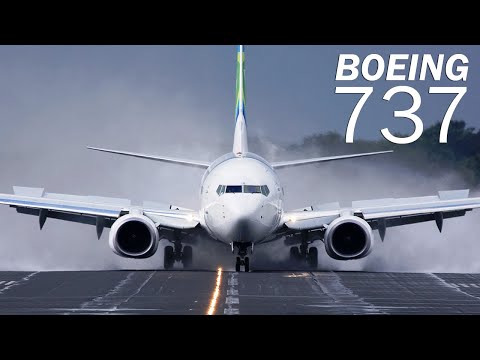
Boeing 737 Sheet pending
Variants (15)
- 737-100
- 737-200
- 737-200 Advanced
- 737-300
- 737-400
- 737-500
- 737-600
- 737-700
- 737-800
- 737-900
- 737-900ER
- 737 MAX 10
- 737 MAX 7
- 737 MAX 8
- 737 MAX 9
- 1969
Boeing 747
The Boeing 747 was history's first wide-body airliner and, for half a century, the very symbol of intercontinental flight. Nicknamed the "Jumbo", its partial double-deck silhouette made it the most recognisable aircraft ever built: ten-abreast economy seating, some 366 passengers in a three-class layout, a pronounced 37.5-degree wing sweep and a Mach 0.85 cruise. It was born in 1966 from a Pan Am order, when Boeing bet the company on an unprecedented leap in scale: an aircraft two and a half times the size of the 707 with a 30 per cent lower cost per unit of passenger-distance. Its two defining features, the nose door and the raised flight deck, came from a military competition Boeing lost, the CX-HLS. Building it required raising the world's largest building by volume at Everett, and the programme went from paper to first flight in barely 28 months, on 9 February 1969. It entered service with Pan Am on 22 January 1970 and cut seat-mile costs so sharply that it turned long-haul aviation into a mass phenomenon: the age of intercontinental tourism begins with it. The family grew from the original 747-100 to the heavier 747-200, the shortened ultra-long-range 747SP, the stretched-upper-deck 747-300, the two-crew 747-400 —the best-selling version, with 694 delivered— and the 747-8, the longest airliner in service. Its swing nose also made it the world's reference freighter and the basis of a family of derivatives with no equivalent: the Dreamlifter that carries 787 sections, NASA's two Shuttle Carrier Aircraft, the presidential VC-25As, the four E-4 airborne command posts and the flying observatory SOFIA. Production ended in 2023 after 1,574 aircraft delivered across a 54-year run, a record unmatched by any other commercial four-engine jet. The economics of long-range twinjets displaced it and the pandemic finished the job; yet its gradual retirement from passenger service has not dimmed its status: few machines have changed the way humanity travels as much.
- 1976
Boeing YC-14 Sheet pending
- 1981
Boeing 767 Sheet pending
Variants (6)
- 767-200
- 767-200ER
- 767-300
- 767-300ER
- 767-300F
- 767-400ER
- 1982
Boeing 757 Sheet pending
Variants (4)
- 757-200
- 757-200M
- 757-200PF
- 757-300
- 1994
Boeing 777 Sheet pending
Variants (8)
- 777-200
- 777-200ER
- 777-200LR
- 777-300
- 777-300ER
- 777-8
- 777-9
- 777F
- 1998
Boeing 717
The Boeing 717 is an American five-abreast narrow-body airliner with two rear-mounted engines, conceived for the 100-seat market. It originated inside McDonnell Douglas in the early 1990s as the MD-95, a shortened derivative of the MD-80 and the last link in the broader DC-9 family, and it inherited that lineage almost intact: it seats up to 134 passengers, has a design range of 2,060 nautical miles and is powered by two Rolls-Royce BR715 turbofans mounted at the rear of the fuselage. The programme changed its name because of a corporate merger. When Boeing absorbed McDonnell Douglas in August 1997, most industry observers expected the MD-95 to be cancelled; instead Boeing pressed ahead and rebranded the aircraft as the Boeing 717, reusing a designation the company had applied to the C-135 Stratolifter military transport and the KC-135 Stratotanker. The launch order had been signed by ValuJet Airlines, later renamed AirTran Airways, in October 1995, and that same carrier would receive both the first and the last airframe. The 717 had a short commercial life and modest sales, but an excellent operational record. Production closed in May 2006 after 155 aircraft had been delivered, and the type has never been involved in a hull loss or a fatal accident. As of November 2024, 99 examples remained in service; Delta Air Lines, its largest operator, and Hawaiian Airlines were still flying it in 2025.
- 2000
Boeing X-32 Sheet pending
Variants (2)
- X-32A
- X-32B
- 2002
Boeing X-45 Sheet pending
Variants (2)
- X-45A
- X-45C
- 2007
Boeing X-48 Sheet pending
Variants (2)
- X-48B
- X-48C
- 2009
Boeing P-8 Poseidon Sheet pending
Variants (2)
- P-8A Poseidon
- P-8I Neptune
- 2009
Boeing 787 Dreamliner Sheet pending
Variants (3)
- 787-10
- 787-8
- 787-9
- 2010
Boeing X-51 Waverider Sheet pending
- 2011
Boeing Phantom Ray Sheet pending
- 2012
Boeing Phantom Eye Sheet pending
- 2015
Boeing KC-46 Pegasus Sheet pending
- 2016
Boeing T-7 Red Hawk Sheet pending
- 2019
Boeing MQ-25 Stingray Sheet pending
- —
Boeing CQM-121 Pave Tiger Sheet pending
- —
Boeing Model 7 Sheet pending
- —
EA-18 Sheet pending
- —
Boeing XP-8 Sheet pending
- —
Boeing GA-1 Sheet pending
Variants (2)
- GA-1
- GA-2
- —
F-47 Sheet pending
- —
Boeing Insitu MQ-27 ScanEagle Sheet pending
- —
Boeing XPB Sheet pending
- —
AH-64 Sheet pending
- —
Boeing Insitu RQ-21 Blackjack Sheet pending
- —
MH-139 Sheet pending
- —
Boeing NC-135 Sheet pending
- —
Boeing XP-7 Sheet pending
- —
Boeing Model 203 Sheet pending
- —
Boeing Model 15 Sheet pending
Variants (10)
- FB-1
- FB-2
- FB-3
- FB-4
- FB-5
- PW-9
- PW-9A
- PW-9B
- PW-9C
- PW-9D
- —
Boeing E-3 Sentry Sheet pending
Variants (7)
- E-3A
- E-3B
- E-3C
- E-3D Sentry AEW.1
- E-3F
- E-3G
- EC-137D
- —
Boeing X-37 Sheet pending
Variants (2)
- X-37A
- X-37B
- —
Boeing Model 64 Sheet pending
- —
Boeing E-7 Wedgetail Sheet pending
- —
Boeing Model 42 Sheet pending
Variants (3)
- XCO-7
- XCO-7A
- XCO-7B
- —
Boeing X-40 Sheet pending
- —
Boeing E-6 Mercury Sheet pending
Variants (2)
- E-6A
- E-6B
- —
Boeing A160 Hummingbird Sheet pending
Variants (2)
- A160
- A160T
- —
Boeing Model 95 Sheet pending
- —
Boeing T-43 Sheet pending
Variants (2)
- CT-43A
- T-43A
- —
Boeing XF6B Sheet pending
- —
Boeing C-32 Sheet pending
Variants (2)
- C-32A
- C-32B
- —
Boeing OC-135B Open Skies Sheet pending
- —
Boeing YB-9 Sheet pending
Variants (2)
- Y1B-9A
- YB-9
- —
Boeing XP-9 Sheet pending
- —
Boeing C-40 Clipper Sheet pending
Variants (3)
- C-40A
- C-40B
- C-40C
- —
Boeing X-50 Dragonfly Sheet pending
- —
Boeing Model 204 Sheet pending
- —
Boeing YQM-94 B-Gull Sheet pending
- —
Boeing C-135 Stratolifter Sheet pending
Variants (3)
- C-135A
- C-135B
- C-135F
- —
Boeing XP-4 Sheet pending
- —
Boeing E-767 Sheet pending
- —
Boeing Model 360 Sheet pending
- —
Boeing-Stearman Model 75 Sheet pending
Variants (13)
- A75N1
- N2S-1
- N2S-2
- N2S-3
- N2S-4
- N2S-5
- PT-13
- PT-13A
- PT-13B
- PT-13D
- PT-17
- PT-18
- PT-27
- —
Boeing EC-135 Sheet pending
Variants (7)
- EC-135A
- EC-135C
- EC-135H
- EC-135J
- EC-135K
- EC-135N
- EC-135P
- —
Boeing 80 Sheet pending
Variants (4)
- Model 80
- Model 80A
- Model 80A-1
- Model 80B
- —
Boeing KC-97 Stratofreighter Sheet pending
Variants (5)
- HC-97G
- KC-97E
- KC-97F
- KC-97G
- KC-97L
- —
Boeing L-15 Scout Sheet pending
Variants (2)
- XL-15
- YL-15
- —
Boeing C-137 Stratoliner Sheet pending
Variants (4)
- C-137C
- VC-137A
- VC-137B
- VC-137C
- —
Boeing Model 6D Sheet pending
- —
Boeing KC-767 Sheet pending
Variants (2)
- KC-767A
- KC-767J
- —
Boeing XAT-15 Sheet pending
- —
Boeing P-29 Sheet pending
Variants (4)
- XF7B-1
- YP-29
- YP-29A
- YP-29B
- —
Boeing Condor Sheet pending
- —
Boeing RC-135 Sheet pending
Variants (10)
- RC-135A
- RC-135B
- RC-135C
- RC-135D
- RC-135E
- RC-135M
- RC-135S Cobra Ball
- RC-135U Combat Sent
- RC-135V/W Rivet Joint
- RC-135X Cobra Eye
- —
Boeing Model 81 Sheet pending
- —
Boeing WC-135 Constant Phoenix Sheet pending
Variants (4)
- WC-135B
- WC-135C
- WC-135R
- WC-135W
- —
Boeing Bird of Prey Sheet pending
- —
Boeing F3B Sheet pending
Variants (2)
- F3B-1
- XF3B-1
- —
Boeing Model 2 Sheet pending
- —
Boeing E-4 Sheet pending
Variants (2)
- E-4A
- E-4B
- —
Boeing Model 8 Sheet pending
- —
Boeing VC-25 Sheet pending
Variants (2)
- VC-25A
- VC-25B
- —
Boeing NB Sheet pending
Variants (2)
- NB-1
- NB-2
- —
Boeing TB Sheet pending
- —
Boeing XP-15 Sheet pending
- —
MV-22 Sheet pending
- —
Boeing Vertol YUH-61 Sheet pending
- —
Boeing YAL-1 Sheet pending
- —
Boeing MQ-28 Ghost Bat Sheet pending
Catalog — Rockets
- 1967
Saturn V
The Saturn V was the three-stage super heavy-lift launch vehicle NASA developed for the Apollo programme and the first to carry humans beyond low Earth orbit. Thirteen vehicles flew between 1967 and 1973; nine sent twenty-four astronauts towards the Moon and the last one placed Skylab in orbit.
Videos




Show the 20 more












Did you know… about Boeing
- Why is the boeing 747 being retired?
Mainly economics. Two modern engines burn less fuel than four and, thanks to ETOPS rules, twins like the 777 and 787 may now fly the same long oceanic routes…
- How far can the 737 max fly?
Between roughly 3,100 and 3,800 nautical miles (5,740-7,040 km) depending on the variant. Boeing quotes 3,550 nmi (6,570 km) for the 737 MAX 8, 3,800 nmi…
- What is the 737 max 8?
The 737 MAX 8 is Boeing's re-engined single-aisle airliner, the best-selling member of the 737 MAX family. It pairs a 737-800 fuselage with CFM LEAP-1B…
- How fast does the boeing 747 fly?
A Boeing 747 cruises at about Mach 0.85, roughly 900 km/h (490 kn) true airspeed at 35,000 ft (10,700 m). The 747-8 is quoted by Boeing at a typical cruise of…
- Why is the 737 max 7 not certified?
The MAX 7 is waiting on one specific fix: its CFM LEAP-1B inlet can overheat if engine anti-ice is left on in dry air, a hazard the FAA now limits in service…