Avião comercial · Civil · Reino Unido
BAe 146
- 3 de setembro de 1981
- Primeiro voo
- 1983
- Entrada ao serviço
- Em serviço
- Estado
- 387–394
- Unidades construídas


_at_Karlsruhe_Baden_Airport-1600.webp)


-800.webp)

.jpg)


%2C_UK_Air_Force_ZE700-series-800.webp)
-1600.webp)



-800.webp)


-1600.webp)


-1600.webp)

_Thai_Airways_Bangkok_1990-10-14_5955-1600.webp)

-1600.webp)


_preserved_at_Manchester-1600.webp)
-1600.webp)


-1600.webp)


-1600.webp)

_takeoff%2C_RIAT_2014-1600.webp)

_at_RIAT_2012-1600.webp)


-1600.webp)


-1600.webp)
-1600.webp)

-1600.webp)
-1600.webp)
-1600.webp)

-1600.webp)


-1600.webp)

-1600.webp)

-1600.webp)
%2C_26_de_junio_de_1990-1600.webp)


-1600.webp)

_BAe_146-300QT_at_Stuttgart%2C_1995-800.webp)


-1600.webp)
-1600.webp)


-1600.webp)

-1600.webp)


-1600.webp)
-1600.webp)


-800.webp)


.jpg)

%2C_UK_-_Air_Force_AN0186402-800.webp)

O BAe 146 é um jato regional britânico de quatro motores e asa alta que voou pela primeira vez a 3 de setembro de 1981 e entrou ao serviço com a Dan-Air em 1983. Em conjunto com a sua versão modernizada Avro RJ soma 394 unidades construídas e é o programa de avião comercial a reação mais bem-sucedido do Reino Unido.
Eventos relacionados
Fichas relacionadas
Categoria
Atualidade de BAe 146
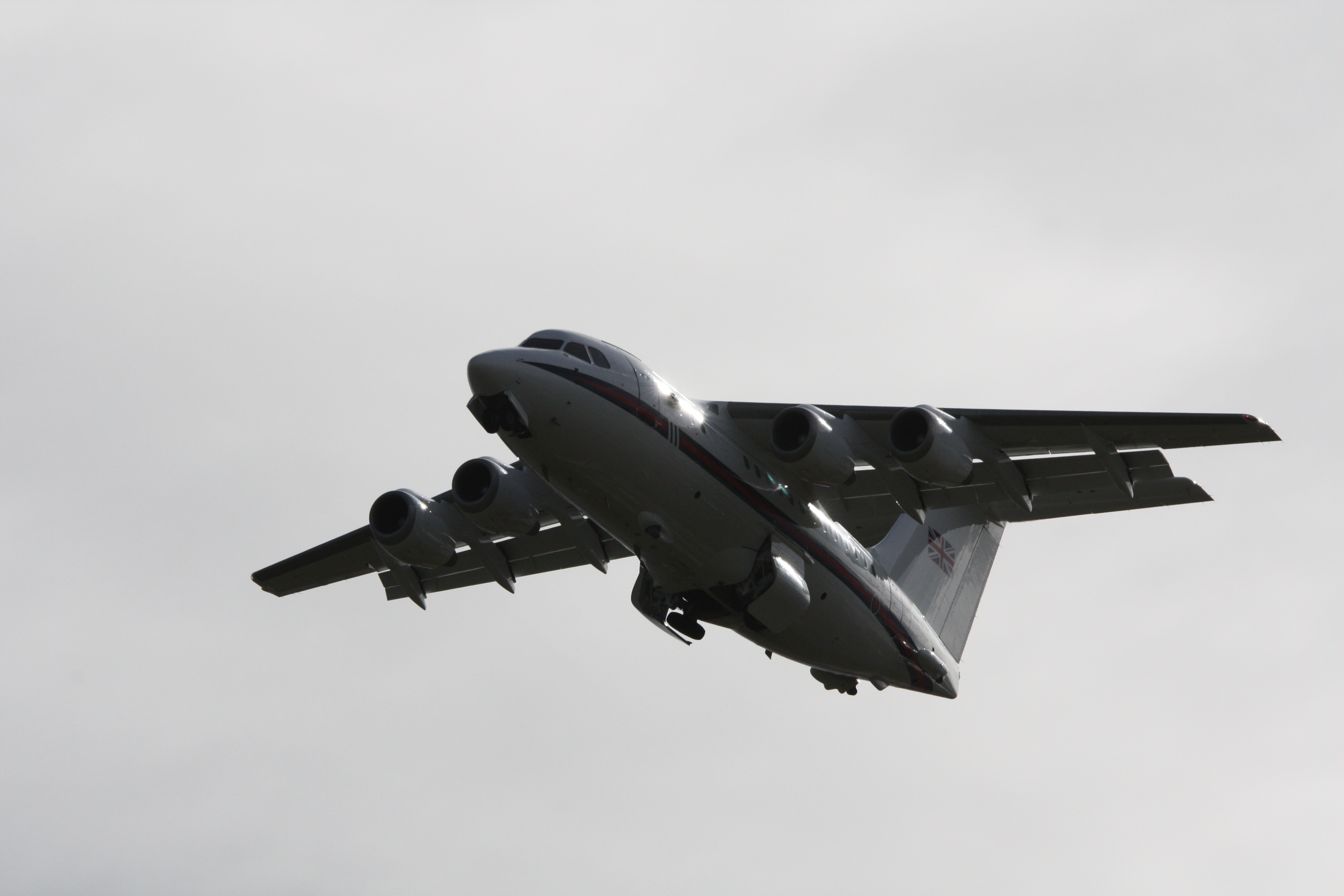
A aeronave E3355 partiu de Cranfield após o programa de retorno ao serviço da Avalon Aero e passa a reforçar a frota de Avro RJ que a Summit Air opera nas rotas de mineração do Ártico…
%2C_imagen_de_archivo_(RIAT%2C_Fairford%2C_2018).jpg)
A célula E3355 deixou Cranfield após o programa de regresso ao serviço da Avalon Aero e vai reforçar a frota de Avro RJ que a Summit Air opera em rotas mineiras no Ártico canadiano…
.jpg)
A companhia operará em 2 de outubro o último voo comercial de seus quatro BAe 146-300QT, aeronaves que voaram carga noturna para a Qantas Freight por 32 anos. A retirada coincide com a…
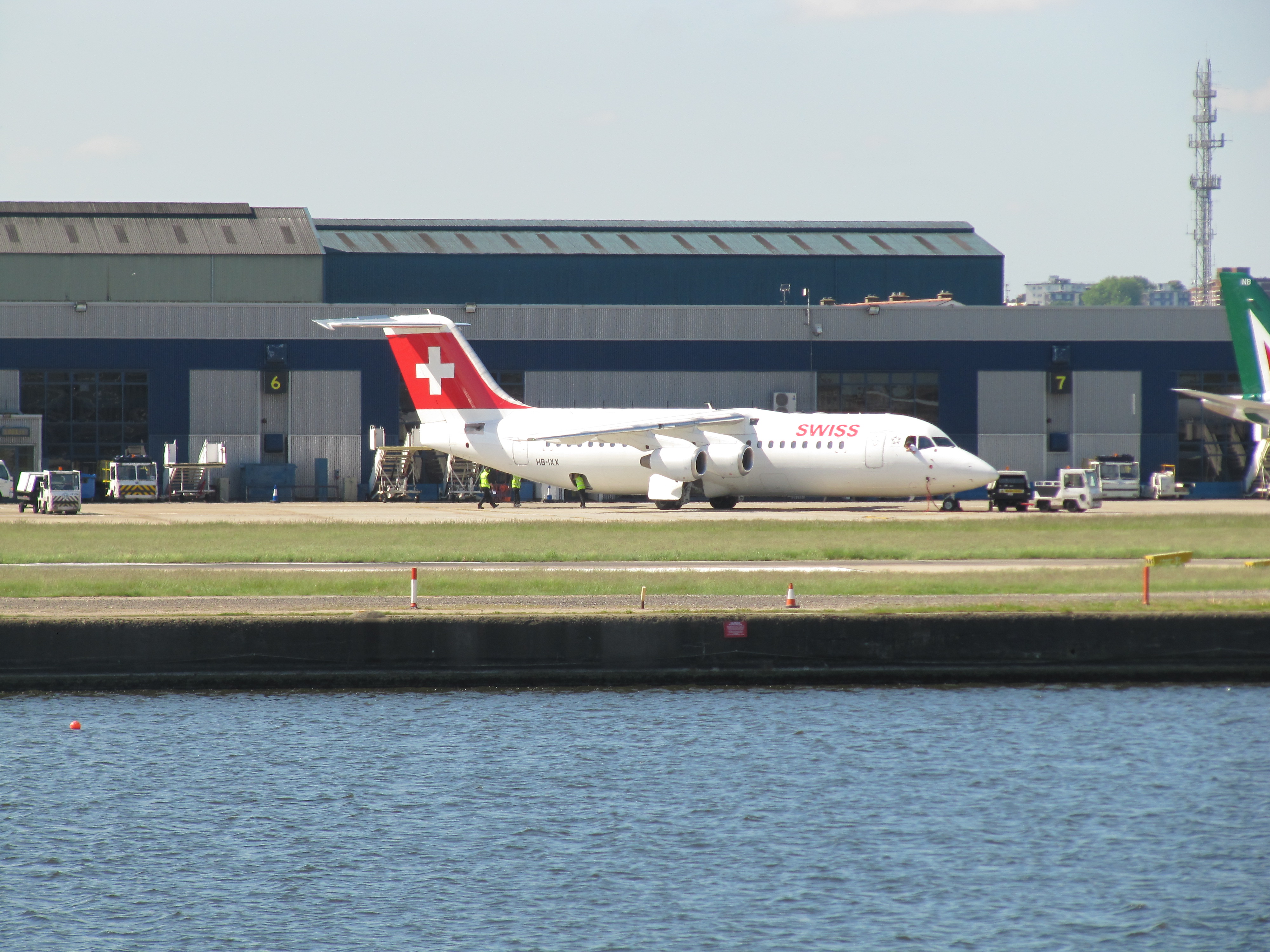
A companhia operará em 2 de outubro o último voo comercial de seus quatro BAe 146-300QT, aeronaves que voaram carga noturna para a Qantas Freight por 32 anos. A retirada coincide com a…
%2C_imagen_de_archivo_(RIAT%2C_Fairford%2C_2018)-1600.webp)
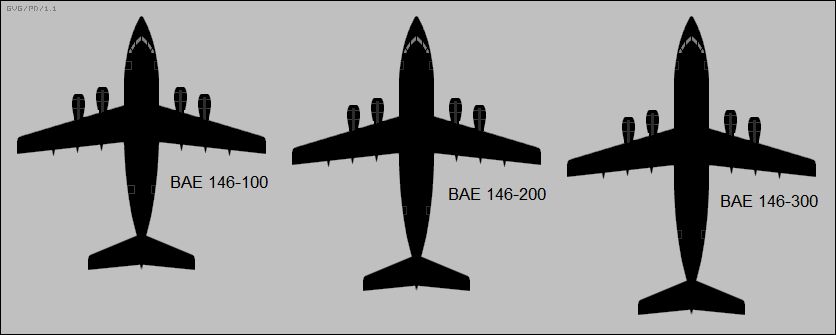
Desenho de três vistas
História
A origem do 146 está em agosto de 1973, quando a Hawker Siddeley lançou o projeto HS.146: um avião de linha de setenta lugares pensado para ocupar o vazio entre os turbo-hélices da época — o próprio HS.748, o Fokker F27 — e os jatos pequenos como o BAC One-Eleven ou o Boeing 737. A configuração escolhida, asa alta e cauda em T, procurava desempenho de campo curto, e o sistema propulsor eram quatro turbofans Avco Lycoming ALF 502H de 6.500 libras de impulso. O Governo britânico aceitou financiar metade do desenvolvimento em troca de uma participação nas receitas de cada avião vendido, mas em outubro de 1974, com a recessão desencadeada pela crise do petróleo, todo o trabalho parou. O projeto sobreviveu em lume brando até que, em 1978, a British Aerospace, sucessora da Hawker Siddeley, o relançou.
A decisão de montar quatro motores num avião tão pequeno foi polémica desde o início, e foi o motor que a impôs: o ALF 502, robusto, silencioso e de baixo consumo, não dava por si só a potência e o alcance que o conceito pedia. A British Aerospace transformou o inconveniente em argumento comercial, ao apresentar um «desempenho excecional com três motores» que interessava aos operadores de zonas montanhosas e de aeródromos quentes, elevados ou de piso deficiente. O resto do desenho foi concebido com uma simplicidade deliberada: asa alta de superfície superior contínua, sem dispositivos de bordo de ataque, cauda fixa e nenhum inversor de impulso — em vez disso, um grande aerofreio de duas valvas sob o leme, utilizável em voo, e spoilers de toda a envergadura que se abrem ao tocar o solo. Foi o segundo avião, depois do Concorde, a usar travões de carbono.
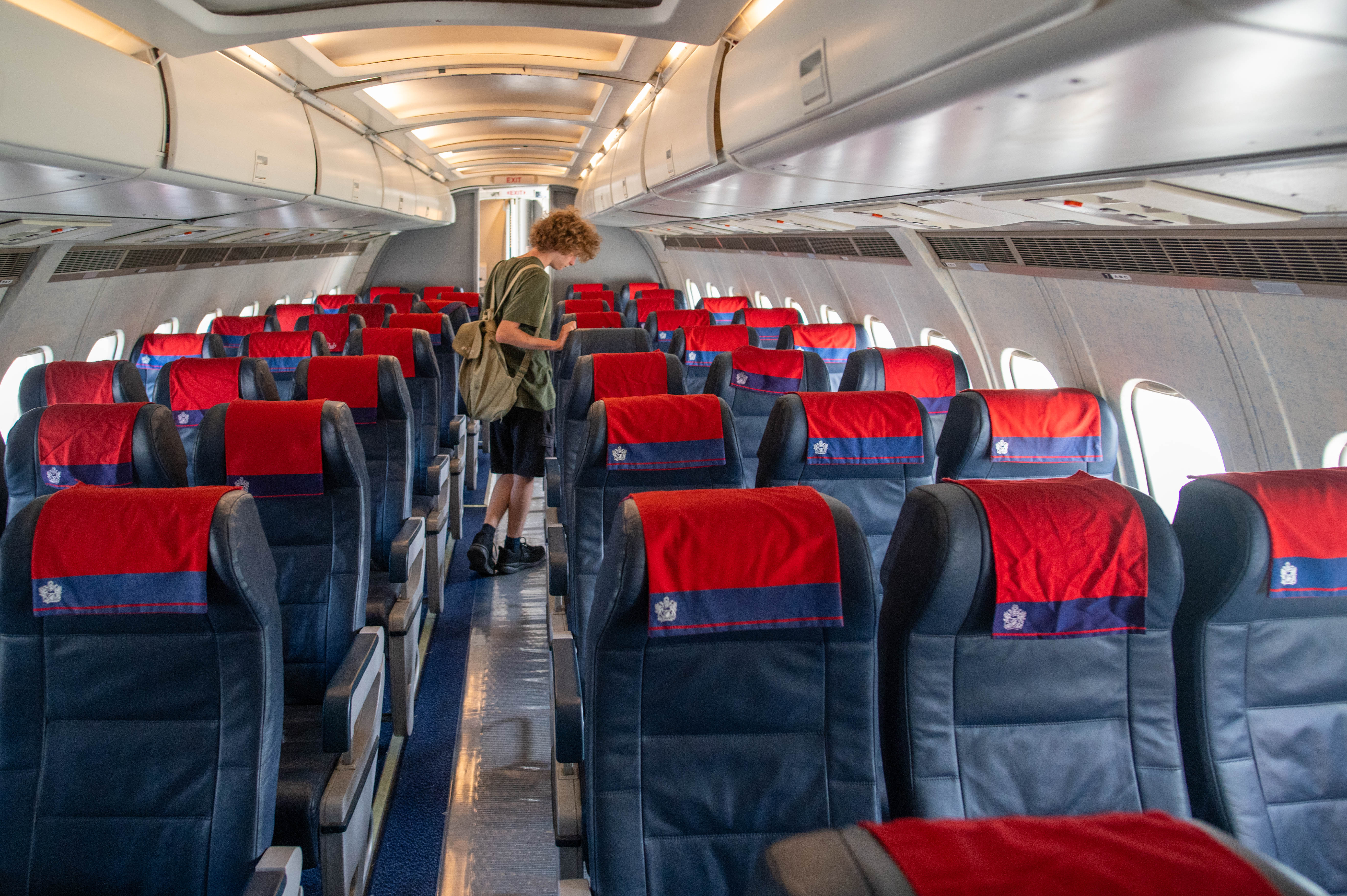
O primeiro aparelho descolou de Hatfield a 3 de setembro de 1981, seguido logo por outros dois protótipos, com resultados de descolagem e de subida melhores do que o previsto. O 146-200 custava então onze milhões de libras e o programa tinha consumido 350; a British Aerospace calculou em 1982 que precisava de vender 250 aviões para o amortizar. O certificado de aeronavegabilidade chegou a 8 de fevereiro de 1983 e em maio a Dan-Air voou o primeiro serviço comercial entre Londres-Gatwick e Berna. A imprensa saudou-o como o jato de linha mais silencioso do mundo e o fabricante vendeu-o como «Whisperjet».
Esse silêncio, aliado à capacidade de operar a partir de pistas curtas, abriu-lhe aeroportos que nenhum outro jato podia usar. Em 1985 a Aspen Airways inaugurou com um 146-100 o primeiro serviço regular a jato para Aspen, nas Rochosas, a partir de um aeródromo a 7.820 pés de altitude, e em janeiro de 1987 o tipo foi escolhido para estrear os voos a jato a partir de London City, com a sua aproximação pronunciada e a sua pista curta: durante anos foi o único jato convencional capaz de operar ali. A Pacific Southwest Airlines recebeu o primeiro dos seus vinte exemplares a 1 de julho de 1984, a Air Wisconsin substituiu com ele os seus Fokker F27 e na Austrália tornou-se o avião das rotas longas e de pouco tráfego, com dezoito aparelhos na Ansett em 1999 e uma carreira que se prolongou até a National Jet Express encerrar a operação de passageiros em junho de 2022, ao fim de 32 anos e 33 aviões do tipo. A Royal Air Force usou-o como transporte VIP de 1986 a 2022.
Em 1993 a série original deu lugar ao Avro RJ, fabricado em Woodford pela Avro International Aerospace: motores LF 507 de maior impulso em nacelas redesenhadas, cabina de pilotagem com ecrãs EFIS e três tamanhos equivalentes aos anteriores, RJ70, RJ85 e RJ100. A produção estava repartida por todo o país — fuselagem traseira em Chadderton, central em Filton, deriva em Brough, pilones em Prestwick — e fora dele: as asas fazia-as a Textron nos Estados Unidos e o estabilizador a Saab-Scania na Suécia. Os motores, porém, arrastaram problemas. Derivado do turboeixo T55 do helicóptero Chinook, o ALF 502 devia o seu silêncio a um fan com redutora que mantinha as pontas das pás abaixo da velocidade do som, mas a sua eletrónica podia sobreaquecer e provocar a paragem automática de um motor sem possibilidade de novo arranque em voo, e certas condições atmosféricas raras causavam perdas de impulso por formação interna de gelo. A isso somaram-se incidentes de fumos irritantes na cabina provenientes do sistema de pressurização.
O fim chegou com o RJX, uma terceira geração com turbofans Honeywell AS977 que prometiam menos 15 % de consumo e mais 17 % de alcance. O protótipo RJX85 voou a 28 de abril de 2001 e o RJX100 a 23 de setembro, mas a 27 de novembro a BAE Systems cancelou o programa e fechou o seu negócio de aviões regionais, com 1.669 despedimentos e um encargo de 400 milhões de libras; a divisão já lhe tinha custado um saneamento de mil milhões em 1992. Os últimos Avro RJ foram entregues no final de 2003. No total construíram-se 394 aviões: 221 BAe 146, 170 Avro RJ e os três RJX.
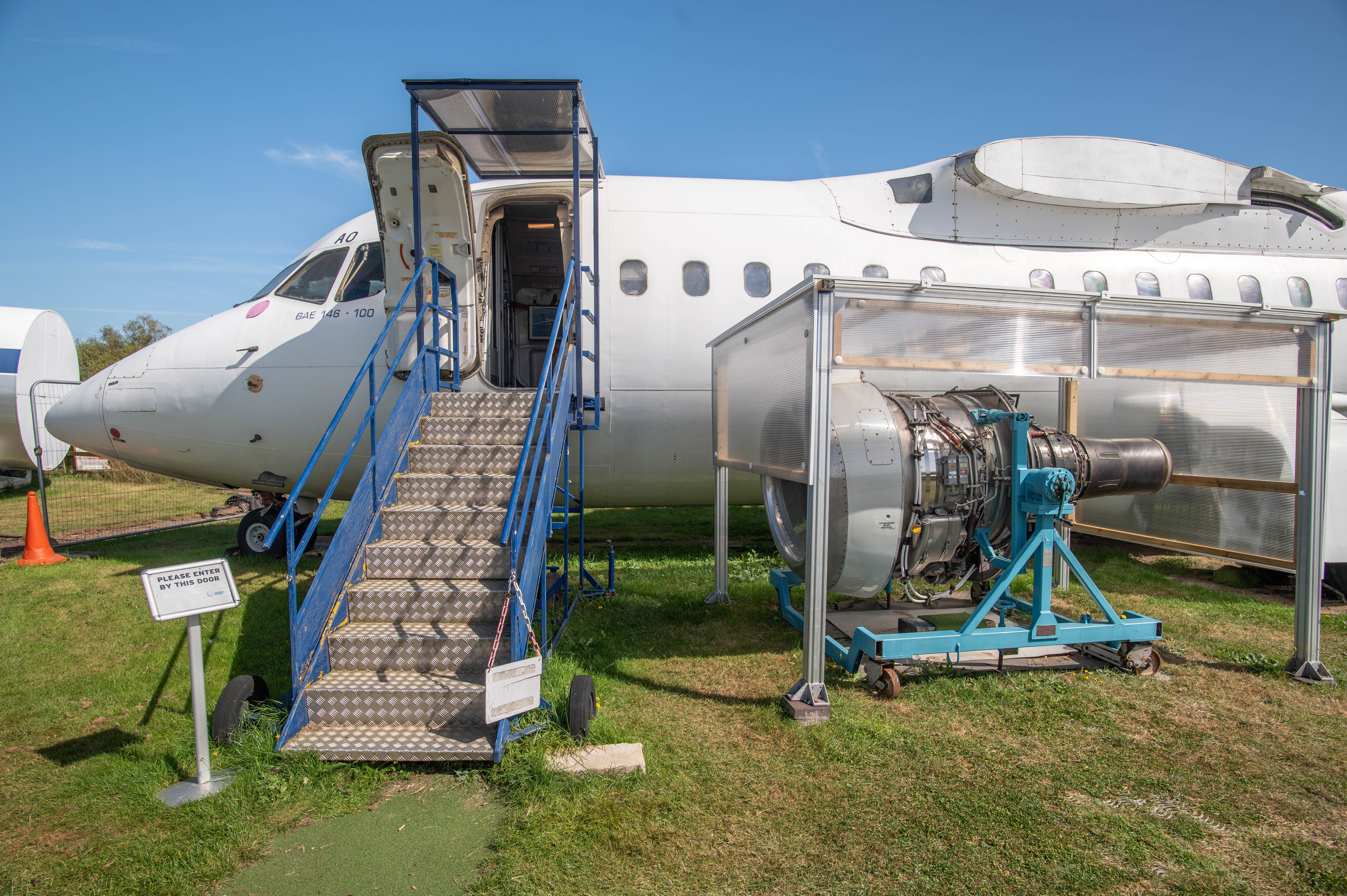
Encerrada a linha, o tipo continuou a voar. As versões de carga QT «Quiet Trader» e convertível QC encontraram o seu nicho nos aeroportos com restrições noturnas, os 146-200 e RJ85 retirados do transporte de passageiros foram transformados em aviões de combate a incêndios na América do Norte, e governos e forças aéreas mantiveram os seus exemplares VIP e de transporte. Em julho de 2020 continuavam ao serviço 54 aparelhos entre companhias aéreas e combate a incêndios, e o primeiro 146 construído continua a voar como laboratório atmosférico do FAAM britânico, com a intenção de o manter operacional até 2040.
Variantes
| BAe 146-100 | BAe 146-200 | BAe 146-300 | Avro RJ85 | Avro RJ100 | Avro RJ70 | Avro RJX85 | Avro RJX100 | Avro RJ115 | BAe 146-200QC «Quick Change» | BAe 146-200QT «Quiet Trader» | BAe 146-300QT «Quiet Trader» | BAe 146-301 ARA | BAe 146 / Avro RJ85 Airtanker | BAe 146 CC Mk2 (Queen's Flight) | BAe 146 C Mk3 | BAe 146M | BAe 146STA | |
|---|---|---|---|---|---|---|---|---|---|---|---|---|---|---|---|---|---|---|
| Primeiro voo | 3 de setembro de 1981 | 1 de agosto de 1982 | 1 de maio de 1987 | 23 de março de 1992 | 13 de maio de 1992 | 23 de junho de 1992 | 28 de abril de 2001 | 23 de setembro de 2001 | — | — | — | — | — | — | — | — | — | — |
| Motorização | 4 × Avco Lycoming ALF 502R-5 (o ALF 502R-3) | 4 × Avco Lycoming ALF 502R-5 | 4 × Avco Lycoming ALF 502R-5 (o Textron Lycoming LF 507-1H) | 4 × Textron Lycoming LF 507-1F | 4 × Textron Lycoming LF 507-1F | 4 × Textron Lycoming LF 507-1F | 4 × Honeywell AS977-1A | 4 × Honeywell AS977-1A | 4 × Textron Lycoming LF 507-1F | 4 × Avco Lycoming ALF 502R-5 | 4 × Avco Lycoming ALF 502R-5 | 4 × Avco Lycoming ALF 502R-5 | 4 × Honeywell LF 507-1H | 4 × Textron Lycoming LF 507-1F (Avro RJ85) o Avco Lycoming ALF 502R-5 (BAe 146-200) | 4 × Avco Lycoming ALF 502R-5 | 4 × Avco Lycoming ALF 502R-5 | 4 × Avco Lycoming ALF 502R-5 | 4 × Avco Lycoming ALF 502R-5 |
| Impulso unitário | 31 kN | 31 kN | 31 kN | 31,1 kN Melhor valor da linha | 31,1 kN Melhor valor da linha | 31,1 kN Melhor valor da linha | 31,1 kN Melhor valor da linha | 31,1 kN Melhor valor da linha | 31,1 kN Melhor valor da linha | 31 kN | 31 kN | 31 kN | 31,1 kN Melhor valor da linha | 31,1 kN Melhor valor da linha | 31 kN | 31 kN | 31 kN | 31 kN |
| Comprimento | 26,2 m | 28,6 m | 31 m Melhor valor da linha | 28,6 m | 31 m Melhor valor da linha | 26,2 m | 28,6 m | 31 m Melhor valor da linha | 31 m Melhor valor da linha | 28,6 m | 28,6 m | 31 m Melhor valor da linha | 31 m Melhor valor da linha | — | 26,2 m | 28,6 m | — | — |
| Envergadura | 26,3 m Melhor valor da linha | 26,3 m Melhor valor da linha | 26,3 m Melhor valor da linha | 26,3 m Melhor valor da linha | 26,3 m Melhor valor da linha | 26,3 m Melhor valor da linha | 26,3 m Melhor valor da linha | 26,3 m Melhor valor da linha | 26,3 m Melhor valor da linha | 26,3 m Melhor valor da linha | 26,3 m Melhor valor da linha | 26,3 m Melhor valor da linha | 26,3 m Melhor valor da linha | — | 26,3 m Melhor valor da linha | 26,3 m Melhor valor da linha | — | — |
| Altura | 8,6 m Melhor valor da linha | 8,6 m Melhor valor da linha | 8,6 m | 8,6 m Melhor valor da linha | 8,6 m | 8,6 m Melhor valor da linha | 8,6 m Melhor valor da linha | 8,6 m | 8,6 m | 8,6 m Melhor valor da linha | 8,6 m Melhor valor da linha | 8,6 m | 8,6 m | — | 8,6 m Melhor valor da linha | 8,6 m Melhor valor da linha | — | — |
| Área alar | 77,3 m² Melhor valor da linha | 77,3 m² Melhor valor da linha | 77,3 m² Melhor valor da linha | 77,3 m² Melhor valor da linha | 77,3 m² Melhor valor da linha | 77,3 m² Melhor valor da linha | 77,3 m² Melhor valor da linha | 77,3 m² Melhor valor da linha | 77,3 m² Melhor valor da linha | 77,3 m² Melhor valor da linha | 77,3 m² Melhor valor da linha | 77,3 m² Melhor valor da linha | 77,3 m² Melhor valor da linha | 77,3 m² Melhor valor da linha | 77,3 m² Melhor valor da linha | 77,3 m² Melhor valor da linha | 77,3 m² Melhor valor da linha | 77,3 m² Melhor valor da linha |
| Peso vazio | 23 288 kg | 23 882 kg | 24 878 kg | 24 600 kg | 25 600 kg | 23 900 kg | 24 500 kg | 25 450 kg | — | — | — | 23 126 kg Melhor valor da linha | 25 400 kg | — | — | — | — | — |
| MTOW | 38 101 kg | 42 184 kg | 44 225 kg | 43 998 kg | 46 039 kg Melhor valor da linha | 43 091 kg | — | — | 46 039 kg Melhor valor da linha | 42 184 kg | 42 184 kg | 44 225 kg | 42 000 kg | — | 38 101 kg | 42 184 kg | 42 184 kg | — |
| Velocidade máxima | 787 km/h | 783 km/h | 794 km/h Melhor valor da linha | 789 km/h | 789 km/h | 789 km/h | — | — | 789 km/h | — | — | — | — | — | — | — | — | — |
| Altitude da velocidade máxima | 9449 m | 9449 m | 9449 m | 10 668 m | 10 668 m | 10 668 m | — | — | 10 668 m | — | — | — | — | — | — | — | — | — |
| Velocidade de cruzeiro | 767 km/h | 767 km/h | 790 km/h Melhor valor da linha | 763 km/h | 763 km/h | 763 km/h | — | — | — | — | 767 km/h | 790 km/h Melhor valor da linha | — | — | — | — | — | — |
| Altitude de cruzeiro | 9449 m | 9449 m | 9449 m | 10 668 m | 10 668 m | 10 668 m | — | — | 10 668 m | — | — | — | — | — | — | — | — | — |
| Teto de serviço | 9449 m | 9449 m | 9449 m | 10 668 m Melhor valor da linha | 10 668 m Melhor valor da linha | 10 668 m Melhor valor da linha | — | — | 10 668 m Melhor valor da linha | 9449 m | 9449 m | 9449 m | 10 668 m Melhor valor da linha | — | 9449 m | 9449 m | — | — |
| Razão de subida inicial | — | 9,1 m/s Melhor valor da linha | — | 9,1 m/s Melhor valor da linha | — | — | — | — | — | — | — | — | 5 m/s | — | — | — | — | — |
| Alcance | 3000 km | 2910 km | 2817 km | 2965 km | 2760 km | 3075 km | 3295 km | 3020 km | — | — | — | — | 3700 km Melhor valor da linha | — | — | — | — | — |
| Raio de ação | 0 km Melhor valor da linha | 0 km Melhor valor da linha | 0 km Melhor valor da linha | 0 km Melhor valor da linha | 0 km Melhor valor da linha | 0 km Melhor valor da linha | 0 km Melhor valor da linha | 0 km Melhor valor da linha | 0 km Melhor valor da linha | 0 km Melhor valor da linha | 0 km Melhor valor da linha | 0 km Melhor valor da linha | 0 km Melhor valor da linha | 0 km Melhor valor da linha | 0 km Melhor valor da linha | 0 km Melhor valor da linha | 0 km Melhor valor da linha | 0 km Melhor valor da linha |
| Autonomia | — | — | — | — | — | — | — | — | — | — | — | — | 360 min | — | — | — | — | — |
| Carga bélica máxima | 0 kg Melhor valor da linha | 0 kg Melhor valor da linha | 0 kg Melhor valor da linha | 0 kg Melhor valor da linha | 0 kg Melhor valor da linha | 0 kg Melhor valor da linha | 0 kg Melhor valor da linha | 0 kg Melhor valor da linha | 0 kg Melhor valor da linha | 0 kg Melhor valor da linha | 0 kg Melhor valor da linha | 0 kg Melhor valor da linha | 0 kg Melhor valor da linha | 0 kg Melhor valor da linha | 0 kg Melhor valor da linha | 0 kg Melhor valor da linha | 0 kg Melhor valor da linha | 0 kg Melhor valor da linha |
| Carga útil | 8612 kg | 11 233 kg | 11 781 kg | 11 233 kg | 11 781 kg | 8612 kg | — | — | — | 10 039 kg | 11 827 kg | 12 490 kg Melhor valor da linha | 11 000 kg | — | — | 10 659 kg | — | — |
| Tripulação | 2 Melhor valor da linha | 2 Melhor valor da linha | 2 Melhor valor da linha | 2 Melhor valor da linha | 2 Melhor valor da linha | 2 Melhor valor da linha | 2 Melhor valor da linha | 2 Melhor valor da linha | 2 Melhor valor da linha | 2 Melhor valor da linha | 2 Melhor valor da linha | 2 Melhor valor da linha | 3 | 2 Melhor valor da linha | 2 Melhor valor da linha | 2 Melhor valor da linha | 2 Melhor valor da linha | 2 Melhor valor da linha |
| Passageiros | 94 | 112 | 128 Melhor valor da linha | 112 | 128 Melhor valor da linha | 94 | 100 | 112 | 128 Melhor valor da linha | 96 | — | — | — | — | 19 | 94 | 94 | — |
| Unidades construídas | 37 | 113 Melhor valor da linha | 71 | 87 | 71 | 12 | 1 | 2 | 0 | — | — | — | 1 | — | 3 | 2 | — | — |
Imagens
Noutros sítios
- FAAM Airborne LaboratoryBAe 146-301 ARA: especificaciones y fotografías del laboratorio volante del FAAM ↗
- de Havilland Aircraft MuseumBAe 146-100: el fuselaje del primer prototipo conservado en el de Havilland Aircraft Museum ↗
- FlightGlobalDespiece numerado (cutaway) del British Aerospace 146-100, lámina del archivo de Flight International ↗
- FlightGlobalDespiece numerado (cutaway) del BAe 146-300, la versión de fuselaje más largo, lámina del archivo de Flight International ↗







![[Tripreport] Hannover - Paris-Charles-de-Gaulle ✈ WDL BAe 146](https://i.ytimg.com/vi/2k5z7H0BACA/hqdefault.jpg)


![[Cockpit & Cabin] China Northwest Airlines BAe 146](https://i.ytimg.com/vi/mxVu4iGco7w/hqdefault.jpg)


