Bomber · Military · United Kingdom
Avro Vulcan
- August 30, 1952
- First flight
- In service
- Status


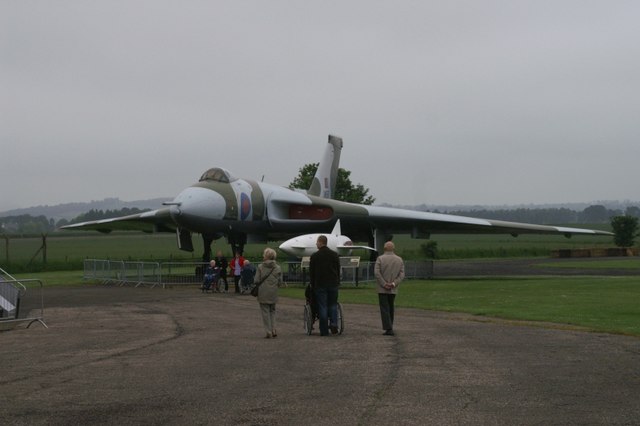






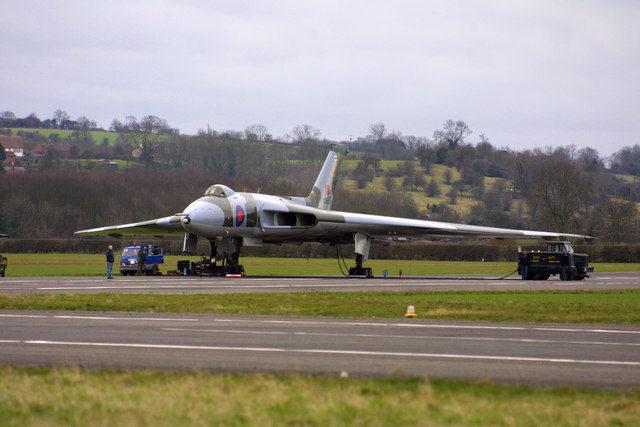


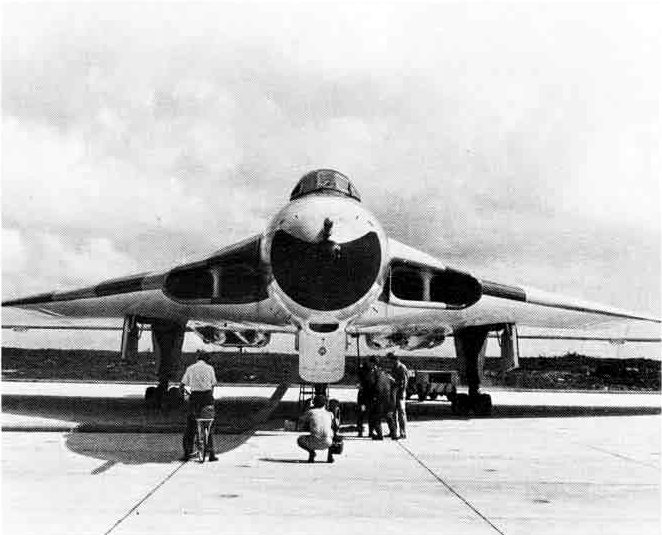




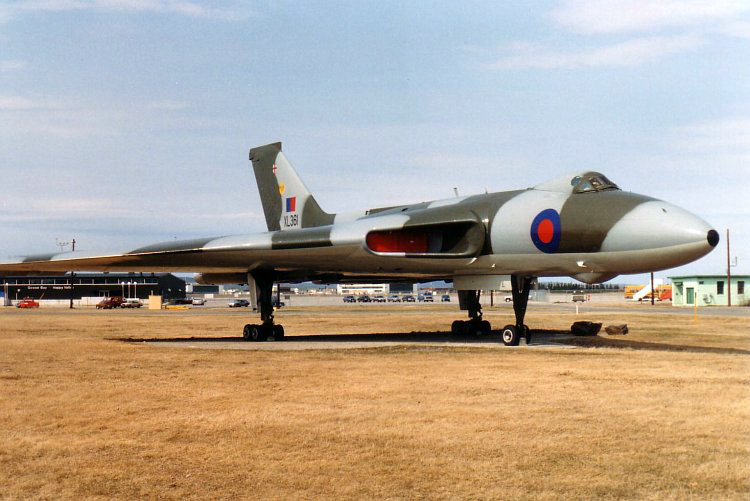


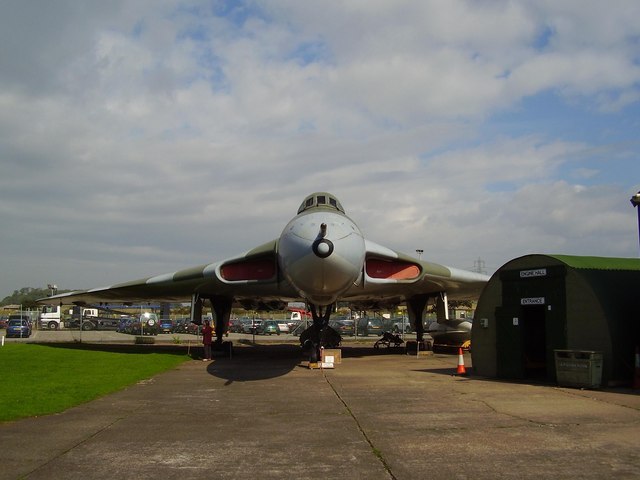


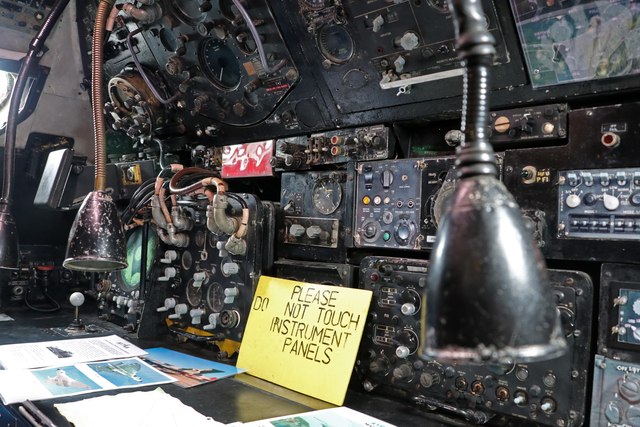


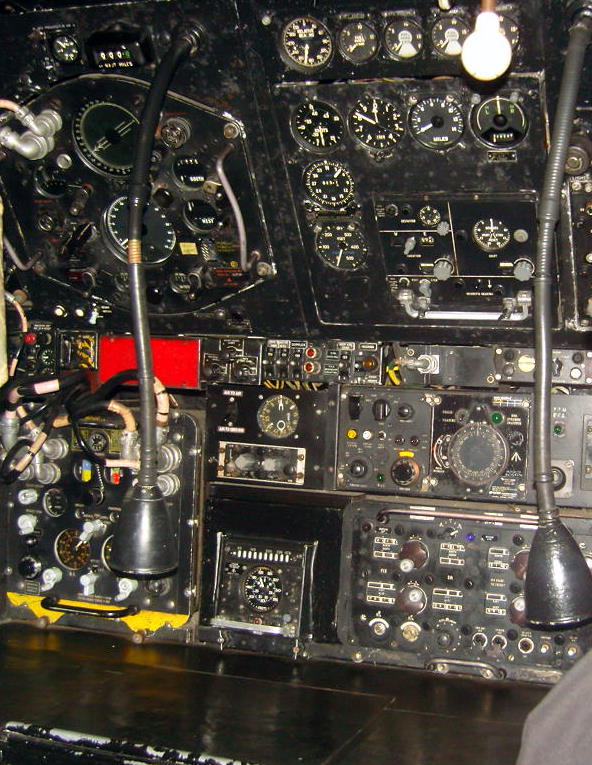


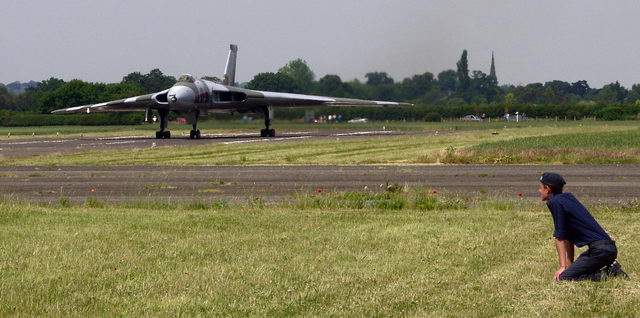


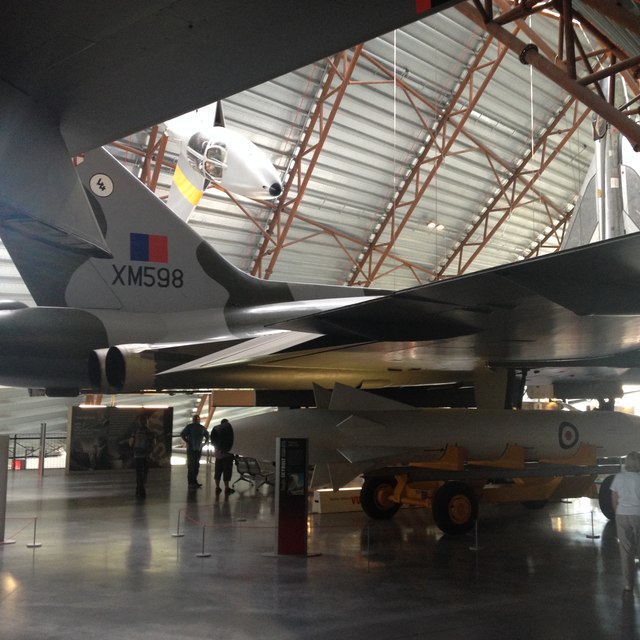


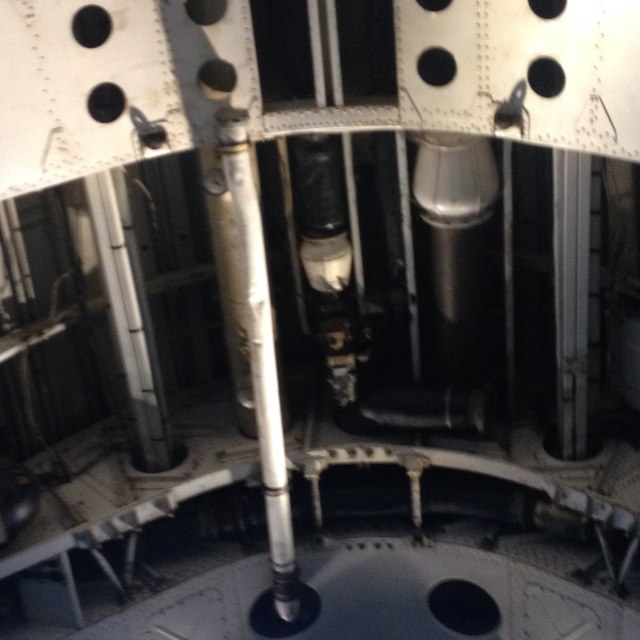


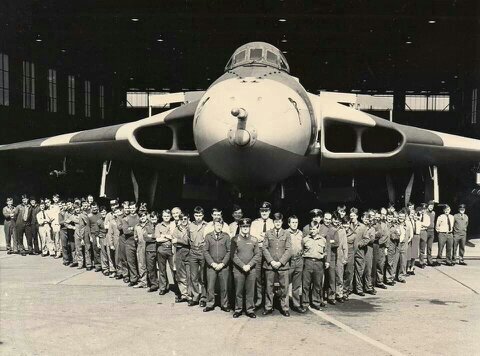


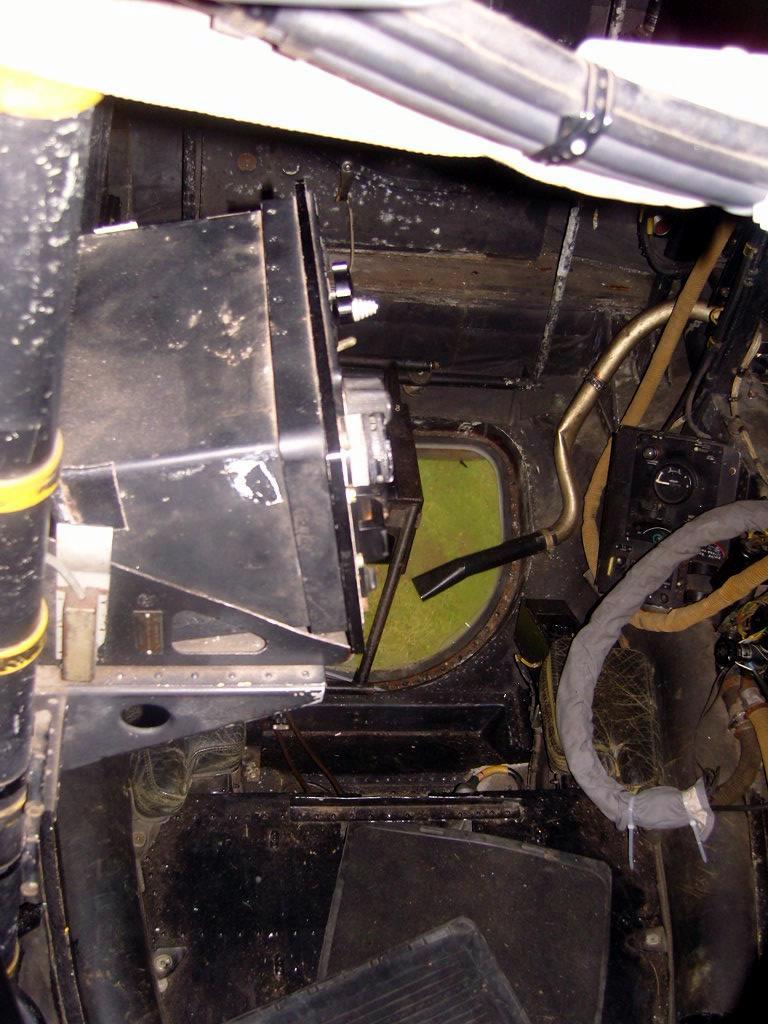


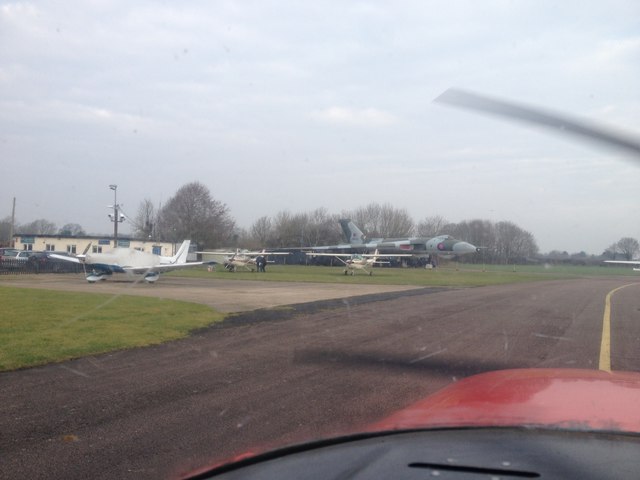

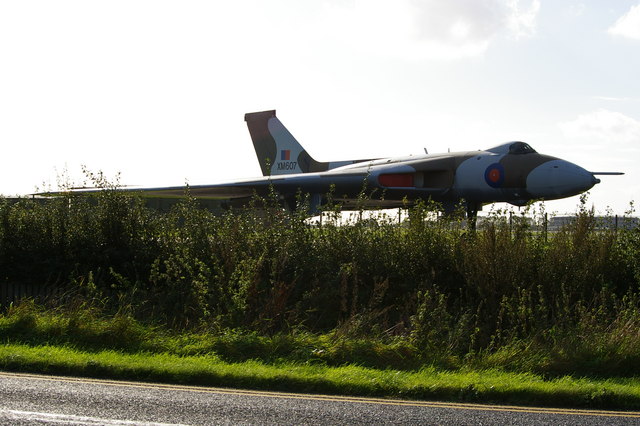


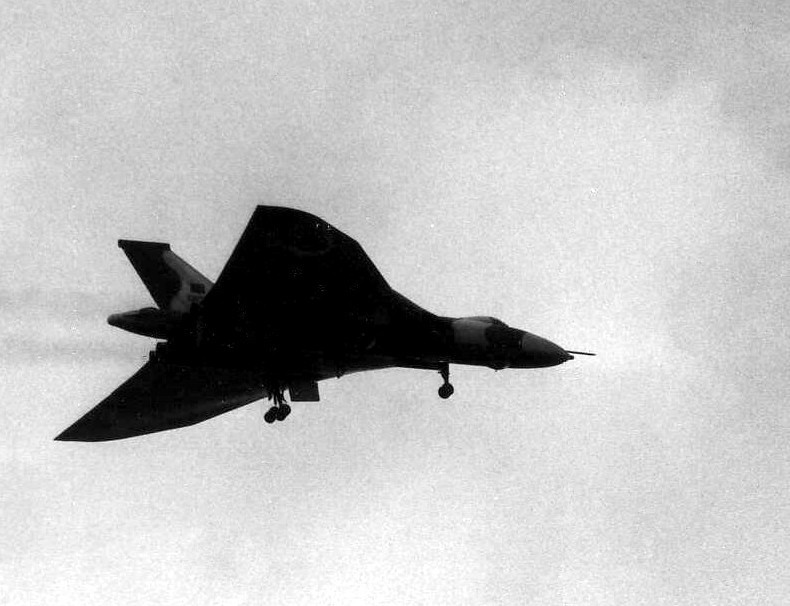


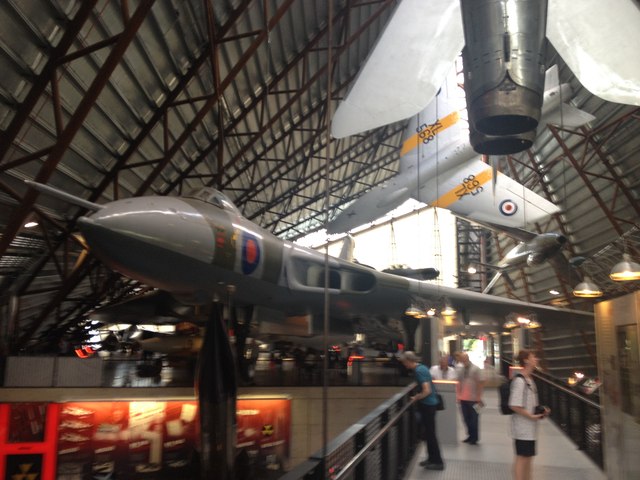
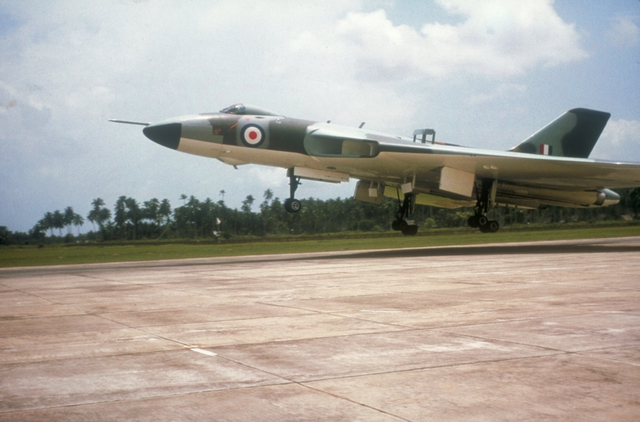


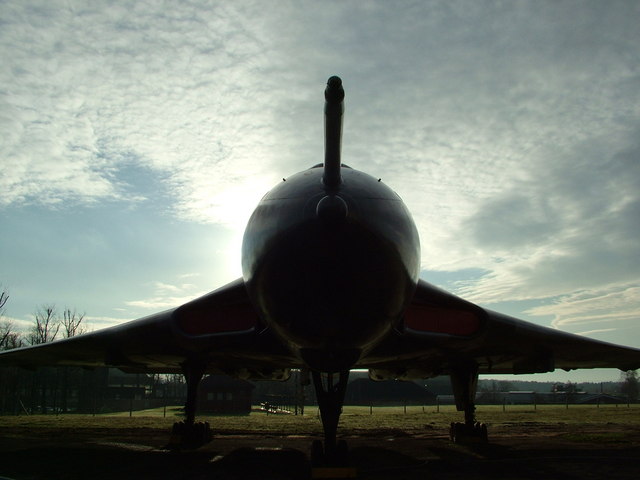
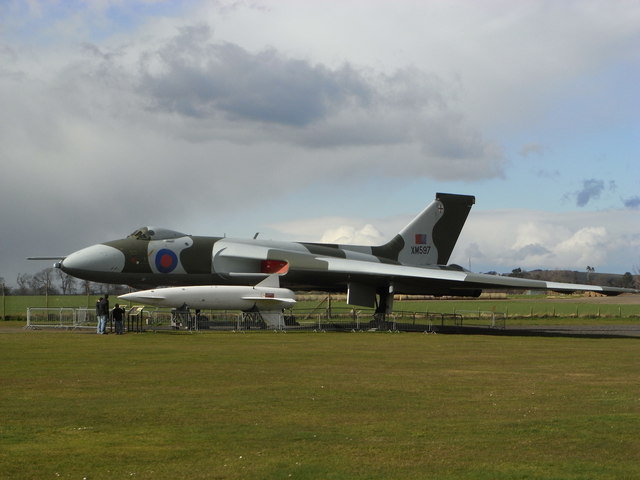


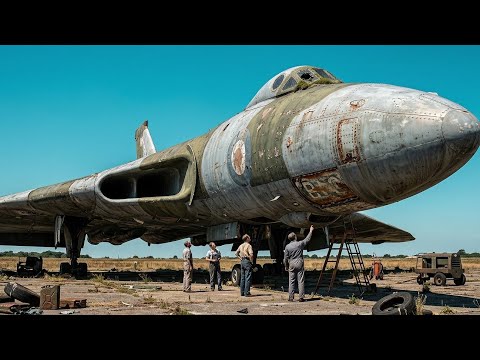
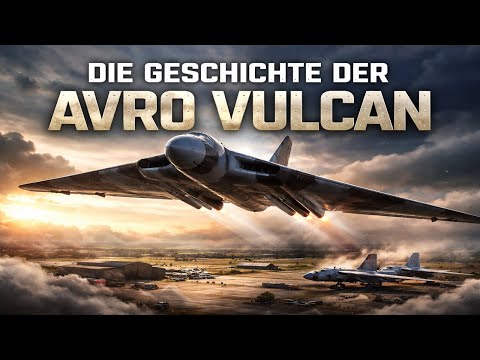
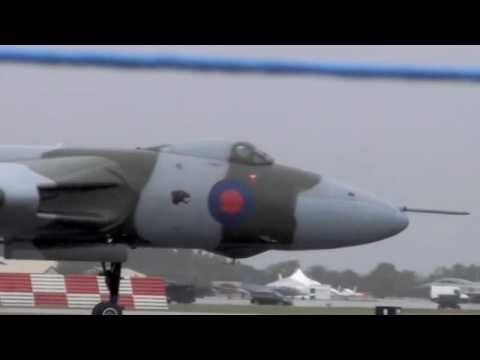
The Avro Vulcan was a four-jet, delta-wing strategic bomber built to fly high and fast, and the Royal Air Force kept it in service from 1956 to 1984. A.V. Roe and Company (Avro) designed it to meet Specification B.35/46, and from July 1963 it officially became the Hawker Siddeley Vulcan. Of Britain's three V bombers it was the most technically ambitious and, for that very reason, the riskiest bet; when its design began it was the largest aircraft ever conceived around a delta wing. Its roots lie in Britain's post-war atomic programme, which needed an aircraft able to deliver a nuclear bomb over long distances. Roy Chadwick and Stuart Davies's team reached the delta through its own reasoning, stripping away the tail and rear fuselage until little more than a flying wing remained. Small Avro 707 research aircraft were built to gain experience, and the prototype VX770 made its first flight on 30 August 1952 with Roly Falk at the controls. The B.1 reached the RAF in 1956, and the B.2 followed from 1960 with more powerful Olympus engines, a larger and thinner wing, a new electrical system and electronic countermeasures. For much of the Cold War the Vulcan was the backbone of the United Kingdom's airborne nuclear deterrent, carrying free-fall bombs and, from 1963, the Blue Steel stand-off missile. In the mid-1960s it gave up high altitude for low-level penetration. Ironically, its only combat sorties were conventional: the 1982 Black Buck raids on Stanley airfield during the Falklands War, at the time the longest-ranged bombing raids in history. In its final years nine aircraft flew maritime radar reconnaissance and six were turned into K.2 tankers. Woodford built 134 production Vulcans, 45 B.1s and 89 B.2s. The last one in RAF service, XH558, was restored by a charitable trust and flew as a civilian display aircraft from 2008 to 2015; like XL426 and XM655 it is now kept able to taxi, while other examples are displayed in museums in Britain and North America.
Related events
Related sheets
Category
Avro Vulcan in the news
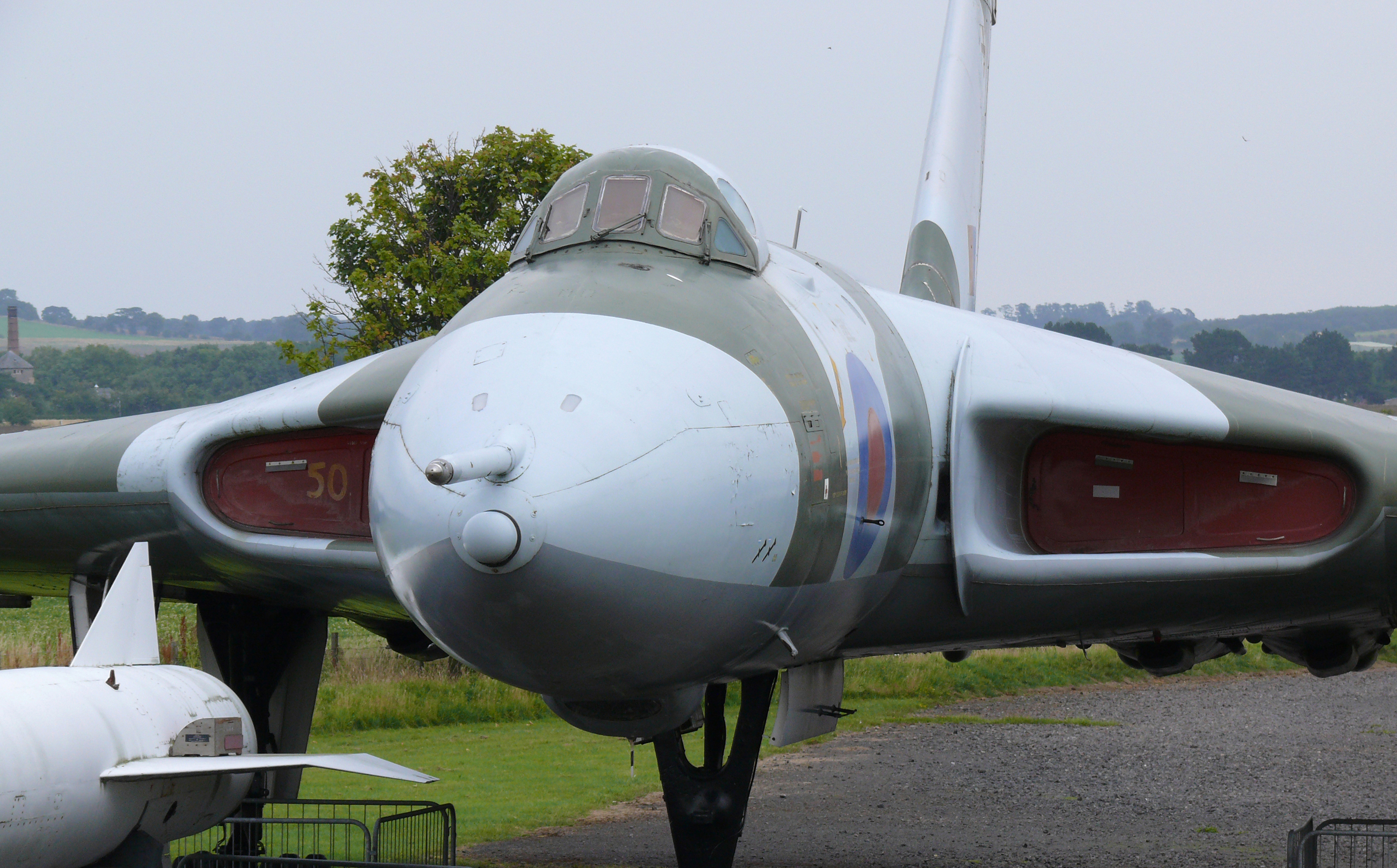
The second of the Royal Air Force’s ‘V bombers’ The Vulcan was the second of the Royal Air Force’s ‘V bombers’ and like the Valiant and Victor provided part of Great Britain’s nuclear deterrent…
History
A bomb without an aircraft
The Vulcan's story begins with Britain's decision to build its own atomic weapons. The American Atomic Energy Act of 1946 shut off nuclear cooperation even with Manhattan Project partners, and in August 1946 the Air Staff issued requirement OR.1001 for a weapon weighing no more than 10,000 lb. What was missing was a way to deliver it. In January 1947 the Ministry of Supply circulated Specification B.35/46, which asked for a bomber able to carry a 10,000 lb bomb to a target 1,500 nautical miles from a base anywhere in the world, cruising at 500 knots between 35,000 and 50,000 ft, with a fully loaded weight of no more than 100,000 lb. Six companies tendered, Avro among them, under the project number Avro 698.
From flying wing to delta
Led by technical director Roy Chadwick and chief designer Stuart Davies, the Avro team soon concluded that no conventional aircraft could meet those numbers, and neither the Royal Aircraft Establishment nor the United States had useful high-speed data to offer. Their sums showed that an orthodox design with a 45° swept wing would have doubled the weight limit. Because sweep already provided longitudinal stability, they deleted the tail and the fuselage that carried it, leaving something close to a flying wing with fins at the tips. Shortening the span and filling in the space between the tips to keep the wing area produced the delta, and the weight estimate fell far enough to satisfy the specification. Alexander Lippisch is usually credited as the father of the delta wing, but Chadwick's group arrived at it by its own logic. The first scheme buried four engines, stacked in pairs, inside the wing, with two bomb bays.
In August 1947 Chadwick was killed in the crash of the Avro Tudor 2 prototype and Sir William Farren succeeded him. A thinner wing forced the engines to sit side by side in pairs either side of a single bomb bay, and the wingtip fins gave way to one central fin. Handley Page won a contract for its crescent-winged HP.80 in November 1947, and in January 1948 Avro was told to build two 698 prototypes. As insurance against both radical designs failing, Short was ordered to build the SA.4 Sperrin, and in April 1948 the more conventional Vickers Type 660 was authorised; it became the Valiant.
The Avro 707s: the delta in miniature
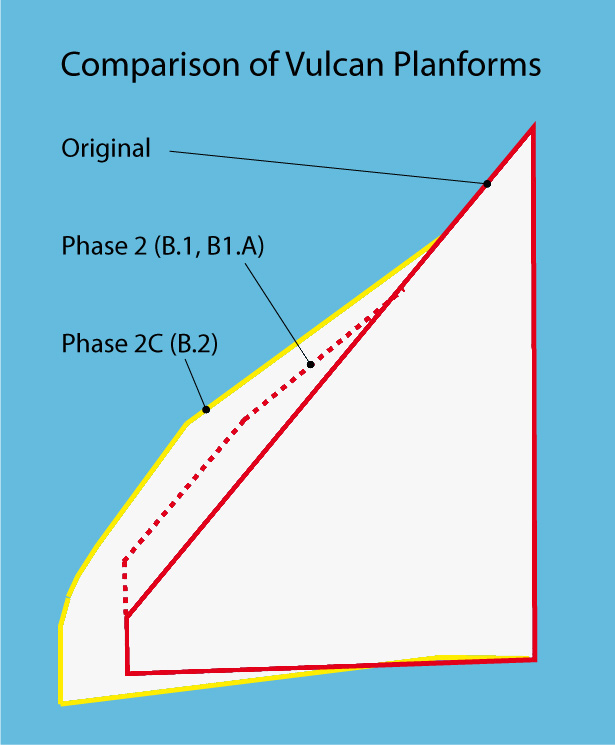
With no delta-wing flying experience, Avro planned two research aircraft based on the 698: the one-third-scale 707 for low-speed handling and the half-scale 710 for high speed. The 710 was dropped as too time-consuming and replaced by a fast version of the 707, the 707A. The first 707, VX784, flew in September 1949 and crashed later that month, killing test pilot Samuel Eric Esler. It was followed by the 707B VX790, flown by Roly Falk in September 1950, and the 707A WD280 in July 1951; a second 707A and the two-seat 707C came later. Because the programme ran late, its influence on the final design was limited, although it proved the delta concept and showed that a longer nosewheel leg was needed for the best take-off attitude. Far more decisive were the wind-tunnel tests at Farnborough, which led to a leading edge with a crank and droop to delay compressibility drag: the so-called "phase 2" wing.
The VX770 and VX777 prototypes
Painted gloss white and fitted with a pure delta wing, prototype VX770 first flew on 30 August 1952 with Falk alone on board. Because the intended Bristol Olympus engines were not yet available it used four Rolls-Royce Avon RA.3s of 6,500 lbf, with temporary extra fuel in the bomb bay, and the following month it appeared at the SBAC show at Farnborough. Avro had suggested the name Ottawa, honouring its Canadian offshoot, and Flight magazine floated Albion, but the Chief of the Air Staff wanted a family of V-named bombers and the Air Council chose Vulcan, after the Roman god of fire. In January 1953 VX770 was grounded to receive wing tanks and Armstrong Siddeley Sapphire engines of 7,500 lbf, flying again that July.
The second prototype, VX777, flew on 3 September 1953. Closer to production standard, it had a longer nose leg, a visual bomb-aiming blister under the cockpit and, at Falk's suggestion, a fighter-style stick in place of the control wheel. It started with Olympus 100 engines, was badly damaged in a heavy landing at Farnborough in July 1954 and, once repaired, received Olympus 101s of 11,000 lbf before resuming trials at Boscombe Down.
High-speed problems and certification
Exploring VX777's speed and altitude envelope revealed buffeting and an alarming tendency to drop into an uncontrollable dive close to the limiting Mach number, unacceptable in an unarmed bomber. The phase 2 wing cured the buffeting and an automatic Mach trimmer countered the dive, so effectively that at high speed the pilot had to push the stick forward to stay level. The first production B.1, XA889, flew in February 1955 with the original wing. In September 1955 Falk stunned the Farnborough crowd by barrel-rolling the second production aircraft, XA890, and was promptly told not to repeat the "dangerous" manoeuvre. Fitted with the phase 2 wing, XA889 went to Boscombe Down in March 1956 for the type's first Certificate of Airworthiness, granted the following month.
Vulcan B.1 and B.1A
The first 15 B.1s had Olympus 101 engines, and many of these metal-finished aircraft stayed with the Ministry of Supply for trials. The first for the RAF reached No. 230 Operational Conversion Unit in July 1956, and later aircraft in anti-flash white with Olympus 102s of 12,000 lbf joined squadrons from July 1957; those engines were eventually brought up to Olympus 104 standard at 13,500 lbf. Rebuilding B.1s as B.2s was rejected on cost grounds, but between 1959 and 1963 Armstrong Whitworth upgraded 28 aircraft to B.1A standard, with electronic countermeasures in an enlarged tail cone, in-flight refuelling and UHF radio. Never strengthened for low flying, they were all withdrawn by the late 1960s.
Vulcan B.2
The go-ahead for the B.2 came in May 1956 under chief designer Roy Ewans. The aim was to fly higher over the target, gain flexibility through in-flight refuelling, add countermeasures against increasingly sophisticated Soviet defences and carry the Blue Steel missile. VX777 was rebuilt with the larger, thinner phase 2C wing and flew in that form in August 1957, while several B.1s served as testbeds for the new engines, the AC electrical system and the electronic equipment. The first B.2, XH533, flew in September 1958 on Olympus 200 engines, six months before the last B.1 was delivered. The second, XH534, already had Olympus 201s of 17,000 lbf, a refuelling probe and the bulged countermeasures tail cone. From the eleventh aircraft, XH557, the intakes were deepened, and the twelfth, XH558, became the first B.2 delivered to the RAF, in July 1960.
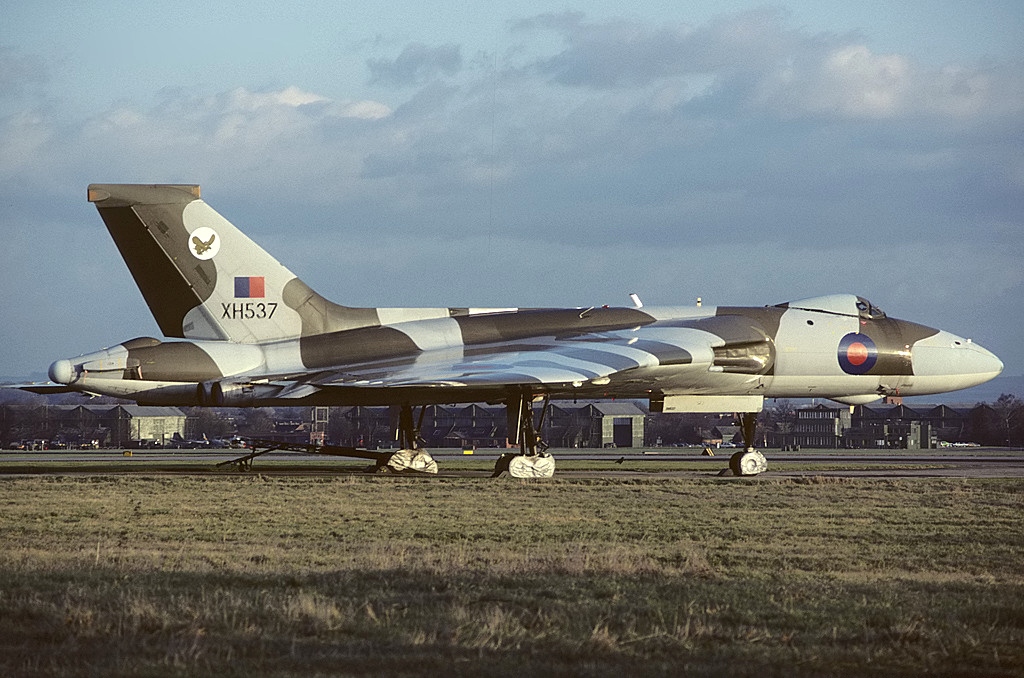
XL317 was the first production Vulcan able to carry Blue Steel, and 33 aircraft were delivered with that capability. Underwing fittings were then added for the American Skybolt ballistic missile, which was cancelled in November 1962. The final aircraft received Olympus 301 engines of 20,000 lbf. The last B.2, XM657, was delivered in 1965, and over its career the type gained rapid engine starting, bomb-bay fuel tanks, wing strengthening for low-level flight, terrain-following radar and improved countermeasures.
A conventionally built delta
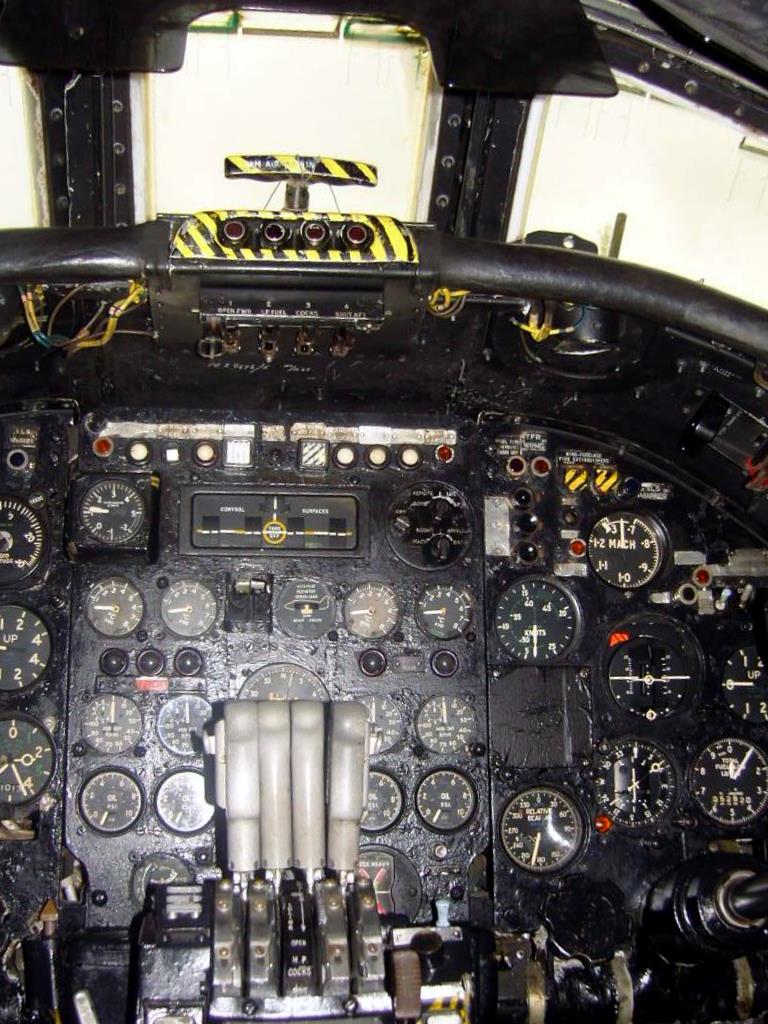
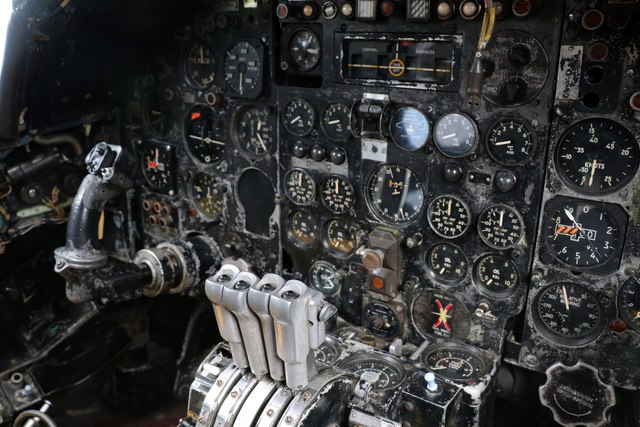
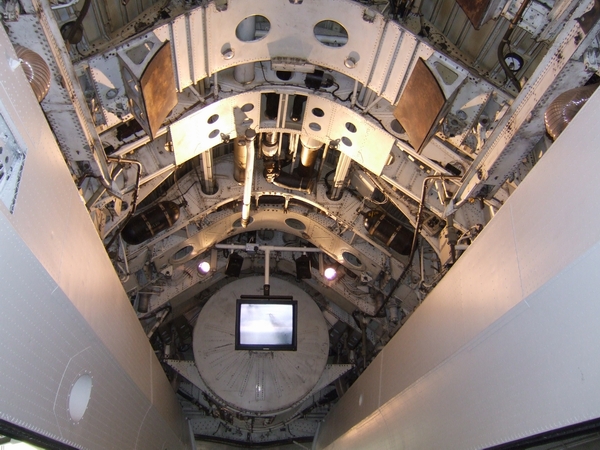
Despite its shape, the airframe followed traditional practice and, except for the most highly stressed parts, was made of standard light alloys. The pressure cabin held five crew on two levels: the two pilots on Martin-Baker ejection seats and, below them and facing aft, the radar navigator, the plotter navigator and the air electronics officer, who had to leave through the entrance door. The lack of ejection seats for the rear crew remained controversial throughout the aircraft's career. Fuel was held in 14 bag tanks, four in the fuselage and five in each wing, and a 1957 technical note found that, thanks to its shape, the Vulcan was by far the simplest radar target yet studied.
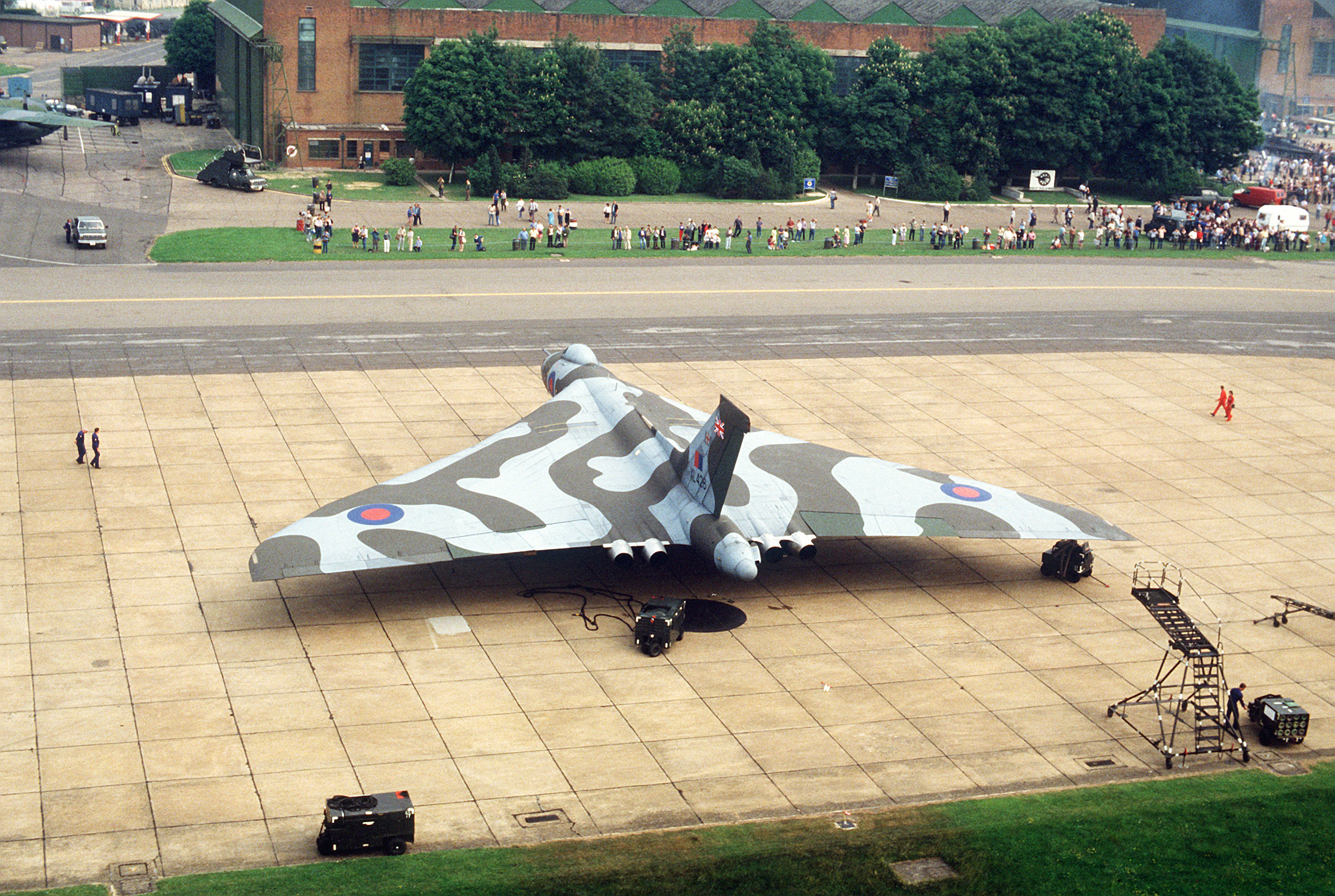
The B.1 had four elevators and four ailerons; the B.2 replaced them with eight elevons. The B.2 also swapped direct current for a three-phase AC system with four alternators, a ram air turbine and an airborne auxiliary power plant. This mattered because the flying controls were entirely electro-hydraulic and a total electrical failure meant loss of control: two B.1s, XA891 and XA908, were lost that way. The engines, four two-spool Olympus units buried in the wing next to the fuselage, came from a design begun in 1947 that later evolved into the powerplants of the TSR-2 and Concorde; at around 90 per cent power they produced the famous howl that drew airshow crowds.
Entry into service and deployments
The RAF received its first B.1, XA897, in September 1956 and sent it straight off on a round-the-world demonstration tour. On its return, on 1 October 1956, it crashed while landing in bad weather at Heathrow; both pilots ejected and the four occupants in the rear were killed. Crew training began in 1957, and No. 83 Squadron became the first operational unit, followed by No. 101 Squadron. In-flight refuelling from Valiant tankers was added from 1959, though it fell into disuse in 1965. Vulcans regularly visited the Commonwealth and the Far East, Singapore above all, and in June 1961 one flew 18,507 km from Scampton to Sydney in just over 20 hours with three refuellings. They also took part in the 1961 Sky Shield exercise against NORAD's defences and in the US Strategic Air Command's bombing competitions.
The nuclear deterrent
As part of Britain's independent deterrent, the Vulcan first carried the Blue Danube fission bomb, supplemented by American Mk 5 bombs under Project E and by the tactical Red Beard. Until a hydrogen bomb was ready the interim Violet Club weapon was used, followed by Yellow Sun, whose Mk 2 version was the first British thermonuclear weapon deployed. From February 1963 three B.2 squadrons carried Blue Steel, a rocket-powered stand-off bomb. Under Quick Reaction Alert, from 1962 every base kept armed aircraft ready to be airborne within fifteen minutes, and during the Cuban Missile Crisis of October 1962 Bomber Command raised its alert state.
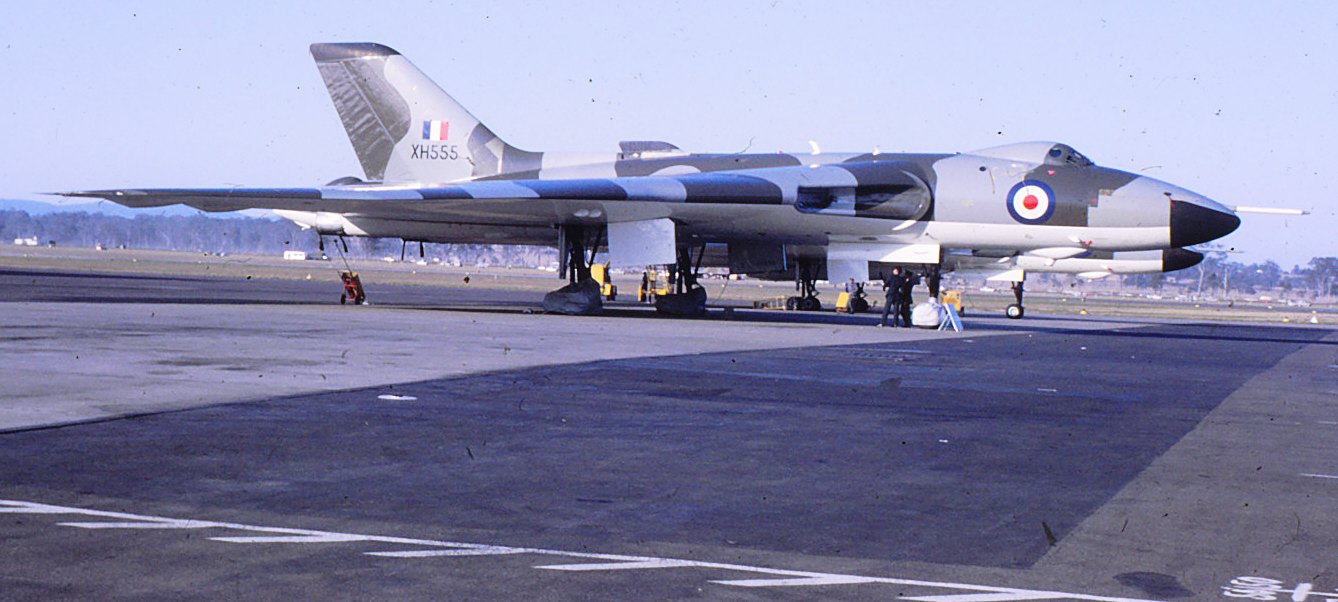
The cancellation of Skybolt left Blue Steel as the main weapon, and stronger air defences forced a new profile: high transit, low-level approach and delivery of weapons such as the WE.177B. That change came at a price, because an aircraft designed for high altitude suffered structural fatigue near the ground and its training speed had to be limited. When the Polaris submarines took over the strategic deterrent and Blue Steel was withdrawn in 1970, the Vulcan stayed on in a tactical nuclear role within NATO and with two squadrons based in Cyprus.
Maritime radar reconnaissance
In November 1973 No. 27 Squadron re-formed at Scampton with Vulcans for maritime radar reconnaissance. Its aircraft patrolled the seas around the British Isles, including the strategic gap between Greenland, Iceland and the United Kingdom, using the H2S radar to track shipping. It eventually flew nine B.2 (MRR) aircraft, without terrain-following radar, with LORAN C navigation and a gloss finish to resist sea spray. It also inherited the air-sampling task of collecting nuclear test fallout for Aldermaston, for which five aircraft carried pylons on the old Skybolt hardpoints. The squadron disbanded in March 1982.
Black Buck: the Falklands
By spring 1982 only three Vulcan squadrons remained, Nos. 44, 50 and 101 at Waddington, all due to disband by 1 July 1982. After Argentina invaded the Falklands, the War Cabinet authorised on 27 April an attack on Stanley airfield from Ascension Island. Aircraft with Olympus 301 engines were chosen, the long-blocked refuelling system was reinstated, inertial navigation was installed and Buccaneer countermeasures pods were hung under the wings on the old Skybolt points. Even the bomb carriers had to be retrieved from a scrapyard.
On the first mission, on the night of 30 April to 1 May, eleven Victor tankers and two Vulcans took off. John Reeve's primary aircraft turned back with a faulty window seal and Martin Withers pressed on alone. After a chain of refuellings complicated by a thunderstorm, he dropped his twenty-one bombs from 10,000 feet and one cratered the runway, denying it to fast jets. The codeword "superfuse" signalled success, and Withers was awarded the Distinguished Flying Cross. The round trip of about 16 hours was at the time the longest-ranged bombing raid in history.
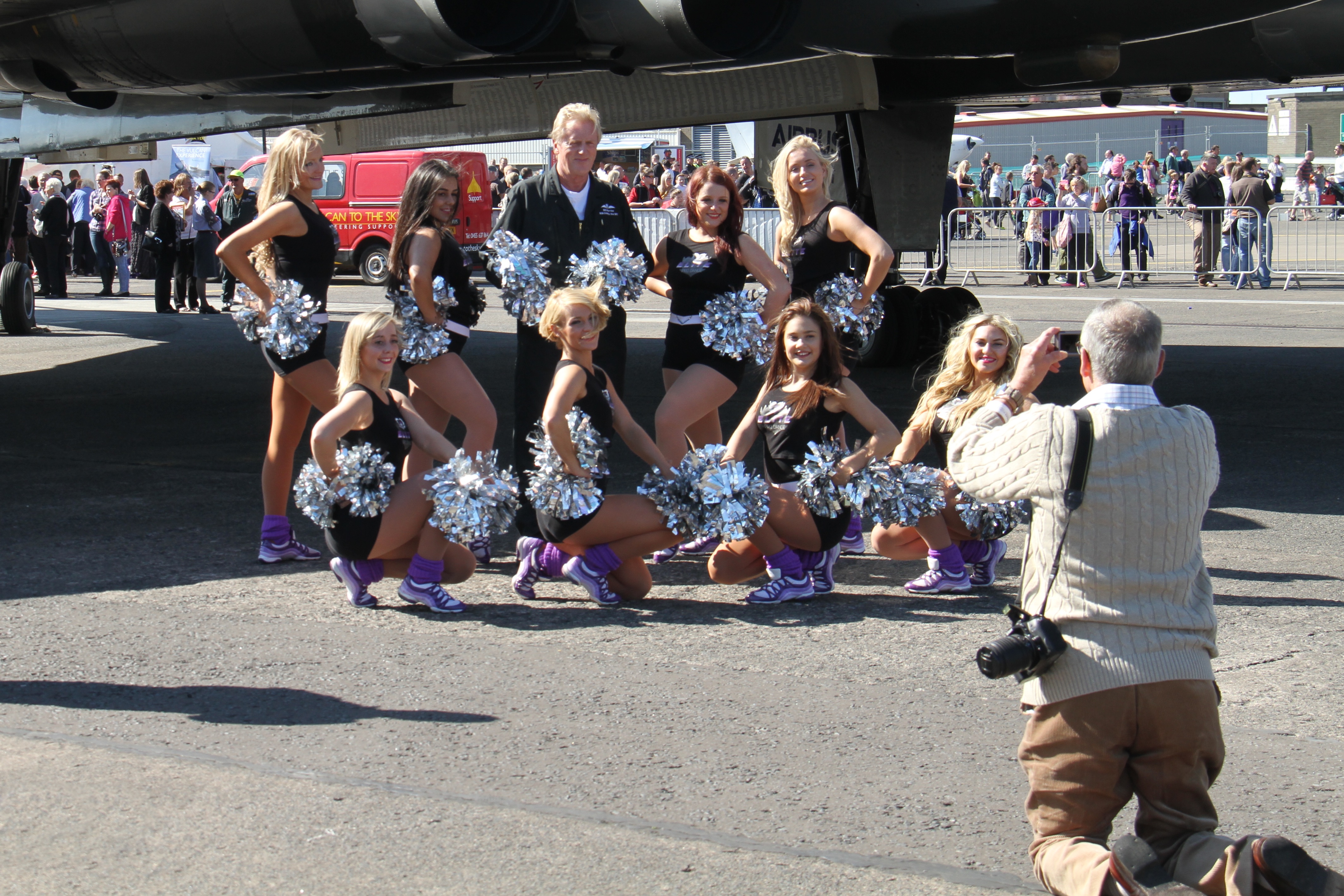
There were seven Black Buck missions, and five reached their targets: three against the runway and its facilities and two against radars with Shrike missiles. On the second, on 3–4 May, every bomb missed the runway. On 3 June 1982 XM597 broke its probe while refuelling on the way home and, without enough fuel for Ascension, diverted to Rio de Janeiro, where it was held until hostilities ended. Black Buck's military value is still debated: the runway was soon repaired for Hercules transports, and critics such as Commander Nigel Ward argued that the fuel burned could have supported hundreds of Sea Harrier sorties, while supporters stress that it kept Argentine fast jets away from the islands.
K.2 tankers and retirement
The campaign had used up much of the Victor tankers' fatigue life, so on 4 May 1982 approval was given to convert six Vulcans into single-point tankers, with a hose drum unit in the tail cone and extra tanks in the bomb bay. The first, XH561, reached Waddington just 50 days after the order. The K.2s, the only Vulcans able to jettison fuel in an emergency, served with No. 50 Squadron until it disbanded in March 1984, ending the type's operational career.
Engine testbeds
Several Vulcans were used to test engines. VX770 flew with Rolls-Royce Conway turbofans, the world's first, until 20 September 1958, when its starboard wing broke up during a flypast at Syerston, killing its four crew and three people on the ground. XA894 carried a fifth engine, the TSR-2's Olympus 320, until it was destroyed by a ground fire at Filton on 3 December 1962. XA902 tested Conway and Spey engines, and XA903 trialled Concorde's Olympus 593 between 1966 and 1971 and then the Tornado's RB.199, retiring in 1979 as the last B.1 to fly.
Accidents
Besides those already mentioned, the Vulcan's record includes XA908, lost near Detroit in October 1958 after a total electrical failure; XA891 in 1959, the first time a whole crew escaped; XM645, which broke up over Żabbar in Malta in 1975; and XL390, which crashed during a display at Glenview in the United States in 1978. In civilian hands, XH558 lost two engines in 2012 after ingesting desiccant bags left in an intake, without damage to the airframe.
Unbuilt projects and export
Avro studied a military transport and an airliner derived from the 698, a supersonic development and, in 1960, the Vulcan B.3, with an enlarged wing and up to six Skybolts for 12-hour patrols; it even proposed slinging three Gnat fighters beneath the bomber. None was built. Australia considered the Vulcan as a Canberra replacement, and in 1981 Argentina asked to buy some; London approved the sale of a single aircraft, but the Falklands invasion ended the matter. No foreign sale ever took place.
XH558 and the survivors
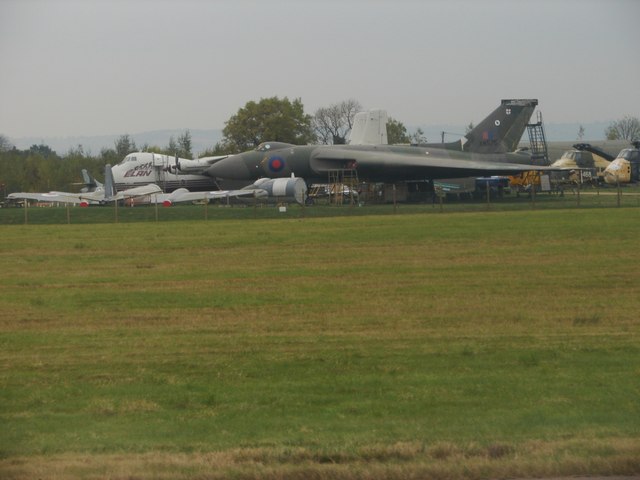
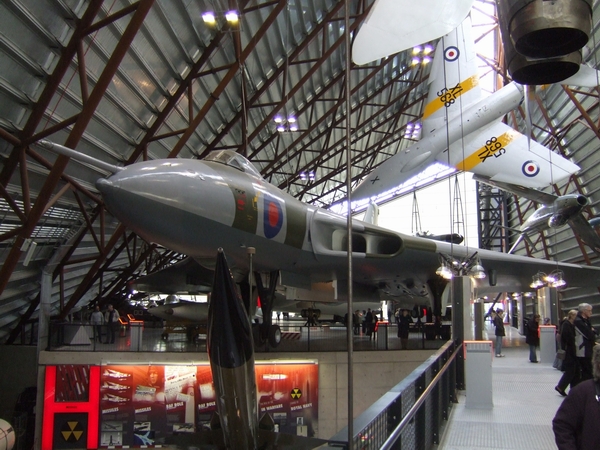
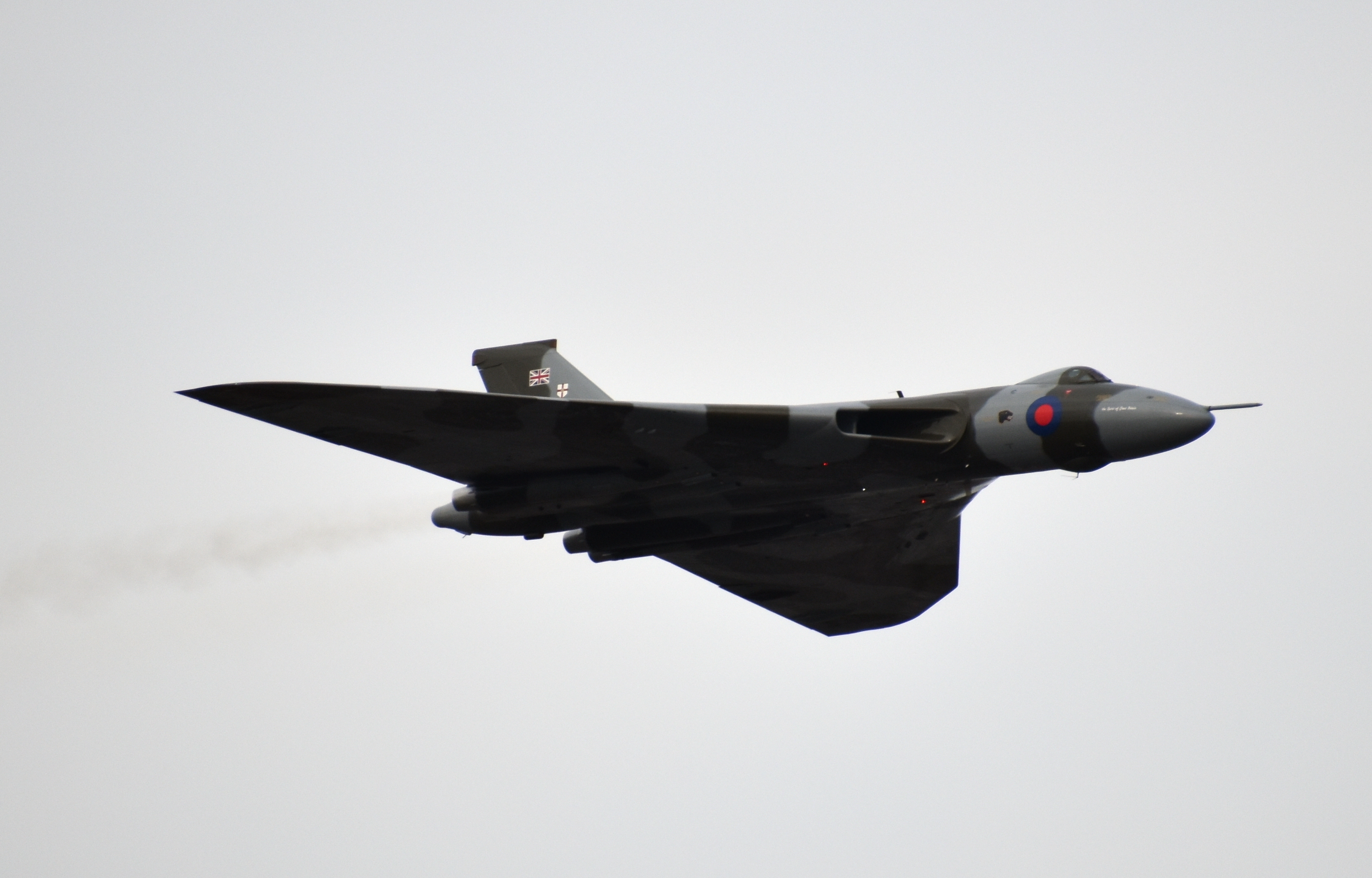
After retirement the Vulcan Display Flight kept XL426 flying and, from 1985, XH558, which made its last RAF flight at Cranfield on 20 September 1992. Sold in 1993, it spent years at Bruntingthorpe until the Vulcan To The Sky Trust, backed by donations and lottery funding, returned it to the air on 18 October 2007. From 2008 it flew at airshows as a civilian aircraft, was named Spirit of Great Britain in 2010 and moved to Doncaster Sheffield in 2011. The withdrawal of support by the companies that maintained it ended its flying: the last flight was on 28 October 2015. It is now kept able to taxi, as are XL426 at Southend and XM655 at Wellesbourne Mountford, and other Vulcans can be seen at Waddington, Newark, Carlisle, Norwich, the RAF Museum in London and the Strategic Air Command Museum in Nebraska.
Variants
| Vulcan B.1 | Vulcan B.2 | Vulcan K.2 | Vulcan B.1A | Vulcan B.2 (MRR) | Vulcan B.3 | Vulcan (prototipo VX770) | |
|---|---|---|---|---|---|---|---|
| First flight | February 4, 1955 | August 31, 1957 | June 18, 1982 | — | — | — | — |
| Aircraft type | — | Strategic bomber | — | — | — | — | — |
| Powerplant | — | 4 × Bristol Siddeley Olympus 201 turbojets of 17,000 lbf (76 kN) or Olympus 301 of 20,000 lbf (89 kN) | — | — | — | — | — |
| Powerplant | 4 × Bristol Olympus 101 | 4 × Bristol Olympus 201 | 4 × Bristol Olympus | 4 × Bristol Olympus | 4 × Bristol Olympus | Rolls-Royce Olympus 301 con poscombustión | 4 × Bristol Siddeley Olympus 301 |
| Thrust per engine | 48.9 kN | 89 kN Best value in this row | — | — | — | — | — |
| Length | 29.6 m | 30.5 m Best value in this row | — | — | — | — | 30.5 m Best value in this row |
| Wingspan | 30.3 m | 33.8 m | 33.8 m | 30.3 m | 33.8 m | 37 m Best value in this row | 33.8 m |
| Height | 8.1 m | 8.3 m Best value in this row | 8.3 m | 8.1 m | 8.3 m | — | 8.3 m Best value in this row |
| Wing area | 330 m² | 368 m² | 368 m² Best value in this row | 330 m² | 368 m² Best value in this row | — | 368 m² |
| Empty weight | — | 36,000 kg | — | — | — | — | — |
| MTOW | 77,111 kg | 115,000 kg | 92,534 kg | — | 92,534 kg | 154,000 kg Best value in this row | — |
| Top speed | — | 1,038 km/h Best value in this row | — | — | — | — | 1,038 km/h Best value in this row |
| Max speed altitude | — | 12,000 m | — | — | — | — | — |
| Cruise speed | 913 km/h | 1,006 km/h Best value in this row | — | — | — | — | 1,006 km/h Best value in this row |
| Cruise altitude | 13,716 m | — | — | — | — | — | — |
| Service ceiling | 17,069 m | 19,810 m Best value in this row | — | 17,069 m | — | — | 19,810 m Best value in this row |
| Range | — | 7,400 km | — | — | — | — | 7,403 km Best value in this row |
| Range conditions | — | 7,400 km (4,600 mi); extendable by in-flight refuelling | — | — | — | — | — |
| Armament | — | 1 Blue Steel missile, or 1 free-fall nuclear bomb, or 21 conventional 1,000 lb (454 kg) bombs; in 1982, AGM-45 Shrike anti-radiation missiles under the wings | None | — | None | — | — |
| Max weapons load | — | 9,500 kg Best value in this row | 0 kg | — | 0 kg | — | — |
| Cargo capacity | — | The bomb bay could take one or two additional fuel tanks | — | — | — | — | — |
| Crew | 5 Best value in this row | 5 Best value in this row | 5 Best value in this row | 5 Best value in this row | 5 Best value in this row | — | — |
| Units built | 45 | 89 Best value in this row | 6 | 28 | — | 0 | — |
Images
Elsewhere
- AirHistory.netAvro Vulcan B.2 XH558 ↗
- AirHistory.netAvro Vulcan B.2A XJ824 ↗
- GeographAvro Vulcan XH558 ↗
- GeographAvro Vulcan XH558 ↗
- GeographAvro Vulcan preserved (Geograph) ↗
- Science Museum GroupAvro Vulcan B1 XA891 in flight ↗
- Science Museum GroupCrew boarding Avro Vulcan B1 XA891 ↗
- Science Museum GroupAvro Vulcan B2 XH533 taking off ↗
- MilitaryAircraft.deAvro Vulcan XH558 (G-VLCN) at RIAT, RAF Fairford ↗
- FlightGlobal (AAP Prints)Avro Vulcan prototype at the SBAC airshow, 1954 ↗
- FlightGlobal (AAP Prints)Avro Vulcan ↗
- Mary Evans Picture LibraryAvro Vulcan B.1 at RAF Akrotiri, c. 1960 ↗