The British bomber made to defeat Russia... Avro Vulcan
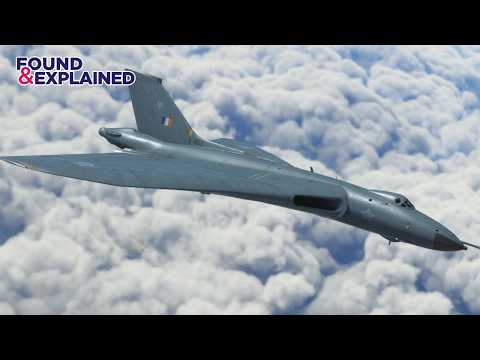
Video from the channel Found And Explained about Avro Vulcan, linked on its Above Ten Thousand entry. Duration: 21:55. Language: English. Video type: Documentary.
What it's about
An explainer piece about the Avro Vulcan, the delta-wing bomber with which the United Kingdom maintained part of its nuclear deterrence during the Cold War. It covers its origin, the scale research aircraft, its versions, the derivative projects that were never built and its only combat use, in the Falklands War.
Historical context
When the USSR acquired nuclear weapons in 1949, the United Kingdom decided to develop its own with a limited budget. The Ministry of Supply issued specification B.35/46, which called for a medium bomber able to carry a 10,000-pound bomb 1,500 nautical miles, cruising at 500 knots between 35,000 and 50,000 feet with a maximum weight under 100,000 pounds. At Avro, Roy Chadwick and Stuart Davies chose a tailless delta wing, the Avro 698 project. Chadwick died in 1947 in a test flight of the Avro Tudor 2, and the government commissioned more conventional alternative designs from Short and Vickers. To study the behaviour of the delta, the one-third-scale Avro 707s were built, in A, B and C versions; test pilot Eric Esler died in the first of these, which had no ejector seat.
Key facts
The 698 first flew on 30 August 1952 piloted by Roly Falk and was displayed that year at Farnborough. The name Vulcan came from a request by the Chief of the Air Staff, Sir John Slessor, that it begin with V. The B1 carried Bristol Olympus 101 engines, H2S Mk 9 radar and five crew members, of whom only the two pilots had ejector seats. From 1956, an improved version was developed with in-flight refuelling, electronic countermeasures, capability for the Blue Steel missile and Olympus 200-series engines, whose air intake is credited with the aircraft's characteristic howl. A passenger airliner, the Avro Atlantic, a troop-transport version, a missile-carrying B3 and a Gnat fighter carrier were also studied. In 1982, with the type already being withdrawn, B2s set off from Ascension Island on the Black Buck missions against Port Stanley airfield, with five in-flight refuellings and about 16 hours of flying; the first, on 1 May, cratered the runway. The B2 example XH558 has been displayed at numerous air shows.