Avro Vulcan – Tödliche Abschreckung aus der Luft
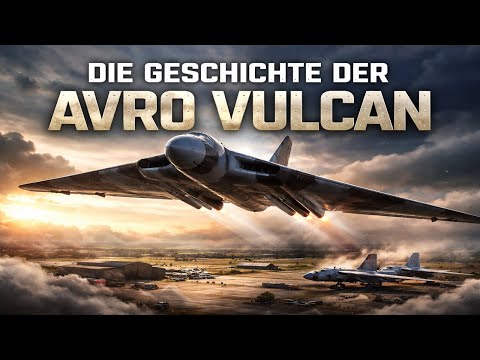
Video from the channel CallSignAero about Avro Vulcan, linked on its Above Ten Thousand entry. Duration: 17:42. Language: German. Video type: Documentary.
What it's about
Documentary on the history of the Avro Vulcan, the delta-wing bomber that was one of the pillars of British nuclear deterrence during the Cold War. It covers its origins and its adaptation to new threats, and reviews its versions up to retirement.
Historical context
After 1945, the United Kingdom wanted its own nuclear capability so as not to depend solely on protection from the United States. Since missiles were still unreliable and imprecise, the delivery vehicle had to be a strategic bomber, and in the late 1940s the V bomber programme was born, which produced three models. Avro opted for a large delta wing, which offered structural strength, internal space for fuel and good high-altitude performance. The prototype flew on 30 August 1952. In the late 1950s, new Soviet surface-to-air missiles made high-altitude flight vulnerable and the Vulcan switched to low-level penetration. In 1982 it took part in the Black Buck missions of the Falklands War, supported by a complex air-to-air refuelling chain, and in 1984 it ended its active service.
Highlights
The crew numbered five. Only the two pilots had ejection seats; the other three had to jump through a hatch. The B.1 was designed to operate at high altitude, and the B.1A incorporated the first electronic countermeasures. The B.2, the best-known and longest-serving version, had a larger wing and more powerful Rolls-Royce Olympus engines, and came to carry modern nuclear and conventional weapons. There was also an MRR maritime radar reconnaissance version around the British Isles and the GIUK gap. After the Falklands, several aircraft were converted into K.2 tankers. Most were scrapped and some are preserved in museums.