Avro Vulcan (V Bomber) - A Short History
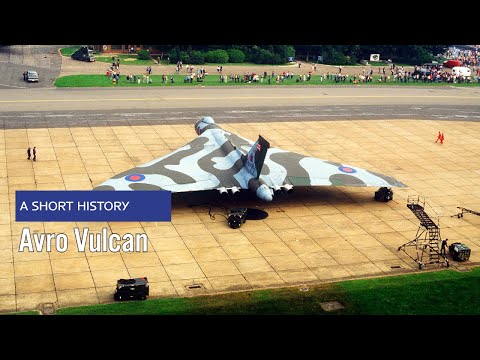
Video from the channel A Short History about Avro Vulcan, linked on its Above Ten Thousand entry. Duration: 6:45. Language: English. Video type: Documentary.
What it's about
A brief history of the Avro Vulcan, a high-altitude strategic bomber with a delta wing and no tailplane. It was one of the Royal Air Force's three V bombers.
Historical background
In 1947, Specification B.35/46 called for a medium bomber able to carry a 10,000-pound nuclear bomb 1,500 nautical miles, fly between 35,000 and 50,000 feet and dispense with defensive armament. Avro began work on the Avro 698 in April 1947 and chose a delta wing, which lightened the aircraft and made a tailplane unnecessary. Two prototypes were ordered in January 1948. Avro built the 707, a one-third-scale aircraft; the first one flew in September 1949 and crashed that same month, killing its pilot. The VX770 prototype flew on 30 August 1952 with Rolls-Royce Avon engines. The second one, from September 1953, already carried Bristol Olympus engines. The name Vulcan refers to the Roman god of fire.
Key facts
The production B1 flew in February 1955. Between 1959 and 1963 it was upgraded to the B1A standard, with electronic countermeasures and air-to-air refuelling, and it was retired in 1968. The first B2 flew in September 1958 with the Olympus 200; the last ones carried the Olympus 301. The B2 remained in service until 1984. It carried nuclear weapons such as the Blue Danube, the Red Beard, the Violet Club, the Yellow Sun Mk II and the Blue Steel missile, and in its conventional version it carried 21 1,000-pound bombs. In the early 1970s two squadrons were deployed to Akrotiri, in Cyprus. It only saw combat in the Falklands in 1982, with the Black Buck missions from Ascension Island: the first one put the Stanley runway out of action. On 3 June, a Vulcan broke its refuelling probe and had to land in Brazil. Six were converted into tankers. It was retired in March 1984, and a total of 136 were built.