Verkehrsflugzeug · Zivil · Vereinigtes Königreich
Vickers VC10
- 29. Juni 1962
- Erstflug
- 1964
- Indienststellung
- 2013
- Ausgemustert
- 54
- Gebaute Exemplare


%2C_1977-800.webp)
_at_Duxford-1600.webp)


%2C_British_Airliner_Collection%2C_Duxford-1600.webp)



-1600.webp)
%2C_RAF%2C_Fairford%2C_24_July_1993-800.webp)


%2C_RAF%2C_Fairford%2C_July_1991-1600.webp)


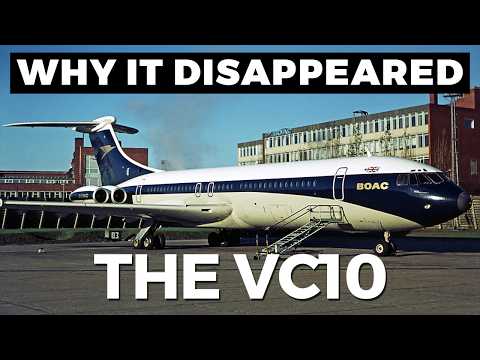
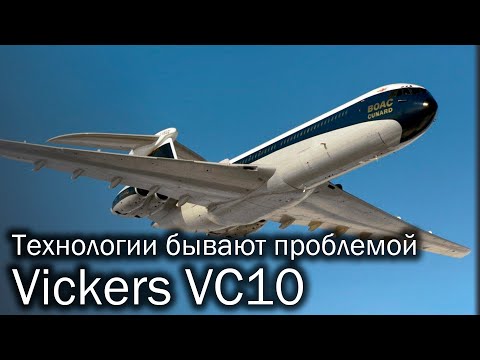
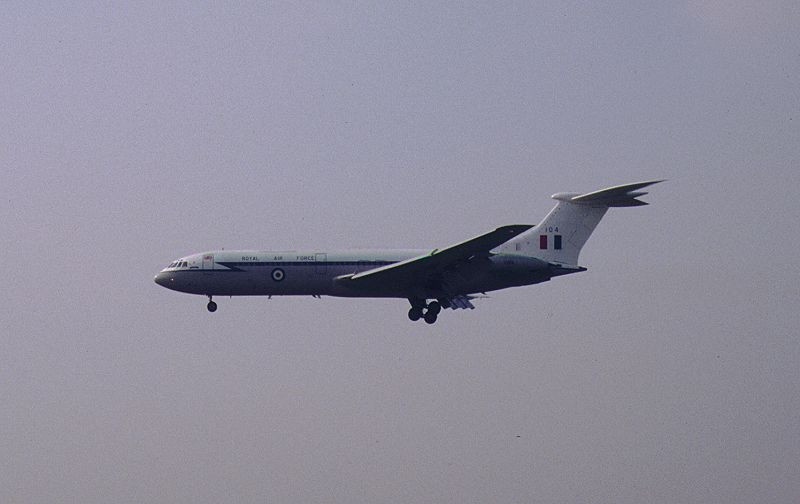
Die Vickers VC10 war ein britisches vierstrahliges Langstreckenflugzeug, das für den Betrieb von kurzen Pisten und von heißen, hochgelegenen Flughäfen der BOAC-Strecken konzipiert wurde. Sie flog erstmals 1962 und diente nach ihrer zivilen Laufbahn jahrzehntelang bei der Royal Air Force, bis 2013.
Verwandte Ereignisse
Verwandte Einträge
Kategorie
Vickers VC10 in den Nachrichten
_DHL_Cargo_MAN_APR92_(5646931043).jpg)
Die Vickers VC10 wurde nicht nur für eine bestimmte Airline, sondern auch für die Bedienung von Flughäfen mit extrem kurzen Pisten entwickelt. Doch als die VC10 in Dienst ging, waren die Runways…
_DHL_Cargo_MAN_APR92_(5646931043)-1600.webp)
Geschichte
Die VC10 entstand aus einer eigentümlichen Forderung der BOAC: ein Langstrecken-Strahlflugzeug, das von den kurzen, heißen und hochgelegenen Pisten ihrer afrikanischen und asiatischen Strecken starten konnte, wo die amerikanischen Jets jener Zeit nur mit Einbußen operierten. Vickers antwortete mit einer ungewöhnlichen Konfiguration: vier Rolls-Royce-Conway-Triebwerke, am Heck gebündelt, und eine aerodynamisch saubere Tragfläche mit hohem Auftrieb. Der Prototyp hob am 29. Juni 1962 in Brooklands ab, und das Muster wurde 1964 bei der BOAC in Dienst gestellt.
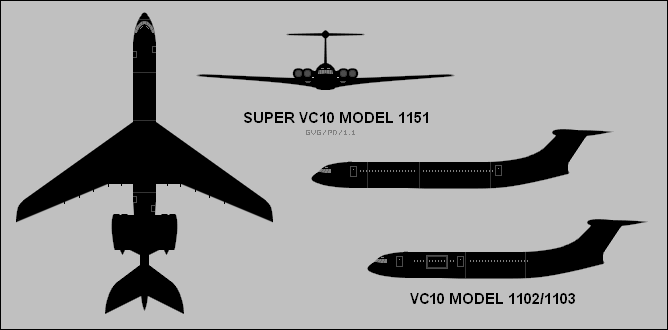
Die verlängerte Version Super VC10 erweiterte die Kapazität für die Atlantikrouten, auf denen sich das Flugzeug den Ruf erwarb, schnell, in der Kabine leise und bei den Passagieren beliebt zu sein; eine VC10 erzielte die schnellste je von einem Unterschall-Verkehrsflugzeug registrierte Atlantiküberquerung. Dennoch konnte ihre Betriebswirtschaftlichkeit nicht mit den amerikanischen Jets mithalten, und die Fertigung wurde nach nur 54 gebauten Exemplaren eingestellt.

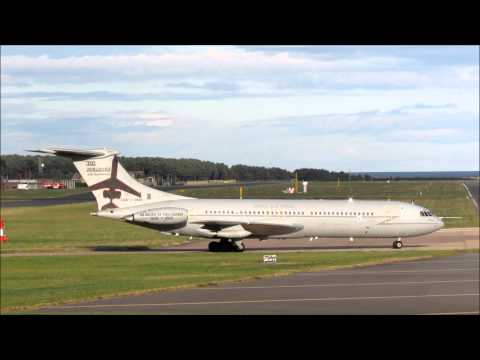
Ihr zweites Leben war militärisch: Die Royal Air Force setzte sie als Transportflugzeug und vor allem als Tankflugzeug zur Luftbetankung ein, eine Rolle, in der die VC10 bis zu ihrer endgültigen Ausmusterung im Jahr 2013 im Einsatz blieb, fast ein halbes Jahrhundert nach ihrem Erstflug.
Varianten
| Vickers VC10 Type 1100 | BAC Super VC10 Type 1151 | VC10 C.1 | VC10 K.4 | BAC Standard VC10 Type 1102 | BAC Standard VC10 Type 1103 | BAC Standard VC10 Type 1104 | BAC Standard VC10 Type 1106 | BAC Standard VC10 Type 1109 | BAC Super VC10 Type 1150 | BAC Super VC10 Type 1152 | BAC Super VC10 Type 1154 | BAC Super VC10 Type 1180 | BAC Super VC10 Type 1181 | BAC Type 1125 | BAC VC10A Type 1110 | BAC VC10A Type 1111 | BAC VC10 Type 1101 | BAC VC11 Type 1400 | VC10 C.1K | VC10 K.2 | VC10 K.3 | VC10 K.3A | |
|---|---|---|---|---|---|---|---|---|---|---|---|---|---|---|---|---|---|---|---|---|---|---|---|
| Erstflug | 29. Juni 1962 | 7. Mai 1964 | 26. November 1965 | 29. Juli 1993 | — | — | — | — | — | — | — | — | — | — | — | — | — | — | — | — | — | — | — |
| Luftfahrzeugtyp | Long-haul airliner prototype | Langstrecken-Verkehrsflugzeug | Strategisches Militärtransportflugzeug | Luftbetankungstanker | Long-haul airliner | Long-haul airliner | Long-haul airliner (not built) | Strategic military transport | Long-haul airliner | Long-haul airliner | Long-haul airliner (not built) | — | Long-haul airliner (not built) | Long-haul airliner (not built) | Long-haul airliner (not built) | Long-haul airliner (not built) | Avión comercial de largo radio (no construido) | Langstrecken-Verkehrsflugzeug | Medium-haul airliner (not built) | Militärtransporter und Lufttanker | Luftbetankungstanker | — | Aerial refuelling tanker (not built) |
| Antrieb | Four Rolls-Royce Conway RCo.42 turbofans paired on either side of the rear fuselage, with thrust reversers on all four engines, an arrangement the production series dropped. | Vier Rolls-Royce Conway RCo.43D Mk.550 Turbofan-Triebwerke mit je 96,97 kN (21.800 lbf), in um drei Grad nach oben geneigten Gondeln und mit Schubumkehr an allen vier Triebwerken. | Vier Rolls-Royce Conway RCo.43 Mk.301 Turbofan-Triebwerke mit je 96,97 kN (21.800 lbf trocken), mit einer APU im Heck für Selbstständigkeit auf Stützpunkten ohne Bodengeräte. | Vier Rolls-Royce Conway RCo.43 Mk.550B Turbofan-Triebwerke mit je 96,97 kN (21.800 lbf), dieselben wie bei der K Mk.3, deren Umbau sie folgt. | Four Rolls-Royce Conway RCo.42 Mk.540 turbofans of 93.4 kN each, with the 4% chord leading-edge extension and an extra wing fence near the root. | Four Rolls-Royce Conway RCo.42 Mk.540 turbofans of 93.4 kN each, with the same extended leading-edge wing as the Ghana Airways series. | Four Rolls-Royce Conway turbofans in rear pairs, like the rest of the Standard series; the order was cancelled before the available sources pinned down the exact engine mark. | Four Rolls-Royce Conway RCo.43 Mk.301 turbofans of 96.97 kN each (21,800 lbf dry), the same uprated engines as the Super VC10, fed as well by the fin fuel tank. | Four Rolls-Royce Conway turbofans in rear pairs; the sources consulted do not state the exact mark carried after the conversion. | Four Rolls-Royce Conway RCo.43D Mk.550 turbofans of 96.97 kN each (21,800 lbf), with thrust reversers on all four engines and an extra fin fuel tank. | Four Rolls-Royce Conway turbofans of the Super VC10 family; the order was cancelled before the sources pinned down the exact mark. | — | Four Rolls-Royce Conway turbofans in rear pairs, following the Super VC10 layout the project derived from. | Four Rolls-Royce Conway turbofans in rear pairs, following the Super VC10 layout. | Four Rolls-Royce Conway turbofans in rear pairs; the study never reached a documented engine designation. | Four Rolls-Royce Conway turbofans in the VC10's characteristic rear arrangement; the project never settled on a documented engine designation. | Cuatro turbofanes Rolls-Royce Conway en parejas traseras, según el esquema del proyecto VC10A. | Vier Rolls-Royce Conway RCo.42 Mk.540 Turbofan-Triebwerke mit je 93,4 kN (21.000 lbf), paarweise auf beiden Seiten des hinteren Rumpfs angeordnet; Schubumkehr gab es nur an den inneren Triebwerken. | Four Rolls-Royce Spey turbofans in the rear arrangement inherited from the VC10; sources do not state the engine mark. | Vier Rolls-Royce Conway RCo.43 Mk.301 Turbofan-Triebwerke mit je 96,97 kN (21.800 lbf trocken), unverändert gegenüber der C Mk.1, aus der der Umbau hervorging. | Vier Rolls-Royce Conway RCo.43 Mk.550B Turbofan-Triebwerke mit je 96,97 kN (21.800 lbf): Der Umbau brachte die Standard-Zellen auf den Triebwerksstandard der C Mk.1, um die Flotte zu vereinheitlichen. | — | Four Rolls-Royce Conway turbofans of the Super VC10 family; the conversion was never carried out and no engine designation is documented. |
| Triebwerke | 4 × Rolls-Royce Conway RCo.42 | 4 × Rolls-Royce Conway RCo.43D Mk.550 | 4 × Rolls-Royce Conway RCo.43 Mk.301 | 4 × Rolls-Royce Conway RCo.43 Mk.550B | 4 × Rolls-Royce Conway RCo.42 Mk.540 | 4 × Rolls-Royce Conway RCo.42 Mk.540 | 4 × turbofan | 4 × Rolls-Royce Conway RCo.43 Mk.301 | 4 × turbofan | 4 × Rolls-Royce Conway RCo.43D Mk.550 | 4 × turbofan | 4 × Rolls-Royce Conway RCo.43D Mk.550 | 4 × turbofan | 4 × turbofan | 4 × turbofan | 4 × turbofan | 4 × turbofan | 4 × Rolls-Royce Conway RCo.42 Mk.540 | 4 × Rolls-Royce Spey | 4 × Rolls-Royce Conway RCo.43 Mk.301 | 4 × Rolls-Royce Conway RCo.43 Mk.550B | 4 × Rolls-Royce Conway RCo.43 Mk.550B | 4 × turbofan |
| Schub je Triebwerk | 93,4 kN | 97 kN Bester Wert dieser Zeile | 97 kN Bester Wert dieser Zeile | 97 kN Bester Wert dieser Zeile | 93,4 kN | 93,4 kN | — | 97 kN Bester Wert dieser Zeile | — | 97 kN Bester Wert dieser Zeile | — | 97 kN Bester Wert dieser Zeile | — | — | — | — | — | 93,4 kN | — | 97 kN Bester Wert dieser Zeile | 97 kN Bester Wert dieser Zeile | 97 kN Bester Wert dieser Zeile | — |
| Länge | 48,4 m | 52,3 m Bester Wert dieser Zeile | 48,4 m | 52,3 m Bester Wert dieser Zeile | 48,4 m | 48,4 m | 48,4 m | 48,4 m | 48,4 m | 52,3 m Bester Wert dieser Zeile | 52,3 m Bester Wert dieser Zeile | 52,3 m Bester Wert dieser Zeile | — | — | — | — | — | 48,4 m | — | 48,4 m | 48,4 m | 52,3 m Bester Wert dieser Zeile | 52,3 m Bester Wert dieser Zeile |
| Spannweite | 42,7 m | 44,6 m Bester Wert dieser Zeile | 44,6 m Bester Wert dieser Zeile | 44,6 m Bester Wert dieser Zeile | 44,6 m Bester Wert dieser Zeile | 44,6 m Bester Wert dieser Zeile | 44,6 m Bester Wert dieser Zeile | 44,6 m Bester Wert dieser Zeile | 44,6 m Bester Wert dieser Zeile | 44,6 m Bester Wert dieser Zeile | 44,6 m Bester Wert dieser Zeile | 44,6 m Bester Wert dieser Zeile | — | — | — | — | — | 44,6 m Bester Wert dieser Zeile | — | 44,6 m Bester Wert dieser Zeile | 44,6 m Bester Wert dieser Zeile | 44,6 m Bester Wert dieser Zeile | 44,6 m Bester Wert dieser Zeile |
| Höhe | 12 m Bester Wert dieser Zeile | 12 m Bester Wert dieser Zeile | 12 m Bester Wert dieser Zeile | 12 m Bester Wert dieser Zeile | 12 m Bester Wert dieser Zeile | 12 m Bester Wert dieser Zeile | — | 12 m Bester Wert dieser Zeile | 12 m Bester Wert dieser Zeile | 12 m Bester Wert dieser Zeile | 12 m Bester Wert dieser Zeile | 12 m Bester Wert dieser Zeile | — | — | — | — | — | 12 m Bester Wert dieser Zeile | — | 12 m Bester Wert dieser Zeile | 12 m Bester Wert dieser Zeile | 12 m Bester Wert dieser Zeile | — |
| Flügelfläche | — | 272 m² | 272 m² | 272 m² | 273 m² Bester Wert dieser Zeile | 273 m² Bester Wert dieser Zeile | — | 272 m² | 272 m² | 272 m² | 272 m² | 272 m² | — | — | — | — | — | 265 m² | — | 272 m² | 265 m² | 272 m² | — |
| Leermasse | — | 71.937 kg | 66.224 kg | — | 66.670 kg | 66.670 kg | — | 66.224 kg | — | — | — | 70.160 kg | — | — | — | — | — | 67.980 kg | — | — | 60.875 kg Bester Wert dieser Zeile | — | — |
| MTOW | — | 151.953 kg Bester Wert dieser Zeile | 146.510 kg | 146.513 kg | 141.520 kg | 141.520 kg | — | 146.510 kg | — | — | — | 151.953 kg Bester Wert dieser Zeile | — | — | — | — | — | 142.430 kg | — | 146.510 kg | 135.622 kg | 146.513 kg | — |
| Höchstgeschwindigkeit | — | 935 km/h Bester Wert dieser Zeile | 935 km/h Bester Wert dieser Zeile | 935 km/h Bester Wert dieser Zeile | 914 km/h | 914 km/h | — | 935 km/h Bester Wert dieser Zeile | — | — | — | 935 km/h Bester Wert dieser Zeile | — | — | — | — | — | 914 km/h | — | 935 km/h Bester Wert dieser Zeile | 914 km/h | 935 km/h Bester Wert dieser Zeile | — |
| Höhe der Höchstgeschwindigkeit | — | 9.450 m | 9.450 m | 9.450 m | 9.450 m | 9.450 m | — | 9.450 m | — | — | — | 9.450 m | — | — | — | — | — | 9.450 m | — | 9.450 m | 9.450 m | 9.450 m | — |
| Reisegeschwindigkeit | — | 886 km/h Bester Wert dieser Zeile | 684 km/h | 886 km/h Bester Wert dieser Zeile | 886 km/h Bester Wert dieser Zeile | 886 km/h Bester Wert dieser Zeile | — | 684 km/h | — | — | — | 886 km/h Bester Wert dieser Zeile | — | — | — | — | — | 886 km/h Bester Wert dieser Zeile | — | 684 km/h | 886 km/h Bester Wert dieser Zeile | 886 km/h Bester Wert dieser Zeile | — |
| Reiseflughöhe | — | 11.600 m | 9.145 m | 11.600 m | 11.600 m | 11.600 m | — | 9.145 m | — | — | — | 11.600 m | — | — | — | — | — | 11.600 m | — | 9.145 m | 11.600 m | 11.600 m | — |
| Dienstgipfelhöhe | — | 12.800 m Bester Wert dieser Zeile | 12.800 m Bester Wert dieser Zeile | 12.800 m Bester Wert dieser Zeile | 12.800 m Bester Wert dieser Zeile | 12.800 m Bester Wert dieser Zeile | — | 12.800 m Bester Wert dieser Zeile | — | — | — | 12.800 m Bester Wert dieser Zeile | — | — | — | — | — | 12.800 m Bester Wert dieser Zeile | — | 12.800 m Bester Wert dieser Zeile | 12.800 m Bester Wert dieser Zeile | 12.800 m Bester Wert dieser Zeile | — |
| Anfängliche Steigrate | — | 11,7 m/s | 15,5 m/s Bester Wert dieser Zeile | — | 9,8 m/s | 9,8 m/s | — | 15,5 m/s Bester Wert dieser Zeile | — | — | — | 11,7 m/s | — | — | — | — | — | 9,8 m/s | — | — | — | — | — |
| Reichweite | — | 7.596 km | 6.273 km | — | 8.115 km Bester Wert dieser Zeile | 8.115 km Bester Wert dieser Zeile | — | 6.273 km | — | — | — | 7.596 km | — | — | — | — | — | 8.115 km Bester Wert dieser Zeile | — | — | — | — | — |
| Überführungsreichweite | — | 11.470 km Bester Wert dieser Zeile | — | — | 9.765 km | 9.765 km | — | — | — | — | — | 11.470 km Bester Wert dieser Zeile | — | — | — | — | — | 9.765 km | — | — | — | — | — |
| Einsatzradius | 0 km Bester Wert dieser Zeile | 0 km Bester Wert dieser Zeile | 0 km Bester Wert dieser Zeile | 0 km Bester Wert dieser Zeile | 0 km Bester Wert dieser Zeile | 0 km Bester Wert dieser Zeile | 0 km Bester Wert dieser Zeile | 0 km Bester Wert dieser Zeile | 0 km Bester Wert dieser Zeile | 0 km Bester Wert dieser Zeile | 0 km Bester Wert dieser Zeile | 0 km Bester Wert dieser Zeile | 0 km Bester Wert dieser Zeile | 0 km Bester Wert dieser Zeile | 0 km Bester Wert dieser Zeile | 0 km Bester Wert dieser Zeile | 0 km Bester Wert dieser Zeile | 0 km Bester Wert dieser Zeile | 0 km Bester Wert dieser Zeile | 0 km Bester Wert dieser Zeile | 0 km Bester Wert dieser Zeile | 0 km Bester Wert dieser Zeile | 0 km Bester Wert dieser Zeile |
| Bedingungen der Reichweite | Development airframe devoted to certification testing, with no published range figures of its own; the programme ended with type certification in April 1964. | Reichweite von 7.596 km mit maximaler Nutzlast und bis zu 11.470 km mit maximalem Kraftstoff, ohne Reserven; der Tank im Seitenleitwerk ist der Schlüssel zum Sprung gegenüber der Standard-Serie. | Reichweite von 6.273 km mit maximaler Nutzlast, ausreichend für die strategischen Strecken des Transport Command nach Zypern, Gan, Singapur und Hongkong. | Ohne Tanks im Hauptdeck gibt sie weniger Kraftstoff ab als die K Mk.3, dafür bei leichterer Zelle; das maximale Startgewicht bleibt bei 146.513 kg. | Range of 8,115 km with maximum payload and 9,765 km with maximum fuel, without reserves. | Range of 8,115 km with maximum payload and 9,765 km with maximum fuel, without reserves. | No range figures of its own: the variant was never built. | Range of 6,273 km with maximum payload; the extra fin tank and the more powerful engines offset the heavier military airframe. | No published range figures of its own; with the Type 1106 wing its behaviour was close to that of the production Standard series. | A family tuned for payload rather than take-off performance; the actual range figures belong to the 1151 and 1154 series. | No range figures of its own: the variant was never built. | — | No range figures: the project never got past the study stage. | No range figures: the project never got past the study stage. | No range figures: the project got no further than a commercial proposal. | No range figures: the project never left the drawing board. | Sin cifras de alcance: la variante no llegó a construirse. | Reichweite von 8.115 km mit maximaler Nutzlast und bis zu 9.765 km mit maximalem Kraftstoff, beide Angaben ohne Reserven; der Hochauftriebsflügel erlaubte den Betrieb von den kurzen, heißen Pisten Afrikas und des Nahen Ostens. | No range figures: the project was dropped before any aircraft was built. | Da sie keinen zusätzlichen Kraftstoff mitführt, bleibt ihr Aktionsradius der des Transporters: Was sie an den Empfänger abgibt, geht von ihrer eigenen Reichweite ab. | Das maximale Startgewicht sinkt auf 135.622 kg, weil die Aufgabe darin besteht, Kraftstoff abzugeben, statt Strecke zurückzulegen: Die nutzbare Flugdauer hängt davon ab, wie viel sie abgibt. | — | No range figures: the conversion was never carried out. |
| Bewaffnung | None | Keine | Keine | Keine | None | None | None | None | None | None | None | — | None | None | None | None | Ninguno | Keine | None | Keine | Keine | — | None |
| Maximale Waffenzuladung | 0 kg Bester Wert dieser Zeile | 0 kg Bester Wert dieser Zeile | 0 kg Bester Wert dieser Zeile | 0 kg Bester Wert dieser Zeile | 0 kg Bester Wert dieser Zeile | 0 kg Bester Wert dieser Zeile | 0 kg Bester Wert dieser Zeile | 0 kg Bester Wert dieser Zeile | 0 kg Bester Wert dieser Zeile | 0 kg Bester Wert dieser Zeile | 0 kg Bester Wert dieser Zeile | 0 kg Bester Wert dieser Zeile | 0 kg Bester Wert dieser Zeile | 0 kg Bester Wert dieser Zeile | 0 kg Bester Wert dieser Zeile | 0 kg Bester Wert dieser Zeile | 0 kg Bester Wert dieser Zeile | 0 kg Bester Wert dieser Zeile | 0 kg Bester Wert dieser Zeile | 0 kg Bester Wert dieser Zeile | 0 kg Bester Wert dieser Zeile | 0 kg Bester Wert dieser Zeile | 0 kg Bester Wert dieser Zeile |
| Nutzlast | — | 22.860 kg | 26.037 kg | — | 18.039 kg | 18.039 kg | — | 26.037 kg | — | — | — | 27.360 kg Bester Wert dieser Zeile | — | — | — | — | — | 17.840 kg | — | — | — | — | — |
| Ladekapazität | Test airframe without a definitive commercial cabin: prototype G-ARTA flew with the short 42.72 m span wing and squared tips before the series aerodynamic refinements were fitted. | Gegenüber der Standard um 3,96 m verlängerter Rumpf: typische Anordnung der BOAC mit 16 Sitzen der Ersten Klasse und 123 der Economy Class, bis zu 174 in einer Kabine mit hoher Sitzdichte, bei einer maximalen Nutzlast von 22.860 kg. | RAF-Transporter mit dem kurzen Rumpf der Super VC10 und einer großen Frachttür: 150 Passagiere oder 76 Tragen mit sechs Sanitätern und bis zu 26.037 kg Nutzlast. | Fünf Super VC10 Type 1151 von British Airways, wie die K Mk.3 zu Dreipunkt-Tankern umgebaut, jedoch ohne Tanks im Hauptdeck, sodass das abgebbare Volumen geringer ist. | Combi version for Ghana Airways: up to 151 economy seats and, on the second airframe, a large side cargo door for mixed passenger and freight work, with a maximum payload of 18,039 kg. | Combi version for British United Airways, very close to the Type 1102 and also fitted with a cargo door; up to 151 seats and 18,039 kg maximum payload. One airframe came from a cancelled Ghana Airways order. | Standard series ordered by Nigeria Airways with the usual VC10 cabin; the two-aircraft order was cancelled and none was ever built. | Manufacturer designation of the RAF's VC10 C Mk.1: shortened Super VC10 fuselage with a large port-side cargo door and a tail APU, for 150 passengers or 76 stretchers with six medical attendants and up to 26,037 kg of freight. | Type 1100 prototype rebuilt with the Type 1106 wing and leased to Laker Airways, with a cabin of up to 151 economy seats. | Generic designation of the Super VC10, with a fuselage stretched 3.96 m over the Standard and seating for 163 to 174 economy passengers. | Combi Super VC10 for BOAC, with a large cargo door and a freight handling system for mixed operations; the thirteen-aircraft order was cancelled. | — | Double-deck Super VC10 project for high passenger capacity; sources disagree on the exact seat count and none was built. | A second double-deck Super VC10 project, of even greater capacity than the Type 1180; it was not built either. | Hybrid project between the Standard series and the Super VC10 offered to Aerolíneas Argentinas; none was built. | Generic designation of the VC10A project, a development of the Standard series that was never built. | Versión del VC10A destinada a BOAC; la compañía prefirió el Super VC10 y no se construyó ningún ejemplar. | Serienmodell für die BOAC in einer typischen Anordnung mit 16 Sitzen der Ersten Klasse und 93 der Economy Class, in einer Kabine mit hoher Sitzdichte auf 151 erweiterbar; die maximale Nutzlast beträgt 17.840 kg. | Scaled-down VC10 with a six-abreast cabin for 80 to 138 passengers; cancelled in favour of the BAC One-Eleven. | Dreizehn C Mk.1, auf Transport-/Tankerstandard umgebaut: Sie behalten die Passagier- und Frachtkabine des Transporters und erhalten zwei Schlauchsysteme unter den Flügeln, ohne zusätzliche Rumpftanks. | Fünf zu Tankern umgebaute Type 1101, ohne Frachttür: fünf zusätzliche Rumpftanks, drei Schlauchtrommeleinheiten und nur 18 Sitze für das Unterstützungspersonal. | — | RAF designation for four proposed Type 1166 tanker conversions; none was converted. |
| Besatzung | — | 4 Bester Wert dieser Zeile | 4 Bester Wert dieser Zeile | 4 Bester Wert dieser Zeile | — | — | — | 4 Bester Wert dieser Zeile | — | — | — | — | — | — | — | — | — | 4 Bester Wert dieser Zeile | — | 4 Bester Wert dieser Zeile | 4 Bester Wert dieser Zeile | 4 Bester Wert dieser Zeile | — |
| Passagiere | — | 174 | 150 | 17 | 151 | 151 | — | 150 | 151 | 174 | 174 | 174 | 239 Bester Wert dieser Zeile | 239 Bester Wert dieser Zeile | — | — | — | 151 | 138 | 150 | 18 | 17 | — |
| Gebaute Exemplare | 1 | 17 Bester Wert dieser Zeile | 14 | 5 | 3 | 2 | 0 | 14 | 1 | — | 0 | 5 | 0 | 0 | 0 | 0 | 0 | 12 | 0 | 13 | 5 | 4 | 0 |
Bilder
Anderswo
- FlightGlobalDespiece numerado (cutaway) del Vickers VC10, lámina del archivo de Flight International ↗
- FlightGlobalDespiece numerado (cutaway) del Vickers Super VC10, lámina del archivo de Flight International ↗
- FlightGlobalDespiece numerado (cutaway) del Vickers VC10 de la RAF, lámina del archivo de Flight International ↗
Videos
 Warum die Vickers VC10 Großbritanniens Antwort auf die Boeing 707 war und warum die RAF sie bis 2...
 Warum die VC10 schaffte, was die 707 nicht konnte – und warum sie so schön sein musste, um Großbr...
 Warum die Vickers VC10 K2/K3/K4 im Jahr 2025 noch immer Respekt einflößt Die vergesene Supermaschine