United States · 2002–
SpaceX
American company founded in 2002 that made orbital rocket reuse routine.
SpaceX in the news
The astronauts of SpaceX's Crew-12 mission wish that we could all see Earth as they just did —as a beautiful but fragile outpost of life in a vast void.
.jpg)
Editorial Note: On October 14, 2026, SatNews reported—based on direct statements from Ukrainian defense advisers—that SpaceX had unilaterally imposed velocity caps on Starshield terminals in…
.jpg)
Tesla just unveiled its new Roadster with a spectacular stunt, using SpaceX thrusters to make the sleek vehicle "fly."
Five spacecraft are docked at the International Space Station following the arrival of a cargo-packed SpaceX Dragon on Thursday. The Expedition 75 crew members have begun unloading Dragon and are…

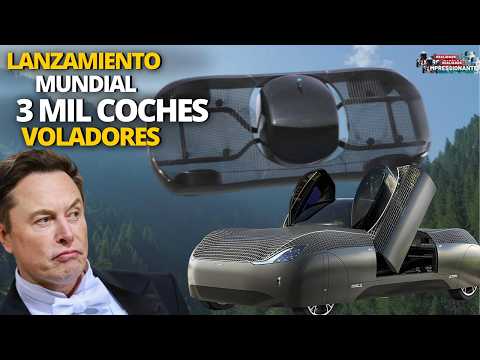
Tesla CEO Elon Musk unveiled what he described as a "flying" car, equipped with thrusters, during a livestreamed event at his SpaceX rocket company's facility on Thursday.

-1600.webp)
-1600.webp)


History
Space Exploration Technologies, founded by Elon Musk in 2002, developed the Falcon launchers and Dragon capsules and achieved the first propulsive landing of an orbital first stage in 2015.
Catalog — Rockets
- 2006
Falcon 1
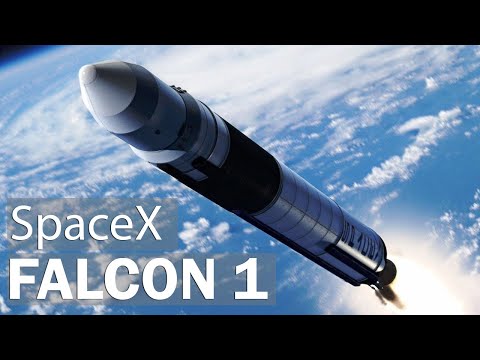
The Falcon 1 was the first launch vehicle built by SpaceX and the first privately developed and privately funded liquid-propellant orbital rocket to reach Earth orbit. It was a two-stage vehicle burning kerosene and liquid oxygen, about twenty-one metres tall and 1.7 metres in diameter, deliberately conceived small: placing a few hundred kilograms in low Earth orbit was enough to give the company Elon Musk founded in 2002 a product to sell before it ran out of money. Its importance lies less in what it carried than in what it taught. The first stage had a single Merlin engine — the ablatively cooled 1A on the first two flights, the regeneratively cooled 1C from the third onward — and the second a pressure-fed, restartable Kestrel with a niobium skirt and cold gas roll control. That friction-stir-welded aluminium tank architecture, that engine and those avionics built on commercial hardware carried over almost intact to the Falcon 9: the five Falcon 1 flights are the test bed the whole later family came out of. Development was privately funded, on the order of a hundred million dollars according to published figures, and the advertised prices drifted down in performance and up in money: 5.9 million dollars in 2005, 6.7 between 2006 and 2007, 7.9 in 2008 and 7 million on the late 2009 list. The first two launches were bought by the United States Department of Defense through DARPA. All five flights left from Omelek Island in the Kwajalein Atoll, some seven acres of land 2,500 miles southwest of Hawaii inside the US Army's test range. The first three failed: in 2006 a nut corroded by sea spray caused a leak and a fire forty-one seconds into flight; in 2007 a knock at staging upset thrust vector control and sloshing oxygen in the upper tank kept the vehicle from reaching orbital velocity; in 2008 residual first stage thrust made it recontact the second stage five seconds after separation. Each failure was answered with a specific fix: stainless steel hardware, baffles in the oxygen tank, and a longer interval between shutdown and separation. The fourth flight, on 28 September 2008, was assembled in six weeks from available parts with the company close to insolvency, and it reached orbit with a mass simulator nicknamed Ratsat. The fifth, on 14 July 2009, placed the Malaysian observation satellite RazakSAT in low equatorial orbit: the programme's only paying customer. There was no sixth. SpaceX retired the vehicle that same year in favour of the Falcon 9, cancelled the stretched Falcon 1e — which promised more than double the payload and never flew — and reassigned the contracted payloads as secondaries on the larger rocket.
- 2010
Falcon 9
The Falcon 9 is the launcher that rewrote the rules of space access: a two-stage rocket burning RP-1 kerosene and liquid oxygen, whose first stage comes back, lands upright and flies again — something the industry considered economically impossible until SpaceX made it routine. It was born from NASA's commercial programme of the mid-2000s, when the agency chose to buy transportation from private companies rather than design its own rockets. SpaceX, coming off the small Falcon 1, answered with a nine-engine launcher that debuted on 4 June 2010 and that the company developed for roughly US$300 million, against the US$3.6 billion NASA reckoned the same rocket would have cost under traditional cost-plus contracting. On 21 December 2015 it achieved the unprecedented: setting an orbital rocket's first stage back down on solid ground. Reuse has not been an experiment since — with landings on autonomous drone ships at sea, boosters accumulating as many as 36 flights, and a launch cadence without precedent in history. The payload fairing is recovered and reflown as well; the second stage is not, an ambition SpaceX abandoned in late 2014 once it became clear that a heat shield and recovery hardware would eat the payload. The rocket has gone through five major revisions — v1.0, v1.1, Full Thrust (or Block 3), Block 4 and Block 5 — growing from 8,500 kg to more than 22,800 kg to low Earth orbit in expendable configuration. The current Block 5 has flown since May 2018 and is certified to carry crew, with nine Merlin 1D engines delivering 7,607 kN at sea level. Today the Falcon 9 is the workhorse of Western space access: it has carried astronauts to the International Space Station aboard Crew Dragon since 2020, deploys the Starlink constellation, flies dedicated rideshare missions with dozens of small satellites, and had logged 668 successes in 671 full missions — a 99.6% record — as of 30 July 2026.
- 2018
Falcon Heavy
Falcon Heavy is SpaceX's heavy-lift launch vehicle and, for much of its career, the most capable operational rocket in the world behind only NASA's Space Launch System. Its architecture follows an idea that is simple on paper and fiendishly difficult in practice: take the Falcon 9 first stage, strengthen it structurally to serve as a centre core, and flank it with two further first stages capped by aerodynamic nose cones acting as strap-on boosters. On top of that triple first stage ride the standard Falcon 9 second stage and payload fairing, so the vehicle inherits almost its entire production line, its engines and its operating procedures from the rocket it derives from. With the twenty-seven Merlin 1D engines of its first stage firing together, Falcon Heavy delivers 22,819 kN of sea-level thrust at liftoff, a figure above five million pounds of force that only a handful of vehicles in history have matched. It stands 70 m tall with the standard fairing and its fuelled mass at liftoff is around 1,420 t. In fully expendable configuration it can inject 63,800 kg into low Earth orbit, 26,700 kg into geostationary transfer orbit and 16,800 kg onto a trans-Mars trajectory; recovering the two side boosters brings low-orbit capability down to some 57 t, and returning all three cores to the launch site reduces performance far more sharply. Formally announced in April 2011 with the promise of carrying more payload to orbit or escape velocity than any vehicle other than the Saturn V and the Soviet Energia, Falcon Heavy took seven years to fly. Elon Musk himself acknowledged that integrating three cores was far harder than expected and that much of the design was effectively impossible to validate on the ground. The maiden flight, on 6 February 2018 from Launch Complex 39A at the Kennedy Space Center, became one of the most widely watched space events of the decade: it carried Musk's personal Tesla Roadster as a dummy payload with a mannequin at the wheel, and ended with the simultaneous landing of both side boosters back at Cape Canaveral. Since then the vehicle has flown at a deliberately low cadence but with a very defined mission profile: high-mass communications satellites, classified United States Space Force payloads requiring direct injection into high orbits, and NASA science probes that no other commercial launcher could send within the available window. Psyche, in October 2023, was the first NASA science mission launched on a Falcon Heavy; Europa Clipper, in October 2024, required all three cores to be expended and was the heaviest interplanetary payload entrusted to the vehicle. Its real role has been that of a niche launcher within SpaceX's catalogue. Falcon 9 in expendable configuration ended up absorbing much of the geostationary business once assigned to Falcon Heavy, leaving the bigger rocket for what no two-stage single-core vehicle could do. Even so, its combination of raw thrust, booster recovery and a published price far below that of its heavy-lift competitors reshaped the heavy launch market and served as a proving ground for the recovery techniques SpaceX would later apply on a much larger scale.
- 2023
Super Heavy
Super Heavy is the reusable first stage of SpaceX's Starship system: the booster that, topped by the Starship upper stage, makes up the super heavy-lift vehicle with which the company intends to carry cargo and crews to the Moon and Mars. Its job is to push the stack out of the dense atmosphere, release the second stage on its way to orbit and then fly back to the launch site, where it does not land on legs but is caught in mid-air by two articulated tower arms. It was born inside SpaceX's Mars colonization programme and took more than a decade to settle into its current shape: from the first concepts announced in 2012 to serial production begun in 2021 and the first flight on 20 April 2023. Structurally it is a stainless steel cylinder 9 m in diameter divided into four sections which, from bottom to top, are the engine bay, the liquid oxygen tank, the liquid methane tank and the interstage. The Block 1 and Block 2 versions, now retired, stood 71 m tall; Block 3 reaches 72.3 m. The two cryogenic tanks share a common bulkhead, the same structural solution used by the S-II and S-IVB stages of the Saturn V, and the whole airframe is built by welding rolled steel rings 9 m across weighing roughly 1600 kg each: this is a vehicle meant to leave an industrial hall quickly and cheaply, not to be machined piece by piece. Propulsion comes from 33 Raptor engines burning liquid methane and oxygen in a full-flow staged combustion cycle, twenty of them fixed on an outer ring and thirteen inner ones mounted on the thrust puck and able to gimbal to steer the vehicle. The interstage carries four electrically actuated stainless steel grid fins — three on Block 3, larger and set lower down — which govern the descent, and between them protruding hardpoints by which the tower grips the booster. The manoeuvre that defines the vehicle arrived on 13 October 2024, when Booster 12 returned to its starting point and came to rest between the tower arms nicknamed the chopsticks, in the first catch of an orbital-class booster in history. The operation has since been repeated, an already-flown booster has been reused, and the design has kept shedding skins on its way to Block 3, with Raptor 3 engines and an interstage integrated into the methane tank. Super Heavy neither flies alone nor has a mission of its own: it exists only as the lower half of the Starship system, from which it inherits its schedule, its successes and its failures.
- 2023
Starship
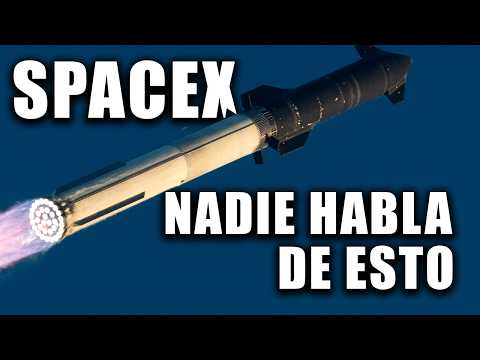
Starship is the fully reusable super-heavy-lift launch system SpaceX is developing at Starbase, Boca Chica, Texas. The name refers both to the whole vehicle and to its upper stage: the complete rocket consists of the Super Heavy booster as first stage and the Starship spacecraft as second, both built of stainless steel, 9 m in diameter and powered by Raptor engines burning sub-cooled liquid methane and liquid oxygen. At roughly 121.3 m tall and a liftoff mass on the order of 5,300 t, it is the largest rocket ever built, and its purpose is less any single performance figure than a change of scale: SpaceX designed it to reuse both stages and drive the cost of access to orbit low enough to make mass payload deployment, a return to the Moon and, in the long run, journeys to Mars economically plausible. Its lineage goes back to 2005, when Elon Musk mentioned a launcher able to place 100 t into low Earth orbit, and passes through three successive names — Mars Colonial Transporter, Interplanetary Transport System and BFR — before crystallising into the present design, defined by the December 2018 switch from carbon composite to stainless steel. Development has been conducted in public and by rapid iteration: the Starhopper test article in 2019, the long SN prototype series that flew, fell and exploded repeatedly through 2020 and 2021, and, since April 2023, integrated flights of the complete vehicle. Those test flights have combined spectacular failures with unprecedented firsts. The first, on 20 April 2023, exploded four minutes after liftoff; the fifth, on 13 October 2024, saw the launch tower catch the returning booster in mid-air with its arms, a manoeuvre with no precedent in spaceflight. Block 2 gave trouble throughout 2025, and Block 3, with Raptor 3 engines, opened the 2026 campaign with suborbital flights that already deploy operational Starlink V3 satellites. Starship is also the vehicle NASA has chosen for its return to the lunar surface: a lander version was selected in April 2021 under the Human Landing System programme, with a later contract extension covering a second crewed mission. It must be stressed that this is a vehicle under active development with no completed orbital flight to date: its figures, its blocks and its schedule change from year to year, and everything described here as planned should be read as stated intent rather than demonstrated capability.
Videos







Show the 37 more















Did you know… about SpaceX
- Why did falcon 9 hit the moon?
Because a spent upper stage on a lunar trajectory has no mission and no way to steer. A Falcon 9 upper stage from the January 2025 Firefly Blue Ghost 1 launch…
- How long spacex been around?
SpaceX was founded by Elon Musk in 2002, so it has been around for about 24 years (figure as of September 2026). It needed six years to reach orbit - Falcon 1…
- How long spacex ipo will last?
The question rests on a false premise: SpaceX has not held an initial public offering, and there is no announced date for one. The company remains privately…
- How long starship to mars?
Six to nine months of flight, set by orbital mechanics rather than by the rocket: a typical Mars cruise runs about seven months, as with Perseverance, which…
- Why is falcon 9 launching?
Falcon 9 launches so often because it is the workhorse of SpaceX's own Starlink network: about two thirds of its flights carry Starlink satellites, several…