Did you know…
How long spacex ipo will last?
Short answer
The question rests on a false premise: SpaceX has not held an initial public offering, and there is no announced date for one. The company remains privately held, raising capital through private funding rounds and periodic share buybacks that let employees sell. Elon Musk has repeatedly said a listing of Starlink, not of SpaceX itself, would be the likelier candidate.
-1600.webp)
No IPO, and no timetable
SpaceX is one of the most valuable private companies in the world, and it has stayed private deliberately. Instead of listing shares on a public exchange, it raises money through private placements to institutional and strategic investors, and periodically organises tender offers in which existing shareholders and employees can sell a portion of their holdings at an agreed price. Those tenders serve the liquidity function an IPO would normally provide, without the disclosure obligations and quarterly scrutiny that come with a public listing.
The reasoning Musk has offered publicly is that long-horizon projects — a reusable super-heavy launch system, a Mars programme — sit badly with shareholders who judge a company every three months. He has said the satellite broadband business Starlink could eventually be spun out and listed once its revenue is predictable, but no filing or date has followed.
What an IPO would actually involve
If it happened, the process is well defined rather than open-ended. A company files a registration statement with the Securities and Exchange Commission, goes through review and amendments, markets the offering, and prices it the night before trading opens. From confidential first filing to first trade typically runs a few months. The listing itself is a single day; there is no duration to it beyond that.
Reading the valuations you see quoted
Headline valuations for SpaceX come from those private tender offers and funding rounds, not from a market price. They are negotiated figures reflecting what a limited set of buyers agreed to pay for a limited block of shares, and they are not continuously updated the way a listed stock is. Treat any single number as a snapshot of one transaction rather than a market consensus.
More questions
- Image pending
Astronauts and life in space
Why does astronauts float in space?
Because they are in free fall, not because gravity is absent. At the International Space Station's altitude of about 400 km, Earth still pulls almost as hard… more…
- Image pending
Astronauts and life in space
Why did yuri gagarin die?
Gagarin died in an aircraft crash, not in a spacecraft. On 27 March 1968 the MiG-15UTI trainer he was flying with instructor Vladimir Seryogin went down in… more…
- Image pending
Astronauts and life in space
How much an astronaut is paid?
NASA's civilian astronauts are ordinary federal employees, paid on the General Schedule grade-and-step scale with no bonus per flight, per spacewalk or per… more…
.png)
Astronauts and life in space
Why is blue origin so slow?
Blue Origin was built on deliberate, owner-funded incrementalism: its motto is Gradatim Ferociter, step by step, and it spent its first two decades on… more…
Astronauts and life in space
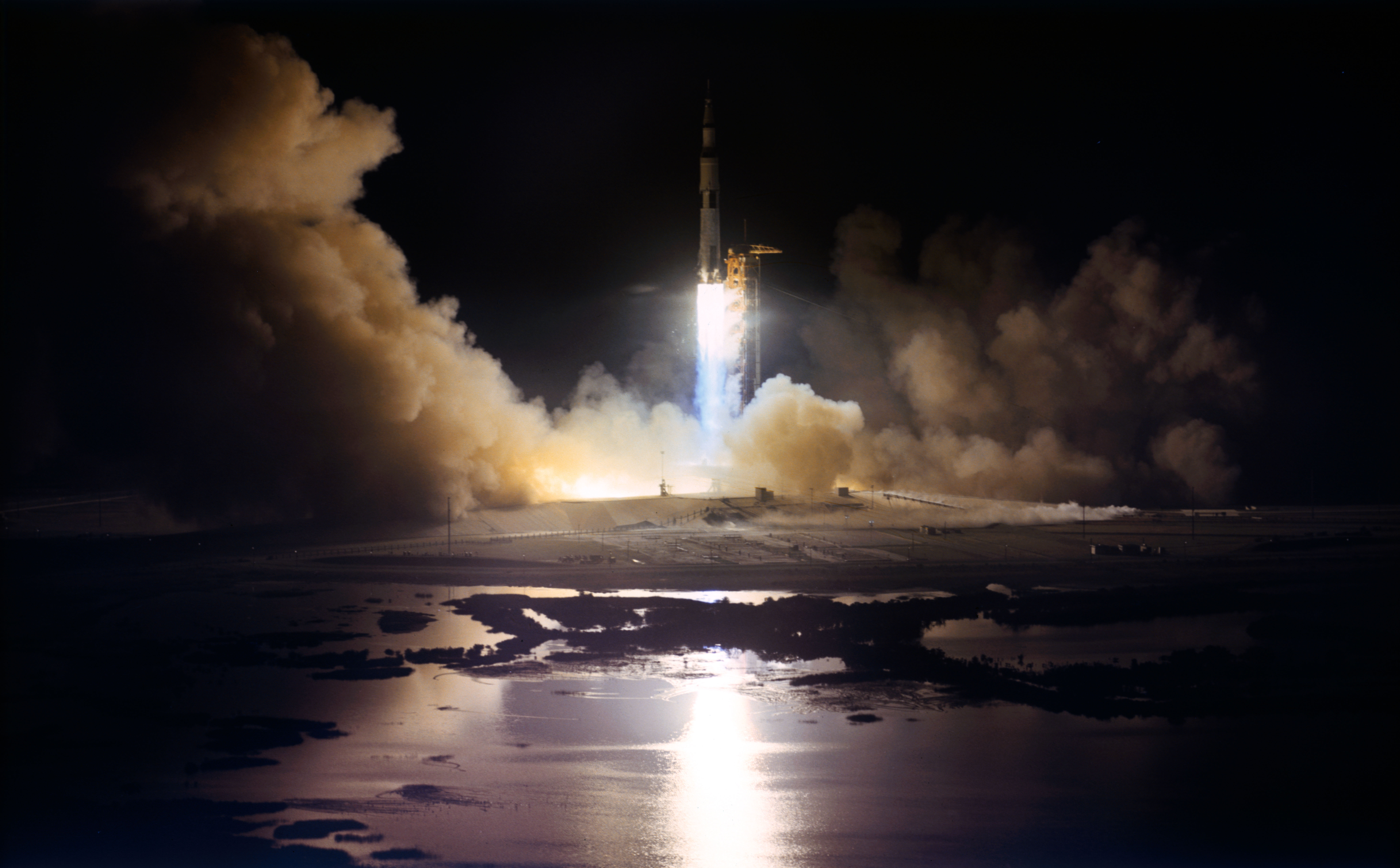
When did astronauts last walk on the moon?
Apollo 17, in December 1972. Eugene Cernan and Harrison Schmitt landed in the Taurus-Littrow valley on 11 December 1972, worked on the surface for three days… more…
- Image pending
Astronauts and life in space
How high do astronauts orbit the earth?
Crewed spaceflight today happens a few hundred kilometres up. The International Space Station orbits at about 400 km, lapping the planet roughly every 90… more…
