Did you know…
How high do astronauts orbit the earth?
Short answer
Crewed spaceflight today happens a few hundred kilometres up. The International Space Station orbits at about 400 km, lapping the planet roughly every 90 minutes, and China's Tiangong flies in the same band. The highest Earth orbit with people aboard is Polaris Dawn's, about 1 400 km, reached in September 2024 (data as of September 2026).
Low Earth orbit, and why it is low
Every crew in space today is flying a few hundred kilometres up. The International Space Station keeps to roughly 400 km, lapping the planet in about 90 minutes, and China's Tiangong station sits in a similar band. That height is a compromise. Go much lower and the thin traces of atmosphere drag a station down quickly. Go much higher and two problems grow: the rocket works harder for every kilogram delivered, and the crew starts spending time in the inner radiation belt, where trapped particles make long stays unattractive.
Even at 400 km the drag never stops. The station loses altitude continuously and is pushed back up by visiting vehicles or its own thrusters, which also lets controllers raise the orbit to avoid tracked debris.
The exceptions
Crews have gone higher. Shuttle missions to service Hubble climbed well above the station's altitude, because the telescope was deliberately placed where the air is thinner. In September 2024 the private Polaris Dawn crew reached about 1 400 km, the highest Earth orbit flown with people aboard, crossing part of the inner belt on purpose so that radiation could be measured (data as of September 2026).
Apollo belongs in a different category. Those crews left Earth orbit altogether for the Moon between 1968 and 1972, so the greatest distance humans have reached from the planet has nothing to do with orbital altitude.
What that altitude looks like
From 400 km the Earth still fills most of the window; the horizon curves but the planet is not a small blue marble. Crews cross a continent in minutes, see sixteen sunrises in a working day, and can pick out airport runways, wildfire smoke and city grids without instruments. It is close enough that a radio call to the ground carries no perceptible delay.
More questions
- Image pending
Astronauts and life in space
Why does astronauts float in space?
Because they are in free fall, not because gravity is absent. At the International Space Station's altitude of about 400 km, Earth still pulls almost as hard… more…
- Image pending
Astronauts and life in space
Why did yuri gagarin die?
Gagarin died in an aircraft crash, not in a spacecraft. On 27 March 1968 the MiG-15UTI trainer he was flying with instructor Vladimir Seryogin went down in… more…
- Image pending
Astronauts and life in space
How much an astronaut is paid?
NASA's civilian astronauts are ordinary federal employees, paid on the General Schedule grade-and-step scale with no bonus per flight, per spacewalk or per… more…
.png)
Astronauts and life in space
Why is blue origin so slow?
Blue Origin was built on deliberate, owner-funded incrementalism: its motto is Gradatim Ferociter, step by step, and it spent its first two decades on… more…
Astronauts and life in space
When did astronauts last walk on the moon?
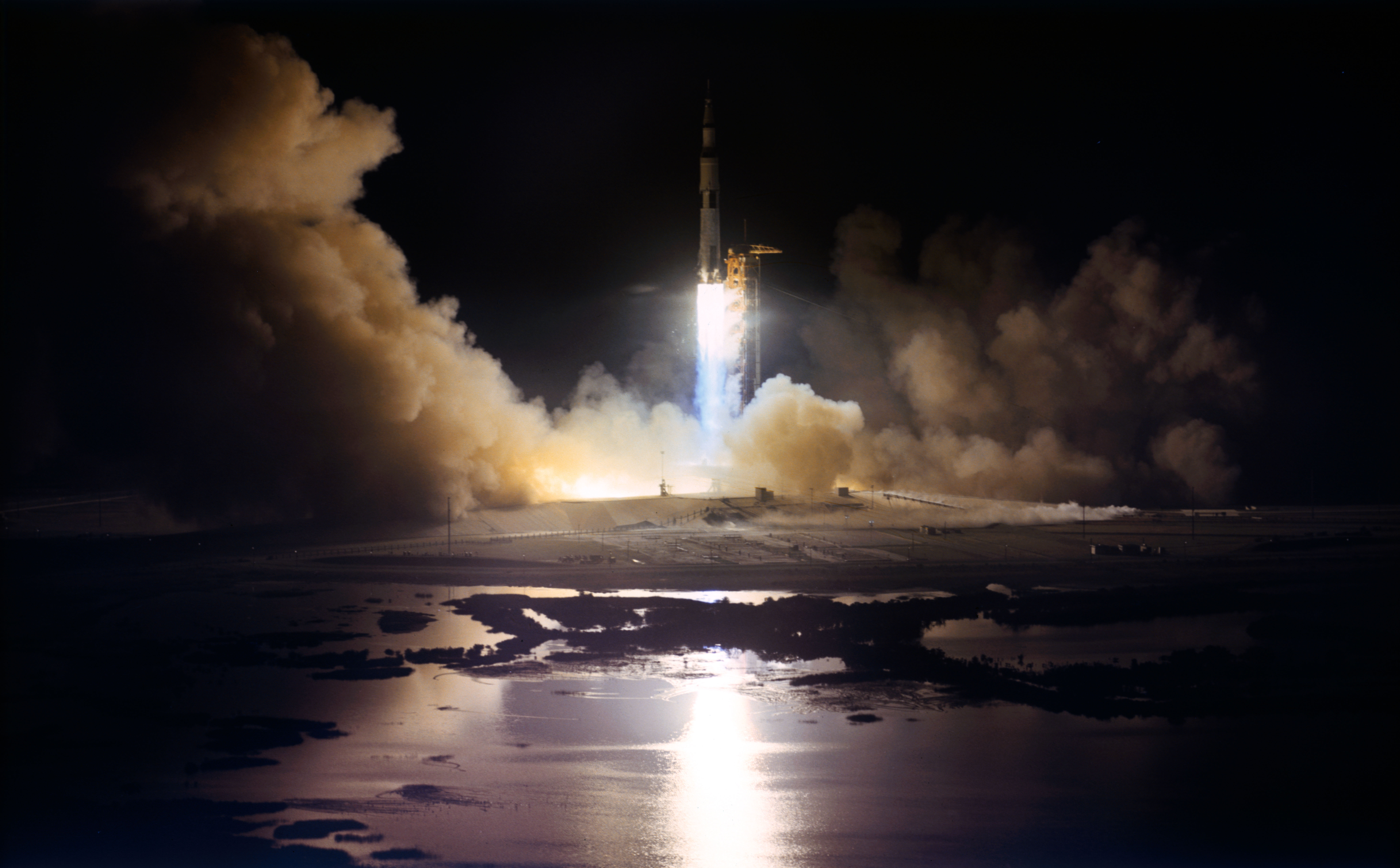
Apollo 17, in December 1972. Eugene Cernan and Harrison Schmitt landed in the Taurus-Littrow valley on 11 December 1972, worked on the surface for three days… more…
- Image pending
Astronauts and life in space
How fast do astronauts return to earth?
Astronauts come home at orbital speed: a capsule leaving the International Space Station meets the atmosphere at roughly 28 000 km/h, and air friction rather… more…
