Did you know…
How much an astronaut is paid?
Short answer
NASA's civilian astronauts are ordinary federal employees, paid on the General Schedule grade-and-step scale with no bonus per flight, per spacewalk or per month in orbit. Military astronauts stay on their service pay instead. The exact bracket appears in each astronaut-candidate vacancy notice and varies with grade, step and locality.
A civil-service salary
The astronaut office at Johnson Space Center is a government workplace, and NASA's civilian astronauts are paid like other federal professionals: a grade on the General Schedule, a step within that grade, plus the locality adjustment for the Houston area. Pay rises with time in grade and experience rather than with flights. There is no launch bonus, no hazard premium for a spacewalk and no daily allowance for months in orbit; the salary is identical whether an astronaut is in a simulator, underwater in the training pool or aboard the International Space Station. NASA has historically classified astronaut candidates within the GS-11 to GS-14 band, and the bracket in force is printed in the vacancy announcement each time a class is recruited.
Military astronauts are paid by their service
A large share of the corps comes from the armed forces and remains there on assignment. Those astronauts keep their rank, base pay, allowances and pension track, and NASA reimburses the service rather than issuing a second salary. Two people strapped side by side in the same capsule can therefore sit on completely different pay systems, with different retirement rules and different tax treatment.
Other agencies, and people who are not employees
ESA, JAXA and Roscosmos pay their astronauts on their own internal grade scales, again as career staff rather than per mission, with new recruits entering near the bottom of the professional range and moving up with experience. The commercial end looks different: astronauts employed by companies such as SpaceX or Axiom Space are on private-sector contracts, while the customers who buy the remaining seats are not paid at all. They are the ones paying, at prices negotiated case by case and rarely published in full.
More questions
- Image pending
Astronauts and life in space
Why does astronauts float in space?
Because they are in free fall, not because gravity is absent. At the International Space Station's altitude of about 400 km, Earth still pulls almost as hard… more…
- Image pending
Astronauts and life in space
Why did yuri gagarin die?
Gagarin died in an aircraft crash, not in a spacecraft. On 27 March 1968 the MiG-15UTI trainer he was flying with instructor Vladimir Seryogin went down in… more…
.png)
Astronauts and life in space
Why is blue origin so slow?
Blue Origin was built on deliberate, owner-funded incrementalism: its motto is Gradatim Ferociter, step by step, and it spent its first two decades on… more…
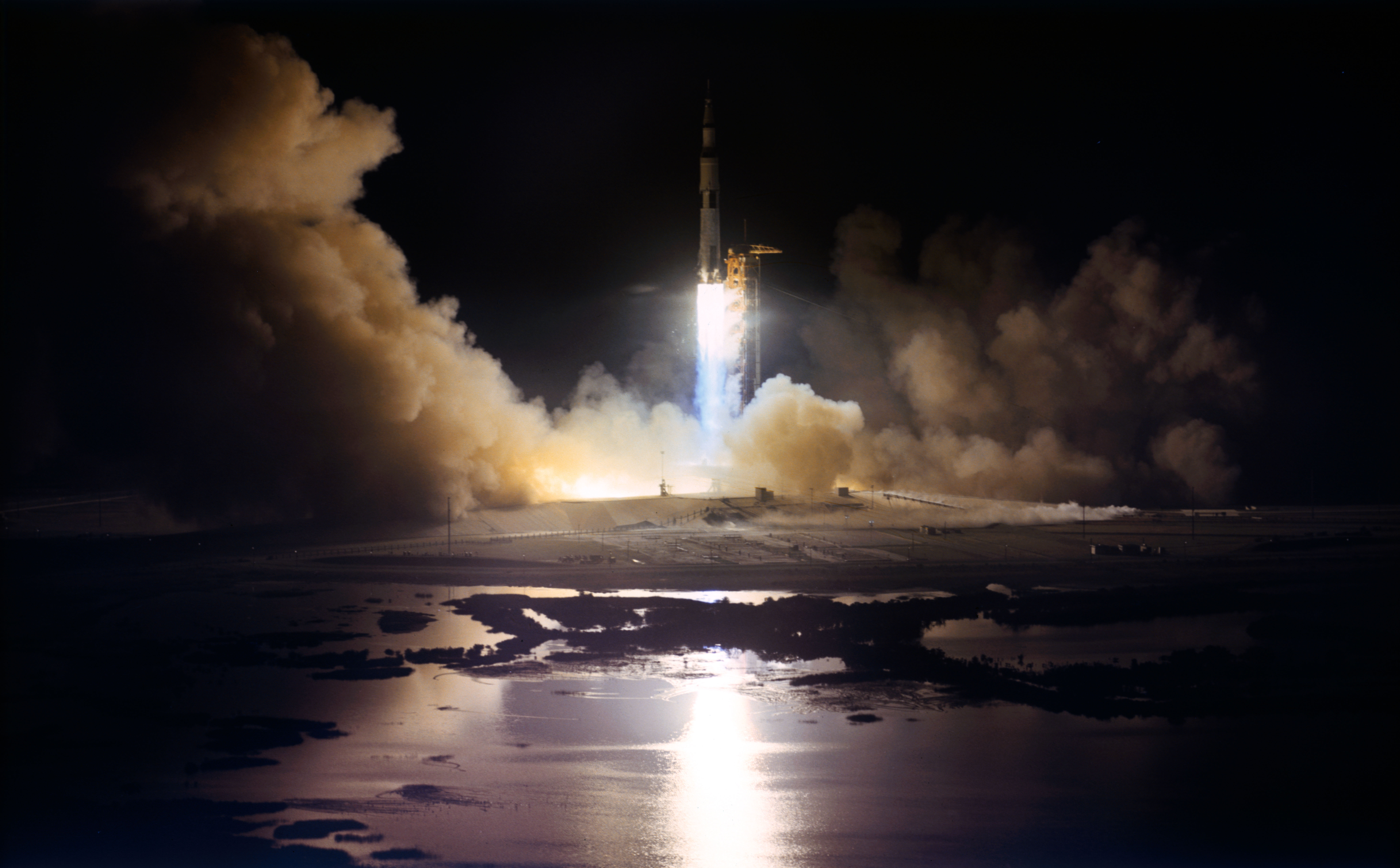
Astronauts and life in space
When did astronauts last walk on the moon?
Apollo 17, in December 1972. Eugene Cernan and Harrison Schmitt landed in the Taurus-Littrow valley on 11 December 1972, worked on the surface for three days… more…
- Image pending
Astronauts and life in space
How high do astronauts orbit the earth?
Crewed spaceflight today happens a few hundred kilometres up. The International Space Station orbits at about 400 km, lapping the planet roughly every 90… more…
- Image pending
Astronauts and life in space
How fast do astronauts return to earth?
Astronauts come home at orbital speed: a capsule leaving the International Space Station meets the atmosphere at roughly 28 000 km/h, and air friction rather… more…
