Did you know…
How fast do astronauts return to earth?
Short answer
Astronauts come home at orbital speed: a capsule leaving the International Space Station meets the atmosphere at roughly 28 000 km/h, and air friction rather than engines removes almost all of that within minutes. Parachutes handle the last kilometres, so the touchdown itself is a thump, not an impact.
Braking with air, not engines
A capsule leaving the International Space Station is moving at about 28 000 km/h, and every bit of that speed has to go somewhere before the crew can stand on the ground. Rockets cannot do it: the propellant needed to cancel orbital speed would rival the propellant needed to reach it. So spacecraft use the atmosphere as a brake. A short engine burn lowers one side of the orbit into the upper air, and from then on friction does the work.
Entry proper begins high in the upper atmosphere. The compressed gas ahead of the heat shield glows, the capsule sheds most of its velocity in a handful of minutes, and the crew feels a steady push of several times their own weight. It is a firm ride rather than a violent one, because the vehicle is shaped to spread the deceleration along a long, shallow path.
The last ten kilometres
Once the speed is down to the range of a fast jet, parachutes take over. Small drogues stabilise the capsule first, then the mains open and the descent slows to something closer to a lift ride. A Crew Dragon comes down under four main parachutes onto water; a Soyuz descends over land and fires soft-landing rockets in the final metre, which is why returning crews describe the arrival as a short, hard thump.
From hatch close to home
The sequence matters more than the clock. On a Soyuz the whole trip, from undocking to sitting in a scorched capsule on the Kazakh steppe, takes a few hours, most of it spent waiting for the right moment to burn; Dragon flights are similar, with the added wait for acceptable sea conditions. Returns from the Moon were faster and hotter, because a spacecraft falling back from lunar distance reaches the atmosphere well above orbital speed, and its heat shield has to absorb the difference.
More questions
- Image pending
Astronauts and life in space
Why does astronauts float in space?
Because they are in free fall, not because gravity is absent. At the International Space Station's altitude of about 400 km, Earth still pulls almost as hard… more…
- Image pending
Astronauts and life in space
Why did yuri gagarin die?
Gagarin died in an aircraft crash, not in a spacecraft. On 27 March 1968 the MiG-15UTI trainer he was flying with instructor Vladimir Seryogin went down in… more…
- Image pending
Astronauts and life in space
How much an astronaut is paid?
NASA's civilian astronauts are ordinary federal employees, paid on the General Schedule grade-and-step scale with no bonus per flight, per spacewalk or per… more…
.png)
Astronauts and life in space
Why is blue origin so slow?
Blue Origin was built on deliberate, owner-funded incrementalism: its motto is Gradatim Ferociter, step by step, and it spent its first two decades on… more…
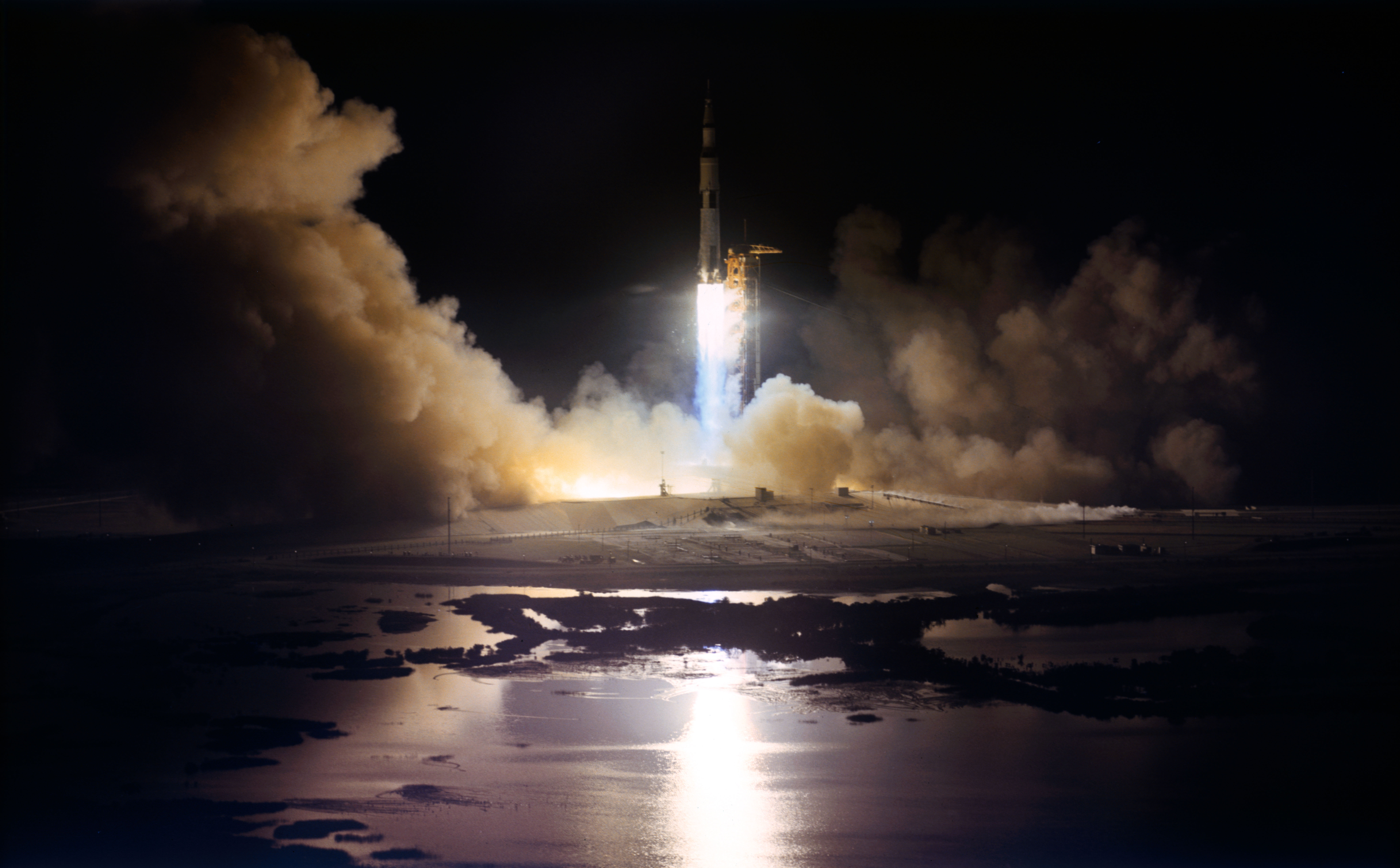
Astronauts and life in space
When did astronauts last walk on the moon?
Apollo 17, in December 1972. Eugene Cernan and Harrison Schmitt landed in the Taurus-Littrow valley on 11 December 1972, worked on the surface for three days… more…
- Image pending
Astronauts and life in space
How high do astronauts orbit the earth?
Crewed spaceflight today happens a few hundred kilometres up. The International Space Station orbits at about 400 km, lapping the planet roughly every 90… more…
