Did you know…
Why is blue origin so slow?
Short answer
Blue Origin was built on deliberate, owner-funded incrementalism: its motto is Gradatim Ferociter, step by step, and it spent its first two decades on suborbital hops and on developing the BE-4 engine in house, with no customer forcing deadlines. New Glenn reached orbit on its first flight in January 2025, so the pace has changed.
.png)
A funding model without deadlines
Blue Origin was founded in 2000, and for most of that time nothing external forced it to hurry. It was financed by its owner, Jeff Bezos, rather than by milestone payments, investors expecting a return or a backlog of customers waiting for a slot. That freedom removed the ordinary pressures of the launch business, and the company used it to work quietly: long test campaigns, few announcements, hardware revealed when it was ready. The crest carries the motto Gradatim Ferociter, step by step, ferociously, and for years the first half of that phrase was the visible one.
The engine came before the rocket
The technical order also stretched the timeline. Blue Origin started with New Shepard, a small reusable suborbital vehicle that carries payloads and passengers above the recognised edge of space and lands again. It proved propulsive landing and rapid reuse, but a suborbital hop earns no orbital business. In parallel the company chose to build its own engines rather than buy them, and the methane-fuelled BE-4, also sold to United Launch Alliance for Vulcan, took far longer than planned. New Glenn could not fly before the engines existed, and its booster needs seven of them.
The premise is now out of date
Judged in 2026, the company is no longer standing still. New Glenn reached orbit on its debut flight in January 2025, its BE-4 engines fly on a competitor's rocket, it holds a NASA contract for a crewed Artemis lunar lander, and a change of leadership has shifted the emphasis from development to manufacturing rate. The open question is no longer whether Blue Origin can reach orbit, but how quickly it can repeat the trick, because cadence, not a first flight, is what decides who carries the traffic.
More questions
- Image pending
Astronauts and life in space
Why does astronauts float in space?
Because they are in free fall, not because gravity is absent. At the International Space Station's altitude of about 400 km, Earth still pulls almost as hard… more…
- Image pending
Astronauts and life in space
Why did yuri gagarin die?
Gagarin died in an aircraft crash, not in a spacecraft. On 27 March 1968 the MiG-15UTI trainer he was flying with instructor Vladimir Seryogin went down in… more…
- Image pending
Astronauts and life in space
How much an astronaut is paid?
NASA's civilian astronauts are ordinary federal employees, paid on the General Schedule grade-and-step scale with no bonus per flight, per spacewalk or per… more…
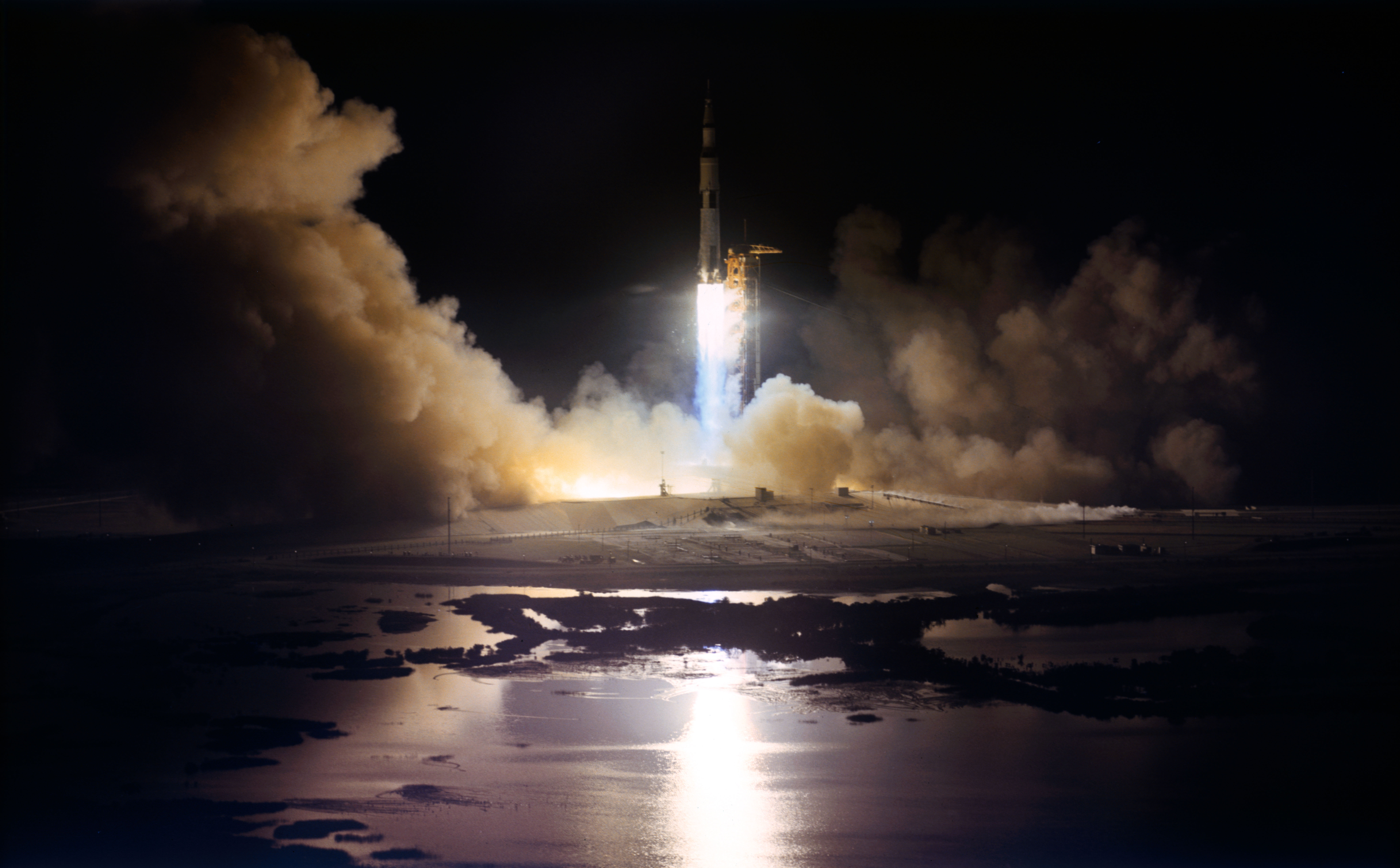
Astronauts and life in space
When did astronauts last walk on the moon?
Apollo 17, in December 1972. Eugene Cernan and Harrison Schmitt landed in the Taurus-Littrow valley on 11 December 1972, worked on the surface for three days… more…
- Image pending
Astronauts and life in space
How high do astronauts orbit the earth?
Crewed spaceflight today happens a few hundred kilometres up. The International Space Station orbits at about 400 km, lapping the planet roughly every 90… more…
- Image pending
Astronauts and life in space
How fast do astronauts return to earth?
Astronauts come home at orbital speed: a capsule leaving the International Space Station meets the atmosphere at roughly 28 000 km/h, and air friction rather… more…
