Family: New Glenn · Blue Origin
New Glenn
Launch statistics
- 3
- Launches (as of April 19, 2026)
- 0
- Successes
- 1
- Failures
- 0.0 %
- Success rate
.png)
-1600.webp)
_(cropped)-1600.webp)
_from_Space_Launch_Complex_36%2C_19_April_2026_(9628270)-1600.webp)
_from_Space_Launch_Complex_36%2C_19_April_2026_(9628275)-1600.webp)
%2C_from_Space_Launch_Complex_36%2C_13_November_2025-800.webp)
.gif)
_from_Space_Launch_Complex_36%2C_19_April_2026_(9628274)-1600.webp)
.gif)
-1600.webp)
-1600.webp)
_from_Space_Launch_Complex_36%2C_19_April_2026_(9628278)-1600.webp)
-1600.webp)
-1600.webp)
-1600.webp)
_from_Space_Launch_Complex_36%2C_19_April_2026_(9628269)-1600.webp)
_from_Space_Launch_Complex_36%2C_19_April_2026_(9628272)-1600.webp)
New Glenn is a family of two-stage partially reusable launch vehicles developed and operated by the American company Blue Origin. It is named after NASA astronaut John Glenn, the first American to orbit Earth. All versions use seven-meter diameter stages, and with a payload capacity of 45 tons to low Earth orbit it is the most powerful reusable launch vehicle to reach orbit. The rocket exists in two configurations that should not be conflated. The operational one, New Glenn 7×2, is a heavy-lift vehicle 98 m tall: its 57.5 m GS1 first stage carries seven BE-4 engines burning liquid methane and oxygen, while the 23.4 m GS2 second stage uses two hydrolox BE-3U engines. The configuration under development, New Glenn 9×4, is a super heavy-lift vehicle with nine BE-4 engines on the first stage and four BE-3U on the second. Announced in November 2025, the company says it will be capable of more than 70,000 kg to low Earth orbit, over 14,000 kg on a direct insertion to geosynchronous orbit and more than 20,000 kg to a trans-lunar injection trajectory, together with an enlarged 8.7 m fairing. As with Blue Origin's suborbital New Shepard, New Glenn's first stage is designed for reuse and lands at sea aboard the barge Landing Platform Vessel 1. Blue Origin states that both the 7×2 and 9×4 versions are intended to operate concurrently.
New Glenn in the news
.jpg)
The launch infrastructure improvements also include a substantial manufacturing expansion at Rocket Park and the addition of new landing barges.
The infrastructure is designed to support multiple flights per week by the end of the decade.
.jpg)
Four months after Blue Origin’s New Glenn rocket exploded on the launch pad, the company… The post Blue Origin Advances LC-36 Rebuild for Year-End New Glenn Return to Flight appeared first on…
Blue Origin seeks FAA approval for up to 50 New Glenn launches and 50 booster landings per year.
In accordance with a contract on-ramp clause, NASA has added Blue Origin’s New Glenn 9×4 launch service to the NASA Launch Services (NLS) II contract. The New Glenn 9×4 launch service will be…

History
From secret project to public name
Blue Origin began developing systems for orbital human spaceflight before 2012 and by 2013 was stating on its website that the first stage would perform a powered vertical landing and be reusable. It publicly declared orbital launch vehicle intentions in September 2015, and in mid-2016 the vehicle was briefly known by the placeholder name "Very Big Brother". On September 12, 2016 the company released the basic design and announced the New Glenn name, along with an intent to build two- and three-stage variants. The three-stage version was cancelled outright in January 2019, and in September 2017 the fairing grew from 5.4 m to 7 m in diameter.
NG-1: orbit on the first try
On January 16, 2025 at 07:03 UTC, New Glenn lifted off for the first time from Launch Complex 36 at Cape Canaveral carrying the Blue Ring Pathfinder. Blue Origin reached orbit on its first attempt, injecting the upper stage and its payload into medium Earth orbit. The booster, wryly named "So You're Telling Me There's a Chance", was lost on descent: telemetry put it at roughly Mach 5.5 and about 25.7 km altitude when it was deemed lost.
Recovery and first reflight
On November 13, 2025 the booster "Never Tell Me the Odds" landed successfully on the vessel Jacklyn, making Blue Origin the second company after SpaceX to deploy a spacecraft in orbit while landing the vehicle's booster. That same booster flew again on April 19, 2026 as mission NG-3, the first flight for a commercial customer, carrying AST SpaceMobile's BlueBird 7 satellite: the booster landed once more, but the mission itself was logged as a failure.
The May 2026 explosion
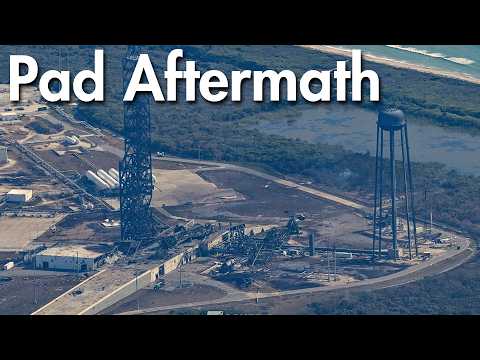
On May 28, 2026 a New Glenn named "No, It's Necessary" exploded during a static fire test at Launch Complex 36. The blast destroyed the vehicle and severely damaged the company's only operational launch facility; no injuries were reported. Industry sources cited by Ars Technica estimated that repairing the complex or completing an alternative facility could take more than a year, leaving the programme inactive and putting the schedule for the Blue Moon lunar landers and the Amazon Leo constellation in doubt.
_(cropped).jpg)
Launch timeline
| Date | Launch site | Program | Outcome | Payload |
|---|---|---|---|---|
| Apr 19, 2026, 11:25 AM | Launch Complex 36A | — | Failure | AST SpaceMobile’s Block 2 BlueBird satellites are designed to deliver up to 10 times the bandwidth capacity of the BlueBird Block 1 satellites, required to achieve 24/7 continuous cellular broadband service coverage in the United States, with beams designed to support a capacity of up to 40 MHz, enabling peak data transmission speeds up to 120 Mbps, supporting voice, full data and video applications. The Block 2 BlueBirds, featuring as large as 2400 square foot communications arrays, will be the largest satellites ever commercially deployed in Low Earth orbit once launched. This launch will feature 1 satellite, BlueBird 7/BlueBird Block 2 FM2. |
Versions
| New Glenn 7×2 | New Glenn 9×4 | New Glenn de tres etapas (cancelada) | |
|---|---|---|---|
| First launch | January 16, 2025 | — | — |
| Last launch | April 19, 2026 | — | — |
| Powerplant | First stage: 7 BE-4 methane/liquid-oxygen engines (19,928 kN at liftoff per the infobox). Second stage: 2 vacuum-optimised BE-3U liquid-hydrogen/liquid-oxygen engines (1,779 kN). | — | — |
| Propellant | LOX/CH4 (GS1) · LOX/LH2 (GS2) | — | — |
| Height | 98 m | 120 m Best value in this row | — |
| Diameter | 7 m Best value in this row | 7 m Best value in this row | 7 m Best value in this row |
| Liftoff thrust | 19,928 kN | 25,622 kN Best value in this row | — |
| Stages | 2 Best value in this row | 2 Best value in this row | 3 |
| LEO capacity | 45,000 kg | 70,000 kg Best value in this row | — |
| GTO capacity | 13,600 kg | — | — |
| Fairing diameter | 7 m | 8.7 m Best value in this row | — |
| Reusable | Yes | Yes | Yes |
Images
Elsewhere
Videos






Show the 113 more
 Blue Origin Says Something Weird Happened to $23 Million Satellite Launched on New Glenn NG3 Mission
 🔴 EN DIRECT LANCEMENT NEW GLENN BlueBird 2 - Première réutilisation. BLUE ORIGIN (Lancement spatial)
![[Annulation] LANCEMENT INAUGURAL NEW GLENN BLUE ORIGIN (Blue Ring Pathfinder - Lancement spatial FR)](https://i.ytimg.com/vi/kfbTMUKXD98/hqdefault.jpg) [Annulation] LANCEMENT INAUGURAL NEW GLENN BLUE ORIGIN (Blue Ring Pathfinder - Lancement spatial FR)
[Annulation] LANCEMENT INAUGURAL NEW GLENN BLUE ORIGIN (Blue Ring Pathfinder - Lancement spatial FR)















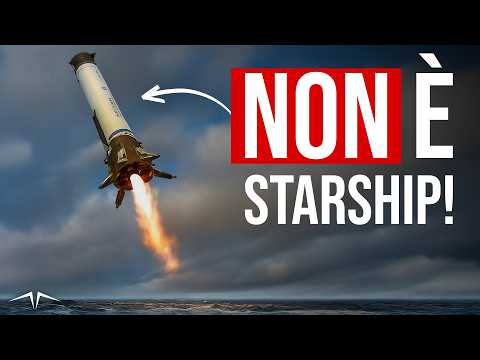






![[REBROADCAST] New Glenn: Blue Origin has recovered its rocket!](https://i.ytimg.com/vi/z-Q7wPa4NOQ/hqdefault.jpg)


![REPLAY 🔴 [ANNULATION] SECOND VOL DE LA NEW GLENN DE BLUE ORIGIN : MISSION ESCAPADE VERS MARS (FR) !](https://i.ytimg.com/vi/Kn_FqOhLF1c/hqdefault.jpg)
![🔴[REPORTÉ] BLUE ORIGIN lance sa fusée GÉANTE ! | DIRECT - New Glenn](https://i.ytimg.com/vi/5yADvMgDyn0/hqdefault.jpg)





![[EN DIRECTO] Lanzamiento del nuevo cohete NEW GLENN (2º INTENTO)](https://i.ytimg.com/vi/dce5XOL3r8Q/hqdefault.jpg)

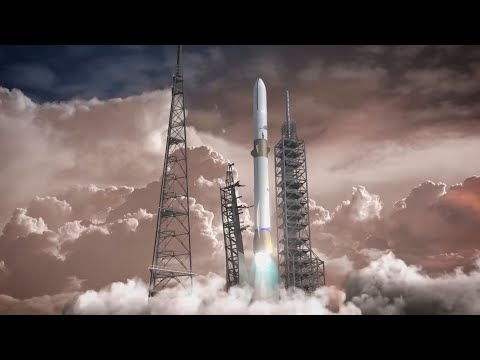









Did you know… about New Glenn
- Why is blue origin so slow?
Blue Origin was built on deliberate, owner-funded incrementalism: its motto is Gradatim Ferociter, step by step, and it spent its first two decades on…
- What is blue origin company?
Blue Origin is an American space company founded in 2000 by Jeff Bezos and based in Kent, Washington. It builds the reusable suborbital New Shepard, which…
- When was blue origin founded?
Blue Origin was founded in 2000 by Jeff Bezos, two years before SpaceX. It worked almost in silence for its first decade, flew the suborbital New Shepard from…
- How does blue origin land?
Propulsively, tail first. New Shepard's booster restarts its BE-3PM engine, steadies itself with a ring fin and drag brakes and touches down on a concrete pad…
- How much blue origin worth?
Blue Origin is privately held and has never published a valuation. It is owned and funded by Jeff Bezos, has no shares traded, files no public accounts and…