United States · 2006–
Rocket Lab
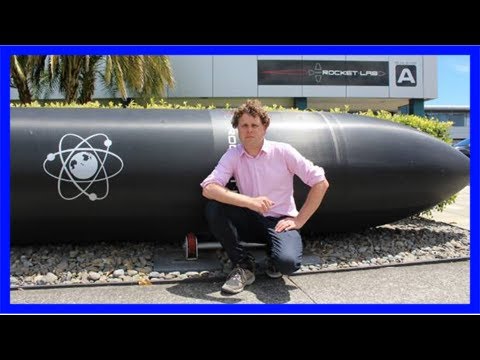
Rocket Lab is an aerospace company that builds rockets, engines, satellites and spacecraft components, and sells launch services. It was started in New Zealand in June 2006 by Peter Beck, a self-taught engineer who never went to university, and around 2013 it moved its registration and headquarters to California, turning the original New Zealand company into a subsidiary of the American one. Its head office is now in Long Beach, and its shares have traded on the Nasdaq since August 2021. Its best-known product is Electron, a two-stage small launcher powered by Rutherford engines whose propellant pumps are driven not by turbines but by battery-fed electric motors. After a failed first flight in 2017 it reached orbit in January 2018, and by early 2026 it had flown more than 75 missions, making it the busiest small launch vehicle in the world. Electron has spawned the suborbital HASTE variant, used for hypersonic testing, and the Photon spacecraft bus, which in 2022 sent NASA's CAPSTONE probe on its way to the Moon. During the 2020s the company reinvented itself as an end-to-end space supplier. A string of acquisitions (Sinclair Interplanetary, ASI, Planetary Systems, SolAero, GEOST, Mynaric, Motiv) brought reaction wheels, solar arrays, separation systems, flight software and laser terminals in-house, and it now builds complete satellites for customers such as the Space Development Agency. It runs launch sites on New Zealand's Māhia Peninsula and at Wallops in Virginia, and is developing Neutron, a partially reusable medium-lift rocket.
Rocket Lab in the news
.jpg)
Rocket Lab has delayed the debut of its powerful, partially reusable Neutron launcher to 2027 due to a manufacturing issue.
.webp)
The company had previously set the launch vehicle's debut for the fourth quarter of 2026, but manufacturing problems related to composite carbon components in the tank…
%3A_TROPICS_Rocket_Launch_(KSC-20230507-PH-RLS01_0005-reupload).jpg)
Rocket Lab has delayed its Neutron launch vehicle once again after carbon fibre manufacturing problems… The post Carbon Fibre Troubles Force Rocket Lab to Delay Neutron Debut to No Earlier Than 2027…
%3A_TROPICS_Rocket_Launch_(KSC-20230507-PH-RLS01_0001-reupload).jpg)
Rocket Lab is further delaying the first launch of its Neutron rocket as it works through fixes after an issue with the first stage tank uncovered earlier this year. Rocket […] The post Rocket Lab’s…
%3A_TROPICS_Rocket_Launch_(KSC-20230507-PH-RLS01_0003-reupload).jpg)
Rocket Lab announced the Neutron rocket in 2021, aiming for a first flight in 2024.
-800.webp)
%3A_TROPICS_Rocket_Launch_(KSC-20230507-PH-RLS01_0005-reupload)-1600.webp)
%3A_TROPICS_Rocket_Launch_(KSC-20230507-PH-RLS01_0001-reupload)-1600.webp)
%3A_TROPICS_Rocket_Launch_(KSC-20230507-PH-RLS01_0003-reupload)-1600.webp)
History
An engineer from Invercargill
Rocket Lab's story cannot be told apart from its founder's. Peter Beck grew up in Invercargill, at the southern tip of New Zealand, the son of a museum director and gemologist and a teacher. As a teenager he turbocharged an old Mini and fired water rockets; he never went to university. From 2001 to 2006 he worked at Industrial Research Limited, a research institute where he dealt with smart materials, composites and superconductors, and where he met the businessman Stephen Tindall, who would later back his venture.
In 2006 Beck went along on his wife's work trip to the United States and used it to seek out people in the rocketry world. He came home convinced there was room for a small, cheap launcher, and in June that year he founded Rocket Lab in New Zealand. While hunting for capital he met Mark Rocket, a New Zealand internet entrepreneur who became a seed investor and served as co-director from 2007 to 2011. Tindall, the investor Vinod Khosla and the New Zealand Government also came on board.
Ātea-1: the first hop into space
The first milestone came on 30 November 2009. From Great Mercury Island, a private island off the Coromandel Peninsula owned by the banker and investor Michael Fay, the company launched the Ātea-1 sounding rocket. Ātea is Māori for space, and the local iwi named the vehicle Manu Karere, the bird messenger. It was about 6 metres long and weighed some 60 kg, designed to lift a 2 kg payload to roughly 120 km. With it Rocket Lab became the first private company in the Southern Hemisphere to reach space. The flight was not spotless: the payload, an instrumented dart with no telemetry link, was never recovered and the launch was even judged unsuccessful; performance was worked out from the boost stage, which did send data and was retrieved. That was enough for the whole team to move on to an orbital launcher. Ātea never flew again.
Early contracts and experiments
Before it had an orbital rocket, the company lived on contracts and prototypes. In December 2010 the US Operationally Responsive Space Office awarded it a study into a low-cost launcher for CubeSats, and an agreement with NASA gave it access to agency staff, facilities and equipment for its commercial work. In 2011 it built Instant Eyes, a small military rocket carrying a 5-megapixel camera that, like a throwaway drone, climbed to 2,500 feet in 20 seconds to give a bird's-eye view. In 2012 it demonstrated a rocket running on a viscous liquid monopropellant developed with DARPA and the Office of Naval Research: a thixotropic substance that acts like a solid until it is sheared, non-toxic, water-soluble and barely flammable. The company was granted a US patent for the system.
The move to America and the money that followed
Around 2013 Rocket Lab moved its registration to the United States and opened its headquarters in Huntington Beach, California; the New Zealand company became a subsidiary of the new American parent. The move coincided with American funding and growing US government involvement. Khosla Ventures and Callaghan Innovation, a New Zealand Crown entity, invested that year; Bessemer Venture Partners followed in 2014 and Lockheed Martin in 2015. In March 2017 the company closed a US$75 million Series D led by Data Collective, and in November 2018 a $150 million Series E led by Future Fund. In May 2017 Callaghan Innovation's support was reported to total NZ$15 million.
Electron and the Rutherford engine
That money paid for Electron, a two-stage rocket for small satellites: about 150 kg to a 500 km Sun-synchronous orbit, at a projected cost below US$5 million per launch. Its novelty lies in the Rutherford engine fitted to both stages. Instead of a gas generator or preburner spinning turbopumps, its pumps are driven by battery-powered electric motors, and much of the engine is 3D-printed by electron beam melting, fusing metal powder layer by layer in a high vacuum. By March 2016 the second-stage Rutherford had finished its firing tests. The main structure is carbon composite; making those parts used to take 400 hours of largely manual work, and in late 2019 the company switched on a robot, nicknamed Rosie after the character in The Jetsons, that produced them in 12 hours.
Māhia: a private spaceport
Rocket Lab wanted to launch from Kaitorete Spit in the South Island, but struggled to obtain resource consent, and in November 2015 it announced that its main site would be on the Māhia Peninsula on the North Island's east coast. There it built Launch Complex 1, a private spaceport licensed to launch every 72 hours for 30 years, officially opened on 26 September 2016 (UTC). The complex includes launch pads, a vehicle integration building and a range control centre; a second pad, LC-1B, was begun in December 2019 and hosted its first launch on 28 February 2022.
From test flight to commercial service
Electron first flew on 25 May 2017 from Māhia. It climbed to about 224 km and was behaving normally when telemetry was lost and flight control destroyed it. The second attempt, wryly named Still Testing, lifted off on 21 January 2018, reached orbit and released CubeSats for Planet Labs and Spire Global, along with the Humanity Star, a carbon-fibre geodesic sphere of 65 reflective panels that re-entered and burned up in March 2018. The first commercial launch, the third overall, flew on 11 November 2018 with satellites for Spire Global and GeoOptics, a CubeSat built by high-school students and a prototype drag sail. That year NASA's first mission with the company went up, valued by the agency at $6.9 million, and in October Rocket Lab unveiled an Auckland factory for tanks and stages that handles final integration of the rockets launched from Māhia.
%3A_TROPICS_Rocket_Launch_(KSC-20230507-PH-RLS01_0006).jpg)
The business was growing: launch revenue was $13.5 million in 2018 and $48 million in 2019, with an estimated $33 million in 2020. In late 2018 the company picked the Mid-Atlantic Regional Spaceport at Wallops, Virginia, as its second site, citing ready infrastructure, little traffic from other operators and access to orbital inclinations that complemented New Zealand. Launch Complex 2 was finished in December 2019, although the first Electron did not fly from there until 24 January 2023, carrying three satellites.
Betting on reuse
For years the company had said publicly that it would not try to recover its rockets, but in 2018 it began working on it and in August 2019 it explained the plan: slow the first stage with a parachute and catch it in mid-air. In December 2019, on Electron's tenth flight, it tested its own aerothermal decelerator, which carried the stage safely through the transition from space to the lower atmosphere. On 19 November 2020 the Return to Sender mission put 30 small satellites into orbit and recovered the first stage from the sea. On 3 May 2022, during There And Back Again, a helicopter actually hooked the falling booster in mid-air, a first; because it was hanging badly it was let go and splashed down, to be picked up by a ship. So far there have been two helicopter capture attempts and six soft water recoveries.
Failures and comebacks
Electron's record has not been flawless. On 4 July 2020 a problem during the second-stage burn of flight 13, Pics or It Didn't Happen, cost the payload. On 15 May 2021 Running Out Of Toes recovered its first stage but the second stage failed and two BlackSky satellites were lost. On 19 September 2023 another second-stage failure shortly after separation doomed a Capella Space radar satellite; Electron returned to flight on 14 December with a Japanese radar satellite, its tenth launch of the year and a record for the rocket.
Photon and the road to the Moon
In 2020 Rocket Lab launched First Light, the first satellite it designed and built itself, derived from Electron's kick stage. That idea grew into Photon, a spacecraft bus that debuted in August 2020 on the I Can't Believe It's Not Optical mission. Photon uses chemical propulsion, with Curie or HyperCurie engines (the latter a hypergolic, electrically pumped evolution) or third-party engines, and can host payloads in low orbit, fly past the Moon or head into deep space. In February 2020 NASA chose the company to launch CAPSTONE, a microwave-oven-sized CubeSat meant to test the elliptical lunar orbit planned for the Artemis programme's Gateway station. First planned to fly from Virginia, the launch was switched to New Zealand because certification of a NASA flight termination system was running late, and took place in June 2022; on 4 July Photon's HyperCurie engine completed the translunar injection burn. CAPSTONE finished its six-month primary mission and kept returning data in an extended one. In August 2022 the company also announced Venus Life Finder, a small private probe meant to fall for a few minutes through Venus's upper atmosphere looking for organic compounds.
A first acquisition and the move to Long Beach
In March 2020 Rocket Lab bought Sinclair Interplanetary, a Canadian maker of small-satellite components, folding its technology into Photon while expanding its sales to other firms. That year it also moved its headquarters to Long Beach to house a growing workforce and sit closer to suppliers and customers. Rutherford engines and avionics are built there, and parts are shipped from there to New Zealand for integration.
Going public and buying up the supply chain
In March 2021 the company announced that it would go public by merging with a special-purpose acquisition company, Vector Acquisition Corporation, and at the same time unveiled Neutron, its medium-lift rocket. It began trading on the Nasdaq on 25 August 2021 at a $4.8 billion valuation, adding $777 million in gross cash. At that point it had more than 500 employees and had put 105 satellites into orbit. Between $250 and $300 million of the proceeds went into developing Neutron.
The cash also went on acquisitions. In October 2021 it bought Advanced Solutions, Inc. (ASI), a Colorado flight-software firm; in November, Planetary Systems Corporation, a maker of satellite separation systems, for $81.4 million; and in January 2022, SolAero, a space solar power supplier with facilities in Albuquerque. In September 2021 it opened an Auckland line able to turn out up to 2,000 reaction wheels a year for an undisclosed mega-constellation customer. Together these moves turned a launch company into a builder of complete satellites, for commercial operators such as Globalstar and for government customers such as the Space Development Agency.
HASTE, engines and new factories
On 18 June 2023 HASTE, a suborbital version of Electron designed as a hypersonic test bed, flew for the first time on the Scout's Arrow mission for Leidos. In May 2023 Rocket Lab bought Virgin Orbit's Long Beach factory, machinery and equipment out of that company's bankruptcy, and in October opened it as its engine development centre, building Rutherford and the new Archimedes, whose test stand at NASA's Stennis Space Center had opened in November 2022. That same October it took over SailGP Technologies' composite facilities in Warkworth, New Zealand, along with more than 50 staff, and in November it announced a space structures complex in Middle River, Maryland. In January 2024 it became prime contractor on a $515M US Space Force military satellite project, its largest contract to date, and in October 2024 NASA asked it to study new concepts for returning samples from Mars.
Neutron
Neutron is the company's big bet: a partially reusable, human-rated, two-stage medium-lift launcher announced on 1 March 2021 and aimed at deploying mega-constellations. In reusable configuration it is meant to place about 13,000 kg in low Earth orbit; it is expected to stand about 40 m tall with a 4.5 m fairing, and its first stage will come back to land. It will fly from Wallops, where Rocket Lab broke ground on its factory on 11 April 2022. The new Launch Complex 3 was opened on 28 August 2025 in the presence of Virginia's governor, Glenn Youngkin. Dates have slipped: the company once aimed to fly in 2025, and the latest projection gathered places the first launch no earlier than the last quarter of 2026.
Recent growth
In May 2025 the company agreed to buy GEOST, adding 115 people and taking its headcount past 2,600, more than 700 of them in New Zealand. In March 2026 it signed a US$190 million Department of Defense contract for a series of hypersonic test flights on HASTE, by then holding contracts for at least twenty HASTE missions through 2030. In April 2026 it closed the purchase of Mynaric, a German maker of laser optical communication terminals, for $155.3 million, giving it its first European footprint, and unveiled Gauss, an in-house electric propulsion system with a production line able to build more than 200 thrusters a year. In May 2026 it won a $90m Space Systems Command contract to build and operate two geostationary satellites, and completed the takeover of Motiv Space Systems, a Pasadena space robotics specialist renamed Rocket Lab Robotics.
Controversy and recognition
The military work of some customers has caused controversy in New Zealand. In October 2024 the Green Party asked in Parliament whether launches for BlackSky, which supplies imagery to the Israeli defence ministry, could be refused under the 2017 space law; in November 2024 the press reported that the company had threatened a defamation suit against an academic who linked it to US military control of nuclear weapons; and in October 2025 an activist group asked the Prime Minister to withdraw approval for upcoming BlackSky launches. On the other side of the ledger, Beck was named New Zealand's Innovator of the Year in 2015, and in 2020 both he and the company received the Pickering Medal from the Royal Society Te Apārangi. Rocket Lab's rivalry with Astra was the subject of the 2024 HBO documentary Wild Wild Space.
%3A_TROPICS_Rocket_Launch_(KSC-20230507-PH-RLS01_0004-reupload).jpg)
Catalog — Rockets
- 2017
Electron
Electron is a two-stage small orbital launch vehicle developed by Rocket Lab, an aerospace manufacturer and launch service provider with roots in both New Zealand and the United States. It stands 18 m tall, measures 1.2 m in diameter and weighs about 13 tonnes at liftoff; its main airframe is built from lightweight carbon composite. Aimed squarely at the commercial small-satellite market, it is the third most launched small-lift launch vehicle in history. Its defining technical feature is the Rutherford engine, the first electric-pump-fed engine to power an orbital-class rocket: conventional turbopumps give way to electric pumps fed by lithium-polymer batteries, and almost every engine part is 3D printed. Nine Rutherfords power the first stage and a single vacuum-optimised unit powers the second, both burning RP-1 and liquid oxygen. An optional third stage, the kick stage, adds a restartable Curie engine for orbit circularisation; the Photon spacecraft is derived from that same hardware. Payload capacity grew from the original 225 kg to 300 kg in low Earth orbit, and from 150 kg to 200 kg in Sun-synchronous orbit, largely thanks to battery improvements. The starting price is around US$7.5 million per launch. Electron flies from Launch Complex 1 on New Zealand's Māhia Peninsula and from Launch Complex 2 at the Mid-Atlantic Regional Spaceport in Virginia. Although designed as an expendable vehicle, Rocket Lab recovered the first stage twice and reflew a Rutherford engine, though it eventually abandoned the idea of catching the booster in mid-air.
Videos












Did you know… about Rocket Lab
- What are the biggest rocket companies?
By launch volume the biggest rocket company is SpaceX, which flew more than 160 orbital missions in 2025, far ahead of anyone else. The other major players…