Did you know…
How does blue origin land?
Short answer
Propulsively, tail first. New Shepard's booster restarts its BE-3PM engine, steadies itself with a ring fin and drag brakes and touches down on a concrete pad near the launch site, while the crew capsule descends separately under parachutes. New Glenn's first stage does the same on a ship stationed at sea.
.png)
New Shepard: a pad for the booster, parachutes for the capsule
Two objects come back from every New Shepard flight, and they land in completely different ways. The booster falls tail first, stabilised by a ring fin at the top that shifts its centre of pressure, and by drag brakes that slow it and steady the descent. Close to the ground the BE-3PM engine relights and throttles deeply, the landing gear deploys, and the stage settles on a concrete pad a short distance from where it lifted off. The crew capsule separates far above and comes down on its own: drogue chutes first, then three main parachutes, and in the last instant before touchdown a burst of gas that cushions the impact on the desert floor.
New Glenn: the same idea, at sea
New Glenn's first stage is far larger and travels much faster, so it cannot simply fly back to the launch site. It slows with engine burns, steers with aerodynamic strakes and lands on six legs aboard a vessel stationed downrange in the Atlantic. Blue Origin designs the stage for a minimum of twenty-five flights. The first attempt, in January 2025, failed during the descent while the mission itself succeeded; the second, later the same year, put the booster on the ship intact.
Why bother
Vertical landing exists for one reason: the first stage is the expensive part of a launcher, and dropping it into the ocean once per flight puts a floor under the price of reaching space. Recovery also returns hardware for inspection, which is how a programme learns what actually wears out and how fast. The cost is performance, because the propellant kept in reserve for the landing burn is propellant not available to lift payload, and every landing leg is mass that flies all the way up.
More questions
- Image pending
Astronauts and life in space
Why does astronauts float in space?
Because they are in free fall, not because gravity is absent. At the International Space Station's altitude of about 400 km, Earth still pulls almost as hard… more…
- Image pending
Astronauts and life in space
Why did yuri gagarin die?
Gagarin died in an aircraft crash, not in a spacecraft. On 27 March 1968 the MiG-15UTI trainer he was flying with instructor Vladimir Seryogin went down in… more…
- Image pending
Astronauts and life in space
How much an astronaut is paid?
NASA's civilian astronauts are ordinary federal employees, paid on the General Schedule grade-and-step scale with no bonus per flight, per spacewalk or per… more…
Astronauts and life in space
Why is blue origin so slow?
Blue Origin was built on deliberate, owner-funded incrementalism: its motto is Gradatim Ferociter, step by step, and it spent its first two decades on… more…
Astronauts and life in space
When did astronauts last walk on the moon?
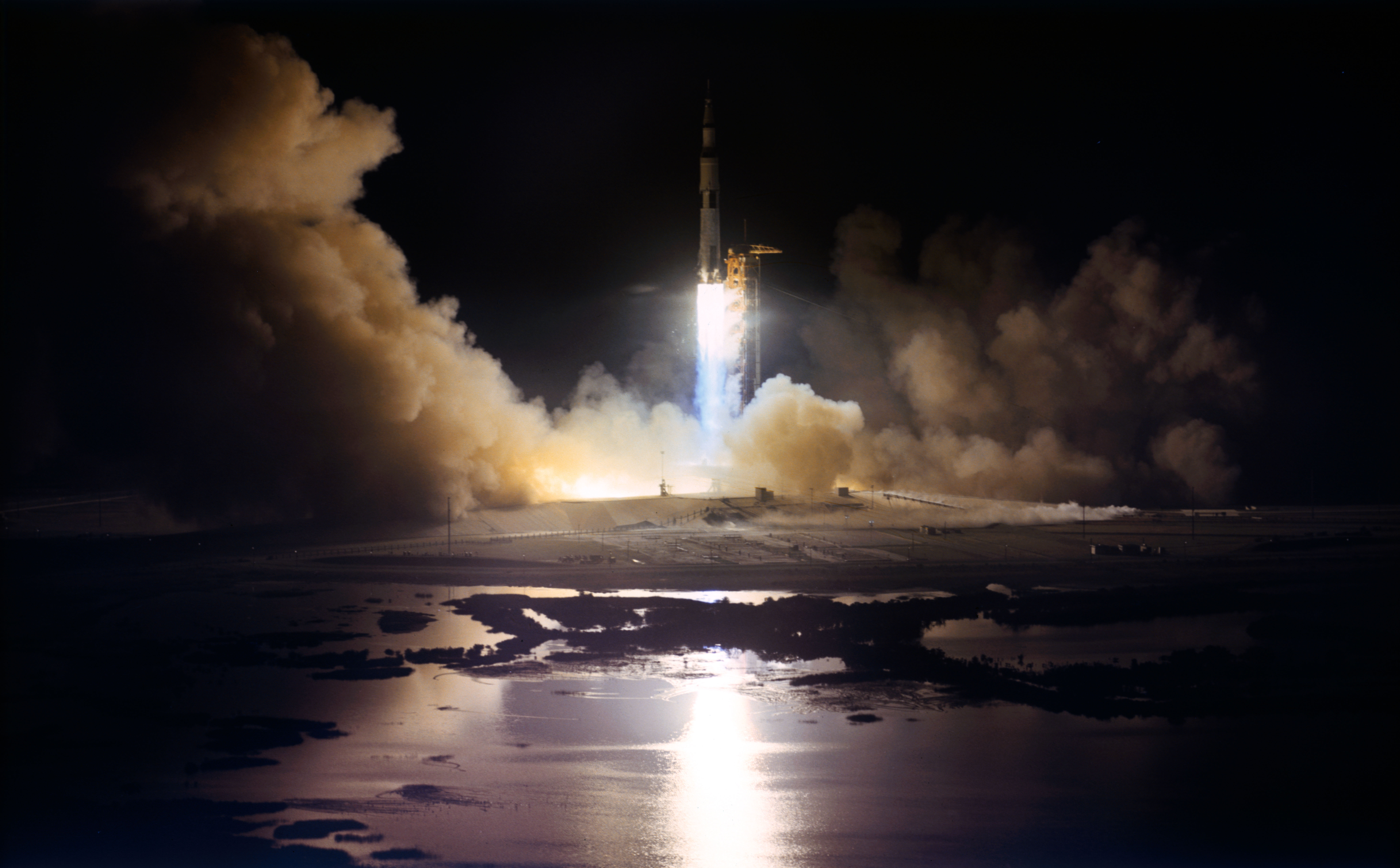
Apollo 17, in December 1972. Eugene Cernan and Harrison Schmitt landed in the Taurus-Littrow valley on 11 December 1972, worked on the surface for three days… more…
- Image pending
Astronauts and life in space
How high do astronauts orbit the earth?
Crewed spaceflight today happens a few hundred kilometres up. The International Space Station orbits at about 400 km, lapping the planet roughly every 90… more…
