Did you know…
Why does astronauts float in space?
Short answer
Because they are in free fall, not because gravity is absent. At the International Space Station's altitude of about 400 km, Earth still pulls almost as hard as at sea level, but the station and its crew fall around the planet together at roughly 28 000 km/h, so nothing is left to press on anybody's feet.
The floor falls away
Weight is not a property of a body; it is what you feel when something holds you up. Standing still, the ground pushes on your feet and your nervous system reads that push as weight. Remove the push, by stepping off a diving board, and the sensation vanishes even though gravity is doing exactly what it did a second earlier. Astronauts live permanently in that second. Their spacecraft is falling, they are falling inside it at the same rate, and there is nothing to press against.
Falling and missing
The fall never ends because of horizontal speed. The International Space Station orbits about 400 km up, where Earth's pull is only slightly weaker than at sea level, and it travels at roughly 28 000 km/h, right around the planet in some 90 minutes. Its path curves downward under gravity at the same rate the surface curves away beneath it. Take the speed away and the station would come down like anything else, which is precisely what a deorbit burn arranges.
Microgravity, not zero gravity
The condition has a name, microgravity, and the prefix is honest. Residual forces are small but real: the thin upper atmosphere drags on the structure, parts of the station farther from its centre of mass tend to drift differently, and every thruster firing or crew push shows up in sensitive experiments. The consequences are visible. Water clings in spheres, flames burn round, and blood that normally pools in the legs shifts into the chest and head, which is why newly arrived crews have puffy faces and thin legs.
Floating does not even require an orbit. Passengers on a suborbital hop feel the same thing while their capsule coasts up and back down, because for those few minutes nothing is holding them up either.
More questions
- Image pending
Astronauts and life in space
Why did yuri gagarin die?
Gagarin died in an aircraft crash, not in a spacecraft. On 27 March 1968 the MiG-15UTI trainer he was flying with instructor Vladimir Seryogin went down in… more…
- Image pending
Astronauts and life in space
How much an astronaut is paid?
NASA's civilian astronauts are ordinary federal employees, paid on the General Schedule grade-and-step scale with no bonus per flight, per spacewalk or per… more…
.png)
Astronauts and life in space
Why is blue origin so slow?
Blue Origin was built on deliberate, owner-funded incrementalism: its motto is Gradatim Ferociter, step by step, and it spent its first two decades on… more…
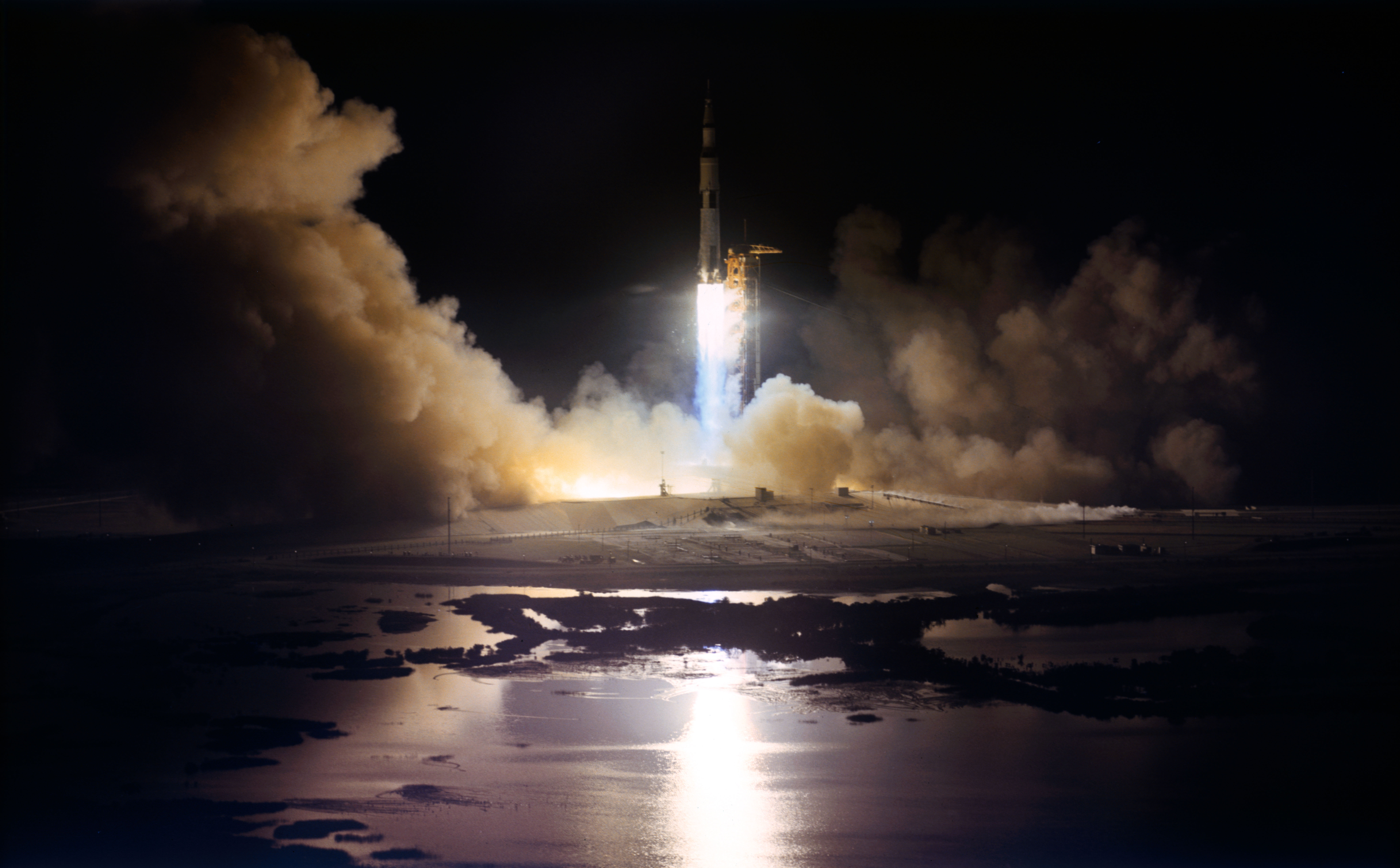
Astronauts and life in space
When did astronauts last walk on the moon?
Apollo 17, in December 1972. Eugene Cernan and Harrison Schmitt landed in the Taurus-Littrow valley on 11 December 1972, worked on the surface for three days… more…
- Image pending
Astronauts and life in space
How high do astronauts orbit the earth?
Crewed spaceflight today happens a few hundred kilometres up. The International Space Station orbits at about 400 km, lapping the planet roughly every 90… more…
- Image pending
Astronauts and life in space
How fast do astronauts return to earth?
Astronauts come home at orbital speed: a capsule leaving the International Space Station meets the atmosphere at roughly 28 000 km/h, and air friction rather… more…
