A Closer Look At The Damage To New Glenn's Launch Pad
Video from the channel TheSpaceBucket about New Glenn, linked on its Above Ten Thousand entry. Duration: 8:01. Language: English. Video type: News.
What's being announced
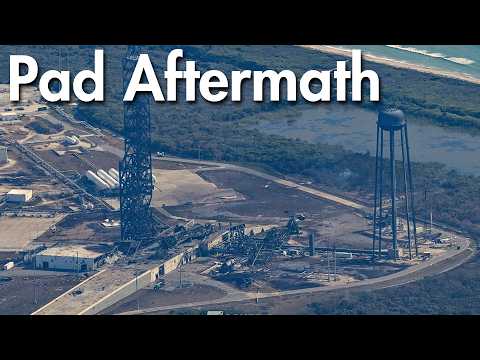
The video analyzes the first daytime images of Cape Canaveral's LC-36 launch complex after a New Glenn exploded during a static fire the night before, as it was being prepared for its fourth mission. The vehicle and much of the pad were lost. The transporter-erector was left nearly destroyed, collapsed over the flame trench. One of the two roughly 183 m lightning towers collapsed, and the other has a broken support at its base. The concrete deck over the flame deflector also gave way, a nearby building lost walls and part of its roof, and debris reached stores farther away. According to Eric Berger, the "Never Tell Me The Odds" booster, stored in the integration building, was damaged.
Context
Blue Origin acquired the pad in 2015 and spent years rebuilding it; it was its only operational launch pad for New Glenn. The roughly 1,800-ton transporter-erector raised the rocket using large hydraulic actuators. The company said all personnel were safe and asked people not to touch any debris that washed ashore. NASA Administrator Jared Isaacman offered support for the investigation.
What it means
Some estimates put the repair time at just over a year. If the cause lies with the BE-4 engines, the failure would also affect ULA's Vulcan. The Blue Moon Mark 1 lander, planned for July, is now in question. It's also unclear whether the announced upgrades to raise thrust from 3.9 to 4.5 million pounds played a role.