Did you know…
How long starship to mars?
Short answer
Six to nine months of flight, set by orbital mechanics rather than by the rocket: a typical Mars cruise runs about seven months, as with Perseverance, which left Earth on 30 July 2020 and landed on 18 February 2021. Windows open only about every two years, and Starship does not shorten the crossing.
.png)
The window rules the schedule
Earth and Mars line up for an efficient transfer only about every two years, and the crossing itself takes months on any practical trajectory: the spacecraft coasts along an ellipse that leaves Earth's orbit and meets Mars where the planet will be on arrival. A typical robotic cruise runs about seven months — Perseverance left Earth on 30 July 2020 and landed on 18 February 2021. Depending on the geometry of a given window and how much energy the launcher can spend, the flight ranges from roughly six to nine months. Missing a window does not cost weeks; it costs the better part of two years.
What Starship would change
Starship is designed to change the mass delivered, not the clock. Its architecture rests on refuelling in low Earth orbit from tanker flights, so that a fully loaded ship departs with enough propellant to land tens of tonnes on the surface and, eventually, to return using propellant manufactured there from local water and carbon dioxide. Orbital propellant transfer is the pivot of the whole plan: without it the payload to Mars collapses. Arrival relies on aerobraking through the thin Martian atmosphere followed by a propulsive landing.
Where things stand
No Starship has yet flown to Mars, and the sequence that would make it possible — a reliable orbital flight profile, then ship-to-ship propellant transfer, then an uncrewed landing — had not been completed as of early 2026. SpaceX has repeatedly aimed at the nearest available window and those targets have repeatedly moved. A crewed flight would add a further constraint that no propulsion system removes: the crew must wait on the surface for the return window, turning a seven-month journey into a mission measured in years.
More questions
- Image pending
Astronauts and life in space
Why does astronauts float in space?
Because they are in free fall, not because gravity is absent. At the International Space Station's altitude of about 400 km, Earth still pulls almost as hard… more…
- Image pending
Astronauts and life in space
Why did yuri gagarin die?
Gagarin died in an aircraft crash, not in a spacecraft. On 27 March 1968 the MiG-15UTI trainer he was flying with instructor Vladimir Seryogin went down in… more…
- Image pending
Astronauts and life in space
How much an astronaut is paid?
NASA's civilian astronauts are ordinary federal employees, paid on the General Schedule grade-and-step scale with no bonus per flight, per spacewalk or per… more…
.png)
Astronauts and life in space
Why is blue origin so slow?
Blue Origin was built on deliberate, owner-funded incrementalism: its motto is Gradatim Ferociter, step by step, and it spent its first two decades on… more…
Astronauts and life in space
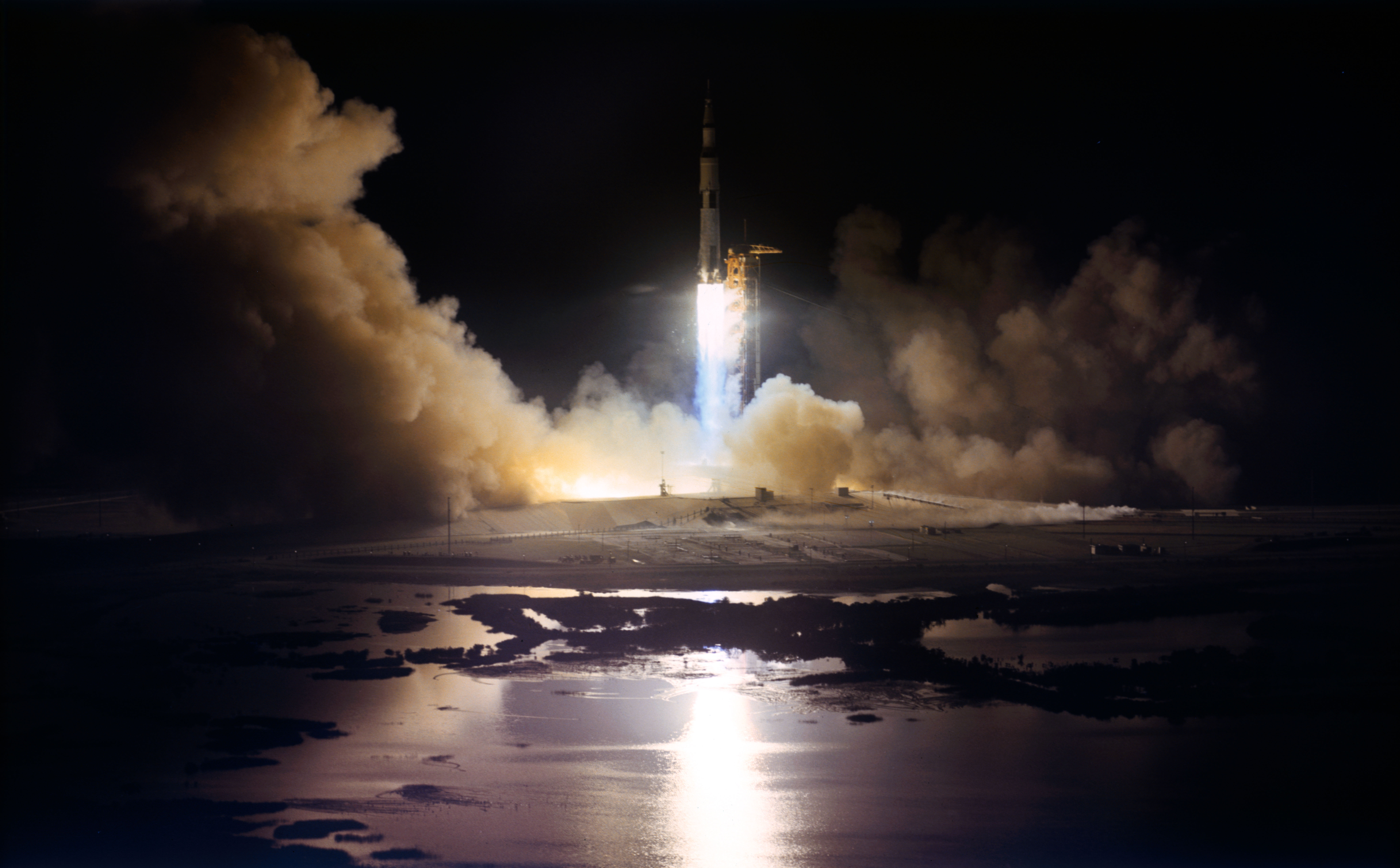
When did astronauts last walk on the moon?
Apollo 17, in December 1972. Eugene Cernan and Harrison Schmitt landed in the Taurus-Littrow valley on 11 December 1972, worked on the surface for three days… more…
- Image pending
Astronauts and life in space
How high do astronauts orbit the earth?
Crewed spaceflight today happens a few hundred kilometres up. The International Space Station orbits at about 400 km, lapping the planet roughly every 90… more…
