Trainer · Military · Germany
Bücker Bü 131 Jungmann
- In service
- Status
-1600.webp)


-1600.webp)
-1600.webp)
-1600.webp)

-1600.webp)
-1600.webp)
-800.webp)

-800.webp)
-1600.webp)

-800.webp)
-1600.webp)


-800.webp)
_AN1611016-800.webp)
-1600.webp)
.jpg)

-1600.webp)
-800.webp)

-1600.webp)

-1600.webp)
-1600.webp)




_AN1550744-800.webp)
-1600.webp)

-1600.webp)
-800.webp)
-800.webp)


-1600.webp)

-1600.webp)


_AN1588703-800.webp)

-1600.webp)

-800.webp)


_AN1628974-800.webp)
-800.webp)


-1600.webp)


_(2)-1600.webp)

-1600.webp)
.jpg)


-1600.webp)



-1600.webp)
_(9670634351)-1600.webp)


%2C_Netherlands_PP1125233729-800.webp)

-1600.webp)
-1600.webp)


-800.webp)


-1600.webp)
-800.webp)
-1600.webp)

-1600.webp)


_t%C3%A9r_%C3%A9s_a_Balassi_B%C3%A1lint-1600.webp)
-800.webp)

-800.webp)

-1600.webp)
-800.webp)
_(8257455614)-1600.webp)

-800.webp)
-1600.webp)


-800.webp)
-1600.webp)
-800.webp)
-800.webp)
-1600.webp)
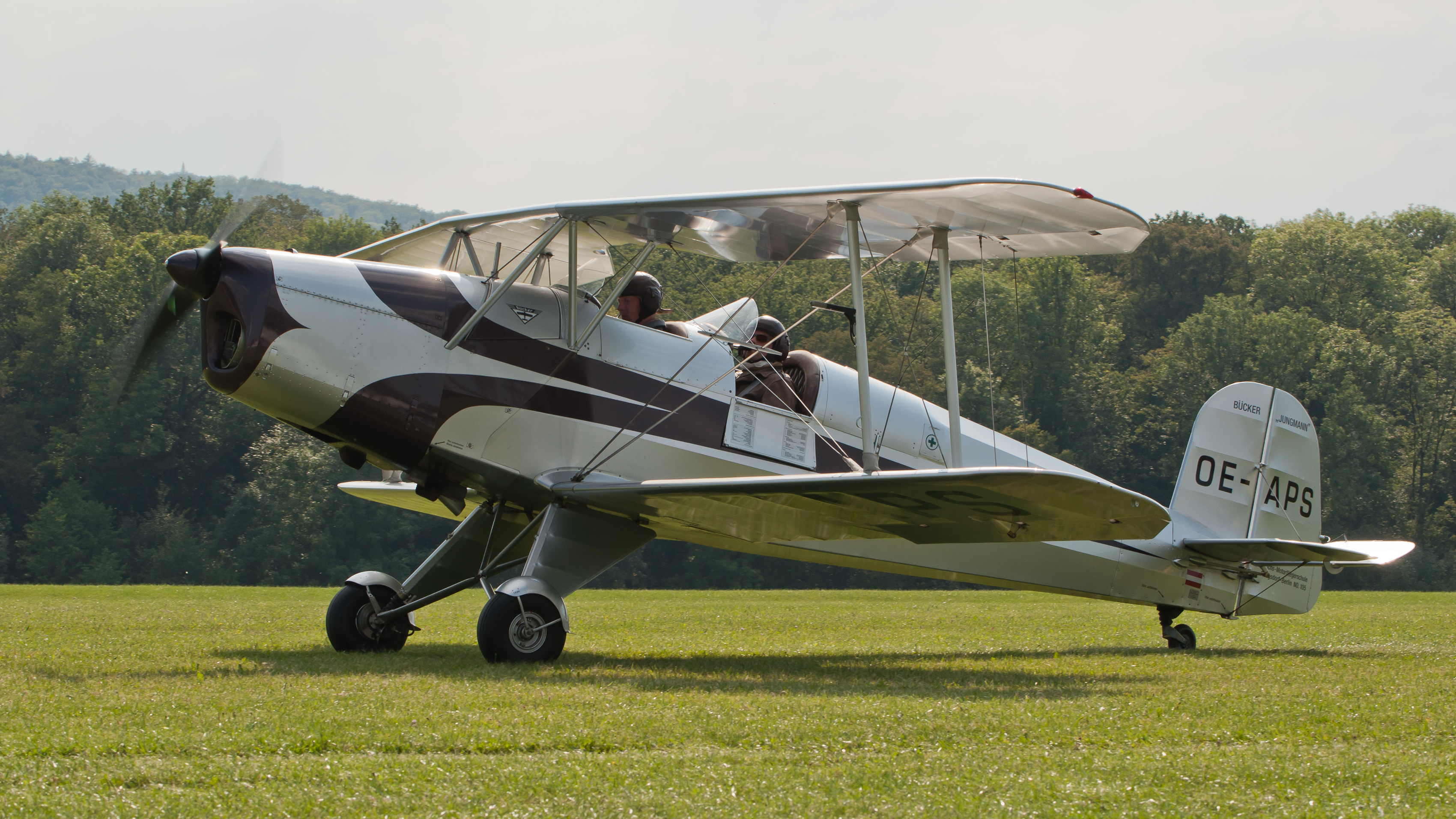
The Bücker Bü 131 Jungmann is a two-seat primary trainer biplane with open tandem cockpits and fixed undercarriage, unveiled in Berlin in 1934 by the newly founded Bücker Flugzeugbau. It was the company's first aircraft and, at the same time, the last biplane to be built in quantity in Germany. Designed by the Swedish engineer Anders J. Andersson for Carl Clemens Bücker, a former naval aviator who had spent the post-war years building aircraft in Sweden, it first flew on 27 April 1934 and quickly became the standard elementary trainer of the German flying clubs and of the new Luftwaffe. Its success spread well beyond Germany. Switzerland, Czechoslovakia, Japan and Spain built it under licence, and around 5,000 examples of all versions were produced, most of them during the Second World War. In Japan it gave rise to the Navy's K9W1 and the Army's Ki-86, and in Czechoslovakia it stayed in production after the war as the Aero C-4 and C-104. For Spanish aviation the Jungmann is very much a home-grown aircraft. It arrived with the Condor Legion in November 1936, CASA built it as the 1.131 in several batches, first with the German Hirth engine and later with the Spanish ENMASA Tigre, and under the military serial E.3B it was for decades the aircraft on which most Spanish Air Force pilots learned to fly; the last were struck off charge in the late 1980s. That longevity explains why a large share of the Jungmanns flying today are Spanish-built. Light, very agile and beautifully harmonised in its controls, with ailerons on all four wings and an airframe stressed for aerobatics, the Jungmann remains a much-loved classic at air displays and competitions. It has been rebuilt and re-engined in several countries and was put back into production in Poland and Spain in the 1990s and 2000s.
Related events
Related sheets
Category
History
A builder with a naval past
Carl Clemens Bücker had flown seaplanes with the Imperial German Navy in the First World War. When the Treaty of Versailles shut down German military aviation he moved to Sweden, where in 1921 he founded Svenska Aero, a company that built Heinkel aircraft under licence as well as its own designs, among them the J 6 Jaktfalk fighter. There he worked with a young engineer, Anders J. Andersson, who would become his chief designer. When Svenska Aero changed hands at the beginning of 1933, Bücker returned to Germany and set up his own works at the Berlin aerodrome of Johannisthal as Bücker Flugzeugbau GmbH. Sources disagree on the founding date: general encyclopaedias give 1932, while the specialist literature places it in October 1933, with financial backing from the Ambi-Budd group. In 1935 the firm moved into a new factory at Rangsdorf, south of Berlin, where all its types would be built until the end of the war. Andersson ran the design office until 1939, when he went home to join SAAB.
Design and first flight
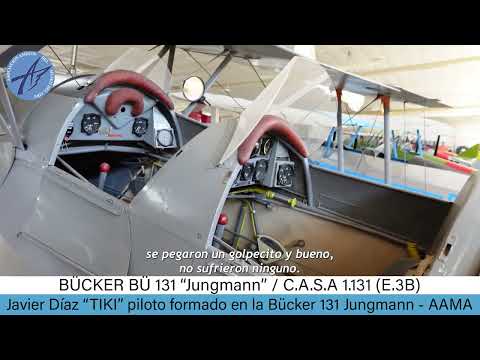
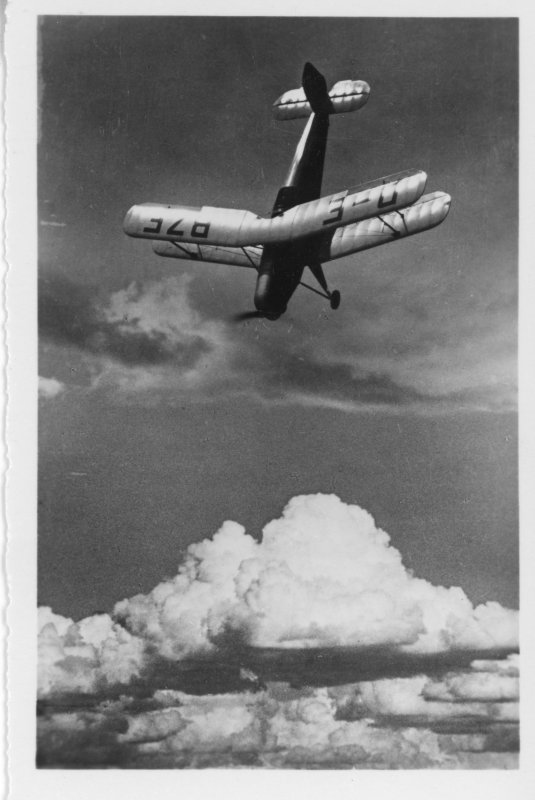
Andersson's first project in Germany was a simple, sturdy training biplane, drawn up in under six months. The prototype, registered D-3150, took off from Johannisthal on 27 April 1934 in the hands of Joachim von Köppen, a test pilot from the DVL research establishment. The formula was conventional but carefully executed: two open tandem cockpits, a fixed undercarriage with spring-and-oil shock absorbers, low-pressure tyres with brakes and a sprung tailwheel. The fuselage was a welded steel-tube structure, metal-skinned at the front and fabric-covered aft. The wooden wings, with I-section spars and fabric covering, had a modest 11 degrees of sweep, positive stagger and, unusually for a trainer, ailerons on all four panels; upper and lower wings were interchangeable, which simplified logistics and repairs. The airframe was stressed to a load factor of 12 g, a legacy of Bücker's wish that the aircraft should also serve for aerobatics. The original engine was the 80 hp Hirth HM 60R inverted four-cylinder.
German versions
The initial production model was the Bü 131A with the HM 60R. In 1936 came the Bü 131B with the 105 hp Hirth HM 504A-2, which markedly improved the climb: the time to 1,000 m fell from about seven minutes to just over five. A single Bü 131C was built with a British Blackburn Cirrus Minor engine. The Bü 131D of 1938 introduced a larger tailwheel and other refinements while keeping the HM 504, and became the mass-production version of the war years. The Jungmann also spawned the Bü 133 Jungmeister, a smaller single-seat aerobatic biplane that flew in late 1935, but that is a different aircraft with a history of its own.
Schoolmaster of the Luftwaffe
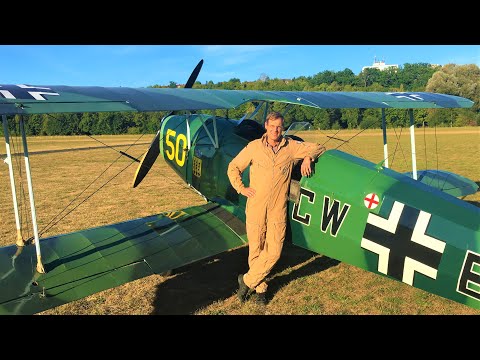
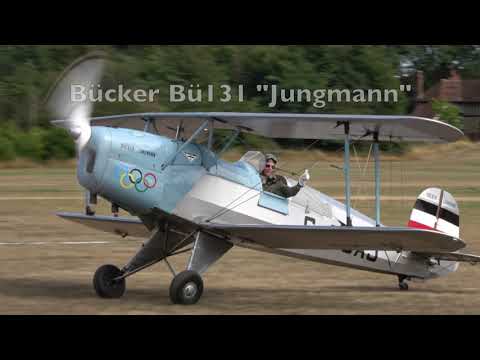
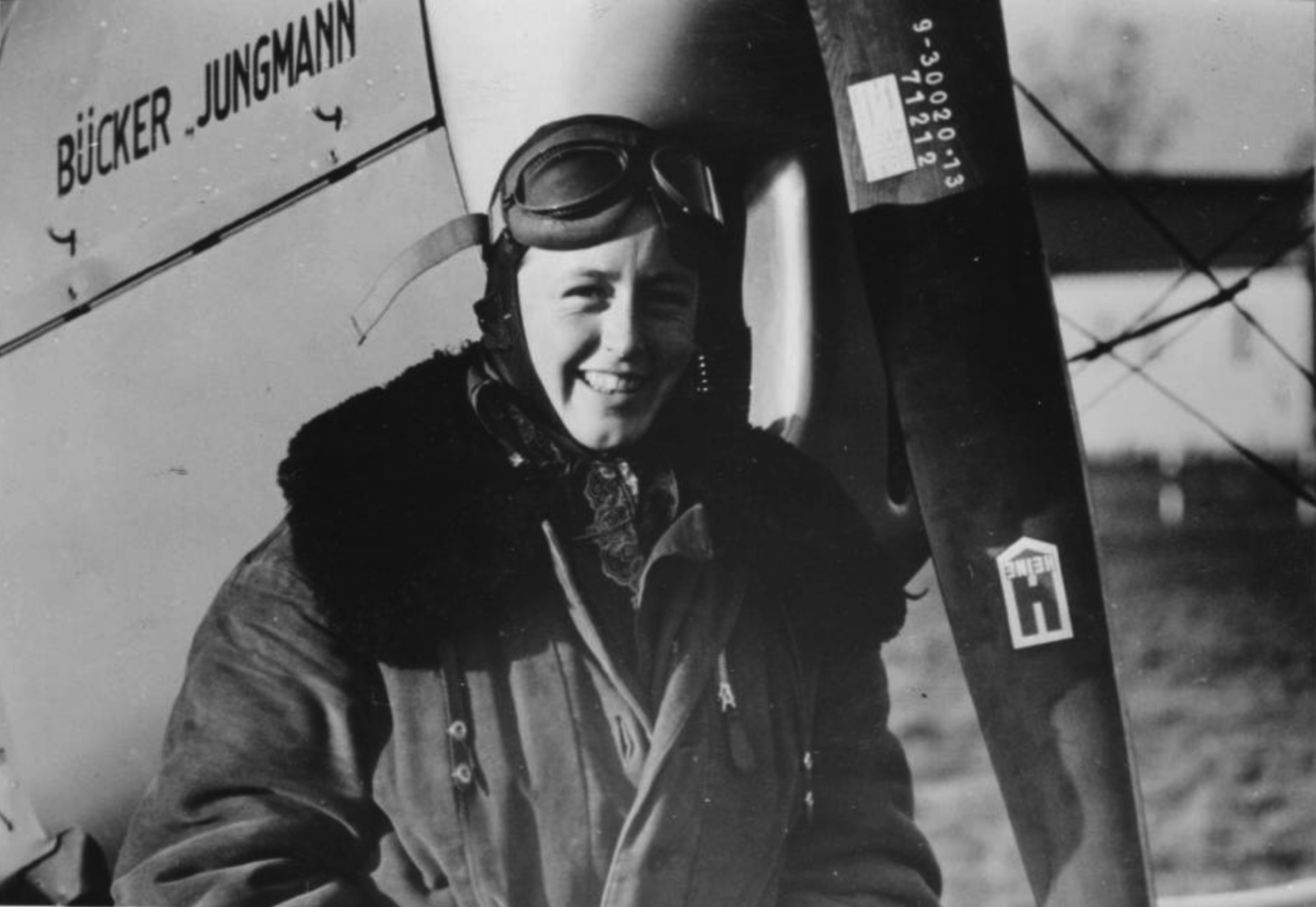
The Deutscher Luftsportverband adopted the type in 1934 and, once the Luftwaffe was revealed, the Jungmann became its standard primary trainer, present at almost every elementary flying school. During the war, alongside its training role, it equipped Nachtschlachtgruppen 2, 11 and 12 as a night harassment aircraft, dropping small anti-personnel bombs on the Eastern Front. From 1939-1940 the Bü 181 Bestmann monoplane was chosen as the new standard trainer and gradually displaced the biplanes, although Jungmanns kept flying until the end of the war.
.jpg)
Production figures carry some uncertainty. The standard references speak of around 5,000 aircraft of all variants between 1934 and 1945, of which some 3,000 came from Rangsdorf; a British estimate puts German production at between 3,000 and 4,000. A detailed reckoning of RLM orders gives a somewhat lower total of about 4,200 including licence production. To raise the rate, in 1939 Aero of Prague was contracted to build the Bü 131D-2 for the Luftwaffe at two dozen a month, reaching about 300 aircraft before the factory switched to the Fw 189.
Exports
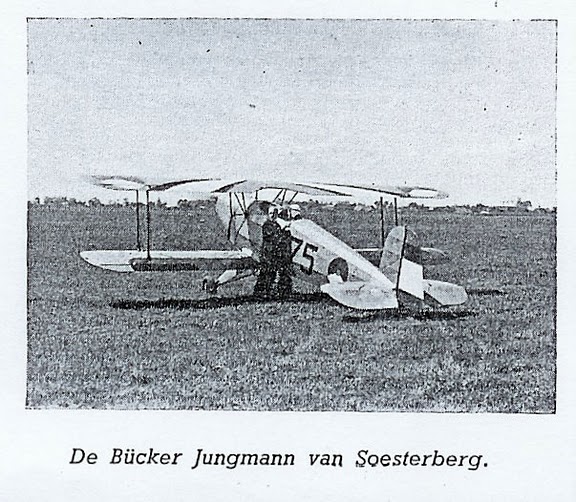
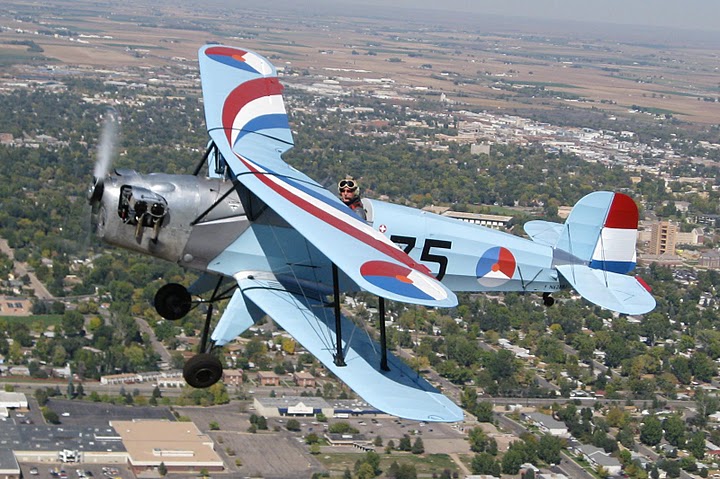
Bücker exported the Jungmann to more than twenty countries. Yugoslavia was the largest customer, with some 400 aircraft. Hungary received 119 early-series Bü 131s, shared between the army, the national aviation fund and private clubs, and from 1939 a further 151 Bü 131Ds; some were rebuilt after the war and the last were retired in 1953. Romania bought about 40 and Bulgaria 15; South Africa took 16. A demonstration tour of South America in 1938 produced orders from Brazil, Uruguay and Chile, and in June 1939 six aircraft left for the Netherlands East Indies. Sweden, Austria, Finland, France, the Netherlands, Poland, Portugal, China and Manchukuo received single examples or pairs. On top of all this came the manufacturing licences.
Licences: Switzerland, Czechoslovakia and Japan
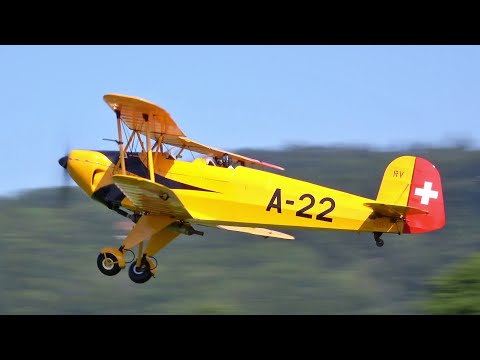
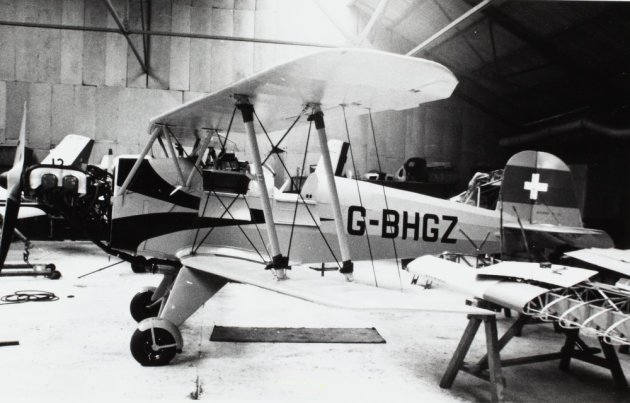
Switzerland was the first to adopt it. After a comparative evaluation, in 1936 it chose the Jungmann and the Jungmeister as its standard trainers, bought a small batch from Bücker and acquired the production rights, which were exercised by Dornier-Werke at Altenrhein. The Swiss flying troops received 94 Bü 131s, of which 88 were built by Dornier (other sources say 84), designated A-16 and in service from 1936 to 1971, although as a primary trainer they were replaced by the Pilatus P-2 in the late 1950s. Switzerland was also where the aircraft's second life began: in 1962 the Federal Aircraft Factory fitted a 170 hp Lycoming to HB-UTH, with which Albert Ruesch took second place in that year's Lockheed Trophy, and later Pilatus and the federal factory developed a conversion with a 180 hp Lycoming and a new wing by Fritz Dubs, named Lerche, whose final batch of 25 went to the Swiss Aero Club.
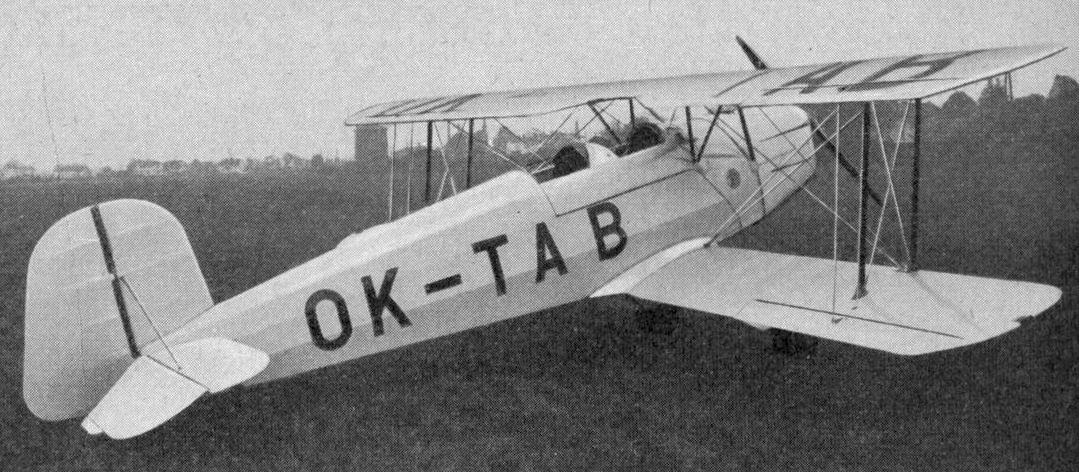
In Czechoslovakia, Tatra obtained a licence in 1937 and built the T-131 at Kopřivnice with a Walter Minor 4-II engine; figures range from ten to about fifteen aircraft out of 35 ordered before the German occupation cut the run short. After the liberation, Aero went on building it for the Czechoslovak Air Force: first about 20 Aero C-4s with the Hirth HM 504, delivered from 1946, and then the C-104 with the 105 hp Walter Minor 4-III, of which some 260 were built up to 1949 (248 according to another source). They served at the military academy, passed to the aero clubs from 1947 and the last flew with the Svazarm organisation until 1964; some were sold in the late 1950s to Switzerland, Austria and West Germany, and an original T-131 is preserved at Tatra.
Japan met the aircraft at a demonstration in 1938. The Navy bought one, ordered twenty more in 1939 and, after failing to get an equivalent indigenous design from Hitachi and Watanabe, purchased the licence. From August 1942 Watanabe, soon renamed Kyushu, and Hitachi built the K9W1, Navy Type 2 Primary Trainer Model 11, with the 110 hp Hitachi GK4A Hatsukaze; the most accepted figure is 339 aircraft. The Army adopted the same airframe in 1943 as the Ki-86 Army Type 4, built by Nippon Kokusai Koku with the Hitachi Ha-47 of the same power, of which 1,037 were completed by 1945 as a replacement for the Ki-17; an all-wood Ki-86b flew in February 1945. The Allies gave both versions the reporting name "Cypress". A Spanish source puts total Japanese production at 1,254.
Spain: from the Condor Legion to the CASA 1.131
The first three Bü 131s reached Spain with the Condor Legion on 6 November 1936. Germany supplied 95 aircraft in all to the Nationalist side during the Civil War (over a hundred according to other sources), some with the 80 hp Hirth and most with the 105 hp version, and they were concentrated at the elementary school of El Copero, near Seville. Construcciones Aeronáuticas S.A. obtained a licence to build it at its Cádiz works under the designation CASA 1.131; in the Spanish Air Force it carried the military serial EE.3 and later E.3B. Sources diverge on the start of Spanish production: Spanish documentation places the first flight of a CASA-built aircraft on 14 March 1941, whereas English- and German-language histories speak of 1938. The first 200 had the German Hirth HM 504; from the 201st the 125 hp ENMASA Tigre G-IVA was fitted, producing the CASA 1.131E, and with the 150 hp Tigre G-IVB the 1.131L. Tigre-engined deliveries began in 1950 and the orders were completed in 1963: 330 new aircraft with the Tigre plus 30 conversions. The E version brought a reinforced airframe, a sturdier tail with a seven-rib rudder, a streamlined cowling and an electrical system with starter, and in time all the older aircraft were brought up to that standard. The Tigre was built in six versions of 125 and 150 hp, the latest capable of inverted flight. In all, CASA built about 550 new Jungmanns and rebuilt another 30; other sources give 555 or around 530.
Half a century with the Spanish Air Force
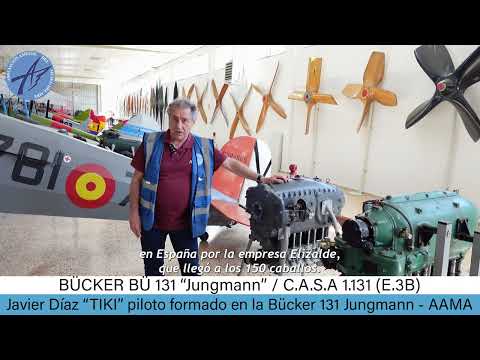
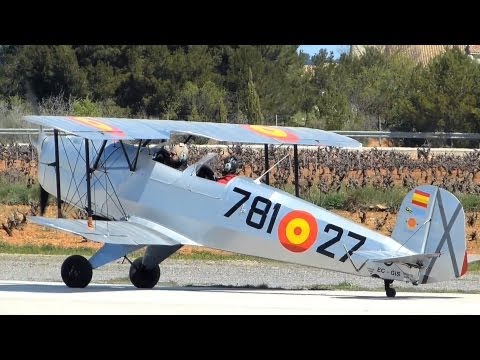
The Jungmann is the aircraft the Spanish Air Force has operated in the greatest numbers and for the longest time in its schools: around fifty years, during which most Spanish military pilots learned to fly on it. Spain was also the only air force to operate the German A, B and D versions alongside the CASA machines. It remained the primary trainer until 1968, when it was relieved in elementary training, but the last E.3Bs were not struck off until 1988. Those disposals fed the classic-aircraft market: many aircraft went to private owners in the United States, the United Kingdom, Germany, France, Switzerland, the Netherlands and elsewhere, often painted in Luftwaffe or Swiss colours. Identifying them is not straightforward: during their service life Air Force workshops swapped fuselages, wings and undercarriages at overhaul, so that the E.3B number and the fuselage data plate do not always match. A group of researchers, Paco Rivas, Johnny Comstedt and Brian Karli, has spent years cataloguing the surviving CASA 1.131s from the brass fuselage plate and has identified more than ninety, with a report updated in 2023.
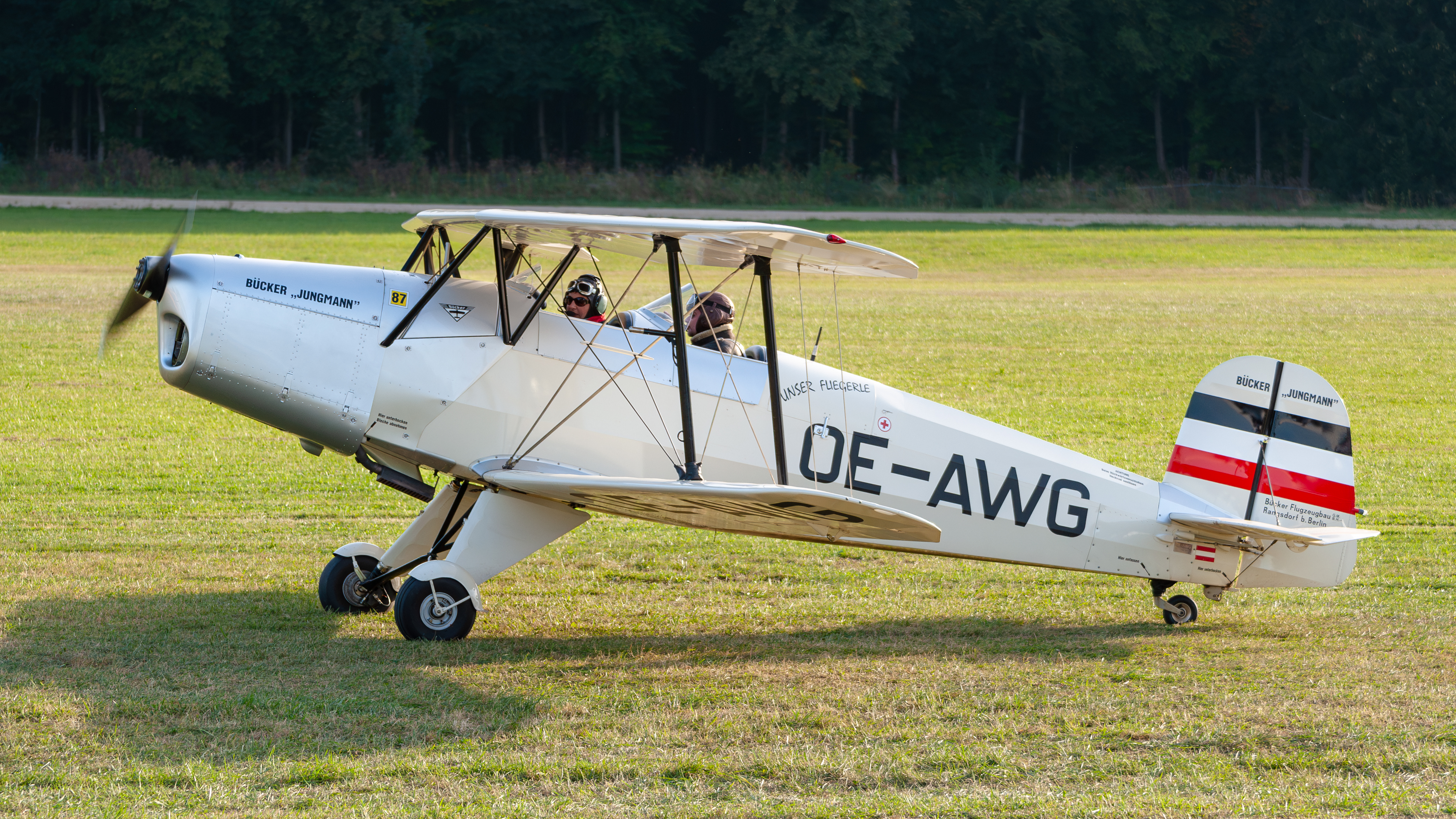
In Spain the aircraft remains very visible. The Fundación Infante de Orleans flies several at Cuatro Vientos in Spanish Air Force colours on the first Sunday of every month, one of them still with its original German engine; the Museo de Aeronáutica y Astronáutica keeps several examples, one is displayed in the gardens of the Academia General del Aire and others belong to flying clubs and private owners. In 1994 the company Bücker Prado, at Albacete, restarted production with the CASA jigs and built 21 new BP 131s.
Second life: aerobatics, restorations and new production
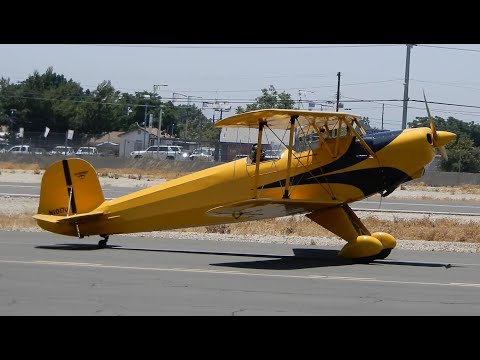
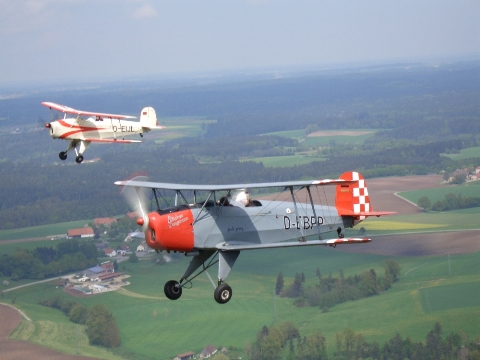
From the 1960s the Spanish, Swiss and Czechoslovak disposals turned the Jungmann into an enthusiast's aircraft. Many were re-engined with the 150 hp Lycoming O-320 or the 180 hp O-360 and inverted systems, which improved performance at the cost of a less graceful cowling. It competed successfully in aerobatics: Mira Slovak bought one in Switzerland in 1962, Hansruedi Reusch won the first Swiss championship in 1963 with HB-UTH, the Lerche conversion took part in the 1964 World Championship at Bilbao, Marion Cole flew an IO-360 machine at the 1968 World Championship and Eric Muller finished sixth in the 1970 World Championship. Pilots praise its four ailerons, which give a roll rate far superior to that of a Tiger Moth, its docile stall and its ease in the flick roll. Survivors were estimated at about 120 in the early 1980s and about 200 in the 2000s.
New production returned in Poland: from 1994 SSH at Jasienica built the T-131P to Czech drawings with the Walter Minor 4-III, and the T-131PA with the 138 hp LOM M332AK, which flew in 1995; 20 aircraft had been built by 2000 and, after a pause, Air Res Aviation at Rzeszów resumed the series in 2012. In Germany, B&F offers the FK131 ultralight replica.
Technical characteristics
Data for the Bü 131B: two seats; length 6.62 m; span 7.4 m; height 2.25 m; wing area 13.5 m²; empty weight 380 kg and gross weight 670 kg; Hirth HM 504 of 100/105 hp with a two-blade fixed-pitch propeller; maximum speed 183 km/h, cruise 170 km/h and landing speed 82 km/h; range 650 km; ceiling 4,300 m; climb to 1,000 m in 5 min 12 s. Other sources give an empty weight of 390 kg and a ceiling of 3,000 m. The CASA 1.131E with the 125 hp Tigre reaches 200 km/h, cruises at 180 km/h, has a ceiling of 4,500 m and a range of 400 km, with 450 kg empty and 720 kg at take-off.
Legacy
Few trainers have had such a long and widely shared life: born in the Germany of 1934, it trained pilots on three continents, outlived its manufacturer and went on being built, under different names, in Czechoslovakia, Japan, Spain and Poland. In Spain, where it flew for half a century and was the first aeroplane of generations of pilots, it is an icon still to be seen every month in the sky over Cuatro Vientos.
Variants
| Bü 131A | Aero C-104 | Aero C-4 | Bü 131B | Bü 131B Dornier-Werke Altenrhein | Bü 131C | Bü 131D | CASA 1.131 | CASA 1.131E | CASA 1.131L | Kokusai Ki-86A | Kokusai Ki-86B | Kyūshū K9W1 Momiji | SSH T-131P | SSH T-131PA | Tatra T.131 | |
|---|---|---|---|---|---|---|---|---|---|---|---|---|---|---|---|---|
| First flight | April 27, 1934 | — | — | — | — | — | — | — | — | — | — | — | — | — | — | — |
| Aircraft type | — | — | — | Basic training and aerobatic biplane, two seats in tandem | — | — | — | — | — | — | — | — | — | — | — | — |
| Powerplant | — | — | — | One Hirth HM 504A-2 four-cylinder inverted air-cooled in-line piston engine of 105 hp (78 kW), driving a two-bladed fixed-pitch propeller. | — | — | — | — | — | — | — | — | — | — | — | — |
| Powerplant | 1 × Hirth HM 60R | 1 × Walter Minor 4-III | 1 × Hirth HM 504 | 1 × Hirth HM 504A-2 | 1 × Hirth HM 504A-2 | 1 × Blackburn Cirrus Minor | 1 × Hirth HM 504A-2 | 1 × Hirth HM 504 | 1 × ENMA Tigre G-IVA | 1 × ENMA Tigre G-IVB | 1 × Hitachi Ha-47 11 | 1 × Hitachi Ha-47 11 | 1 × Hitachi GK4A Hatsukaze 11 | 1 × Walter Minor 4-III | 1 × LOM M332AK | 1 × Walter Minor 4-II |
| Power per engine | 80.5 hp | 105 hp | — | 105 hp | 105 hp | — | 105 hp | — | 125 hp | 150 hp Best value in this row | 110 hp | — | 110 hp | 105 hp | 138 hp | 103 hp |
| Length | — | — | — | 6.6 m Best value in this row | — | — | — | — | 6.6 m Best value in this row | — | 6.6 m | — | — | — | — | — |
| Wingspan | — | — | — | 7.4 m Best value in this row | — | — | — | — | 7.4 m Best value in this row | — | 7.3 m | — | — | — | — | — |
| Height | — | — | — | 2.3 m | — | — | — | — | — | — | 2.6 m Best value in this row | — | — | — | — | — |
| Wing area | — | — | — | 13.5 m² | — | — | — | — | — | — | — | — | — | — | — | — |
| Empty weight | — | — | — | 380 kg Best value in this row | — | — | — | — | 450 kg | — | 409 kg | — | — | — | — | — |
| MTOW | — | — | — | 670 kg | — | — | — | — | 720 kg Best value in this row | — | 639 kg | — | — | — | — | — |
| Top speed | — | — | — | 183 km/h | — | — | — | — | 200 km/h Best value in this row | — | 180 km/h | — | — | — | — | — |
| Cruise speed | — | — | — | 170 km/h | — | — | — | — | 180 km/h Best value in this row | — | 121 km/h | — | — | — | — | — |
| Cruise altitude | — | — | — | — | — | — | — | — | — | — | 1,000 m | — | — | — | — | — |
| Service ceiling | — | — | — | 4,300 m | — | — | — | — | 4,500 m Best value in this row | — | 3,880 m | — | — | — | — | — |
| Range | — | — | — | 650 km Best value in this row | — | — | — | — | 400 km | — | 600 km | — | — | — | — | — |
| Range conditions | — | — | — | 650 km according to the Jane's Fighting Aircraft of World War II entry and the Bücker-Museum at Rangsdorf; the German and Spanish Wikipedias give a lower figure of 400 km. | — | — | — | — | — | — | — | — | — | — | — | — |
| Armament | — | — | — | None. An unarmed school trainer; the examples flown by the night harassment units NSGr 2, 11 and 12 carried no standard armament. | — | — | — | — | — | — | — | — | — | — | — | — |
| Max weapons load | — | — | — | 0 kg | — | — | — | — | — | — | — | — | — | — | — | — |
| Payload | — | — | — | 0 kg | — | — | — | — | — | — | — | — | — | — | — | — |
| Cargo capacity | — | — | — | No cargo payload: two open seats in tandem (pupil and instructor). The Bücker-Museum at Rangsdorf puts the total useful load, crew and fuel included, at 290 kg over a 390 kg equipped weight. | — | — | — | — | — | — | — | — | — | — | — | — |
| Crew | 2 Best value in this row | 2 Best value in this row | 2 Best value in this row | 2 Best value in this row | 2 Best value in this row | 2 Best value in this row | 2 Best value in this row | 2 Best value in this row | 2 Best value in this row | 2 Best value in this row | 2 Best value in this row | 2 Best value in this row | 2 Best value in this row | 2 Best value in this row | 2 Best value in this row | 2 Best value in this row |
| Passengers | — | — | — | 0 | — | — | — | — | — | — | — | — | — | — | — | — |
| Units built | — | 260 | 20 | — | — | 1 | — | 200 | — | — | 1,037 Best value in this row | 1 | 339 | 4 | — | — |
Images
Elsewhere
- JetPhotosHB-UUO | Bücker Bü-131 Jungmann | Private ↗
- JetPhotosHB-UVC | Bücker Bü.131 Jungmann | Private ↗
- AirHistory.netN707S | Bucker Bu-131 Jungmann | Oshkosh, EAA AirVenture 2024 ↗
- AirHistory.netG-ASLI | Bucker Bu-131B Jungmann | ex Swiss AF A-92 ↗
- ABPicCASA 1.131E Jungmann, EC-EGP / 2222, Private, Madrid-Cuatro Vientos ↗
- ABPicCASA 1.131E Jungmann Srs 1000, G-CHII / 1108, Private ↗
- Wikimedia CommonsBücker Bü-131 Jungmann HB-UVU, Flugplatz Buochs, Suiza ↗
- Wikimedia CommonsCASA 1.131E Jungmann ↗
- FlickrCASA 1.131E (Bücker Bü-131 Jungmann) E.3B-565, Ejército del Aire, Museo del Aire ↗
- FlickrBücker Bü-131 Jungmann, Museo de aviones históricos en vuelo, Cuatro Vientos ↗
- Airplane-Pictures.netD-EAVV - Private Bücker Bü.131 Jungmann at Poprad-Tatry ↗
- Airplane-Pictures.netF-AZTT - Bücker Bü.131 Jungmann at La Ferté-Alais ↗