Trainer · Military · Czechia
Aero L-39 Albatros
- November 4, 1968
- First flight
- 1972
- Introduced
- In service
- Status
- 2,900
- Units built
Aero L-39 Albatros in the news
September 3, 2026
Kazakhstan needs new trainer aircraft. Although the old L-39s had just been modernised, the replacement is now set to come from China.


-800.webp)


-800.webp)

%2C_1991-1600.webp)
-1600.webp)
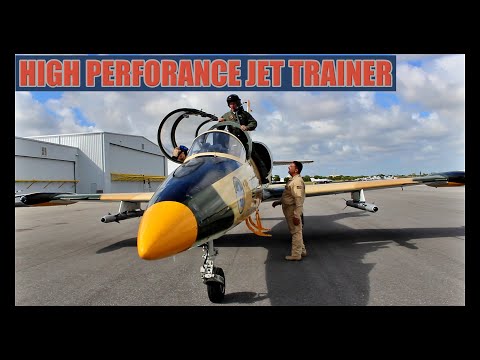
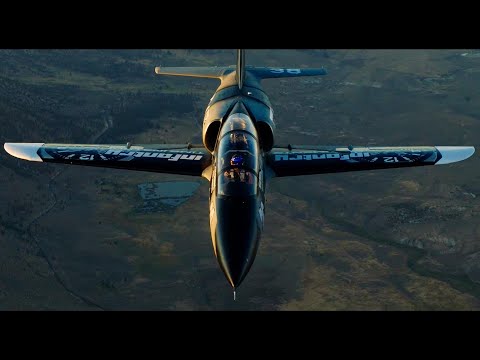
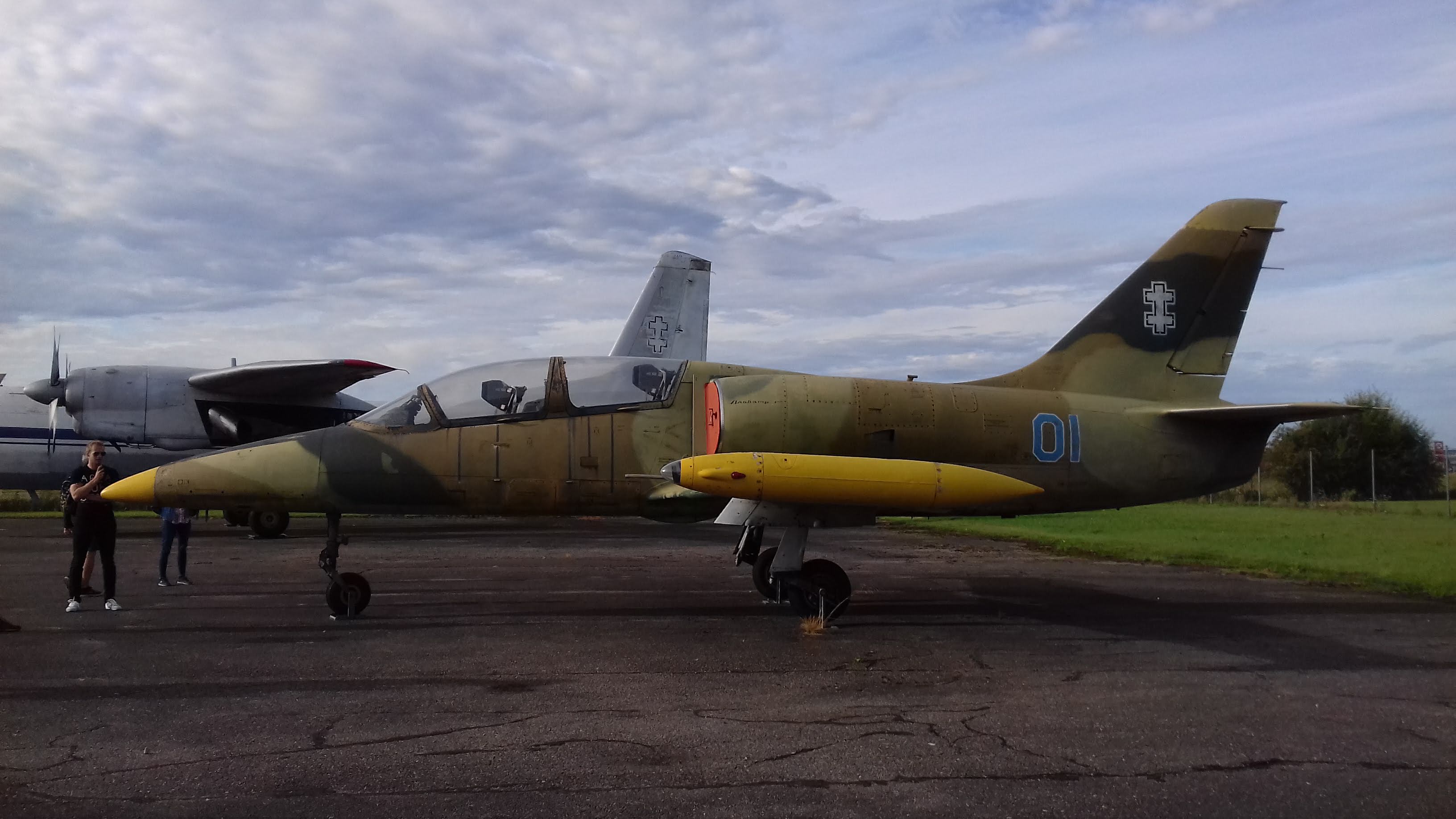
The Aero L-39 Albatros is the two-seat jet trainer that Aero Vodochody developed in Czechoslovakia during the late 1960s and that went on to train several generations of military pilots across much of the world. Conceived as the successor to the L-29 Delfín, it first flew on 4 November 1968 and entered service with the Czechoslovak Air Force on 28 March 1972, the same year the Warsaw Pact adopted it as its common basic trainer. It was the first training aircraft in the world to be powered by a turbofan, the 16.87 kN Ivchenko AI-25TL. Its design answers a very specific brief: an affordable jet with deliberately simplified systems and landing gear rugged enough to work from grass strips and improvised fields. The tandem cockpit, with the instructor seated slightly higher behind the student, reproduces the layout and procedures of contemporary Soviet fighters so that the step up to the MiG would feel natural. A straight wing, wingtip fuel tanks and an engine with a thousand hours between overhauls completed a formula built to fly a lot and cost little. That formula produced some 2,900 aircraft built between 1971 and 1996, spread across the pure L-39C trainer, the armed L-39ZO and L-39ZA versions and a lineage that reaches the L-59, the L-159 ALCA and the modern L-39 Skyfox. The armed variants turned the Albatros into a cheap light-attack aircraft, and as such it has seen combat in Iraq, Libya, the Caucasus, Afghanistan, Syria and Ukraine, very often in the hands of forces with no access to anything more capable. From the 1990s onwards the collapse of the Eastern Bloc flooded the civil market with surplus Albatroses and gave the type a second life as a warbird and display aircraft: it is the only second-generation jet trainer available in quantity to private operators. It flies with civilian aerobatic teams such as the Breitling Jet Team, the Baltic Bees and the Patriots, had a class of its own at the Reno Air Races from 2002, and more than half a century after its first flight it remains a regular sight at airshows across Europe and North America.
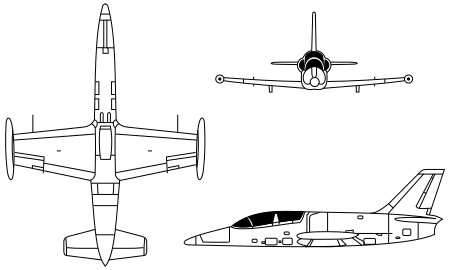
Three-view drawing
History
A successor for the Delfín
By the mid-1960s Aero Vodochody was the trainer factory of the Eastern Bloc. Its L-29 Delfín had been chosen as the common Warsaw Pact trainer and was being built in the thousands, but it was a simple turbojet aircraft of modest performance, designed for students who would go on to subsonic fighters. A new generation of combat jets forced a rethink of the step before them. In 1964 the factory began, on its own initiative, the study of a successor: a single-engine two-seater conceived from the outset to win the Warsaw Pact common trainer competition again. The design team was led by Jan Vlček.
The boldest technical decision was the powerplant. Instead of a conventional turbojet, the new aircraft adopted the Ivchenko AI-25TL turbofan, which made the Albatros the first training aircraft in the world fitted with an engine of this kind. The advantage was not speed — the L-39 was never fast — but fuel consumption, throttle response and above all operating cost: a trainer is measured in cheap flying hours, not in records.
The prototype, designated X-02, first flew on 4 November 1968 with test pilot Rudolf Duchoň at the controls. Testing led to series production of the L-39C from 1971, and in 1972 the Warsaw Pact formally recognised the Albatros as its preferred basic trainer. That decision opened the floodgates: military orders, above all from the Soviet Air Forces, sustained a production rate of roughly two hundred aircraft a year in the late 1980s. When the line closed in 1996, some 2,900 Albatroses of all versions had been built.
The aircraft
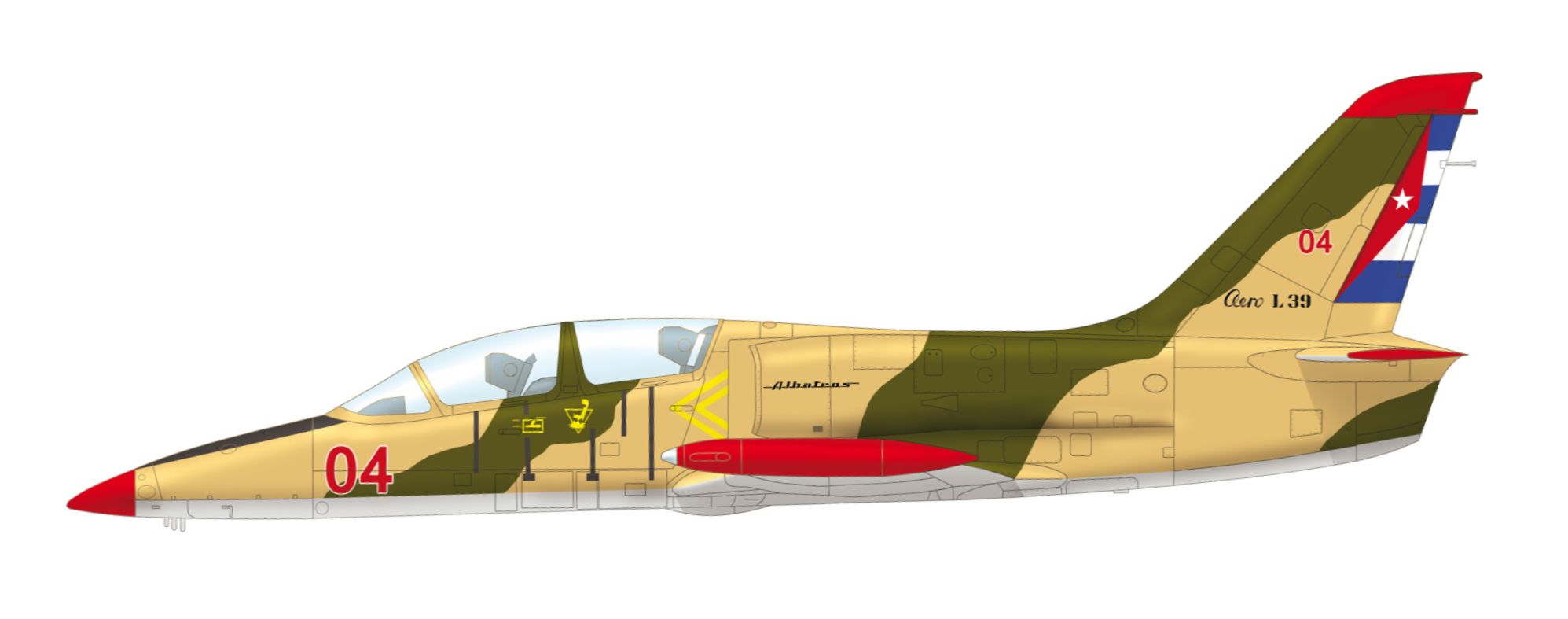
The L-39 is a low-wing monoplane with a straight, double-taper wing and 2.5 degrees of dihedral from the roots. Fixed tip tanks of one hundred litres each are the type's unmistakable visual signature. The trailing-edge flaps are double-slotted and the ailerons mass-balanced; an automatic trimming system links flaps and trim to counter the pitch changes produced when a student moves the flap lever vigorously — a telling detail about who the aircraft was designed for. The tall swept fin carries an inset rudder, and the horizontal stabilisers are of variable incidence. Two side-by-side airbrakes sit under the fuselage ahead of the wing leading edge.
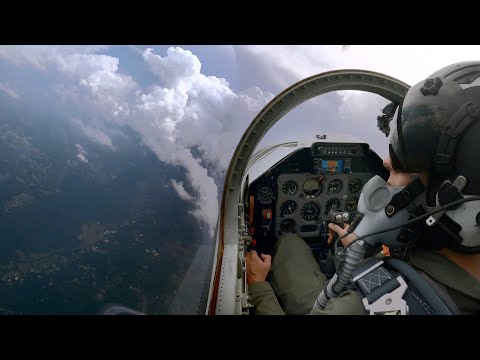
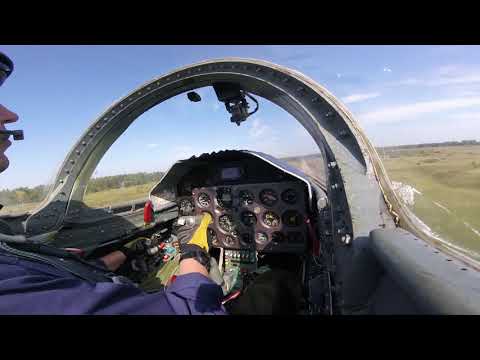
The tandem cockpit seats student and instructor on Czech-built VS-1 ejection seats under individually hinged canopies. The rear seat, normally the instructor's, is raised slightly so that he can watch and correct what the student is doing. Panel layout, fittings and procedures deliberately mirror Soviet practice — the ejection sequence matches that of the MiG-29 — so that moving on to an operational fighter would not require relearning basic reflexes. Pressurisation is partial: above 23,000 feet the crew depends on oxygen masks. A gyro gunsight was normally fitted in the front cockpit only.
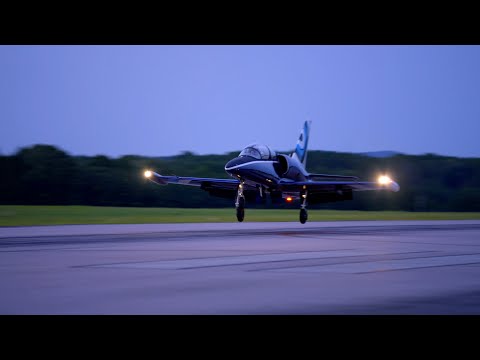
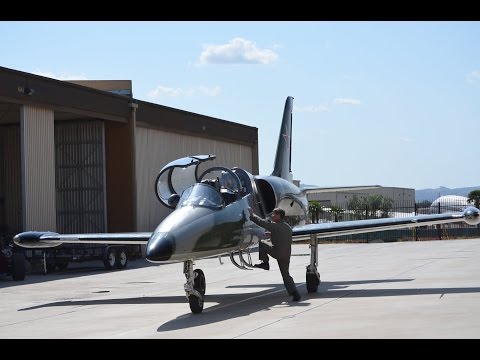
Fuel is carried in five rubber bag tanks in the fuselage behind the cockpit, plus the wingtip tanks and, on the versions that accept them, external tanks. The AI-25TL delivers 16.87 kN of thrust with a thousand-hour interval between overhauls, a figure that explains much of the aircraft's economic appeal against other jets. The hydraulically retractable tricycle undercarriage was deliberately rugged: the main legs retract inward into the wing bays and the nose leg forward, and the whole arrangement allows operation from grass strips and austere airfields, frozen lakebeds included. Handling is by design docile, with quick engine response that eases a student's transition from propeller aircraft.
%2C_1991.jpg)
The basic trainer's armament is token: the L-39C has two underwing pylons for drop tanks or practice stores, often left empty, and can carry K-13 missiles for a minimal self-defence capability. The light-attack versions are another matter, with four hardpoints and, on the ZA, an underfuselage gun pod.
A large family
The L-39C — C for cvičná, "training" — is the canonical and most numerous version, with about 2,260 built for the Soviet Union, Czechoslovakia and export. It was originally designated simply L-39; the letter arrived when the other versions appeared.
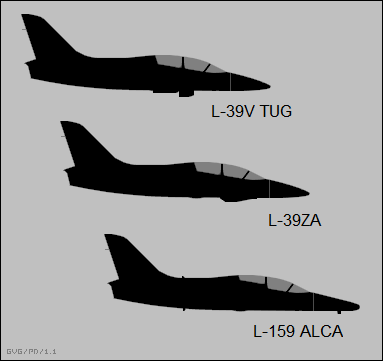
The L-39V (from vlečná, "tug") was a single-seat target-towing version, built as one prototype and eight production aircraft for Czechoslovakia, towing KT-04 targets. The L-39ZO (from zbraně, "weapons") was the interim export weapons trainer, with four pylons — 500 kg inboard and 250 kg outboard, up to 1,150 kg of external load; it first flew on 25 June 1975 and the first Iraqi deliveries were made in 1977. A total of 337 were built.
The L-39ZA took the idea further: sturdier landing gear, greater payload — up to 1,290 kg — and a twin-barrelled 23 mm GSh-23L cannon in a conformal underfuselage pod with a 150-round magazine, with outer pylons wired for K-13 or R-60 air-to-air missiles. The first of two prototypes flew on 29 September 1976 and 208 aircraft were delivered. From it came the Slovak L-39ZAM and the Thai L-39ZA/ART with Elbit avionics, forty of which were built.

The later lineage is no longer strictly an L-39. The L-39MS, later renamed L-59, brought a strengthened fuselage, a longer nose, an updated cockpit and the 21.6 kN Lotarev DV-2 engine; it flew on 30 September 1986. The L-139 Albatros 2000 was a single prototype with Western avionics and a 17.99 kN Garrett TFE731-4-1T. The L-159 ALCA is by then a light combat aircraft with modern Western avionics and a Honeywell/ITEC F124. And the L-39NG, marketed as the L-39 Skyfox, resumes the line with a Williams FJ44 engine, a new fuel system and modern avionics: it flew in December 2018, received military type certification in 2022 and has been in production since 2023 with 34 aircraft on order.
Existing airframes were also modernised, as with the Slovak L-39CM or the Ukrainian L-39M1 with AI-25TLSh engines, converted by Odesaviaremservis from 2009; of the eight conversions planned, only six had been completed by 2014. Outside the lineage proper, the UL-39 Albi is a carbon-fibre ducted-fan facsimile conceived by a group at the Czech Technical University in Prague and first flown on 4 April 2016.
Military service and combat
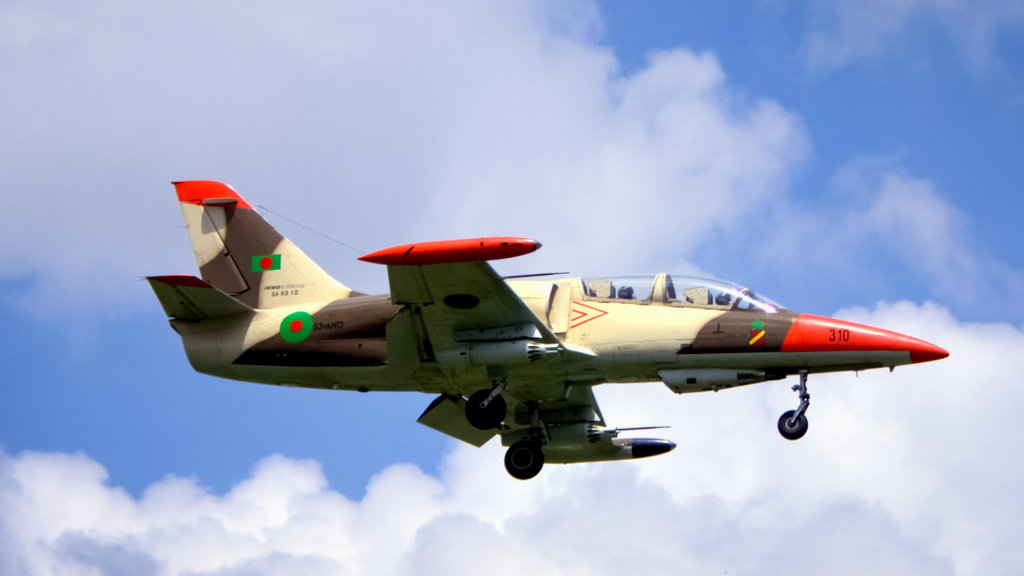
The first L-39 entered Czechoslovak Air Force service in 1974. From there the type became the common classroom of the Warsaw Pact and of much of the world that bought Soviet equipment, from Bulgaria to Vietnam, Cuba, Algeria, Ethiopia and North Korea. Iraq was the first export customer: by the middle of 1970 its air force had acquired a considerable number of Albatroses and had shifted the bulk of its training onto them. Libya received around 180 L-39ZOs about 1978, serving at the Sabha and Okba Ben Nafi flying schools.
The dissolution of the Soviet Union in 1991 left Russia with hundreds of surplus Albatroses; by 2005 roughly 800 were thought to be potentially available for sale, receiving minimal monthly maintenance while their fate was decided. That surplus fed both the civil market and the conflicts of the post-Soviet periphery.
As a combat aircraft, the Albatros has almost always appeared in asymmetric wars. In the Chadian-Libyan conflict, Chadian forces captured eleven L-39s at Ouadi Doum air base in 1987 and destroyed or shot down at least four; in 1983 a Libyan operation to move seventeen Albatroses to Nicaragua aboard Il-76 and C-130 transports ended with the cargo impounded by Brazilian authorities at Manaus Airport and returned to Libya. In Georgia, Abkhaz separatists received L-39s from Russia and Chechnya, and on 10 January 1993 a friendly SA-11 Buk missile shot one down, killing its pilot Oleg Chanba, commander of the separatist air forces. Azerbaijan used the type for ground attack during the First Nagorno-Karabakh War. Chechnya inherited dozens of aircraft abandoned by Soviet forces at Khankala and Kalinovskaya in 1992, most of them unflightworthy, though some flew during the fighting between August and November 1994; at least one was shot down on 4 October by a Strela-2 MANPADS near Goragorsk, killing Colonel Ali Musayev and co-pilot Dedal Dadayev. In Afghanistan the Taliban air arm operated about five L-39Cs captured from the forces of the Democratic Republic of Afghanistan, of which only two remained serviceable by early 2001; after the American invasion that year, further Albatroses entered Afghan service. During the invasion of Iraq, US Navy F/A-18 Hornets attacked L-29 and L-39 aircraft near Tikrit on 14 April 2003 that were believed to have been modified for weapons delivery.
Syria has been the most intense theatre. The Syrian air arm operates armed L-39ZAs and has used them routinely in counter-insurgency operations since the start of the civil war, first employing them operationally at the Battle of Aleppo in 2012. In February 2013 insurgents captured intact Albatroses and their support equipment at Al-Jarrah air base, and by late that year Islamist fighters claimed to have flown two of them, while the Syrian government claimed by October 2014 to have destroyed at least two rebel aircraft. On 26 December 2017 Syrian forces lost an L-39 to ground fire near Hama airport, and on 3 March 2020 a Turkish F-16 shot down another over Idlib province, a kill confirmed by both countries. During the 2024 north-western Syria offensive, opposition forces captured further Albatroses after the fall of Aleppo.
Ukraine has suffered two particularly remembered episodes. On 24 February 2022, in the opening hours of the Russian invasion, an L-39 of the 39th Tactical Aviation Brigade flown by Dmytro Kolomiyets was shot down at Khmelnytskyi; he received the Order of the Gold Star posthumously on 9 August 2022. On 25 August 2023, two Ukrainian L-39M1s collided during combat training near Zhytomyr, killing three pilots: Majors Andrii Pilshchykov — known by his callsign "Juice" and for his public campaigning for the supply of Western F-16s — Viacheslav Minka and Serhii Prokazin.
The second, civilian life
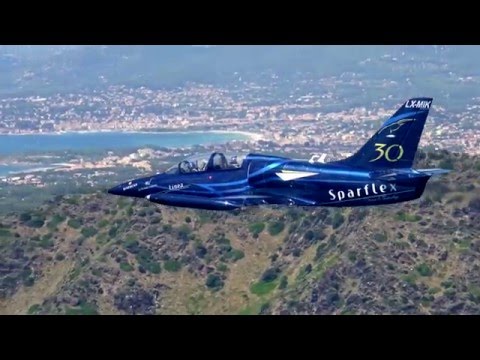
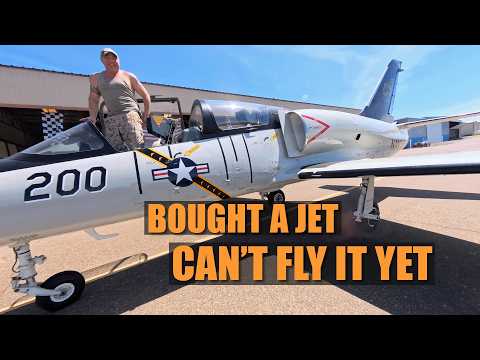
Since the 1990s the Albatros has become the warbird jet par excellence. Its appeal is largely one of availability: it is the only second-generation jet trainer that can be bought in quantity, with spares and with accessible maintenance experience. In September 2012 there were 255 L-39s registered with the US Federal Aviation Administration and four with Transport Canada; in March 2018 five were on the New Zealand civil register.
Civil operators adapt the aircraft to its new role: it is common to strip the heavy radio units from the rear avionics bay and replace them with an additional fuel tank, while expandable tip tanks extend the range for transits between airshows. Aero Vodochody has followed that market: since 2004 its Defence & MRO division has offered maintenance, repair, modernisation and demilitarisation of civil L-39s, with life-extension programmes, support for civil registration and certification, ground and flight crew training, logistics, customisation and routine inspection.
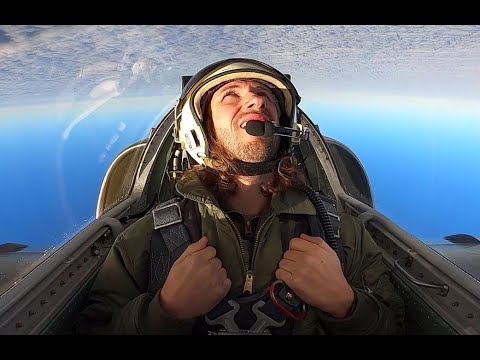
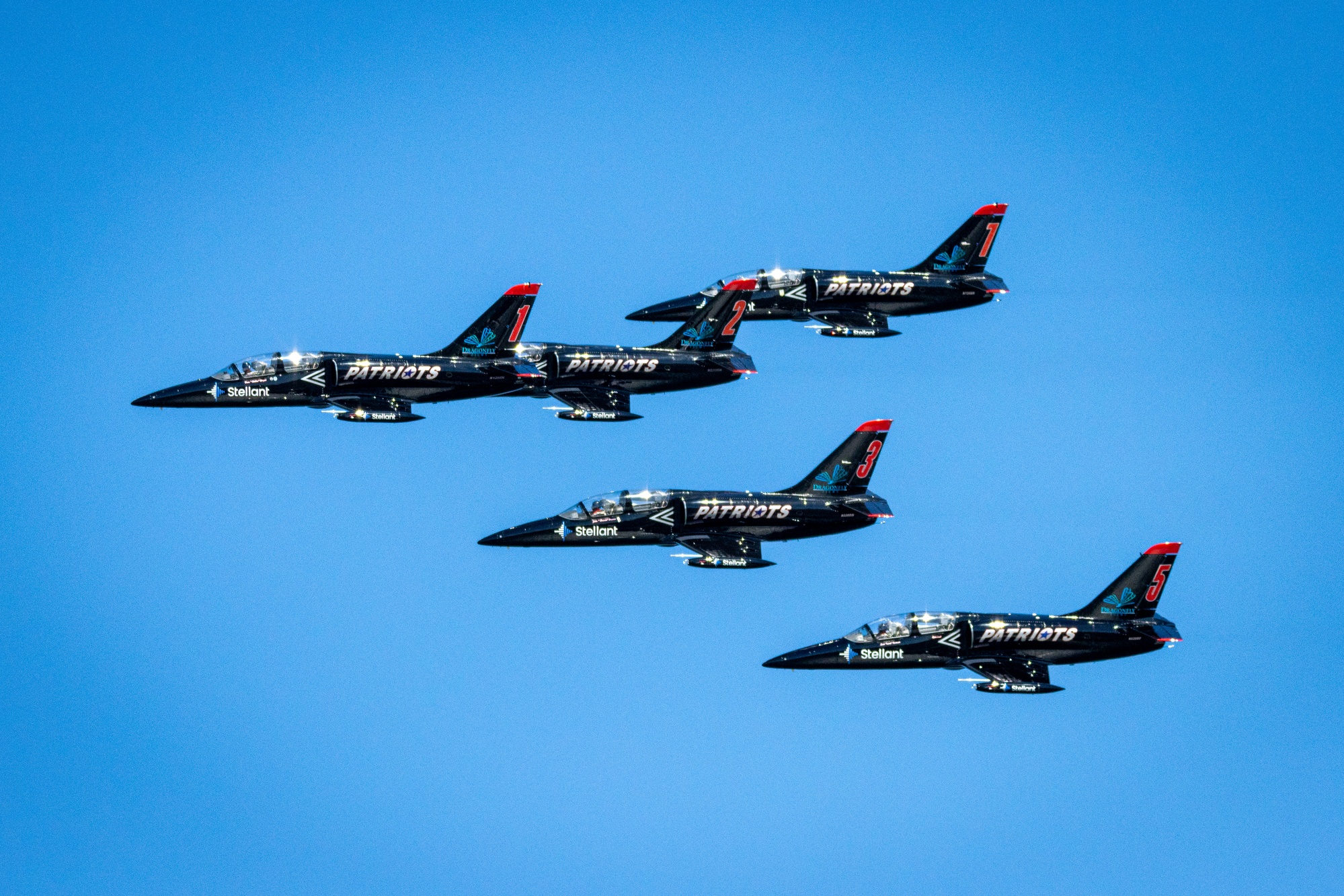
On the display circuit, the Albatros is probably the most-seen jet in private hands anywhere. The Breitling Jet Team flies seven, the Patriots Jet Team six, the Baltic Bees six and the Black Diamond Jet Team five, and operators offer passenger rides in Australia, the Czech Republic, France, Germany, Spain and the United States. Its popularity at the Reno Air Races led in 2002 to a Jet class exclusively for the L-39, later widened to include similar aircraft.
Legacy
Few aircraft have trained so many pilots. With close to 2,900 built over twenty-five years of production, the L-39 was the classroom in which entire generations of Soviet and Soviet-aligned aviators learned to fly, and it still fills that role in dozens of air forces. Its formula — an economical turbofan, simple systems, rugged gear and a cockpit that imitates the operational fighter — proved so sound that Aero itself has reissued it twice, first with the L-59 and L-159 and later with the Skyfox. Meanwhile, at airshows across Europe and North America, that straight wing with tanks on the tips has become as familiar in civilian hands as it once was in military ones.
Variants
| L-39X-01 – X-07 | L-39ZO | L-39ZA | L-39MS | L-39C | L-39CM | L-39M1 | L-39 Skyfox (L-39NG) | L-39V | L-39ZA/ART | L-39ZAM | |
|---|---|---|---|---|---|---|---|---|---|---|---|
| First flight | November 4, 1968 | June 25, 1975 | September 29, 1976 | September 30, 1986 | — | — | — | — | — | — | — |
| Aircraft type | — | Armed trainer and light attack aircraft | Armed trainer and light attack aircraft | Second-generation jet trainer | Two-seat jet trainer | — | Upgraded two-seat jet trainer | New-generation two-seat jet trainer | Single-seat target tug | Armed trainer and light attack aircraft with Western avionics | — |
| Powerplant | — | 1 × Ivchenko AI-25TL turbofan rated at 16.87 kN | 1 × Ivchenko AI-25TL turbofan rated at 16.87 kN | 1 × Lotarev DV-2 turbofan rated at 21.6 kN | 1 × Ivchenko AI-25TL turbofan rated at 16.87 kN | — | 1 × Ivchenko AI-25TLSh turbofan | 1 × Williams FJ44 turbofan | — | — | — |
| Powerplant | — | 1 × Ivchenko AI-25TL | 1 × Ivchenko AI-25TL | 1 × Lotarev DV-2 | 1 × Ivchenko AI-25TL | 1 × turbofan | 1 × Ivchenko AI-25TLSh | 1 × Williams FJ44 | 1 × turbofan | 1 × Ivchenko AI-25TL | 1 × turbofan |
| Thrust per engine | — | 16.9 kN | 16.9 kN | 21.6 kN Best value in this row | 16.9 kN | — | — | — | — | — | — |
| Length | — | — | — | — | 12.1 m | — | — | — | — | — | — |
| Wingspan | — | — | — | — | 9.5 m | — | — | — | — | — | — |
| Height | — | — | — | — | 4.8 m | — | — | — | — | — | — |
| Wing area | — | — | — | — | 18.8 m² | — | — | — | — | — | — |
| Empty weight | — | — | — | — | 3,455 kg | — | — | — | — | — | — |
| MTOW | — | — | — | — | 4,700 kg | — | — | — | — | — | — |
| Top speed | — | — | — | 872 km/h Best value in this row | 750 km/h | — | — | — | — | — | — |
| Max speed altitude | — | — | — | — | 5,000 m | — | — | — | — | — | — |
| Cruise speed | — | — | — | — | 680 km/h | — | — | — | — | — | — |
| Cruise altitude | — | — | — | — | 5,000 m | — | — | — | — | — | — |
| Service ceiling | — | — | — | — | 11,000 m | — | — | — | — | — | — |
| Initial climb rate | — | — | — | — | 21 m/s | — | — | — | — | — | — |
| Range | — | — | — | — | 1,100 km | — | — | — | — | — | — |
| Ferry range | — | — | — | — | 1,750 km | — | — | — | — | — | — |
| Endurance | — | — | — | — | 150 min | — | — | — | — | — | — |
| Range conditions | — | — | — | — | 1,100 km on internal fuel; 1,750 km ferry range with internal and external fuel. | — | — | — | — | — | — |
| Armament | — | Four underwing pylons (500 kg inboard, 250 kg outboard) for a total external load of 1,150 kg. No gun. | 1 × twin-barrelled 23 mm Gryazev-Shipunov GSh-23L in a conformal pod under the cockpit, with a 150-round magazine inside the airframe; four underwing pylons for a total of 1,290 kg, the outboard pair wired for K-13 or R-60 air-to-air missiles. | — | Two underwing pylons for drop tanks and practice stores; up to 284 kg of external load. No gun. | — | — | — | None: the aircraft tows the KT-04 target rather than firing on it. | — | — |
| Max weapons load | — | 1,150 kg | 1,290 kg Best value in this row | — | 284 kg | — | — | — | — | — | — |
| Payload | — | 0 kg Best value in this row | 0 kg Best value in this row | — | 0 kg Best value in this row | — | — | — | — | — | — |
| Cargo capacity | — | None: an armed trainer with no civil payload capacity. | None: a light combat aircraft with no civil payload capacity. | — | None: a two-seat trainer with no civil payload capacity. | — | — | — | — | — | — |
| Crew | 2 | 2 | 2 | 2 | 2 | 2 | 2 | 2 | 1 Best value in this row | 2 | 2 |
| Passengers | — | — | — | — | 0 | — | — | — | — | — | — |
| Units built | — | 337 | 208 | — | 2,260 Best value in this row | — | — | — | 8 | 40 | — |
Images
Elsewhere
- Airliners.netAero L-39 Albatros N139LW en vuelo, Florida, 2025 ↗
- Airliners.netAero L-39 Albatros de BLR Aerospace ↗
- Airliners.netAero L-39 Albatros del Patriots Jet Team, Moffett Airshow 2004 ↗
- ABPicAero L-39 Albatros 0443, Fuerza Aérea Eslovaca ↗
- ABPicAero L-39 Albatros ES-TLC, Breitling Jet Team ↗
- ABPicAero L-39 Albatros YL-KSK, Fuerza Aérea Lituana ↗
- FlickrAero L-39 Albatros, EAA AirVenture 2009 ↗
- FlickrAero L-39 Albatros de un escuadrón agresor ↗
- Aerial VisualsAero L-39ZO Albatros s/n 2314, c/r N39VC ↗
- Flugzeugbilder.deAero L-39ZA Albatros N214AX, Airborne Tactical Advantage Company, Zweibrücken 2013 ↗
- Flugzeugbilder.deAero L-39 Albatros LX-SJW, operador privado, Paderborn Lippstadt 2014 ↗
- Flugzeugbilder.deAero L-39 Albatros LX-ROB, operador privado, Zweibrücken 2017 ↗






![L-39 Albatros : flight from Avignon - Top Gun Voltige [Short Edit]](https://i.ytimg.com/vi/DGrpUYeNT5M/hqdefault.jpg)