Trainer · Civil · Belgium
Stampe SV-4
- In service
- Status


-800.webp)


-1600.webp)

-1600.webp)


-800.webp)


-1600.webp)
-1600.webp)


-1600.webp)


_in_flight_2-1600.webp)


-1600.webp)


-800.webp)


-1600.webp)


_1993-08-10_Andre_Gerwing_Collection_ID_030772-1600.webp)

_04-1600.webp)
-800.webp)


_2015-08-10_Andre_Gerwing_Collection_ID_016062-1600.webp)
-800.webp)


-800.webp)


-1600.webp)


-800.webp)


-1600.webp)


-800.webp)


-800.webp)


-800.webp)
-1600.webp)

-800.webp)


_cockpit-1600.webp)


_(33426904574)-1600.webp)

-1600.webp)


-800.webp)


-800.webp)
_06-1600.webp)


-800.webp)
-800.webp)

_motor-1600.webp)
-800.webp)

_07.jpg)


.jpg)


-1600.webp)


_1992-08-23_Andre_Gerwing_Collection_ID_024001-1600.webp)


-800.webp)


_(Deurne)%2C_Belgium_PP1147074270-800.webp)




-800.webp)

-800.webp)


-800.webp)


-1600.webp)

-800.webp)
-800.webp)
-800.webp)


_2013_01-800.webp)

_(49887603406).jpg)
-800.webp)


_in_flight_3-1600.webp)
-800.webp)
_OO-SVT_02-1600.webp)


_3-1600.webp)
_tail_02-1600.webp)


-1600.webp)


-800.webp)
-800.webp)


_in_flight-800.webp)


-1600.webp)


-800.webp)




-800.webp)

-800.webp)


_05-1600.webp)
_02-1600.webp)


-800.webp)


_01-1600.webp)




-800.webp)


-800.webp)

-800.webp)
_tail-1600.webp)


_2015-08-10_Andre_Gerwing_Collection_ID_016063-1600.webp)

-1600.webp)


_2-1600.webp)
_03-1600.webp)


_OO-SVT_01-1600.webp)


_(34377350840)-1600.webp)


_at_Stampe_Fly-in_2019-1600.webp)


_(34137777341)-1600.webp)


-1600.webp)


-800.webp)
-800.webp)


-1600.webp)


-800.webp)
-1600.webp)


-800.webp)


_2-1600.webp)


_2015-08-10_Andre_Gerwing_Collection_ID_016064-1600.webp)


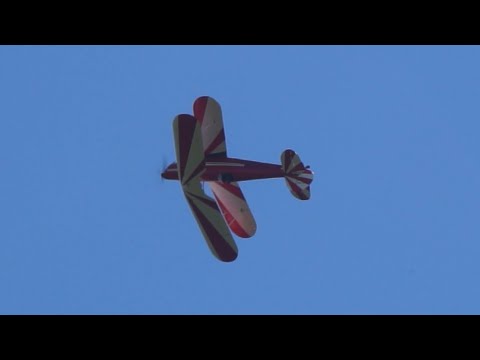
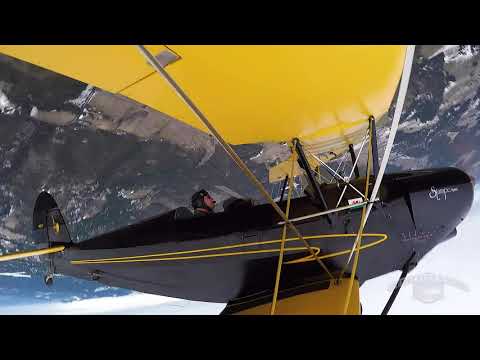
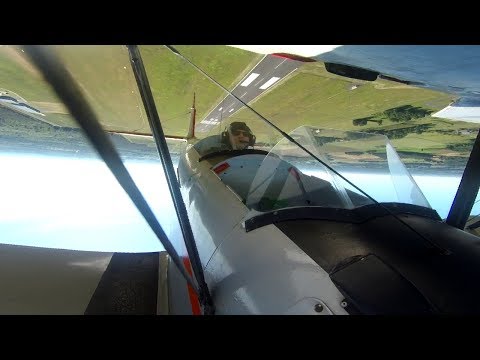
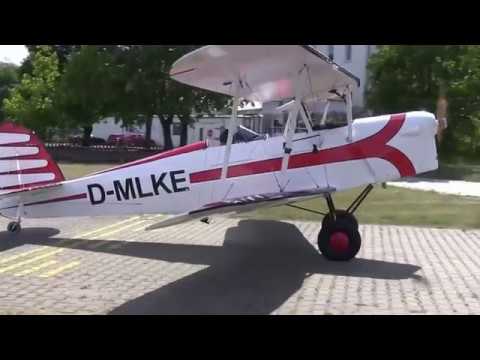
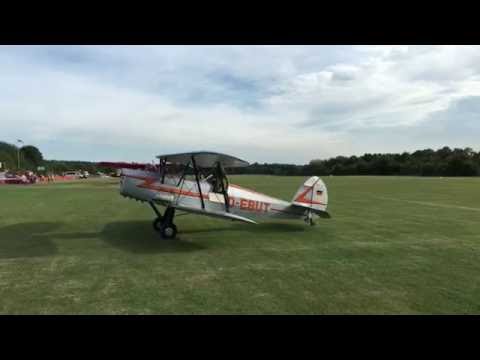
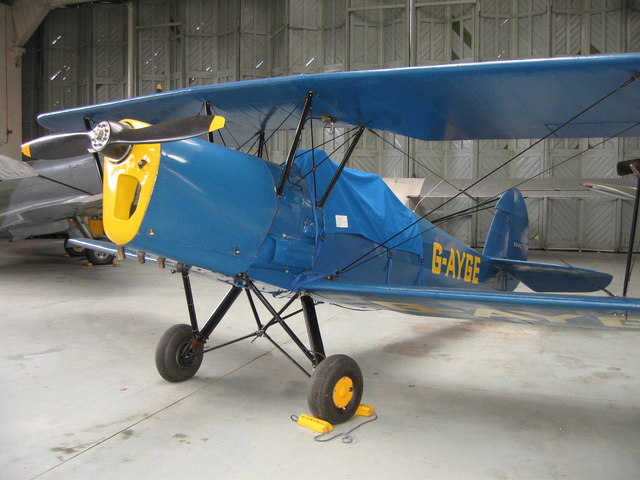
The Stampe SV-4 is a two-seat biplane trainer and touring aircraft designed at Antwerp by the Belgian firm Stampe et Vertongen. First flown on 17 May 1933 with Jean Stampe at the controls, it reached its definitive form in 1937 as the SV-4B, an aerobatic trainer with swept wings, ailerons on all four planes and a de Havilland Gipsy Major engine. It was a thoroughly conventional aeroplane of wood and fabric, yet its balanced handling and its willingness to fly inverted made it one of the most admired training biplanes in Europe. Only a few dozen had been completed in Belgium when the Second World War stopped production, but a French order placed in 1939 and a licence granted to Farman set the stage for the type's real career. After the liberation the French state chose the Renault-powered SV-4C as its standard basic trainer for military and civil schools: SNCAN at Sartrouville and the Atelier Industriel de l'Aéronautique at Algiers turned out roughly 850 between 1946 and 1950, while the reconstituted Stampe et Renard company delivered 65 SV-4Bs to the Belgian Air Force. Depending on the source, total production is given as somewhere between 940 and 1050 aircraft. The Stampe trained French military and civilian pilots into the sixties, mounted the Patrouille d'Étampes and carried the aerobatic champions of Saint-Yan, and served the Belgian Air Force until 1975. Sold off cheaply to flying clubs, it became the archetypal vintage biplane of French-speaking Europe: it still gathers in numbers at annual meetings, has appeared in several films, and forms the heart of the museum named after its builders at Antwerp-Deurne airport.
Related sheets
Category
History
Beginnings at Deurne
The company that built the SV-4 was born in 1923 on the airfield of Deurne, outside Antwerp, where two former military aviators, Jean Stampe and Maurice Vertongen, opened a flying school and a workshop. Their early biplanes were drawn by the engineer Alfred Renard and carried the RSV prefix for the three partners' initials; the RSV 32/90 of that first year is remembered as the first aeroplane built entirely in Belgium, and King Albert I flew in it. When Renard left to set up his own firm at Evere, Stampe and Vertongen hired a young Russian-born engineer, George Ivanov, and the prefix became simply SV. It was under his pencil that the company's most famous product took shape.
The 1933 SV-4
Stampe's brief was unpretentious: a training biplane with easy access to the front seat, openly modelled on the de Havilland DH.82 Tiger Moth that the firm imported as the British company's agent. Sources disagree on who deserves credit for the design, some attributing the concept to Renard with later refinement by Ivanov and others naming Ivanov outright, but they agree that the prototype left Deurne in May 1933 with Jean Stampe at the controls. Most accounts give the date as the 17th; one Dutch-language source says the 13th. The aircraft followed an unsuccessful SV-3 and was at first nothing more than a school hack: six were built for the company's own school and production stopped in 1935. When Ivanov was killed alongside Stampe's son in the crash of the twin-engined SV-10 bomber, the type seemed destined to be forgotten.
Elza Leysen and the SV-4B
Its revival was the work of a woman pilot. In 1937, as the first international aerobatic contests were being organised, the Antwerp aviatrix Elza Leysen asked Stampe for a light aerobatic aircraft that could better the Tiger Moth and the Bücker Jungmann. With a new engineer, Boris Demidoff, Stampe reworked the SV-4 around all three axes: a longer fuselage, a new aerofoil, sweepback on both wings with ailerons on all four panels, and a 130 hp de Havilland Gipsy Major I. A measuring error left the wing smaller than intended, and the aeroplane flew the better for it. The result, formally the SV-4 bis and in everyday use the SV-4B, flew from Deurne in July 1937 and in September won the Belgian military competition for a replacement of the ageing Avro trainers. A second example went to Thierry d'Huart and would become the sole pre-war survivor. The official order did not follow until 1939: most sources speak of thirty aircraft, though two put the figure at three hundred, probably through confusion with the French order.
The French order and the war
In 1939 a French delegation made up of the aerobatic pilot Michel Détroyat, the engineer Henri Ziegler and Louis Bonte tested the Belgian biplane, and the Air Ministry ordered 600 with the 140 hp Renault 4P engine, 400 for the Armée de l'Air schools and 200 for army artillery observation. Deurne could never build on that scale, so a manufacturing licence was signed with Farman in November 1939. The German invasion brought everything to a halt. By then Stampe et Vertongen had completed only a few dozen SV-4s, the figure ranging from 20 to 35 according to the source, with a broader account speaking of some sixty aircraft of all series, and eleven more were on the Farman assembly line. Of the Belgian aircraft, 24 of the 30 were crated and shipped to North Africa, where they were dispersed.
The Divoy and Donnet escape
The type's best-known wartime story concerns Thierry d'Huart's SV-4B, registered OO-ATD. Hidden in occupied Belgium, it was secretly returned to flying condition by two military pilots, Léon Divoy and Michel Donnet, who in 1941 flew it out by night across the Channel to England. The biplane went on to serve with the Royal Air Force's No. 510 Squadron, and its exploit is commemorated by a replica in the Brussels Air Museum, whose collection received it in 1964.
France: the SV-4C from Sartrouville and Algiers
After the liberation the French government drew up an ambitious plan to rebuild light aviation and picked the Stampe, as the SV-4C with a 140 hp Renault 4Pei, as the common primary trainer for civil and military schools. The Farman licence passed to the Société Nationale de Constructions Aéronautiques du Nord, whose Sartrouville plant on the Seine built the series numbered 1 to 701 until 1948; the first SV-4C flew in January 1946. A second line at the Atelier Industriel de l'Aéronautique at Algiers-Maison Blanche added 150 more, numbered 1001 to 1150, between 1947 and 1950. French production figures wander from source to source, with 700, 701, 704 and even 856 quoted for SNCAN and 150 or 155 for Algiers, but all of them put the French programme at roughly 850 aircraft.
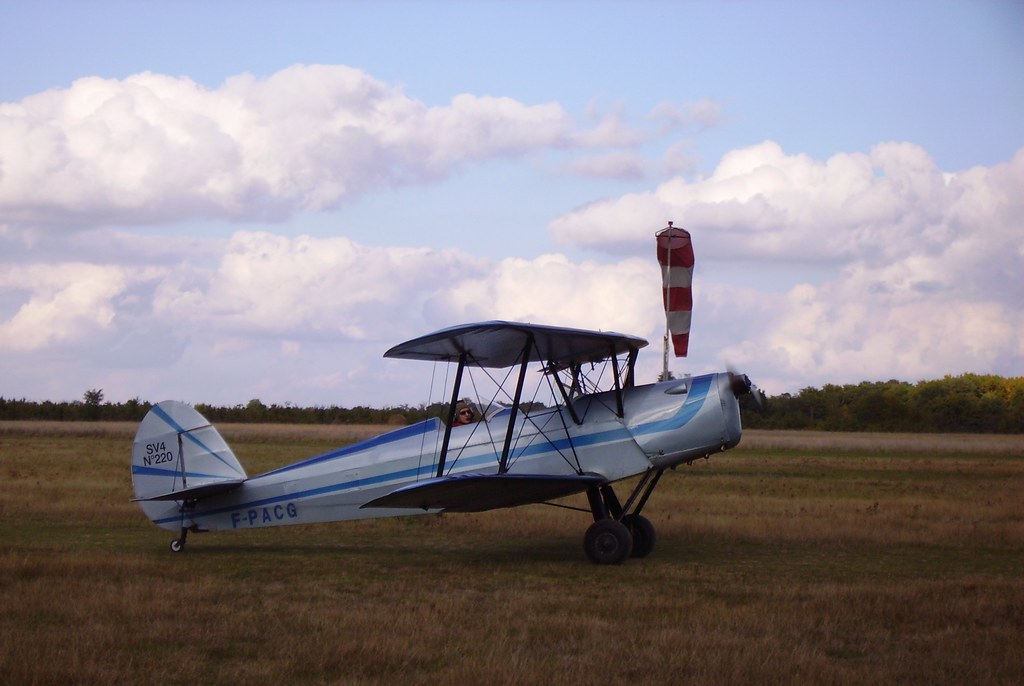
The SV-4C equipped Armée de l'Air schools until 1955 and the Aéronavale until 1966, and it also served with army light aviation and the flight test centre. One detailed breakdown credits the air force with 243 aircraft, naval aviation with 123, the ALAT with 30 and the Belgian Congo with 7. At the same time the Service de l'Aviation Légère et Sportive passed the type to flying clubs from 1951 for a token 1000 francs, and the national centres at Carcassonne, Challes-les-Eaux and Saint-Yan used it to train instructors until the early sixties. A glider-towing hook was approved in 1950 and around forty aircraft towed Caudron C.800 and Castel C-25 S sailplanes, at the cost of cylinder-head failures on the Renault engine.
Belgium: Stampe et Renard and the 65 SV-4Bs
The Deurne factory emerged from the war in ruins and Maurice Vertongen chose not to start again, so Jean Stampe joined forces once more with Alfred Renard at the latter's works at Evere. The new Stampe et Renard company, founded in 1946 or 1947 depending on the source, built 65 SV-4Bs for the Belgian Air Force between 1948 and 1955, powered by the 145 hp Gipsy Major X or the Blackburn Cirrus Major III and fitted with a sliding canopy that set them apart from the open-cockpit French machines. Together with the thirty pre-war aircraft they brought Belgian production of the SV-4B to 95. The orange biplanes of the elementary flying school trained Belgian pilots until 1975, when the SIAI-Marchetti SF-260 took over.
Schools, aerobatics and display teams
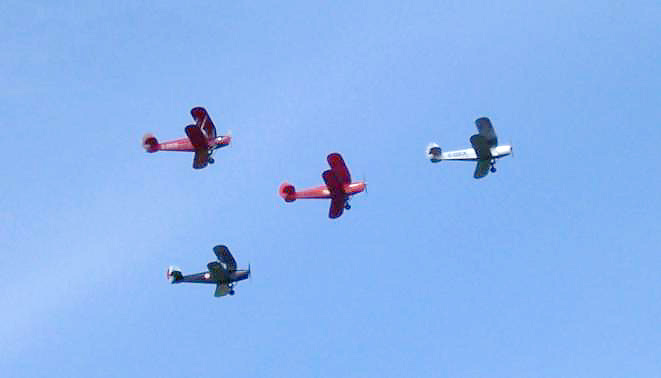
Few trainers have enjoyed such an aerobatic career. In France the Stampe mounted the Patrouille d'Étampes from 1947 to 1953, the Armée de l'Air display flight formed in 1947 and the air force aerobatic team between 1968 and 1970, and it carried Léon Biancotto, Marcel Charollais, Louis Notteghem and Jean d'Orgeix to their titles. In Belgium the pair of Jean Feyten and Paul Christiaens flew two SV-4Bs from 1965 to 1970 through a routine of twenty-four figures and eight formation changes with only 30 to 35 centimetres between wingtips. In Britain the Rothmans Aerobatic Team used SV-4Cs from 1970 to 1973. The one dark note was the 1969 accident that killed Jean-Claude Champion when the wing bracing wires failed; a structural modification followed, and the CAP-10B soon replaced the biplane in competition aerobatics.
Versions and engines
The SV-4A designation covers the aircraft with the 140 hp Renault 4P, both the pre-war Belgian examples and the French series; the SV-4B is the Gipsy Major version and the SV-4C the SNCAN-built aircraft with the Renault 4Pei. There was also a single SV-4D, described in two irreconcilable ways by the sources: either a single-seater with a 175 hp Mathis radial that flew with the Patrouille d'Étampes, or a 1965 modernisation kit with a 165 hp Continental IO-346. SV-4E is the name given to OO-KAT after re-engining with a Lycoming, and the SV-4P was a 1957 project around a 300 hp Potez 4D-31 that never left the drawing board. Over the years Stampes have also flown with Lycoming O-320, Ranger 6 and LOM 332b engines.
Technical data
The figures most often quoted are those of the post-war Belgian SV-4B: a span of 8.385 m, a length of 6.8 m, a height of 2.775 m and a wing area of 18.06 m²; an empty weight of 520 kg and a maximum of 770 kg; a top speed of 188 km/h, a cruise of 140 km/h, a range of 420 km and a ceiling of 6000 m, with the structure stressed to +6/-4 g. The French SV-4C, according to the data sheet of the Le Bourget museum's Amicale, is 6.810 m long and 2.850 m high, weighs 502 kg empty and 750 kg loaded, reaches 198 km/h and cruises at 170 km/h, with a ceiling of 5000 m and a range of 500 km; its Renault 4P delivers 140 hp at 2400 rpm from a 90-litre tank in the upper-wing centre section. There are no flaps.
Retirement and afterlife
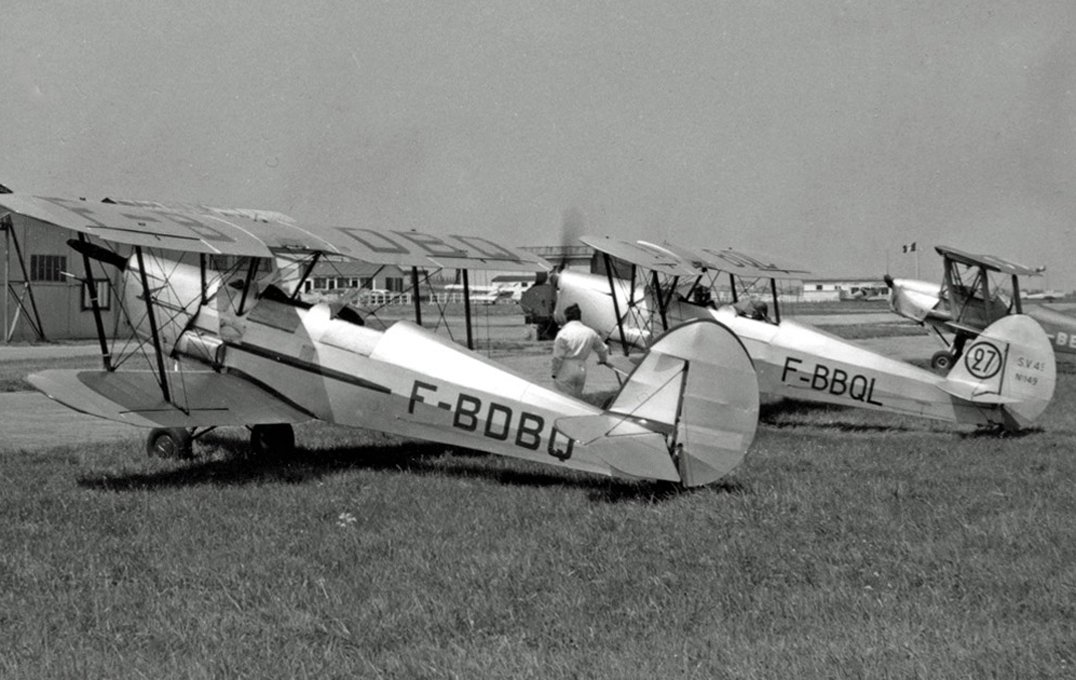
Leaving the schools did not mean disappearing. The Stampe became the classic of French-speaking flying clubs and, since the eighties, a collector's aeroplane. Every year it gathers at the Coupe d'Anjou at Angers-Marcé in late July and at the Antwerp-Deurne meeting in late May, and in June 2023 Saint-Yan hosted a fly-in marking a century of Stampe et Vertongen. The Le Bourget Amicale keeps SV-4C No. 149, F-BBQL, delivered by SNCAN in 1946 with 1852 flying hours, while the Stampe & Vertongen museum at Antwerp airport houses a whole flying stable of SV-4s. On screen the biplane has appeared in Indiana Jones and the Last Crusade, Biggles, High Road to China and Hopscotch.
Variants
| SV-4 (prototipo) | SV-4A | SV-4B | SV-4C | SV-4D | SV-4E | SV-4P | |
|---|---|---|---|---|---|---|---|
| First flight | May 17, 1933 | — | — | — | — | — | — |
| Aircraft type | — | — | — | Two-seat trainer and touring biplane, licence-built in France | — | — | — |
| Powerplant | — | One Renault 4P-05 four-cylinder inverted in-line engine of 140 hp (104 kW); avionslegendaires gives 145 hp. | Original: one 130 hp (97 kW) inverted de Havilland Gipsy Major I. Post-war: de Havilland Gipsy Major X or Blackburn Cirrus Major III of 145 hp (108 kW), four-cylinder air-cooled inverted in-line. | One Renault 4Pei (Bengali 4P) four-cylinder air-cooled inverted in-line, 140 hp (104 kW) at 2,400 rpm; Renault 4P, 4P03 and 4P106 engines were also fitted. Avionslegendaires gives 145 hp. | One seven-cylinder Mathis radial of 175 hp (130 kW), designated G.4R, GR7 or 7G20 depending on the source; avionslegendaires instead describes a 165 hp Continental IO-346. | — | — |
| Powerplant | 1 × piston | 1 × Renault 4P-05 | 1 × de Havilland Gipsy Major X (o Blackburn Cirrus Major III) | 1 × Renault 4Pei (Bengali 4P) | 1 × Mathis radial de 7 cilindros (G.4R / GR7 / 7G20 según la fuente) | 1 × Lycoming | 1 × Potez 4D-31 |
| Power per engine | — | 139 hp | 145 hp | 139 hp | 174 hp | — | 300 hp Best value in this row |
| Length | — | 6.9 m Best value in this row | 6.8 m | 6.8 m | — | — | — |
| Wingspan | — | 8.4 m Best value in this row | 8.4 m | 8.4 m | — | — | — |
| Height | — | 2.8 m | 2.8 m | 2.9 m Best value in this row | — | — | — |
| Wing area | — | — | 18.1 m² | 19 m² Best value in this row | — | — | — |
| Empty weight | — | — | 520 kg | 502 kg Best value in this row | — | — | — |
| MTOW | — | 780 kg Best value in this row | 770 kg | 750 kg | — | — | — |
| Top speed | — | 200 km/h Best value in this row | 188 km/h | 198 km/h | — | — | — |
| Cruise speed | — | — | 140 km/h | 170 km/h Best value in this row | — | — | — |
| Service ceiling | — | 5,000 m | 6,000 m Best value in this row | 5,000 m | — | — | — |
| Initial climb rate | — | — | 4.5 m/s Best value in this row | 4.5 m/s Best value in this row | — | — | — |
| Range | — | 600 km Best value in this row | 420 km | 500 km | — | — | — |
| Range conditions | — | — | — | Range of 500 km in still air, according to the SV4C characteristics published by the Amicale du Bourget; the 420 km often quoted belong to the Gipsy Major-powered SV-4b, not to this version. | — | — | — |
| Armament | — | — | — | None. It is an unarmed trainer and touring aircraft; the machine-gun turrets seen on some SV.4s in films are movie modifications, not equipment of the type. | — | — | — |
| Max weapons load | — | — | — | 0 kg | — | — | — |
| Payload | — | — | — | 0 kg | — | — | — |
| Cargo capacity | — | — | — | No cargo capacity: the aircraft carries only its two occupants in tandem (the student pilot sits in the rear seat) and a 90-litre fuel tank in the upper wing. | — | — | — |
| Crew | 2 | 2 | 2 | 2 | 1 Best value in this row | 2 | 1 Best value in this row |
| Passengers | — | — | — | 0 | — | — | — |
| Units built | 6 | — | 95 Best value in this row | — | 1 | — | 0 |
Images
Elsewhere
- Airliners.netStampe-Vertongen SV-4B ↗
- Airliners.netStampe-Vertongen SV-4C ↗
- JetPhotosStampe and Vertongen SV-4L, F-PCOR ↗
- JetPhotosStampe and Vertongen SV-4L, F-PCOR ↗
- Planespotters.netN81RG Stampe et Vertongen SV.4C ↗
- Planespotters.netG-AMPI Stampe-Vertongen SV-4C ↗
- FlickrStampe-Vertongen SV4B ↗
- FlickrStampe et Vertongen SV-4C ↗
- Wikimedia CommonsStampe SV4 OO-SVG ↗
- Wikimedia CommonsStampe SV.4C (E) OO-SVT ↗
- ABPicStampe SV.4C, F-BGGP ↗
- Airport-Data.comStampe-Vertongen SV-4C, N81RG ↗