Stampe SV-4 variant
Stampe SV-4 SV-4A
Pre-war aerobatic and training version with a 140 hp inverted in-line Renault 4P-05, ailerons on both wings and rounded wingtips; it was the first production version of the SV-4 and the one Belgium selected in 1939, although the war cut its production short with some twenty airframes completed.
- 600 km
- Range
History
The SV-4A grew out of a rework of the 1933 S-IV/SV-4 prototype. According to aviationsmilitaires.net, in 1937 Elsa Leysen, a former pupil of the Stampe et Vertongen flying school, was looking for an aerobatic aircraft better than the de Havilland DH-82 and the Bücker Jungmann; the company's technical team shortened the fuselage, changed the tail, swept the upper wing, slightly reduced the span by rounding the wingtips and fitted ailerons to the lower wing. The aerobatic version derived from that prototype, and the training version too, was designated SV-4A. Its engine is a Renault 4P-05 four-cylinder inverted in-line of 140 hp (avionslegendaires says 145 hp); the undercarriage is fixed, the pilot sits at the back with the pupil in front, and fuselage and wings are fabric-covered wooden structures.
In 1939 the firm built two more aircraft for the Belgian military aviation competition for a new trainer. The SV-4A was selected and an order placed — 30 aircraft according to most sources, 300 according to aviationsmilitaires.net — while a French delegation, won over by its performance, ordered 600 with the 140 hp Renault 4P, 400 for training and 200 for artillery spotting, with licence production assigned to Farman in November 1939. The Second World War cut everything short: only about twenty Belgian SV-4As had been built — 20 assembled at Deurne and 11 in progress on Farman's lines, according to the French Wikipedia — and, per aviationsmilitaires.net, only one came through the conflict intact: the aircraft a Belgian pilot flew across the Channel to Britain in 1941, where it served as the Royal Air Force's only SV-4.
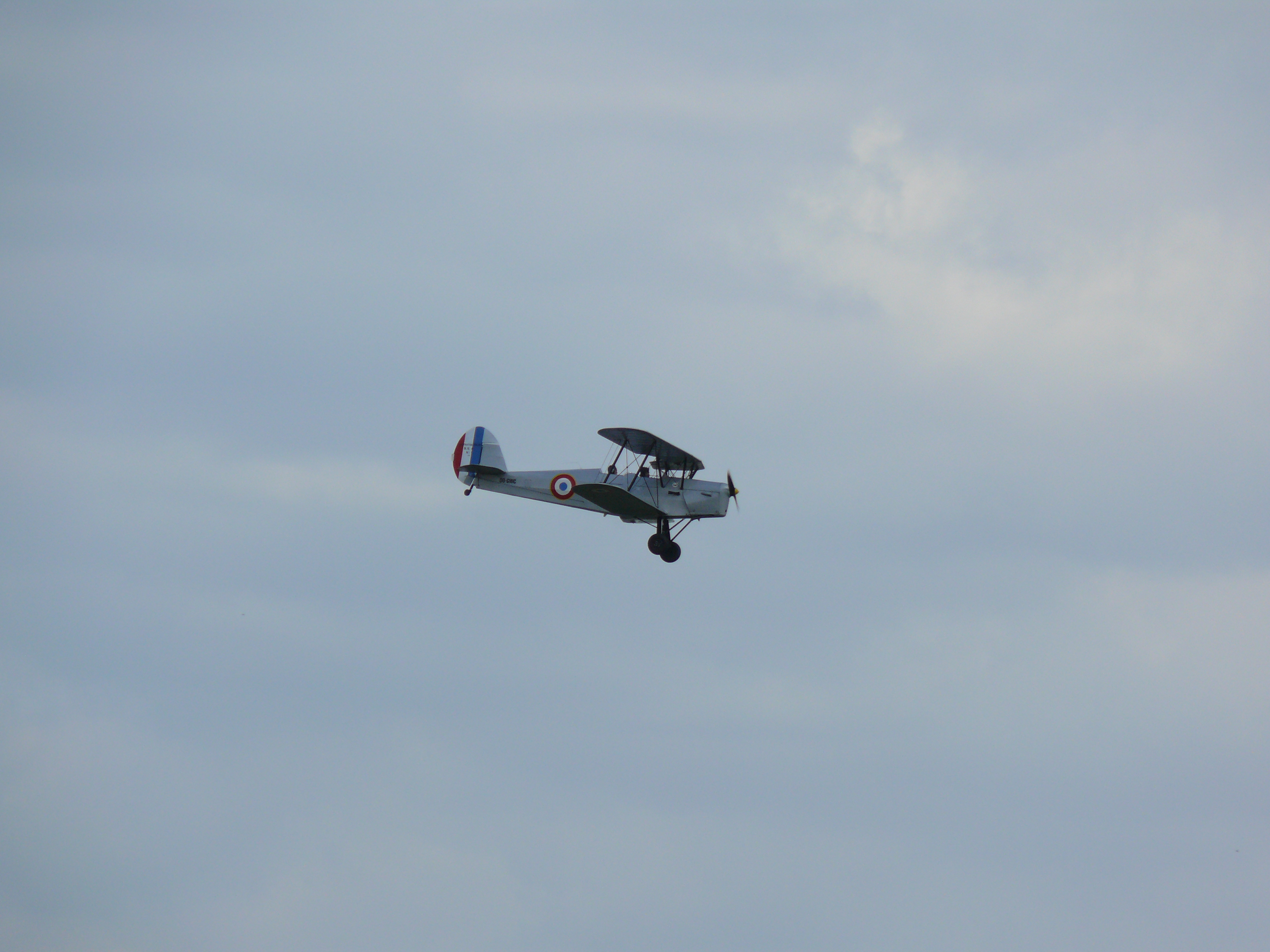
After the war the designation stayed attached to Renault-engined aircraft: avionslegendaires credits the French SNCAN with licence-building SV-4As, and examples still fly under that name today, such as the Belgian OO-GWC or the Nord SV-4A no. 219 preserved in New Zealand shown in the Wikipedia articles. The avionslegendaires figures for the SV-4A are a span of 8.40 m, length 6.90 m, height 2.77 m, 780 kg loaded, a top speed of 200 km/h, a 5,000 m ceiling and a 600 km range; the French Wikipedia gives the Renault-engined SV-4 the same 8.40 m and 6.90 m but 750 kg and 230 km/h.
Multimedia
