Stampe SV-4 variant
Stampe SV-4 SV-4B
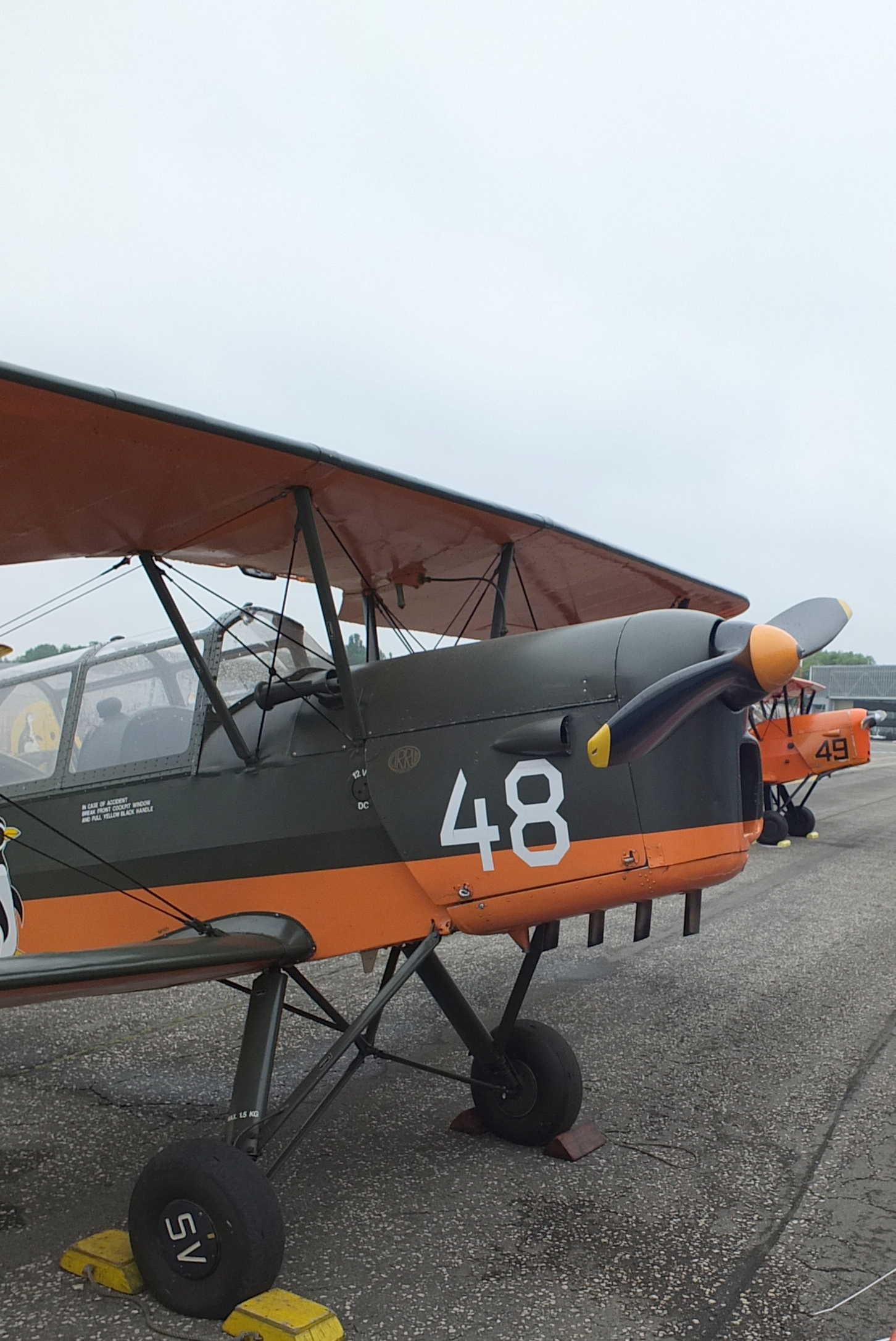
Belgian version with a 130 hp de Havilland Gipsy Major I, symmetrical swept wings and ailerons on both planes; it left Deurne in July 1937 and, in its post-war form with a sliding canopy and a 145 hp Gipsy Major X or Cirrus Major III, equipped the Belgian Air Force with 65 aircraft built by Stampe et Renard.
- 95
- Units built
- 420 km
- Range
History
According to the French Wikipedia, the SV-4B left the Stampe et Vertongen works at Deurne, near Antwerp, in July 1937 as a derivative of the 1933 SV-4, conceived by Jean Stampe. It differed in its symmetrical, positively swept wings, each fitted with ailerons, and in its 130 hp inverted de Havilland Gipsy Major I. Winner of the Belgian military aviation trainer competition in 1937, 30 were ordered; shown in France in 1939 it caused a sensation and Farman was granted a licence for 700 aircraft (600 according to other sources), but the war broke out when only 20 had been assembled at Deurne and 11 were in progress on Farman's line. The Dutch Wikipedia tells the origin of the letter differently: Jean Stampe came back from France with an order for thirty aircraft and the type was renamed SV.4b, 'b' for 'bis'. AeroVFR, for its part, describes the 1937 SV-4B with the 130 hp Gipsy Major as the aircraft that won the Belgian competition but was not produced because of a stall judged too sharp and a difficult landing, which led to a longer fuselage and sweep and a new profile on both wings.
After the Liberation the licence passed to SNCAN. In 1946 — or 1947 according to other sources — Jean Stampe and the engineer Alfred Renard, who had already worked together in the 1930s, founded the Stampe et Renard company at Evere, which built the 65 SV-4Bs of the Belgian Air Force. These post-war aircraft received a sliding canopy — 'heresy' for purists of the open biplane, as the Amicale du Bourget jokes — and more powerful engines, the 145 hp de Havilland Gipsy Major X or Blackburn Cirrus Major III. In all, 95 SV-4Bs were built in Belgium according to the French Wikipedia. They served in the Belgian schools until 1975; aviationsmilitaires.net also counts seven in the air force of the Belgian Congo, and airframe V-33 is preserved at the Brussels Air Museum.
The post-war data sheet shared by the English Wikipedia (from factory drawings), aviationsmilitaires.net and the French Wikipedia gives a length of 6.8 m, span 8.385 m, height 2.775 m, wing area 18.06 m², 520 kg empty and 770 kg at take-off, a top speed of 188 km/h, cruise 140 km/h, stall 55 km/h, climb 4.5 m/s, a 6,000 m ceiling and 420 km range, with load factors of +6/-4 g.
Multimedia
