Trainer · Military · Canada
Canadair CT-114 Tutor
- January 13, 1960
- First flight
- 1963
- Introduced
- 2026
- Retired
- 212
- Units built
-1600.webp)






-800.webp)


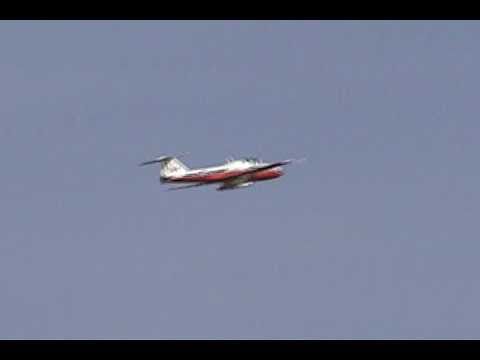
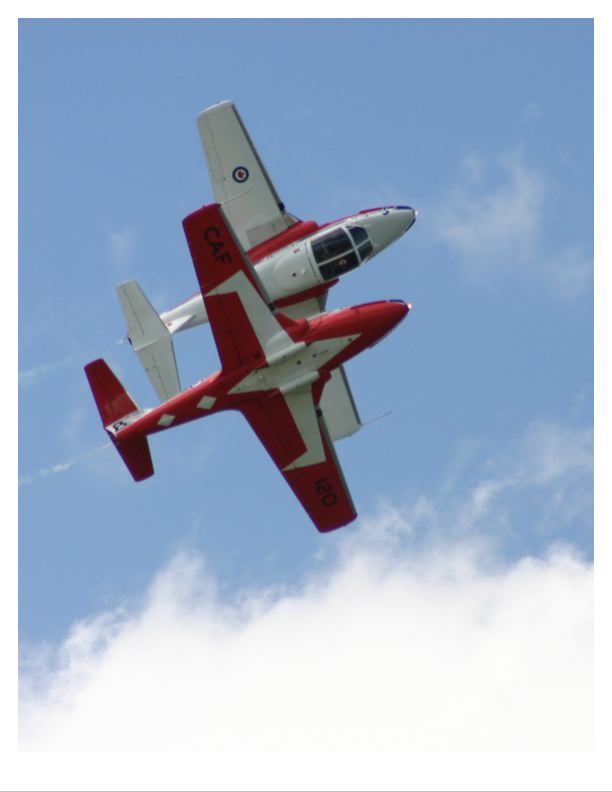
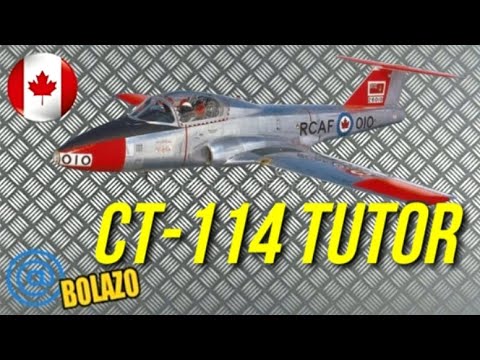
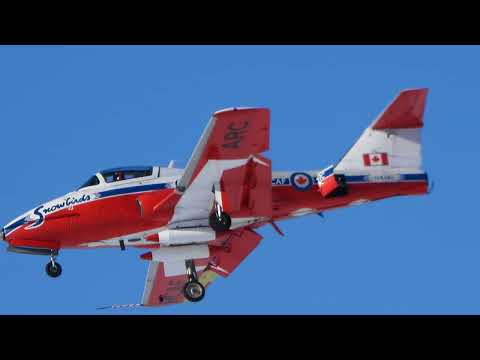
The Canadair CT-114 Tutor, known to its makers as the CL-41, was the standard jet trainer of the Royal Canadian Air Force (RCAF) and, after unification, of the Canadian Armed Forces. A single-engined low-wing aircraft with tricycle undercarriage and a side-by-side cockpit, it holds a particular place in Canadian industrial history: as the Canada Aviation and Space Museum notes, it was the first aircraft Canadair designed from scratch rather than adapting someone else's design. The programme began in the mid-1950s as a private venture of the company's Preliminary Design department. By August 1957 the basic configuration was settled, and on 13 January 1960 the prototype made its maiden flight with project pilot Ian MacTavish at the controls. In September 1961 the Canadian government ordered 190 examples of the production CL-41A, which entered service under the unified designation CT-114 Tutor. The Tutor was Canada's basic jet trainer from 1963 to 2000, with most of the fleet based at CFB Moose Jaw in Saskatchewan. By the end of its training career the type had flown more than 1,000,000 hours in nearly forty years of service, and its duties passed to a combination of the British-built CT-155 Hawk and the American-built CT-156 Harvard II. Its second life, the one that made it famous abroad, was aerobatic. Ten aircraft equipped the Golden Centennaires during Canada's centennial year of 1967, and since 1971 the Tutor has been the only aircraft ever flown by the Snowbirds, who gained squadron status in 1978 as 431 Air Demonstration Squadron. There was an export chapter too: the Royal Malaysian Air Force received twenty CL-41G-5 Tebuan light attack aircraft, withdrawn in 1986. With 212 airframes built, the Tutor's career closed in August 2026 after roughly sixty years of service. The Snowbirds' replacement will be the CT-157 Siskin II (Pilatus PC-21), announced in May 2026 and expected to be operational in the early 2030s.
Related events
Related sheets
Category
History
A Canadian trainer designed from scratch
In the mid-1950s Canadair, the Montreal manufacturer whose business until then had largely been building other people's designs under licence, proposed a high-performance jet trainer to prepare RCAF pilots for the newly acquired F-86 Sabre, as the National Air Force Museum of Canada records. The project began as a private venture of the firm's Preliminary Design department, and by August 1957 its basic configuration was fixed: a single turbojet, a low wing, tricycle undercarriage and a cockpit seating instructor and student side by side. From the outset it was conceived as a purpose-built trainer, able to cover elementary jet instruction as well as the advanced stages.
The Canadian government offered no official backing at first, but the Jet Trainer Liaison Committee of the RCAF's Directorate of Training worked closely with the company, and that involvement left a mark on the final design. Government and manufacturer eventually funded a pair of flight-capable prototypes and several static test airframes, built discreetly at Plant 4, the building that housed Canadair's Missiles and Systems division. Side-by-side seating followed training logic: the instructor could watch the student directly and take control if needed, and many of the controls echoed those of the Sabre the pilots were being prepared for.
From prototype to maiden flight
On 13 January 1960 the prototype took off for the first time with project pilot Ian MacTavish at the controls. The flight came late: it had been scheduled for early 1959 and slipped because of engine development problems. That first machine flew behind a Pratt & Whitney JT12A-5 turbojet, while production aircraft would use the General Electric J85. The substitution required no redesign, since the fuselage had been laid out to accept a wide range of engines without structural change; the Armstrong-Siddeley Viper ASV11, the Continental Gabizo, the Rolls-Royce RB.108 and the Fairchild J83-R-1 were all studied in the early stages.
In March 1960 an RCAF survey team flew the CL-41 over the course of a week, having already evaluated trainers from France, the United States and the United Kingdom. According to aviation historian Bill Upton, everyone who flew the prototype praised its handling and performance. The two prototypes, registered CF-LTW-X and CF-LTX-X, went through an extensive test programme, parts of which fell outside the usual scope of such work. The first of them, number 000, survives: manufactured on 18 September 1959, it flew the London-to-Victoria air race in 1971 to mark the centennial of British Columbia's entry into Confederation, spent years on a plinth at Portage la Prairie in Golden Centennaires colours, and passed to the National Air Force Museum of Canada in 2013, where it has been restored.
What the Tutor was like
The CT-114 is an all-metal, subsonic, low-wing aircraft with a single turbojet. Its performance envelope was generous for a school machine: a top speed at altitude of 795 km/h and a diving speed of 885 km/h against a stalling speed of only 71 knots. Flight controls were manual, incorporating spring tabs, and the aircraft was deliberately made aerodynamically stable, a quality that helps in teaching pilots unfamiliar with the demands of flight. The cabin, covered by a rear-hinged canopy over both crew members, could be pressurised to a differential of 3 psi (20 kPa), equivalent to an altitude of about 2,000 m.
In normal use the instructor sat on the right and the student on the left, and only the left position had full flight controls. Experience with the Snowbirds led to a number of aircraft being reconfigured with extra controls so they could be flown from either seat, and cleared for inverted flight. For display work the Tutor readily accepted a smoke generator fed by a pair of under-fuselage pods holding pressurised diesel fuel; the red dye used at first was dropped quickly because it proved highly corrosive. Such modifications went on and off easily, since airframes moved constantly between display and training duties.
The RCAF order and entry into service
Impressed by the prototype's performance and keen to support domestic industry, the Canadian government ordered 190 examples of the production CL-41A in September 1961. The National Air Force Museum of Canada dates the announcement by Minister of National Defence D. S. Harkness to 11 September 1961 and puts the unit price at 425,000 Canadian dollars. In service the aircraft took the Canadian unified designation CT-114 Tutor.

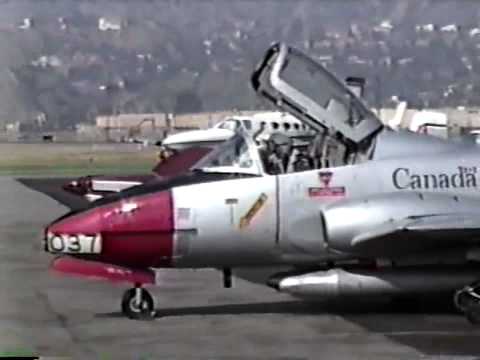
The first aircraft arrived in 1963, and official entry into RCAF service is dated 29 October of that year. Flying training on the Tutor began in late 1964, and the bulk of the fleet gathered at CFB Moose Jaw in Saskatchewan, with heavy use also by the Central Flying School at CFB Winnipeg, Manitoba. 2 Canadian Forces Flying Training School operated the type from 1964 to 1999.
Three decades in the training role
The Tutor served as a primary training platform for more than thirty years. In 1976 the Canadian Armed Forces had 113 of the surviving aircraft fitted with upgraded avionics and provision for a pair of belly-mounted external tanks of 41 US gallons (155 litres). By 1998 around 120 examples were still in regular service. The mass retirement came in 2000: by then the fleet had flown more than 1,000,000 hours in nearly forty years, and the training task was divided between the CT-155 Hawk and the CT-156 Harvard II, an arrangement that lasted until the Hawk fleet was retired in 2024.
A small number of aircraft kept flying afterwards, both for experimental work with the Aerospace Engineering Test Establishment at CFB Cold Lake, Alberta, and for aerial display. By 2019 there were 24 examples registered as in service with the RCAF.
From the Golden Centennaires to the Snowbirds
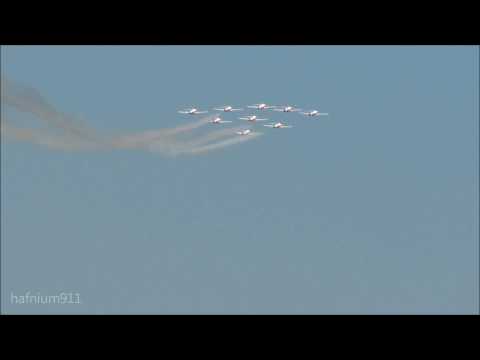
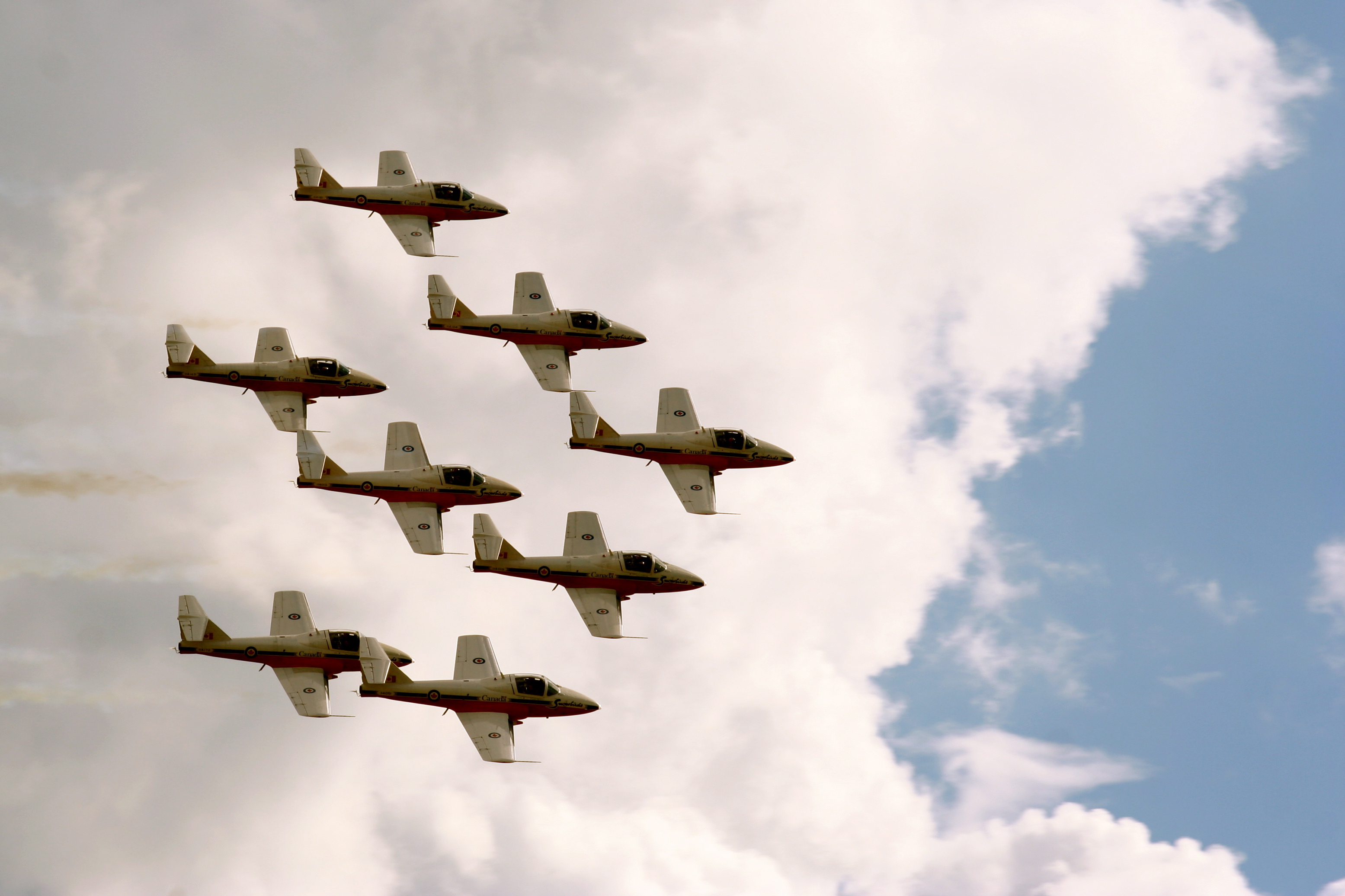
In 1967, for the centennial of Canadian Confederation, ten Tutors were modified for the RCAF's formation aerobatic team, the Golden Centennaires, which appeared among other venues at the world fair held in Montreal. The team disbanded at the end of the season and its aircraft returned to routine training. In 1971 a new formation team was created at 2CFFTS in Moose Jaw and again adopted the type; the name "Snowbirds" came out of a naming contest involving schoolchildren in Moose Jaw, and in 1978 the team received squadron status as 431 Air Demonstration Squadron, an outfit whose lineage goes back to a wartime unit formed in 1942.
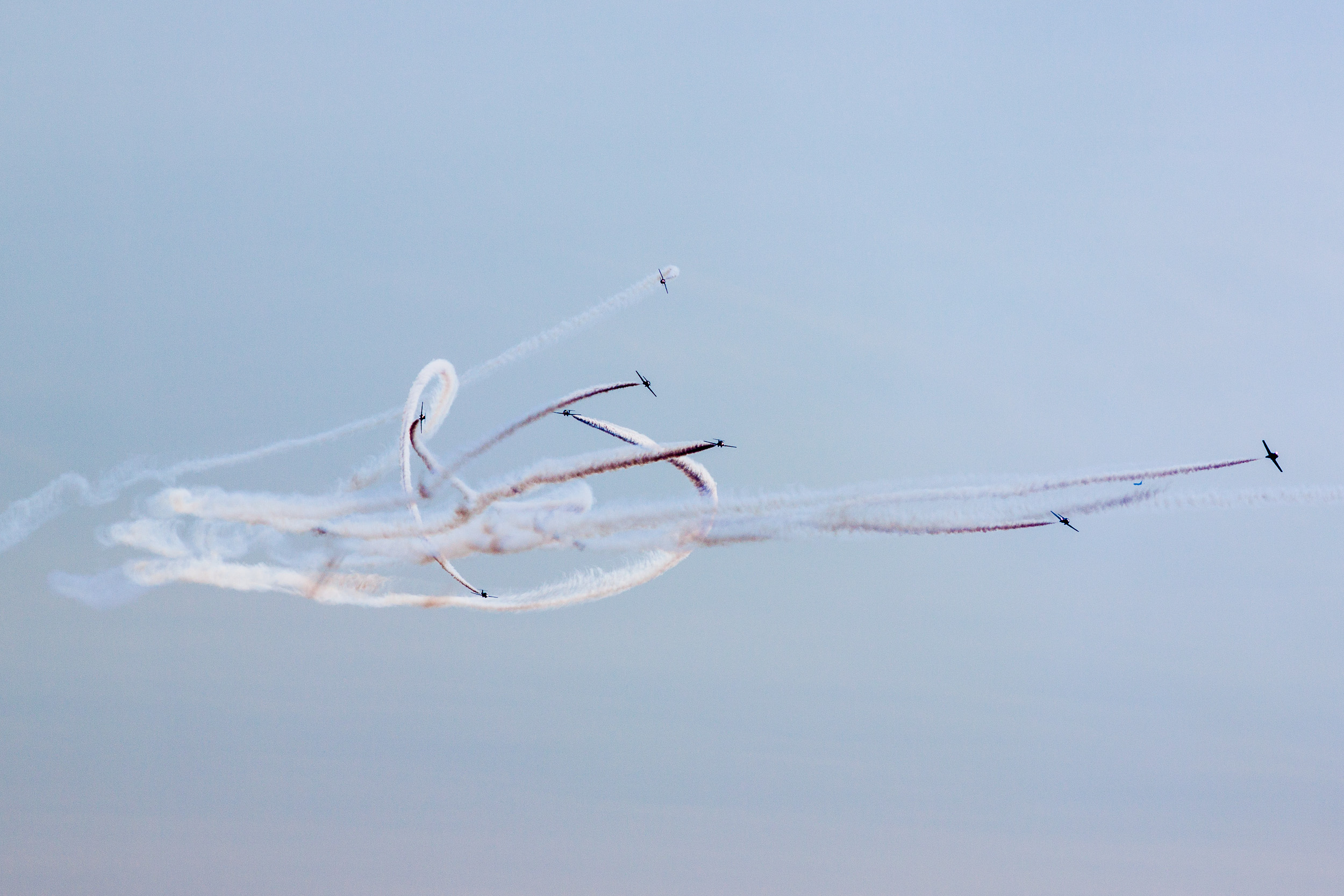
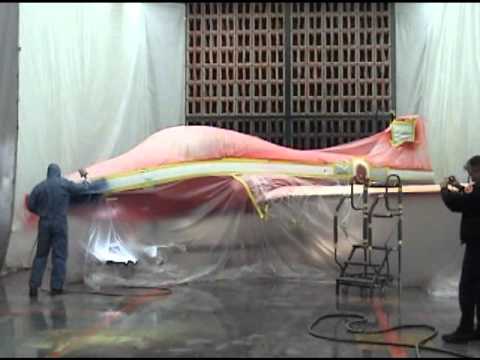
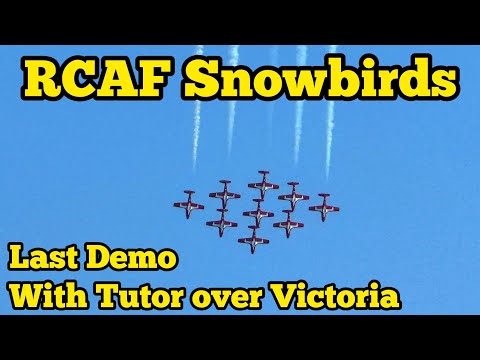
The Snowbirds have since flown at air shows and special events, including the annual Canada Day flypast over Ottawa. Journalist Guy Norris identifies the physically demanding formation flying and locally devised manoeuvres such as the "Big Goose" as defining traits of the team. Unlike most display teams, the Snowbirds have no support aircraft: spares and useful material are carried in stowage areas in the nose and wing root of the Tutors themselves. Their aircraft carry a smoke system, an instantly recognisable paint scheme and an engine tuned for sharper response in low-level flight; pilots also flew with an above-average amount of nose-down trim so that pushing the stick forward became unnecessary. Airframes were cycled regularly with training aircraft so the team always flew examples with comparatively low accumulated hours.
Marking its 55th anniversary in 2026, the squadron counted nearly 2900 official shows and more than 1000 flypasts before an estimated audience of over 150 million people, across every region of Canada and much of the continental United States, including a 1993 appearance in Guadalajara, Mexico. During the pandemic the team toured the country as Operation Inspiration, paying tribute to healthcare workers and other front-line staff.
Safety: the team's accidents
The Tutor's career also brought losses. By Global News's count, nine members of the Snowbirds have died in accidents since 1972. The list includes Captain Lloyd Waterer, killed during an air show at Trenton, Ontario, in 1972; Captain Gordon de Jong, at Grande Prairie, Alberta, in 1978; Captain Shane Antaya, at the Canadian National Exhibition in Toronto in 1989; Captain Michael VandenBos, on a training mission at Moose Jaw in December 1998; Captain Miles Selby, at Mossbank, Saskatchewan, in December 2004; Captain Shawn McCaughey, on 18 May 2007 at an air base in Montana; and Captain Bryan Mitchell together with Sergeant Charles Senecal, killed on 9 October 2008 during a dissimilar formation photo flight at Moose Jaw. In October 2019 a pilot was forced to eject at the Atlanta Air Show; his aircraft came down in an unpopulated area and he escaped without injury.
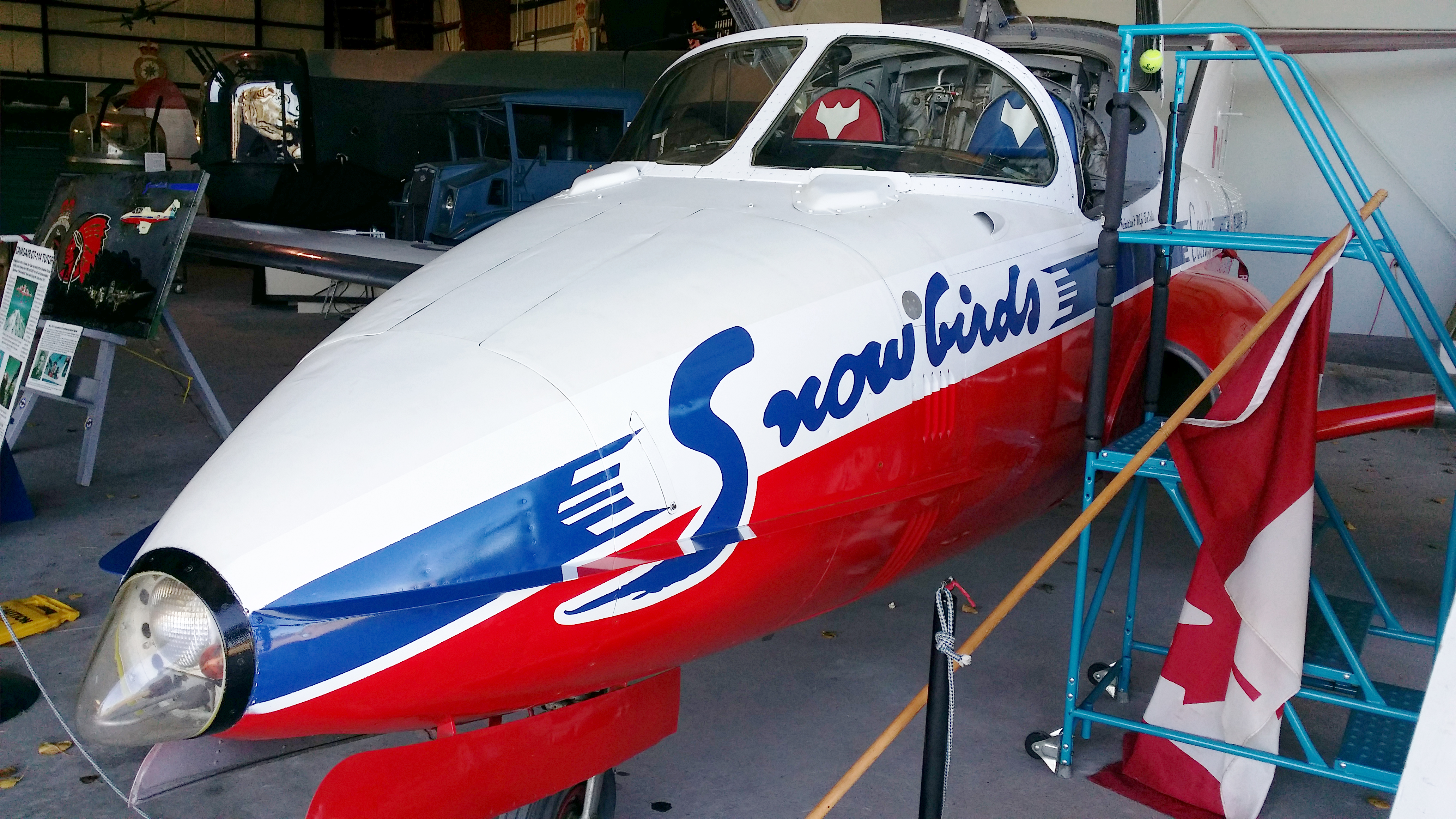
The best-known accident occurred on 17 May 2020 at Kamloops, British Columbia, during Operation Inspiration. Captain Jennifer Casey was killed and the pilot seriously injured after ejecting. The investigation, which took close to a year, concluded that an engine stall caused by a bird strike was responsible; both occupants attempted to eject, but Casey's seat did not function properly, and because the crash happened shortly after take-off the aircraft was low and the pilot had no time to regain control. The report recommended more extensive training for flying near residential areas, flight recorders able to survive a crash, and a more stable ejection system.
The Malaysian Tebuan and the experimental CL-41R
Canadair also developed an armament training and light attack version, the CL-41G, with an uprated engine and underwing hard points able to carry up to 4,000 lb (1,814 kg) of weapons and drop tanks. In March 1966 the Royal Malaysian Air Force ordered twenty CL-41G-5 Tebuan aircraft for counter-insurgency work. The type entered Malaysian service in 1967 and flew there for more than twenty years with 6 and 9 Squadrons, the last being withdrawn in June 1986 and replaced by the Italian Aermacchi MB-339A; most of the fleet was then kept in local storage for over a decade.
There was also an experimental variant, the CL-41R, fitted with the nose of an F-104 Starfighter as a proposed electronic systems trainer for future Canadian CF-104 pilots. A single airframe, CF-LTX-X, was built to demonstrate the concept; it attracted no orders and never entered production. As of August 2019 it was awaiting restoration at the Reynolds-Alberta Museum.
Retirement, replacement and survivors
After the training era ended, a smaller group of eleven Tutors was kept for the Snowbirds. The aircraft was officially and fully retired in August 2026, after roughly sixty years of service. In its message for the 2026 season, the command team of 431 Squadron set out the reasons: time had made the aircraft increasingly challenging to maintain, and the air force it serves today is faster and more technologically sophisticated than the one it was designed to support. In May 2026 Canada announced the procurement of the CT-157 Siskin II, the Pilatus PC-21, for the team, expected to be operational in the early 2030s, with the squadron standing down temporarily in 2027.
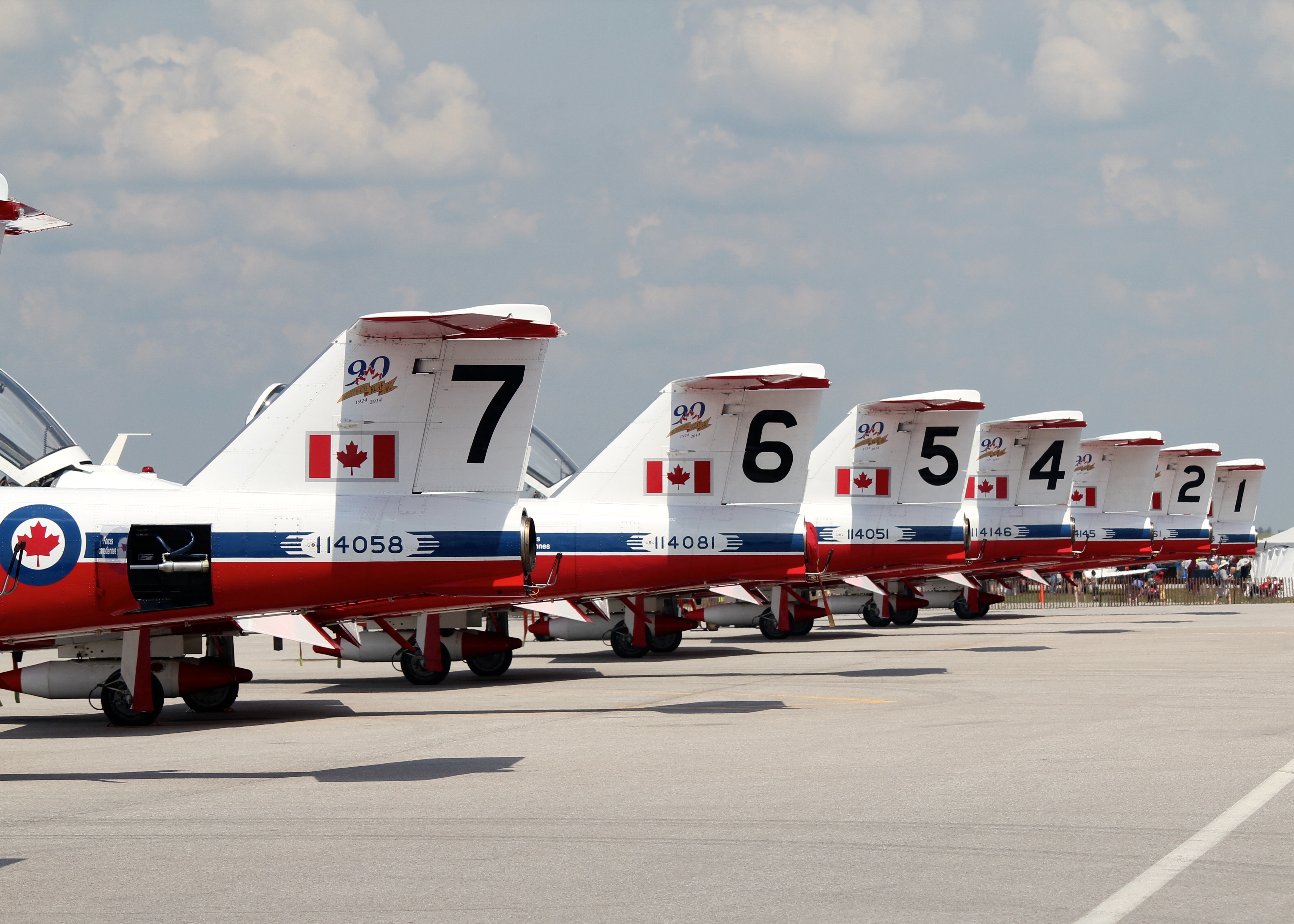
Many examples survive across Canada. The Canada Aviation and Space Museum holds 114108, built in 1963, which served as an RCAF trainer before passing to the Snowbirds; the number 10 on its fin marks a formation slot flown only when another aircraft was under repair, and the Canadian Forces donated it to the museum in 1999. The Canadian Warplane Heritage Museum displays 114038, which entered service in 1965, spent most of its career at Moose Jaw and was acquired from the Department of National Defence in September 2005. The Bomber Command Museum of Canada at Nanton preserves 114177, built in 1966, which flew ten seasons with the Snowbirds in the number 3, 4, 6, 9 and 10 positions and made its last flight to CFB Trenton on 27 July 1999. Outside Canada, in 2001 the actor John Travolta gave a CL-41G to Embry-Riddle Aeronautical University in Daytona Beach; as of August 2011 three CL-41Gs and one CT-114 appeared on the US civil registry.
Variants
| CL-41 | CL-41A / CT-114 Tutor | CL-41G-5 Tebuan | CL-41R | CT-114 Tutor (Snowbirds) | |
|---|---|---|---|---|---|
| First flight | January 13, 1960 | January 13, 1960 | — | — | — |
| Aircraft type | Jet trainer prototype | Two-seat jet trainer | Armed trainer and light attack aircraft | Experimental electronic systems demonstrator | Aerial display configuration |
| Powerplant | One turbojet. Test airframe number 000 went through a number of re-designs and through several engine variants over the course of the trials programme. | One Orenda J85-CAN-40 turbojet, built under licence from General Electric, rated at 11.8 kN of thrust. | One turbojet, uprated with respect to the standard trainer; the sources consulted do not state its exact designation. | One turbojet, inherited from the CF-LTX-X prototype airframe on which the conversion was made. | One Orenda J85-CAN-40 turbojet, highly tuned for greater responsiveness during low-level flying. |
| Powerplant | 1 × turbojet | 1 × Orenda J85-CAN-40 | 1 × turbojet | 1 × turbojet | 1 × Orenda J85-CAN-40 |
| Thrust per engine | — | 11.8 kN | — | — | — |
| Length | 9.8 m Best value in this row | 9.8 m Best value in this row | — | — | 9.8 m Best value in this row |
| Wingspan | 11.1 m Best value in this row | 11.1 m | — | — | 11.1 m |
| Height | 2.8 m | 2.9 m Best value in this row | — | — | 2.9 m Best value in this row |
| Wing area | — | 20 m² Best value in this row | — | — | 20 m² Best value in this row |
| Empty weight | — | 2,195 kg | — | — | — |
| MTOW | 3,335 kg | 4,990 kg Best value in this row | — | — | — |
| Top speed | 782 km/h Best value in this row | 782 km/h Best value in this row | — | — | — |
| Service ceiling | — | 13,600 m | — | — | — |
| Initial climb rate | — | 21.4 m/s | — | — | — |
| Range | — | 1,519 km | — | — | — |
| Range conditions | — | Range of 1,519 km. From 1976, 113 aircraft received provision for a pair of belly tanks of 41 US gallons (155 litres). | — | — | — |
| Armament | None: the prototypes were used for the company engineering and testing programme. | Two hardpoints under the fuselage, able to carry armament or external fuel tanks. | Underwing hardpoints for up to 1,814 kg of weapons and drop tanks. | None: the aircraft was built to demonstrate the use of CF-104 and F-104G radar and avionics, not for combat. | None. In place of weapons the aircraft carry a smoke generating system and their own spares in the nose and wing root. |
| Max weapons load | — | — | 1,814 kg | — | — |
| Crew | 2 Best value in this row | 2 Best value in this row | 2 Best value in this row | — | 2 Best value in this row |
| Passengers | 0 Best value in this row | 0 Best value in this row | 0 Best value in this row | — | 0 Best value in this row |
| Units built | 2 | 190 Best value in this row | 20 | 1 | — |
Images
Elsewhere
- JetPhotosCanadair CT-114 Tutor 114131, RCAF ↗
- JetPhotosCanadair CT-114 Tutor, RCAF ↗
- JetPhotosCanadair CT-114 Tutor 114141, RCAF ↗
- Airliners.netCanadair CT-114 Tutor (CL-41A), Canada Air Force ↗
- Airliners.netCanadair CT-114 Tutor (CL-41A), Canada Air Force ↗
- Airliners.netCanadair CT-114 Tutor (CL-41A), Canada Air Force ↗
- Planespotters.net114141 Royal Canadian Air Force Canadair CT-114 Tutor ↗
- Planespotters.net114038 Canadian Armed Forces Canadair CT-114 Tutor (CL-41A) ↗
- ABPicCanadair CT-114 Tutor, 114071 / 1071, Canadian Armed Forces ↗
- FlickrCanadair CT-114 Tutor 114161 of the Canadian Armed Forces ↗
- FlickrCanadair CT-114 Tutor, Snowbirds aerobatics display team ↗
- FlickrCanadair CT-114 Tutor 114141, Snowbirds ↗







![THE SNOWBIRDS Visit Calgary! Nine Canadair CT-114 Tutors at YYC [4K]](https://i.ytimg.com/vi/CoKrN8D88pE/hqdefault.jpg)