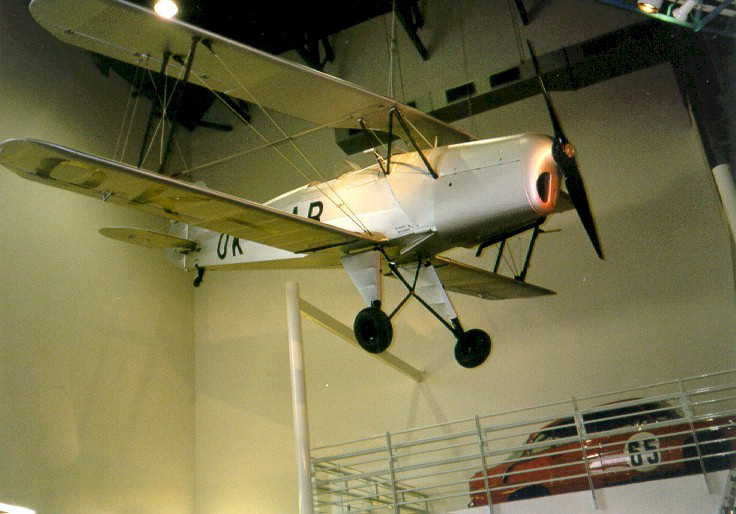
Bücker Bü 131 Jungmann variant
Bücker Bü 131 Jungmann Tatra T.131
Jungmann built under licence by Ringhoffer-Tatra at Studénka between 1936 and 1939: the first production aircraft of Tatra's brief aviation venture, registered OK-TAB to OK-TAM, with the run finished under German occupation.

- October 5, 1936
- First flight
History
The Tatra T.131 was the Czechoslovak version of the Bücker Bü 131 Jungmann built under licence before the Second World War by the Ringhoffer-Tatra group, and the first production aircraft of the short-lived aviation venture of the car, truck and railway-carriage maker.
It grew out of the economic crisis of the early 1930s, which pushed the Ringhoffer management to look for additional work for its Studénka and Kopřivnice plants. According to the Studénka Railway Carriage Museum, in June 1934 the Ministry of Trade authorised the Moravskoslezská vozovka, the Studénka carriage works, to build, repair and trade in aircraft and engines. Kopřivnice was assigned the engines; at Studénka a new assembly hall for airframes, a hangar and a 25-hectare grass airfield were built. At the end of 1934 Tatra hired engineer Karel Tomáš from Letov as chief designer and the former military airman Vojtěch Matěna as chief pilot. The aviation department officially began work on 1 July 1935.

To get going quickly, the company chose to buy licences for proven foreign types whose simple construction allowed new workers to be trained fast: the Jungmann for basic and aerobatic training, and the Avro 626 Prefect (Tatra T-126) for advanced military training. The date of the Jungmann licence differs between sources: the Czech Wikipedia gives 1935 and the German one 1937. In April 1936 Matěna ferried the pattern aircraft from Germany, a Bü 131 A-2 with works number 37 and registration OK-TAA.
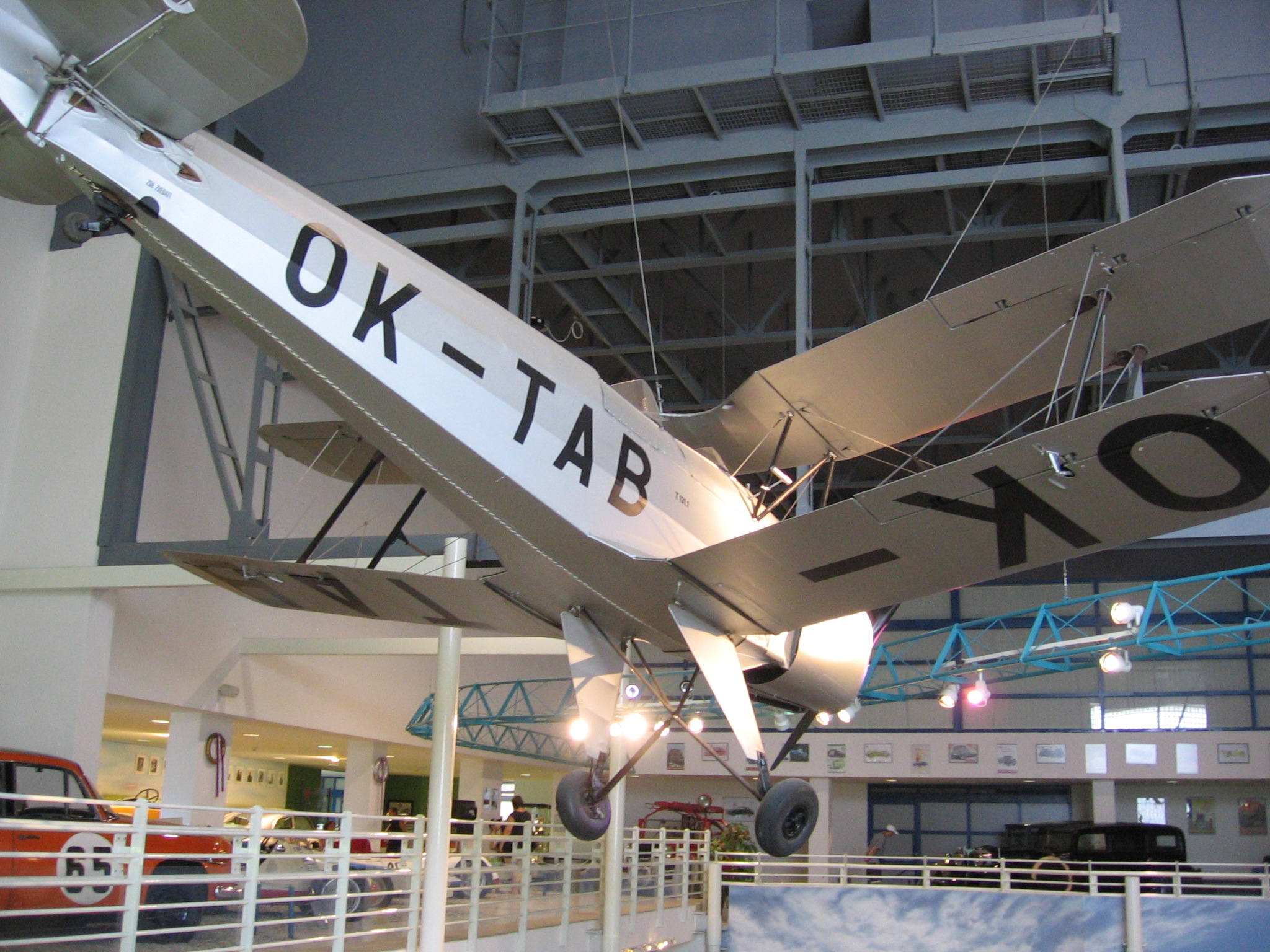
From July 1936 Ringhoffer-Tatra modified the Bü 131 for inverted flight and fitted dual controls. The engine is the main point on which sources disagree: according to vrtulnik.cz it was the Tatra T 100, a 72 kW inverted air-cooled four-cylinder inline built at Kopřivnice under licence from the Hirth HM 504 A 2, driving a wooden propeller of Tatra's own make sheathed in brass; the German Wikipedia instead gives the 105 hp Walter Minor 4-II. The prototype T 131.1, registered OK-TAB, first flew on 5 October 1936 with Matěna at the controls.
On an order from the Ministry of National Defence, a series of ten T 131s registered OK-TAC to OK-TAM was built between October 1936 and July 1937. The register reconstructed by vrtulnik.cz shows them entered between December 1937 and August 1938 and spread among the groups of the MLL air league at Piešťany, Olomouc and Prague, plus two with the ÚLŠ school in Prague. The Air Britain Digest reads it differently: a private venture by Tatra that the Czechoslovak Air Force did not select, whose aircraft ended up with the state aero clubs. A second order for 25 aircraft followed, of which only five were completed before the Munich crisis.
In the autumn of 1938 the Czechoslovak army evacuated the aviation department to Vsetín by truck and rail, airworthy aircraft were flown to Olomouc and Tomáš left for Otrokovice. On Monday 10 October 1938 Studénka became part of the Sudetenland; because the rush had left no time to dismantle the shop, with part-built T-131 components and machine tools still in place, the German authorities ordered the order to be completed. According to the Railway Carriage Museum, of the 35 T-131s built, 20 were completed under the occupation and the last were handed over in April 1939. The workshop closed on 23 May 1939; its machinery and documentation went to the Aero factory in Prague, which built the Bü 131D-2 there for the Luftwaffe until September 1940.
The total is still disputed. The English Wikipedia counts 11 aircraft (one prototype and ten production machines) finished before the occupation; the German one estimates around 16, since of 35 ordered eleven are known to have been registered and five more never were; the Air Britain Digest quotes 10 or 35 depending on the source; the Railway Carriage Museum and the Czech Wikipedia speak of 35 built at Studénka. The census therefore sets no figure.
The T-131 experience underpinned Tatra's own designs (T-001, T-101, T-201 and T-301), which reused elements of its fuselage and airframe; the T-001 prototype already outperformed the production T-131 in speed and climb. Today a post-war Aero C-104, registered OK-AXM, is preserved at the Tatra factory painted to represent the first example, OK-TAB.
Multimedia