Bücker Bü 131 Jungmann variant
Bücker Bü 131 Jungmann Aero C-104
The post-war Czechoslovak Jungmann: 260 aircraft built by Aero in Prague between 1946 and 1949 with the domestic Walter Minor 4-III engine, which trained military and civil pilots, towed gliders and set national records with Svazarm.

- 260
- Units built
History
The Aero C-104 grew out of a production line inherited from the occupation. In the spring of 1939, with the Czech lands occupied by Nazi Germany, licence production of the Jungmann at Tatra was stopped after the 35th aircraft and moved to the Aero factory, then located in Prague, to build Bü 131D-2s for the Luftwaffe. According to the Czech Wikipedia, some 24 aircraft a month left the plant until September 1940; the Air Britain Digest puts the number of Jungmanns built by Aero in Prague at around 300.
When the Second World War ended, it was decided to continue production to train Czechoslovakia's military and civil pilots. The first post-war aircraft, designated Aero C-4, kept the German Hirth engine (that is a separate variant, and the sources disagree on how many were completed). The Hirth was then replaced by the domestic Walter Minor 4-III, a four-cylinder engine of 77.3 kW (105 hp), driving a two-bladed wooden Aero propeller, and aircraft so fitted were designated Aero C-104. They were built between 1946 and 1949, 260 in all, the figure given by the Czech and English Wikipedias, the German Wikipedia's variant list, the Air Britain Digest and the TMFC foundation; the German Wikipedia's production paragraph gives 248 instead.
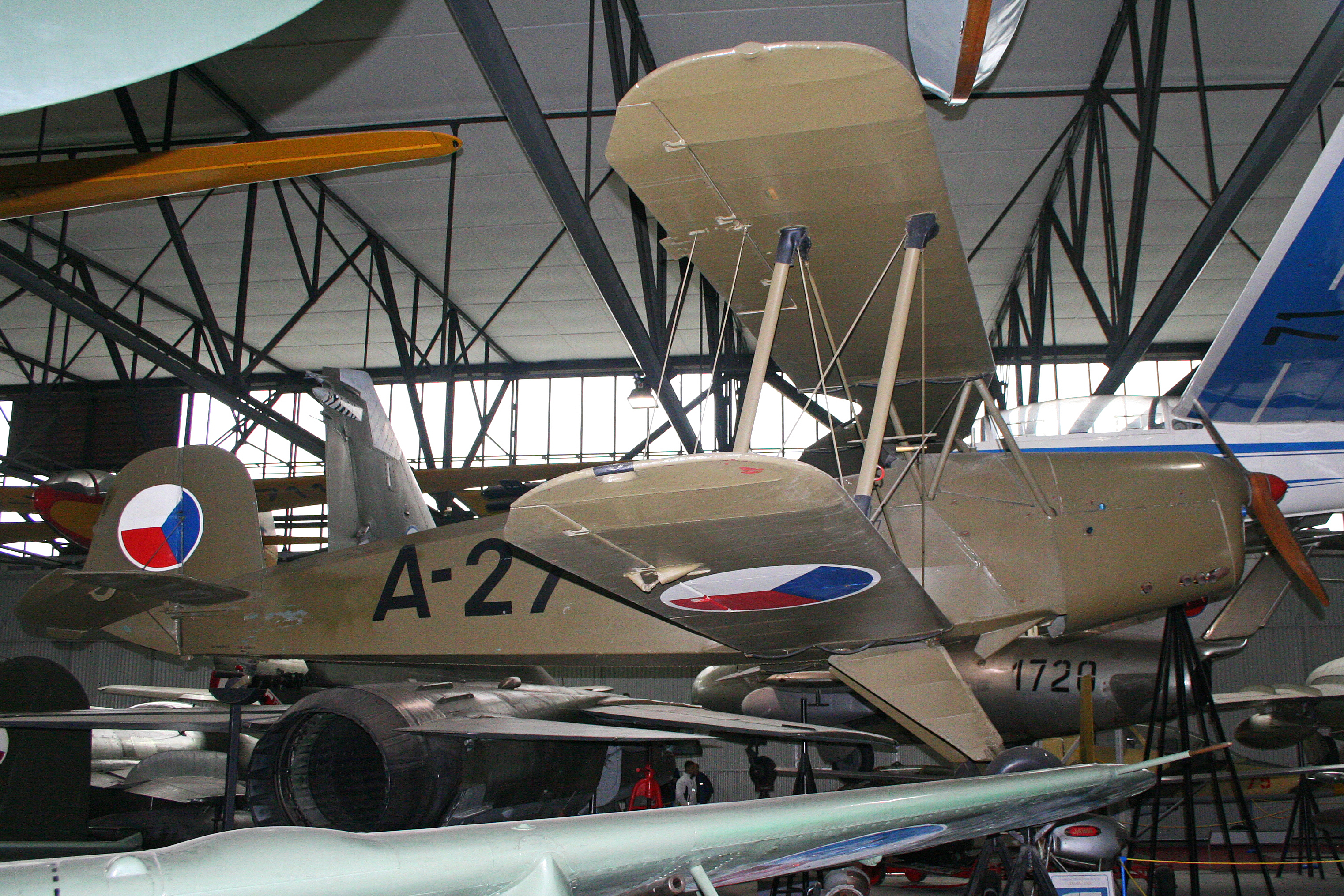
The technical data published by the TMFC foundation for its C-104 give a wingspan of 7.4 m, a length of 6.76 m, an empty weight of 390 kg and a take-off weight of 680 kg, with a maximum speed of 185 km/h, a service ceiling of 4300 m and a range of 650 km. During its restoration it was established that post-war C-104s left the factory painted in RLM 02, because Aero kept using wartime German paint stocks until 1948, with insignia and tactical markings in the Czechoslovak colours Avion 1810, 2323 and 4550.
The C-4 and above all the C-104 first equipped the Czechoslovak military air force for basic and continuation pilot training, including at the Military Air Academy in Hradec Králové. From 1947 civil aviation received aircraft too, and the air units of the SNB, the state security corps, also used them for training flights. In the 1950s the C-104 was phased out of military service and handed to the aero clubs, and the last examples left the Svazarm clubs, the paramilitary air-sports organisation, in 1964. Overhauls and repairs were carried out first by the manufacturer, then by the aircraft repair works at Kbely and, from April 1952, by the Kunovice works.
The post-war growth of gliding created a need for tug aircraft, and in 1949 it was decided to adapt the C-104 as well. In 1950 the aeronautical research institute at Letňany began testing C-104.216 (OK-BIL), fitted with a ground-adjustable metal Walter propeller and towing gear. Cooling the fully loaded engine required extra air intakes in the cowling, and the tug C-104s carried an oil cooler on the left side of the engine cover.
Svazarm pilots set a number of national and international records in category C-1-a with the C-104. On 17 June 1960 Helena Rumlerová reached an altitude of 5655 m after taking off from Jihlava. On 7 October 1960 Jiří Stoklasa flew a 3 km course near Brno at an average of 171 km/h; three days later he averaged 185 km/h over the 20 km between Podolí and Vyškov, and on 12 October he reached 194 km/h over 3 km. Further gains needed more power: the Prague municipal Svazarm aero club at Kladno airfield installed a 103 kW M-332 engine in C-104 OK-AQR, lightened as far as possible. On 11 September 1961 Karel Jareš and then Eva Leignerová both reached 216 km/h with it over 3 km and 15/20 km; two days later Jareš climbed to 6340 m over Panenský Týnec, improving to 7190 m on 15 September, and on 5 October Leignerová flew a 100 km closed circuit at 207 km/h. In 1962 Karel Valášek, an instructor at the Svazarm Central Gliding School in Vrchlabí, lightened C-104 OK-AXF with Ladislav Vobořil, faired over the front cockpit and enclosed the rear one; on 19 October 1962 he flew five laps of the Vrchlabí-Hodkovice-Jičín triangle in 3 h 21 min 55 s, averaging 150 km/h.
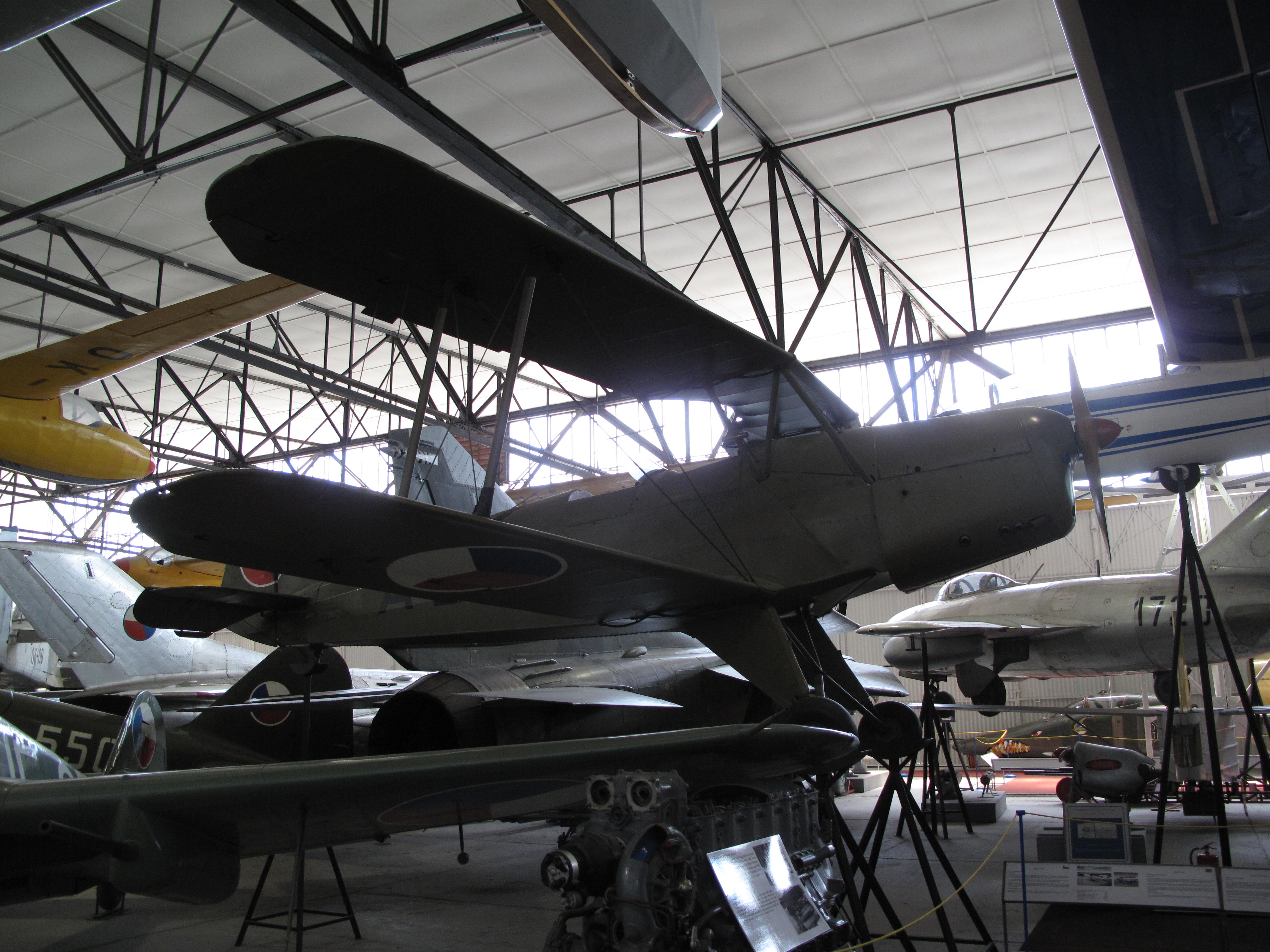
According to the Air Britain Digest, in 1959-1960 a number of C-104s were sold to customers in Switzerland, Austria and West Germany, and in the United States some Czech- and Spanish-built Jungmanns were later re-engined with Lycoming engines.
One of the best-documented survivors is serial number 237, built in 1947 at Aero's Prague-Vysočany factory and taken over by the Ministry of Defence. After its military service it went in 1954 to the Ústí nad Labem aero club as OK-AXT, flying there until 6 August 1965; it then moved to the Raná aero club and on 29 April 1968 entered the collections of the Kbely aviation museum, which kept it in storage without displaying it. On 16 January 1985 it was lent to the Czechoslovak national aerobatic team at Moravská Třebová, which returned it to flying condition: it flew again on 25 May 1986 as OK-RXE. Its last flight in those colours was on 1 April 2021, with 630 h 56 min and 1473 take-offs logged. It still belongs to the Military History Institute Prague and is operated by the TMFC family foundation, which paid for a complete overhaul and painted it as an aircraft of the Hradec Králové academy; after flying on 18 May 2023 it is based at Prague-Točná airfield.
Multimedia


