Spain · 1923–
CASA
Construcciones Aeronáuticas S.A. (CASA) was the Spanish aircraft manufacturer founded by José Ortiz Echagüe on 3 March 1923, and for most of the twentieth century the driving company of Spain's aerospace sector. It began building aircraft the following year at Getafe under French licence and ended up a founding partner of the European consortium from which Airbus grew. Its speciality was light and medium military transport: the C-212 Aviocar, the CN-235 and the C-295 are in-house designs with hundreds of examples serving in dozens of countries, alongside the C-101 Aviojet trainer and light attack aircraft. Before that period CASA was above all a licence house — Breguet, Dornier, Vickers, Polikarpov, Gotha, Bücker, Junkers, Heinkel, Northrop — which is why so many historic aircraft of other marques were actually built at Getafe, Cádiz or Seville. The Spanish state took a stake in 1943 and controlled almost the whole company by 1992. In 1999 CASA joined the European EADS group as EADS-CASA, in 2009 its military transport aircraft division was absorbed into Airbus Military, and since 24 July 2014 the company has been called Airbus Defence and Space S.A.U., a wholly owned Airbus subsidiary based in Getafe.
CASA in the news

The French Air and Space Force conducted, between September 23 and October 2, 2026, an exercise that brought three Dassault Rafale fighters and two CASA CN235 transport aircraft to airports…

Australia’s Civil Aviation Safety Authority (CASA) will continue its broad-area beyond visual line-of-sight (BVLOS) drone trial while developing a long-term approach to these operations. Following…
.jpg)
The French Air and Space Force operated three Rafale fighters and two CASA CN235 transport aircraft from two… The post France tests how Rafale fighters can keep flying from civilian airports…
At last Starship S40 (Ship 40) is home, that is, Starbase (Texas). The S40, the second v3-version Starship, lifted off this past July 24 […] The post A Starship in the…
Plane Support can now use additive manufacturing to produce cabin air conditioning ducting components for the 214B (B-1) helicopter.


-1600.webp)

History
Getafe, Cádiz and the French licences
CASA was constituted in March 1923 and began work in May 1924, when the Getafe factory opened to build Breguet aircraft under licence; the first order covered 26 Breguet 19 A.2s and total production of the type reached 400. In 1926 it built a second plant at Cádiz to make the German Dornier Do J Wal flying boat: seventeen for the Spanish military air arm, twelve for naval aviation and two for commercial use. In 1929 it presented the CASA-1, the first aeroplane designed in house, and in 1930 King Alfonso XIII visited the main factory. The Getafe lines also produced two Breguet XIX aircraft modified for long-distance flights that became famous: the Jesús del Gran Poder, which in 1929 flew from Seville to Bahia covering 6746 kilometres in 43 hours and 50 minutes with captains Ignacio Jiménez and Francisco Iglesias at the controls, now preserved at the Cuatro Vientos air museum, and the Cuatro Vientos, which in 1933 took Mariano Barberán and Joaquín Collar to Havana. In 1932 the firm obtained a Vickers licence for 25 Vildebeest torpedo bombers with Hispano engines.
Civil war and German licences
The Civil War left the Getafe works in the Republican zone; production was moved out of Madrid and another plant was opened at Sabadell, returning to Getafe when the conflict ended. In those years CASA built the Soviet Polikarpov I-15 biplane fighter, completing 287 of them. After the war it opened a new factory at Tablada, in Seville, with German licences: 25 Gotha Go 145As as the CASA 1.145, 25 Bücker Bü 133s as the CASA 1.133 and 555 Bücker Bü 131s as the CASA 1.131, whose production ran until the late fifties. In 1940 it began licence manufacture of 200 Heinkel He 111 bombers, designated CASA 2.111 and fitted with imported Rolls-Royce Merlin engines; decades later those Spanish machines stood in for Luftwaffe He 111s on film.
The state as shareholder, own designs and American contracts
From 1943 the Spanish state began investing in the company with a 33 % stake, which it enlarged until it controlled 99.2 % by 1992. In 1945 it opened a factory in Madrid for parts and sub-assemblies, working until 1982, and in 1946 it re-established the projects office to design aircraft with its own technology again: the firm had become a builder of other people's licences with no design capacity, and that decision reversed the trend. Maintenance was the other leg of the business: in 1957 it won the contract to support the American F-100 Super Sabres deployed in Europe and Turkey — a programme that raised its technical standing — along with overhaul of the Spanish Air Force's T-33s, and in 1962 it started licence production of the Northrop F-5A fighter. In 1971 it absorbed Hispano Aviación, becoming the country's leading aerospace company, and in December 1972 it did the same with the national aero-engine company. The projects office produced the C-201 Alcotán, C-202 Halcón and C-207 Azor transports and, above all, the C-212 Aviocar and its successors the CN-235 and C-295; in 1977 it was awarded the contract to design and build the C-101 trainer and attack aircraft.
Airbus, EADS and the present name
In 1972 CASA joined the Airbus consortium as a full member alongside France, Germany and the United Kingdom, and in 1996 it entered the Eurofighter programme. In 1999 it became part of EADS with France's Aérospatiale-Matra and Germany's Dornier GmbH and DASA, the Spanish branch taking the name EADS-CASA; the European group was formally constituted in July 2000. In July 2001 one of the four Eurofighter Typhoon final assembly lines started up at Getafe — the other three in the United Kingdom, Germany and Italy — with the right wing of every production aircraft built in Spain and the assembly of the Spanish Air Force's 87 aeroplanes, the first delivery arriving in the second half of 2002. Airbus Military was formally created in April 2009 by integrating EADS CASA's military transport aircraft division, which then employed around 7500 people; with the C-212, CN-235 and C-295 the group became the world leader in light and medium military transport, with some 650 aircraft flying for more than a hundred operators. On 24 July 2014 the company adopted its present name, Airbus Defence and Space S.A.U., and in December 2022 it moved its registered office to Getafe, to the street named after the Aviocar.
_Ortiz_Echag%C3%BCe.jpg)
Catalog — Aircraft
- 1929
CASA III Sheet pending
- 1945
CASA 2.111 Sheet pending
Variants (6)
- 2.111A
- 2.111B
- 2.111C
- 2.111D
- 2.111E
- 2.111F
- 1949
CASA C-201 Alcotán Sheet pending
Variants (6)
- C-201A
- C-201B
- C-201D
- C-201E
- C-201F
- C-201G
- 1952
CASA C-202 Halcón Sheet pending
- 1955
CASA C-207 Azor Sheet pending
Variants (3)
- C-207A
- C-207B
- C-207C
- 1971
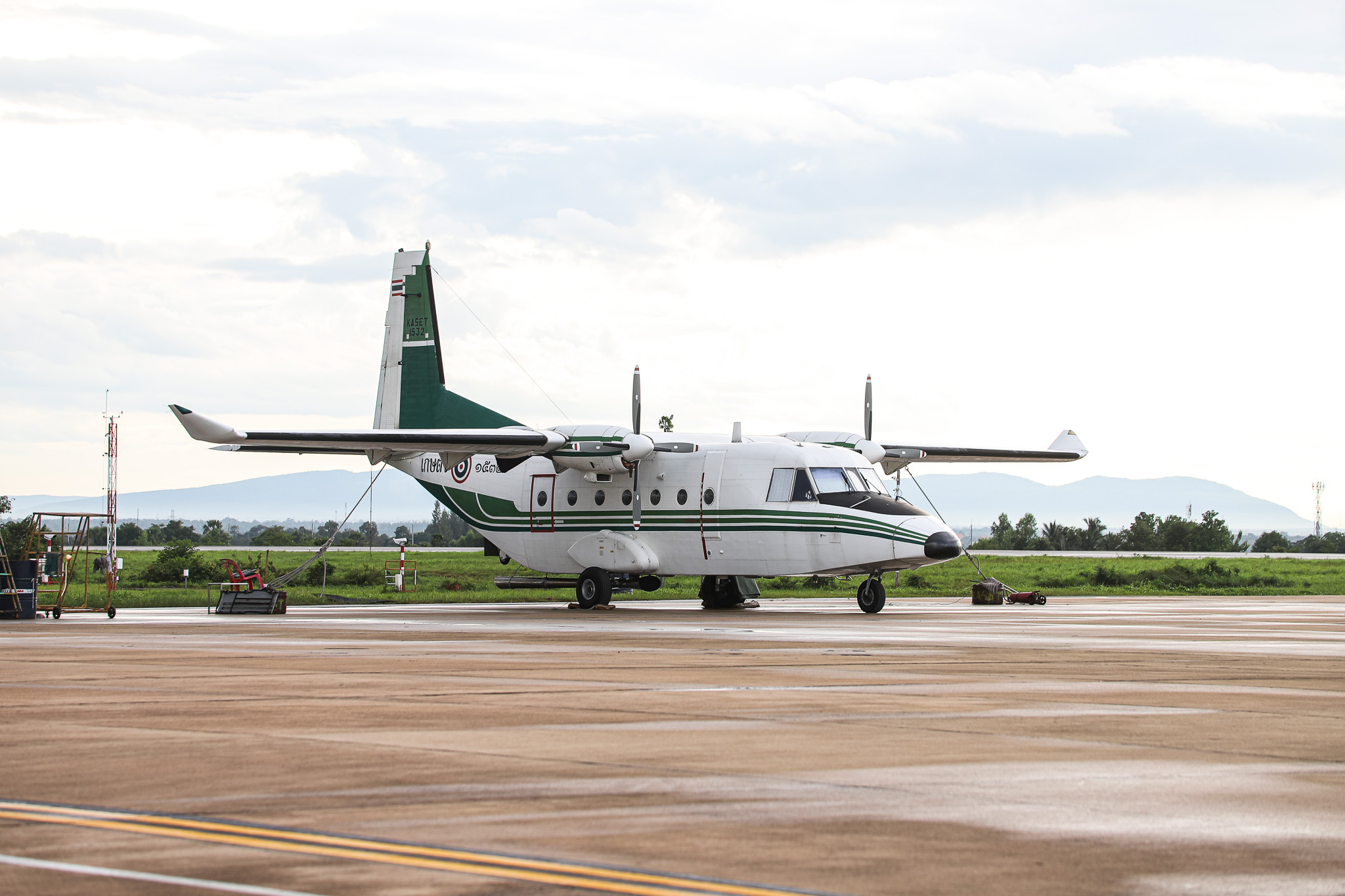
CASA C-212 Aviocar
The CASA C-212 Aviocar is a twin-turboprop light transport with short-field capability, conceived by the Spanish manufacturer CASA to serve military and civil operators alike. It first flew on 26 March 1971 and became the greatest commercial success of the Spanish aviation industry, with 485 aircraft completed in Spain and production later continuing under licence in Indonesia.
- 1977
CASA C-101 Aviojet Sheet pending
Variants (14)
- C-101BB
- C-101CC
- C-101DD
- C-101EB
- C-101EB (E-25 Mirlo)
- C-101ET
- C-101ET (ET-25)
- CASA C-101 Aviojet (E-25 «Mirlo»)
- P2
- P3
- P4
- T-36 Halcón
- XE-25-01…04 (P1-P4)
- XE-25-01 (P1)
- 1983
CASA/IPTN CN-235 Sheet pending
Variants (8)
- AC-235
- CN-235-10
- CN-235-100/110
- CN-235-200/220
- CN-235-300
- CN-235 ASW
- CN-235 MPA
- HC-144 Ocean Sentry




![ultimas imagenes del avion casa 212 rumbo a Juan Fernandez [recuperado]](https://i.ytimg.com/vi/qBzmPkGMwhw/hqdefault.jpg)