Bücker Bü 131 Jungmann variant
Bücker Bü 131 Jungmann CASA 1.131E
Spanish Jungmann version built by CASA with the domestic 125 hp ENMA Tigre G-IVA engine instead of the German Hirth; strengthened airframe, seven-rib rudder and electrical system. Spanish Air Force elementary trainer for decades.

- 400 km
- Range
History
The CASA 1.131E is the version of the Bücker Bü 131 Jungmann that Construcciones Aeronáuticas S.A. (CASA) built in Spain with a domestic engine. The first licence-built Spanish Jungmanns, designated CASA 1.131 by the manufacturer and E.3B by the Spanish Air Force, used the German Hirth HM 504 engine; the first Spanish-built Bücker flew on 14 March 1941. According to the history published by The Bücker Pages, CASA built 200 aircraft of that version, derived from the Bü 131-D2, and the obvious advantages of a Spanish engine led to the installation of the 125 hp (93 kW) ENMA Tigre G-IVA from the 201st aircraft onwards: these were the CASA 1.131Es. Defensa.com attributes the change to the lack of German engines: the aircraft were fitted with the Tigre G-IV A made by Elizalde, later ENMASA, and those built this way were designated CASA 1131E. The Fundación Aérea de la Comunidad Valenciana (FACV) gives the factory designations CASA C-1131H and C-1131E.
The Bücker Pages describe the 1.131E as an improved version of the Bü 131-D2: a reinforced airframe able to take more powerful engines; a stronger tail and empennage, with seven ribs in the rudder and a redesign allowing more abrupt landings; a more streamlined cowling; and an electrical system for a starter and other equipment. Defensa.com adds that externally it could be recognised by its sharper engine cowling, with the main intake on the left side, small side fairings and a tiny intake on top, and by its two-bladed wooden propeller with a small hub; the landing gear was improved to withstand harder landings and, overall, the gross weight rose from 670 to 720 kg. The Tigre was designed specifically for these aircraft and was offered in six versions of 125 and 150 hp; the latest could fly inverted and had a starter and generator. According to The Bücker Pages, all earlier aircraft still in service were brought up to the 1.131E standard.
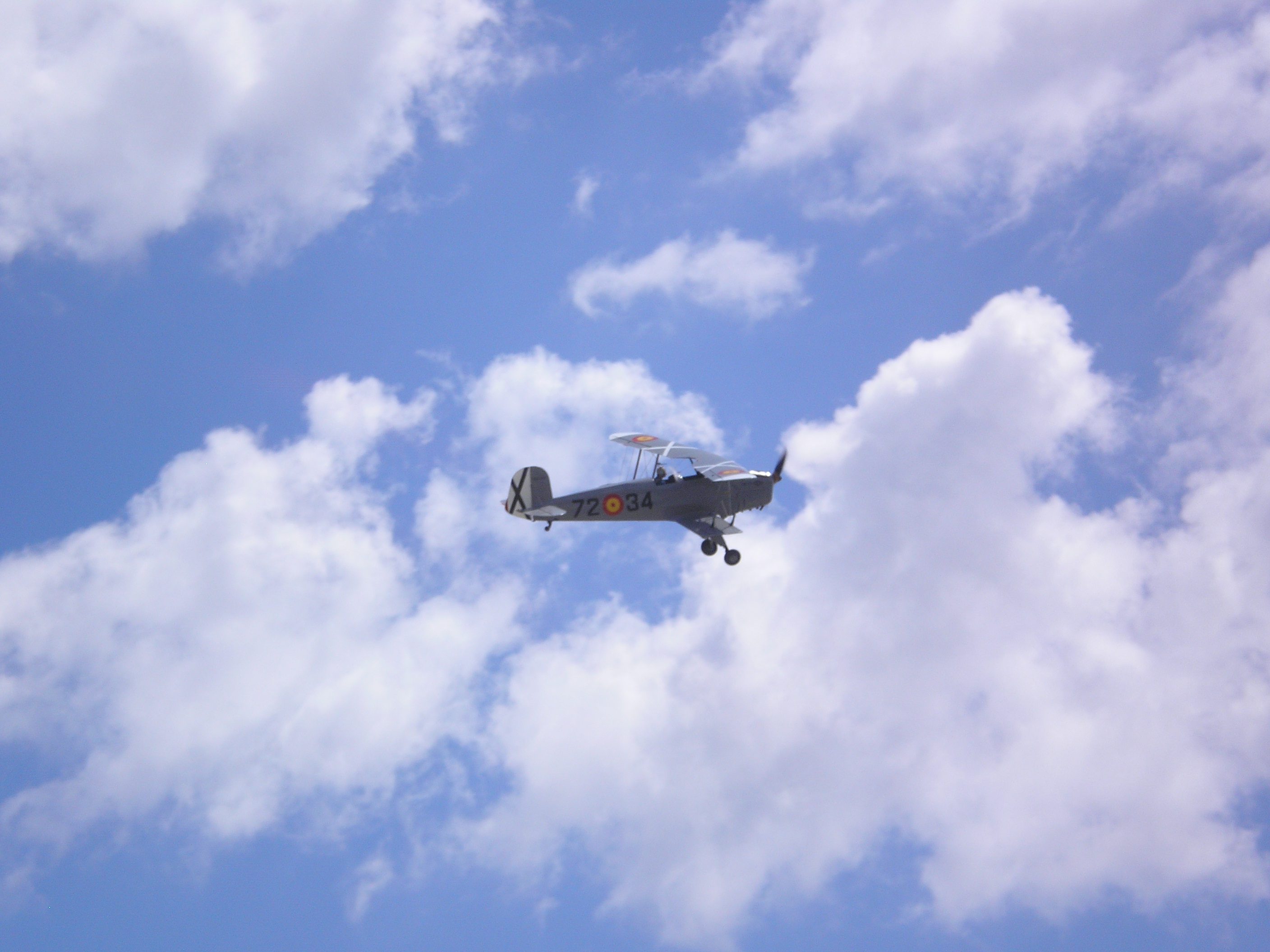
Production figures differ between sources. The Fundación Infante de Orleans (FIO) and the Spanish Wikipedia state that, after building 200 aircraft with the German engine, CASA began delivering Tigre-powered aircraft in 1950 and completed the orders in 1963, with 330 new aircraft built with the Spanish engine and another 30 converted from Hirth-powered airframes. Defensa.com details the orders: a batch of 100 with the Tigre was ordered in 1948, another 100 in 1950, a further 50 in 1955 and another 50 in 1959, with the last deliveries between 1960 and 1963; in addition, 30 of the early aircraft were re-engined with the Tigre. The German Wikipedia estimates about 300 with the Tigre, and The Bücker Pages puts the end of production in 1960. The FACV documents the final batch: 30 C-1131Es of the so-called 2000 series, delivered to the Spanish Air Force between July and December 1963 with the more powerful Tigre G-IV A5 and reinforced fuselages that increased empty weight and widened their aerobatic capability.
In Spanish Air Force service the Bückers returned to elementary training once modern equipment began to arrive after the agreements with the United States: at San Javier they trained future officers, at Granada reserve NCOs and at Burgos-Villafría, every summer, the students of the university air militia; many were also handed over to civilian flying clubs. The domestic AISA I-115 monoplane failed to replace them, and on 6 March 1976 all the Bückers at San Javier moved to Granada. Retirement dates do not agree either: the Spanish Wikipedia keeps the Jungmann as primary trainer until 1968; the FACV has it leaving the inventory from 1977; Defensa.com mentions a handful still airworthy in 1980 and final withdrawal in 1986; and The Bücker Pages puts the last withdrawal in 1988, the same year in which, according to Defensa.com, the last aircraft were sold.
The Tigre had supporters and critics. According to reports received by the Defensa.com author, its performance never matched the Hirth: it was made of poor-quality materials, was heavy, its parts wore out often, it lasted only 200 hours between overhauls and it barely delivered the power of the Hirth. The restorer De Prado argues instead that it was designed for Spain's needs at the time: a durable, reliable engine that was easy and cheap to maintain. In January 1986 there were 43 Jungmanns registered in Germany, 32 of them Spanish, and 88 per cent of those still had their original Tigre.
Many survive, although naming varies: the research team of Paco Rivas, Johnny Comstedt and Brian Karli groups as "CASA 1.131L" the airframes identified by their brass serial-number plate, and notes that only those converted from Hirth to Tigre carry two plates. In Spain the FACV flies EC-GIS, a 2000-series C-1131E that passed to Civil Aviation, was registered in 1995 and joined its collection in 2018; its data sheet gives a span of 7.40 m, length of 6.62 m, height of 2.25 m, empty weight of 450 kg, maximum weight of 720 kg, maximum speed of 200 km/h, climb rate of 192 m/min and a ceiling of 4,500 m. The FIO publishes the same basic figures for its Tigre-powered Jungmann rated at 125 hp (180 km/h cruise, 82 km/h minimum speed and a range of 400 km), and the De Prado workshop holds the drawings and manufacturing jigs for the CASA 1131-E.
Multimedia


Where to see it today
| Serial | Place | City | Country | Status |
|---|---|---|---|---|
| EC-ERP | Fundación Infante de Orleans | Madrid | Spain | Unconfirmed |
| EC-ERO | Fundación Infante de Orleans | Madrid | Spain | Airworthy |
List reviewed on October 29, 2026 against aerialvisuals.ca — EC-ERP, aerialvisuals.ca — EC-ERO, Wikipedia (ES): Fundación Infante de Orleans, AviationCorner.net — EC-ERO (14-06-2025).