Airliner · Civil · United Kingdom
Bristol Britannia
- August 16, 1952
- First flight
- 1957
- Introduced
- 1997
- Retired
- 85
- Units built


%2C_RAF_St_Athan_(2)-800.webp)


%2C_RAF-800.webp)


-1600.webp)


-800.webp)


_(2)-1600.webp)

-1600.webp)
-1600.webp)

_XM496_%22Regulus%22%2C_preserved_at_Kemble_(2)-800.webp)


-1600.webp)
-1600.webp)
-1600.webp)
%2C_Southend%2C_UK%2C_02_Sep_1966_(9040223443)-1600.webp)


_(2)-1600.webp)
%2C_RAF_St_Athan_(1)-800.webp)


-1600.webp)


%2C_RAF_Brize_Norton-800.webp)

-1600.webp)
-1600.webp)
_XM496_%22Regulus%22%2C_preserved_at_Kemble-800.webp)
-1600.webp)
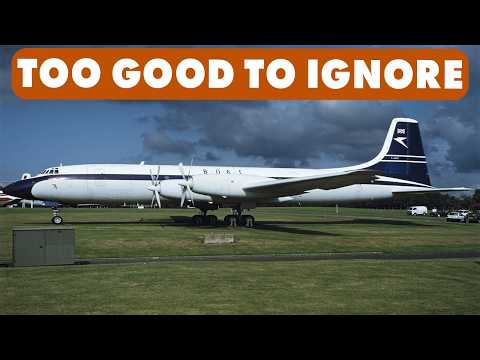
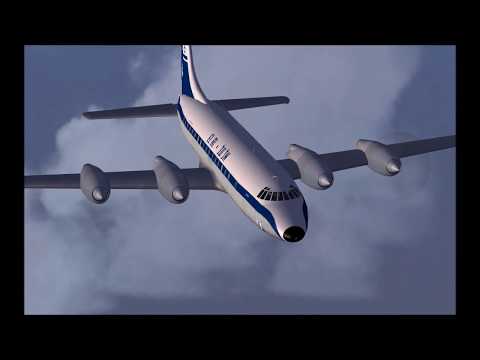
The Bristol Type 175 Britannia was a British medium-to-long-range turboprop airliner, conceived by the Bristol Aeroplane Company for the Empire routes and universally remembered as "The Whispering Giant" for its quiet exterior noise and smooth flight. It grew out of BOAC's Medium Range Empire requirement and the Brabazon Committee's Type III contract, received the company designation Model 175 in July 1948 and first flew on 16 August 1952 at Filton, with chief test pilot A. J. "Bill" Pegg at the controls. Its development, however, was among the most painful in the post-war British industry. The four Bristol Proteus turboprops — reverse-flow, free-turbine engines — suffered gearbox failures, excess weight and, above all, three successive kinds of intake icing that caused in-flight flame-outs. Two prototypes were lost, and the certification demands tightened after the de Havilland Comet crashes added months of testing. Entry into service, expected in 1955, slipped to 1 February 1957, roughly two years late. That delay settled its commercial fate. By the time the aircraft was mature, the Boeing 707 and Douglas DC-8 were imminent: serious interest from Eastern Air Lines and TWA — Howard Hughes flew it himself and immediately asked for thirty aircraft — could not be met for lack of production capacity. Only 85 were built, thirty of them by Short Brothers and Harland at Belfast, against a projected 180, and the line closed in 1960. For all that, the Britannia was loved by passengers and respected by its crews, a landmark in turboprop airliner design and an extraordinarily long-lived platform. It served with BOAC on the first non-stop London-Canada and London-New York services, equipped RAF Transport Command with twenty-three aircraft named after stars, and after military retirement in 1975 found a long second life as a freighter. Canadair bought the licence and derived a further 72 aircraft from it: the CL-44/CC-106 Yukon and the CP-107 Argus maritime patrol aircraft. Cubana de Aviación flew its Britannias until March 1990, and Zairean airlines kept them hauling cargo into the early 1990s.
Related events
Related sheets
Category
History
The Brabazon Committee and the origins of the Type 175
In 1942, in the middle of the Second World War, the division of labour among the Allies left Britain concentrating on heavy bombers and handed transport aircraft production to the United States. The predictable consequence was that Britain would emerge from the war with little experience of large civil aircraft, and in 1943 a committee chaired by Lord Brabazon of Tara set about defining the post-war British airliner market. The Brabazon Committee called for several aircraft types, and Bristol won both the Type I and Type III contracts. The first produced the enormous Bristol Brabazon, delivered in 1949; the second would produce the Britannia.
The specific requirement arrived by two routes that eventually converged: BOAC's Medium Range Empire (MRE) Requirements of 1946, and Specification C.2/47 issued by the Minister of Supply in April 1947. They called for an airliner able to carry 48 passengers, powered by Bristol Centaurus radials or by the Napier Nomad turbo-compound Diesel. Turboprop options were considered too, but they were so new that Bristol would not guarantee their performance.
Before committing to a clean-sheet design, Bristol explored shortcuts. In late 1946 it tabled two in-company proposals: "X", converting Lockheed Constellations to Centaurus 662 powerplants, and "Y", licence production of the Constellation. BOAC preferred an entirely new design. After wrangling over costs between the airline and the Ministry of Supply, the project was given the go-ahead in July 1948 under the company designation Model 175. Three prototypes were ordered: the first as a Mk 1 with Centaurus 662, the second and third as Mk 2s convertible to the Bristol Proteus turboprops then under development.
By October 1947, with work already under way, Bristol had settled on a Centaurus-powered design of 103,000 lb (47,000 kg) gross weight with a 13,300 lb (6,000 kg) payload. The anticipated Karachi–Cairo sector, the most demanding on the planned route, imposed the 48-seat limit so that enough fuel could be carried. On 5 July 1949 the Ministry of Supply ordered five prototypes on the understanding that BOAC would contract for 25 production aircraft; on 28 July the airline took options on those 25, to be delivered with Centaurus engines and re-fitted with Proteus when the engine became available.
Redefinition: from Centaurus to Proteus
In November 1948 the Type 175 was revised again, and this time deeply: it grew to seat 74 passengers on a longer-span wing, now aimed at a long-range version for the long Empire and transatlantic routes rather than the medium-haul sectors originally planned. On reflection, BOAC decided that only the Proteus-engined aircraft was worth pursuing, forcing a further redesign that eliminated the Centaurus option.
The decision was not unanimous inside the airline. Senior BOAC figures such as Deputy Chairman Whitney Straight called the Proteus "an obsolete contraption". The irony cuts twice: that "obsolete" engine was still driving SR.N4 hovercraft across the English Channel as late as 2000, and still powering warships in 1982 at the time of the Falklands War. Even so, and despite BOAC's wish for a turboprop, the Type 175 project remained contingent on the Proteus passing a 150-hour type test.
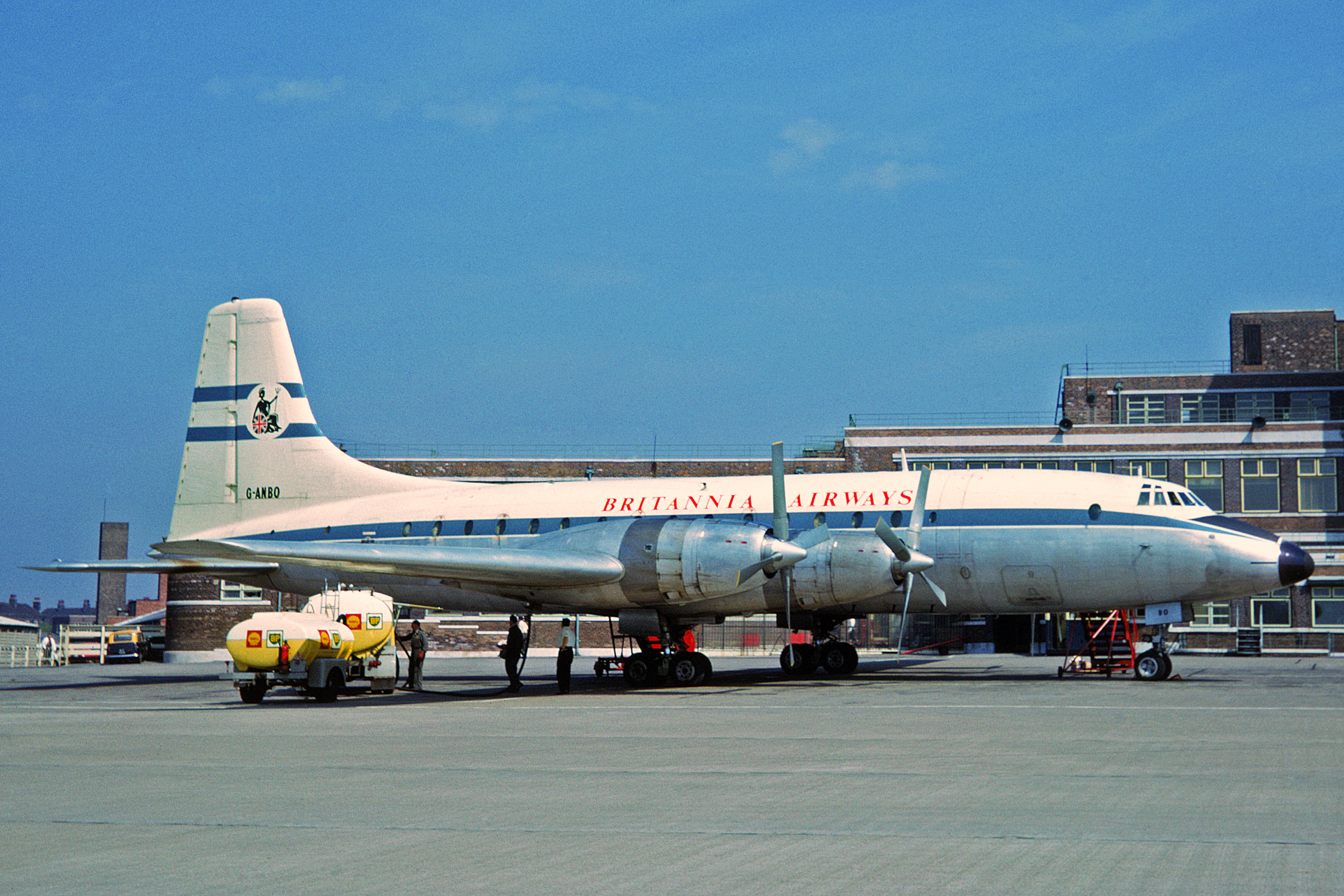
In April 1950 the aircraft's name was chosen: Britannia. The designation Britannia 101 was applied to the first pair of prototypes, powered by the early Proteus 625, direct successor to the 600 series engine that had already completed its type trials.
First flight and the testing years
The first prototype, registered G-ALBO, lifted off from Filton on 16 August 1952 with Bristol's chief test pilot A. J. "Bill" Pegg at the controls. The maiden flight was eventful: over-sensitive flying controls produced wild pitching before Pegg restored control, and on final approach smoke filled the cockpit while the main undercarriage bogie stuck part-way through its cycle, fully deploying only seconds before touchdown.
The snags proved minor. By September the prototype was cleared to perform at the 1952 SBAC Display at Farnborough, where spectators remarked on the surprising "quietness" of the giant airliner — the nickname that would follow it for life was born there. In November 1952 Popular Science reported that by 1954 BOAC would have 25 of these aircraft flying routes such as London to Tokyo over the Arctic and the North Pole. Neither happened on that timetable.
The Proteus ordeal
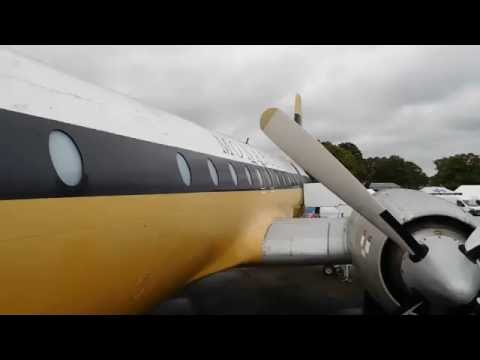
Much of the Britannia's delay was not the airframe's fault but the engine's. The Bristol Proteus was the Bristol Engine Company's first mass-produced gas turbine: a reverse-flow turboprop delivering just over 4,000 hp (3,000 kW). Because its second turbine drove no compressor stages and turned only the propeller, it was classed as a free-turbine engine. Design work began in September 1944, with the free turbine and propeller gearbox based on the earlier Bristol Theseus, and a compressor combining 12 axial with 2 centrifugal stages. To avoid being held back by gearbox troubles, the gas generator was built as a separate turbojet, the Bristol Phoebus, flight-tested in May 1946 in the bomb bay of an Avro Lincoln.
The Proteus 2 (Mk 600 series) was meant to give 3,200 shp for 3,050 lb of weight; it delivered 2,500 shp weighing 3,800 lb, and suffered failures in virtually every component — compressor blades, turbine blades, bearings — even at low power. Hence the famous remark by Proteus chief engineer Frank Owner to Stanley Hooker: "When we designed the Proteus I decided we should make the engine with the lowest fuel consumption in the world, regardless of its weight and bulk. So far, we have achieved the weight and bulk!" The redesigned Proteus 3 (700 series) gave 3,780 shp for nearly 1,000 lb less, but came too late for the first Britannia prototype.
In 1954 the costliest defect surfaced. During a flight carrying a delegation from KLM, a straight-cut gearwheel in the propeller gearbox stripped its teeth; the resulting damage started a fire and the aircraft — the second prototype, G-ALRX — had to land on the mud of the Severn estuary. On hearing of it, Lord Hives of Rolls-Royce, Hooker's former boss, sent Rolls-Royce engineers to help the Bristol team: that unasked-for generosity towards a competitor thawed the coldness that had lingered between the two men since 1948.
The icing problem was more stubborn still, and came in three waves. Icing trials of a Proteus installation in an Ambassador in Canada showed the anti-icing system could cope with the severe conditions expected; but during route-proving flights in Africa in April 1956 a different kind of icing appeared against which the system was ineffective. Modifications were made that dealt with it. BOAC began services in February 1957 and later that year, on flights to Australia, a third type appeared. In prolonged icing conditions ice built up on the surfaces of the reverse-flow intake — inherited from the installations intended for the Brabazon II and the Princess — and its shedding through the engine caused flame-outs. The engine would auto-relight with a long tongue of flame from the jetpipe that alarmed passengers. It was not inherently dangerous, and was avoided by flight-manual restrictions, essentially not flying in cloud above a certain height; the definitive fixes were validated in April 1958 on flights out of Singapore. Crews came to manage the risk with a "high-lo" flight regime, and Squadron Leader David Berry, with 5,000 hours on type, summed up life with the aircraft as flying "Beauty and the Beast."
The commercial window that closed
After three de Havilland Comets crashed without explanation in 1953 and 1954, the Air Ministry demanded that the Britannia undergo lengthy testing. To that were added the engine's troubles, the loss of the second prototype in February 1954, and the time spent resolving icing. BOAC publicly exaggerated the extent of the problem, devastating future sales and delaying entry into service by two years; the episode came close to bankrupting Bristol Aircraft.
Bristol responded by enlarging the design into a bigger transatlantic airliner for BOAC, producing the Series 200 and 300; the Britannia 300LR (Long-Range) was judged "eminently suitable" for BOAC's London–Sydney services. In 1955 BOAC agreed a price of £768,000 for each 100-series aircraft. Australia's Qantas considered buying a fleet, but the interminable development had eroded any advantage over the Douglas DC-8 and the de Havilland Comet 4. During the first eight months of operational trials there were 16 in-flight engine failures and 49 unscheduled engine changes. The affair reached the popular press and the House of Commons, especially when it emerged that BOAC had contemplated fitting Rolls-Royce Tynes to its Douglas DC-7s as an interim measure until the Britannia was cleared.
In 1956 Bristol's managing director Peter Masefield took the tenth production Britannia, G-ANBJ, on a world sales tour. American interest was strong: the Britannia looked like a faster, longer-ranged, higher-capacity sister of the already successful Vickers Viscount, and against the piston-engined DC-7C it offered similar transcontinental or transatlantic range with greater speed and the appeal of a modern powerplant. Eastern Air Lines and TWA both wanted to order; Howard Hughes, TWA's majority owner, took the controls on one flight and immediately asked for thirty aircraft. But the Americans wanted delivery within a couple of years, and Bristol, with limited facilities and committed to the BOAC order, could not meet it. With the Boeing 707 and Douglas DC-8 expected in service in 1958–9, the opportunity passed. Historian Peter Pigott put it bluntly: had the Britannia appeared in 1950, when it was faster than every American aircraft, it would have put the British at the forefront of commercial aviation sales; competing with the 707, the turboprop airliner had become passé.
Entry into service and network expansion
After a long period of uneventful development flying and the fitting of a modified Proteus 765 series engine that greatly reduced breakdowns, a full Certificate of Airworthiness was awarded at the end of 1955. The first two Model 102s were delivered to BOAC on 30 December 1955 for crew training. Scheduled service began on 1 February 1957 with a London–Johannesburg flight; Sydney followed in March and Tokyo in July. By August 1957 the first 15 Model 102s had been delivered to BOAC; the last 10 aircraft of the order were completed as Series 300 machines for the Atlantic.
The 310 series was the long-range Britannia par excellence. BOAC received 18 Model 312s from September 1957 and with one of them made, on 19 December 1957, the first-ever non-stop flight from London to Canada; in late December it opened regular London–New York services. In 1959 BOAC extended the network across the Pacific to Tokyo and Hong Kong, closing the round-the-world loop: the westbound routing was London–New York–San Francisco–Honolulu–Wake Island–Tokyo–Hong Kong. In March 1964 BOAC owned 50 aircraft, 10 of them Britannia 312s. Its last scheduled Britannia flight was in April 1965.
.jpg)
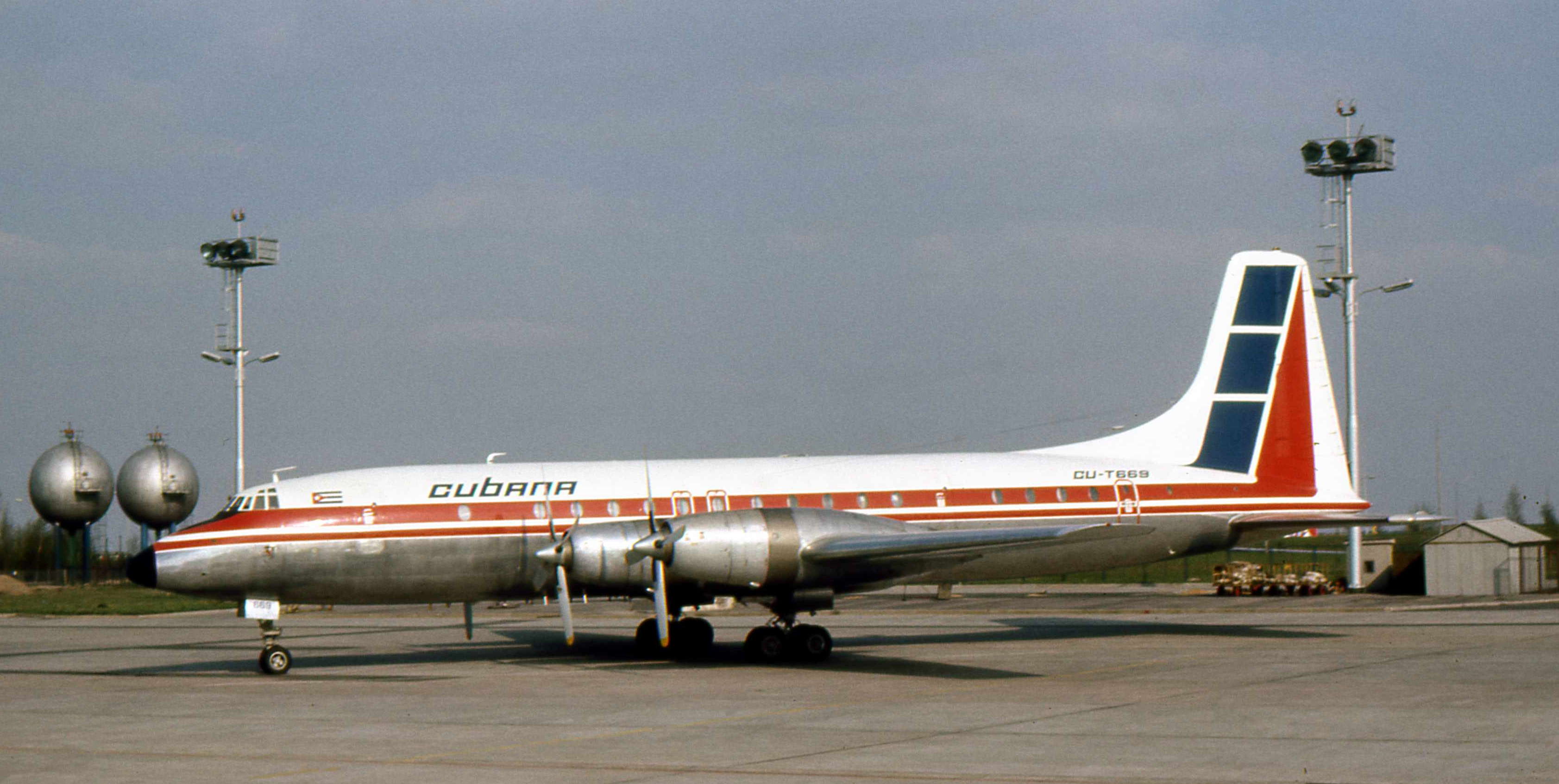
The Britannia also served as a bridge to BOAC's associate airlines. In April 1959 a Model 102 was leased to Ghana Airways for the Accra–London route, and the airline bought several more in the early 1960s; the Model 102 eventually reached Cathay Pacific, Central African, East African, Nigeria and Malayan airlines. On 1 April 1958 Canadian Pacific Air Lines took delivery of the first of six Model 314s, joined by two Model 324s built to a 320 standard and sold to Cathay Pacific in 1961. BOAC had ordered seven Model 302s it never took: they went instead to Aeronaves de México — two, in service from December 1957 — and Ghana Airways. The Model 318 took Cubana de Aviación onto the Atlantic from 1958.
The production series
The family falls into well-defined blocks. The Mk 1 and Mk 2 of the original Model 175 were never built: the Mk 1, with Centaurus 662, had a 114 ft fuselage, 120 ft span and 48 seats; the Mk 2 kept the fuselage but stretched the wing to 140 ft and cut seating to 36. The Series 100 was the 74-seat aircraft with a 114 ft fuselage and four Proteus 705: two 101 prototypes and fifteen production Model 102s for BOAC, from an order for 25 whose last ten were cancelled in favour of the 300 series. The all-cargo Series 200, with the fuselage stretched to 124 ft 3 in, was never built; BOAC's option on five was cancelled.
The mixed passenger/freight Series 250 materialised as the RAF aircraft. The Series 300 was the passenger-only long-fuselage version, seating up to 139 — originally 99 — with medium fuel capacity: one Filton-built 301 prototype that first flew on 31 July 1956, the Belfast-built 302s, the longer-ranged 305s whose take-off weight was limited by thinner fuselage skin and lighter landing gear, and a constellation of conversions — 306, 307, 307F, 308, 308F, 309 — that passed from El Al to Air Charter, British United Airways, British Eagle, Transcontinental SA of Argentina and Ghana Airways. The Series 310, with strengthened skin and undercarriage and long-range fuel capacity, was the former 300LR: the 311 prototype, BOAC's 18 Model 312s (five converted to 312F freighters in the 1960s), four Model 313s for El Al, six Model 314s for Canadian Pacific, two Model 317s in 124-passenger trooping configuration for Hunting-Clan Air Transport, four Model 318s for Cubana delivered from 15 December 1958, the 319 conversion for Ghana Airways, and the two Model 324s that had begun as 320s for a TWA order that was never concluded.
The Royal Air Force Britannia
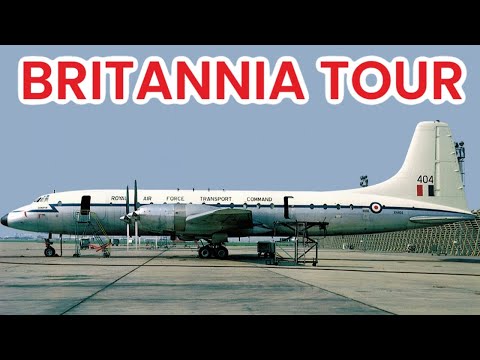
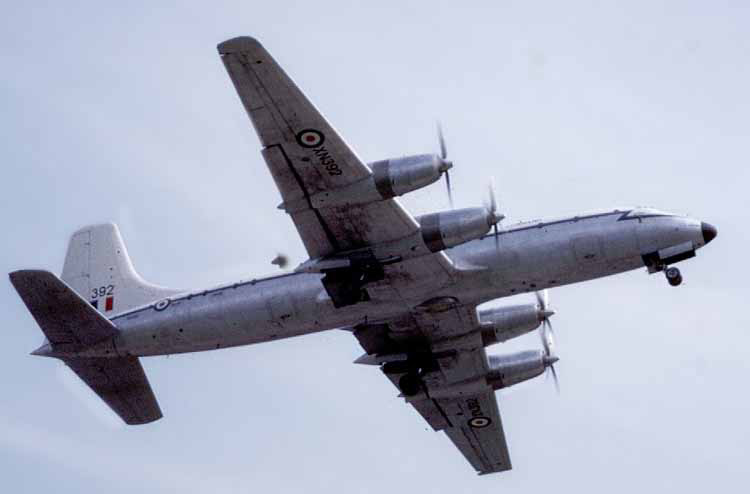
RAF Transport Command bought three Model 252s and twenty Model 253s in 1959, designated Britannia C.2 and C.1 respectively and built for the Ministry of Supply under Specification C176P. The 252 had a heavy-duty floor only in the forward fuselage plus a large cargo door; the 253 had a full-length heavy-duty floor and provision for rearward-facing seats as the RAF preferred, with capacity for 115 troops or the equivalent in cargo. The aircraft were named after stars — "Arcturus", "Sirius", "Vega", "Regulus", "Schedar" — and shared between Nos. 99 and 511 Squadrons, both previously on the Handley Page Hastings and, before that, the Avro York.
.jpg)
Based at RAF Lyneham in Wiltshire, the Britannias were operated separately until central servicing was established; from September 1960 the fleet was pooled and each aircraft was flown by crews from both squadrons, a practice that continued when the fleet moved to RAF Brize Norton in Oxfordshire, where a distant relative, the Short Belfast C1, was already based. The military fleet's figures speak for themselves: still-air range with maximum payload of 33,100 lb over 4,628 statute miles at 355 mph for the 252, and 37,400 lb over the same distance at 360 mph for the 253; with maximum fuel, 5,334 statute miles carrying 21,724 lb in the 252 and 26,024 lb in the 253. Cargo volume was 5,850 cubic feet in the 252 and 6,120 in the 253, with 8,580 imperial gallons of fuel. In the aeromedical role it took 53 stretchers, six medical attendants and two iron lungs. Although certified for 139 passengers, in practice the RAF limited loads to 115 because of dinghy capacity.
The mid-1970s reduction in strategic airlift, driven by the perceived easing of the Cold War, swept the fleet away: the Britannias were withdrawn in 1975 along with the Comet and Belfast squadrons and stored at RAF Kemble and St Athan. From there they were sold or leased to the civil market, where freight operators snapped them up: they had strengthened floors, a large forward cargo door, relatively low flying hours and economical operation. Once civilianised the 252s and 253s were redesignated 252F and 253F, though the former was less flexible for lacking the full-length freight floor.
Second civil life and last operators
Retired from major passenger routes, the Britannias returned to the freighter role the Series 200 had envisaged from the start, and many ex-military airframes ended up with independent cargo operators. Cubana de Aviación kept the type flying despite the Cuban Revolution thanks to a special accord with British manufacturers to maintain the model, and in 1975 several Cuban Britannias carried hundreds of soldiers of the Cuban Revolutionary Armed Forces to Angola during Operation Carlota; the airline flew them until March 1990. Afterwards, Zairean airlines that had bought the remaining spares from the Royal Aircraft Establishment and from Cubana operated several Britannias into the early 1990s on regular cargo flights from N'djili Airport to destinations across the country.
Of the 85 aircraft built, 30 came from Short Brothers and Harland at Belfast and the rest from Filton. Against a projected production of 180, only 80 were sold. The programme left its mark: BOAC became markedly more cautious towards other British aircraft, notably the Vickers VC10.
The Canadian derivatives
In 1954 a licence was issued to Canadair that produced a further 72 aircraft in two families. The CL-28/CP-107 Argus maritime patrol and anti-submarine aircraft was optimised for endurance rather than speed and used four Wright R-3350-32W Turbo-Compound engines that burned less fuel at low altitude. It was a hybrid: Britannia wings, tail surfaces and landing gear matched to a purpose-built, unpressurised fuselage, with North American materials and standard parts substituted for British ones. Its interior was densely equipped with navigation, communication and tactical electronics, and it could carry bombs, torpedoes, mines and depth charges. A total of 33 Argus were built in two series, Mk 1 and Mk 2, serving the RCAF and Canadian Forces from 1957 to 1982.
.jpg)
The second family was the CL-44/CC-106 Yukon, 39 aircraft powered by Rolls-Royce Tyne turboprops: 12 CC-106 Yukons for the RCAF in a solely passenger configuration, and 27 CL-44D4 passenger/cargo variants for the civil market, where they were typically operated as freighters. All the CL-44D4s were built with swing-tails allowing straight-in cargo loading and served with a variety of carriers, most notably Flying Tiger Line; four were converted to CL-44Js with lengthened fuselages for Iceland's Loftleiðir. A final one-off development was the Conroy Skymonster, or Guppy, based on CL-44D4 N447T and fitted with an enormously enlarged fuselage in the manner of Aero Spacelines' Mini Guppy; after a long career as a freighter it was stored at Bournemouth Airport in 2003 and later sold.
Accidents
Fourteen Britannias were lost between 1954 and 1980 with a total of 365 fatalities. The worst was the 1967 Nicosia Britannia disaster, with 126 dead. On 4 February 1954 the second prototype crashed at Severn Beach, Gloucestershire: No. 3 engine indicated a loss of oil pressure and was shut down, then restarted, whereupon an uncontainable fire broke out; No. 4 was shut down as a precaution and, fearing the fire would fail the main spar, Bill Pegg elected to make an emergency landing on the mudflats of the Severn Estuary, with no fatalities. On 6 November 1957 the 300 series prototype crashed on a test flight, killing all 15 occupants. On 24 December 1958 a BOAC Britannia 312 on a test flight crashed at Winkton, killing nine of those on board. On 5 July 1960 two co-pilots hijacked a Cuban Britannia and diverted it to Miami.
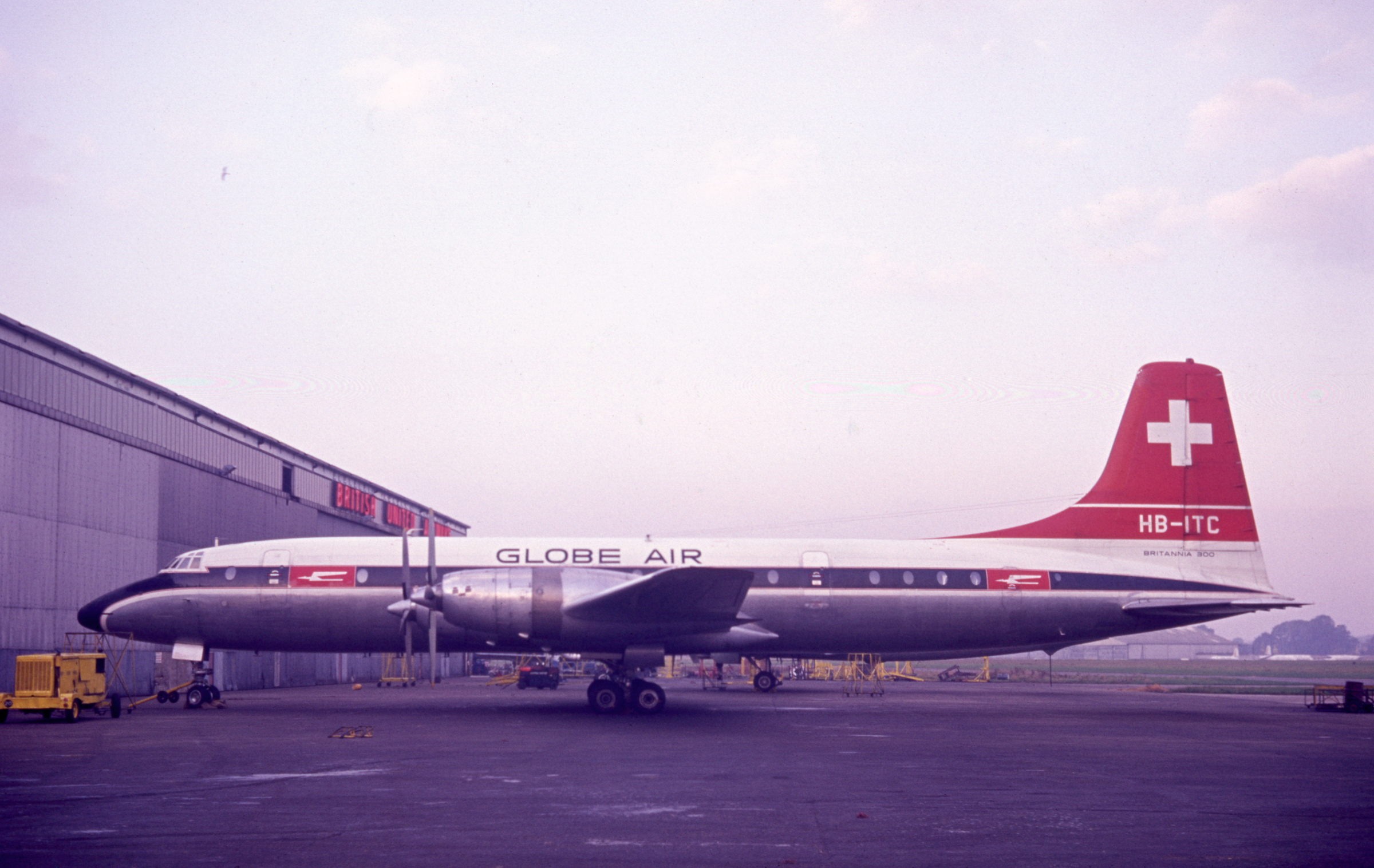
On 22 July 1962 Canadian Pacific Air Lines Flight 301, a Britannia 314, was destroyed during an attempted go-around after a three-engined approach at Honolulu, killing 27 of the 40 aboard. On 29 February 1964 British Eagle International Airlines Flight 802/6 crashed into the Glungezer mountain near Innsbruck, killing all 83 aboard. On 1 September 1966 Britannia Airways Flight 105 crashed while landing at Ljubljana, with 98 fatalities among the 117 passengers and crew; the probable cause was the crew failing to set the altimeter to QFE instead of QNH, creating a 980-foot error in indicated altitude. On 20 April 1967 a Globe Air Britannia 313 flying Bangkok to Basel diverted its Cairo stop to Nicosia, where a missed approach and low circuit ended in impact near the airport perimeter. On 12 October 1967 "Sirius", an RAF C.1, was damaged beyond repair overrunning the runway at RAF Khormaksar, Aden. On 30 September 1977 an Interconair Britannia 253G on a ferry flight suffered severe vibration at 300 feet on approach to Shannon; the overshoot failed to arrest the sink, the aircraft struck the ground short of the runway, bounced, lost its right wing and caught fire, yet all six on board survived. On 16 February 1980 a Britannia 253F of Redcoat Air Cargo crashed at Billerica, Massachusetts, shortly after take-off from Boston, the probable cause being accumulated ice and snow before departure and further icing in flight, with wind shear and turbulence during the climb contributing; seven of the eight aboard died.
Technical data for the Series 310
The figures are those of the long-range Series 310. Crew of 4 to 7 and up to 139 passengers in coach class. Length 124 ft 3 in (37.87 m), wingspan 142 ft 3 in (43.36 m), height 37 ft 6 in (11.43 m) and wing area 2,075 sq ft (192.8 m²), with a NACA 25017 root airfoil and NACA 4413 at the tip. Empty weight 86,400 lb (39,190 kg) and maximum take-off weight 185,000 lb (83,915 kg). Powerplant: four Bristol Proteus 765 turboprops of 4,450 shp (3,320 kW) equivalent each, driving 16-foot four-blade de Havilland hydromatic propellers of hollow steel or duralumin. Maximum speed 397 mph (639 km/h, 345 kn); cruise speed 357 mph (575 km/h, 310 kn) at 22,000 ft (6,700 m); range 4,430 mi (7,130 km, 3,850 nmi); service ceiling 24,000 ft (7,300 m); rate of climb 2220 ft/min (677 m/min). Avionics: EKCO E120 weather radar.
.jpg)
On engine versions: the Mk 705 of 3,900 hp (2,900 kW) powered the Series 100 and some 300 series aircraft; the Mk 755 of 4,120 hp (3,070 kW) was for the Series 200 — never built — and other 300s; and the Mk 765 of 4,445 hp (3,315 kW) equipped the RAF's Series 250, which also used variants with water-methanol injection to offset performance loss at high, hot airfields. The Proteus was to have been superseded by the Bristol Orion, which would have given the Britannia a 75 per cent increase in power for faster cruising; the first prototype G-ALBO was in fact used to test the Orion in 1956 and the Proteus 765 in 1957.
Legacy and survivors
The Britannia is today a case study in the cost of arriving late. Technically it was a landmark in turboprop airliner design, loved by passengers and capable of performance that in 1950 had no rival; commercially it fell victim to its own engine, to its launch customer's public exaggeration of its faults, and to industrial capacity too small to serve the American market when that market came knocking. Aeroplane included it in its "100 Great British Aircraft" (2008).
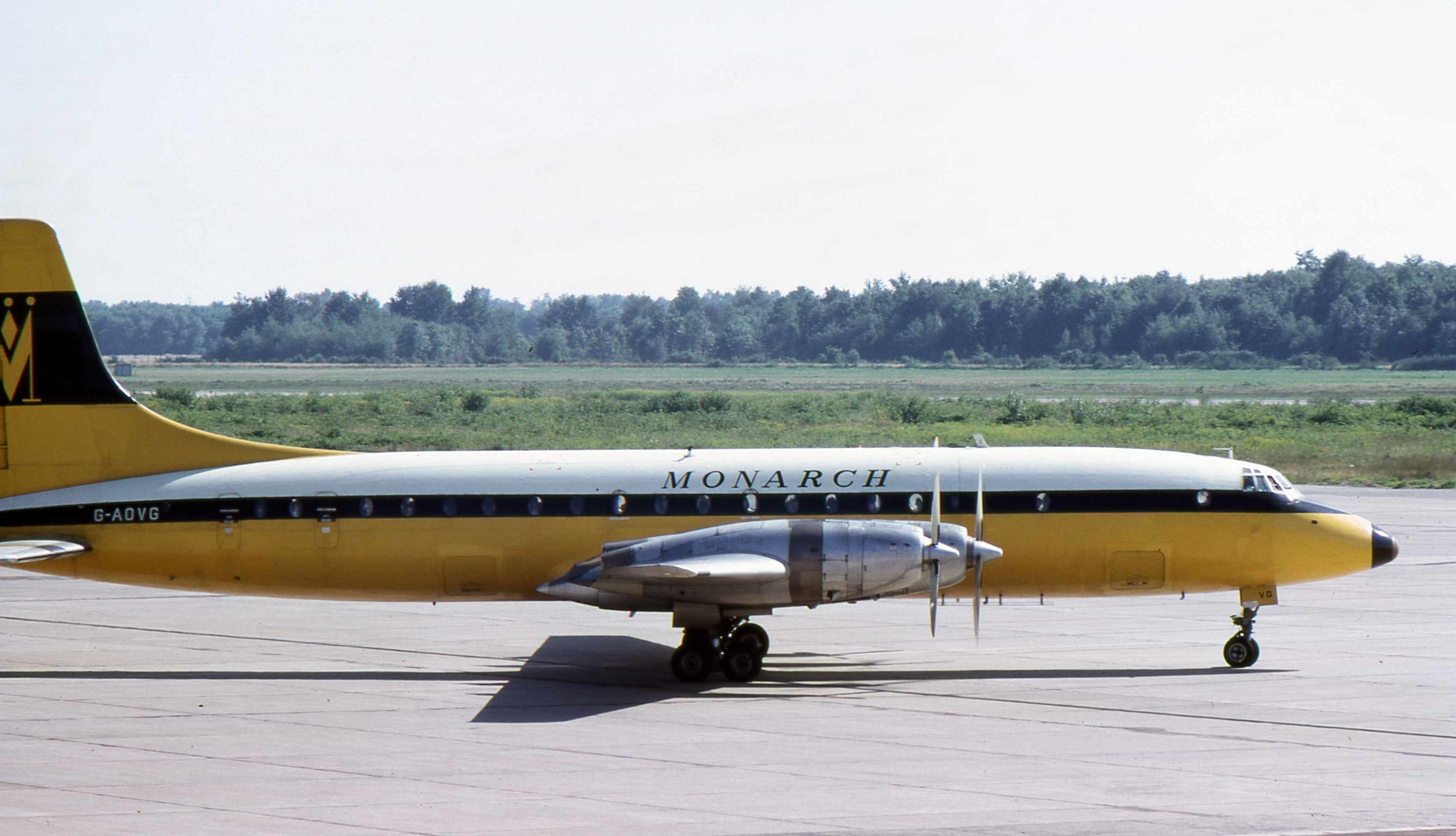
Several examples survive. The forward fuselage of the second prototype, Britannia 101 G-ALRX damaged in the Severn Estuary crash, is at Aerospace Bristol. Britannia 308F G-ANCF was removed from Kemble and reassembled in early 2007 in Liverpool, on the former airside apron of Speke Airport. Britannia 312 G-AOVF is displayed at the Royal Air Force Museum Cosford in RAF Air Support Command colours as XM497 "Schedar", and Britannia 312 G-AOVT at the Imperial War Museum Duxford in Monarch Airlines colours. Britannia C.1 XM496 "Regulus" is preserved at Cotswold Airport, the former Kemble, in RAF colours and cared for by its own preservation society. Britannia 312F G-AOVS survives as a derelict fuselage on the fire training dump at London Luton Airport in Redcoat Air Cargo colours as "Christian", and the cockpit of 307F 5Y-AYR is preserved at Burnham-on-Sea, Somerset.
Variants
| 101 | 301 | 313 | 252 (Britannia C.2) | 102 | 253 (Britannia C.1) | 253F | 302 | 305 | 306 | 307 | 307F | 308 | 308F | 309 | 311 | 312 | 312F | 314 | 317 | 318 | 319 | 320 | 324 | Model 175 Mk 1 (proyecto) | Model 175 Mk 2 (proyecto) | Series 200 (proyecto) | |
|---|---|---|---|---|---|---|---|---|---|---|---|---|---|---|---|---|---|---|---|---|---|---|---|---|---|---|---|
| First flight | August 16, 1952 | July 31, 1956 | July 28, 1957 | October 13, 1958 | — | — | — | — | — | — | — | — | — | — | — | — | — | — | — | — | — | — | — | — | — | — | — |
| Aircraft type | Long-haul airliner prototype | Long-haul airliner | Long-haul airliner | Long-range military transport | Long-haul airliner | Long-range military transport | Long-haul freighter | Long-haul airliner | Long-haul airliner | Long-haul airliner | Long-haul airliner | Long-haul freighter | Long-haul airliner | Long-haul freighter | Long-haul airliner | Long-haul airliner | Long-haul airliner | Long-haul freighter | Long-haul airliner | Long-haul airliner | Long-haul airliner | Long-haul airliner | Long-haul airliner | Long-haul airliner | Medium-range airliner project | Long-haul airliner project | Long-haul freighter project |
| Powerplant | 4 × Bristol Proteus 755 turboprops, 3,070 kW each; both prototypes first flew with the Proteus 625 and were re-engined shortly afterwards. | 4 × Bristol Proteus turboprops: 705 of 2,900 kW or 755 of 3,070 kW each, depending on the aircraft. | 4 × Bristol Proteus 765 turboprops, 3,320 kW each. | 4 × Bristol Proteus 765 turboprops, 3,320 kW each, driving four-blade de Havilland Hydromatic propellers. | 4 × Bristol Proteus 705 turboprops, 2,900 kW each. | 4 × Bristol Proteus 765 turboprops, 3,320 kW each, driving four-blade de Havilland Hydromatic propellers. | 4 × Bristol Proteus 765 turboprops, 3,320 kW each. | 4 × Bristol Proteus turboprops: 705 of 2,900 kW or 755 of 3,070 kW each, depending on the aircraft. | 4 × Bristol Proteus turboprops: 705 of 2,900 kW or 755 of 3,070 kW each, depending on the aircraft. | 4 × Bristol Proteus turboprops: 705 of 2,900 kW or 755 of 3,070 kW each, depending on the aircraft. | 4 × Bristol Proteus turboprops: 705 of 2,900 kW or 755 of 3,070 kW each, depending on the aircraft. | 4 × Bristol Proteus turboprops: 705 of 2,900 kW or 755 of 3,070 kW each, depending on the aircraft. | 4 × Bristol Proteus turboprops: 705 of 2,900 kW or 755 of 3,070 kW each, depending on the aircraft. | 4 × Bristol Proteus turboprops: 705 of 2,900 kW or 755 of 3,070 kW each, depending on the aircraft. | 4 × Bristol Proteus turboprops: 705 of 2,900 kW or 755 of 3,070 kW each, depending on the aircraft. | 4 × Bristol Proteus 765 turboprops, 3,320 kW each. | 4 × Bristol Proteus 765 turboprops, 3,320 kW each, driving four-blade propellers. | 4 × Bristol Proteus 765 turboprops, 3,320 kW each. | 4 × Bristol Proteus 765 turboprops, 3,320 kW each. | 4 × Bristol Proteus 765 turboprops, 3,320 kW each. | 4 × Bristol Proteus 765 turboprops, 3,320 kW each. | 4 × Bristol Proteus 765 turboprops, 3,320 kW each. | 4 × Bristol Proteus 765 turboprops, 3,320 kW each. | 4 × Bristol Proteus 765 turboprops, 3,320 kW each. | 4 × Bristol Centaurus 662 piston engines. | 4 × Bristol Centaurus 662 piston engines or, in the long-span configuration, 4 × Bristol Proteus 600 turboprops. | 4 × Bristol Proteus 755 turboprops, 3,070 kW each. |
| Powerplant | 4 × Bristol Proteus 755 | 4 × Bristol Proteus 705 / 755 | 4 × Bristol Proteus 765 | 4 × Bristol Proteus 765 | 4 × Bristol Proteus 705 | 4 × Bristol Proteus 255 | 4 × Bristol Proteus 765 | 4 × Bristol Proteus 705 / 755 | 4 × Bristol Proteus 705 / 755 | 4 × Bristol Proteus 705 / 755 | 4 × Bristol Proteus 705 / 755 | 4 × Bristol Proteus 705 / 755 | 4 × Bristol Proteus 705 / 755 | 4 × Bristol Proteus 705 / 755 | 4 × Bristol Proteus 705 / 755 | 4 × Bristol Proteus 765 | 4 × Bristol Proteus 765 | 4 × Bristol Proteus 765 | 4 × Bristol Proteus 765 | 4 × Bristol Proteus 765 | 4 × Bristol Proteus 765 | 4 × Bristol Proteus 765 | 4 × Bristol Proteus 765 | 4 × Bristol Proteus 765 | 4 × Bristol Centaurus 662 | 4 × Bristol Centaurus 662 / Bristol Proteus 600 | 4 × Bristol Proteus 755 |
| Power per engine | 4,117 hp | — | 4,452 hp Best value in this row | 4,452 hp Best value in this row | 3,889 hp | 4,452 hp Best value in this row | 4,452 hp Best value in this row | — | — | — | — | — | — | — | — | 4,452 hp Best value in this row | 4,452 hp Best value in this row | 4,452 hp Best value in this row | 4,452 hp Best value in this row | 4,452 hp Best value in this row | 4,452 hp Best value in this row | 4,452 hp Best value in this row | 4,452 hp Best value in this row | 4,452 hp Best value in this row | — | — | 4,117 hp |
| Length | 34.8 m | 37.9 m Best value in this row | 37.9 m Best value in this row | 37.9 m | 34.8 m | 37.9 m Best value in this row | 37.9 m Best value in this row | 37.9 m Best value in this row | 37.9 m Best value in this row | 37.9 m Best value in this row | 37.9 m Best value in this row | 37.9 m Best value in this row | 37.9 m Best value in this row | 37.9 m Best value in this row | 37.9 m Best value in this row | 37.9 m Best value in this row | 37.9 m Best value in this row | 37.9 m Best value in this row | 37.9 m Best value in this row | 37.9 m Best value in this row | 37.9 m | 37.9 m Best value in this row | 37.9 m Best value in this row | 37.9 m Best value in this row | 34.8 m | 34.8 m | 37.9 m Best value in this row |
| Wingspan | — | 43.4 m Best value in this row | 43.4 m Best value in this row | 43.4 m Best value in this row | — | 43.4 m Best value in this row | 43.4 m Best value in this row | 43.4 m Best value in this row | 43.4 m Best value in this row | 43.4 m Best value in this row | 43.4 m Best value in this row | 43.4 m Best value in this row | 43.4 m Best value in this row | 43.4 m Best value in this row | 43.4 m Best value in this row | 43.4 m Best value in this row | 43.4 m Best value in this row | 43.4 m Best value in this row | 43.4 m Best value in this row | 43.4 m Best value in this row | 43.4 m | 43.4 m Best value in this row | 43.4 m Best value in this row | 43.4 m Best value in this row | 36.5 m | 43 m | 43.4 m Best value in this row |
| Height | — | 11.4 m | 11.4 m | 11.4 m Best value in this row | — | 11.4 m | 11.4 m | 11.4 m | 11.4 m | 11.4 m | 11.4 m | 11.4 m | 11.4 m | 11.4 m | 11.4 m | 11.4 m | 11.4 m | 11.4 m | 11.4 m | 11.4 m | 11.4 m Best value in this row | 11.4 m | 11.4 m | 11.4 m | — | — | 11.4 m |
| Wing area | — | 193 m² Best value in this row | 193 m² Best value in this row | 193 m² Best value in this row | — | 193 m² Best value in this row | 193 m² Best value in this row | 193 m² Best value in this row | 193 m² Best value in this row | 193 m² Best value in this row | 193 m² Best value in this row | 193 m² Best value in this row | 193 m² Best value in this row | 193 m² Best value in this row | 193 m² Best value in this row | 193 m² Best value in this row | 193 m² Best value in this row | 193 m² Best value in this row | 193 m² Best value in this row | 193 m² Best value in this row | 193 m² Best value in this row | 193 m² Best value in this row | 193 m² Best value in this row | 193 m² Best value in this row | — | — | — |
| Empty weight | — | — | 39,190 kg Best value in this row | 43,046 kg | — | — | — | — | — | — | — | — | — | — | — | — | 39,190 kg Best value in this row | — | 39,190 kg Best value in this row | — | 39,190 kg Best value in this row | — | — | — | — | — | — |
| MTOW | — | — | 83,915 kg Best value in this row | 83,915 kg Best value in this row | — | 83,915 kg Best value in this row | 83,915 kg Best value in this row | — | — | — | — | — | — | — | — | — | 83,915 kg Best value in this row | — | 83,915 kg Best value in this row | — | 83,915 kg Best value in this row | — | — | — | 47,000 kg | — | — |
| Top speed | — | — | 639 km/h Best value in this row | — | — | — | — | — | — | — | — | — | — | — | — | — | 639 km/h Best value in this row | — | 639 km/h Best value in this row | — | 639 km/h Best value in this row | — | — | — | — | — | — |
| Cruise speed | — | — | 575 km/h | 571 km/h | — | 579 km/h Best value in this row | — | — | — | — | — | — | — | — | — | — | 575 km/h | — | 575 km/h | — | 575 km/h | — | — | — | — | — | — |
| Cruise altitude | — | — | 6,700 m | — | — | — | — | — | — | — | — | — | — | — | — | — | 6,700 m | — | — | — | 6,700 m | — | — | — | — | — | — |
| Service ceiling | — | — | 7,300 m Best value in this row | — | — | — | — | — | — | — | — | — | — | — | — | — | 7,300 m Best value in this row | — | 7,300 m Best value in this row | — | 7,300 m Best value in this row | — | — | — | — | — | — |
| Initial climb rate | — | — | — | — | — | — | — | — | — | — | — | — | — | — | — | — | 11.3 m/s | — | — | — | — | — | — | — | — | — | — |
| Range | — | — | 7,130 km | 7,448 km Best value in this row | — | 7,448 km Best value in this row | — | — | — | — | — | — | — | — | — | — | 7,130 km | — | 7,130 km | — | 7,130 km | — | — | — | — | — | — |
| Ferry range | — | — | — | 8,584 km | — | 8,584 km | — | — | — | — | — | — | — | — | — | — | 8,600 km Best value in this row | — | — | — | — | — | — | — | — | — | — |
| Combat radius | 0 km Best value in this row | 0 km Best value in this row | 0 km Best value in this row | 0 km Best value in this row | 0 km Best value in this row | 0 km Best value in this row | 0 km Best value in this row | 0 km Best value in this row | 0 km Best value in this row | 0 km Best value in this row | 0 km Best value in this row | 0 km Best value in this row | 0 km Best value in this row | 0 km Best value in this row | 0 km Best value in this row | 0 km Best value in this row | 0 km Best value in this row | 0 km Best value in this row | 0 km Best value in this row | 0 km Best value in this row | 0 km Best value in this row | 0 km Best value in this row | 0 km Best value in this row | 0 km Best value in this row | 0 km Best value in this row | 0 km Best value in this row | 0 km Best value in this row |
| Range conditions | — | — | — | 7,448 km still-air range with maximum payload and 8,584 km with full fuel, both at cruise speed. | — | 7,448 km still-air range with maximum payload and 8,584 km with full fuel, both at cruise speed. | — | — | — | — | — | — | — | — | — | — | 7,130 km with maximum payload and up to 8,600 km with full tanks, cruising at 575 km/h and 6,700 m. | — | — | — | — | — | — | — | — | — | — |
| Armament | None | None | None | None | None | None | None | None | None | None | None | None | None | None | None | None | None | None | None | None | None | None | None | None | None | None | None |
| Max weapons load | 0 kg Best value in this row | 0 kg Best value in this row | 0 kg Best value in this row | 0 kg Best value in this row | 0 kg Best value in this row | 0 kg Best value in this row | 0 kg Best value in this row | 0 kg Best value in this row | 0 kg Best value in this row | 0 kg Best value in this row | 0 kg Best value in this row | 0 kg Best value in this row | 0 kg Best value in this row | 0 kg Best value in this row | 0 kg Best value in this row | 0 kg Best value in this row | 0 kg Best value in this row | 0 kg Best value in this row | 0 kg Best value in this row | 0 kg Best value in this row | 0 kg Best value in this row | 0 kg Best value in this row | 0 kg Best value in this row | 0 kg Best value in this row | 0 kg Best value in this row | 0 kg Best value in this row | 0 kg Best value in this row |
| Payload | — | — | — | 15,014 kg | — | — | — | — | — | — | — | — | — | — | — | — | 17,872 kg Best value in this row | — | — | — | — | — | — | — | 6,000 kg | — | — |
| Cargo capacity | Series 100 layout, with 74 seats as designed. | Series 300 prototype, with the wing and fuel capacity of the Series 100 and up to 139 seats. | Series 310 production aircraft for El Al, seating up to 139. | Mixed passenger/freight transport for the RAF: cargo door and strengthened floor in the forward fuselage. Up to 139 seats, in practice limited to 115 by dinghy capacity. | Production Series 100 for BOAC: 74 seats as designed and up to 90 in scheduled service. | Full-length strengthened floor and cargo door: up to 115 troops in rearward-facing seats, an equivalent cargo load, or 53 stretchers with six medical attendants in the aeromedical role. | Civil freighter conversion of the Britannia C.1 after RAF retirement, keeping the full-length strengthened floor and the forward cargo door. | Belfast-built Series 300 production aircraft: up to 139 seats (99 as originally configured). | Series 302 modified for longer range, seating up to 139; thinner skin and lighter landing gear capped its take-off weight. | Single aircraft leased to El Al pending delivery of its Series 313s; up to 139 seats. | Two aircraft from the cancelled Northeast order, redesignated for Air Charter; up to 139 seats. | Freighter conversion of both Britannia 307s, carried out in the 1960s. | Two former 305s delivered to Transcontinental SA of Argentina in a 104-seat layout. | Freighter conversion of both Britannia 308s for British Eagle, carried out in the 1960s. | Single aircraft converted from a 305 and leased to Ghana Airways; up to 139 seats. | Series 310 prototype, originally known as the 300LR; up to 139 seats. | Up to 139 seats in coach class and 82 in first, with a maximum payload of 17,872 kg. | Freighter conversion of five Britannia 312s, carried out in the 1960s. | Series 310 production aircraft for Canadian Pacific Air Lines, seating up to 139. | Two aircraft for Hunting-Clan Air Transport in a 124-seat trooping layout. | Series 310 production aircraft for Cubana de Aviación, seating up to 139. | Single aircraft converted from a 312 for Ghana Airways; up to 139 seats. | Variant aimed at the North American market; the Trans World Airlines order was never concluded and the two aircraft started were completed as Series 324s. | Two Series 320s completed for Canadian Pacific Air Lines and later bought by Cunard Eagle Airways; up to 139 seats. | 48 seats planned for the BOAC MRE requirement; never built. | 36 seats with the longer-span wing and Proteus engines; two prototypes planned, none built. | All-cargo version with the stretched 38 m fuselage; BOAC optioned five and cancelled, none built. |
| Crew | 4 Best value in this row | 4 Best value in this row | 4 Best value in this row | 4 Best value in this row | 4 Best value in this row | 4 Best value in this row | 4 Best value in this row | 4 Best value in this row | 4 Best value in this row | 4 Best value in this row | 4 Best value in this row | 4 Best value in this row | 4 Best value in this row | 4 Best value in this row | 4 Best value in this row | 4 Best value in this row | 4 Best value in this row | 4 Best value in this row | 4 Best value in this row | 4 Best value in this row | 4 Best value in this row | 4 Best value in this row | 4 Best value in this row | 4 Best value in this row | 4 Best value in this row | 4 Best value in this row | 4 Best value in this row |
| Passengers | 74 | 139 Best value in this row | 139 Best value in this row | — | 74 | 115 | — | 139 Best value in this row | 139 Best value in this row | 139 Best value in this row | 139 Best value in this row | — | 104 | — | 139 Best value in this row | 139 Best value in this row | 139 Best value in this row | — | 139 Best value in this row | 124 | 139 Best value in this row | 139 Best value in this row | 139 Best value in this row | 139 Best value in this row | 48 | 36 | — |
| Units built | 2 | 1 | 4 | 3 | 15 | 20 Best value in this row | — | 2 | 5 | 1 | 2 | 2 | 2 | 2 | 1 | 1 | 18 | 5 | 6 | 2 | 4 | 1 | 2 | 2 | 0 | — | — |
Images
Elsewhere
- FlightGlobalDespiece numerado (cutaway) del Bristol Britannia 300LR, lámina del archivo de Flight International ↗
- FlightGlobalDespiece numerado (cutaway) del Bristol Britannia en versión carguera, lámina del archivo de Flight International ↗
- JetPhotosOO-YCF Bristol Britannia, Young Cargo ↗
- JetPhotosXX367 Bristol Britannia Series 312F, Royal Air Force (RAF) ↗
- JetPhotosG-ANBE Bristol Britannia, British Overseas Airways Corporation (BOAC) ↗
- Airliners.netBristol 175 Britannia 312 - Monarch Airlines ↗
- Airliners.netBristol 175 Britannia 312 - BOAC ↗
- Airliners.netBristol 175 Britannia 312(F) - Lloyd International Airways ↗
- ABPicBristol Britannia C1, XL660, Royal Air Force ↗
- ABPicBristol Britannia C1, XM518, Royal Air Force ↗
- Planespotters.netXL636 Royal Air Force Bristol 175 Britannia C1 (253) ↗
- Planespotters.netG-AOVE British Eagle Bristol 175 Britannia 312 ↗