Airliner · Civil · France
Airbus A350
- June 14, 2013
- First flight
- In service
- Status







The Airbus A350 is a long-range, wide-body twinjet that Airbus built to take on Boeing in the market for large two-engined airliners. It was the first Airbus airframe made largely of carbon-fibre-reinforced polymer, it shares a common type rating with the A330 and it replaced the four-engined A340 in the catalogue. Its rivals are the 787 Dreamliner, the 777 and the coming 777X. The programme had a troubled start. The original A350 of 2004 was essentially an A330 with a composite wing and new engines, and leasing giants and carriers such as Singapore Airlines dismissed it as an inadequate answer to the 787. In 2006 Airbus started again with the A350 XWB (Xtra Wide Body): a clean-sheet airliner with a wider fuselage that seats nine abreast in economy, powered exclusively by the Rolls-Royce Trent XWB. The rethink cost two years and pushed development spending sharply upward. The prototype took off from Toulouse on 14 June 2013. EASA type certification followed on 30 September 2014 and FAA approval on 12 November 2014. Launch customer Qatar Airways took the first aircraft on 22 December 2014 and flew the first revenue service, Doha to Frankfurt, on 15 January 2015. The stretched A350-1000 flew in November 2016 and entered service with the same airline in February 2018. The family has since grown to include ultra-long-range models (the A350-900ULR used on Singapore-New York and the A350-1000ULR built for Qantas' Project Sunrise), the ACJ350 corporate jet and the A350F freighter, whose prototype first flew in September 2026. The shorter A350-800 was dropped in 2014. By September 2026 the A350 had collected 1,624 firm orders from 66 customers, with 737 delivered and 736 in service with 38 operators. The fleet has logged more than 15 million flight hours and carried over 600 million passengers without an onboard fatality; its single hull loss, at Tokyo in 2024, followed a runway collision with a Japan Coast Guard aircraft.
Related events
- EADS and BAE Systems authorise Airbus to offer the A350
- Airbus announces the industrial launch of the A350
- The redesigned A350 is unveiled as the A350 XWB at Farnborough
- Airbus board approves the industrial launch of the A350 XWB
- First flight of the Airbus A350
- EASA certifies the Airbus A350-900
- The A350 obtains 370-minute ETOPS approval
- The FAA certifies the Airbus A350-900
- Qatar Airways takes delivery of the first Airbus A350 in Toulouse
- First commercial A350 flight, from Doha to Frankfurt
- First flight of the Airbus A350-1000
- EASA and the FAA certify the A350-1000
- Qatar Airways receives the first A350-1000
- The A350-1000 enters service on the Doha-London route
- First flight of the A350-900ULR
- An A350-900ULR completes the world's longest commercial flight, Singapore to Newark
- Airbus launches the A350F with an Air Lease commitment in Dubai
- First flight of the Airbus A350F
Related sheets
Category
Airbus A350 in the news

Emirates has announced plans to replace the Boeing 777 on one of its three daily Dubai–Mauritius flights with… The post Emirates deploys A350 with new Business Class on Mauritius route from November…
The exercise, built around a scenario set by ANAC, was carried out with no scheduled flights and comes three weeks after World2Fly launched its Rosario-Madrid route with the Airbus A350-900.

The exercise, built around a scenario set by ANAC, was carried out with no scheduled flights and comes three weeks after World2Fly launched its Rosario-Madrid route with the Airbus A350-900.
British Airways has installed SpaceX's Starlink Wi-Fi on every Airbus A350 in its fleet, offering passengers free high-speed internet on long-haul flights.
Ferry flight to Munich expected mid-NovemberFirst scheduled flight on December 3 from Munich to Tokyo/HanedaAdditional destinations: Shanghai and SingaporeThe first Airbus A350-1000…


History
A late answer to the 787 (2004-2005)
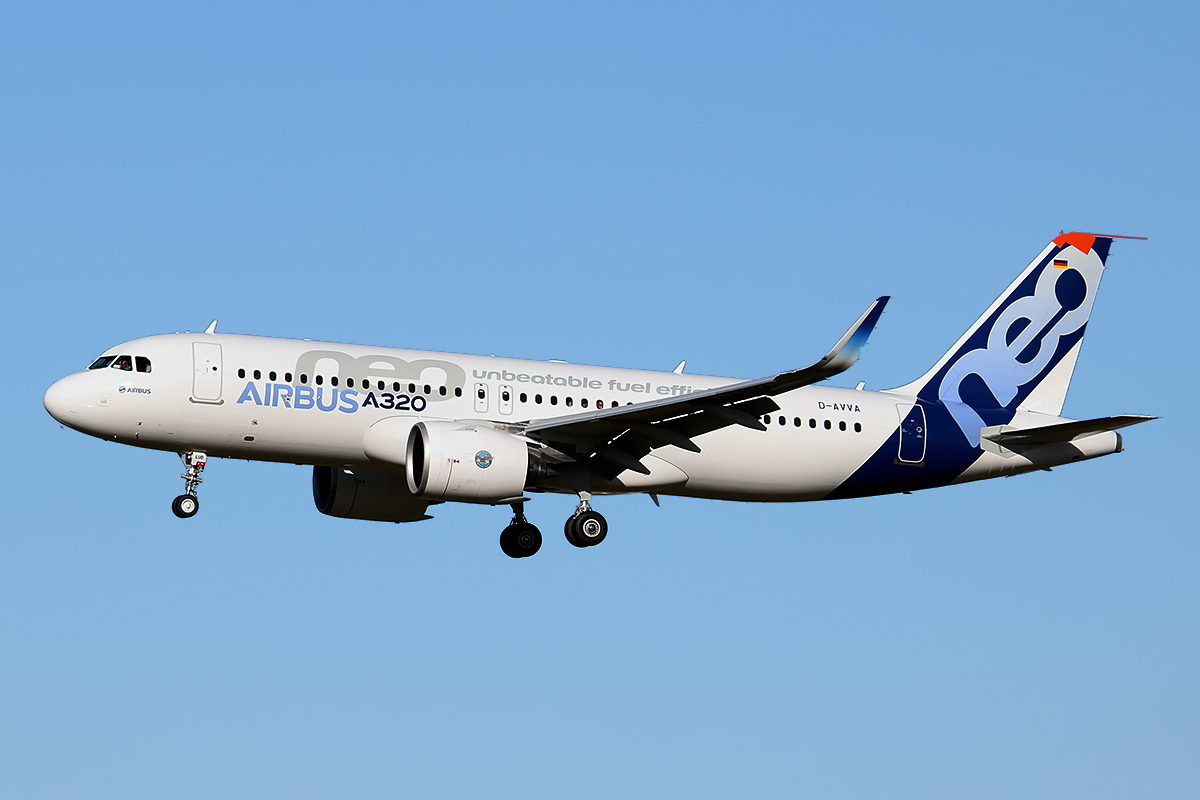
Airbus's first instinct when Boeing launched the 787 Dreamliner was to shrug it off: Toulouse argued that the new American twin was merely a reply to the A330 and needed no counter. Airlines disagreed and pressed for a rival. The first idea, an "A330-200 Lite" with cleaner aerodynamics and 787-generation engines, was meant to be unveiled at the 2004 Farnborough Airshow but went no further.
On 16 September 2004 Airbus chief executive Noël Forgeard told prospective customers in private that a new project was under study, without naming it or saying whether it would be a fresh design or an adaptation. Airline unhappiness led the company to earmark €4 billion for a new aircraft, and on 10 December 2004 shareholders EADS and BAE Systems granted "authorisation to offer" the A350, aiming at service entry in 2010. Airbus hoped to win more than half of a 250-300-seat market it sized at 3,100 aircraft over twenty years.
That first A350 kept the A330 fuselage cross-section, to be built largely in aluminium-lithium, and added a mostly composite wing, a new horizontal tail and General Electric GEnx engines, promising fuel savings of over 10%. Two versions, the A350-800 and A350-900, were aimed squarely at the 787-9 and the 777-200ER. Qatar Airways announced an order for 60 at the Paris Air Show on 13 June 2005, and on 6 October 2005 Airbus declared the industrial launch, with development estimated at around €3.5 billion. Emirates wanted something better and stayed away.
Customer revolt and the XWB redesign (2006)
The design drew public fire from two of Airbus's biggest customers, the lessors ILFC and GECAS. On 28 March 2006 ILFC's Steven Udvar-Házy demanded a clean-sheet aircraft and derided the plan as a stopgap response to the 787, a view echoed by GECAS president Henry Hubschman. In April Singapore Airlines chief Chew Choon Seng remarked that, having redesigned wing, tail and cockpit, Airbus might as well have built a new fuselage too. As Qantas and Singapore chose the 787, CEO Gustav Humbert set engineers to work on alternatives; one of them, known internally as "1d", became the basis for the new aircraft.
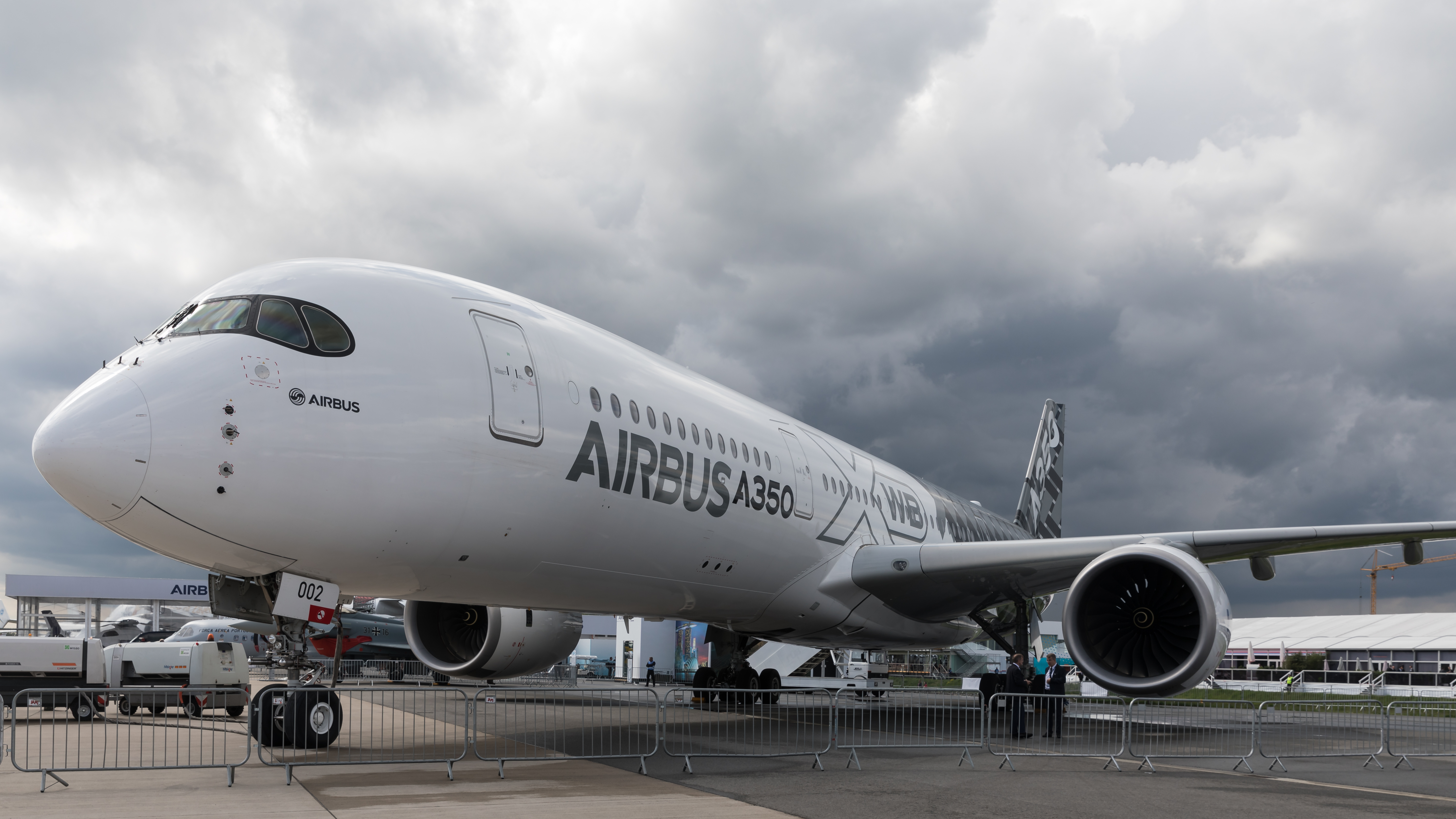
Airbus revealed the outcome at Farnborough on 14 July 2006 as the A350 XWB, for Xtra Wide Body. The wider fuselage allowed anything from eight-abreast premium economy to ten-abreast high density, with maximum capacities of 440 to 475 depending on the model. Singapore Airlines signed up for 20 within four days, with options on 20 more. On 1 December 2006 the Airbus board approved industrial launch of the -800, -900 and -1000, a decision held back by the A380's troubles and by arguments over funding; EADS chief Thomas Enders even cautioned that the programme was not a foregone conclusion. It was eventually agreed to pay for it mainly from cash flow. The first firm XWB order came on 4 January 2007, two aircraft for Pegasus Aviation Finance.
The rethink was expensive. It added two years to the schedule and raised development costs from about US$5.5 billion to roughly US$10 billion, while Reuters put the overall bill at US$15 billion. By June 2013 Airbus itself was quoting €11 billion. According to Airbus's 2019 results, the programme only broke even that year.
A composite airliner
Having once called Boeing's all-composite fuselage premature, Airbus originally planned carbon-fibre panels only for the A350's skin. Criticism over maintenance costs changed its mind, and in early September 2007 it confirmed carbon-fibre frames as well, fitted with aluminium strips to keep the fuselage electrically continuous for lightning protection. The -900 design was frozen in December 2008. The finished airframe is 53% composites (tail surfaces, wing boxes with spars and covers, keel beam, rear fuselage, skin and frames), 19% aluminium and aluminium-lithium, 14% titanium for landing gear, pylons and attachments, 6% steel and 8% other materials. Airbus expected 10% lower airframe maintenance than on the original A350.
The fuselage keeps a constant width from door 1 to door 4 and has a double-lobe section 5.97 m in outside diameter, against 5.64 m for the A330/A340. Cabin width at armrest height is 5.61 m, a little more than the 787 and a little less than the 777, enough for nine 45 cm economy seats abreast. The aluminium nose borrows from the A380: the nose-gear bay moves forward, a six-pane windscreen replaces the four panes of the early XWB sketch, and crew rest areas can be placed overhead further forward. Electrochromic dimmable windows became an option in 2020, and Starlux was the first airline to fit them throughout the cabin.
The composite wing spans 64.75 m, staying inside the ICAO Code E gate limit, with 31.9° of sweep tuned for Mach 0.85 cruise and a maximum operating speed of Mach 0.89; on the -900 it covers 442 m². Its dropped-hinge flaps come from the A380, and a variable-camber logic shifts load along the span to save fuel. Computational fluid dynamics and more than 4,000 hours of wind-tunnel testing went into it, and the final wing and winglet shape was frozen on 17 December 2008. The wings are built in a new factory at Broughton in Wales.
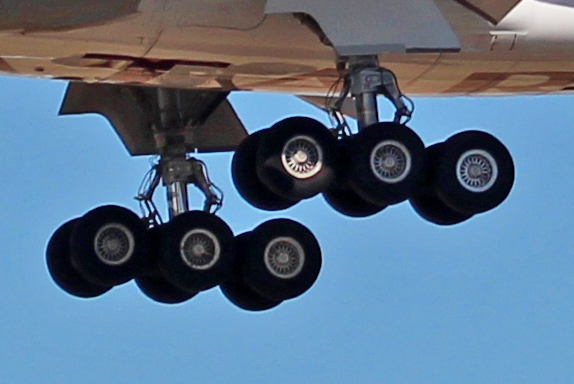
The main landing gear is attached in a new way suited to the composite wing, with a double side-stay reminiscent of the Vickers VC10. The -900 rolls on four-wheel bogies and the heavier -1000 on six-wheel ones.
Flight deck, systems and avionics
The cockpit gave up A380-size screens for six 38 cm liquid-crystal displays, each pilot having a primary flight and navigation display plus two stacked central screens, with an optional head-up display. The integrated modular avionics, an evolution of the A380's, handle up to 40 functions against 23 on the A380, using roughly half as many computer modules on a 100 Mbit/s switched Ethernet network. Thales won the avionics and navigation contract in January 2008, Rockwell Collins and Moog the flight-control actuators, and Panasonic the in-flight entertainment.
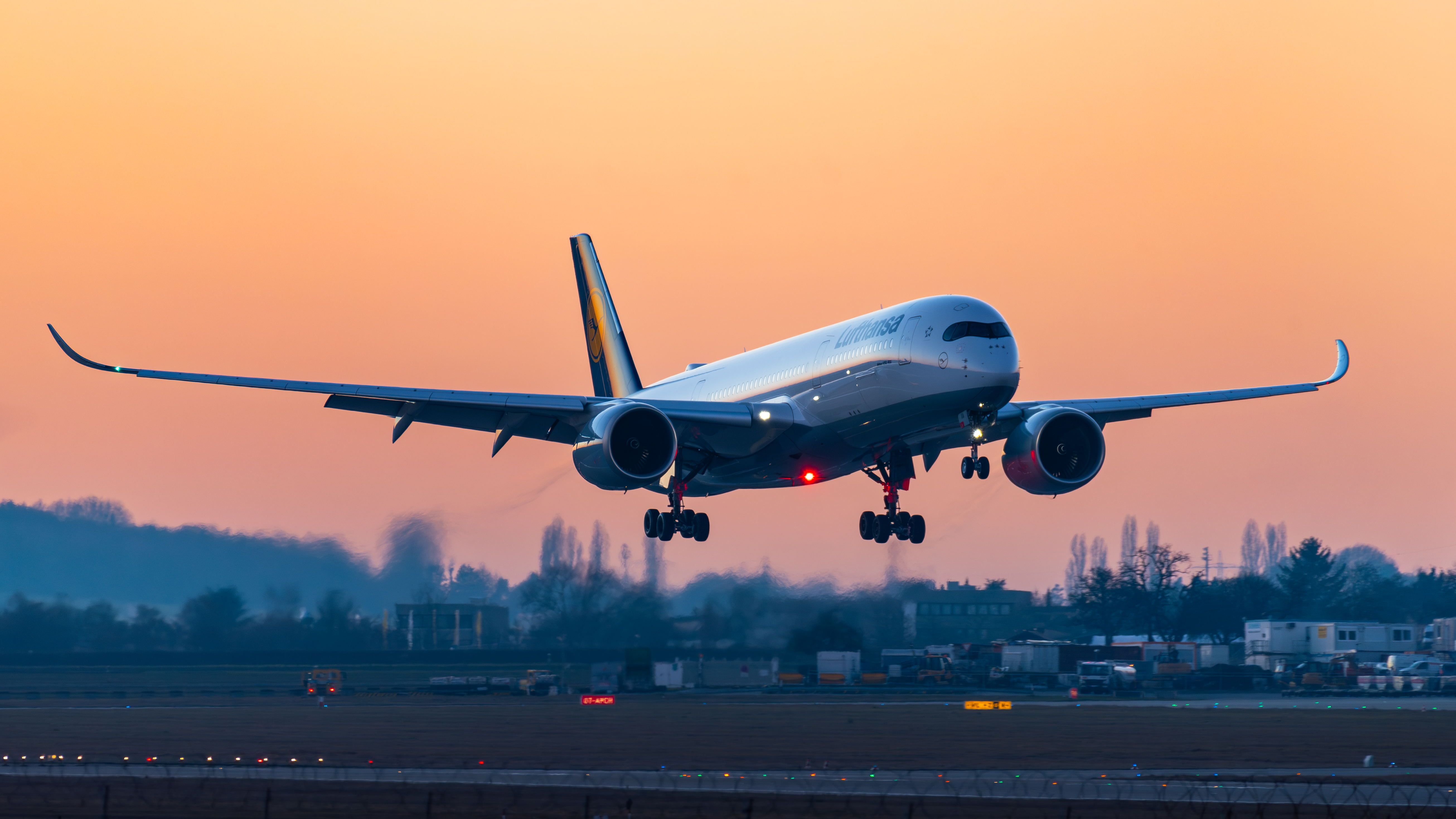
Unlike the 787, the A350 retains a conventional bleed-air system. Honeywell provides the HGT1700 auxiliary power unit and air management, and Airbus advertises 20% cabin humidity with a cabin altitude at or below 6,000 ft. After the 787's battery fires, Airbus reverted to nickel-cadmium batteries in February 2013, before introducing lighter Saft lithium-ion units from late 2015. Parker Hannifin supplies the whole fuel system, including nitrogen inerting, as well as the hydraulics.
The Trent XWB engine
In 2005 the original A350 was to be launched with General Electric power. For the XWB, GE offered the GEnx-3A87 for the -800 and -900 but no high-thrust version for the -1000, which would have competed with GE's exclusive GE90-115B on the 777. In December 2006 Rolls-Royce became launch engine supplier with the Trent XWB, derived from the A380's Trent 900 and the 787's Trent 1000, with a 300 cm fan and four thrust ratings: 75,000 and 79,000 lbf for regional versions of the -900, 84,000 lbf for the standard -900 and 97,000 lbf for the -1000. Engine testing began on 14 June 2010; the Trent XWB flew on an A380 test aircraft in early 2011 and was certified late that year. In 2021 Rolls-Royce secured exclusivity on the -900 until 2030. On 15 October 2014 the aircraft gained 370-minute ETOPS approval, covering 99.7% of the Earth's surface.
Manufacturing
The programme required 10 new factories in Western Europe and the United States plus extensions at three more sites. The first structural part was produced in December 2009, the first fuselage barrel was started at Illescas in Spain in late 2010, a composite rudder plant opened in China in early 2011, and the first forward fuselage reached the Toulouse final assembly line on 29 December 2011. Assembly of the first prototype was finished in December 2012.
Flight testing and certification
The Trent XWBs were first run on the aircraft on 2 June 2013, and the maiden flight followed from Toulouse-Blagnac on 14 June 2013: four hours aloft, reaching Mach 0.8 at 25,000 ft, at the start of a 2,500-hour campaign with five aircraft, squeezed from 15 to 12 months by the delays. In May 2014 test aircraft msn 2 spent two and a half weeks in the McKinley Climatic Laboratory at Eglin Air Force Base, Florida, between 45 °C and -40 °C. EASA type certification came on 30 September 2014; on 15 October EASA granted 370-minute ETOPS, making the A350-900 the first airliner cleared beyond 180 minutes before entering service. A common type rating with the A330 was approved later that month, and the FAA certified the aircraft on 12 November 2014.
Entry into service
The 2011 plan had the -900 entering service in the first half of 2014, a target pushed back three months in July 2012. Handover to Qatar Airways slipped because of a minor supplier problem, and the airline finally accepted its first A350 on 22 December 2014. The first commercial flight linked Doha and Frankfurt on 15 January 2015. After a year the fleet had flown 3,000 cycles and around 16,000 block hours, and Finnair was flying its aircraft more than 20 hours a day on the Bangkok route. Teething troubles included onboard maintenance software, leaking galley equipment and false overheat warnings in the bleed system, cured with a gold-plated connector. Operational reliability rose from 97.2% in 2015 to 98.8% by mid-2017.
The A350-800 that never was
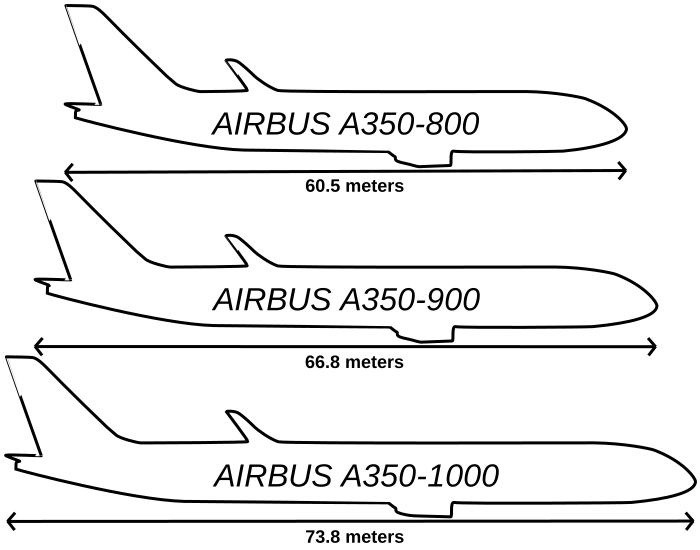
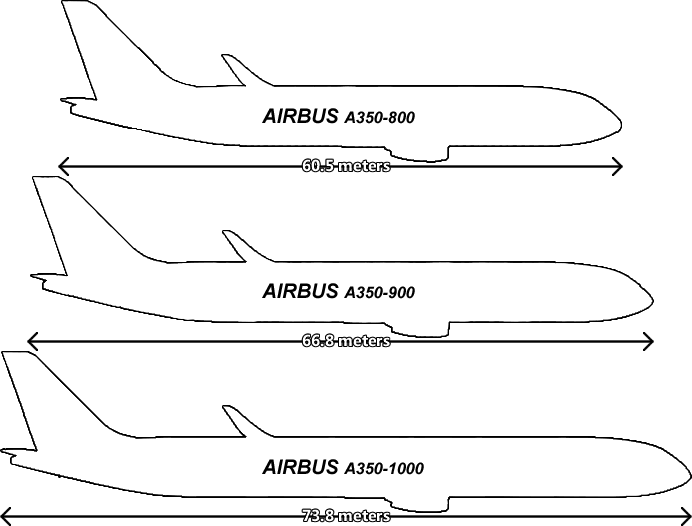
The -800, 60.45 m long with 276 seats in three classes, was reworked in 2010 as a simple shrink of the -900 to ease development, at a small fuel-burn penalty. Its backlog peaked at 182 in 2008 and then dwindled as customers moved up to the -900. After launching the A330neo at Farnborough 2014, Airbus dropped it and confirmed the cancellation that September. The last customers, Aeroflot and Asiana, cancelled or converted their orders to the -900.
The A350-1000
In 2011 Airbus reworked the -1000 with higher weights and more thrust for trans-Pacific routes. That appealed to Cathay Pacific and United, but Emirates responded by cancelling its order for 50 A350-900s and 20 A350-1000s. The -1000 is 11 frames longer than the -900, just short of 74 m, with a 4% larger wing thanks to a trailing-edge extension, six-wheel bogies and the 97,000 lbf Trent XWB. It was conceived to replace the A340-600 and to take on the 777-300ER and 777-8, and it introduced an automatic emergency descent function that activates if the crew fails to respond to an alert.
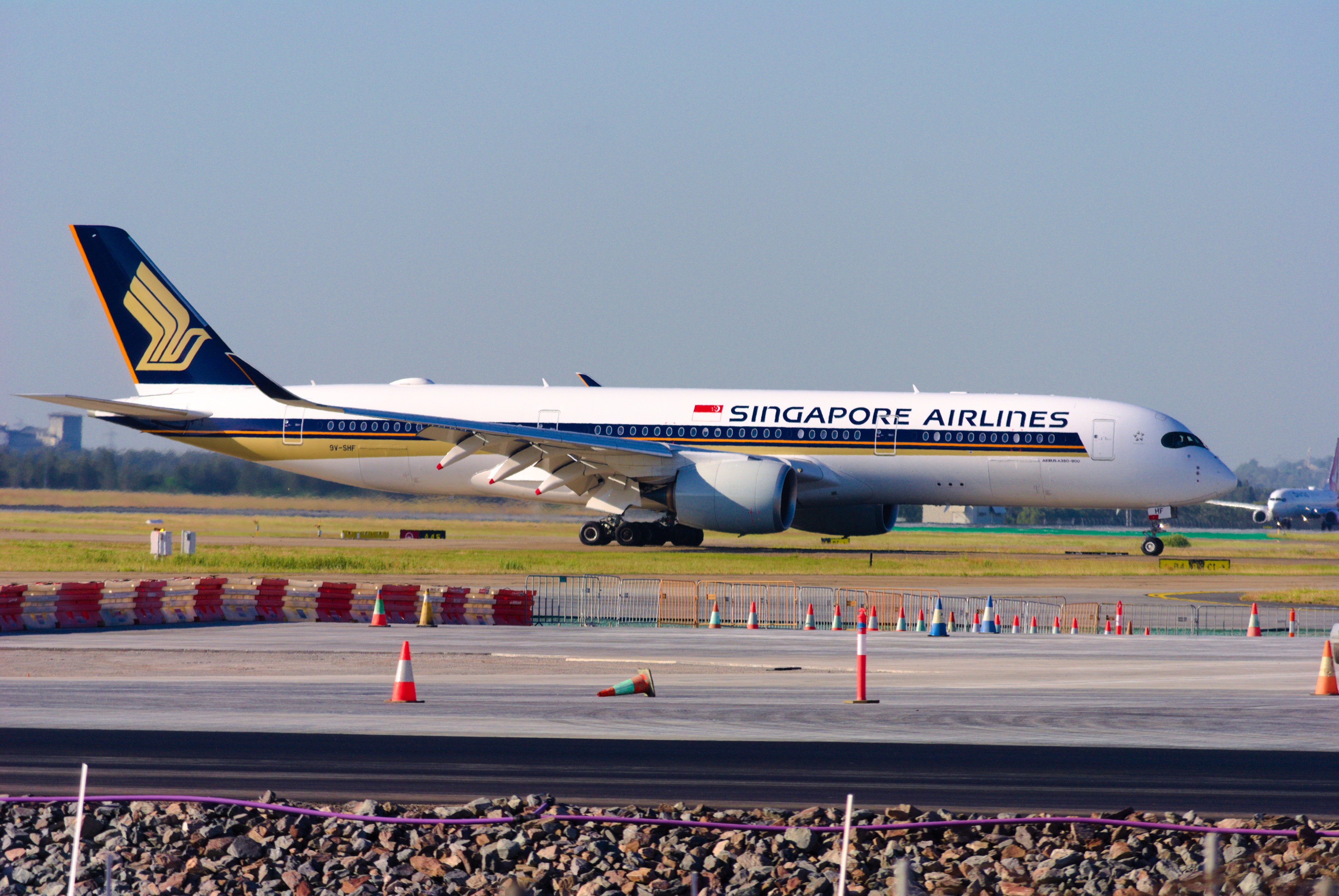
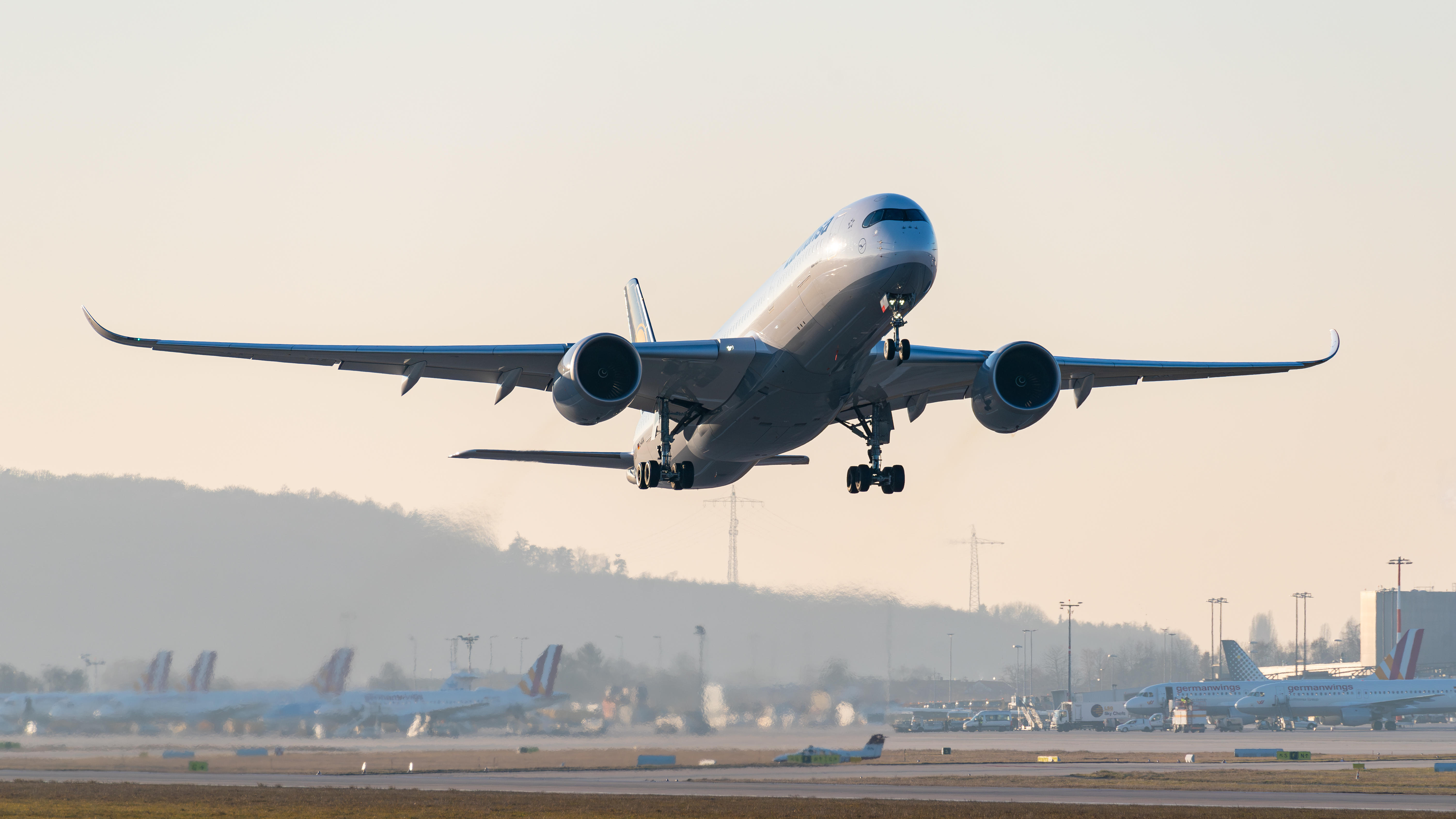
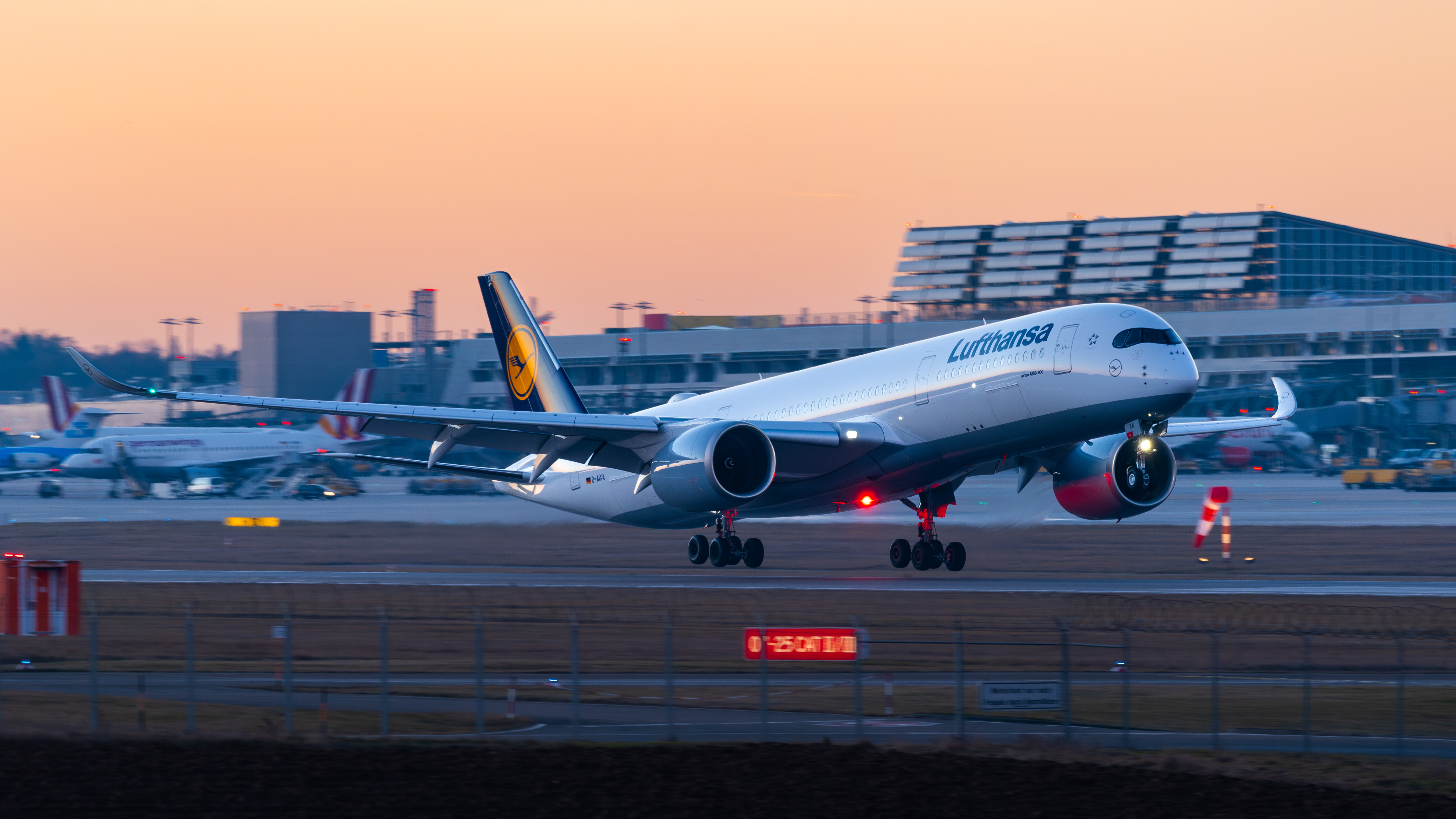
Final assembly began in February 2016 and the first aircraft flew on 24 November 2016. Three test aircraft shared a 1,600-hour programme that allowed maximum take-off weight to rise from 308 to 316 tonnes. EASA and the FAA certified the model on 21 November 2017. Delivery to Qatar Airways slipped over business-class seat installation and took place on 20 February 2018, with the first revenue flight, Doha to London Heathrow, on 24 February 2018. Maximum weight kept climbing, to 322 tonnes in October 2023, and new Type-A+ exits raised maximum capacity from 440 to 480 seats in 2019, a layout French Bee introduced in December 2021. A further stretch, the notional A350-2000, was studied in 2016 and shelved at the 2017 Paris Air Show for lack of demand.
Ultra long range: the A350-900ULR
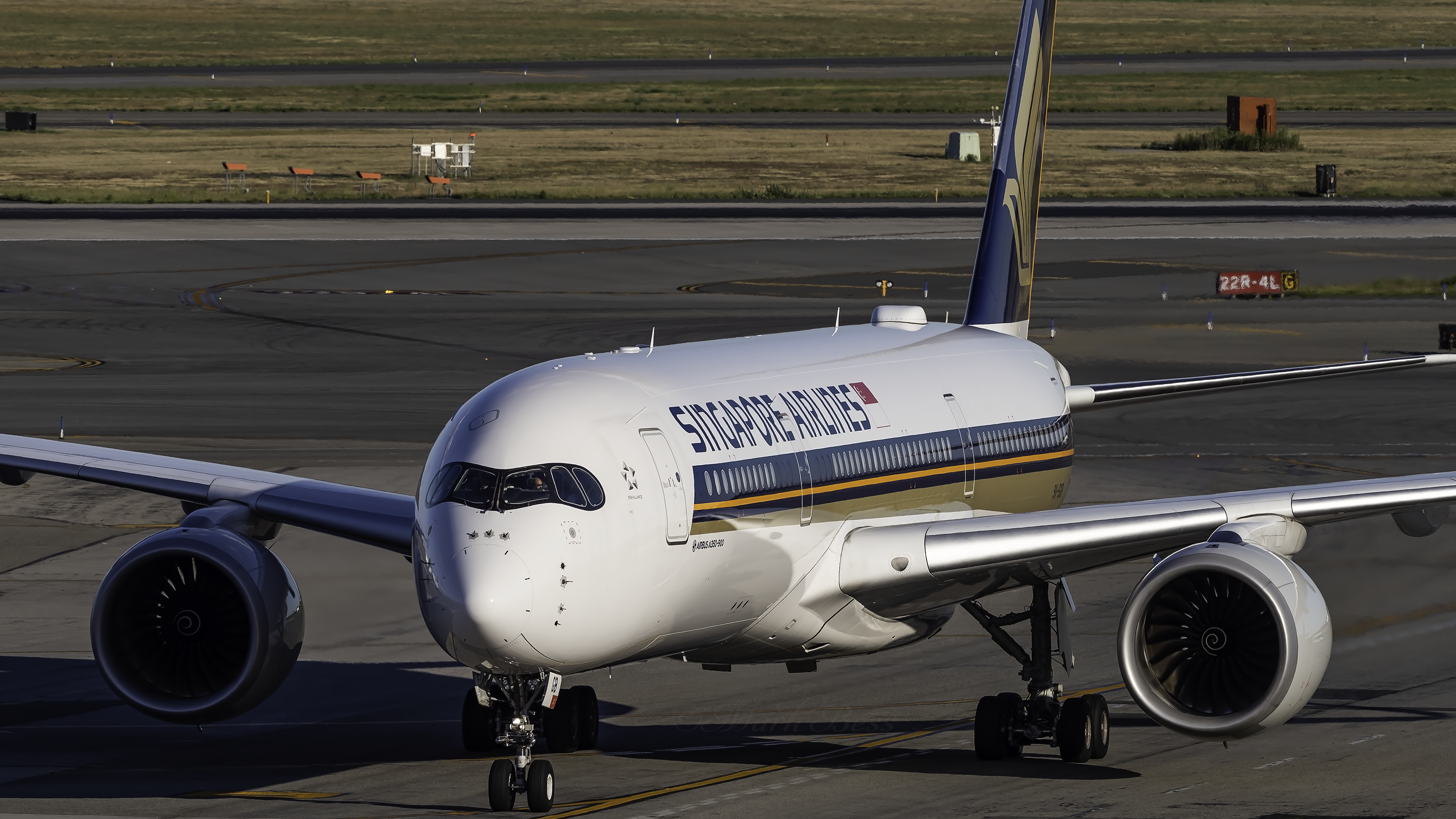
Singapore Airlines launched this variant, which raises maximum take-off weight to 280 tonnes and fuel capacity from 141,000 to 165,000 litres without extra tanks, by using spare volume in the centre wing box, for flights of up to 19 hours and 9,700 nmi. It keeps the A350-941 type certificate. It first flew on 23 April 2018, and Singapore received its first on 23 September 2018. On 12 October 2018 one landed at Newark after 17 hours 52 minutes from Singapore, then the world's longest flight, and the type still flies Singapore Airlines flights 23 and 24 between Singapore and New York-JFK. Its aerodynamic refinements, such as the extended sharklets of the 2017 package, were later applied across -900 production.
ACJ350, regional and heavy versions
The ACJ350 corporate version from Airbus Corporate Jets is derived from the -900ULR; the German Air Force ordered three to replace its A340-300s. Airbus also floated a lighter A350-900 Regional that was never ordered as such, although Japan Airlines took a 369-seat domestic -900 with a 217-tonne maximum weight. At the other end of the scale, Philippine Airlines introduced a higher-weight -900 in July 2018 that can fly Manila-New York without payload restrictions.
The A350F freighter
A freighter was first mentioned in 2007, but the Airbus board did not approve development until July 2021. It is based on the -1000 with a fuselage shortened to 70.8 m, a main-deck cargo door aft of the wing and a 111-tonne payload, more than the 777F. Air Lease Corporation launched it at the 2021 Dubai Air Show and cancelled in August 2025; Singapore Airlines ordered seven in 2022, and in March 2026 Atlas Air placed a firm order for 20, its first ever for non-Boeing aircraft. Supply-chain problems, notably at Spirit AeroSystems, pushed service entry to 2027. The prototype first flew from Toulouse on 29 September 2026.
Continuous improvement and Project Sunrise
Production has absorbed a series of upgrades: the 2017 package with extended sharklets and higher weight, first delivered to Iberia in June 2018; the 2019 package with LED lighting and the removal of a redundant probe, first delivered to Singapore Airlines; and the 2022 new production standard, which cuts 1.2 tonnes from the structure, raises maximum weight and widens the cabin to take ten-abreast seating. A hybrid laminar-flow fin was also tested under the EU Clean Sky programme.
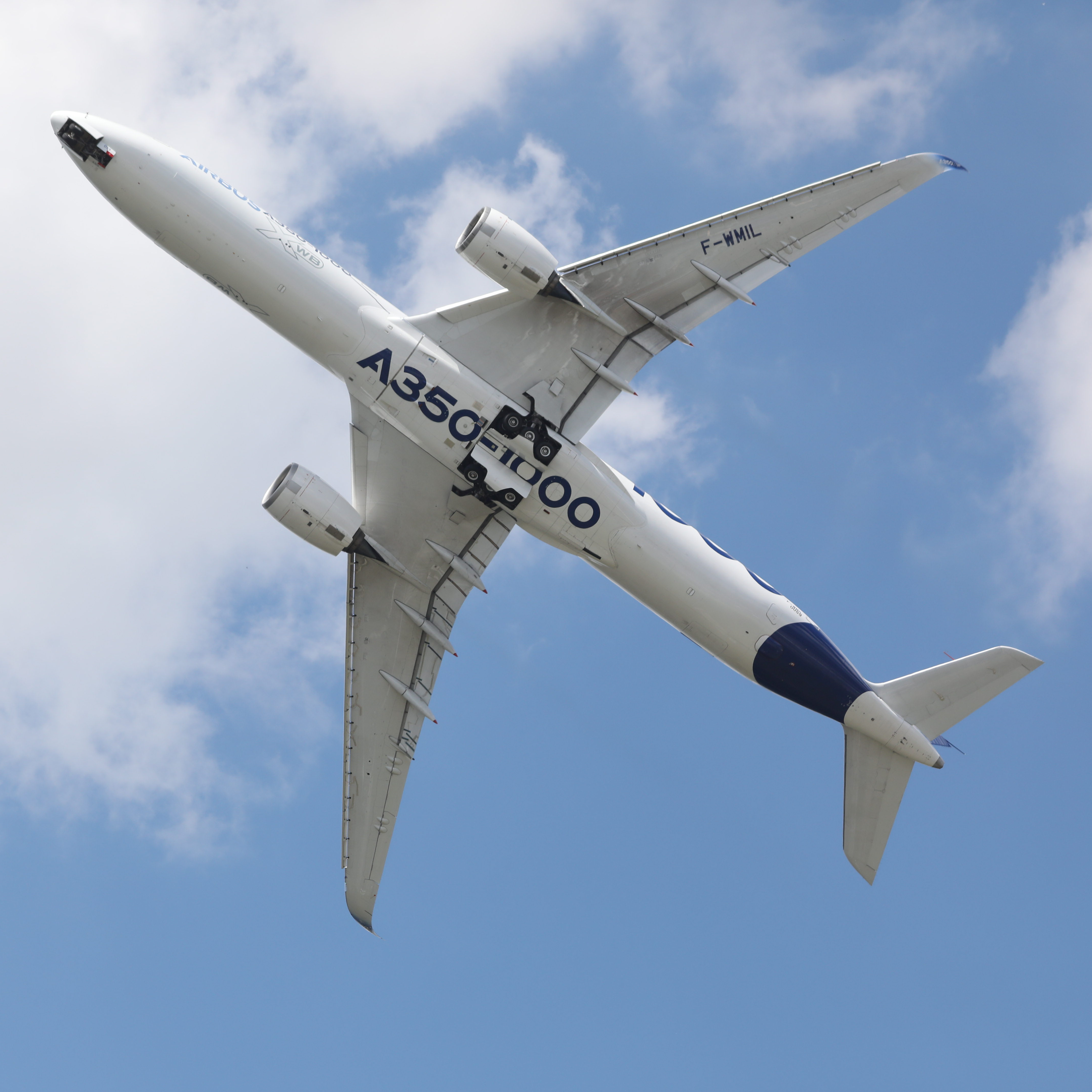
Qantas chose the A350-1000 for its Project Sunrise ultra-long-haul flights and, after a pandemic delay, firmed an order for 12 aircraft on 2 May 2022. EASA approved the design of an extra rear centre tank in 2024, and in November 2025 Airbus and Qantas showed the first A350-1000ULR. The first Sunrise test flight, Toulouse to Melbourne, lasted 19 hours 12 minutes on 23-24 July 2026; the return on 27-28 July logged 24 hours 25 minutes in the air over roughly 12,460 nautical miles.
The Qatar Airways paint dispute
In August 2021, while repainting aircraft in a 2022 FIFA World Cup livery, Qatar Airways found unusual paint degradation and grounded part of its A350 fleet. EASA concluded that the defect did not affect the structure or create other risks; only Qatar's own regulator called it an airworthiness issue. Finnair, Cathay Pacific, Etihad, Lufthansa and Air France had reported paint damage as early as 2016. Qatar sued Airbus in the English courts on 20 December 2021, claiming the flaws compromised lightning protection over the wing fuel tanks, and Airbus cancelled the airline's outstanding orders. The two sides reached a confidential settlement on 1 February 2023.
Production, orders and operators
Output rose from three aircraft a month in early 2015 to ten in 2018, when 93 were delivered, followed by 112 in 2019. COVID-19 cut the rate to six a month from April 2020; Airbus plans to return to ten and reach twelve by 2028. On 30 September 2022 Iberia received the 500th A350. The family passed 1,000 orders in June 2023, and the -900 alone did so two years later.
In September 2026 the A350 counted 1,624 firm orders from 66 customers, 737 deliveries and 736 aircraft in service with 38 operators. Turkish Airlines was the biggest customer with 110 on order, and the largest operators were Singapore Airlines (65), Qatar Airways (63), Cathay Pacific (48), Air France (46) and Delta Air Lines (42). The list keeps growing: in early September 2026 KLM flew two test flights with its first A350, named "De Nachtwacht" after Rembrandt's painting, ahead of a delivery due that month and services to destinations such as Toronto, Montreal, Nairobi and Zanzibar.
Accidents
The A350 has suffered a single hull loss. On 2 January 2024 Japan Airlines flight 516, an A350-900 arriving from Hokkaido, struck a Japan Coast Guard Dash 8 after touching down at Tokyo's Haneda airport; the Coast Guard aircraft, carrying relief supplies for victims of the Noto earthquake, was on the runway without clearance. The A350 burned out, but all 367 passengers and 12 crew escaped down the slides, with 17 injuries and no deaths. Five of the six people on the Coast Guard aircraft were killed.
Legacy
The A350 proved that Airbus could compete on the ground Boeing had opened with the 787, that of composite wide-body twins, and it gave the industry the longest-range airliner in service. By June 2026 its fleet of 717 aircraft, averaging just over five years old, had flown more than 1,400 routes with 99.28% operational reliability. The design still has room to grow: Airbus has studied a re-engined A350neo built around next-generation ultra-high-bypass engines, and the freighter and Sunrise versions open new markets for a family that began as a patch-up job and ended up as Airbus's benchmark large twinjet.
Variants
| A350-900 | A350-1000 | A350-900ULR | A350F | A350-1000ULR | A350-2000 | A350-800 | A350-900R | A350-900 Regional | ACJ350 | |
|---|---|---|---|---|---|---|---|---|---|---|
| First flight | June 14, 2013 | November 24, 2016 | April 23, 2018 | September 29, 2026 | — | — | — | — | — | — |
| Aircraft type | Long-range wide-body airliner | — | — | — | — | — | — | — | — | — |
| Powerplant | 2 × Rolls-Royce Trent XWB-84 high-bypass turbofans, 374.5 kN each | — | — | — | — | — | — | — | — | — |
| Powerplant | 2 × Rolls-Royce Trent XWB-84 | 2 × Rolls-Royce Trent XWB-97 | 2 × turbofan | 2 × turbofan | 2 × Rolls-Royce Trent XWB-97 | 2 × Rolls-Royce Trent XWB-97 | 2 × turbofan | 2 × turbofan | 2 × turbofan | 2 × turbofan |
| Thrust per engine | 375 kN | 432 kN Best value in this row | — | 432 kN Best value in this row | 432 kN Best value in this row | — | — | — | — | — |
| Length | 66.8 m | 73.8 m Best value in this row | 66.8 m | 70.8 m | — | — | 60.5 m | — | — | — |
| Wingspan | 64.8 m Best value in this row | 64.8 m Best value in this row | — | — | — | — | — | — | — | — |
| Height | 17.1 m | 17.1 m Best value in this row | — | — | — | — | — | — | — | — |
| Wing area | 442 m² Best value in this row | — | 442 m² Best value in this row | — | — | — | — | — | — | — |
| Empty weight | 115,700 kg Best value in this row | 129,000 kg | — | — | — | — | — | — | — | — |
| MTOW | 283,000 kg | 322,000 kg Best value in this row | 280,000 kg | 319,000 kg | — | 319,000 kg | 259,000 kg | — | 250,000 kg | — |
| Top speed | 950 km/h | — | — | — | — | — | — | — | — | — |
| Cruise speed | 903 km/h | — | — | — | — | — | — | — | — | — |
| Service ceiling | 13,100 m Best value in this row | 12,634 m | — | — | — | — | — | — | — | — |
| Range | 15,400 km | 16,100 km | 18,000 km | 8,700 km | — | 14,100 km | 15,270 km | — | 12,600 km | 20,550 km Best value in this row |
| Range conditions | 15,400 km (8,300 nmi) per Airbus, at the 283 t maximum take-off weight | — | — | — | — | — | — | — | — | — |
| Armament | None | — | — | — | — | — | — | — | — | — |
| Max weapons load | 0 kg | — | — | — | — | — | — | — | — | — |
| Payload | 53,300 kg | — | — | 111,000 kg Best value in this row | — | — | — | — | — | — |
| Cargo capacity | 300-350 seats in a typical three-class layout and up to 440 maximum; 53.3 t payload; lower deck holds 36 LD3 containers or 11 pallets (172.40 m³) | — | — | — | — | — | — | — | — | — |
| Crew | 2 Best value in this row | 2 Best value in this row | — | — | — | — | — | — | — | — |
| Passengers | 440 | 480 Best value in this row | — | — | — | — | — | — | 360 | — |
| Units built | — | — | — | — | — | 0 Best value in this row | 0 Best value in this row | 0 Best value in this row | 0 Best value in this row | — |
Images
Elsewhere
- AeroxplorerAirbus A350-900 de Finnair (OH-LWH) en Singapur-Changi ↗
- AeroxplorerAirbus A350-900 de Qatar Airways (A7-ALZ) con librea oneworld, Filadelfia ↗
- AeroxplorerAirbus A350-900 de Qatar Airways (A7-AMG) ↗
- Delta News HubAirbus A350-900 de Delta en vuelo (imagen de prensa) ↗
- Delta News HubAirbus A350-900 de Delta (imagen de prensa) ↗
- Aviation Photo CompanyAirbus A350-900 de Singapore Airlines en Manchester, 2017 ↗
- Loop InsightCinco A350-900 de pruebas volando en formacion (sesion de Airbus, 2014) ↗
- Flight-ReportGaleria de fotos de viajeros del Airbus A350-900 ↗
- AirbusPrimer vuelo del A350-1000 (MSN059), Toulouse, 24-11-2016 ↗
- Aviation Week (ATW)Galeria: el Airbus A350-1000 inicia su primer vuelo ↗
- Flightradar24 BlogEl Airbus A350-1000 despega en su primer vuelo ↗
- FlightAwareAirbus A350-1000 de British Airways (G-XWBI) ↗
Show the 19 more
- Lufthansa Group Media LoungeImagen del Airbus A350-1000 (Lufthansa Group Media Lounge) ↗
- JetPhotosAirbus A350-1000 (JetPhotos) ↗
- JetPhotosAirbus A350-1000 (JetPhotos) ↗
- JetPhotosAirbus A350-1000 (JetPhotos) ↗
- Flight-ReportGaleria de fotos de viajeros del Airbus A350-1000 ↗
- JetPhotosAirbus A350-900ULR 9V-SGA en final a Changi, entrega 2018 ↗
- JetPhotosAirbus A350-900ULR 9V-SGA remolcado en Nueva York-JFK, 2021 ↗
- AirlineGeeksSingapore Airlines recibe el primer A350-900ULR ↗
- Mainly MilesSingapore Airlines recibe el primer A350ULR del mundo ↗
- WingbornPrimer vuelo de pruebas del A350-900ULR (foto Airbus) ↗
- AirlineReporterFotos y noticias del A350-900ULR ↗
- AeroxplorerAirbus A350-900ULR 9V-SHE en Singapur-Changi ↗
- Airways MagazinePrimer vuelo del A350F en fotos ↗
- Airways MagazineMontaje del primer A350F en Toulouse ↗
- Air Cargo NewsSecciones de fuselaje del A350F llegan a la linea de montaje de Toulouse ↗
- CargoForwarder GlobalComienza el montaje del A350F (seccion 19 en Hamburgo) ↗
- STAT TimesPrimer A350F de pruebas con la librea Flying Parcel ↗
- Air Data NewsPrimer A350F con librea de caja de reparto ↗
- AirbusLa linea de montaje final del A350 se prepara para el carguero ↗
Videos


Did you know… about Airbus A350
- How high planes fly?
Commercial jets typically cruise between 9,000 and 12,500 m (30,000–41,000 ft), where thin air cuts drag and fuel burn while the engines still get enough…