Apollo program · NASA · Crewed
Apollo 15
- Jul 26, 1971, 1:34 PM
- Launch date
- 3
- Crew size
- 12 days 7 hr
- Duration
- Success
- Outcome
Apollo 15 in the news
August 2, 2026
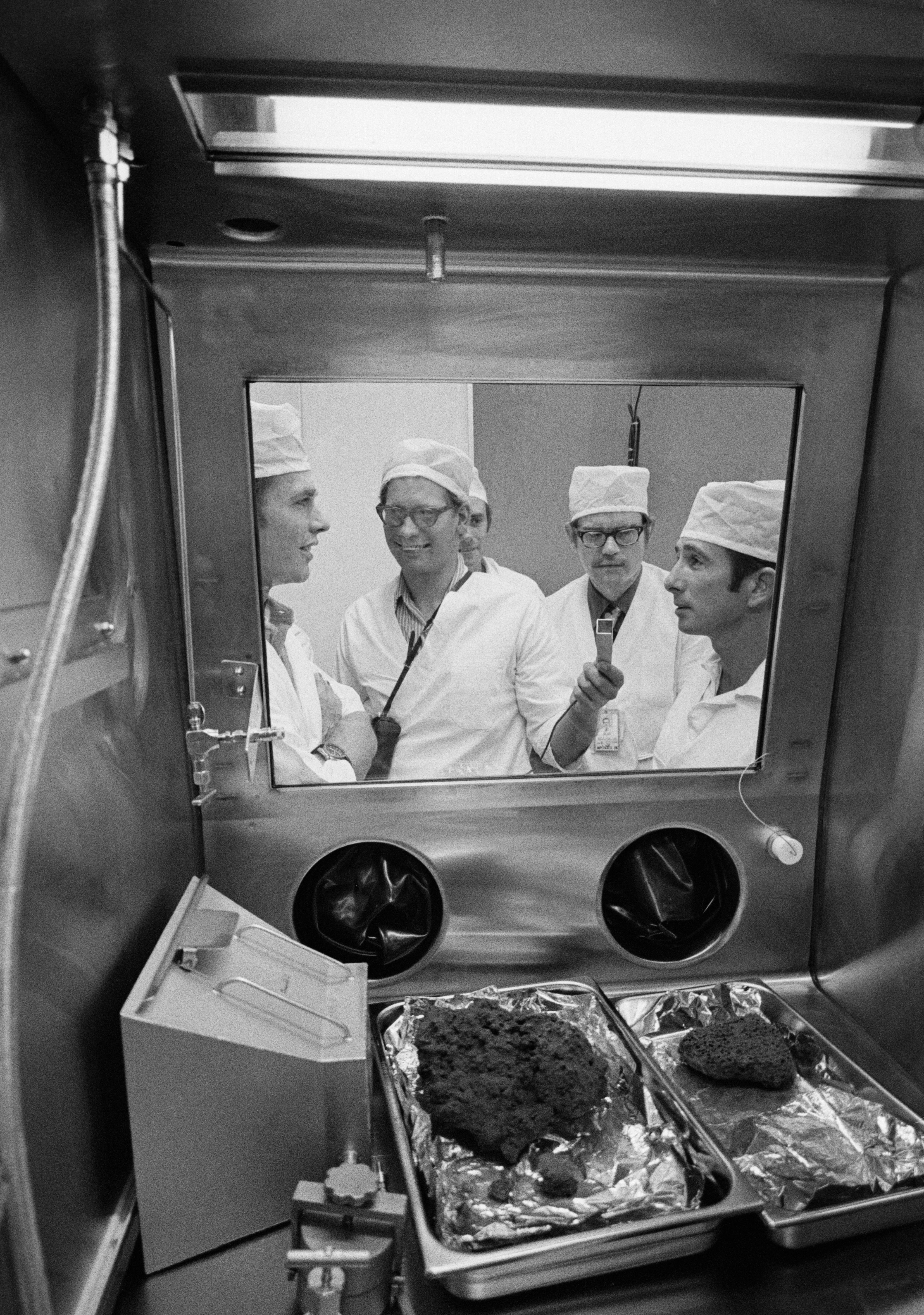
On Aug. 2, 1971, a lunar liftoff was televised for the first time on NASA's Apollo 15 mission, one giant leap for live TV from the moon.
July 31, 2026
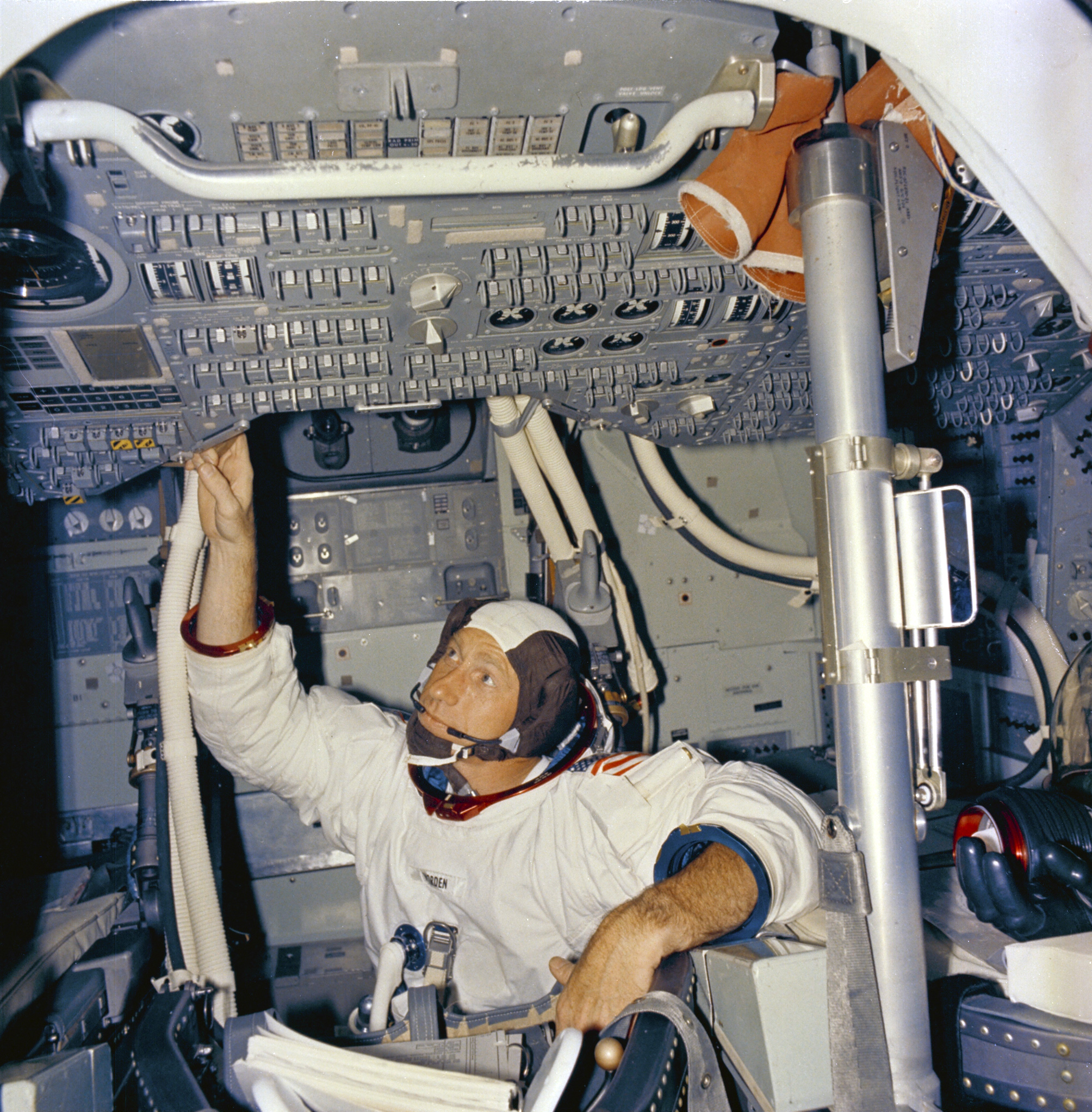
On July 31, 1971, Apollo 15 astronauts drove on the moon for the first time. Here's how it happened and why it mattered.


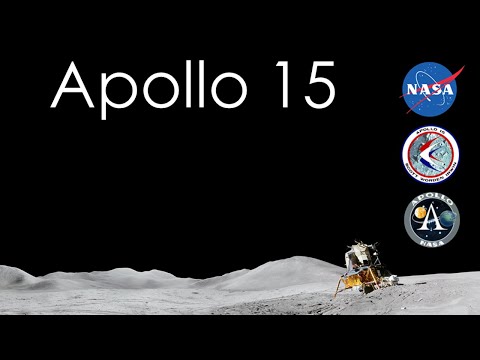
Apollo 15 was the fourth American mission to put astronauts on the surface of the Moon and the first of the so-called J missions, designed for longer stays with science at the heart of the flight plan. It lifted off from Launch Complex 39A at Kennedy Space Center on 26 July 1971 aboard a Saturn V, with David Scott as commander, Alfred Worden flying the command module Endeavour and James Irwin as pilot of the lunar module Falcon. Scott and Irwin touched down on 30 July on the Hadley plain, at the foot of the Apennine mountains and beside the winding channel of Hadley Rille, a far more rugged spot than any chosen before. They stayed on the surface for 66 hours and 55 minutes, spent about eighteen and a half hours outside and introduced the Lunar Roving Vehicle, the electric car that carried them 27.9 kilometres and let them range further from the lander than anyone had done. They came home with 77 kg of rock and soil, including the famous "Genesis Rock", a fragment interpreted as a piece of the Moon's primitive crust. Meanwhile Worden surveyed the Moon from orbit with the service module's Scientific Instrument Module (SIM) bay: panoramic and mapping cameras, spectrometers and a laser altimeter. Before heading home the crew released the PFS-1 subsatellite, and on the way back Worden made the first spacewalk in deep space to retrieve the SIM film. Splashdown in the North Pacific on 7 August came with one of the three parachutes failed, without consequence. The mission met its goals and marked the shift from demonstration flights to field geology on another world, although the following year it was overshadowed by the affair of the postal covers the crew had carried without authorisation.
Payload
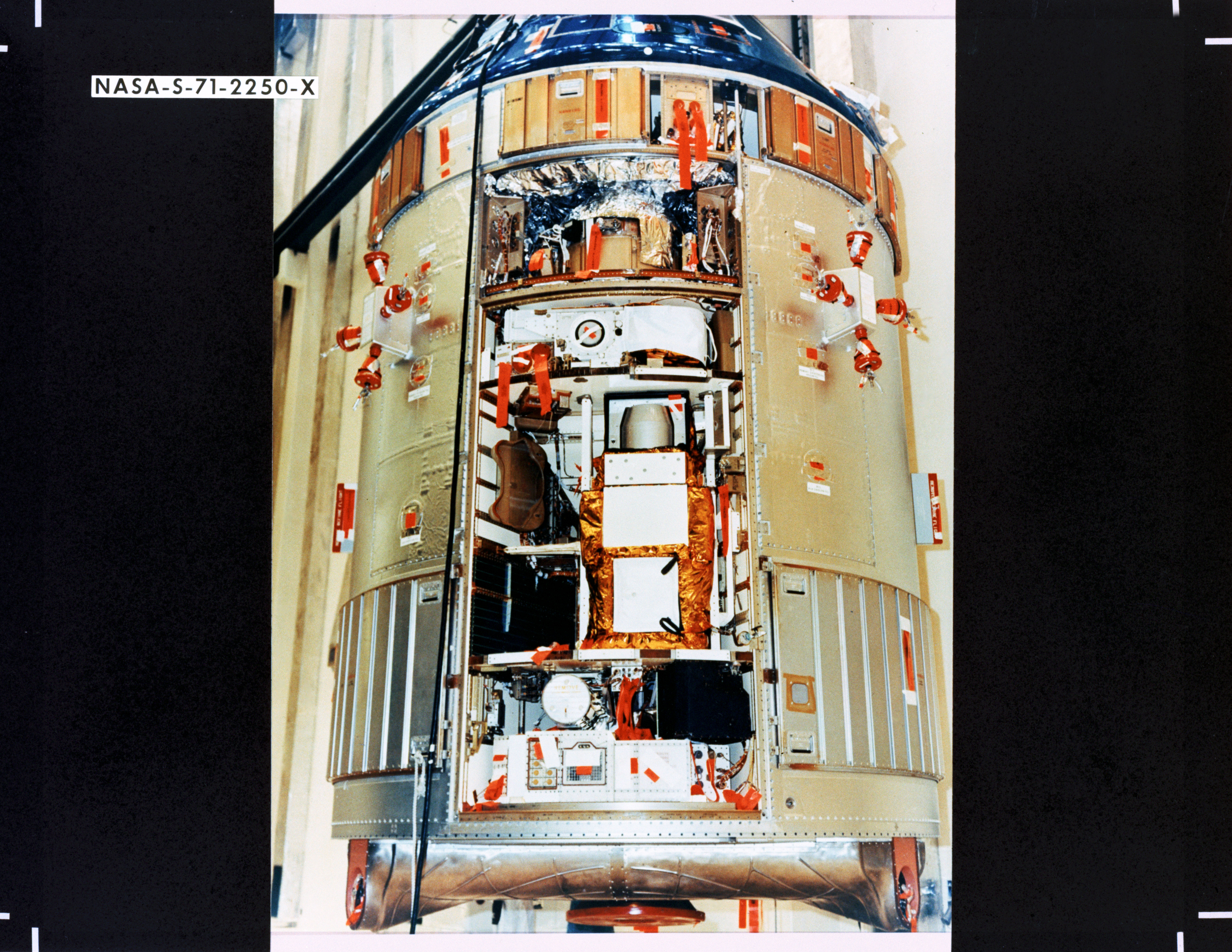
Apollo 15 carried the most complete payload of the programme up to that point. Folded into Falcon's descent stage was the Lunar Roving Vehicle, the first crewed vehicle on the Moon: electric, about 209 kg empty, it covered 27.9 kilometres over three excursions. On the surface the crew deployed the ALSEP experiment package, with a passive seismometer, magnetometer, solar wind spectrometer, ion detectors, a heat flow experiment that required drilling into the regolith and a laser retroreflector. In orbit, the service module's Scientific Instrument Module (SIM) bay added panoramic and mapping cameras, a laser altimeter and gamma-ray, X-ray, alpha particle and mass spectrometers. Before the return, the PFS-1 particles and fields subsatellite was released into lunar orbit, sending data from August 1971 until January 1973. The spacecraft came home with 77 kg of lunar samples.
| Crew | Role | Agency | Extravehicular activity |
|---|---|---|---|
| David Randolph Scott | Commander | NASA · United States | — |
| Alfred Merrill Worden | Command module pilot | NASA · United States | — |
| James Benson Irwin | Lunar module pilot | NASA · United States | — |
History
From H mission to first J mission
Apollo 15 was not born as the mission it ended up being. In the initial plans it was listed as just another H mission, similar to Apollo 12 and 14: barely two days on the Moon, two moonwalks and a package of instruments to leave on the surface. The turning point came in September 1970, when NASA cancelled two missions from the programme for budgetary reasons. The reshuffle turned Apollo 15 into the first of three extended missions, the J missions, with a reinforced lunar module able to remain on the surface for up to 75 hours, a wheeled vehicle to travel far from the landing site, and a service module loaded with orbital observation instruments.
With the change in category came a change in destination too. The site selection committee was torn between two candidates: the crater Marius, surrounded by small domes of possible volcanic origin, and Hadley Rille, a deep channel at the edge of the Mare Imbrium and at the foot of the Apennines. Hadley was chosen, a site until then reserved for Apollo 19, one of the cancelled flights. It was the first time a landing would not be confined to the equatorial belt, and the site held great promise: material from deeper regions of the Moon, a sinuous rille perhaps carved by volcanism, and, moreover, a position that better completed the network of seismometers left by earlier expeditions. The price was high. NASA lacked high-resolution imagery of the area, which no one had wanted to risk on earlier missions given the rugged terrain, and the proximity of the mountains demanded a 26-degree approach trajectory, far steeper than the 15 degrees of previous landings.
The crew and their training as geologists
Command fell to David Scott, a veteran of Gemini 8 and Apollo 9, joined by two rookies: Alfred Worden as command module pilot and James Irwin as lunar module pilot. The three had been the backup crew for Apollo 12, so they already knew the spacecraft well and could devote much of their preparation to geology. The backup crew comprised Richard Gordon, Vance Brand and geologist Harrison Schmitt.
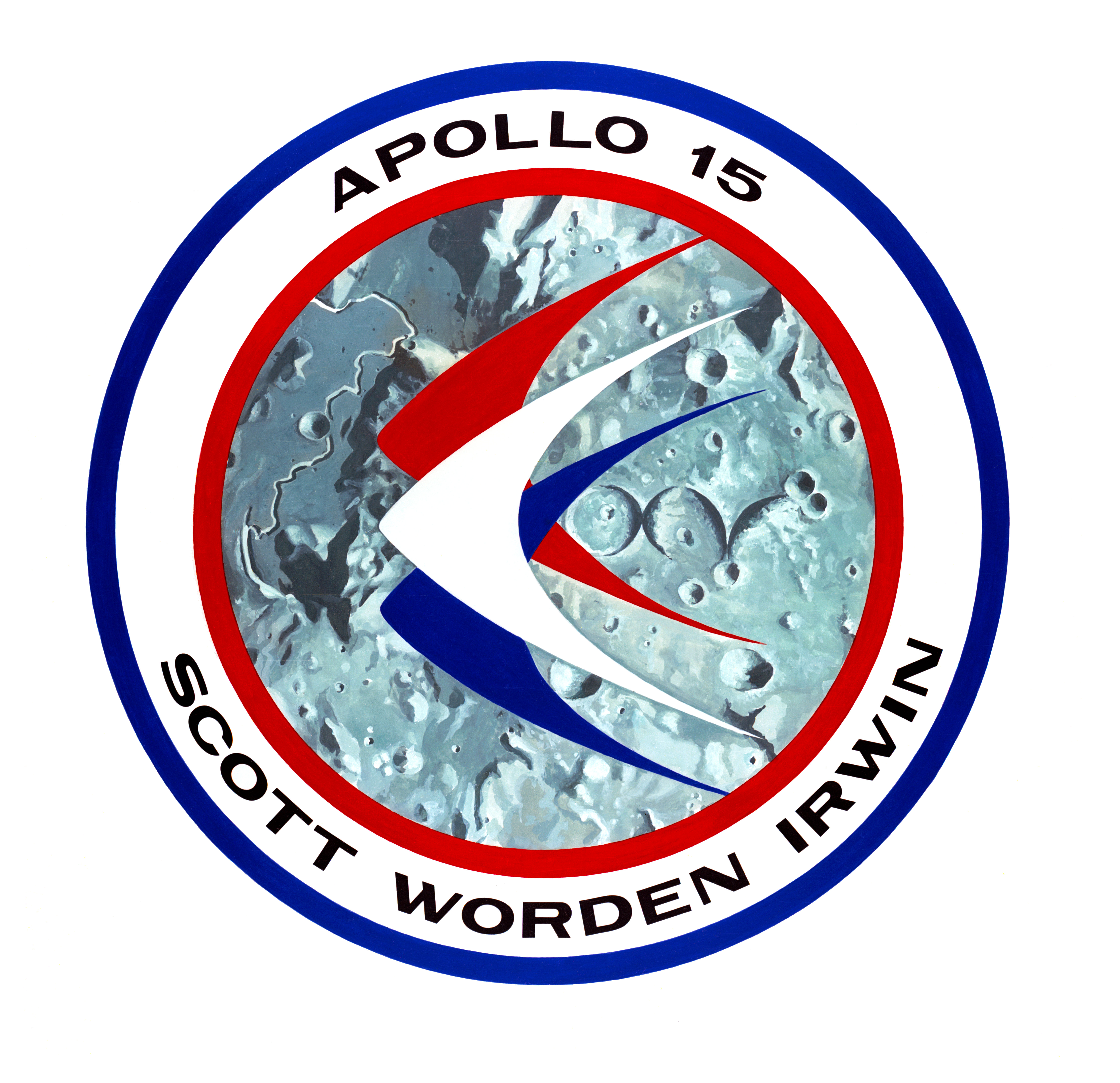
Schmitt was a key piece of that training. He had put the astronauts in touch with Lee Silver, a Caltech geologist and a professor able to spread enthusiasm for fieldwork. Scott, determined that his crew would bring back the maximum amount of scientific data, met with Silver in April 1970 to design the programme. Over the 20 months of training there was roughly one field trip a month. At first Silver took the commanders and lunar module pilots of both crews to Arizona and New Mexico as if it were an ordinary geology class; as the launch drew closer, the exercises became more realistic. Near the Rio Grande gorge the astronauts walked with mock-ups of the backpacks they would carry on the Moon and spoke by radio with a CAPCOM stationed in a tent. Beside him sat a geologist unfamiliar with the area, who had to interpret the findings solely from the descriptions given, a method that taught the crew to convey a landscape to someone who could not see it. Scott, who considered himself a serious amateur, ended up genuinely enjoying field geology. As backup, Schmitt also stirred up healthy competition between the two crews.
Worden took a different path. He spent long stretches at the North American Rockwell facilities in Downey, California, where the spacecraft was being built, and trained with geologist Farouk El-Baz. Together they studied maps and photographs of the craters he would fly over alone, and Worden learned to describe terrain in a way useful to the scientists who would be listening to his transmissions. He often joined his crewmates on field trips, though frequently from an aircraft simulating the speed at which the lunar landscape would pass beneath the spacecraft.
Spacecraft and names
The command and service module CSM-112 received the call sign Endeavour, in tribute to James Cook's ship: Scott recalled that the voyage had been the first sea expedition of a purely scientific nature, just as Apollo 15 was the first lunar mission with science as its central aim. A small piece of wood from the vessel travelled on board. The lunar module LM-10 was named Falcon, after the mascot of the Air Force Academy, and carried two falcon feathers to the Moon in recognition of the crew's military background.
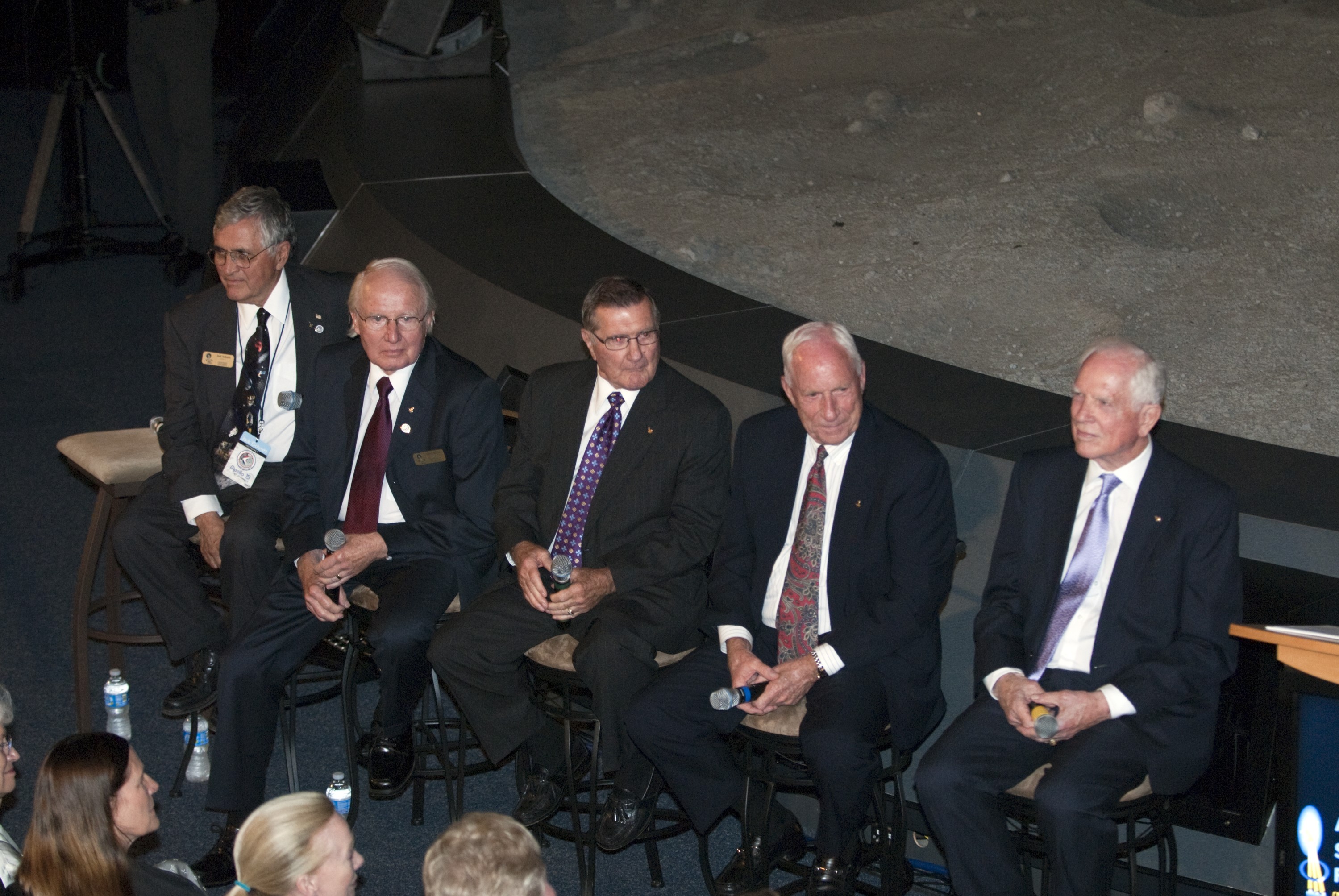
The new requirements swelled the lunar module to about 36,000 pounds, 4,000 more than earlier models. To be able to launch it, NASA aimed the liftoff further south than on previous missions and lowered the Earth parking orbit to 166 kilometres, two adjustments that gained payload capacity for the Saturn V AS-510.
A folding off-roader
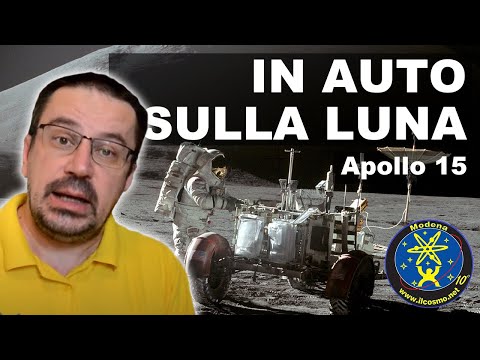
NASA had been thinking about a vehicle for the lunar surface since the early 1960s, but did not decide to build one until May 1969. Boeing received the contract to manufacture three units, and cost overruns, especially in the navigation system, drew press attention at a time of budget cuts and public fatigue with the space programme. The result was an ingenious machine: folded, it occupied a space of 1.5 by 0.5 metres in the lunar module's descent stage; empty it weighed 209 kg, and with the two astronauts and their equipment, about 700 kg. Each wheel had its own 200 W electric motor, and although either astronaut could drive it, the commander always did, while the lunar module pilot helped him navigate. At 10 to 12 km/h, the astronauts could for the first time move away from the module and still have time left for scientific work.
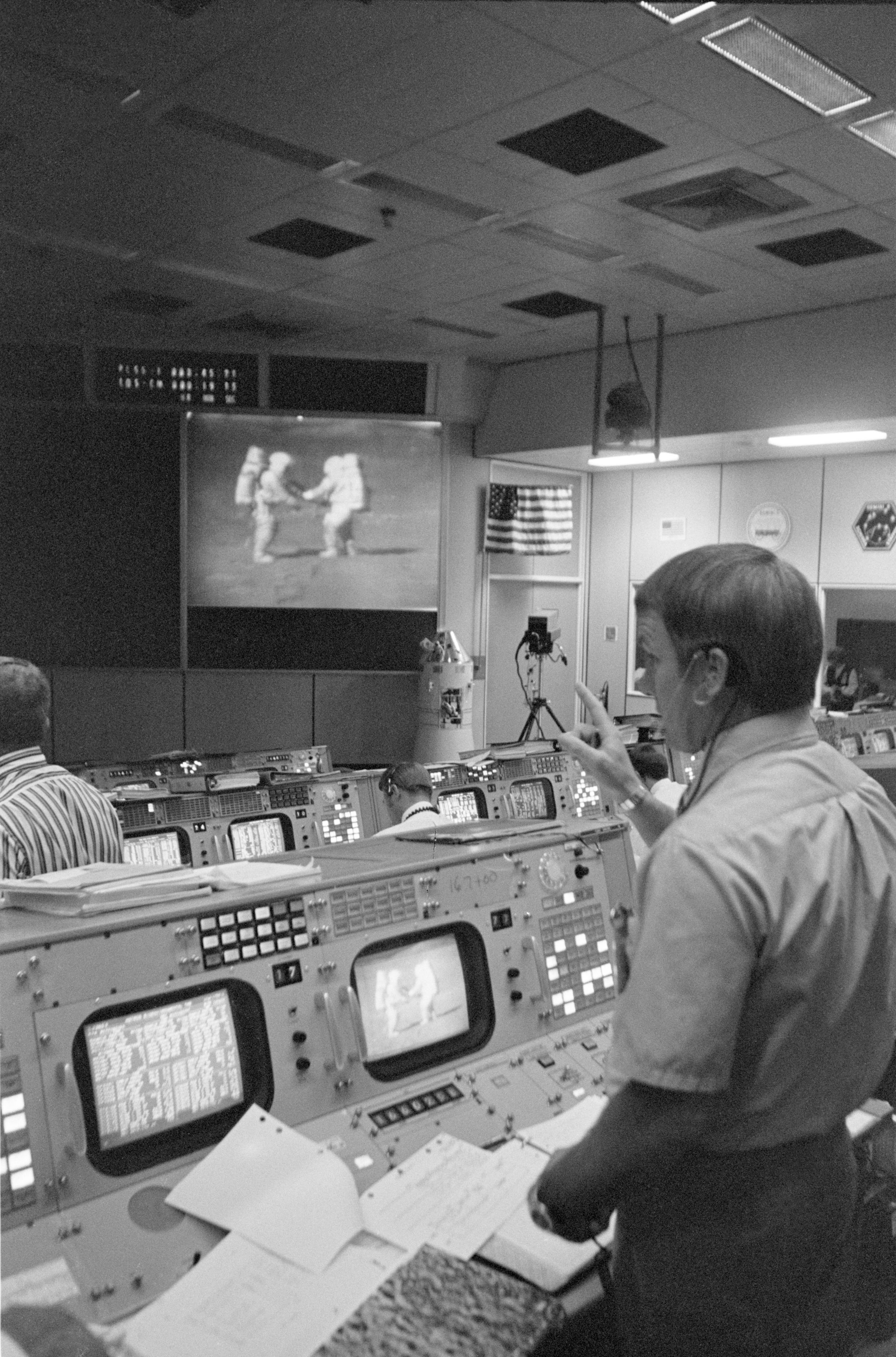
The vehicle carried a television camera operated remotely from Houston by Ed Fendell, and a communications unit that relayed voice and data to Earth. The image did not match the quality of still photographs, but it let the geologists at mission control follow almost in real time what Scott and Irwin were doing. The Apollo 15 rover bore a plaque reading "Man's First Wheels on the Moon, Delivered by Falcon, July 30, 1971".
Launch and journey to the Moon
Apollo 15 lifted off from Complex 39A on 26 July 1971, right at the opening of a two-hour-37-minute launch window calculated to reach Hadley with the right lighting. After just under twelve minutes of ascent, the third stage S-IVB left the spacecraft in a parking orbit, where crew and mission control checked the systems for about two hours and 40 minutes before translunar injection. Once separated from the spacecraft, the S-IVB was deliberately steered into the Moon; its impact, although it landed 146 km from the planned point, was recorded by the seismometers left behind by Apollo 12 and Apollo 14.
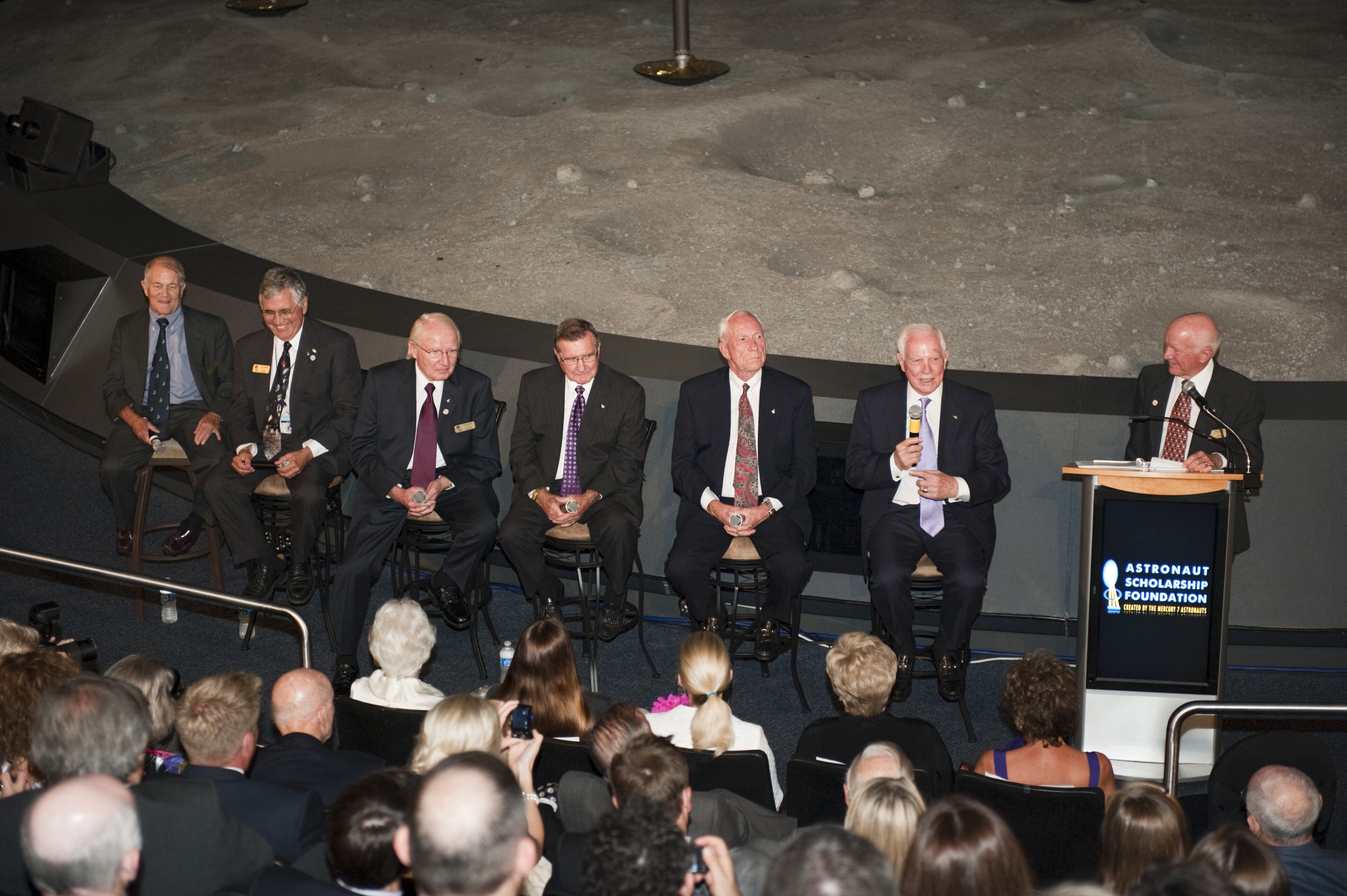
The outbound trip was not free of scares. While inspecting the lunar module, the crew found the glass of a gauge broken, its fragments floating around the cabin and having to be carefully collected. On 29 July the service module's main engine braked the spacecraft on the far side of the Moon, with no radio contact with Earth. Once communication was restored, Scott lingered describing the beauty of the landscape before giving the burn data, to the despair of Alan Shepard, who was waiting in Houston for a television interview.
The descent to Hadley
Since Apollo 14, the service module itself lowered the orbit before separation to save fuel in the lunar module, which on the J missions was much heavier. During the night of 29 to 30 July, mission control noticed that mass concentrations beneath the lunar surface were distorting the orbit and bringing its low point too close, so it had to be corrected with the attitude control thrusters. With the problem solved, Falcon separated from Endeavour about 25 minutes late and Worden raised his spacecraft into a nearly circular orbit to begin his scientific work.
The descent down the slope of the Apennines was demanding. The trajectory arrived off course and the craters Scott had memorised in the simulator were hard to recognise in the real light; in the final metres, dust kicked up by the engine completely hid the ground. Falcon touched down on 30 July with about 103 seconds of fuel remaining, some 550 metres from the planned point and on the rim of a small crater, tilted noticeably, in what was probably the hardest landing of the whole programme.
A look from the hatch
Since Falcon was to spend nearly three days on the Moon and had arrived in the late afternoon by Houston time, Scott wanted to respect the crew's sleep schedule: sleep first, then go outside. Beforehand, however, he opened the module's upper hatch, the one normally used for docking, and spent half an hour leaning out, describing and photographing the surroundings. It was Silver's lesson of climbing to a high point to survey new terrain. Slayton and other officials objected because of the oxygen that would be lost, but Scott got his way and used that one "standing" excursion, the only one of the whole programme, to plan the next day. Afterwards, Scott and Irwin took off their suits to sleep, the first astronauts to do so on the Moon.
First excursion: wheels on the Moon
Scott and Irwin became the seventh and eighth men to walk on the Moon. Deploying the lunar rover, folded into a compartment of the descent stage, took longer than expected because of the module's tilt, until the experts in Houston suggested lifting the front while pulling it out. During the check-out, one battery read zero voltage, though it was only a faulty gauge. More serious was that the front-wheel steering did not respond: Scott switched power circuits and tried again, with no result, so the first excursion was made steering only with the rear wheels, which proved enough to manoeuvre. "Okay. Out of detent; we're moving," Scott said mid-sentence as he drove away from Falcon: the first words spoken by a human at the wheel on the Moon.
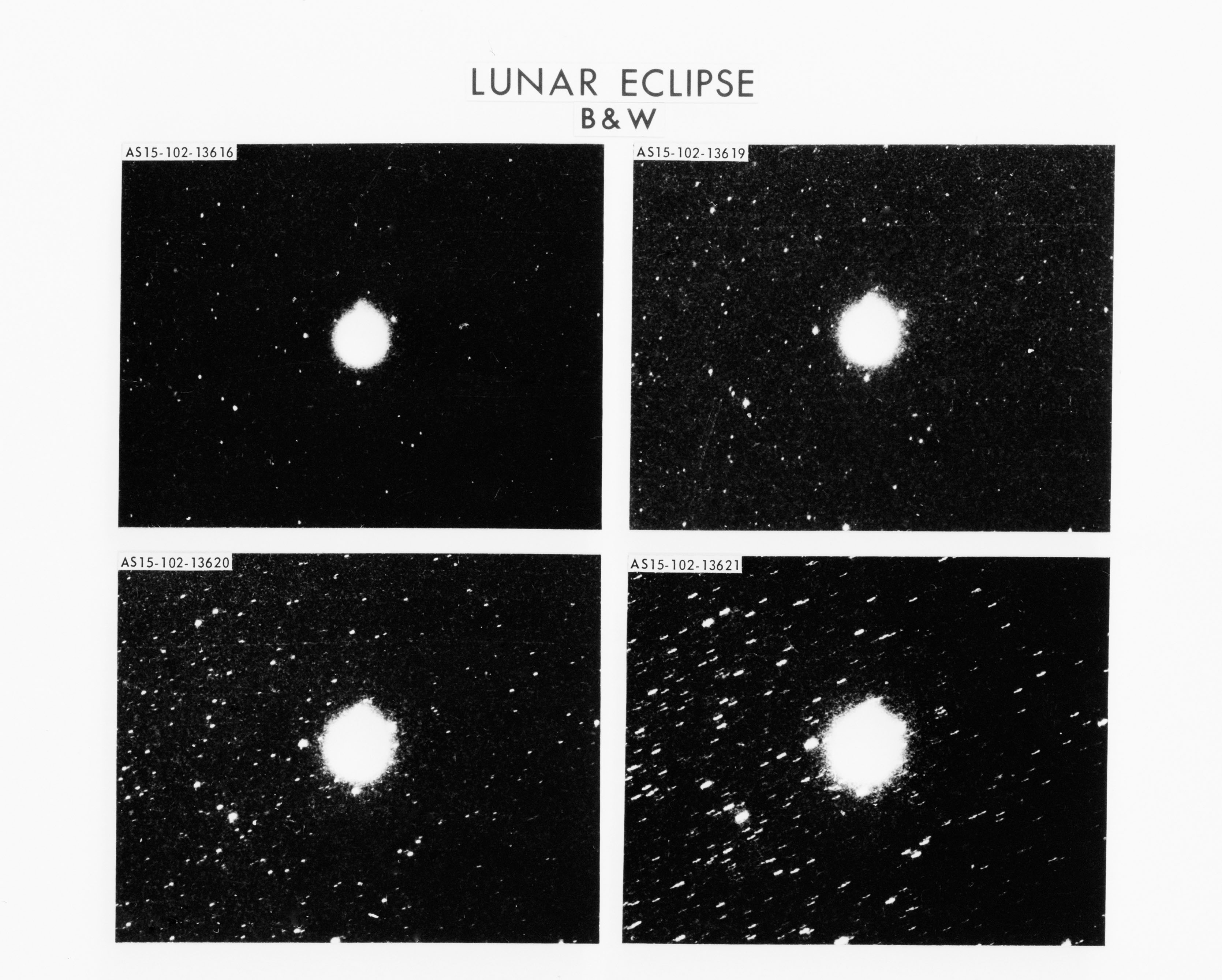
The rille could not be seen from the landing point, but it came into view as they advanced across the undulating terrain. They headed for Elbow crater, a known landmark that let mission control refine the module's actual position, collected samples there and continued on to the vicinity of St. George crater, on the flank of Mount Hadley Delta. On the way back, guided by the rover's navigation system, they had covered about 10.3 kilometres.
What remained was to set up the ALSEP, the package of experiments that would keep working after they left, about 110 metres west-northwest of the module. The hardest part was the heat flow experiment, which required two boreholes to house its thermal probes. Scott managed to open the first hole to about 172 centimetres and place the first probe, but the drill advanced much worse than expected and the second hole had to be postponed. The first excursion lasted 6 hours and 32 minutes.
Spur and the Genesis Rock
At the start of the second excursion, on 1 August, Scott tried the front-steering switch and circuit breaker again and, to everyone's surprise, it worked. He first tried four-wheel steering, which turned out too sensitive, and kept only the front steering for the rest of the mission. The round trip, 12.5 kilometres long, headed south, towards the front of the Apennines, along a route further east than the previous day's. The goal was the slope of Hadley Delta, whose scarp was thought to be an exposed fragment of the crust predating the impact that formed the Mare Imbrium: the Apennines would be blocks uplifted and fractured by that collision.
At Spur crater they spent an hour and collected a fragment of anorthosite weighing about 270 grams, made up mostly of anorthite, which the press dubbed the "Genesis Rock". The hope of finding such a rock had been one of the reasons for choosing Hadley, and at first it was thought to be a remnant of the Moon's primordial crust. Later analysis dated it to about 4.1 billion years, younger than the Moon itself, though it remains an extremely ancient sample; it is kept in Houston under number 15415. On the way back they stopped at the south rim of Dune crater, within the south cluster of craters, which probably formed from debris ejected by a large distant impact and allowed sampling material from other regions without travelling great distances.
Back at the module, Scott returned to the ALSEP, finished the second hole of the heat flow experiment to the same depth and placed the probe, though a damaged section of the drill stem kept him from reaching the bottom: it stopped at 105 centimetres, while the first probe occupied the stretch between 47 and 152 centimetres. The experiment had been activated on 31 July and was sending valid subsurface temperature data. Scott then began drilling to extract a deep core sample, but had to abandon it for lack of time. After raising the flag, the second excursion ended after 7 hours and 12 minutes.
The deep core and Hadley Rille
The third excursion, on 2 August, started later than planned so the crew could rest, and was trimmed from six to four and a half hours. The first task was retrieving the deep core, and it proved very difficult: getting it out of the ground already used up time, and once out, a badly mounted vice on the rover prevented splitting it into sections. Only two sections were separated; the drill and the other four were left for later. Scott even asked whether the effort was worth it, and CAPCOM Joe Allen assured him it was. He was right: that core turned out to be one of the most valuable pieces ever brought back from the Moon. The price was giving up the visit to the North Complex, a group of hills of possible volcanic origin.
Instead they returned to the edge of Hadley Rille, this time northwest of the module, with stops at Scarp and Rim craters and at The Terrace. The rille, about 80 kilometres long, reaches a depth of about 370 metres there, with walls sloping about 25 degrees. Before the Apollo programme some scientists attributed it to water; today it is explained by volcanism, as a lava channel or a volcanic tube whose roof collapsed. On the west wall they photographed clearly visible layers, some up to about 60 metres thick, probably a cross-section of mare lava flows and perhaps pyroclastic deposits, and took a sample from a bedrock outcrop at the edge, along with a double core. Among what was collected on the mission were basalts ranging from vesicular and scoriaceous to dense ones with crystals over a centimetre across, breccias similar to those from Apollo 14, and abundant glass. On the way back, they retrieved the rest of the core: they separated one more section, and the remaining three travelled to Earth in a single piece, longer than expected.
Next to Falcon, Scott postmarked, in front of the camera, a first-day cover of two stamps issued that same day, with a Postal Service team, and then dropped a hammer and a falcon feather at the same time: both reached the ground together, as Galileo had predicted for a fall with no air resistance. The idea had been Joe Allen's, who wanted a memorable outreach experiment. Scott then parked the rover away from the module so the camera could film the liftoff, and, with the camera turned away, left beside it the 8.9-centimetre aluminium figurine "Fallen Astronaut", the work of Belgian artist Paul Van Hoeydonck, and a plaque with the names of eight American astronauts and six Soviet cosmonauts who had died. He told Houston he was tidying up around the rover, and did not reveal the tribute until the post-flight press conference. The third excursion lasted 4 hours, 49 minutes and 50 seconds.
Balance of the lunar rover
Across the three excursions, the rover covered 27.9 kilometres, and the pair spent a total of about 18 and a half hours outside the module and gathered 77 kg of samples representative of the Apennine front, the mare surrounding the landing site, and the bedrock at the edge of the rille. Navigation worked flawlessly: gyro drift was practically nil, the error at the maximum distance of 5.0 kilometres was around 0.3 kilometres, the system never needed realigning, and the closure errors on the three traverses were 0, 100 and 200 metres. The communications relay unit gave no trouble either. Apart from the front steering and some difficulties with the seat belts, the crew was very satisfied with the rover's speed and its ability to climb slopes.
Worden in orbit: science from above
While his crewmates explored Hadley, Worden completed 34 orbits alone in Endeavour, with his own CAPCOM and his own support team. The SIM bay, a space in the service module that had previously been empty and whose door had been blown off with explosives during the outbound trip, held a panoramic camera and a mapping camera, a gamma-ray spectrometer on the end of a boom, an X-ray spectrometer, an alpha-particle spectrometer, a mass spectrometer and a laser altimeter that failed midway through the mission. The X-ray data showed a fluorescent flux greater than expected and highlands richer in aluminium than the maria. From an orbit more inclined than those of previous missions, Worden described terrain features never seen before, and greeted mission control each time he regained contact coming out from the far side with "Hello, Earth. Greetings from Endeavour," in a different language each time.
Return and a spacewalk in deep space
Falcon lifted off from the Moon on 2 August after 66 hours and 55 minutes on the surface and docked again with Endeavour on the first orbit. Once the samples had been transferred, the ascent stage was jettisoned one orbit late because of difficulties verifying its seal and crashed into the Moon, an impact recorded by the seismometers of Apollo 12, 14 and 15. Doctors had detected irregularities in the heart rhythm of Scott and Irwin during the excursions, which they attributed to a lack of potassium, though they did not tell the crew during the flight.
The following two days were devoted to orbital science. On 4 August, shortly before starting the return journey, the particles and fields subsatellite PFS-1 was released from the SIM bay, meant to study the plasma, particles and magnetic field of the lunar environment and map its gravity; it sent data until January 1973. After 74 orbits, Endeavour set course for Earth. The next day, about 317,000 km from home, Worden went outside for about 38 minutes to retrieve the film cassettes from the panoramic and mapping cameras, with Irwin looking out from the hatch and television broadcasting the event. He made three trips to the SIM bay and checked on the state of the instruments along the way. It was the first spacewalk carried out far from any planetary body and remains the one farthest from Earth.
On 7 August the command module came down over the North Pacific. One of its three parachutes failed after deploying, probably damaged by the fuel dump, but two were enough for a safe splashdown. The USS Okinawa recovered the crew after a mission lasting 12 days, 7 hours and 11 minutes.
The postal covers scandal
Before the flight, the three astronauts had agreed to carry philatelic covers to the Moon in exchange for about 7,000 dollars each, which they planned to set aside for their children. The go-between was Walter Eiermann, well connected within the astronaut corps, and the buyer was West German stamp dealer Hermann Sieger. Scott brought about 400 covers on board without Slayton's mandatory authorisation; they travelled on Falcon down to the surface and, after the return, 100 ended up in Sieger's hands, who sold them in late 1971 at about 1,500 dollars apiece. When they began to circulate, the astronauts returned the payments and refused any compensation. Slayton found out in April 1972 and removed them from the Apollo 17 backup crew. The affair reached the press in June, NASA opened an investigation, and on 10 July the three were reprimanded for poor judgement. The Senate space committee held a closed-door hearing on 3 August. None of them flew again: Irwin left NASA in 1972, and Scott and Worden moved to other posts within the agency. The covers they still held were retained by the government until Worden sued NASA and, in July 1983, an out-of-court settlement returned them to all three.
The figurine had its own controversy. Scott had commissioned it on condition that there be no commercial exploitation, and after its unveiling a single replica was given to the National Air and Space Museum. Van Hoeydonck understood the agreement differently and went so far as to announce the sale of 950 signed copies, a plan he cancelled under pressure from NASA.
Legacy
Apollo 15 set the pattern for the J missions that followed: long stays, a lunar rover, geology planned with scientific rigour, and systematic observation from orbit. The command module Endeavour is now on display at the National Museum of the United States Air Force, in Dayton, Ohio.
Images
Elsewhere
- NASADavid Scott stepping onto the lunar surface at Hadley, EVA-1 ↗
- NASADeploying the Lunar Roving Vehicle during the first moonwalk ↗
- NASAJames Irwin with the Rover, Mount Hadley in the background ↗
- NASALunar Module Falcon seen from Station 6, 5 km away ↗
- Getty ImagesApollo 15 mission photo collection ↗
- Getty ImagesApollo 15 Lunar Roving Vehicle photo collection ↗
- UCF STARS LibraryDavid Scott and Lunar Rover at Hadley Rille ↗
- LROC (Arizona State University)Hadley Rille and the Mountains of the Moon ↗
- Flickr — Project Apollo ArchiveSelected Apollo 15 photographs, Project Apollo Archive ↗
- CBS NewsRemastered Apollo 15 photos, 50th anniversary ↗
- Sky & TelescopeFifty years ago: Apollo 15 astronauts explore the Moon ↗
- Space.comThousands of Apollo mission photos released online ↗