Did you know…
How many astronauts have walked on the moon?
Short answer
Twelve. Between July 1969 and December 1972, twelve NASA astronauts set foot on the lunar surface across six Apollo landings, from Neil Armstrong and Buzz Aldrin on Apollo 11 to Eugene Cernan and Harrison Schmitt on Apollo 17. Twelve more flew to the Moon without ever landing on it.

Six landings, two crew at a time
Every Apollo landing crew had three members, but only two descended in the Lunar Module; the Command Module Pilot stayed in orbit. Six successful landings therefore produced twelve moonwalkers: Neil Armstrong and Buzz Aldrin on Apollo 11, Charles Conrad and Alan Bean on Apollo 12, Alan Shepard and Edgar Mitchell on Apollo 14, David Scott and James Irwin on Apollo 15, John Young and Charles Duke on Apollo 16, and Eugene Cernan and Harrison Schmitt on Apollo 17. None of them made a second landing.
Short visits, then real fieldwork
The character of the visits changed quickly. Apollo 11 stayed close to its lander and made a single moonwalk of about two and a half hours, mostly collecting samples and setting up instruments within a few dozen metres of the hatch. From Apollo 15 onwards the crews drove a Lunar Roving Vehicle, worked kilometres away from the Lunar Module and spent about three days on the surface. Schmitt, a professional geologist, was the only scientist among the twelve; Cernan, who climbed the ladder last in December 1972, is still the most recent human being to stand on another world.
The other twelve
Twenty-four people have travelled to the Moon, so exactly half of them never touched it. That group includes the crews of Apollo 8, 10 and 13, which orbited or looped around the Moon without landing, and the Command Module Pilots who circled alone overhead while their colleagues worked below, Michael Collins among them. Three men made the journey twice: James Lovell, John Young and Cernan. All twelve moonwalkers were American men, and the whole sequence of landings fitted into three and a half years.
More questions
- Image pending
Astronauts and life in space
Why does astronauts float in space?
Because they are in free fall, not because gravity is absent. At the International Space Station's altitude of about 400 km, Earth still pulls almost as hard… more…
- Image pending
Astronauts and life in space
Why did yuri gagarin die?
Gagarin died in an aircraft crash, not in a spacecraft. On 27 March 1968 the MiG-15UTI trainer he was flying with instructor Vladimir Seryogin went down in… more…
- Image pending
Astronauts and life in space
How much an astronaut is paid?
NASA's civilian astronauts are ordinary federal employees, paid on the General Schedule grade-and-step scale with no bonus per flight, per spacewalk or per… more…
.png)
Astronauts and life in space
Why is blue origin so slow?
Blue Origin was built on deliberate, owner-funded incrementalism: its motto is Gradatim Ferociter, step by step, and it spent its first two decades on… more…
Astronauts and life in space
When did astronauts last walk on the moon?
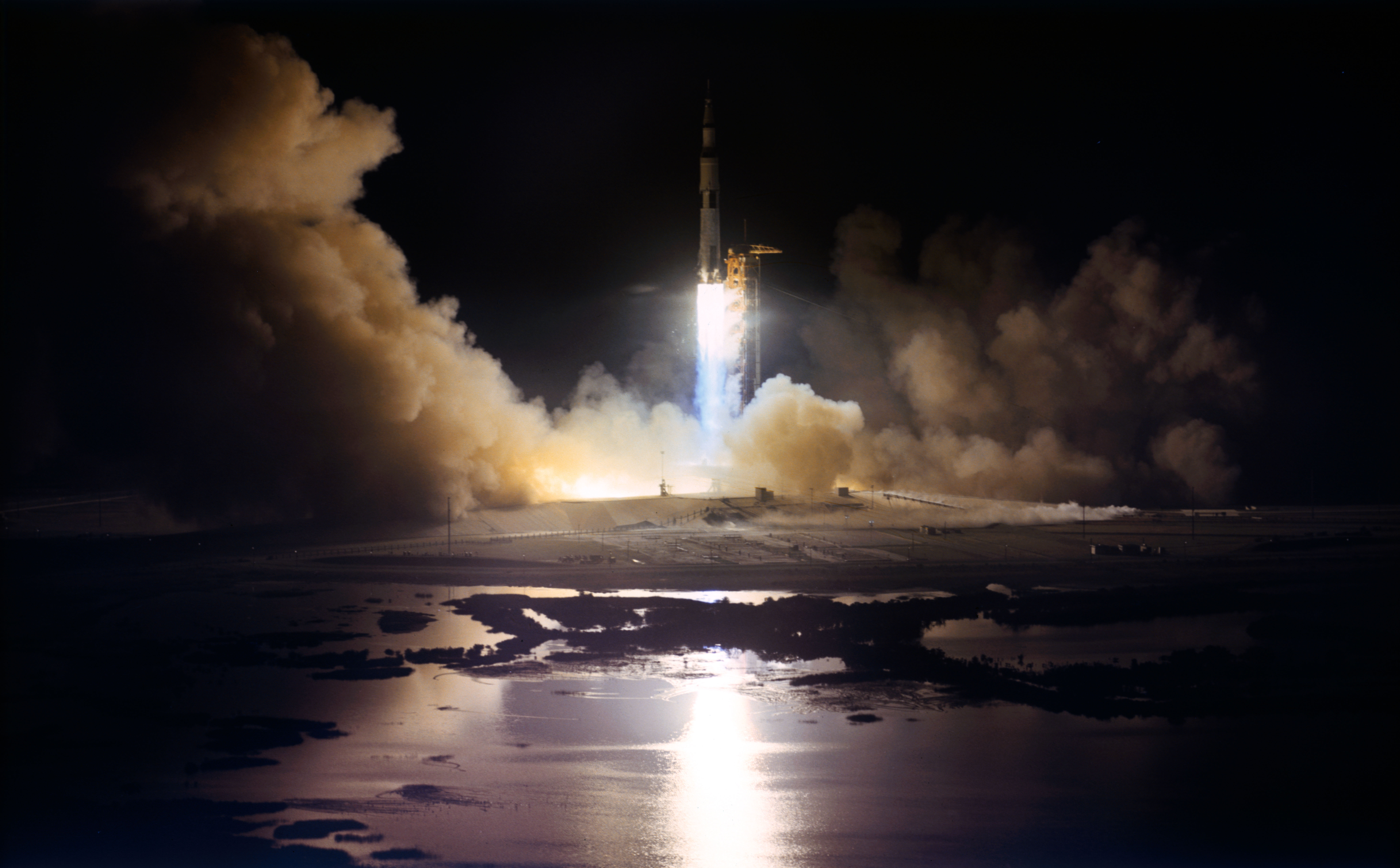
Apollo 17, in December 1972. Eugene Cernan and Harrison Schmitt landed in the Taurus-Littrow valley on 11 December 1972, worked on the surface for three days… more…
- Image pending
Astronauts and life in space
How high do astronauts orbit the earth?
Crewed spaceflight today happens a few hundred kilometres up. The International Space Station orbits at about 400 km, lapping the planet roughly every 90… more…
