Douglas DC-3 variant
Douglas DC-3 Lisunov Li-2
Licence-built Soviet version of the DC-3, first as the PS-84 and from 1942 as the Li-2; with 4,937 built it was the key transport of the USSR and Eastern Europe.

- 4,937
- Units built
- 2,500 km
- Range
- 24
- Passengers
History
The Lisunov Li-2, originally designated PS-84 and known to NATO as Cab, was the licence-built Soviet version of the Douglas DC-3. It grew out of purchases of American aircraft: the Soviet Union received its first DC-2 in 1935, ordered 18 DC-3s on 11 April 1936, and before the Second World War the government bought 21 DC-3s for Aeroflot. A production licence was granted on 15 July 1936. The engineer Boris Pavlovich Lisunov spent two years at Douglas, between November 1936 and April 1939, translating the design; one of the engineers who went with him was Vladimir Mikhailovich Myasishchev, later head of his own design bureau. Production was assigned to State Aircraft Plant No. 84 at Khimki, outside Moscow, hence the designation PS-84, passenger aircraft of plant 84.
The intention was to change as little as possible, but the plant had to issue some 1,293 engineering change orders against the Douglas drawings, most of them to metricate parts, dimensions, materials and processes. Because metric sheet gauges were not exact equivalents of American alloy sheet, the skins came out slightly heavier, and the hardware, engine mounts, landing gear, wheels and tyres followed Soviet standards. The Shvetsov bureau supplied the ASh-62IR radial, a Soviet development of the nine-cylinder Wright R-1820 Cyclone 9, the same family of engine that had powered the earliest DSTs and 21-seat DC-3s. In line with Soviet practice the engines were fully shuttered to cope with extreme temperatures. The span was slightly reduced, the passenger door moved to the right-hand side and a cargo door was fitted on the left. Ski landing gear was later provided for operations in remote and Arctic regions. The first PS-84s were leaving the plant 84 line by 1939.
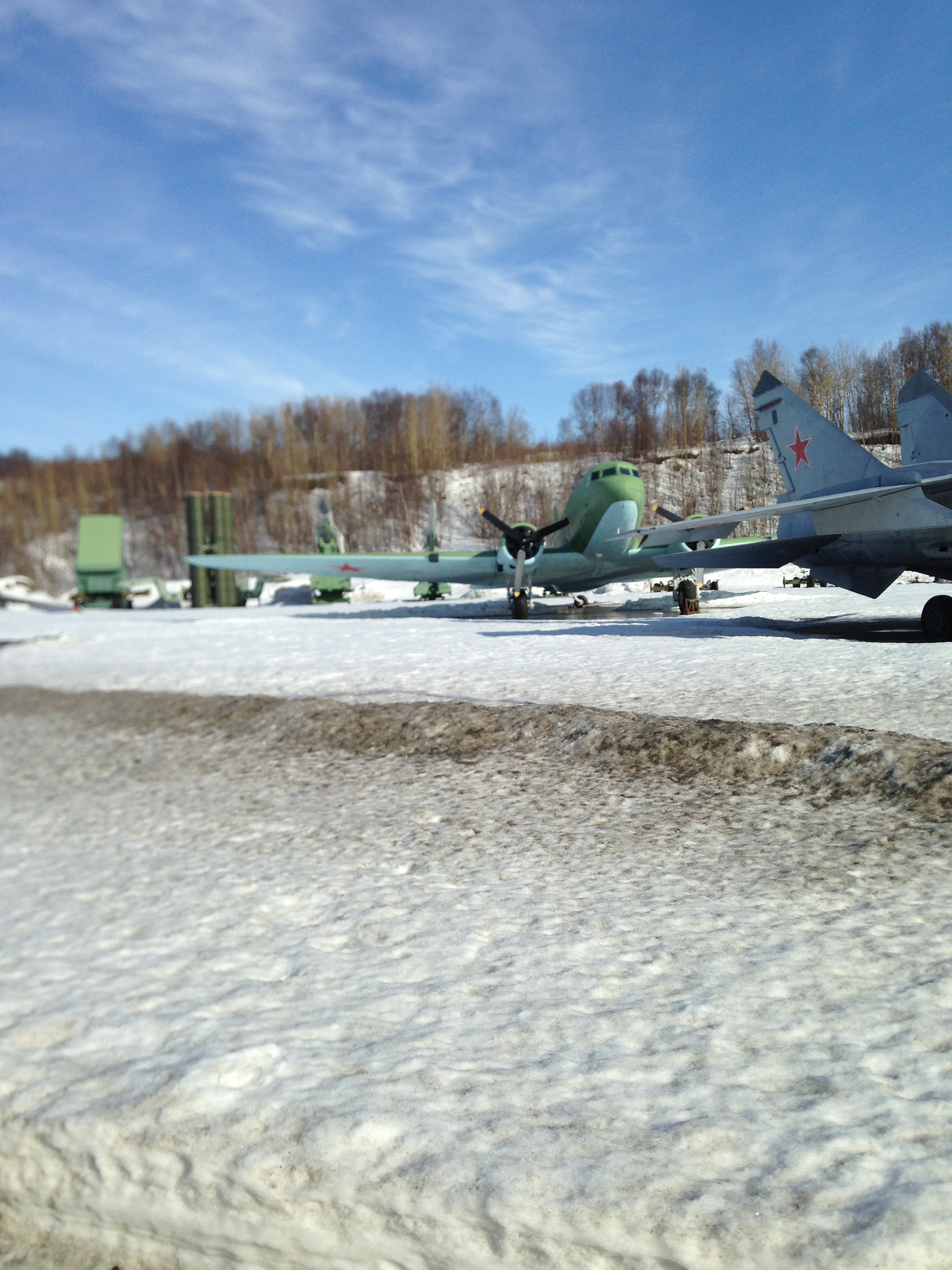
By the time Germany invaded the USSR on 22 June 1941, 237 PS-84s had been built, all as civil airliners. The factory was evacuated east and production resumed at plant 33 in Tashkent, now the capital of Uzbekistan, which after a huge effort was delivering aircraft again by January 1942. Plant 124 at Kazan had built ten aircraft before the war, and plant 126 at Komsomolsk-on-Amur produced 353 Li-2Ts between 1946 and 1950 before switching to the MiG-15.
With the war, many of Aeroflot's PS-84s were taken into military service and in 1942 they were redesignated Li-2. Unlike the American C-47, which was strictly an unarmed transport, several military Li-2 versions carried bombing and defensive equipment: an MV-3 dorsal turret with a 7.62 mm ShKAS machine gun, later replaced by a 12.7 mm UBT, and two more ShKAS guns on pivot mounts beside the cargo door. The Li-2VV had a redesigned nose with an extra ShKAS and could carry up to four 250 kg bombs under the fuselage; smaller bombs were thrown out of the door by the crew. The type served as a transport, for partisan supply, as a bomber and as an air ambulance, and a night-bomber version, the Li-2NB, followed in 1944.
The family was large: the PS-84 airliner with 14 to 28 seats, the PS-84I medevac aircraft, the 1942 Li-2D paratroop transport with a strengthened floor and cargo doors, the Li-2F photographic aircraft, the Li-2G freighter, the armed Li-2K transport, the 1945 Li-2P airliner and its Li-2PG combi version, the glass-nosed Li-2PR, the Li-2R reconnaissance aircraft, the Li-2T transport, the Li-2V high-altitude weather aircraft with turbocharged engines, and the Yugoslav Li-3 with Pratt & Whitney R-1830 engines. A total of 4,937 aircraft of all versions were built between 1940 and 1954.
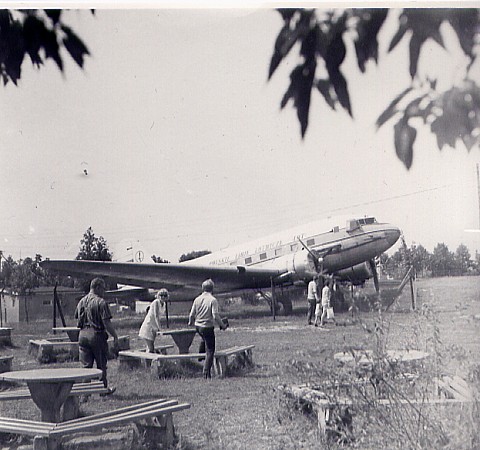
After the war the Li-2 was the standard transport of Eastern Europe until the 1960s. Airlines including Aeroflot, CSA, LOT (which flew up to 40 as airliners), MALÉV, TABSO, Tarom and Polar Aviation operated it, as did the air forces of Albania, Bulgaria, Czechoslovakia, Hungary, Poland, Romania, Yugoslavia, Syria, Mongolia, Laos, Vietnam and North Korea. China imported 214 for military and civil use and retired the last one in 1986; in Poland Li-2s were fitted for spraying forests against pests. The last ones in use were noted in China and Vietnam in the 1980s.
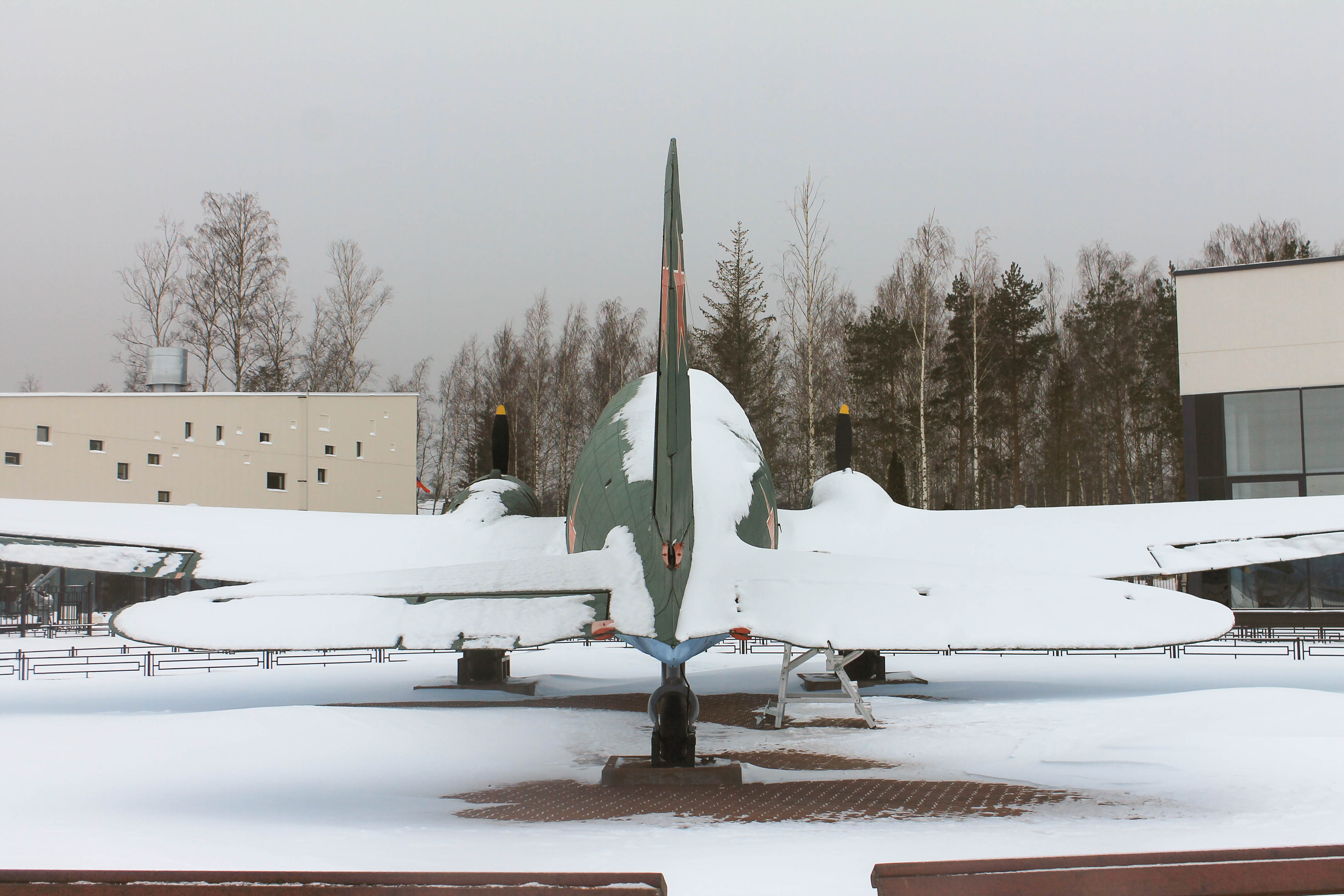
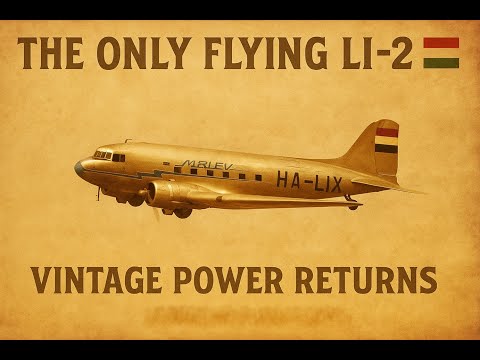
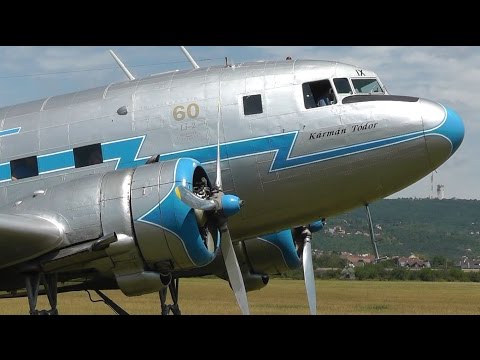
The only airworthy Li-2 in Europe is the Hungarian HA-LIX, built in Tashkent in 1949 as serial number 18433209. It flew with MALÉV until 1964, then served the air force as a parachute trainer before going to a museum in 1974. After a complete rebuild finished in 2001, it is operated by the Goldtimer Foundation from Budaörs Airport, Budapest, on sightseeing flights and at air shows.
Multimedia