Airliner · Civil · United States
Douglas DC-2
- May 11, 1934
- First flight
- 1934
- Introduced
- In service
- Status
- 192
- Units built
_at_Albury%2C_New_South_Wales-800.webp)
.jpg)


-800.webp)

-800.webp)
-800.webp)
-800.webp)

_(2)-800.webp)
-800.webp)


.jpg)


-800.webp)


-800.webp)

_Big_Chief_front_view-800.webp)
_(5810921685)-800.webp)

-800.webp)

_(5810924053)-800.webp)


-800.webp)


-800.webp)




-800.webp)


-800.webp)
The Douglas DC-2 was an American twin-engined airliner seating fourteen passengers, developed from the DC-1 prototype and a direct rival to the Boeing 247. It flew on 11 May 1934, entered service with TWA a week later and became the basis for the DC-3, the stretched development that a year afterwards would remake air transport.
Related sheets
Category
History
In the early 1930s, distrust of wooden airframes pushed the American industry towards the all-metal airliner. United Airlines held exclusive rights to the Boeing 247, so its rival TWA issued a specification for an all-metal trimotor. Douglas answered with something more ambitious than the brief: a twin with a tapered cantilever wing, retractable undercarriage and variable-pitch propellers, able to keep flying on one engine. The DC-1 prototype flew on 1 July 1933 with twelve seats; the DC-2 was longer, more powerful and carried fourteen passengers in a cabin 66 inches wide. Douglas test pilot Carl Cover took it up for the first time on 11 May 1934, and TWA, the launch customer, ordered twenty.
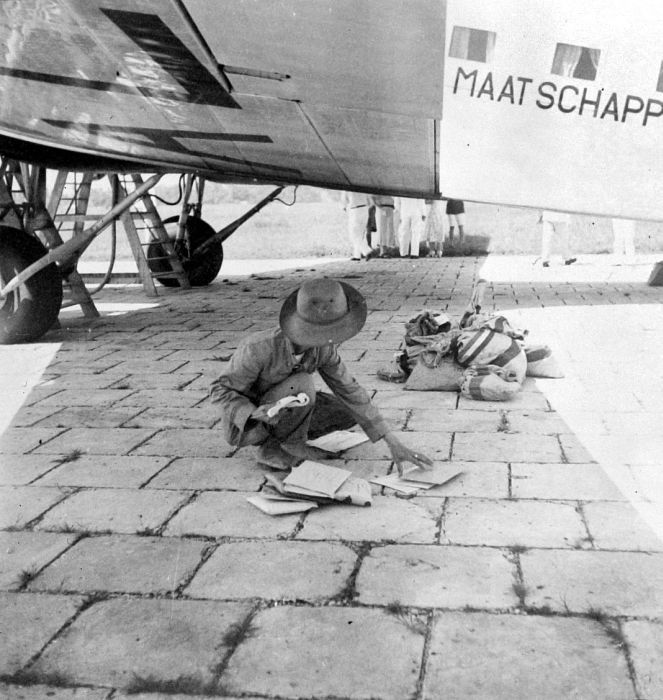
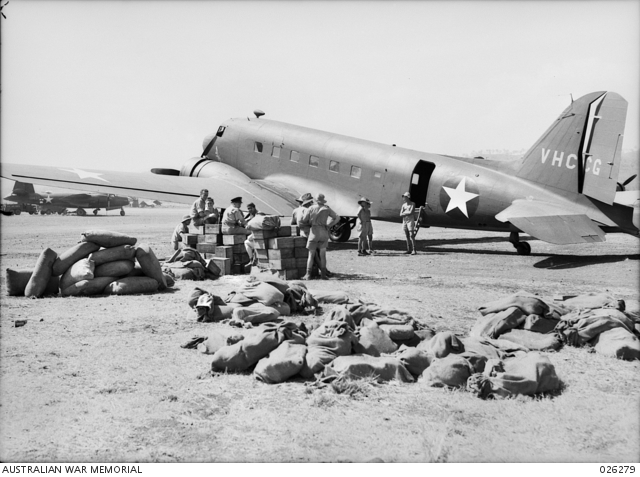
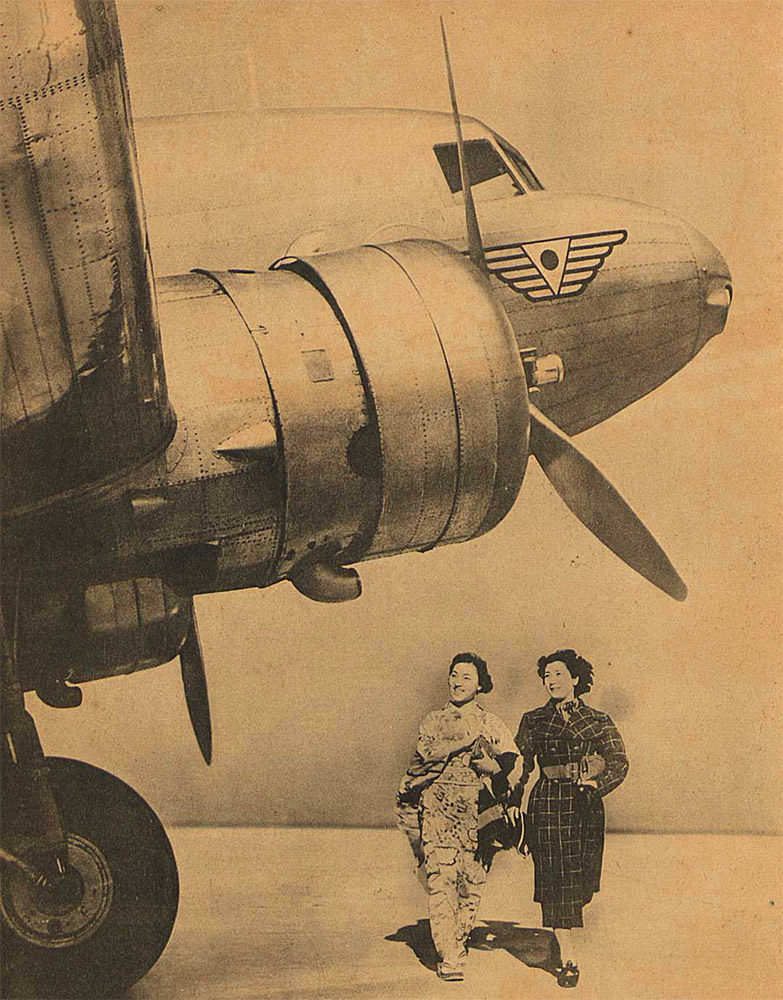
The design impressed American and European airlines alike. Fokker bought a production licence it never exercised: the aircraft for KLM, LOT, Swissair, CLS and LAPE were built and flown in the United States, shipped across the Atlantic with wings and propellers removed, and erected at airfields near the port of arrival. Airspeed took a British licence under which nothing was built, and only Nakajima in Japan actually assembled aircraft, completing five of its own besides erecting at least one Douglas-built machine. Production between 1934 and 1939 came to 130 civil aircraft and a further 62 for the American armed forces, which gave them a family of designations — XC-32, C-33, YC-34 — and which on entering the Second World War also impressed 24 commercial DC-2s as C-32As.
The DC-2 showed before its celebrated successor that airline travel could be comfortable, safe and dependable, and the proof came quickly. In October 1934 KLM entered its first example, PH-AJU Uiver, in the MacRobertson air race from London to Melbourne: it finished second of twenty entrants, behind only the purpose-built de Havilland DH.88 racer and nearly three hours ahead of the Boeing 247D, and it did so flying its ordinary 9,000-mile commercial route, carrying mail, making every scheduled passenger stop and even turning back once for a stranded passenger. The type also left an unorthodox military trail — the Finnish Air Force received donated aircraft during the Winter War and flew one on a bombing mission in February 1940 — and it is now retired, with several airframes preserved or under restoration in museums in Australia and Finland.
Variants
| DC-2 | Airspeed AS.23 (proyecto) | C-32A | C-33 | C-38 | C-39 | C-42 | DC-2A | DC-2B | Nakajima-Douglas DC-2 | R2D-1 | XC-32 | YC-34 / C-34 | |
|---|---|---|---|---|---|---|---|---|---|---|---|---|---|
| First flight | May 11, 1934 | — | — | — | — | — | — | — | — | — | — | — | — |
| Aircraft type | Pioneering airliner | Pioneering airliner (project) | Military transport | Military transport | Military transport | Military transport | Military transport | Pioneering airliner | Pioneering airliner | Pioneering airliner | Military transport | Military transport | Military transport |
| Powerplant | 2 × Wright GR-1820-F52 Cyclone nine-cylinder air-cooled radial, 578 kW each, driving three-blade variable-pitch metal propellers. | Airspeed Ltd. licence to assemble the DC-2 with its twin Wright Cyclone radials; a registration was reserved for one aircraft but none was built. | 2 × Wright SGR-1820-F3 Cyclone radial of 529 kW each: the impressed DC-2s kept their civil engines and gained only military radio equipment. | 2 × military-standard Wright R-1820-25 Cyclone radial, 560 kW each. | 2 × Wright R-1820-45 Cyclone radial of 727 kW each, the power increase introduced by this single aircraft. | 2 × Wright R-1820-55 Cyclone radial of 727 kW each. | 2 × Wright R-1820-53 Cyclone radial of 746 kW each, the most powerful engines in the whole DC-2 family. | 2 × Pratt & Whitney R-1690 Hornet radial (SD-G, S1E-G or S2E-G) in place of the usual Wright Cyclone; only two civil aircraft. | 2 × Bristol Pegasus VI radial of 560 kW each, the British engines specified by LOT Polish Airlines. | 2 × Wright Cyclone SGR-1820-F82 nine-cylinder radial, 544 kW each. | 2 × Wright R-1820-12 Cyclone radial of 530 kW each. | 2 × Wright R-1820-25 Cyclone radial of 560 kW each. | 2 × Wright R-1820-25 Cyclone radial of 560 kW each, the same engines as the XC-32 it derives from. |
| Powerplant | 2 × Wright GR-1820-F52 Cyclone | 2 × piston | 2 × Wright SGR-1820-F3 Cyclone | 2 × Wright R-1820-25 Cyclone | 2 × Wright R-1820-45 Cyclone | 2 × Wright R-1820-55 Cyclone | 2 × Wright R-1820-53 Cyclone | 2 × Pratt & Whitney R-1690 Hornet (SD-G / S1E-G / S2E-G) | 2 × Bristol Pegasus VI | 2 × Wright Cyclone SGR-1820-F82 | 2 × Wright R-1820-12 Cyclone | 2 × Wright R-1820-25 Cyclone | 2 × Wright R-1820-25 Cyclone |
| Power per engine | 775 hp | — | 709 hp | 751 hp | 975 hp | 975 hp | 1,000 hp Best value in this row | — | 751 hp | 730 hp | 711 hp | 751 hp | 751 hp |
| Length | 18.9 m | 18.9 m Best value in this row | 18.9 m Best value in this row | 18.9 m | 18.8 m | 18.8 m | 18.9 m Best value in this row | 18.9 m Best value in this row | 18.9 m Best value in this row | 18.9 m Best value in this row | 18.9 m Best value in this row | 18.9 m Best value in this row | 18.9 m Best value in this row |
| Wingspan | 25.9 m Best value in this row | 25.9 m | 25.9 m | 25.9 m Best value in this row | 25.9 m Best value in this row | 25.9 m Best value in this row | 25.9 m | 25.9 m | 25.9 m | 25.8 m | 25.9 m | 25.9 m | 25.9 m |
| Height | 5 m | 5 m | 5 m | 5 m | 6 m Best value in this row | 5.7 m | 5 m | 5 m | 5 m | 4.4 m | 5 m | 5 m | 5 m |
| Wing area | 87.2 m² | — | — | — | — | — | — | — | — | 87.3 m² Best value in this row | — | — | — |
| Empty weight | 5,628 kg | — | — | 5,659 kg | 5,659 kg | 6,480 kg | — | — | — | 5,585 kg Best value in this row | — | — | — |
| MTOW | 8,419 kg | — | — | 8,431 kg | 8,391 kg | 9,525 kg Best value in this row | — | — | — | 8,160 kg | — | — | — |
| Top speed | 340 km/h Best value in this row | — | — | 325 km/h | 335 km/h | 338 km/h | — | — | — | 320 km/h | — | — | — |
| Max speed altitude | 2,400 m | — | — | 762 m | 762 m | 1,524 m | — | — | — | 706 m | — | — | — |
| Cruise speed | 310 km/h Best value in this row | — | — | 275 km/h | 274 km/h | 251 km/h | — | — | — | 270 km/h | — | — | — |
| Cruise altitude | 2,400 m | — | — | — | — | 1,524 m | — | — | — | — | — | — | — |
| Service ceiling | 6,840 m Best value in this row | — | — | 6,096 m | — | 6,279 m | — | — | — | 5,400 m | — | — | — |
| Initial climb rate | 5.1 m/s | — | — | — | — | — | — | — | — | — | — | — | — |
| Range | 1,600 km | — | — | 1,474 km | 1,770 km | 1,883 km Best value in this row | — | — | — | 1,621 km | — | — | — |
| Ferry range | 1,700 km | — | — | — | — | 2,575 km Best value in this row | — | — | — | — | — | — | — |
| Combat radius | 0 km Best value in this row | 0 km Best value in this row | 0 km Best value in this row | 0 km Best value in this row | 0 km Best value in this row | 0 km Best value in this row | 0 km Best value in this row | 0 km Best value in this row | 0 km Best value in this row | 0 km Best value in this row | 0 km Best value in this row | 0 km Best value in this row | 0 km Best value in this row |
| Endurance | 337 min | — | — | — | — | — | — | — | — | — | — | — | — |
| Range conditions | Normal range 1,600 km; up to 1,700 km with full tanks. | — | — | Normal range 1,474 km with a 6,096 m service ceiling. | Normal range 1,770 km. | Normal range 1,883 km, maximum 2,575 km. | — | — | — | Range of 1,621 km with a 5,400 m service ceiling. | — | — | — |
| Armament | None | None | None | None | None | None | None | None | None | None | None | None | None |
| Max weapons load | 0 kg Best value in this row | 0 kg Best value in this row | 0 kg Best value in this row | 0 kg Best value in this row | 0 kg Best value in this row | 0 kg Best value in this row | 0 kg Best value in this row | 0 kg Best value in this row | 0 kg Best value in this row | 0 kg Best value in this row | 0 kg Best value in this row | 0 kg Best value in this row | 0 kg Best value in this row |
| Payload | 1,846 kg Best value in this row | — | — | 1,089 kg | 1,633 kg | 1,633 kg | — | — | — | — | — | — | — |
| Cargo capacity | Fourteen-seat cabin with a crew of three; maximum payload 1,846 kg and a 5.3 m³ hold. | No aircraft built: it never had a cabin fit of its own. | Unaltered fourteen-seat civil cabin. | Reinforced floor and a large port-side cargo door: up to 1,089 kg of freight or twelve equipped soldiers. | Cargo payload raised to 1,633 kg thanks to the more powerful engines. | A hybrid of DC-2 fuselage with DC-3 centre section, landing gear and tail: 16 seats or 1,633 kg of freight through the port cargo door. | Staff transport derived from the C-39 for the commanding general of GHQ Air Force; two more C-39s were similarly converted in 1943 with their cargo doors bolted shut. | Fourteen-seat civil cabin, identical to the standard DC-2. | Fourteen-seat civil cabin, as on the standard DC-2. | Four crew and 14 passengers in the Japanese airline fit. | Transport similar to the XC-32: three for the US Navy and two for the Marine Corps. | Fourteen-seat VIP transport; later flown by General Andrews as an airborne command post. | Secretary of War transport: fourteen seats and military radio, otherwise unchanged from the civil DC-2. |
| Crew | 3 | 2 Best value in this row | 2 Best value in this row | 2 Best value in this row | 2 Best value in this row | 2 Best value in this row | 2 Best value in this row | 2 Best value in this row | 2 Best value in this row | 4 | 2 Best value in this row | 2 Best value in this row | 2 Best value in this row |
| Passengers | 14 | 14 | 14 | 12 | — | 16 Best value in this row | 16 Best value in this row | 14 | 14 | 14 | 14 | 14 | 14 |
| Units built | 156 Best value in this row | 0 | 24 | 18 | 1 | 35 | 1 | 2 | 2 | 5 | 5 | 1 | 2 |
Images
Elsewhere
- ABPicDouglas DC-2 aviation photographs ↗
- Airplane-Pictures.netDouglas DC-2 photo gallery ↗
- FlightAwareDouglas DC-2 aircraft photos ↗
- Airliners.netDouglas DC-2 & DC-3 photos ↗
- JetPhotosDouglas DC-2 aviation photos ↗
- AirHistory.netDouglas DC-2 aircraft photos ↗
- Vintage Aviation NewsAdam's Profile Reports: Douglas DC-2 N13711 ↗
- Museum of Flight ArchivesDouglas DC-2, 1934-1935 archival record ↗
- Museum of FlightDouglas DC-2 exhibit ↗
- rbogash.comDouglas DC-2 history and photos ↗
- AeroCornerDouglas DC-2 history, technical data and photos ↗
- Planespotters.netDouglas DC-2 latest photos ↗
Show the 8 more
- Airport-data.comDouglas DC-2 aircraft photo search ↗
- Smithsonian National Air and Space MuseumDouglas DC-2 photograph ↗
- SFO MuseumDouglas DC-2 aircraft object ↗
- FlickrDouglas DC-2 tagged photos ↗
- AviodromeDouglas DC-2 (Uiver) collection ↗
- Bureau of Aircraft Accidents ArchivesDouglas DC-2 aircraft record ↗
- Key.AeroDouglas DC-2 delivered to HARS ↗
- Oldprops.ukhome.netDouglas DC-2 photographs ↗