United States · 1921–
Douglas Aircraft Company
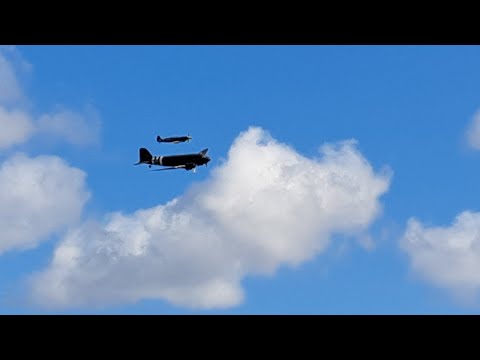
The Douglas Aircraft Company was an American aircraft and defence manufacturer based in southern California, founded on 22 July 1921 by Donald Wills Douglas Sr. in Santa Monica. It merged with McDonnell Aircraft in 1967 to create McDonnell Douglas, inside which it continued to exist as a division. Its deepest mark is the DC — Douglas Commercial — series, and above all the DC-3 of 1936, often regarded as the most influential transport aircraft ever built and produced in military form as the C-47 Skytrain, or Dakota in British service. The line continued with the DC-6, the DC-7 and, in the jet age, the DC-8, with which the company took on the Boeing 707. Douglas was also a military and space heavyweight: it built close to thirty thousand aircraft between 1942 and 1945, led the Thor and Skybolt missile programmes and produced the S-IVB stage of the Saturn IB and Saturn V rockets for NASA. The name disappeared in 1997, when Boeing absorbed McDonnell Douglas and retired the brand after seventy-six years.
Douglas Aircraft Company in the news

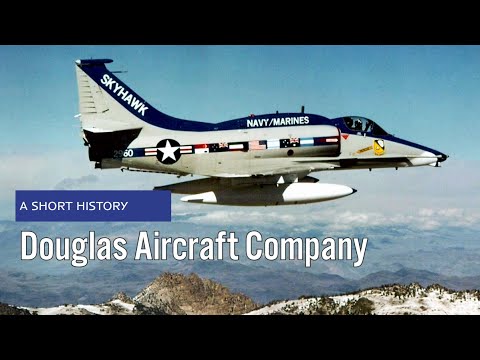
The Skyhawk A study in simplicity, the A-4 Skyhawk resulted from Douglas Aircraft Company designer Ed Heinemann’s concern about the increasing weight and cost of combat aircraft appearing during the…

History
Foundation and the first flight around the world
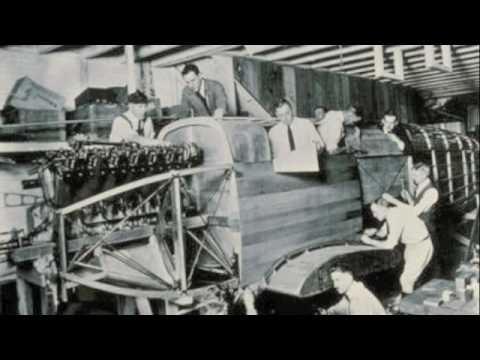
Donald Wills Douglas Sr. formed the Douglas Company on 22 July 1921 in Santa Monica, after the dissolution of the Davis-Douglas Company. Its first great feat came almost at once: when the U.S. Army Air Service set out in 1923 to circle the globe by air, Douglas proposed a modified version of its DT torpedo bomber and won an order for four production machines, the Douglas World Cruiser, whose fuel system was designed by a young Jack Northrop. The four aircraft left Seattle on 6 April 1924 heading west; two returned on 28 September to great acclaim, one was lost in fog and another went down in the Atlantic. The success placed the company among the world's major manufacturers and gave it its motto, "first around the world". The firm was reorganised as the Douglas Aircraft Company on 30 November 1928 and within five years was building around a hundred aircraft a year, with Ed Heinemann, "Dutch" Kindelberger and Northrop among its early employees.
The DC series and the mastery of commercial transport
Douglas always kept its military market — torpedo bombers, reconnaissance, airmail, amphibians — while building the line that would make it famous. In 1934 it introduced the twin-engined DC-2 and in 1936 the DC-3, the aircraft that made carrying passengers economically viable and which, as the C-47 Skytrain, became the archetypal Allied military transport. The Santa Monica complex grew so large that the mail girls used roller skates to deliver internal post, and by the end of the Second World War the company was running plants at Santa Monica, El Segundo, Long Beach and Torrance in California, plus Tulsa and Midwest City in Oklahoma and Chicago.
War, peace, jets and missiles
The war was an immense boost: Douglas ranked fifth among United States corporations by the value of wartime contracts, built almost 30,000 aircraft between 1942 and 1945 — the C-47, the A-20 Havoc light bomber, the SBD Dauntless dive bomber and the A-26 Invader — and its workforce swelled to 160,000. The end of government orders then forced it to let go of nearly 100,000 workers. In March 1946 it won the Project RAND contract to study intercontinental warfare, the seed of the future RAND Corporation. Commercially came the four-engined DC-6 in 1946 and the DC-7 in 1953, its last propeller-driven design, while 1948 brought the company's first jet, the F3D Skyknight for the Navy, followed by the F4D Skyray in 1951; the DC-8 of 1958 was its answer to the Boeing 707. Douglas also pioneered ejection seats, missiles and launch rockets: it moved into complete systems with the Nike programme of 1956, led those of the Thor ballistic missile and the air-launched Skybolt, and won from NASA the design of the S-IVB stage of the Saturn IB and Saturn V.
Merger with McDonnell and the end of the name
By 1967 the company was drowning: it could not expand production fast enough for the DC-8, the DC-9 and the A-4 Skyhawk attack aircraft, it carried quality and cash-flow problems, it bore the development costs of the DC-10 and it suffered shortages caused by the Vietnam War. After almost four years of talks, on 28 April 1967 it merged with the McDonnell Aircraft Corporation. The fit was good: McDonnell was a large defence contractor with almost no civil business and had the revenue to repair Douglas' finances — it bought 1.5 million Douglas shares to meet immediate requirements — while Douglas' commercial contracts cushioned swings in military procurement. The combined company was headquartered in St. Louis, Missouri; Donald Douglas Sr. became honorary chairman until his death in 1981 and his son ran the subsidiary. Douglas Aircraft continued as a wholly owned subsidiary and its space and missiles arm became the McDonnell Douglas Astronautics Company. In 1997 the merger with Boeing folded Douglas Aircraft into Boeing Commercial Airplanes and retired the name; the last commercial aircraft built at Long Beach, the Boeing 717 — a third-generation DC-9 — ceased production in May 2006, and the final C-17 Globemaster III was assembled there in late 2015.
Catalog — Aircraft
- 1921
Douglas Cloudster Sheet pending
Variants (1)
- Cloudster
- 1925
Douglas C-1 Sheet pending
Variants (3)
- C-1
- C-1A
- C-1C
- 1927
Douglas T2D Sheet pending
Variants (3)
- P2D-1
- T2D-1
- XTN-1
- 1933
Douglas DC-1 Sheet pending
Variants (1)
- DC-1
- 1934
Douglas DC-2
The Douglas DC-2 was an American twin-engined airliner seating fourteen passengers, developed from the DC-1 prototype and a direct rival to the Boeing 247. It flew on 11 May 1934, entered service with TWA a week later and became the basis for the DC-3, the stretched development that a year afterwards would remake air transport.
- 1935
Douglas XP3D Sheet pending
Variants (2)
- XP3D-1
- XP3D-2
- 1935
Douglas TBD Devastator Sheet pending
Variants (3)
- TBD-1
- TBD-1A
- XTBD-1
- 1935
Douglas DC-3 Sheet pending
Variants (31)
- C-41
- C-41A
- C-48
- C-49
- C-50
- C-51
- C-52
- C-68
- C-84
- Conroy Super-Turbo-Three
- Conroy Tri-Turbo-Three
- Conroy Turbo-Three
- Dart-Dakota
- DC-3
- DC-3A
- DC-3B
- DC-3C
- DC-3D
- DC-3S (Super DC-3)
- DST
- DST-A
- Greenwich Turbo Dakota DC-3
- LXD1
- Mamba-Dakota
- R4D-2
- R4D-4
- R4D-4Q
- R4D-4R
- TS-62
- TS-82
- USAC DC-3 Turbo Express
- 1938
Douglas A-20 Havoc Sheet pending
Variants (25)
- A-20
- A-20A
- A-20B
- A-20C
- A-20D (proyecto)
- A-20G
- A-20H
- A-20J (Boston IV)
- A-20K (Boston V)
- BD-1
- BD-2
- Boston I
- Boston II
- DB-7
- DB-73
- DB-7A
- DB-7B (Boston III)
- DB-7C
- F-3A
- Havoc I Turbinlite
- Havoc Mk I
- Havoc-Pandora
- O-53
- P-70
- ZB-20H
- 1939
Douglas DC-5 Sheet pending
Variants (6)
- C-110
- DC-5
- DC-5 (prototipo)
- R3D-1
- R3D-2
- R3D-3
- 1939
Douglas B-23 Dragon Sheet pending
Variants (3)
- B-23
- C-67
- UC-67
- 1940
Douglas SBD Dauntless Sheet pending
Variants (14)
- A-24A Banshee
- A-24 Banshee
- A-24B Banshee
- SBD-1
- SBD-1P
- SBD-2
- SBD-2P
- SBD-3
- SBD-4
- SBD-4P
- SBD-5
- SBD-5A
- SBD-6
- XBT-2
- 1941
Douglas XB-19 Sheet pending
Variants (2)
- XB-19
- XB-19A
- 1941
Douglas C-47 Skytrain Sheet pending
Variants (69)
- AC-47D Spooky
- Airspeed AS.61
- Airspeed AS.62
- Airspeed AS.63
- Basler BT-67
- C-117A Skytrooper
- C-117B
- C-117D
- C-47
- C-47A
- C-47B
- C-47D
- C-47E
- C-47F
- C-47L
- C-47M
- C-47R
- C-47TP Turbo Dak
- C-53B Skytrooper
- C-53C Skytrooper
- C-53D Skytrooper
- C-53 Skytrooper
- CC-129
- Dakota I
- Dakota II
- Dakota III
- Dakota IV
- Douglas AC-47
- EC-47D
- EC-47N
- EC-47P
- EC-47Q
- LC-117D
- NC-47D
- R4D-1
- R4D-3
- R4D-5
- R4D-5L
- R4D-5Q
- R4D-5R
- R4D-5S
- R4D-5Z
- R4D-6
- R4D-6L
- R4D-6Q
- R4D-6R
- R4D-6S
- R4D-6Z
- R4D-7
- R4D-8L
- R4D-8 (Super DC-3)
- R4D-8T
- R4D-8Z
- RC-47A
- RC-47D
- SC-117A
- SC-47A
- SC-47D
- TC-117D
- VC-117A
- VC-117B
- VC-117D
- VC-47A
- VC-47B
- VC-47D
- XC-47C
- XC-53A Skytrooper
- XCG-17
- YC-129
- 1942
Douglas DC-4
The Douglas DC-4 was an unpressurized four-engine transport whose production series first flew on February 14, 1942. Mass-produced during the Second World War as the military C-54 Skymaster, it became one of the workhorses of postwar commercial aviation.
- 1942
Douglas A-26 Invader Sheet pending
Variants (19)
- A-26B
- A-26C
- A-26Z
- B-26K Counter Invader
- B-26N
- JD-1
- RB-26C
- RB-26L
- TB-26B
- TB-26C
- VB-26B
- WB-26
- XA-26
- XA-26A
- XA-26B
- XA-26D
- XA-26E
- XA-26F
- YB-26K
- 1943
Douglas BTD Destroyer Sheet pending
Variants (4)
- BTD-1
- SB2D-1
- XBTD-2
- XSB2D-1
- 1944
Douglas XB-42 Mixmaster Sheet pending
Variants (2)
- XB-42
- XB-42A
- 1945
Douglas XTB2D Skypirate Sheet pending
Variants (1)
- XTB2D-1
- 1945
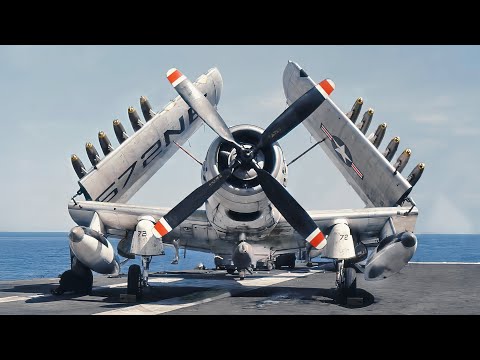
Douglas A-1 Skyraider Sheet pending
Variants (39)
- A-1E
- AD-1
- AD-1Q
- AD-1U
- AD-2
- AD-2D
- AD-2Q
- AD-2QU
- AD-2W
- AD-3
- AD-3N
- AD-3Q
- AD-3QU
- AD-3S
- AD-3W
- AD-4
- AD-4B
- AD-4L
- AD-4NA
- AD-4N (A-1D)
- AD-4NL
- AD-4Q
- AD-4W
- AD-5 (A-1E)
- AD-5N (A-1G)
- AD-5Q (EA-1F)
- AD-5S
- AD-5U
- AD-5W (EA-1E)
- AD-6 (A-1H)
- AD-7 (A-1J)
- UA-1E
- XAD-1W
- XAD-2
- XAD-3E
- XBT2D-1
- XBT2D-1N
- XBT2D-1P
- XBT2D-1Q
- 1945
Douglas C-74 Globemaster Sheet pending
Variants (1)
- C-74
- 1946
Douglas DC-6
The Douglas DC-6 is the piston-engined four-motor airliner with which the Douglas Aircraft Company took on Lockheed in the post-war long-range commercial market. It began as a military order: in 1944 the United States Army Air Forces asked Douglas for a lengthened, pressurised derivative of the C-54 Skymaster with more powerful engines, and the XC-112A prototype flew on 15 February 1946, by which time the war was over and the requirement had been rescinded. Douglas reworked the project as a civil transport, stretching the fuselage over that of the DC-4, keeping its wing and fitting four Pratt & Whitney R-2800 Double Wasp radials. The civil DC-6 first flew on 29 June 1946 and reached American Airlines and United Air Lines in November of that year. Its entry into service almost killed the programme. A run of in-flight fires — the one that destroyed United Air Lines Flight 608 over Bryce Canyon on 24 October 1947, killing 52, and the one that forced an American Airlines DC-6 to land in flames at Gallup, New Mexico, on 11 November — grounded the whole fleet until the cause was traced: a fuel tank vent sited too close to the air scoop feeding the cabin heater. With every aircraft modified, the type returned to service in March 1948 and went on to earn a reputation as the most economical propliner of its generation. From that stem came the DC-6A freighter, with cargo doors and a strengthened floor; the DC-6B, widely regarded as the definitive piston airliner for ruggedness, reliability and operating economy; and the convertible DC-6C, alongside the military C-118A Liftmaster of the Air Force, the Navy's R6D and Harry Truman's presidential VC-118, named The Independence. A total of 704 were built up to 1958. Pushed off passenger routes by the jets, the DC-6 found a second life of decades as a freighter, flying tanker and water bomber, and still flies in Alaska.
- 1946
Douglas XB-43 Jetmaster Sheet pending
Variants (2)
- XB-43
- YB-43
- 1947
Douglas Cloudster II Sheet pending
Variants (1)
- Cloudster II
- 1947
Douglas D-558-1 Skystreak Sheet pending
Variants (1)
- D-558-1
- 1948
Douglas D-558-2 Skyrocket Sheet pending
Variants (3)
- D-558-2 n.º 1 (NACA-143)
- D-558-2 n.º 2 (NACA-144)
- D-558-2 n.º 3 (NACA-145)
- 1948
Douglas F3D Skyknight Sheet pending
Variants (16)
- EF-10B
- F-10A
- F-10B
- F3D-1
- F3D-1M
- F3D-2
- F3D-2B
- F3D-2M
- F3D-2Q
- F3D-2T
- F3D-2T2
- F3D-3 (proyecto)
- MF-10A
- MF-10B
- TF-10B
- XF3D-1
- 1949
Douglas C-124 Globemaster II Sheet pending
Variants (5)
- C-124A
- C-124C
- YC-124
- YC-124A
- YC-124B
- 1950
Douglas A2D Skyshark Sheet pending
Variants (2)
- A2D-1
- XA2D-1
- 1951
Douglas F4D Skyray Sheet pending
Variants (4)
- F4D-1
- F4D-2N (proyecto)
- F4D-2 (proyecto)
- XF4D-1
- 1952
Douglas X-3 Stiletto Sheet pending
Variants (1)
- X-3
- 1952
Douglas A-3 Skywarrior Sheet pending
Variants (15)
- A3D-1 (A-3A)
- A3D-1P (RA-3A)
- A3D-1Q (EA-3A)
- A3D-2 (A-3B)
- A3D-2P (RA-3B)
- A3D-2Q (EA-3B)
- A3D-2T (TA-3B)
- EKA-3B
- ERA-3B
- KA-3B
- NRA-3B
- NTA-3B
- VA-3B
- XA3D-1
- YA3D-1
- 1953
Douglas DC-7
The Douglas DC-7 was the last large piston-engined airliner built by the Douglas Aircraft Company, produced between 1953 and 1958 as a direct derivative of the DC-6. It answered a very specific request from American Airlines: an aircraft able to cross the United States coast to coast without a stop in roughly eight hours, the ceiling that civil regulations then placed on a domestic crew's flight time. Douglas was reluctant to build it until the airline's president, C. R. Smith, ordered twenty-five aircraft for forty million dollars and so covered the development bill. That stretched airframe went on to spawn the longer-legged DC-7B and, above all, the DC-7C «Seven Seas», which from the summer of 1956 made the non-stop Atlantic routine in both directions, including the westbound leg against the prevailing wind that had rarely been economic before. Its engine, the eighteen-cylinder Wright R-3350 Turbo-Compound, gave the aeroplane the performance that defined it and, at the same time, the reputation for fragility that cut its airline career short. A total of 338 aircraft of the series were built. The arrival of the Boeing 707 and the Douglas DC-8 made the type obsolete in barely five years — some carriers withdrew their DC-7s after little more than five years of service — yet it survived for decades converted into a freighter and an aerial firefighting tanker: the last airworthy example was not retired until October 2020.
- 1954
Douglas A-4 Skyhawk Sheet pending
Variants (42)
- A-4AR Fightinghawk
- A4D-1 (A-4A)
- A4D-2 (A-4B)
- A4D-2N (A-4C)
- A4D-3 (proyecto)
- A4D-4 (proyecto)
- A4D-5 (A-4E)
- A4D-6 (proyecto)
- A-4F
- A-4G
- A-4H
- A-4K
- A-4KU
- A-4L
- A-4M Skyhawk II
- A-4N
- A-4P
- A-4PTM
- A-4Q
- A-4S
- A-4S-1
- A-4SU Super Skyhawk
- A-4Y
- AF-1
- AF-1A
- CA-4F (proyecto)
- EA-4F
- OA-4AR Fightinghawk
- OA-4M
- TA-4E
- TA-4F
- TA-4G
- TA-4H
- TA-4J
- TA-4K
- TA-4KU
- TA-4PTM
- TA-4S
- TA-4S-1
- TA-4SU Super Skyhawk
- XA4D-1
- YA4D-1
- 1954
Douglas B-66 Destroyer Sheet pending
Variants (8)
- B-66B
- EB-66C
- EB-66E
- NB-66B
- RB-66A
- RB-66B
- RB-66C
- WB-66D
- 1956
Douglas F5D Skylancer Sheet pending
Variants (1)
- F5D-1
- 1956
Douglas C-133 Cargomaster Sheet pending
Variants (2)
- C-133A
- C-133B
- 1958
Douglas DC-8 Sheet pending
Variants (13)
- DC-8-71
- DC-8-72
- DC-8-73
- DC-8 Jet Trader
- DC-8 Series 10
- DC-8 Series 20
- DC-8 Series 30
- DC-8 Series 40
- DC-8 Series 50
- DC-8 Series 61
- DC-8 Series 62
- DC-8 Series 63
- EC-24A
- —
Douglas A-33 Sheet pending
Variants (2)
- A-33
- Model 8A-5
- —
Douglas O-46 Sheet pending
Variants (2)
- O-46A
- XO-46
- —
Douglas XFD Sheet pending
Variants (1)
- XFD-1
- —
Douglas DT Sheet pending
Variants (9)
- DT-1
- DT-2
- DT-2B
- DT-3
- DT-4
- DT-5
- DT-6
- DTB
- SDW-1
- —
Douglas B-18 Bolo Sheet pending
Variants (11)
- B-18
- B-18A
- B-18AM
- B-18B
- B-18C
- B-18M
- C-58
- DB-1
- DB-2
- Digby Mark I
- XB-22 (proyecto)
- —
Douglas YOA-5 Sheet pending
Variants (3)
- YB-11
- YO-44
- YOA-5
- —
Douglas DA-1 Ambassador Sheet pending
Variants (1)
- DA-1
- —
Douglas Dolphin Sheet pending
Variants (32)
- C-21
- C-26
- C-26A
- C-26B
- C-29
- Dolphin 113
- Dolphin 114
- Dolphin 116
- Dolphin 117
- Dolphin 119
- Dolphin 129
- Dolphin 136
- Dolphin Model 1
- Dolphin Model 1 Special
- Dolphin Model 3
- FP-1
- FP-2
- FP-2A
- FP-2B
- OA-3
- OA-4
- OA-4A
- OA-4B
- OA-4C
- RD-1
- RD-2
- RD-3
- RD-4
- Sinbad
- Y1C-21
- Y1C-26
- Y1C-26A
- —
Douglas World Cruiser Sheet pending
Variants (2)
- DOS
- DWC
- —
Douglas O-38 Sheet pending
Variants (9)
- A-6 (target drone)
- O-38
- O-38A
- O-38B
- O-38C
- O-38E
- O-38F
- O-38P
- O-38S
- —
Douglas O2D Sheet pending
Variants (1)
- XO2D-1
- —
Douglas DF Sheet pending
Variants (2)
- DF-151
- DF-195
- —
Douglas M-1 Sheet pending
Variants (6)
- M-1
- M-2
- M-3
- M-4
- M-4A
- MO-2B
- —
Douglas O-31 Sheet pending
Variants (6)
- XO-31
- Y1O-31C
- YO-31
- YO-31A
- YO-31B
- YO-31C
- —
Douglas O-2 Sheet pending
Variants (41)
- A-4 (target drone)
- BT-1
- BT-2
- BT-2A
- BT-2B
- BT-2C
- O-2
- O-22
- O-25
- O-25A
- O-25B
- O-25C
- O-2A
- O-2B
- O-2C
- O-2D
- O-2E
- O-2H
- O-2J
- O-2K
- O-2M
- O-2MC
- O-2MC-10
- O-2MC-2
- O-2MC-3
- O-2MC-4
- O-2MC-5
- O-2MC-6
- O-32
- O-32A
- O-7
- O-8
- O-9
- OD-1
- XA-2
- XO-14
- XO-2
- XO-6
- XO-6B
- Y1O-29
- YO-34
- —
Douglas O-43 Sheet pending
Variants (2)
- O-43A
- Y1O-43
- —
Douglas XT3D Sheet pending
Variants (2)
- XT3D-1
- XT3D-2
- —
Douglas Y1B-7 Sheet pending
Variants (5)
- XB-7
- XO-35
- XO-36
- Y1B-7
- Y1O-35