Airliner · Civil · United Kingdom
BAe Jetstream
- March 28, 1980
- First flight
- 1982
- Introduced
- In service
- Status
- 492
- Units built
-800.webp)


-800.webp)


-800.webp)
-1600.webp)


_BAe_Jetstream_32_at_Wagga_Wagga_Airport-1600.webp)

-1600.webp)

-800.webp)


-1600.webp)

-800.webp)
_BAe_Jetstream_32_at_Sydney_Airport-1600.webp)


-800.webp)
-800.webp)


_Squadron%2C_RAF_Cranwell-800.webp)
-800.webp)
-800.webp)
-800.webp)
-800.webp)


_en_el_Vliegend_Museum%2C_Seppe_Airport-1600.webp)
_en_el_Stampe_en_Vertongen_Museum%2C_Deurne-1600.webp)

-800.webp)
-1600.webp)


-1600.webp)
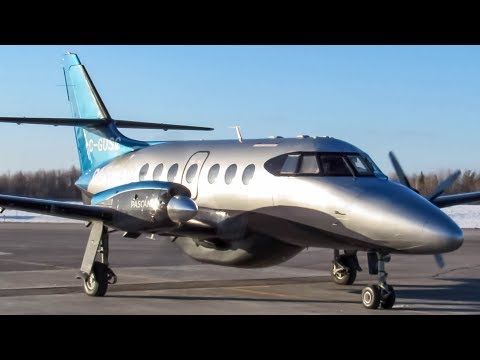
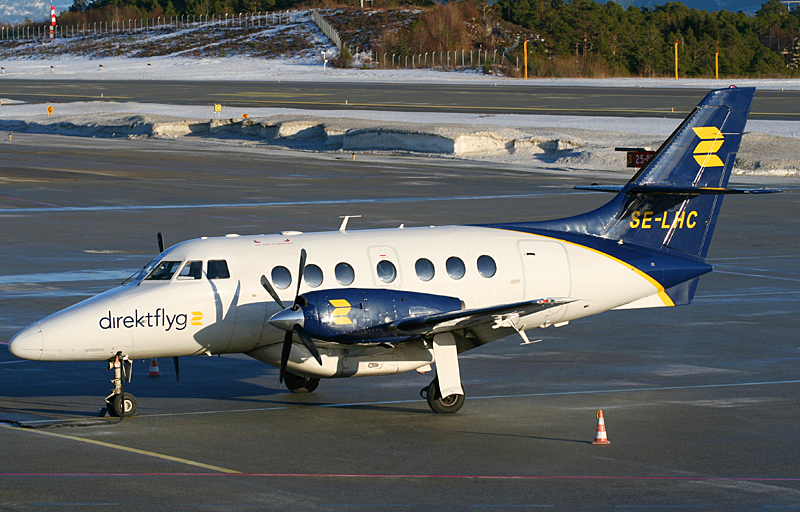
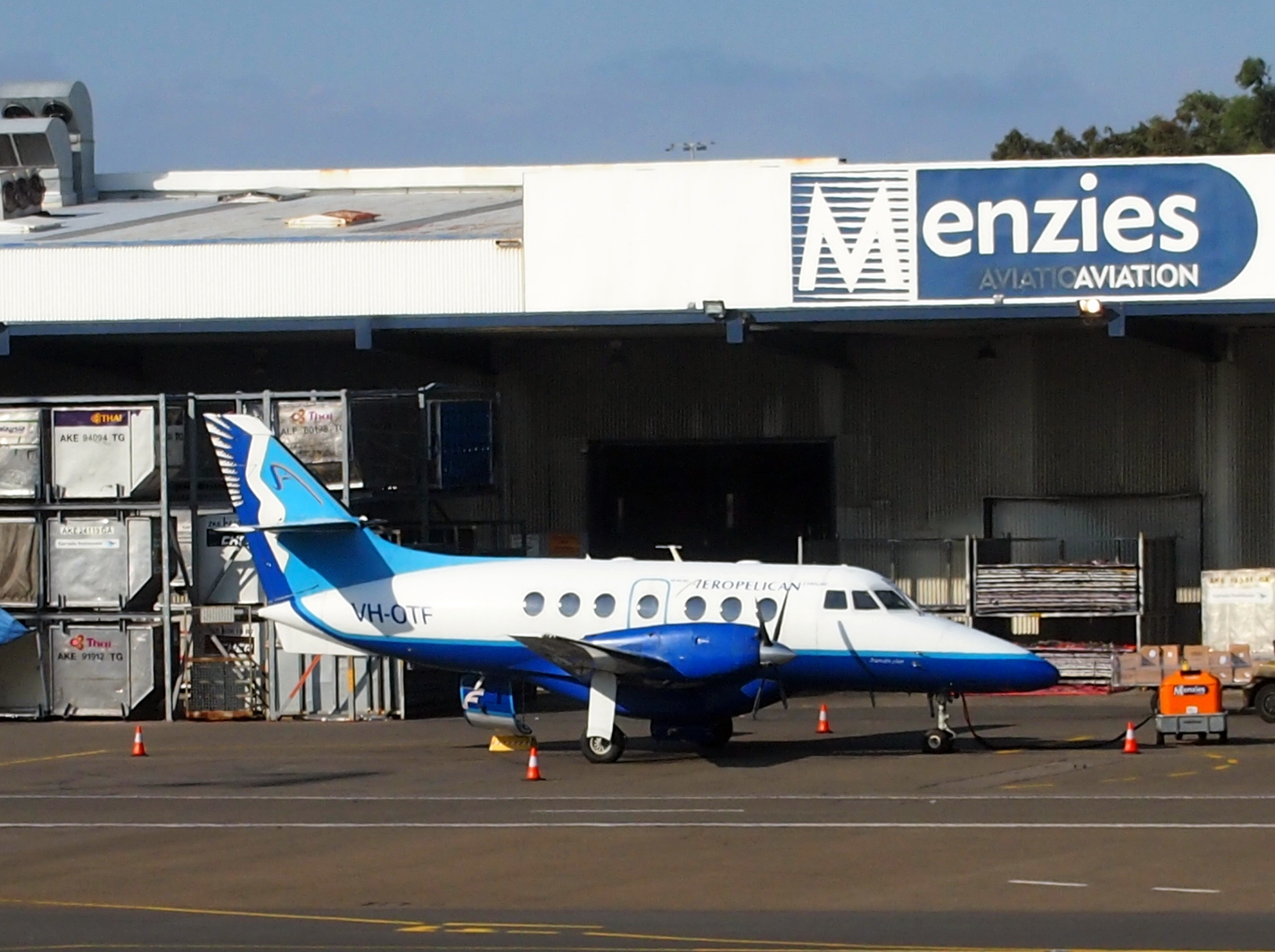
The BAe Jetstream was British Aerospace's rework of the small pressurised turboprop inherited from Handley Page. Renamed the Jetstream 31, it flew on 28 March 1980 and became one of the most common 19-seat airliners of the 1980s.
Related sheets
Category
BAe Jetstream in the news
.jpg)
Shortly after 1pm the AIS Airlines BAe Jetstream 32 registered PH-DCI landed in Genoa. The flight number was PNX82…
_BAe_Jetstream_32_at_Wagga_Wagga_Airport.jpg)
The Colombian Air Force (FAC) deployed a combat element made up of IAI Kfir C10/C12 aircraft to carry out an air patrol mission over the port of Santa Marta, in the north of…
Three-view drawing
History
When Scottish Aviation was nationalised into British Aerospace in 1978, the company inherited Handley Page's Jetstream design and decided it deserved another chance. The work was framed as a "Mark 3": Garrett TPE331 engines in place of the original Turbomeca Astazous, with more power at a flat rating of 1,020 shp against a thermodynamic limit of 1,100, and longer overhaul intervals. That allowed an 18-seat layout in six rows with an offset aisle and, with water-methanol injection, take-offs at maximum load from a wider range of airfields, which mattered in the continental United States and Australia.
The result, the Jetstream 31, flew on 28 March 1980 and was certificated in the United Kingdom on 29 June 1982. This time the market responded as Handley Page had hoped for the original, and several hundred aircraft were delivered through the decade. A further engine upgrade planned in 1985 flew in 1988 as the Jetstream Super 31, also sold as the Jetstream 32. In that same year of 1985 the Royal Navy ordered four Jetstream T.3 radar observer trainers, which were later used for VIP transport.
.jpg)
Production of the 31/32 series closed in 1993 after 386 aircraft; Wikipedia puts the family total at 492 built. In that year British Aerospace turned Jetstream into the brand for all of its twin turboprops: the stretched Jetstream 41 and the BAe ATP, renamed Jetstream 61 although the name never entered service. The proposed Jetstream 51 and 71 were never built. The 31s and 32s still earn a living on regional routes: in July 2019, 70 were in airline service, 49 of them in the Americas.
Variants
| Jetstream 1 | Jetstream 3M (C-10A) | Jetstream T.1 | Jetstream 31 | Century III | Jetstream 200 | Jetstream 31 Corporate | Jetstream 31EP | Jetstream 31EZ | Jetstream 31 Special | Jetstream 32EP | Jetstream Executive Shuttle | Jetstream QC | Jetstream Super 31 (Jetstream 32) | Jetstream T.2 | Jetstream T.3 | Riley Jetstream | |
|---|---|---|---|---|---|---|---|---|---|---|---|---|---|---|---|---|---|
| First flight | August 18, 1967 | November 21, 1968 | April 13, 1973 | March 28, 1980 | — | — | — | — | — | — | — | — | — | — | — | — | — |
| Aircraft type | Regional turboprop airliner | Light turboprop military transport | Military trainer | Regional turboprop airliner | Regional turboprop airliner | Regional turboprop airliner | Turboprop executive transport | Regional turboprop airliner | Turboprop maritime patrol aircraft | Turboprop utility transport | Regional turboprop airliner | Turboprop executive transport | Regional turboprop airliner | Regional turboprop airliner | Military trainer | Military trainer | Regional turboprop airliner |
| Powerplant | Two Turbomeca Astazou XIV turboprops rated at 625 kW (850 shp) each, with three-blade Hamilton Standard propellers. | Two Garrett AiResearch TPE331-3A-301W turboprops, the US engine that replaced the French Astazou. | Two Turbomeca Astazou XVI turboprops, the same as on the civil Jetstream 200 it derives from. | Two Garrett TPE331-10UG-513H turboprops rated at 701 kW (940 shp) each, driving four-blade Dowty Rotol propellers. | Two Garrett AiResearch TPE331 turboprops rated at 673 kW (902 shp) each, replacing the French Astazou. | Two Turbomeca Astazou XVIC turboprops rated at 687 kW (921 shp) each. | Two Garrett TPE331-10UG-513H turboprops rated at 701 kW (940 shp) each. | Two Garrett TPE331-10UG-513H turboprops rated at 701 kW (940 shp) each. | Two Garrett TPE331-10UG-513H turboprops rated at 701 kW (940 shp) each. | Two Garrett TPE331-10UG-513H turboprops rated at 701 kW (940 shp) each. | Two Garrett TPE331-12UHR-701H turboprops rated at 761 kW (1,020 shp) each. | Two Garrett TPE331-10UG-513H turboprops rated at 701 kW (940 shp) each. | Two Garrett TPE331-10UG-513H turboprops rated at 701 kW (940 shp) each. | 2 × Garrett TPE331-12 turboprops, 1,020 shp (760 kW) | Two Turbomeca Astazou XVI turboprops, inherited from the T.1 the conversion starts from. | Two Garrett TPE331-10UG turboprops rated at 701 kW (940 shp) each — the engine change that sets the T.3 apart from the Astazou-powered T.2. | Two Pratt & Whitney Canada PT6A turboprops, replacing the original Astazou. |
| Powerplant | 2 × Turbomeca Astazou XIV | 2 × Garrett AiResearch TPE331-3A-301W | 2 × Turbomeca Astazou XVI | 2 × Garrett TPE331-10UG-513H | 2 × Garrett AiResearch TPE331 | 2 × Turbomeca Astazou XVIC | 2 × Garrett TPE331-10UG-513H | 2 × Garrett TPE331-10UG-513H | 2 × Garrett TPE331-10UG-513H | 2 × Garrett TPE331-10UG-513H | 2 × Garrett TPE331-12UHR-701H | 2 × Garrett TPE331-10UG-513H | 2 × Garrett TPE331-10UG-513H | 2 × Garrett TPE331-12UAR-701H | 2 × Turbomeca Astazou XVI | 2 × Garrett TPE331-10UG | 2 × Pratt & Whitney Canada PT6A |
| Power per engine | 838 hp | — | — | 940 hp | 903 hp | 921 hp | 940 hp | 940 hp | 940 hp | 940 hp | 1,021 hp Best value in this row | 940 hp | 940 hp | 1,021 hp Best value in this row | — | 940 hp | — |
| Length | — | — | — | 14.4 m | — | 14.4 m Best value in this row | — | — | — | — | — | — | — | 14.4 m | — | — | — |
| Wingspan | — | — | — | 15.9 m Best value in this row | — | 15.9 m Best value in this row | — | — | — | — | — | — | — | 15.9 m Best value in this row | — | — | — |
| Height | — | — | — | 5.2 m | — | 5.3 m Best value in this row | — | — | — | — | — | — | — | 5.2 m | — | — | — |
| Wing area | — | — | — | 25.1 m² Best value in this row | — | 25.1 m² Best value in this row | — | — | — | — | 25.1 m² Best value in this row | — | — | 25.1 m² Best value in this row | — | — | — |
| Empty weight | — | — | — | 4,360 kg | 3,719 kg | 3,485 kg Best value in this row | — | — | — | — | — | — | — | 4,578 kg | — | — | — |
| MTOW | — | — | — | 6,954 kg | 5,670 kg | 5,700 kg | — | — | — | — | — | — | — | 7,350 kg Best value in this row | — | — | — |
| Top speed | — | — | — | 487 km/h | — | 454 km/h | — | — | — | — | — | — | — | 489 km/h Best value in this row | — | — | — |
| Cruise speed | — | — | — | 426 km/h | 483 km/h Best value in this row | 433 km/h | — | — | — | — | — | — | — | 452 km/h | — | — | — |
| Cruise altitude | — | — | — | 7,620 m | — | — | — | — | — | — | — | — | — | 7,620 m | — | — | — |
| Service ceiling | — | — | — | 7,620 m Best value in this row | — | 7,620 m Best value in this row | — | — | — | — | — | — | — | 7,620 m Best value in this row | — | — | — |
| Initial climb rate | — | — | — | 10.6 m/s | — | 12.7 m/s Best value in this row | — | — | — | — | — | — | — | 11.4 m/s | — | — | — |
| Range | — | — | — | 1,260 km | 3,090 km Best value in this row | 2,220 km | 1,760 km | — | — | — | — | 1,760 km | — | 1,192 km | — | — | — |
| Combat radius | 0 km Best value in this row | 0 km Best value in this row | 0 km Best value in this row | 0 km Best value in this row | 0 km Best value in this row | 0 km Best value in this row | 0 km Best value in this row | 0 km Best value in this row | 0 km Best value in this row | 0 km Best value in this row | 0 km Best value in this row | 0 km Best value in this row | 0 km Best value in this row | 0 km Best value in this row | 0 km Best value in this row | 0 km Best value in this row | 0 km Best value in this row |
| Range conditions | The Astazou proved underpowered for the design and cost the aircraft range and payload against what had been promised. | No published range figures exist for the military version. | Flown on short-radius training sorties; no published range figure for the military version. | Maximum range 1,259 km (680 nm). With 19 passengers and reserves it drops to 1,185 km, rising to 1,760 km with 12 and 2,130 km with nine. Certified maximum operating altitude is 25,000 ft (7,620 m). | 3,090 km (1,920 miles) on the 426 US gallon fuel load. | Range of 2,220 km with a 25,000 ft (7,620 m) ceiling. | 1,760 km with 12 passengers and reserves. | Refinements aimed at short-field and hot-and-high capability. | Patrol endurance depends on altitude and surveillance profile; no specific published figure. | Range equivalent to that of the airline Jetstream 31. | The aerodynamic refinements target payload-range and short-field capability. | 1,760 km with 12 passengers and reserves. | Range equivalent to that of the airline Jetstream 31. | 1,192 km with 19 passengers and reserves. Certified maximum operating altitude is 25,000 ft (7,620 m). | Flown on training profiles over the sea; no published range figure. | Flown on training profiles over the sea; no published range figure for the military version. | No published range figures exist for the conversion. |
| Armament | None | None | None | None | None | None | None | None | None | None | None | None | None | None | None | None | None |
| Max weapons load | 0 kg Best value in this row | 0 kg Best value in this row | 0 kg Best value in this row | 0 kg Best value in this row | 0 kg Best value in this row | 0 kg Best value in this row | 0 kg Best value in this row | 0 kg Best value in this row | 0 kg Best value in this row | 0 kg Best value in this row | 0 kg Best value in this row | 0 kg Best value in this row | 0 kg Best value in this row | 0 kg Best value in this row | 0 kg Best value in this row | 0 kg Best value in this row | 0 kg Best value in this row |
| Payload | 1,814 kg Best value in this row | — | — | 1,805 kg | — | — | — | — | — | — | — | — | — | — | — | — | — |
| Cargo capacity | Pressurised 12-seat cabin, up to 18 in high density; volume-limited maximum payload of 1,814 kg. | Cargo door and accommodation for 12 passengers or six stretchers. The US Air Force ordered a batch as the C-10A and cancelled it in October 1969 over delivery delays; none was ever handed over. | Multi-engine training cabin: student and instructor stations in place of the passenger seats. Ordered as the Jetstream 201 to replace RAF Training Command's Vickers Varsity. | Pressurised 19-seat cabin in three-abreast rows; 12 seats in the corporate layout and nine in the executive one. Maximum payload is 1,805 kg, with a baggage bay limited to 315 kg that the optional 205 kg ventral pod extends. | Century Aircraft (Amarillo, Texas) conversion of HP.137 airframes, air-conditioned and pressurised to 6.5 psi; Volpar of Van Nuys did the engine installation. | Pressurised 16-seat cabin; fuel capacity of 384 imperial gallons (1,745 litres). | Twelve-seat corporate cabin, with more room per passenger than the 19-seat airline interior. | Enhanced-performance version of the Jetstream 31, with the same 19-seat cabin. | Exclusive economic zone surveillance interior: observer consoles and search windows in place of the passenger cabin. | Utility transport derived from the Jetstream 31, with an interior adaptable to mixed passenger and cargo work. | 19-seat cabin. Enhanced-performance retrofit offered from 1997, with aerodynamic refinements that improve payload and hot-and-high operation. | Executive shuttle layout seating 12 passengers. | Quick-change layout: the seats come out to switch from passengers to freight between rotations. | Same 19-seat cabin as the Jetstream 31, with an extra overwing emergency exit on the left side and higher maximum weights. | T.1 conversion for Royal Navy observer training, with a nose-mounted MEL E90 radar and consoles for the mission crew. | Jetstream 31 airframe adapted to Royal Navy observer training, with an underfuselage Racal ASR360 search radar in place of the T.2's nose-mounted MEL E90. | Riley Aircraft (Carlsbad, California) conversion of a handful of early Jetstream 1s; the nacelles are recognisable by their bottom intake and side exhausts. |
| Crew | 2 Best value in this row | 2 Best value in this row | 2 Best value in this row | 2 Best value in this row | 2 Best value in this row | 2 Best value in this row | 2 Best value in this row | 2 Best value in this row | 2 Best value in this row | 2 Best value in this row | 2 Best value in this row | 2 Best value in this row | 2 Best value in this row | 2 Best value in this row | 2 Best value in this row | 2 Best value in this row | 2 Best value in this row |
| Passengers | 12 | 12 | — | 19 Best value in this row | — | 16 | 12 | — | — | — | 19 Best value in this row | 12 | — | 19 Best value in this row | — | — | — |
| Units built | 36 | — | 26 | 220 Best value in this row | — | — | — | — | — | — | — | — | — | 161 | 14 | 4 | — |
Images


![[4K] Full Flight Cockpit Footage: Transaviabaltica (AIS Airlines) Bae Jetstream 32 Kärdla - Tallinn](https://i.ytimg.com/vi/pAeFQ2Zu6x8/hqdefault.jpg)
![[4K] Full Flight Report: Transaviabaltica (AIS Airlines) Bae Jetstream 32 from Tallinn to Kärdla](https://i.ytimg.com/vi/ONocnSYvDtE/hqdefault.jpg)
![Classic BAe Jetstream 32: Passenger's view during Stuttgart Takeoff! [AirClips]](https://i.ytimg.com/vi/AWnriZhemBM/hqdefault.jpg)


![Pan Am BAE Jetstream 31 taxi and take off [4K Video!]](https://i.ytimg.com/vi/JkcUyHw8tjQ/hqdefault.jpg)



![FlyPelican | BAe Jetstream 32 | VH-OTQ | Canberra [CBR] - Newcastle [NTL]](https://i.ytimg.com/vi/SAyxjL3dwp0/hqdefault.jpg)