BAe Jetstream variant
BAe Jetstream Super 31 (Jetstream 32)
The final Jetstream 31 evolution, with 1,020 shp TPE331-12 engines and higher weights. Planned in 1985, it flew and was certified in 1988; known as the Super 31 or Jetstream 32.
_BAe_Jetstream_32_at_Wagga_Wagga_Airport-1600.webp)
- 161
- Units built
- 1,192 km
- Range
- 19
- Passengers
History
The final step in power
In 1985, with the Jetstream 31 established in the 19-seat regional airliner market, British Aerospace planned a further engine upgrade. The result flew in 1988 under the marketing name Jetstream Super 31, although fleet lists, the press and everyday usage almost always call it the Jetstream 32 or J32; airliners.net notes that this second name was originally unofficial. To the airworthiness authorities it is the "Jetstream Series 3200", just as the 31 is the "Series 3100".
The application for certification with the UK Civil Aviation Authority was filed on 1 June 1987, and the type certificate data sheet, now held by EASA, gives the UK certification date as 6 September 1988. Other sources, such as airliners.net, give October 1988. The certification basis is the same as for the Series 3100, except for ground loads and landing gear, where the British BCAR requirements were replaced by the equivalent European JAR 25 requirements; for noise it complies with BCAR Section N, Chapter N3-4.
What changed from the 31
The airframe is essentially that of the 31: low wing, conventional tail, two turboprops mounted above the wing driving four-bladed propellers, a 15.85 m span, 14.36 m length, 5.20 m height and 25.08 m² wing area according to the certificate. The step change is in the engines: where the 31 had two 700 kW (940 shp) Garrett TPE331-10s, the Super 31 received TPE331-12s, limited by the certificate to 1,020 shp for take-off and maximum continuous power. Airliners.net describes them as 760 kW TPE331-12UARs. The certificate approves a whole family of engine sub-models (12UA, 12UAR and 12UHR, with different part numbers) paired with either Dowty Rotol R.333/4-82-F/12 or McCauley 4HFR34C653 four-bladed propellers; both engines must always be of the same model.
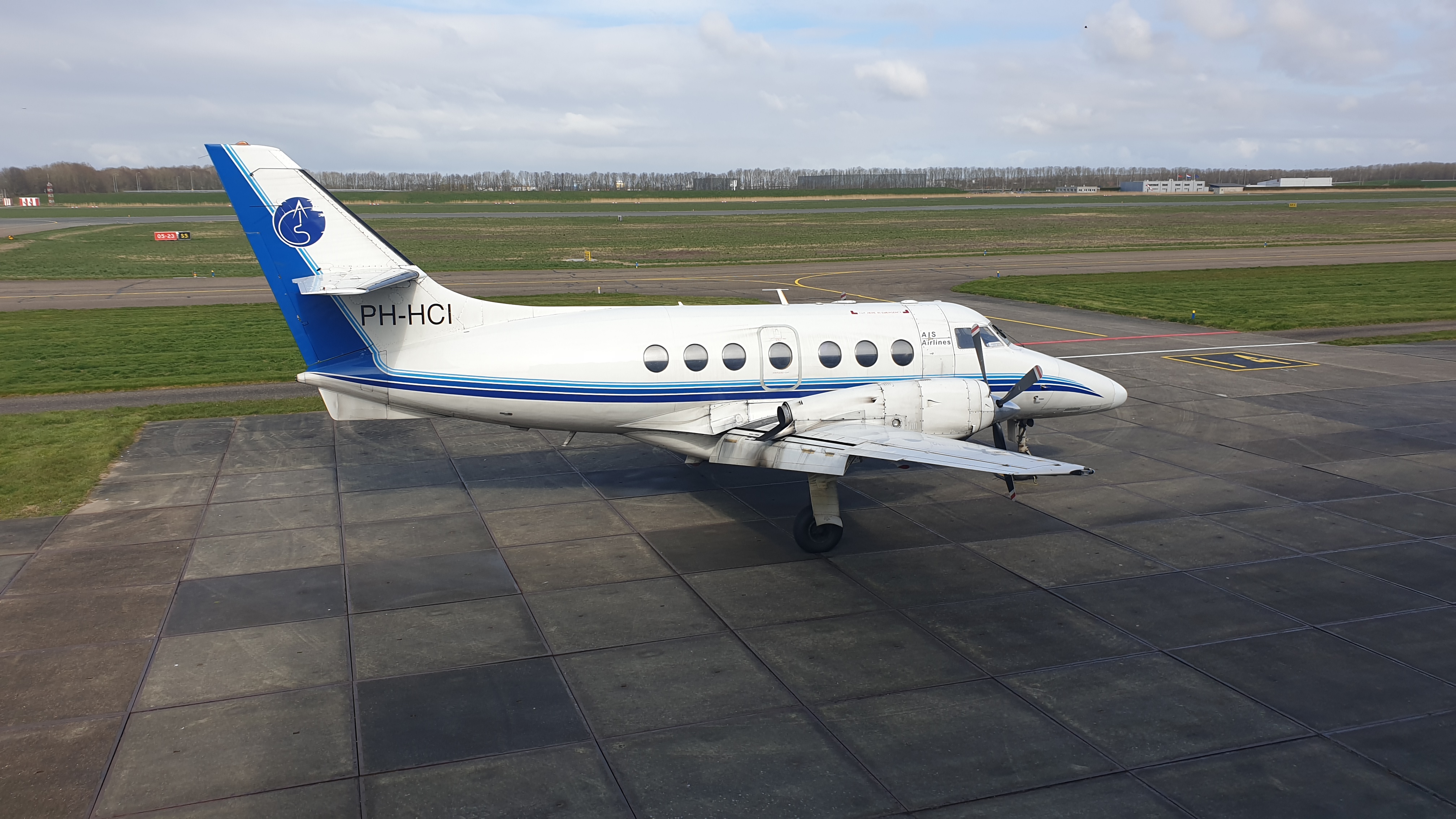
More power brought more weight. The Series 3200's maximum take-off weight is 7,350 kg, against the 6,950 kg airliners.net gives for the 31; maximum ramp weight is 7,400 kg, landing weight 7,080 kg and zero-fuel weight 6,500 kg, rising to 6,736 kg with certain modifications. Usable fuel is 1,846 litres (1,477 kg), the maximum operating altitude is about 7.6 km and the certificate requires two pilots for all types of flight. Maximum approved seating is 21 including crew, matching the 19 passengers of the airliner layout; airliners.net adds 12-seat corporate shuttle and 9-seat executive configurations. The cabin is evacuated through the rear left-hand door and two overwing emergency exits, and the aircraft has a 315 kg baggage bay plus an optional 205 kg underfuselage baggage pod.
Performance
According to airliners.net, the Super 31 reaches a maximum cruising speed of 490 km/h and a long-range cruising speed of 452 km/h, against 482 and 426 km/h for the 31, with an initial climb rate of about 11.4 m/s. Its range with 19 passengers and reserves is 1,192 km, practically the same as the 31's 1,185 km, but with more payload and better hot-and-high performance. The same source gives an operating empty weight of 4,578 kg.
Production and registration
The 32 was built at Prestwick, Scotland, like the 31. In the certificate, the Series 3200 covers serial numbers 790 onwards, with a long list of exceptions that continued to be built as Series 3100s: in the final years both versions came off the same line intermixed. Each registration authority assigned its own model number: 3201 for the US FAA, 3202 for the UK CAA, 3206 for the French DGAC, 3207 for Australia, 3212 for Canada, 3216 for Switzerland and 3217 for Japan.
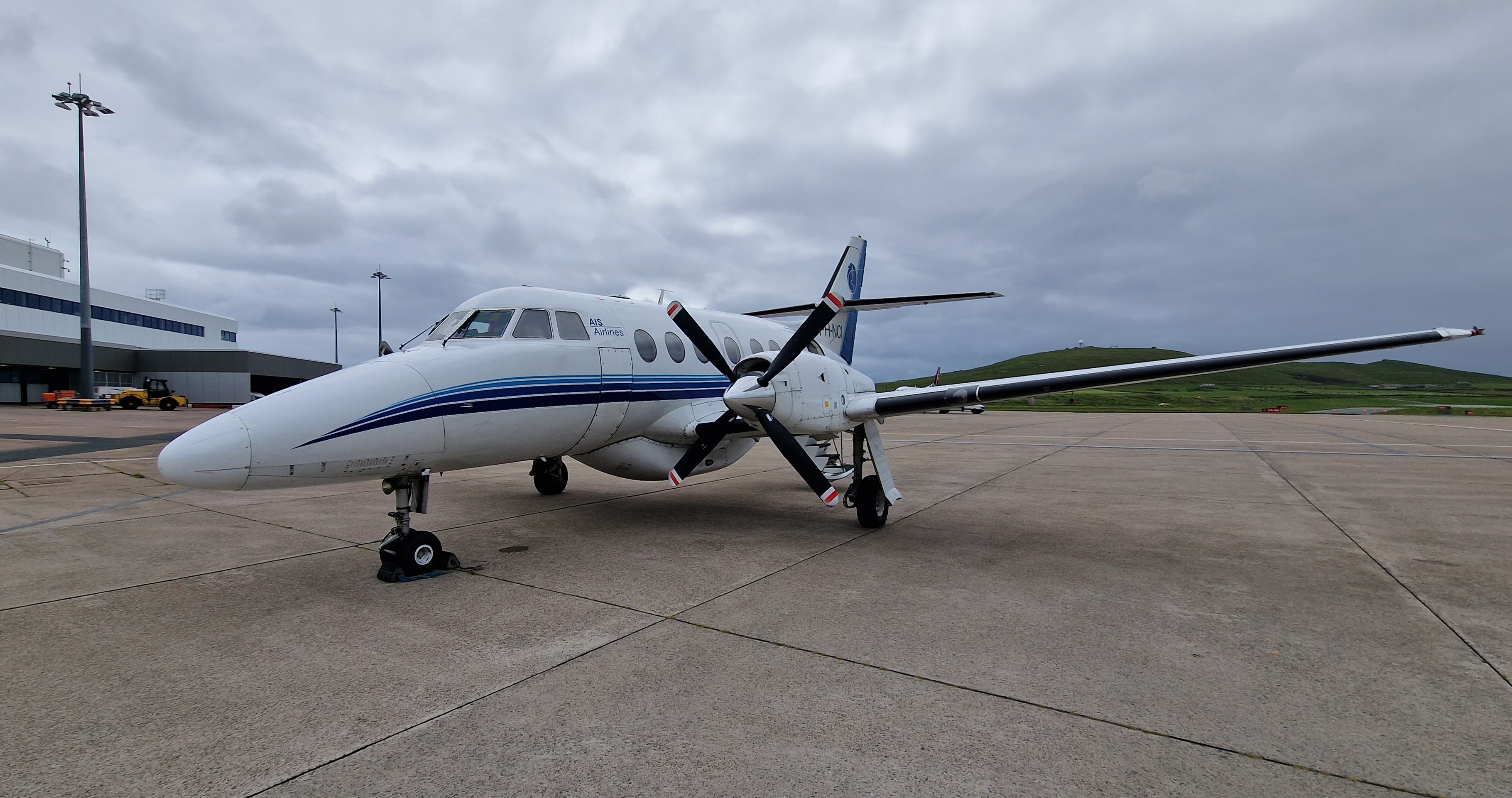
Airliners.net puts total Jetstream 31 deliveries at 381, of which 161 were Super 31s; the English Wikipedia gives 386 31s and 32s when production ended in 1993, the year the last aircraft was built. That same year British Aerospace turned Jetstream into a brand for its whole twin-turboprop range: the 31 and 32, the related Jetstream 41 and the BAe ATP rebadged Jetstream 61, a name that was never used in service. From 1997 British Aerospace Asset Management offered the J32EP (Enhanced Performance) for sale or lease, a 32 with minor aerodynamic and drag improvements that enhance payload-range and hot-and-high performance. The type certificate, which replaced the British BA15, was issued by EASA in 2009 and is now held by BAE Systems (Operations) Ltd.
In service
The 32 still flies with regional and charter operators, mostly in the Americas; Canada's Pascan Aviation is one of them. It has also suffered notable accidents this century. On 12 October 2014, an engine of an Air Century 32 caught fire on landing at Punta Cana after a charter from San Juan, Puerto Rico; the aircraft was destroyed, but all 13 passengers and two crew escaped unhurt. In July 2018, a Servicios Aéreos Profesionales 32 lost an engine while climbing out of Santa Clara, Cuba, and returned to the airport. On 17 March 2025, Aerolínea Lanhsa Flight 018, a 32 registered HR-AYW, crashed into the sea shortly after take-off from Roatán, Honduras, killing 13 of its 18 occupants.
Multimedia


