Airliner · Civil · France
Airbus A320
- February 22, 1987
- First flight
- 1988
- Introduced
- In service
- Status


The Airbus A320 is a twin-engined, single-aisle airliner with a six-abreast economy cabin. Airbus launched the programme in March 1984 and the first aircraft took to the air on 22 February 1987. It is the original, mid-sized member of the family that bears its name, from which the stretched A321 and the shortened A319 and A318 were derived, and it was the first airliner to fly with digital fly-by-wire controls commanded through side-sticks, a choice that shaped every Airbus built since. The design grew out of European studies of the 1970s aimed at the roughly 150-seat market then held by the Boeing 737 and the McDonnell Douglas DC-9. Airbus gave it a fuselage wider than its rival, a long and slender wing, a composite tail and a glass cockpit for a crew of two. European authorities certified it on 26 February 1988 and Air France flew the first commercial services that April. The first generation, now known as the A320ceo, was offered with CFM56 or IAE V2500 turbofans; since 2016 the A320neo has flown with LEAP-1A or PW1000G engines and promises about 15% lower fuel burn. As an A320-200, the version used as the reference for this entry, the aircraft is 37.57 m long, takes off at up to about 78 tonnes and carries 150 passengers in two classes over roughly 6,100 km. The A320 family overtook the Boeing 737 in fleet size in 2017, in orders in October 2019 and in deliveries in September 2025, making it the best-selling airliner ever built. Its story also includes events that left a mark on aviation as a whole, from the Habsheim crash of 1988 to the Hudson River ditching of Flight 1549 in 2009.
Related events
- Airbus launches the A320 programme
- First Airbus A320 rolled out in Toulouse
- First flight of the Airbus A320
- Airbus A320 receives JAA certification
- Airbus A320 enters service with Air France
- Air France Flight 296 crashes at Habsheim
- Air Inter Flight 148 crashes near Mont Sainte-Odile
- US Airways Flight 1549 ditches in the Hudson River
- Airbus launches Sharklet wingtips at the Dubai Airshow
- Airbus launches the A320neo
- First flight of the Airbus A320neo
- Germanwings Flight 9525 crashes in the French Alps
- A320neo receives joint EASA and FAA type certification
- A320neo enters service with Lufthansa
Related sheets
Category
Airbus A320 in the news
Tonight, just over 4.5 hours ago, an A320-232 9H-WZW belonging to Wizz Air arrived in Turin from Katowice; it is the second aircraft planned for the Wizz Air base, as…
The pilots of a Pegasus Airlines Airbus A320 accidentally turned the wrong way onto their departure runway at Frankfurt am Main International Airport on Tuesday and attempted to take off with less…
The British magazine highlighted the addition of the A320neo, which accounted for 30% of the fleet at the end of 2025, and the airline's social programs
The British magazine highlighted the addition of the A320neo, which accounted for 30% of the airline's fleet at the end of 2025, along with its social programs.
The airline was recognized at the World Finance Sustainability Awards 2026. By the end of 2025, it operated 48 Airbus A320neo aircraft and reported a 19.6% reduction in its emissions intensity…

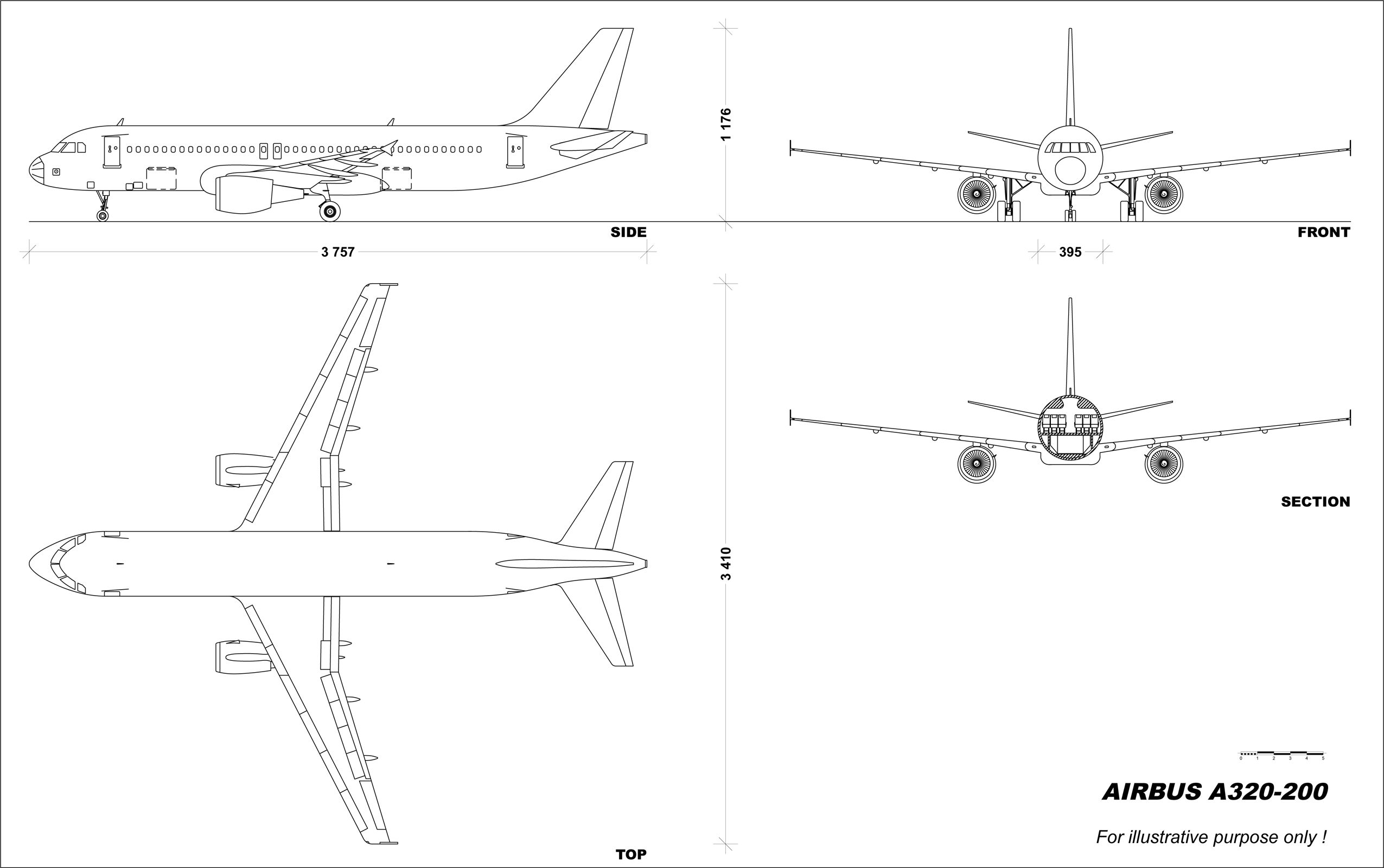
Three-view drawing
History
Origins: the search for a European single-aisle
While Airbus was designing the A300 in the late 1960s and early 1970s, it already envisaged a full range of airliners to take on Boeing and McDonnell Douglas. After the A310, the next logical target was the single-aisle market, held by the Boeing 737 and the DC-9. Several European manufacturers were separately looking for a successor to the BAC One-Eleven: MBB, British Aircraft Corporation, Saab and CASA studied the 180- to 200-seat EUROPLANE, dropped because it overlapped the A310, while VFW-Fokker, Dornier and Hawker Siddeley sketched designs of about 150 seats.
In June 1977 British Aerospace, Aérospatiale, Dornier and Fokker set up the Joint European Transport (JET) programme at Weybridge in Surrey. All were Airbus partners, yet they treated it as a separate venture. JET targeted the 130- to 188-seat segment with two CFM56 engines and a cruise speed of Mach 0.84, faster than the 737. The surviving design, the 163-seat JET2, fed into Airbus's Single-Aisle studies of 1980, led by the former JET chief Derek Brown. Its three variants, SA1, SA2 and SA3, turned out to be the blueprints of the future A319, A320 and A321. The consortium was split between a shorter-range twinjet and the long-range four-engined layout favoured by the West Germans and Lufthansa in particular; the twin won, and Lufthansa eventually bought it.
Design: a wider fuselage and an efficient wing
In February 1981 the project was renamed A320 and focused on the former SA2. That year Airbus worked with Delta Air Lines on the 150-seat aircraft the US carrier wanted. Rather than reuse the fuselage of the Boeing 707 and 727, Airbus chose an internal width of 3.7 m against Boeing's 3.45 m, accepting a weight penalty in exchange for a roomier cabin and larger overhead bins, with an outside diameter of 3.95 m. The 25-degree swept wing went through several iterations; long and thin, its higher aspect ratio gave it an aerodynamic edge over the 737 and the MD-80.
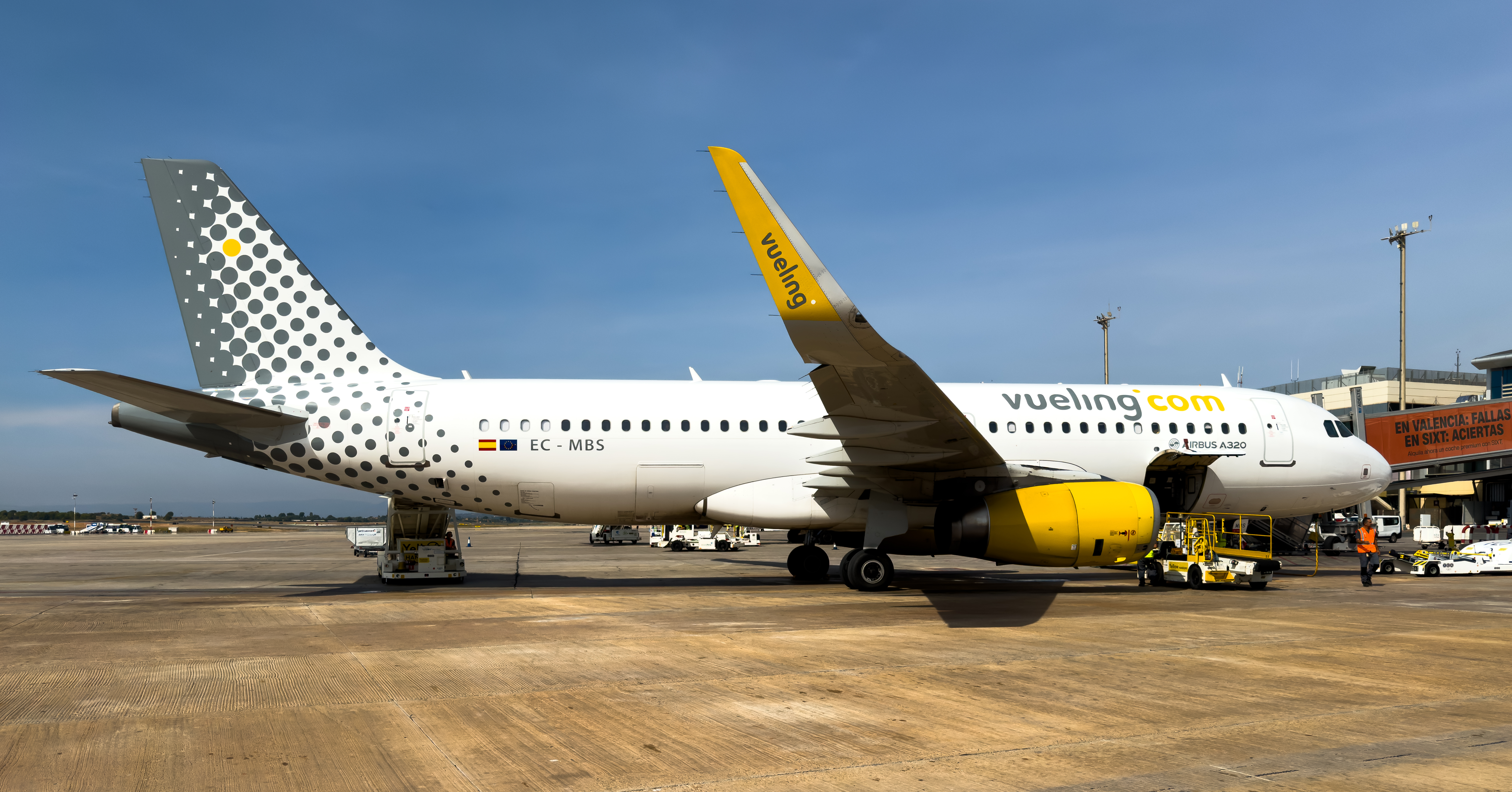
The oil shocks of the 1970s made trip fuel cost the overriding concern. Hence the composite primary structure of the tail, centre-of-gravity control by fuel transfer, a glass cockpit with side-sticks and a two-pilot flight deck. CASA built almost the entire composite tail as well as the elevators, main gear doors and parts of the rear fuselage. The A320 is a low-wing cantilever monoplane with a retractable tricycle undercarriage, a single fin and two turbofans on underwing pylons, and its hold accepts standard containers.
Work-share and launch
Britain, France and West Germany fought over final assembly and the associated work. France was ready to provide launch aid, Germany was more cautious and the British government was reluctant to fund the tooling requested by British Aerospace, estimated at 250 million pounds. On 1 March 1984 the two sides agreed that 50 million would be paid whether or not the aircraft flew, with the rest recovered as a levy on each aircraft sold. Flight International put the programme cost at around 2 billion pounds at the time.
The programme was formally launched on 2 March 1984 with 96 orders in hand. Air France had signed a letter of intent for 25 aircraft plus 25 options at the 1981 Paris Air Show, and British Caledonian ordered seven in October 1983. In November 1984 Cyprus Airways became the first customer for V2500-powered aircraft, followed in January 1985 by Pan Am with 16 firm orders and 34 options, and then by Inex Adria. The decisive boost came in October 1986, when Northwest Airlines ordered 100 CFM56-powered A320s. During development Airbus also weighed propfan engines, backed by Lufthansa, before settling on conventional turbofans.
First flight, certification and service entry
The first A320 was rolled out at Toulouse on 14 February 1987 before French Prime Minister Jacques Chirac and the Prince and Princess of Wales, and made its maiden flight on 22 February, staying aloft for 3 hours and 23 minutes. Flight testing ran to 1,200 hours over 530 flights. The European Joint Aviation Authorities certified the type on 26 February 1988, the same date as the CFM56-5A1-powered A320-111 model. Air France took delivery of its first aircraft on 28 March and opened commercial service in April on a Paris to Berlin route via Düsseldorf. In 1988 the cost of the clean-sheet programme stood at 5.486 billion French francs.
The first digital fly-by-wire airliner
The A320 was the world's first airliner with a digital fly-by-wire flight control system: side-stick inputs are interpreted by flight control computers that move the control surfaces within a protected flight envelope. Experience from the Dassault Mirage 2000 fighter informed the Airbus team, which had earlier trialled the technique on an A300. Airbus president Roger Béteille later described adopting fly-by-wire with envelope protection as one of the hardest calls of his career, arguing that the company had to lead with new technology or give up on the market. The earliest aircraft ran on Intel 80186 and Motorola 68010 processors, and in 1988 the flight management computer combined six Intel 80286 chips working in three pairs.
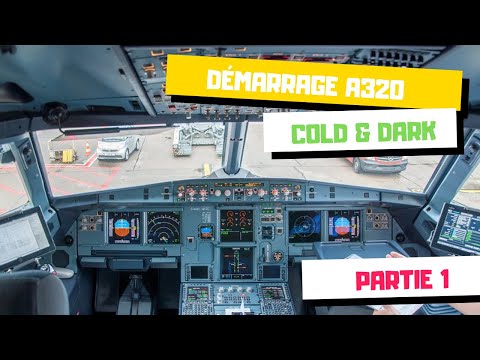
The flight deck was fully glass, with EFIS displays and an ECAM central monitor reporting on every system; only the radio-magnetic indicator and the brake pressure gauge remained analogue. From the A310 it inherited the dark cockpit concept, in which a light stays off while its system works normally, so that any illuminated indicator draws attention to a fault. LCD screens replaced the cathode-ray tubes from 2003. The commercial payoff was commonality: every later Airbus shares the same interface, easing cross-qualification between types, and all four members of the A320 family share a single pilot type rating.
Engines and the A320-100 and A320-200
The A320 was initially to fly with two CFM56-5-A1 engines of 111 kN, the only option until International Aero Engines, grouping Rolls-Royce, Pratt & Whitney, Japanese Aero Engine Corporation, Fiat and MTU, delivered the V2500. The first V2500-A1, rated at 110 kN, was about 4% more efficient than the CFM56. The V2500-A1-powered A320-231 was certified on 20 April 1989, followed by models such as the V2527-A5-powered A320-232 in September 1993 and the CFM56-5B4-powered A320-214 in March 1995.
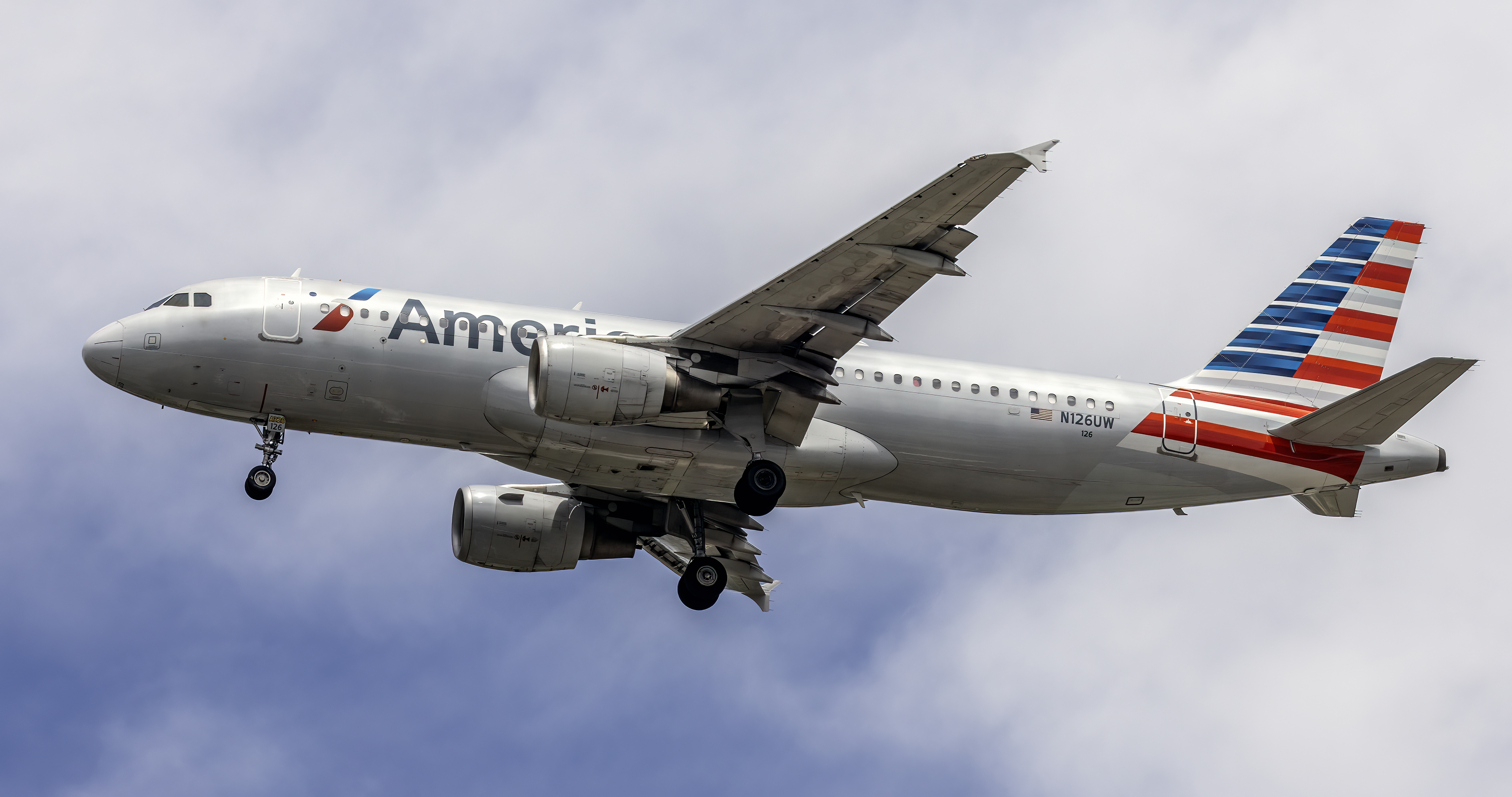
Only 21 A320-100s were built, the very first of the line, going to Air Inter and to British Airways, the latter through an order placed by British Caledonian. The A320-200, which became the standard model and is the technical reference for this entry, added wingtip fences and activated the centre tank, raising fuel capacity from 15,590 to 23,430 litres. With CFM56-5 or V2500 engines of 98 to 120 kN, it carries 150 passengers over about 6,100 km. Airbus's aircraft characteristics document gives a length of 37.57 m, a span of 34.10 m with the original tips or 35.80 m with sharklets, and a height of 11.76 m; a typical maximum take-off weight is 78 tonnes. It cruises at Mach 0.78, and its certified maximum operating Mach number is 0.82. A new A320 cost about 30 million dollars in 1988; its 2018 list price was 101.0 million.
A320 Enhanced, sharklets and a new cabin
In 2006 Airbus started the A320 Enhanced programme, a package aimed at a 4 to 5% efficiency gain through large winglets, aerodynamic refinements, weight savings and a new cabin. The CFM56 Tech Insertion and V2500Select engine upgrades of 2007 and 2008 cut fuel burn by a further 1%. After flight-testing several winglet designs on the prototype A320, which Airbus had kept, the manufacturer unveiled sharklets at the Dubai Airshow in November 2009: 2.5 m tall wingtip devices built by Korean Air that add 200 kg but reduce fuel burn by 3.5% on sectors over 2,800 km. The first sharklet-equipped A320 went to Indonesia AirAsia on 21 December 2012 with 450 kg more payload and 190 km more range. The 2007 cabin brought more overhead bin space, LED mood lighting and touchscreen cabin management for the crew.
The second generation: A320neo
On 1 December 2010 Airbus launched the A320neo, for new engine option, an incremental development of the enhanced aircraft with CFM International LEAP-1A or Pratt & Whitney PW1000G engines and sharklets as standard. It first flew on 25 September 2014 and entered service with Lufthansa on 25 January 2016, while the earlier aircraft were renamed A320ceo, for current engine option. A head start of about six months over the Boeing 737 MAX let Airbus collect 1,000 orders before its rival had even announced its answer.
Production on four continents
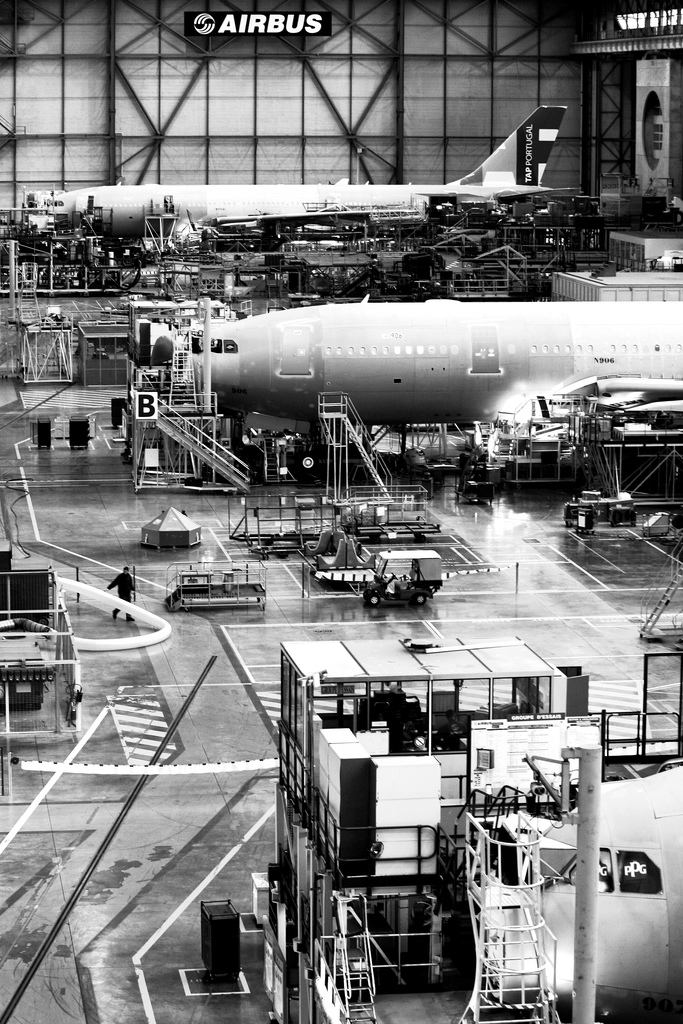
The A320 is assembled at Toulouse-Blagnac, while Hamburg-Finkenwerder concentrated on the other family members. The Tianjin plant in China has assembled A320s since 2009 and the Airbus Americas plant at Mobile, Alabama, since April 2016. Parts come from many countries, such as the centre fuselage from Hamburg and the horizontal stabiliser from Getafe. Airbus was building 42 family aircraft a month in 2015; it delivered the 9000th to easyJet in September 2019, and the COVID-19 pandemic forced a cut from 60 to 40 a month in 2020. That October Tianjin delivered its 500th A320, a neo, to China Southern.
An unprecedented commercial success
In 2017 the A320 family became the most numerous airliner family in service, with 6,965 aircraft against 6,864 Boeing 737s. In October 2019 it became the best-selling with 15,193 orders, and in September 2025 it overtook the 737 in deliveries as well. In May 2026 it became the first airliner programme to reach 20,000 orders. As of September 2026 it had 20,435 orders and 12,900 deliveries, with 11,374 aircraft in service with more than 375 operators; 6,373 of them were A320s proper, 3,903 of the first generation and 2,470 neos. The worldwide fleet had flown more than 176 million flights over 328 million block hours.
Accidents that made history
On 26 June 1988, barely three months into service, a brand-new A320 chartered for Air France crashed during a low pass at the Habsheim air show: planned at 100 ft, the flyover was flown at about 30 ft, the aircraft clipped the trees of an adjacent forest and came down in front of thousands of spectators. All 136 passengers survived the impact, but three died in the fire. The official inquiry blamed the crew, while the captain claimed the fly-by-wire system had prevented him from applying power, a controversy that long followed the new control concept.
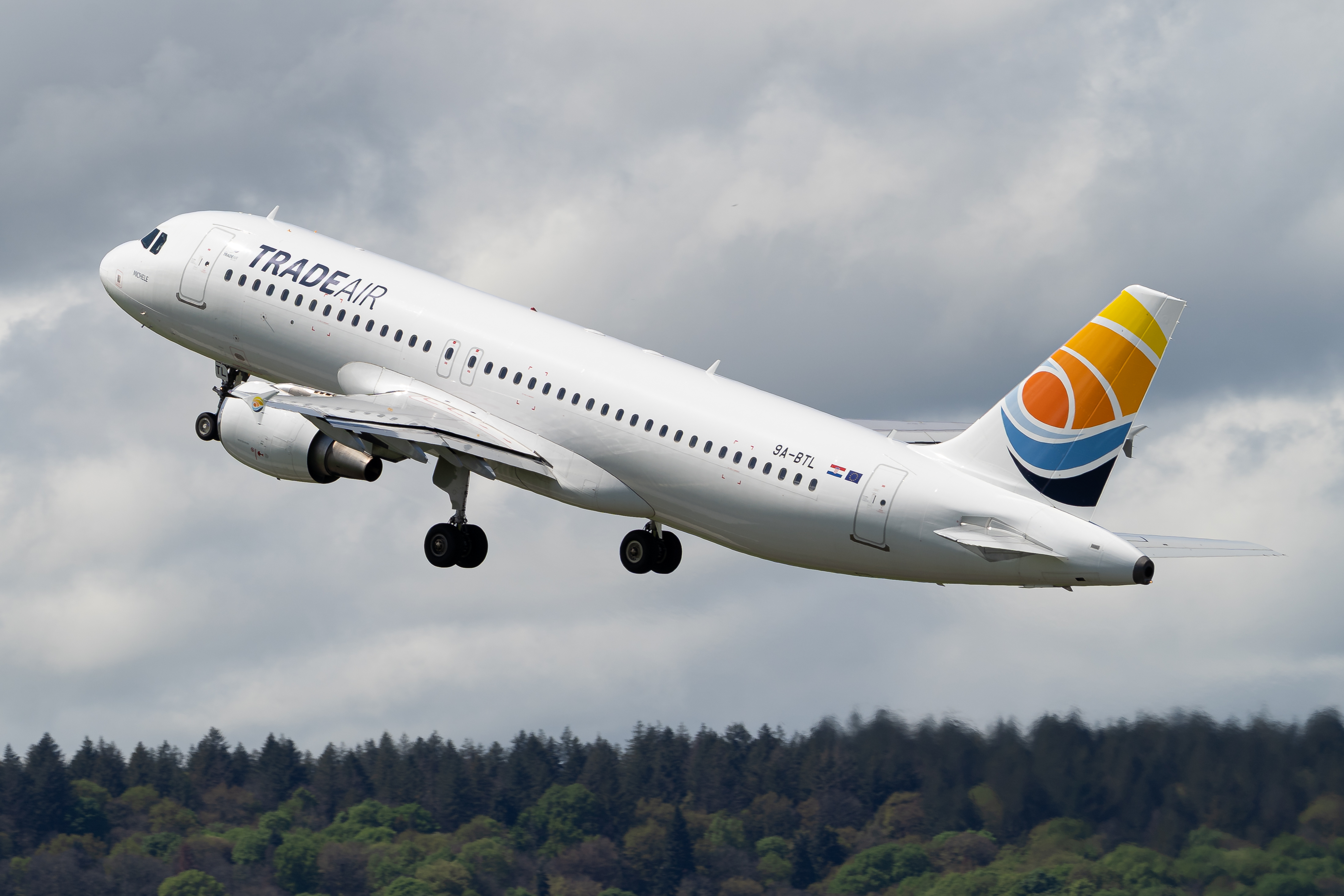
On 20 January 1992 Air Inter Flight 148 struck the Vosges near Mont Sainte-Odile on approach to Strasbourg, killing 87 of the 96 people on board. The French investigation bureau BEA found that the crew had left the autopilot in vertical speed mode instead of flight path angle mode, and Airbus changed the display so that the two could no longer be confused. On 15 January 2009 US Airways Flight 1549, the A320 N106US, lost both engines to a flock of Canada geese after leaving LaGuardia; Chesley Sullenberger and Jeffrey Skiles glided it onto the Hudson River and all 155 people on board survived. On 24 March 2015 the first officer of Germanwings Flight 9525 deliberately flew his A320 into the French Alps, killing 150. By 2015 the family's rate stood at 0.12 fatal hull losses per million take-offs.
In late 2025, after solar radiation corrupted flight data on a JetBlue aircraft, Airbus and EASA issued a mandatory safety notice covering more than 6,000 family aircraft, most of which needed only a software patch for the elevator controls.
Freighter and military roles
The passenger-to-freighter programme run by Elbe Flugzeugwerke (EFW) in Dresden with ST Aerospace began its first A320 conversion in March 2021. The A320P2F flew on 8 December that year from Singapore and gained its supplemental type certificate at the end of March 2022; it carries up to 27 tonnes over 3,500 km, with 14 main-deck positions and 10 LD3 containers below. On the military side, India approved in late 2020 the conversion of six Air India A320s into Netra Mk2 airborne early warning aircraft.
Towards a successor
As early as 2006 Airbus was studying a replacement, provisionally called NSR and later A30X, but in 2010 John Leahy, its chief operating officer for customers, ruled out an all-new single-aisle before the middle of the following decade. Meanwhile the A320 has kept evolving step by step, and in July 2026 Airbus announced high-span wing trials under its Wing of Tomorrow programme for the next generation of single-aisle airliners.
Variants
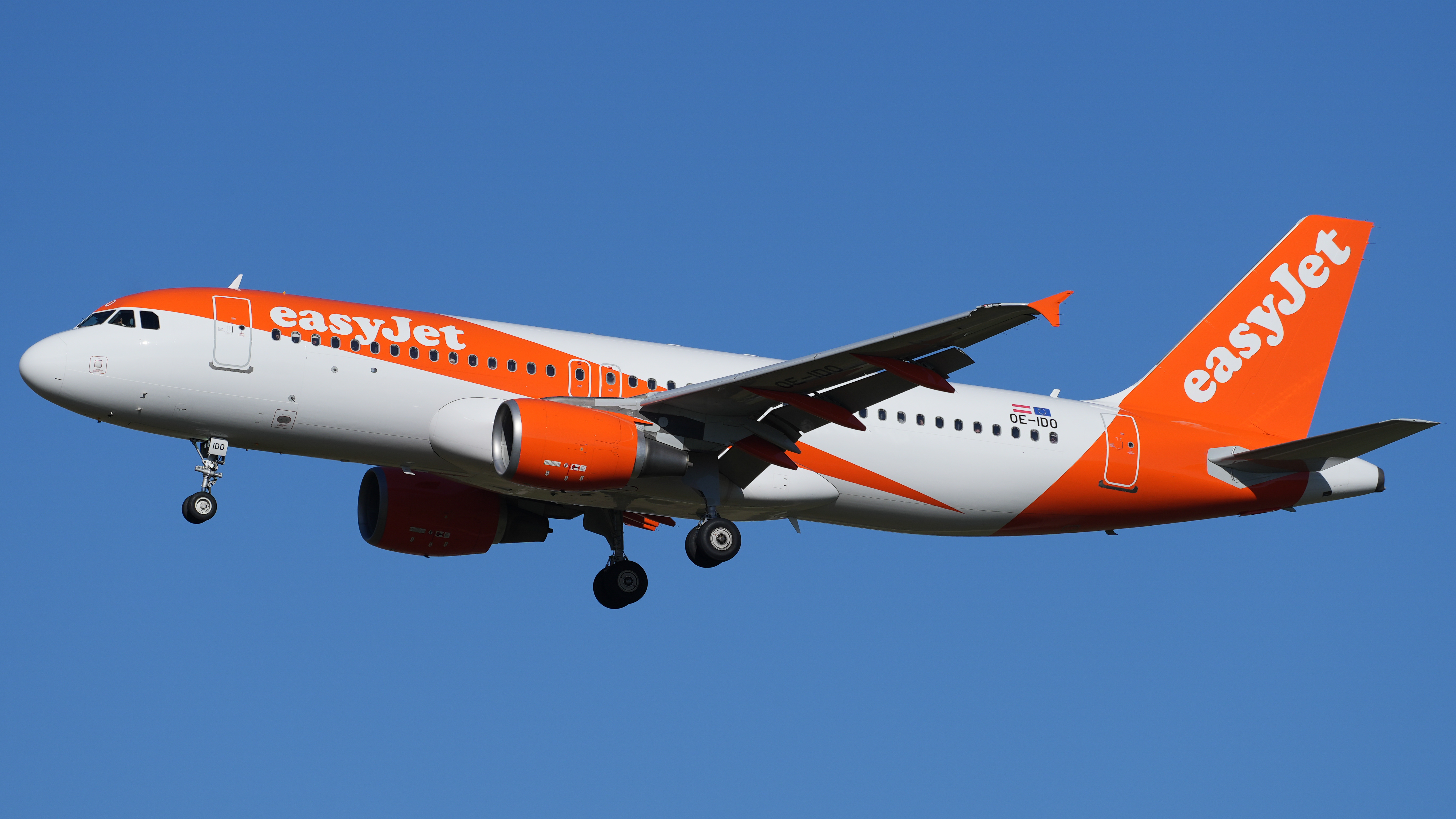
| A320-100 | A320-200 | A320neo | A320P2F | A320-211 | A320-212 | A320-214 | A320-215 | A320-216 | A320-231 | A320-232 | A320-233 | A320-251N | A320-252N | A320-253N | A320-271N | A320-272N | A320-273N | ACJ320 | ACJ320neo | |
|---|---|---|---|---|---|---|---|---|---|---|---|---|---|---|---|---|---|---|---|---|
| First flight | February 22, 1987 | June 27, 1988 | September 25, 2014 | December 8, 2021 | — | — | — | — | — | — | — | — | — | — | — | — | — | — | — | — |
| Aircraft type | — | Twin-engine single-aisle short- to medium-haul airliner | — | — | — | — | — | — | — | — | — | — | — | — | — | — | — | — | — | — |
| Powerplant | — | 2 × CFM International CFM56-5A1 turbofans of 111 kN each; the A320-200 was also certified with CFM56-5B engines and with IAE V2500-A1 (110 kN) and V2527-A5 engines. | — | — | — | — | — | — | — | — | — | — | — | — | — | — | — | — | — | — |
| Powerplant | 2 × CFM International CFM56-5A1 | 2 × CFM International CFM56-5A/-5B o IAE V2500-A1/V2527-A5 | 2 × CFM International LEAP-1A o Pratt & Whitney PW1100G-JM | 2 × turbofan | 2 × CFM International CFM56-5A1 (o CFM56-5A1/F) | 2 × CFM International CFM56-5A3 | 2 × CFM International CFM56-5B4 (o CFM56-5B4/2) | 2 × CFM International CFM56-5B5/P | 2 × CFM International CFM56-5B6/P | 2 × IAE V2500-A1 | 2 × IAE V2527-A5 | 2 × IAE V2527E-A5 | 2 × CFM International LEAP-1A26 | 2 × CFM International LEAP-1A24 | 2 × CFM International LEAP-1A29 | 2 × Pratt & Whitney PW1127G-JM | 2 × Pratt & Whitney PW1124G1-JM | 2 × Pratt & Whitney PW1129G-JM | 2 × turbofan | 2 × CFM International LEAP-1A26CJ o Pratt & Whitney PW1127G-JM / PW1124G1-JM / PW1129G-JM |
| Thrust per engine | 111 kN Best value in this row | 111 kN Best value in this row | — | — | 111 kN Best value in this row | — | — | — | — | 110 kN | — | — | — | — | — | — | — | — | — | — |
| Length | 37.6 m Best value in this row | 37.6 m Best value in this row | 37.6 m Best value in this row | — | — | — | — | — | — | — | — | — | — | — | — | — | — | — | — | — |
| Wingspan | — | 34.1 m | 35.8 m Best value in this row | — | — | — | — | — | — | — | — | — | — | — | — | — | — | — | — | — |
| Height | 11.8 m Best value in this row | 11.8 m Best value in this row | 11.8 m Best value in this row | — | — | — | — | — | — | — | — | — | — | — | — | — | — | — | — | — |
| Wing area | — | 124 m² | — | — | — | — | — | — | — | — | — | — | — | — | — | — | — | — | — | — |
| Empty weight | — | 42,600 kg | — | — | — | — | — | — | — | — | — | — | — | — | — | — | — | — | — | — |
| MTOW | — | 78,000 kg | 79,000 kg Best value in this row | — | — | — | — | — | — | — | — | — | — | — | — | — | — | — | — | 79,000 kg Best value in this row |
| Top speed | — | 871 km/h | — | — | — | — | — | — | — | — | — | — | — | — | — | — | — | — | — | — |
| Max speed altitude | — | 11,000 m | — | — | — | — | — | — | — | — | — | — | — | — | — | — | — | — | — | — |
| Cruise speed | — | 828 km/h | — | — | — | — | — | — | — | — | — | — | — | — | — | — | — | — | — | — |
| Cruise altitude | — | 11,000 m | — | — | — | — | — | — | — | — | — | — | — | — | — | — | — | — | — | — |
| Service ceiling | — | 11,918 m | — | — | — | — | — | — | — | — | — | — | — | — | — | — | — | — | — | — |
| Range | — | 6,100 km | — | 3,500 km | — | — | — | — | — | — | — | — | — | — | — | — | — | — | — | 11,112 km Best value in this row |
| Range conditions | — | About 6,100 km with 150 passengers in the typical two-class layout. | — | — | — | — | — | — | — | — | — | — | — | — | — | — | — | — | — | — |
| Armament | — | None: the A320-200 is a civil passenger transport. | — | — | — | — | — | — | — | — | — | — | — | — | — | — | — | — | — | — |
| Max weapons load | — | 0 kg | — | — | — | — | — | — | — | — | — | — | — | — | — | — | — | — | — | — |
| Payload | — | 19,900 kg | — | — | — | — | — | — | — | — | — | — | — | — | — | — | — | — | — | — |
| Cargo capacity | — | Up to 19,900 kg of maximum payload. The lower holds offer 37.4 m³ and take 7 LD3-45 containers, on top of the baggage of the 150 passengers of the typical two-class layout. | — | — | — | — | — | — | — | — | — | — | — | — | — | — | — | — | — | — |
| Crew | 2 Best value in this row | 2 Best value in this row | 2 Best value in this row | — | — | — | — | — | — | — | — | — | — | — | — | — | — | — | — | 2 Best value in this row |
| Passengers | — | 180 Best value in this row | — | — | — | — | — | — | — | — | — | — | — | — | — | — | — | — | — | 25 |
| Units built | 21 | — | — | — | — | — | — | — | — | — | — | — | — | — | — | — | — | — | — | — |
Images
Elsewhere
- Airliners.netAirbus A320-232 de JetBlue Airways (N536JB) en Los Angeles ↗
- Airliners.netAirbus A320-214 de American Airlines (N119US) en Dallas/Fort Worth ↗
- Airliners.netAirbus A320-232 de Vueling en Madrid-Barajas ↗
- Airliners.netPrimer Airbus A320neo (F-WNEO) en rodaje de pruebas en Toulouse ↗
- JetPhotosAirbus A320-214 de Eurowings (D-ABDU) en Dusseldorf ↗
- JetPhotosAirbus A320-252N de Transavia France (F-HXIC) en Paris-Orly ↗
- JetPhotosAirbus A320-271N de Aegean Airlines (SX-NEL) en Munich ↗
- Airteam ImagesAirbus A320-200 en Toulouse (2003) ↗
- Airteam ImagesAirbus A320-214 de easyJet (G-EZUY) en Luton, librea Petra 200 ↗
- AirHistory.netAirbus A320-214 de Aer Lingus (EI-DVF) en Amsterdam-Schiphol ↗
- Aviation Photo CompanyAirbus A320-200 de Air New Zealand (ZK-OJF) ↗
- FlightGlobal (AAP Prints)Airbus A320 de British Airways en aproximacion (archivo Flight International) ↗
Videos






Did you know… about Airbus A320
- Why is the a320 ptu so loud?
That barking is the A320's power transfer unit. The PTU lets the green hydraulic system drive the yellow one, or the reverse, by mechanically coupling a pump…
- How fast does the a320 go?
An Airbus A320 cruises at about Mach 0.78, roughly 830 km/h (450 kn) true airspeed at 35,000 ft (10,700 m). Airbus gives a maximum operating speed of Mach…
- Why is the a320 so loud?
The whistle is not the engines. A320s built before 2014 have small fuel overpressure vents under each wing that behave like a blown bottle, emitting a pure…
- How much does the a320 cost?
Airbus stopped publishing list prices in 2018. In that final catalogue the A320neo was $110.6 million, the outgoing A320ceo $101.0 million and the A321neo…
- Why is the a320 so popular?
Because it made narrowbody flying cheap to operate and cheap to staff. The A320 family has taken more than 18,000 orders since 1984, on the strength of…