Avião comercial · Civil · Países Baixos
Fokker F.VII
- 24 de novembro de 1924
- Primeiro voo
- 1925
- Entrada ao serviço
- Em serviço
- Estado
-1600.webp)
%2C_New_England_Airways%2C_1933-1935-1600.webp)

-1600.webp)
.jpg)
-1600.webp)
-800.webp)

%2C_enero_de_1933-1600.webp)
_at_Bolling_Field%2C_1927-1600.webp)
-1600.webp)


-800.webp)


%2C_1928%2C_en_el_agua-1600.webp)
%2C_1928-1600.webp)
-1600.webp)
-1600.webp)
_en_vuelo_con_flotadores-1600.webp)
-1600.webp)

-1600.webp)

%2C_vista_cenital-1600.webp)


-1600.webp)


_with_pilot_and_visitors%2C_1933-1935-1600.webp)

_at_Muriwai_beach_before_the_first_official_airmail_to_Australia%2C_17_Feb_1934-800.webp)
-800.webp)
-1600.webp)
%2C_1928%2C_vista_lateral-1600.webp)
_with_pilot_Keith_Virtue_and_visitors%2C_1933-1935-1600.webp)
-1600.webp)
-800.webp)

-800.webp)
_in_Queensland-800.webp)


-1600.webp)
-800.webp)
-1600.webp)
-800.webp)

%2C_febrero_de_1934-800.webp)


_in_flight%2C_before_its_loss_in_1931.png)
-800.webp)
O Fokker F.VII, popularmente conhecido como Fokker Trimotor, foi um avião de linha dos anos vinte fabricado pela neerlandesa Fokker, pela sua filial norte-americana Atlantic Aircraft Corporation e por várias empresas sob licença. Levava entre seis e doze passageiros consoante a versão e foi o aparelho escolhido por boa parte dos voos pioneiros da época.
Eventos relacionados
Fichas relacionadas
Categoria
Atualidade de Fokker F.VII
Último Greyhound operacional pousou em Pensacola antes de integrar acervo do Museu da Aviação Naval

O último Greyhound operacional aterra em Pensacola antes de integrar o Naval Aviation Museum
O C-2A Greyhound da Marinha dos EUA cumpriu seu último voo e pousou na Estação Aeronaval (NAS) de Pensacola. Agora passará a integrar o National Naval Aviation Museum. O Grumman […]…
.jpg)
O Grumman C-2A Greyhound, uma das aeronaves mais emblemáticas da aviação naval dos Estados Unidos, encerrou oficialmente sua carreira após seis décadas de operações. O último voo do modelo foi…
Antes de pousar, o Greyhound voou em formação com a equipe acrobática Blue Angels da Marinha dos EUA, como parte da homenagem preparada para a…

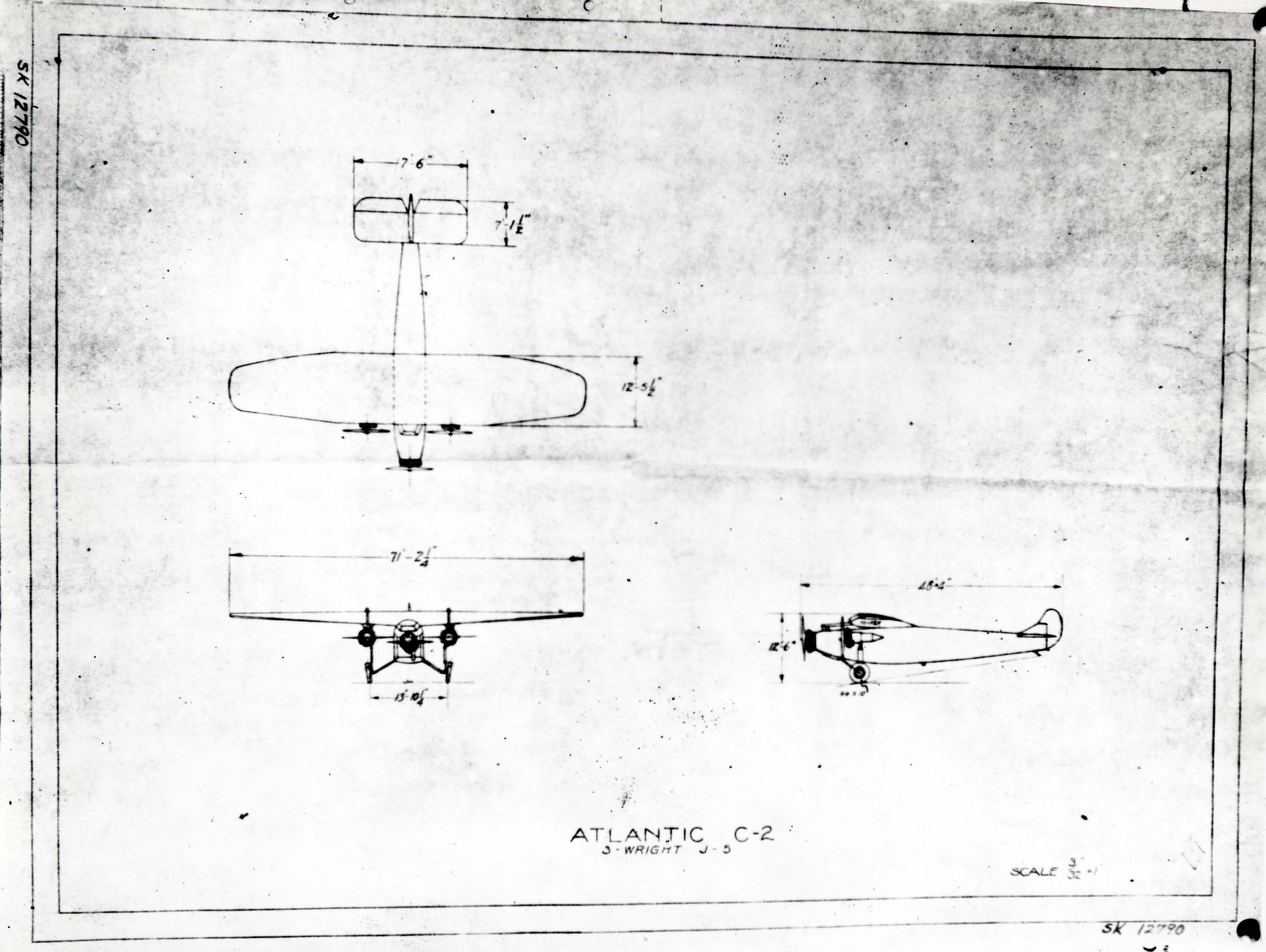
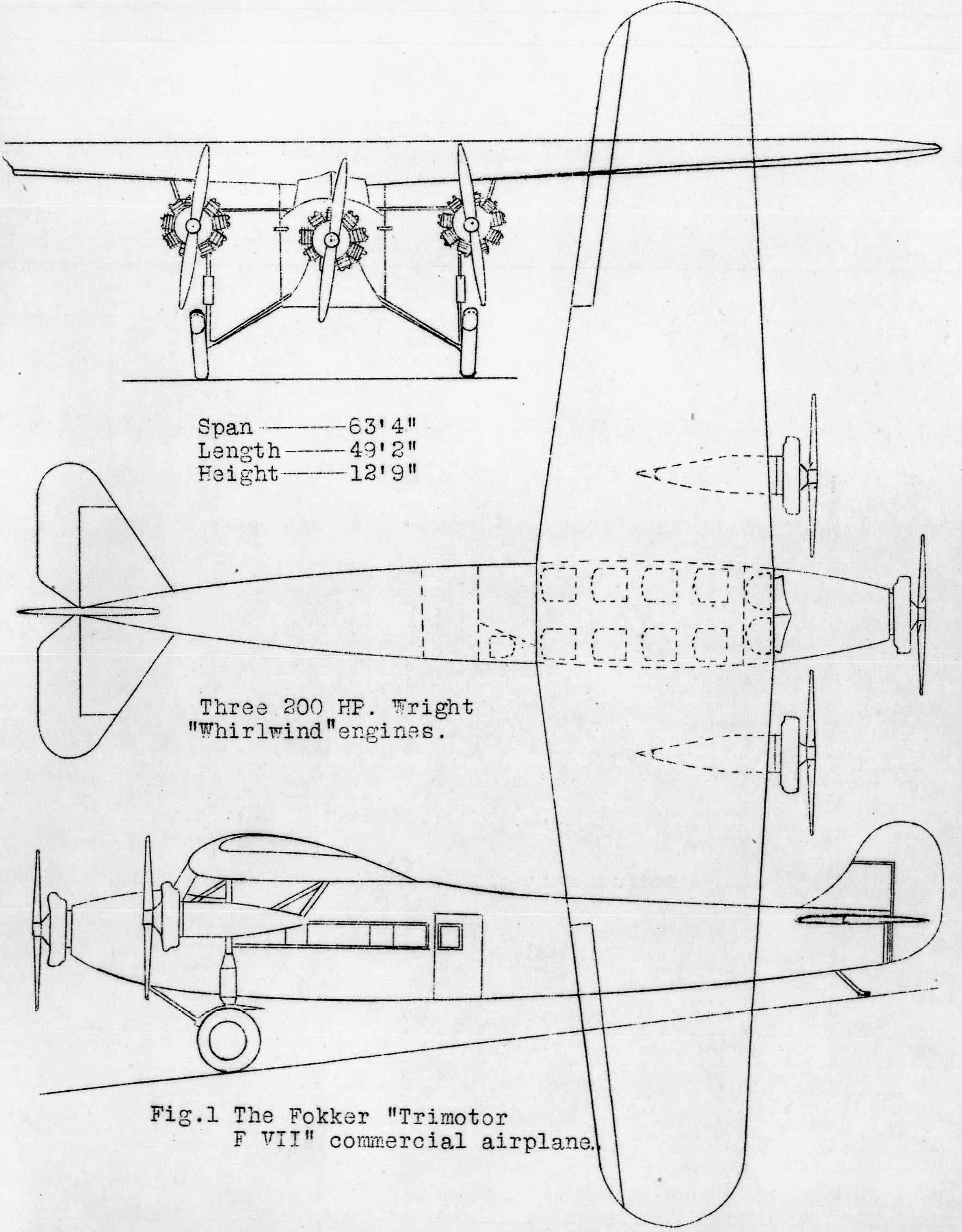
Desenho de três vistas
.jpg)
História
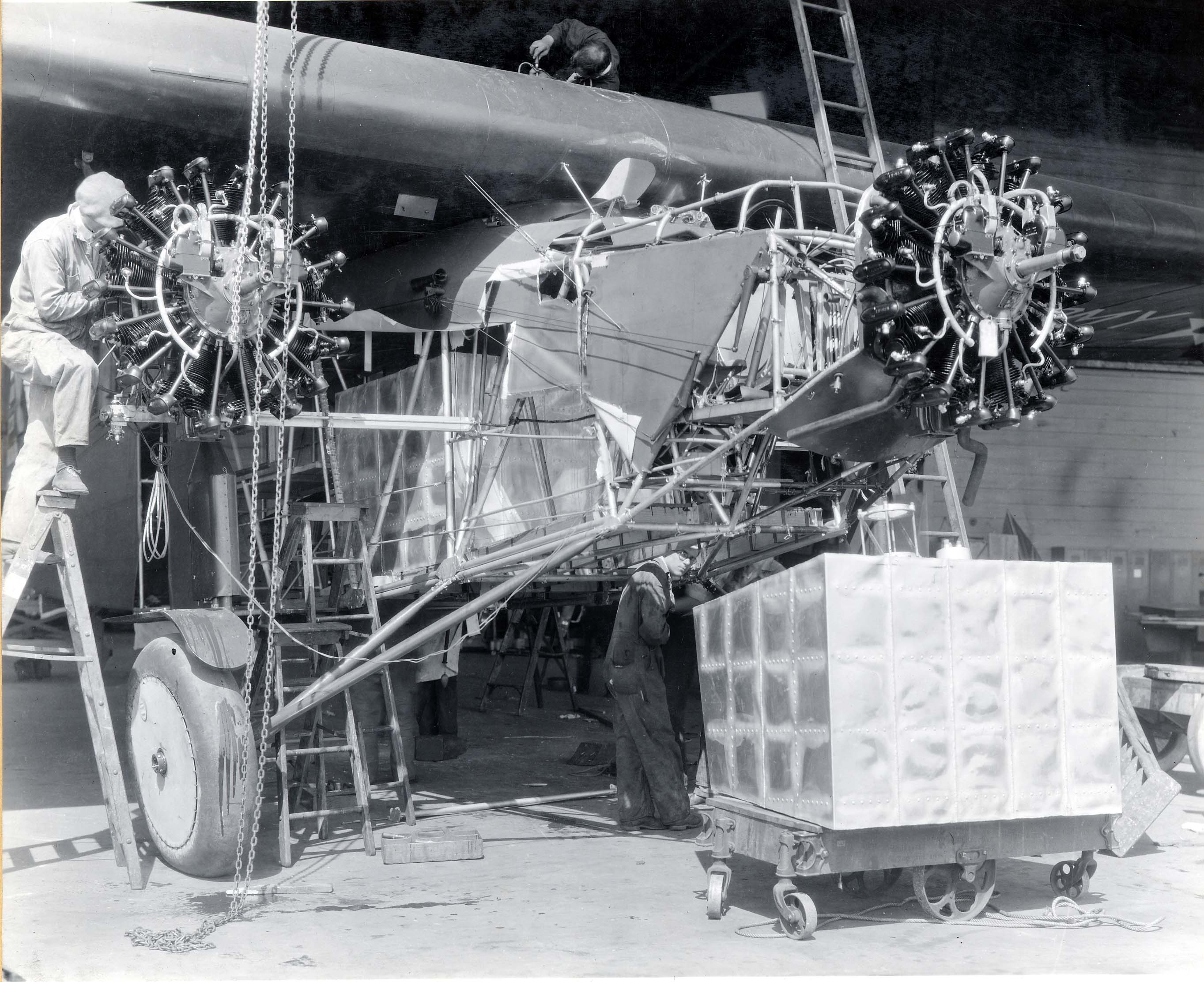
Walter Rethel projetou o F.VII como transporte monomotor e construíram-se cinco exemplares para a companhia aérea neerlandesa KLM; um deles, com a matrícula H-NACC, fez em 1924 o primeiro voo dos Países Baixos às Índias Orientais Neerlandesas. O primeiro voo do tipo teve lugar a 24 de novembro de 1924 e a entrada ao serviço chegou em 1925. Nesse ano Anthony Fokker, que vivia nos Estados Unidos, soube da inauguração do Ford Reliability Tour, um concurso para aviões de transporte, e encarregou o chefe de projeto da casa, Reinhold Platz, de converter um F.VIIA monomotor em trimotor com radiais Wright Whirlwind de 200 hp. O resultado, designado F.VIIA-3m, voou a 4 de setembro de 1925 e venceu a prova norte-americana no final desse ano. A estrutura combinava uma fuselagem de tubo de aço revestida a tela com uma asa de madeira forrada a contraplacado.
Do modelo saíram várias gerações. Do F.VIIA-3m construíram-se provavelmente apenas dezoito unidades, embora muitos F.VIIA tenham sido atualizados para esse padrão. A variante principal de produção foi o F.VIIB-3m, com motores mais potentes — ofereceram-se o Wright Whirlwind de 300 hp, o Armstrong Siddeley Lynx e o Titan Major de 360 hp —, maior envergadura e geometria alar modificada: construíram-se 154, contando as de licença. Fora dos Países Baixos fabricaram-no a SABCA com 29 aparelhos, a Avia com 18, três unidades italianas como IMAM Ro.10 para a Avio Linee Italiane e a Ala Littoria, três espanholas e a polaca Plage i Laśkiewicz, que entre 1929 e 1930 entregou onze F.VIIB-3m mais vinte de uma versão própria de bombardeamento desenvolvida por Jerzy Rudlicki. As derivações maiores foram o F.VIII, bimotor e maior, o F.IX para vinte passageiros e o F-10 norte-americano, capaz de levar doze.
O F.VII foi o avião dos exploradores. Richard E. Byrd afirmou ter sobrevoado o Polo Norte com o F.VIIA-3m Josephine Ford a 9 de maio de 1926, poucos dias antes de Roald Amundsen o conseguir com o dirigível Norge; os tenentes Lester Maitland e Albert Hegenberger fizeram o primeiro voo transpacífico a partir do território continental norte-americano até ao Havai, cerca de 2400 milhas, nos dias 28 e 29 de junho de 1927 com o Atlantic-Fokker C-2 Bird of Paradise; Byrd, Bernt Balchen e dois companheiros levaram o primeiro correio aéreo transatlântico oficial no C-2 America, que acabou por amarar forçosamente ao largo das costas de França a 1 de julho de 1927. Charles Kingsford Smith atravessou pela primeira vez o Pacífico dos Estados Unidos à Austrália em junho de 1928 com o F.VIIB-3m Southern Cross e em setembro atravessou o mar da Tasmânia de ida e volta; Amelia Earhart tornou-se a primeira mulher a sobrevoar o Atlântico a 17 de junho de 1928, como passageira do F.VIIB-3m Friendship; e uma tripulação do Corpo Aéreo do Exército norte-americano encabeçada por Carl Spaatz ultrapassou as 150 horas de voo com o C-2A Question Mark entre 1 e 7 de janeiro de 1929 graças ao reabastecimento em voo. Nem todas as tentativas correram bem: o St. Raphael desapareceu sem deixar rasto ao tentar atravessar o Atlântico de este para oeste a 31 de agosto de 1927 e o Old Glory perdeu-se no Atlântico Norte poucos dias depois.
O Fokker de oito a doze lugares dominou o mercado norte-americano no final dos anos vinte, mas o seu prestígio afundou-se com o acidente de um F-10 da Transcontinental & Western Air em 1931 no qual morreu Knute Rockne, treinador de futebol americano da Notre Dame. A investigação apontou problemas na construção laminada de contraplacado do Fokker, o que trouxe uma proibição temporária dos seus voos comerciais, requisitos de manutenção mais estritos e a deslocação do mercado para aviões inteiramente metálicos como o Ford Trimotor e, mais tarde, o Boeing 247 e o Douglas DC-2. A produção parou em 1932.
Variantes
| F.VII | F.VIIa (F.VIIa/1m) | F.VIIa/3m | Avia F.VIIb/3m | Avro 618 Ten | C-2 | C-2A | C-5 | C-7 | C-7A | F-10 | F-10A | F-9 | F.VIIa/3m/M | F.VIIb/3m | F.VIIb/3m de construcción española | IMAM Ro.10 | Plage i Laśkiewicz F.VIIb/3m | Plage i Laśkiewicz F.VIIb/3m (bombardero) | RA-1 | RA-2 | RA-3 | RA-4 | SABCA F.VIIb/3m | TA-1 | TA-2 | TA-3 | XC-7 | XLB-2 | |
|---|---|---|---|---|---|---|---|---|---|---|---|---|---|---|---|---|---|---|---|---|---|---|---|---|---|---|---|---|---|
| Primeiro voo | 11 de abril de 1924 | 12 de março de 1925 | 4 de setembro de 1925 | — | — | — | — | — | — | — | — | — | — | — | — | — | — | — | — | — | — | — | — | — | — | — | — | — | — |
| Tipo de aeronave | — | — | — | Pioneering airliner | — | — | Military transport | Military transport | Military transport | Military transport | — | Pioneering airliner | Pioneering airliner | Light bomber | — | Military transport | Pioneering airliner | Pioneering airliner | Night bomber | Military transport | Military transport | Military transport | Military transport | Pioneering airliner | Military transport | Military transport | Military transport | Experimental military transport | Experimental light bomber |
| Grupo motopropulsor | — | — | — | 3 × Walter Castor I radials of 191 kW (260 hp) at take-off driving three-blade metal propellers; aircraft also flew with 154 kW Škoda-Wright Whirlwind, 184 kW Avia DR-14, 187 kW Avia Rk-17 and, on the CIDNA machines, Gnome-Rhône Titan engines. | — | — | 3 × Wright J-5 Whirlwind (R-790) radials of 164 kW (220 hp) each. | 3 × Wright R-975 Whirlwind (J-6-9) radials of 246 kW (330 hp) each. | 3 × Wright R-975 Whirlwind (J-6-9) radials of 246 kW (330 hp) each. | 3 × Wright R-975 Whirlwind (J-6-9) radials of 246 kW (330 hp) each. | — | 3 × Pratt & Whitney Wasp C radials of 317 kW (425 hp) each; some aircraft moved to the 450 hp Wasp. | 3 × Wright J-5 Whirlwind radials of 164 kW (220 hp) each. | 3 × Wright J-4 Whirlwind radials of 149 kW (200 hp), the same powerplant as the civil F.VIIa/3m. | — | 3 × Wright J-5 Whirlwind radials of 164 kW (220 hp), the standard F.VIIb/3m powerplant. | 3 × Alfa Romeo Lynx radials of 160 kW (215 hp), the Armstrong Siddeley Lynx built under licence in Italy. | 3 × Wright J-5B Whirlwind radials of 162 kW (220 hp) each; the LOT aircraft were re-engined in 1934-35 with the 309 kW Pratt & Whitney Wasp Junior TB and two-blade metal propellers. | 3 × Wright J-5B Whirlwind radials of 162 kW (220 hp) each. | 3 × Wright J-5 Whirlwind radials of 164 kW (220 hp) each. | 3 × Wright J-5 Whirlwind radials of 164 kW (220 hp) each. | 3 × Wright J-6-9 Whirlwind (R-975) radials of 224 kW (300 hp) each. | 3 × Pratt & Whitney Wasp C radials of 317 kW (425 hp) each. | 3 × air-cooled radials, identical across the 29 Belgian aircraft; consulted sources do not pin down the exact designation of SABCA's production engine. | 3 × Wright J-5 Whirlwind radials of 164 kW (220 hp) each. | 3 × Wright J-5 Whirlwind radials of 164 kW (220 hp) each. | 3 × Wright J-6-9 Whirlwind (R-975) radials of 224 kW (300 hp) each. | 3 × Wright J-6-9 Whirlwind (R-975) radials of 246 kW (330 hp) each. | 2 × Pratt & Whitney R-1690 Hornet radials of 391 kW (525 hp) each, later replaced by the R-1340; other sources credit the aircraft with three 306 kW R-1380 Wasps. |
| Motorização | 1 × Rolls-Royce Eagle | 1 × Bristol Jupiter | 3 × Wright J-4 Whirlwind | 3 × Walter Castor I | 3 × Armstrong Siddeley Lynx IVB/IVC | 3 × Wright J-5 Whirlwind (R-790) | 3 × Wright J-5 Whirlwind (R-790) | 3 × Wright R-975 Whirlwind (J-6-9) | 3 × Wright R-975 Whirlwind (J-6-9) | 3 × Wright R-975 Whirlwind (J-6-9) | 3 × Pratt & Whitney R-1340 Wasp | 3 × Pratt & Whitney Wasp C | 3 × Wright J-5 Whirlwind | 3 × Wright J-4 Whirlwind | 3 × Wright J-6 Whirlwind (R-975) | 3 × Wright J-5 Whirlwind | 3 × Alfa Romeo Lynx | 3 × Wright J-5B Whirlwind | 3 × Wright J-5B Whirlwind | 3 × Wright J-5 Whirlwind | 3 × Wright J-5 Whirlwind | 3 × Wright J-6-9 Whirlwind (R-975) | 3 × Pratt & Whitney Wasp C | 3 × piston | 3 × Wright J-5 Whirlwind | 3 × Wright J-5 Whirlwind | 3 × Wright J-6-9 Whirlwind (R-975) | 3 × Wright J-6-9 Whirlwind (R-975) | 2 × Pratt & Whitney R-1690 Hornet |
| Potência unitária | 362 hp | — | 200 hp | 256 hp | 241 hp | 220 hp | 220 hp | 330 hp | 330 hp | 330 hp | 425 hp | 425 hp | 220 hp | 200 hp | 295 hp | 220 hp | 215 hp | 217 hp | 217 hp | 220 hp | 220 hp | 300 hp | 425 hp | — | 220 hp | 220 hp | 300 hp | 330 hp | 524 hp Melhor valor da linha |
| Comprimento | — | — | 14,6 m | 14,5 m | 14,5 m | 14,5 m | 14,7 m | — | 14,9 m | — | 15,4 m | 15,2 m | — | — | 14,5 m | — | — | — | — | 15 m | — | — | — | — | 15 m | — | — | — | 15,7 m Melhor valor da linha |
| Envergadura | — | — | — | 21,7 m | 21,7 m | 19,4 m | 22,6 m | — | 22,2 m | — | 21,7 m | 24,2 m Melhor valor da linha | — | — | 21,7 m | — | — | — | — | 19,3 m | 22,2 m | — | — | — | 19,3 m | 22,2 m | — | — | 22,2 m |
| Altura | — | — | — | 3,9 m Melhor valor da linha | 3,9 m | — | — | — | — | — | 3,8 m | — | — | — | 3,9 m | — | — | — | — | — | — | — | — | — | — | — | — | — | — |
| Área alar | — | — | — | 67,6 m² | 71,7 m² Melhor valor da linha | — | — | — | — | — | 67,6 m² | — | — | — | 67,6 m² | — | — | — | — | — | — | — | — | — | — | — | — | — | — |
| Peso vazio | — | — | — | 2440 kg Melhor valor da linha | 2731 kg | — | — | — | — | — | 2971 kg | — | — | — | 3100 kg | — | — | — | — | — | — | — | — | — | — | — | — | — | — |
| MTOW | — | — | — | 5000 kg | 4808 kg | — | — | — | — | — | 5216 kg | — | — | — | 5300 kg Melhor valor da linha | — | — | — | — | — | — | — | — | — | — | — | — | — | — |
| Velocidade máxima | — | — | — | 208 km/h | 185 km/h | 208 km/h | — | — | 219 km/h | — | 230 km/h | 248 km/h Melhor valor da linha | — | — | 210 km/h | — | — | 185 km/h | 185 km/h | 187 km/h | — | — | — | — | 187 km/h | — | — | — | — |
| Altitude da velocidade máxima | — | — | — | — | — | — | — | — | — | — | — | — | — | — | 0 m | — | — | — | — | — | — | — | — | — | — | — | — | — | — |
| Velocidade de cruzeiro | — | — | — | 165 km/h | 160 km/h | 187 km/h | — | — | 177 km/h | — | 190 km/h | 203 km/h Melhor valor da linha | — | — | 178 km/h | — | — | 160 km/h | 160 km/h | — | — | — | — | — | — | — | — | — | 198 km/h |
| Altitude de cruzeiro | — | — | — | — | — | — | — | — | — | — | — | — | — | — | 2400 m | — | — | — | — | — | — | — | — | — | — | — | — | — | — |
| Teto de serviço | — | — | — | 4300 m | 4900 m | 4724 m | — | — | 5639 m Melhor valor da linha | — | 5500 m | — | — | — | 4400 m | — | — | 4250 m | 4250 m | — | — | — | — | — | — | — | — | — | — |
| Razão de subida inicial | — | — | — | — | 3,4 m/s | — | — | — | — | — | 7,2 m/s Melhor valor da linha | — | — | — | 7,1 m/s | — | — | — | — | — | — | — | — | — | — | — | — | — | — |
| Alcance | — | — | — | 800 km | 640 km | 571 km | — | — | — | — | 1279 km Melhor valor da linha | 1215 km | — | — | 1200 km | — | — | 1240 km | 1240 km | 740 km | — | — | — | — | 740 km | — | — | — | — |
| Raio de ação | 0 km Melhor valor da linha | 0 km Melhor valor da linha | 0 km Melhor valor da linha | 0 km Melhor valor da linha | 0 km Melhor valor da linha | 0 km Melhor valor da linha | 0 km Melhor valor da linha | 0 km Melhor valor da linha | 0 km Melhor valor da linha | 0 km Melhor valor da linha | 0 km Melhor valor da linha | 0 km Melhor valor da linha | 0 km Melhor valor da linha | — | 0 km Melhor valor da linha | — | 0 km Melhor valor da linha | 0 km Melhor valor da linha | — | 0 km Melhor valor da linha | 0 km Melhor valor da linha | 0 km Melhor valor da linha | 0 km Melhor valor da linha | 0 km Melhor valor da linha | 0 km Melhor valor da linha | 0 km Melhor valor da linha | 0 km Melhor valor da linha | 0 km Melhor valor da linha | — |
| Condições de alcance | — | — | — | 800 km range, 165 km/h cruise and a 4,300 m ceiling. | — | — | — | — | 177 km/h cruise and a 5,639 m ceiling. | — | — | 1,215 km range and 203 km/h cruise. | — | — | — | — | — | 1,240 km range, 160 km/h cruise and a 4,250 m ceiling. | 1,240 km range and a 4,250 m ceiling. | 740 km range at a 187 km/h top speed. | — | — | — | — | 740 km range at a 187 km/h top speed. | — | — | — | — |
| Armamento | — | — | — | None: civil transport. | — | — | None: unarmed military transport. | None: unarmed military transport. | None: unarmed military transport. | None: unarmed military transport. | — | None: civil transport. | None: civil transport. | Bomb racks under the fuselage; three airframes modified for the Dutch air arm, with powerful floodlights for landing in poor visibility. | — | No factory armament; the Spanish Fokkers were pressed into service as improvised bombers when the Civil War broke out. | None: civil transport. | None: civil transport. | 1 × 7.7 mm Lewis machine gun on a dorsal ring mount and 1,000 kg of bombs; some sources raise the load to 1,500 kg and the armament to four machine guns. | None: unarmed military transport. | None: unarmed military transport. | None: unarmed military transport. | None: unarmed military transport. | None: civil transport. | None: unarmed military transport. | None: unarmed military transport. | None: unarmed military transport. | None: unarmed military transport. | Light-bomber prototype; consulted sources give no armament detail. |
| Carga bélica máxima | 0 kg | 0 kg | 0 kg | 0 kg | 0 kg | 0 kg | 0 kg | 0 kg | 0 kg | 0 kg | 0 kg | 0 kg | 0 kg | — | 0 kg | — | 0 kg | 0 kg | 1000 kg Melhor valor da linha | 0 kg | 0 kg | 0 kg | 0 kg | 0 kg | 0 kg | 0 kg | 0 kg | 0 kg | — |
| Carga útil | — | — | — | — | — | — | — | — | — | — | — | — | — | — | 1000 kg | — | — | — | — | — | — | — | — | — | — | — | — | — | — |
| Capacidade de carga | — | — | — | Eight to 12 passengers and two crew on the ČSA, ČLS and CIDNA aircraft. | — | — | Long-span version for two pilots and ten passengers; one of them, the Question Mark, set the air-refuelled endurance record. | A single re-engined F-10A bought by the Army Air Corps, seating 12 passengers. | Re-engined and redesignated C-2As, with a two-pilot cockpit and military passengers. | Six new-build aircraft with a larger wing, redesigned fin and a fuselage derived from the commercial F-10A. | — | Luxury version seating 12 to 14 passengers, with a longer-span wing. | American-built version of the F.VIIb/3m produced by the Atlantic Aircraft Corporation. | Transport airframe adapted to bombing; consulted sources publish no load figure. | — | Three military trimotors built by Aeronáutica Industrial (AISA), the former Talleres Loring, for the Sahara squadron. | Three Italian-built aircraft operated by Avio Linee Italiane and Ala Littoria. | Up to 10 passengers and two crew in the airliner version built in Lublin. | No passenger cabin: side windows deleted, vertical bomb cells inside the fuselage and racks for heavier bombs underneath, with a crew of three. | Redesignation of the TA-1 once the Navy reserved the letter T for torpedo aircraft; all were later converted to RA-3. | Redesignation of the long-span TA-2; these too were later converted to RA-3. | Six TA-1 and TA-2 conversions plus one new-build aircraft, re-engined with the nine-cylinder Whirlwind. | One civil F-10A bought by the US Navy for evaluation and ultimately not accepted. | Eight passengers and two crew; Sabena was the type's largest operator with 28 aircraft. | Three short-span transports for the US Navy and Marine Corps. | Identical to the TA-1 except for the longer-span wing; three built. | Only one aircraft left the factory with this designation; the rest were TA-1 and TA-2 conversions. | One C-2A re-engined as the testbed for the C-7 series. | Experimental twin-engined derivative of the C-2, with five stations and a single aircraft built. |
| Tripulação | 2 | 2 | 2 | 2 | 2 | 2 | 2 | — | 2 | 2 | 1 Melhor valor da linha | — | 2 | — | 2 | 2 | 2 | 2 | 3 | — | — | — | — | 2 | — | — | — | — | 5 |
| Passageiros | 8 | 8 | 8 | 12 | 8 | 10 | 10 | 12 | — | — | 12 | 14 Melhor valor da linha | 10 | — | 8 | — | 8 | 10 | — | — | — | — | 14 Melhor valor da linha | 8 | — | — | — | — | — |
| Unidades construídas | 5 | 39 | 18 | 19 | 14 | 3 | 8 | 1 | 4 | 6 | 65 | 61 | — | 3 | 154 Melhor valor da linha | 3 | 3 | 11 | 20 | — | — | — | 1 | 29 | 3 | 3 | 1 | 1 | 1 |
Imagens