Airliner · Civil · Netherlands
Fokker F.VII
- November 24, 1924
- First flight
- 1925
- Introduced
- In service
- Status
-1600.webp)

%2C_vista_cenital-1600.webp)

%2C_1928%2C_en_el_agua-1600.webp)

%2C_New_England_Airways%2C_1933-1935-1600.webp)

%2C_enero_de_1933-1600.webp)

_in_Queensland-800.webp)

%2C_febrero_de_1934-800.webp)
-1600.webp)
-800.webp)
-800.webp)

%2C_1928-1600.webp)
-1600.webp)
-1600.webp)
_in_flight%2C_before_its_loss_in_1931.png)
_at_Bolling_Field%2C_1927-1600.webp)
-1600.webp)
-800.webp)
_with_pilot_Keith_Virtue_and_visitors%2C_1933-1935-1600.webp)
-1600.webp)

_en_vuelo_con_flotadores-1600.webp)
-1600.webp)
-800.webp)
%2C_1928%2C_vista_lateral-1600.webp)


.jpg)

-1600.webp)
-1600.webp)
-1600.webp)
-800.webp)

_at_Muriwai_beach_before_the_first_official_airmail_to_Australia%2C_17_Feb_1934-800.webp)


-1600.webp)


-800.webp)


_with_pilot_and_visitors%2C_1933-1935-1600.webp)

-1600.webp)


-800.webp)
-800.webp)

-1600.webp)
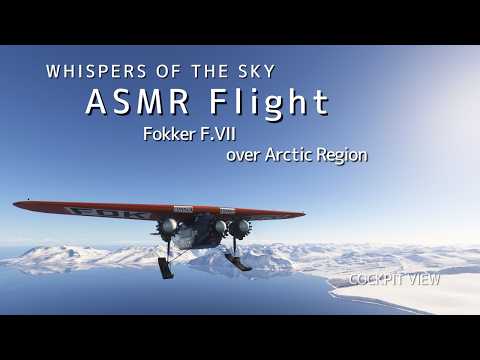
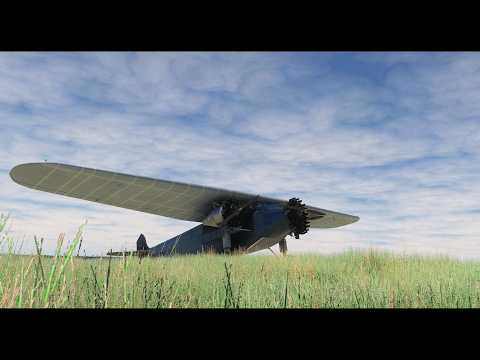
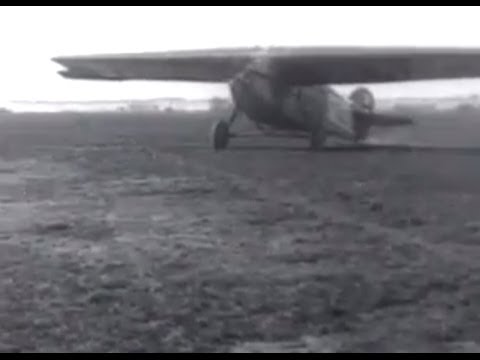
The Fokker F.VII, popularly known as the Fokker Trimotor, was a 1920s airliner produced by the Dutch firm Fokker, by its American subsidiary Atlantic Aircraft Corporation and by several licensees. It carried between six and twelve passengers depending on the version and was the aircraft of choice for many of the era's pioneering flights.
Related sheets
Category
Fokker F.VII in the news
The last operational Greyhound landed in Pensacola before joining the collection of the National Naval Aviation Museum

Last operational Greyhound lands in Pensacola before joining Naval Aviation Museum
The US Navy's C-2A Greyhound completed its final flight, landing at Naval Air Station (NAS) Pensacola. It will now join the National Naval Aviation Museum. The Grumman […]…
.jpg)
The Grumman C-2A Greyhound, one of the most iconic aircraft in US naval aviation, has officially ended its career after six decades of operations. The type's final flight was…
Before touching down, the Greyhound flew in formation with the US Navy's Blue Angels aerobatic team, as part of the tribute prepared for the…

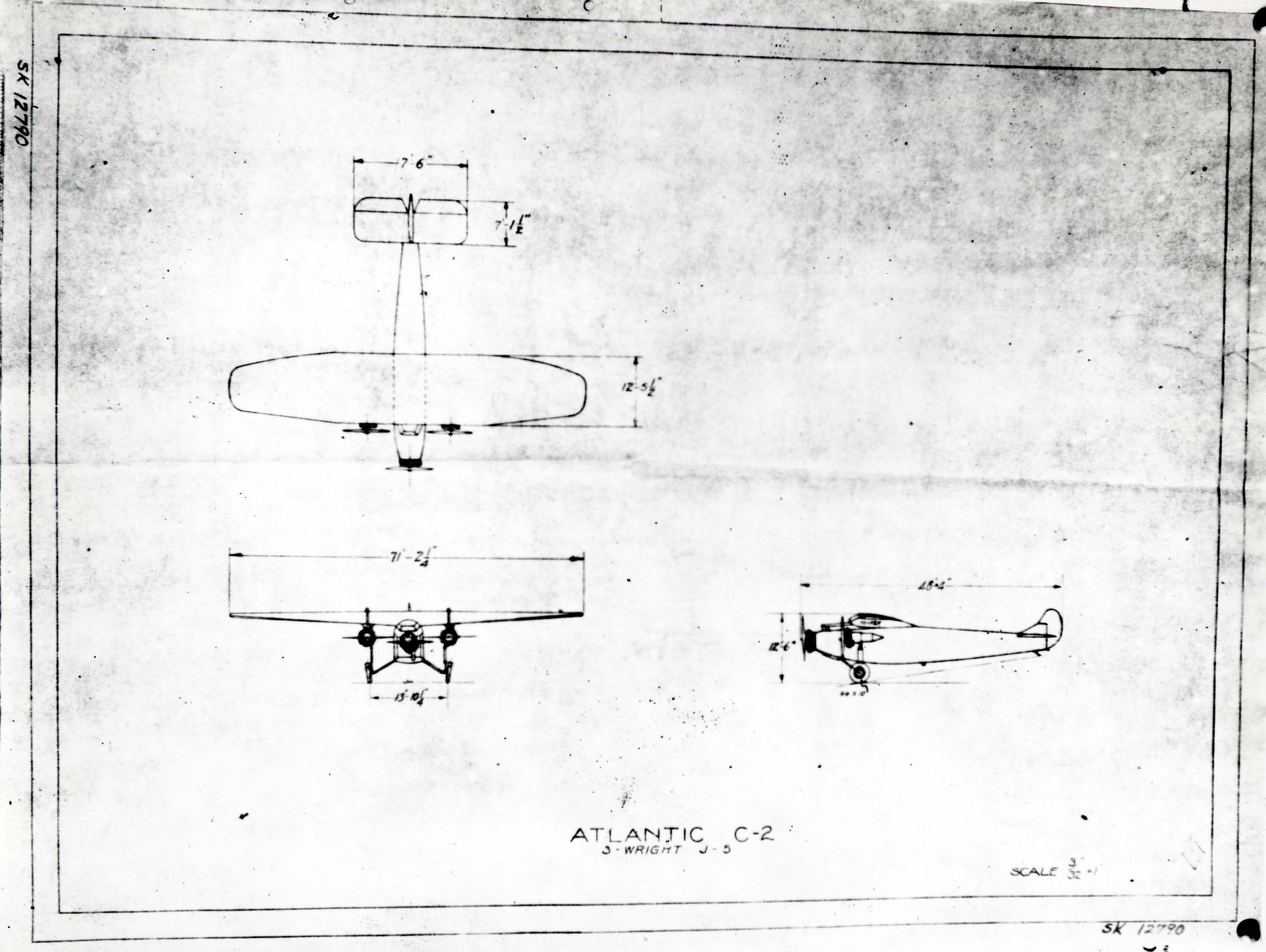
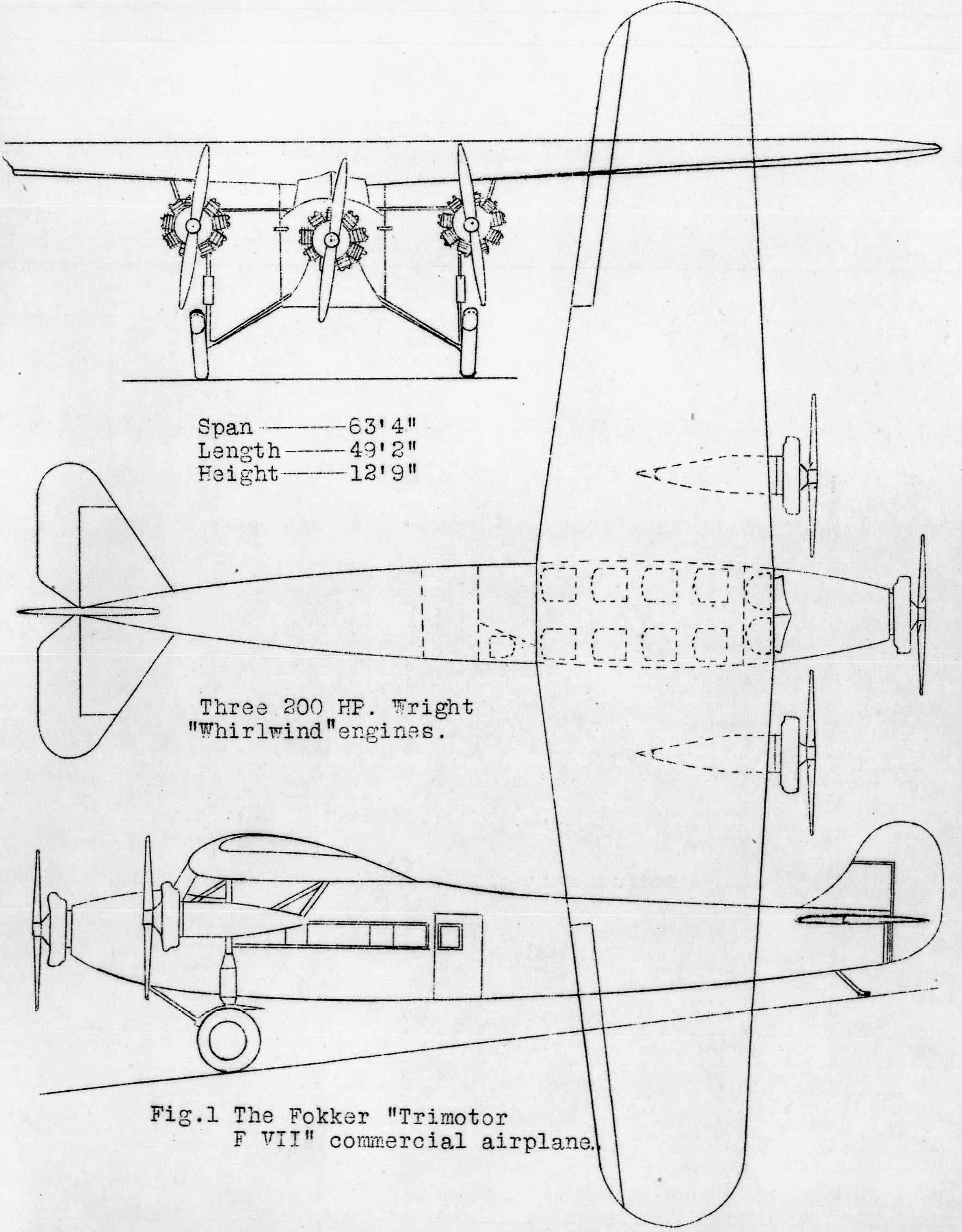
Three-view drawing
.jpg)
History
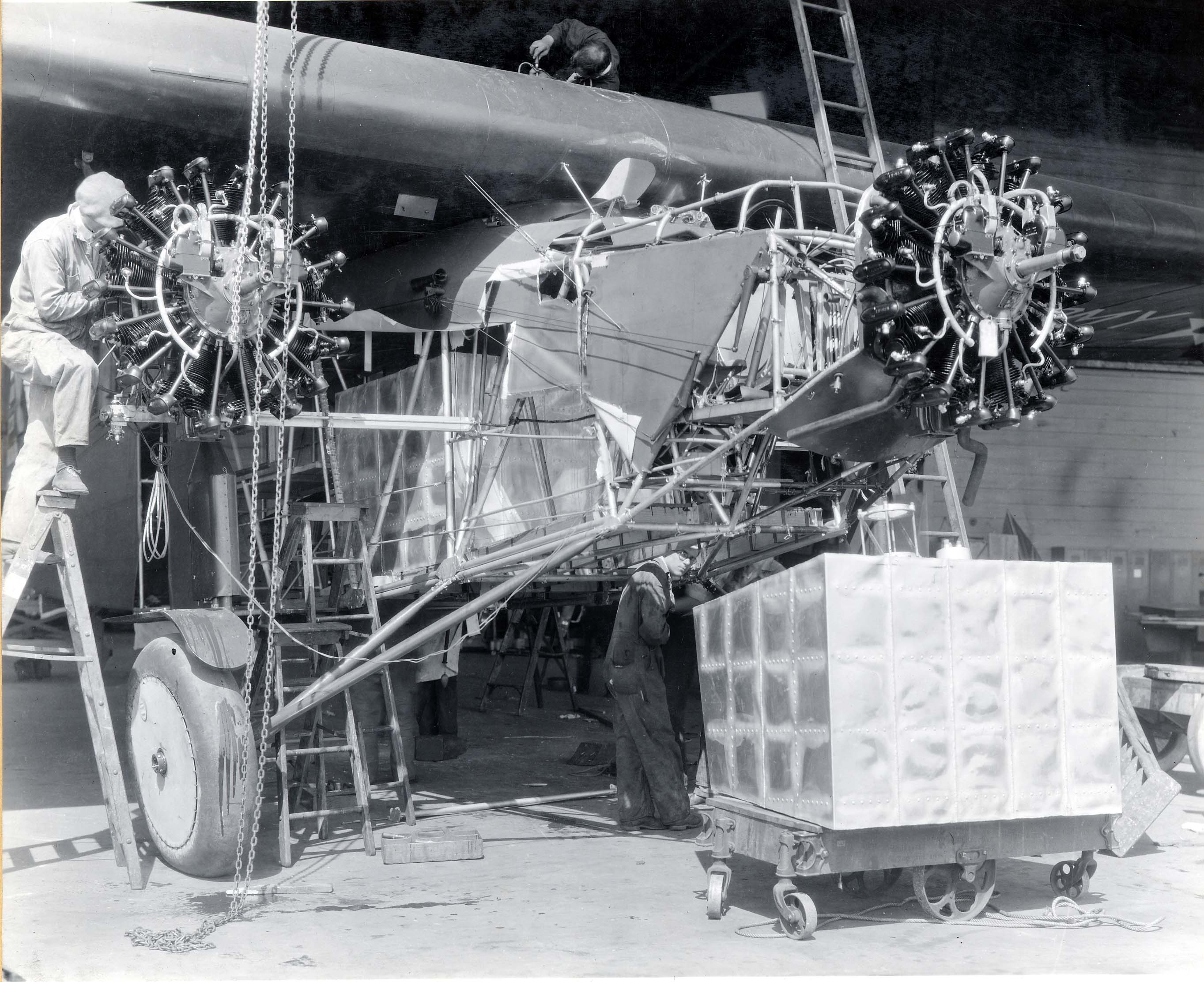
Walter Rethel designed the F.VII as a single-engined transport, and five were built for the Dutch airline KLM; one of them, registered H-NACC, made the first flight from the Netherlands to the Dutch East Indies in 1924. The type first flew on 24 November 1924 and entered service in 1925. That year Anthony Fokker, then living in the United States, heard of the inaugural Ford Reliability Tour, a competition for transport aircraft, and had the company's head designer Reinhold Platz convert a single-engined F.VIIA airliner into a trimotor with 200 hp Wright Whirlwind radials. The result, designated F.VIIA-3m, flew on 4 September 1925 and won the American event later that year. Its structure paired a fabric-covered steel-tube fuselage with a plywood-skinned wooden wing.
Several generations followed. Probably only eighteen F.VIIA-3m aircraft were built, although many F.VIIAs were upgraded to that standard. The main production variant was the F.VIIB-3m, with heavier engines on offer, among them the 300 hp Wright Whirlwind, the Armstrong Siddeley Lynx and the 360 hp Titan Major, plus greater span and modified wing geometry: 154 were built, licence production included. Outside the Netherlands it was manufactured by SABCA with 29 aircraft, Avia with 18, three Italian machines as the IMAM Ro.10 for Avio Linee Italiane and Ala Littoria, three in Spain, and Poland's Plage i Laśkiewicz, which between 1929 and 1930 delivered eleven F.VIIB-3m plus twenty of its own bomber version developed by Jerzy Rudlicki. The larger derivatives were the twin-engined F.VIII, the twenty-passenger F.IX and the American F-10, which took twelve.
The F.VII was the explorers' aeroplane. Richard E. Byrd claimed to have flown over the North Pole in the F.VIIA-3m Josephine Ford on 9 May 1926, a few days before Roald Amundsen managed it in the airship Norge; Lieutenants Lester Maitland and Albert Hegenberger made the first transpacific flight from the continental United States to Hawaii, some 2400 miles, on 28 and 29 June 1927 in the Atlantic-Fokker C-2 Bird of Paradise; and Byrd, Bernt Balchen and two companions carried the first official transatlantic airmail in the C-2 America, which crash-landed off the coast of France on 1 July 1927. Charles Kingsford Smith crossed the Pacific from the United States to Australia for the first time in June 1928 in the F.VIIB-3m Southern Cross and flew the Tasman Sea and back that September; Amelia Earhart became the first woman to fly the Atlantic on 17 June 1928, as a passenger aboard the F.VIIB-3m Friendship; and a United States Army Air Corps crew led by Carl Spaatz passed 150 hours aloft in the C-2A Question Mark between 1 and 7 January 1929 using aerial refuelling. Not every attempt ended well: the St. Raphael vanished without trace trying to cross the Atlantic from east to west on 31 August 1927, and the Old Glory was lost over the North Atlantic days later.
The eight- to twelve-seat Fokker dominated the American market in the late 1920s, but its standing collapsed after the 1931 crash of a Transcontinental & Western Air F-10 that killed Knute Rockne, the Notre Dame football coach. The investigation pointed to problems with the Fokker's plywood-laminate construction, which brought a temporary ban from commercial flights, stricter maintenance requirements and a shift in the market towards all-metal aircraft such as the Ford Trimotor and later the Boeing 247 and the Douglas DC-2. Production ended in 1932.
Variants
| F.VII | F.VIIa (F.VIIa/1m) | F.VIIa/3m | Avia F.VIIb/3m | Avro 618 Ten | C-2 | C-2A | C-5 | C-7 | C-7A | F-10 | F-10A | F-9 | F.VIIa/3m/M | F.VIIb/3m | F.VIIb/3m de construcción española | IMAM Ro.10 | Plage i Laśkiewicz F.VIIb/3m | Plage i Laśkiewicz F.VIIb/3m (bombardero) | RA-1 | RA-2 | RA-3 | RA-4 | SABCA F.VIIb/3m | TA-1 | TA-2 | TA-3 | XC-7 | XLB-2 | |
|---|---|---|---|---|---|---|---|---|---|---|---|---|---|---|---|---|---|---|---|---|---|---|---|---|---|---|---|---|---|
| First flight | April 11, 1924 | March 12, 1925 | September 4, 1925 | — | — | — | — | — | — | — | — | — | — | — | — | — | — | — | — | — | — | — | — | — | — | — | — | — | — |
| Aircraft type | Pioneering airliner | Pioneering airliner | Pioneering airliner | Pioneering airliner | Pioneering airliner | Military transport | Military transport | Military transport | Military transport | Military transport | Pioneering airliner | Pioneering airliner | Pioneering airliner | Light bomber | Pioneering airliner | Military transport | Pioneering airliner | Pioneering airliner | Night bomber | Military transport | Military transport | Military transport | Military transport | Pioneering airliner | Military transport | Military transport | Military transport | Experimental military transport | Experimental light bomber |
| Powerplant | 1 × Rolls-Royce Eagle inline engine of 270 kW (360 hp); some airframes took the 340 kW Napier Lion. | 1 × Bristol Jupiter or Pratt & Whitney Wasp radial of 400 to 500 hp depending on the customer; the first aircraft flew with a 420 hp Packard Liberty. | 3 × Wright J-4 Whirlwind radials of 149 kW (200 hp) each, one in the nose and two under the wing. | 3 × Walter Castor I radials of 191 kW (260 hp) at take-off driving three-blade metal propellers; aircraft also flew with 154 kW Škoda-Wright Whirlwind, 184 kW Avia DR-14, 187 kW Avia Rk-17 and, on the CIDNA machines, Gnome-Rhône Titan engines. | 3 × Armstrong Siddeley Lynx IVB or IVC seven-cylinder radials of 180 kW (240 hp) each. | 3 × Wright J-5 Whirlwind (R-790) radials of 164 kW (220 hp) each. | 3 × Wright J-5 Whirlwind (R-790) radials of 164 kW (220 hp) each. | 3 × Wright R-975 Whirlwind (J-6-9) radials of 246 kW (330 hp) each. | 3 × Wright R-975 Whirlwind (J-6-9) radials of 246 kW (330 hp) each. | 3 × Wright R-975 Whirlwind (J-6-9) radials of 246 kW (330 hp) each. | 3 × Pratt & Whitney R-1340 Wasp nine-cylinder radials of 317 kW (425 hp) each. | 3 × Pratt & Whitney Wasp C radials of 317 kW (425 hp) each; some aircraft moved to the 450 hp Wasp. | 3 × Wright J-5 Whirlwind radials of 164 kW (220 hp) each. | 3 × Wright J-4 Whirlwind radials of 149 kW (200 hp), the same powerplant as the civil F.VIIa/3m. | 3 × Wright J-6 Whirlwind (R-975) nine-cylinder air-cooled radials of 220 kW (300 hp) each; early aircraft used the 164 kW Wright J-5 Whirlwind, and deliveries were also made with Armstrong Siddeley Lynx or 270 kW Gnome-Rhône Titan Major engines. | 3 × Wright J-5 Whirlwind radials of 164 kW (220 hp), the standard F.VIIb/3m powerplant. | 3 × Alfa Romeo Lynx radials of 160 kW (215 hp), the Armstrong Siddeley Lynx built under licence in Italy. | 3 × Wright J-5B Whirlwind radials of 162 kW (220 hp) each; the LOT aircraft were re-engined in 1934-35 with the 309 kW Pratt & Whitney Wasp Junior TB and two-blade metal propellers. | 3 × Wright J-5B Whirlwind radials of 162 kW (220 hp) each. | 3 × Wright J-5 Whirlwind radials of 164 kW (220 hp) each. | 3 × Wright J-5 Whirlwind radials of 164 kW (220 hp) each. | 3 × Wright J-6-9 Whirlwind (R-975) radials of 224 kW (300 hp) each. | 3 × Pratt & Whitney Wasp C radials of 317 kW (425 hp) each. | 3 × air-cooled radials, identical across the 29 Belgian aircraft; consulted sources do not pin down the exact designation of SABCA's production engine. | 3 × Wright J-5 Whirlwind radials of 164 kW (220 hp) each. | 3 × Wright J-5 Whirlwind radials of 164 kW (220 hp) each. | 3 × Wright J-6-9 Whirlwind (R-975) radials of 224 kW (300 hp) each. | 3 × Wright J-6-9 Whirlwind (R-975) radials of 246 kW (330 hp) each. | 2 × Pratt & Whitney R-1690 Hornet radials of 391 kW (525 hp) each, later replaced by the R-1340; other sources credit the aircraft with three 306 kW R-1380 Wasps. |
| Powerplant | 1 × Rolls-Royce Eagle | 1 × Bristol Jupiter | 3 × Wright J-4 Whirlwind | 3 × Walter Castor I | 3 × Armstrong Siddeley Lynx IVB/IVC | 3 × Wright J-5 Whirlwind (R-790) | 3 × Wright J-5 Whirlwind (R-790) | 3 × Wright R-975 Whirlwind (J-6-9) | 3 × Wright R-975 Whirlwind (J-6-9) | 3 × Wright R-975 Whirlwind (J-6-9) | 3 × Pratt & Whitney R-1340 Wasp | 3 × Pratt & Whitney Wasp C | 3 × Wright J-5 Whirlwind | 3 × Wright J-4 Whirlwind | 3 × Wright J-6 Whirlwind (R-975) | 3 × Wright J-5 Whirlwind | 3 × Alfa Romeo Lynx | 3 × Wright J-5B Whirlwind | 3 × Wright J-5B Whirlwind | 3 × Wright J-5 Whirlwind | 3 × Wright J-5 Whirlwind | 3 × Wright J-6-9 Whirlwind (R-975) | 3 × Pratt & Whitney Wasp C | 3 × piston | 3 × Wright J-5 Whirlwind | 3 × Wright J-5 Whirlwind | 3 × Wright J-6-9 Whirlwind (R-975) | 3 × Wright J-6-9 Whirlwind (R-975) | 2 × Pratt & Whitney R-1690 Hornet |
| Power per engine | 362 hp | — | 200 hp | 256 hp | 241 hp | 220 hp | 220 hp | 330 hp | 330 hp | 330 hp | 425 hp | 425 hp | 220 hp | 200 hp | 295 hp | 220 hp | 215 hp | 217 hp | 217 hp | 220 hp | 220 hp | 300 hp | 425 hp | — | 220 hp | 220 hp | 300 hp | 330 hp | 524 hp Best value in this row |
| Length | — | — | 14.6 m | 14.5 m | 14.5 m | 14.5 m | 14.7 m | — | 14.9 m | — | 15.4 m | 15.2 m | — | — | 14.5 m | — | — | — | — | 15 m | — | — | — | — | 15 m | — | — | — | 15.7 m Best value in this row |
| Wingspan | — | — | — | 21.7 m | 21.7 m | 19.4 m | 22.6 m | — | 22.2 m | — | 21.7 m | 24.2 m Best value in this row | — | — | 21.7 m | — | — | — | — | 19.3 m | 22.2 m | — | — | — | 19.3 m | 22.2 m | — | — | 22.2 m |
| Height | — | — | — | 3.9 m Best value in this row | 3.9 m | — | — | — | — | — | 3.8 m | — | — | — | 3.9 m | — | — | — | — | — | — | — | — | — | — | — | — | — | — |
| Wing area | — | — | — | 67.6 m² | 71.7 m² Best value in this row | — | — | — | — | — | 67.6 m² | — | — | — | 67.6 m² | — | — | — | — | — | — | — | — | — | — | — | — | — | — |
| Empty weight | — | — | — | 2,440 kg Best value in this row | 2,731 kg | — | — | — | — | — | 2,971 kg | — | — | — | 3,100 kg | — | — | — | — | — | — | — | — | — | — | — | — | — | — |
| MTOW | — | — | — | 5,000 kg | 4,808 kg | — | — | — | — | — | 5,216 kg | — | — | — | 5,300 kg Best value in this row | — | — | — | — | — | — | — | — | — | — | — | — | — | — |
| Top speed | — | — | — | 208 km/h | 185 km/h | 208 km/h | — | — | 219 km/h | — | 230 km/h | 248 km/h Best value in this row | — | — | 210 km/h | — | — | 185 km/h | 185 km/h | 187 km/h | — | — | — | — | 187 km/h | — | — | — | — |
| Max speed altitude | — | — | — | — | — | — | — | — | — | — | — | — | — | — | 0 m | — | — | — | — | — | — | — | — | — | — | — | — | — | — |
| Cruise speed | — | — | — | 165 km/h | 160 km/h | 187 km/h | — | — | 177 km/h | — | 190 km/h | 203 km/h Best value in this row | — | — | 178 km/h | — | — | 160 km/h | 160 km/h | — | — | — | — | — | — | — | — | — | 198 km/h |
| Cruise altitude | — | — | — | — | — | — | — | — | — | — | — | — | — | — | 2,400 m | — | — | — | — | — | — | — | — | — | — | — | — | — | — |
| Service ceiling | — | — | — | 4,300 m | 4,900 m | 4,724 m | — | — | 5,639 m Best value in this row | — | 5,500 m | — | — | — | 4,400 m | — | — | 4,250 m | 4,250 m | — | — | — | — | — | — | — | — | — | — |
| Initial climb rate | — | — | — | — | 3.4 m/s | — | — | — | — | — | 7.2 m/s Best value in this row | — | — | — | 7.1 m/s | — | — | — | — | — | — | — | — | — | — | — | — | — | — |
| Range | — | — | — | 800 km | 640 km | 571 km | — | — | — | — | 1,279 km Best value in this row | 1,215 km | — | — | 1,200 km | — | — | 1,240 km | 1,240 km | 740 km | — | — | — | — | 740 km | — | — | — | — |
| Combat radius | 0 km Best value in this row | 0 km Best value in this row | 0 km Best value in this row | 0 km Best value in this row | 0 km Best value in this row | 0 km Best value in this row | 0 km Best value in this row | 0 km Best value in this row | 0 km Best value in this row | 0 km Best value in this row | 0 km Best value in this row | 0 km Best value in this row | 0 km Best value in this row | — | 0 km Best value in this row | — | 0 km Best value in this row | 0 km Best value in this row | — | 0 km Best value in this row | 0 km Best value in this row | 0 km Best value in this row | 0 km Best value in this row | 0 km Best value in this row | 0 km Best value in this row | 0 km Best value in this row | 0 km Best value in this row | 0 km Best value in this row | — |
| Range conditions | — | — | — | 800 km range, 165 km/h cruise and a 4,300 m ceiling. | 640 km range, 160 km/h cruise and a 4,900 m ceiling. | 571 km range, 187 km/h cruise and a 4,724 m ceiling. | — | — | 177 km/h cruise and a 5,639 m ceiling. | — | 1,279 km range, 190 km/h cruise and a 5,500 m ceiling. | 1,215 km range and 203 km/h cruise. | — | — | 1,200 km range with normal load; 178 km/h cruise at 2,400 m and a 4,400 m ceiling. | — | — | 1,240 km range, 160 km/h cruise and a 4,250 m ceiling. | 1,240 km range and a 4,250 m ceiling. | 740 km range at a 187 km/h top speed. | — | — | — | — | 740 km range at a 187 km/h top speed. | — | — | — | — |
| Armament | None: civil transport. | None: civil transport. | None: civil transport. | None: civil transport. | None: civil transport. | None: unarmed military transport. | None: unarmed military transport. | None: unarmed military transport. | None: unarmed military transport. | None: unarmed military transport. | None: civil transport. | None: civil transport. | None: civil transport. | Bomb racks under the fuselage; three airframes modified for the Dutch air arm, with powerful floodlights for landing in poor visibility. | None: civil transport. | No factory armament; the Spanish Fokkers were pressed into service as improvised bombers when the Civil War broke out. | None: civil transport. | None: civil transport. | 1 × 7.7 mm Lewis machine gun on a dorsal ring mount and 1,000 kg of bombs; some sources raise the load to 1,500 kg and the armament to four machine guns. | None: unarmed military transport. | None: unarmed military transport. | None: unarmed military transport. | None: unarmed military transport. | None: civil transport. | None: unarmed military transport. | None: unarmed military transport. | None: unarmed military transport. | None: unarmed military transport. | Light-bomber prototype; consulted sources give no armament detail. |
| Max weapons load | 0 kg | 0 kg | 0 kg | 0 kg | 0 kg | 0 kg | 0 kg | 0 kg | 0 kg | 0 kg | 0 kg | 0 kg | 0 kg | — | 0 kg | — | 0 kg | 0 kg | 1,000 kg Best value in this row | 0 kg | 0 kg | 0 kg | 0 kg | 0 kg | 0 kg | 0 kg | 0 kg | 0 kg | — |
| Payload | — | — | — | — | — | — | — | — | — | — | — | — | — | — | 1,000 kg | — | — | — | — | — | — | — | — | — | — | — | — | — | — |
| Cargo capacity | Original single-engined machine: cabin for 8 passengers with a crew of two. | Cabin enlarged to 8 passengers; many airframes were later converted to trimotor standard. | Eight passengers and two crew; from the third aircraft the fuselage was stretched by 80 cm. | Eight to 12 passengers and two crew on the ČSA, ČLS and CIDNA aircraft. | Eight passengers and two crew in the British-built version of the trimotor. | Two pilots and ten passengers; the first aircraft, fitted with the long wing, crossed the Pacific as Bird of Paradise. | Long-span version for two pilots and ten passengers; one of them, the Question Mark, set the air-refuelled endurance record. | A single re-engined F-10A bought by the Army Air Corps, seating 12 passengers. | Re-engined and redesignated C-2As, with a two-pilot cockpit and military passengers. | Six new-build aircraft with a larger wing, redesigned fin and a fuselage derived from the commercial F-10A. | Enlarged Super Trimotor: 12 passengers with a single pilot. | Luxury version seating 12 to 14 passengers, with a longer-span wing. | American-built version of the F.VIIb/3m produced by the Atlantic Aircraft Corporation. | Transport airframe adapted to bombing; consulted sources publish no load figure. | Cabin for 8 passengers —up to 12 in the dense layouts of some operators— and about 1,000 kg of useful load, with two crew. | Three military trimotors built by Aeronáutica Industrial (AISA), the former Talleres Loring, for the Sahara squadron. | Three Italian-built aircraft operated by Avio Linee Italiane and Ala Littoria. | Up to 10 passengers and two crew in the airliner version built in Lublin. | No passenger cabin: side windows deleted, vertical bomb cells inside the fuselage and racks for heavier bombs underneath, with a crew of three. | Redesignation of the TA-1 once the Navy reserved the letter T for torpedo aircraft; all were later converted to RA-3. | Redesignation of the long-span TA-2; these too were later converted to RA-3. | Six TA-1 and TA-2 conversions plus one new-build aircraft, re-engined with the nine-cylinder Whirlwind. | One civil F-10A bought by the US Navy for evaluation and ultimately not accepted. | Eight passengers and two crew; Sabena was the type's largest operator with 28 aircraft. | Three short-span transports for the US Navy and Marine Corps. | Identical to the TA-1 except for the longer-span wing; three built. | Only one aircraft left the factory with this designation; the rest were TA-1 and TA-2 conversions. | One C-2A re-engined as the testbed for the C-7 series. | Experimental twin-engined derivative of the C-2, with five stations and a single aircraft built. |
| Crew | 2 | 2 | 2 | 2 | 2 | 2 | 2 | — | 2 | 2 | 1 Best value in this row | — | 2 | — | 2 | 2 | 2 | 2 | 3 | — | — | — | — | 2 | — | — | — | — | 5 |
| Passengers | 8 | 8 | 8 | 12 | 8 | 10 | 10 | 12 | — | — | 12 | 14 Best value in this row | 10 | — | 8 | — | 8 | 10 | — | — | — | — | 14 Best value in this row | 8 | — | — | — | — | — |
| Units built | 5 | 39 | 18 | 19 | 14 | 3 | 8 | 1 | 4 | 6 | 65 | 61 | — | 3 | 154 Best value in this row | 3 | 3 | 11 | 20 | — | — | — | 1 | 29 | 3 | 3 | 1 | 1 | 1 |
Images