Russia · 1939–
Mikoyan
Soviet and Russian design bureau (MiG) behind some of the most-produced fighter aircraft in history.
Mikoyan in the news
The Foxbat The Mikoyan-Gurevich MiG-25 (Russian: Микоян и Гуревич МиГ-25; NATO reporting name: Foxbat) is a supersonic interceptor and reconnaissance aircraft that was among the fastest military…
Designed to counter the future F-22, the Mikoyan demonstrator combined supercruise, high maneuverability and... The post MiG 1.44: the Soviet fighter demonstrator built to…
_(6).jpg)
MiG-29 The Mikoyan MiG-29 (Russian: Микоян МиГ-29; NATO reporting name: Fulcrum) is a twin-engine jet fighter aircraft designed in the Soviet Union. Developed by the Mikoyan design bureau as an air…
The Fulcrum The Mikoyan MiG-29 (Russian: Микоян МиГ-29; NATO reporting name: Fulcrum) is a twin-engine jet fighter aircraft designed in the Soviet Union. Developed by the Mikoyan design bureau as an…


_(6)-1600.webp)

History
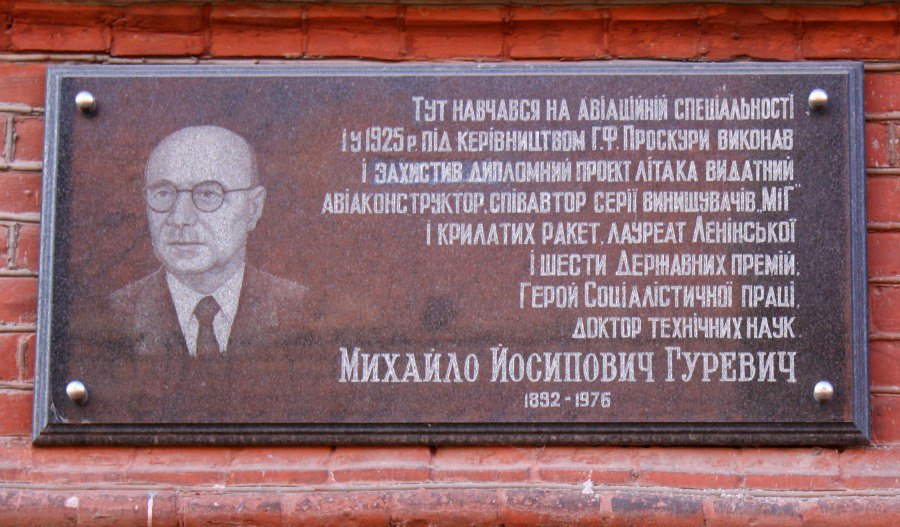
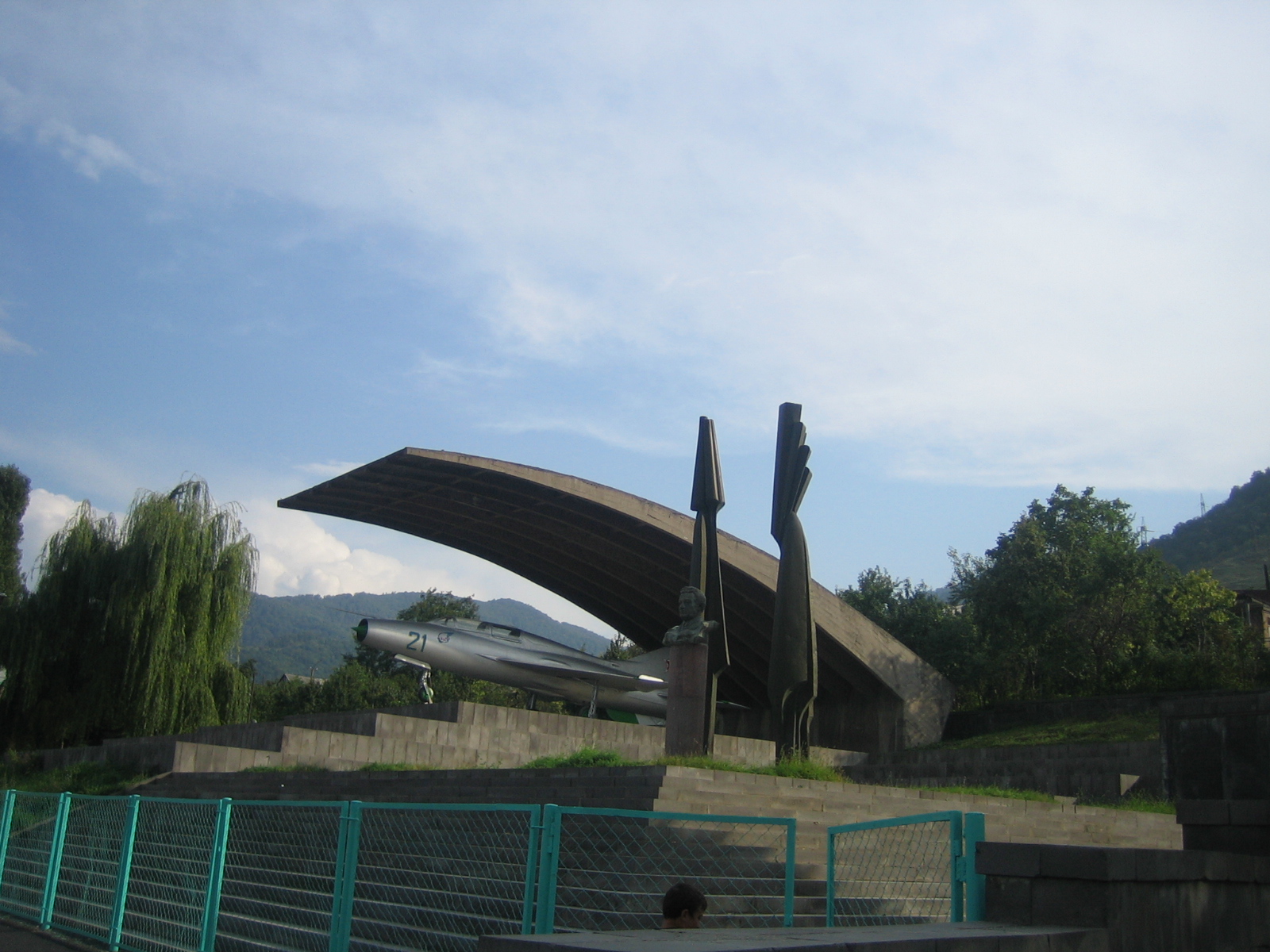
Founded in 1939 by Artem Mikoyan and Mikhail Gurevich, the MiG bureau shaped 20th-century combat aviation with families such as the MiG-15, MiG-21 and MiG-29.
Catalog — Aircraft
- 1940
Mikoyan-Gurevich MiG-1 Sheet pending
Variants (2)
- I-200
- MiG-1
- 1940
Mikoyan-Gurevich MiG-3 Sheet pending
Variants (4)
- I-210
- I-230 (MiG-3U)
- I-231
- MiG-3
- 1941
Mikoyan-Gurevich DIS Sheet pending
Variants (3)
- DIS-IT
- DIS (T)
- DIS-T
- 1945
Mikoyan-Gurevich MiG-8 Sheet pending
Variants (1)
- MiG-8
- 1946
Mikoyan-Gurevich MiG-9 Sheet pending
Variants (9)
- I-300
- MiG-9 (I-301)
- MiG-9 (I-302)
- MiG-9 (I-305)
- MiG-9 (I-307)
- MiG-9 (I-320)
- MiG-9L
- MiG-9M (I-308)
- MiG-9UTI (I-301T)
- 1947
Mikoyan-Gurevich MiG-15
The Mikoyan-Gurevich MiG-15 (NATO reporting name "Fagot") was the first mass-produced Soviet swept-wing jet fighter, and with it the Soviet Union drew level with Western combat aviation almost overnight. The I-310 "S-01" prototype — a single-seater conceived specifically to intercept formations of heavy bombers at altitude — first flew on 30 December 1947 with Captain Viktor N. Yuganov at the controls, barely three months after the North American F-86 Sabre it would later be measured against. Wings and tail carried 35° of sweep, the design bureau having studied captured plans and wind-tunnel models of the German Focke-Wulf Ta 183 even though the MiG's structure and proportions were its own, and each wing had two fences to tame the spanwise flow. The armament announced the mission: one 37 mm Nudelman N-37 and two 23 mm Nudelman-Suranov NS-23 cannon grouped under the nose — few rounds, very heavy ones, against a large target. The Soviet weakness lay not in aerodynamics but in turbines: in 1946 no domestic engine offered more than modest thrust or lasted many hours. Aviation minister Mikhail Khrunichev and designer A. S. Yakovlev proposed to Stalin that the engine be bought in Britain; the canonical story has Stalin asking what fool would sell his secrets, then approving the trip anyway. The British Labour government and its trade minister, Sir Stafford Cripps, agreed to sell the Rolls-Royce Nene complete with blueprints and a manufacturing licence: 25 Nenes were purchased between September 1946 and March 1947 — 55 jet engines in all counting the Derwents — and Vladimir Klimov adapted them for Soviet industry as the RD-45. A second evolution with better metallurgy, the 26.5 kN VK-1, produced the MiG-15bis, in service from early 1950 with larger air brakes, NR-23 cannon in place of the NS-23, and later underwing racks for bombs or rockets. The first production MiG-15 flew on 31 December 1948 and the first regiments were operational during 1949. Output was vast — the available tallies give more than 13,000 aircraft, and one popular source raises the figure above 18,000, with no properly cross-checked breakdown by factory and country — split between Soviet plants and Eastern Bloc licences: Poland built the Lim-1 and Lim-2 at WSK Mielec, Czechoslovakia the S-102, S-103 and two-seat CS-102 at Aero, and China assembled the JJ-2 trainer (exported as the FT-2) at Shenyang. The dual-control MiG-15UTI two-seater, "Midget" to NATO, became the jet school of half a dozen air arms and stayed in the line long after the single-seat fighter had been overtaken. Its baptism of fire came over China in the spring of 1950, when Soviet pilots of the 50th Fighter Aviation Division stopped the Nationalist raids on Shanghai, and it became a legend in Korea. On 1 November 1950 MiGs appeared over the Yalu river in North Korean markings, flown by Soviet pilots in disguise; Soviet sources place the first jet-versus-jet combat in history on that same day, while the American account credits the first jet kill to Lieutenant Russell J. Brown in an F-80C on 8 November. In "MiG Alley" the new fighter rendered the Gloster Meteor, F-80, F-84 and F9F obsolete at a stroke, and only the F-86 Sabre could meet it: the MiG climbed and accelerated better, had a higher ceiling (15,500 m) and hit harder, while the Sabre held the advantage below 8,000 m and carried a far better radar-ranging gyroscopic gunsight. Against the B-29 it did exactly what it had been designed for: "Black Thursday", 12 April 1951, damaged or destroyed a quarter of the Far East heavy bomber force and drove the four-engined bombers out of daylight raids. The scoreboards remain disputed — the Soviet 64th Fighter Aviation Corps claimed 1,106 aircraft shot down, and both sides inflated their tallies. The West waited three years to examine a complete example. On 21 September 1953 North Korean lieutenant No Kum-Sok landed his MiG-15bis at Kimpo air base after a seventeen-minute flight and collected the $100,000 offered by Operation Moolah, a reward he said he had never heard of; the aircraft went to Okinawa, where Captain H. E. Collins and Major Chuck Yeager flew it, and it is preserved today at the National Museum of the United States Air Force — the technical substance of that evaluation survives only through popular accounts. By then the MiG-15 was already giving way to the MiG-17, yet it went on being exported to more than thirty air forces across Eastern Europe, Asia, Africa and the Middle East, and it still featured in one famous tragedy: Yuri Gagarin, the first man in space, was killed in March 1968 when the MiG-15UTI he was flying crashed. Nearly eight decades after its first flight, the type remains in service as an advanced trainer with the North Korean air force.
- 1949
Mikoyan-Gurevich I-320 Sheet pending
Variants (3)
- I-320 (R-1)
- I-320 (R-2)
- I-320 (R-3)
- 1950
Mikoyan-Gurevich MiG-17 Sheet pending
Variants (14)
- I-330
- I-340
- MiG-17
- MiG-17A
- MiG-17F
- MiG-17GU
- MiG-17M
- MiG-17MM
- MiG-17NBU
- MiG-17P
- MiG-17PF
- MiG-17PFU
- MiG-17R
- MiG-17SA
- 1951
Mikoyan-Gurevich I-350 Sheet pending
Variants (2)
- I-350 (M-1)
- I-350 (M-2)
- 1952
Mikoyan-Gurevich MiG-19 Sheet pending
Variants (13)
- I-360 (SM-2)
- MiG-19
- MiG-19M
- MiG-19P
- MiG-19PM
- MiG-19PML
- MiG-19PU
- MiG-19R
- MiG-19S
- MiG-19SF
- MiG-19SU
- MiG-19SV
- MiG-19SVK
- 1955
Mikoyan-Gurevich MiG-21
The Mikoyan-Gurevich MiG-21 — NATO reporting name «Fishbed» — is the delta-winged supersonic fighter-interceptor with which the Soviet Union equipped its own fighter arm, and that of much of the world, from 1959 onwards. Aircrews named it after its silhouette: «balalaika» in the USSR, «Ołówek» («pencil») in Poland and «Én Bạc» («silver swallow») in Vietnam. Around sixty countries on four continents have flown it, and seven decades after its maiden flight it remains in service with a handful of them. Its significance is measured in figures few aircraft can match: it is the most-produced supersonic combat aircraft in history and the most-produced combat aircraft since the Korean War, built over a run stretching from 1959 to 1985. Totals differ by source: Soviet official records add up to 10,158 airframes, while the most widely quoted overall figure reaches 11,496 — 10,645 built in the USSR, 657 assembled under licence by Hindustan Aeronautics in India and 194 by Aero Vodochody in Czechoslovakia. Soviet output came from three plants: 5,765 aircraft from Gorky, 3,203 from Moscow and 1,678 from Tbilisi, the last of them specialising in two-seat trainers. The programme began in the early 1950s as a continuation of the MiG-15, MiG-17 and MiG-19 line. The preliminary Ye-1 design study of 1954 was reworked once its intended engine proved underpowered, yielding the still swept-wing Ye-2; the first prototype with the delta wing of the production versions was the Ye-4, which flew on 16 June 1955 and appeared in public at the Tushino display in Moscow in July 1956. The outcome was a lightweight fighter able to reach Mach 2 on a comparatively modest afterburning turbojet, close in philosophy to the F-104 Starfighter, the F-5 and the Mirage III. Its nose intake with a shock cone left very little room for radar and ultimately capped the design's growth potential, while internal tanks placed ahead of the centre of gravity gave it short legs — roughly forty-five minutes of endurance in clean configuration. Armament paired a cannon with the K-13 missile, a reverse-engineered copy of the American AIM-9 Sidewinder based on an example recovered after the 1958 fighting over the Taiwan Strait. In combat it was exactly what it had been designed to be: a ground-controlled interceptor. Over North Vietnam, where the first aircraft arrived by ship in April 1966 for the 921st Fighter Regiment, it practised the single fast firing pass against American formations; thirteen North Vietnamese aces scored their victories in it, and Operation Bolo of 2 January 1967 — F-4 fighters posing as bomb-laden F-105s to draw the MiGs into a turning fight — was, as Vietnamese sources later conceded, one of the worst days of the war for their air arm, with five MiG-21s lost by their own count. In the Middle East it equipped Egypt, Syria and Iraq: in the Six-Day War Egypt lost about a hundred of the hundred and ten MiG-21s it had, almost all of them on the ground, and Syria thirty-five of sixty; during the War of Attrition Soviet pilots arrived to fly them, and it was they who were ambushed by Israel in Operation Rimon 20 on 30 July 1970, which ended with five Soviet-flown MiG-21s shot down and not one Israeli aircraft lost. No air force became as closely identified with the type as India's. India chose it in 1961 over Western contenders and in 1963 it became the first supersonic aircraft in Indian military service; more than 1,200 would eventually be inducted, with a peak of four hundred spread across nineteen squadrons. It fought the subcontinent's first supersonic dogfight in the 1971 war, when a MiG-21FL brought down a Pakistani F-104 with cannon fire. It also built up an accident record that earned it the nickname «flying coffin»: more than a hundred and seventy pilots and forty civilians were killed in MiG-21 accidents from 1970 onwards. Its Indian story closed with the loss of one aircraft in the 2019 border clash with Pakistan, its pilot captured and returned days later, and with the farewell ceremony held at Chandigarh on 26 September 2025, No. 23 Squadron «Panthers» being the last unit to fly it. The Fishbed's lineage continued along two paths. The first was Chinese copying and development: the technology-transfer agreement of 30 March 1962 led to the Chengdu J-7 — production started at Shenyang in March 1964 with incomplete documentation, forcing Chinese engineers to reconstruct much of the design, and only reached true mass production in the 1980s — and to its F-7 export family. The second was modernisation: Romania converted 111 airframes between 1995 and 2002 into the LanceR A, B and C versions, cleared for both Western and Eastern weapons, while India contracted in 1996 for 125 aircraft to be brought to the MiG-21-93 standard, known as the «Bison». On the latest available counts, from 2021 to 2023, the MiG-21 still flies in small numbers with Angola, Cuba, Mali, Mozambique, North Korea, Sudan and Yemen.
- 1957
Mikoyan-Gurevich I-7 Sheet pending
Variants (4)
- I-7K
- I-7P
- I-7SF
- I-7U
- 1959
Mikoyan-Gurevich Ye-150 family Sheet pending
Variants (5)
- Ye-150
- Ye-152-1
- Ye-152-2
- Ye-152A
- Ye-152M
- 1964
Mikoyan-Gurevich MiG-25 Sheet pending
Variants (19)
- MiG-25BM
- MiG-25M
- MiG-25P
- MiG-25PD
- MiG-25PDS
- MiG-25PU
- MiG-25R
- MiG-25RB
- MiG-25RBF
- MiG-25RBK
- MiG-25RBN
- MiG-25RBS
- MiG-25RBSh
- MiG-25RBT
- MiG-25RBV
- MiG-25RR
- MiG-25RU
- Ye-155P
- Ye-155R
- 1967
Mikoyan-Gurevich 23-01 Sheet pending
Variants (1)
- 23-01 (MiG-23PD)
- 1967
Mikoyan-Gurevich MiG-23 Sheet pending
Variants (16)
- MiG-23B
- MiG-23BK
- MiG-23BN
- MiG-23LL
- MiG-23M
- MiG-23MF
- MiG-23ML
- MiG-23MLA
- MiG-23MLD
- MiG-23MS
- MiG-23P
- MiG-23S
- MiG-23U
- MiG-23UB
- MiG-23UM
- Ye-231
- 1970
Mikoyan MiG-27 Sheet pending
Variants (6)
- MiG-27D
- MiG-27K
- MiG-27M
- MiG-27 (MiG-23BM)
- MiG-27ML
- MiG-27UPG
- 1975
Mikoyan MiG-31 Sheet pending
Variants (12)
- MiG-31
- MiG-31B
- MiG-31BM
- MiG-31BS
- MiG-31BSM
- MiG-31D
- MiG-31DZ
- MiG-31I
- MiG-31K
- MiG-31LL
- MiG-31M
- Ye-155MP
- 1977
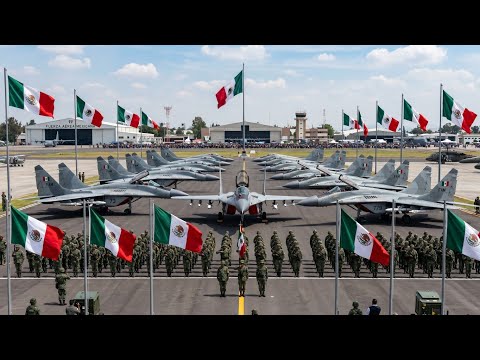
MiG-29
The MiG-29 is the light air-superiority fighter with which the Soviet Union answered America's fourth generation. Christened "Fulcrum" by NATO, its low-speed agility and famous cobra manoeuvre made it the airshow star of the late Cold War. It was born from the 1969 PFI programme, which the Soviets split in two: a heavy long-range fighter —the future Su-27— and a light, cheap, mass-deployable one, the "Product 9-12" that Mikoyan began defining in 1974 and which first flew on 6 October 1977. It entered service in 1982 and became one of the most exported fighters of its era: more than 25 countries have operated it, from India to Cuba, and after German reunification it became the first Soviet fighter thoroughly evaluated by a NATO air force, the Luftwaffe. With around 1,600 aircraft built and versions ranging from the original interceptor to the naval MiG-29K, it remains in service with numerous air forces — a protagonist of both history and current military affairs.
- 1988
Mikoyan MiG-29K Sheet pending
Variants (5)
- MiG-29K (Product 9.41)
- MiG-29KR (Product 9.41R)
- MiG-29KUB (Product 9.47)
- MiG-29KUBR (Product 9.47R)
- MiG-29KVP
- 1996
Mikoyan MiG-AT Sheet pending
Variants (3)
- MiG-AC
- MiG-AT
- MiG-ATC
- 2000
Mikoyan Project 1.44 Sheet pending
Variants (2)
- MiG 1.42
- MiG 1.44
- 2011
Mikoyan MiG-29M Sheet pending
Variants (5)
- MiG-29M2 (Product 9.47S)
- MiG-29M2 (Product 9.47SM)
- MiG-29M (Product 9.41S)
- MiG-29M (Product 9.41SM)
- MiG-29UBM (Product 9.61)
- —
MiG-23 Sheet pending
- —
Mikoyan MiG-35 Sheet pending
Variants (4)
- MiG-35D (Product 9.67)
- MiG-35 (Product 9.61)
- MiG-35S (Product 9.41SR)
- MiG-35UB (Product 9.47SR)
- —
Mikoyan-Gurevich I-220 Sheet pending
Variants (5)
- I-220
- I-221
- I-222
- I-224
- I-225
- —
Mikoyan-Gurevich I-250 Sheet pending
Variants (2)
- I-250
- MiG-13
- —
Mikoyan-Gurevich I-75 Sheet pending
Variants (2)
- I-75
- I-75F
- —
Mikoyan-Gurevich Ye-8 Sheet pending
Variants (2)
- Ye-8/1
- Ye-8/2
- —
Mikoyan-Gurevich I-211 Sheet pending
Variants (1)
- I-211
- —
Mikoyan-Gurevich MiG-105 Sheet pending
Variants (1)
- MiG-105-11
- —
Mikoyan-Gurevich I-270 Sheet pending
Variants (2)
- I-270 (Zh-1)
- I-270 (Zh-2)
- —
Mikoyan-Gurevich I-3 Sheet pending
Variants (3)
- I-3 (I-380)
- I-3P
- I-3U (I-5)
Videos

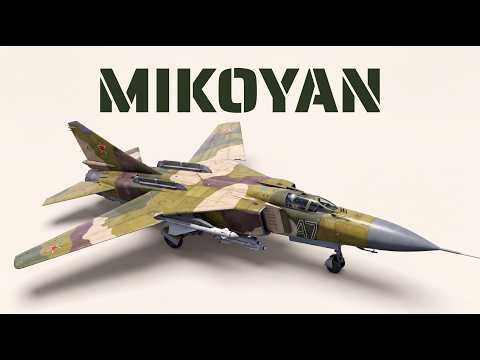




Show the 13 more




Did you know… about Mikoyan
- How much does the mig 29 weight?
A MiG-29 weighs about 11,000 kg (24,250 lb) empty, around 15,000 kg (33,000 lb) at normal take-off weight with internal fuel and air-to-air missiles, and up…
- Why is the mig 29 called fulcrum?
“Fulcrum” is not the MiG-29’s Soviet name but a NATO reporting name assigned by the Air Standardization Coordinating Committee around 1979. Fighters received…